
Table of Contents Chapter The Nonliving Environment Section
Table of Contents Chapter: The Nonliving Environment Section 1: Abiotic Factors Section 2: Cycles in Nature Section 3: Energy Flow
Abiotic Factors 1 Environmental Factors • Biotic factors - features of the environment that are alive, or were once alive • Abiotic factors - nonliving, physical features of the environment
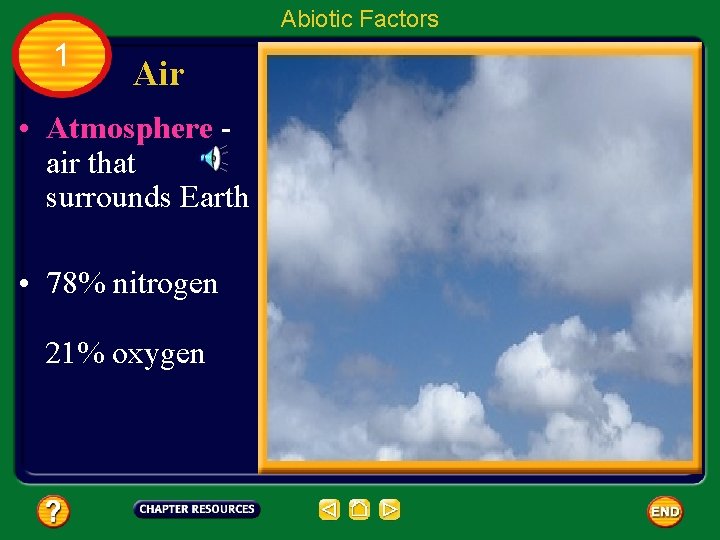
Abiotic Factors 1 Air • Atmosphere air that surrounds Earth • 78% nitrogen 21% oxygen
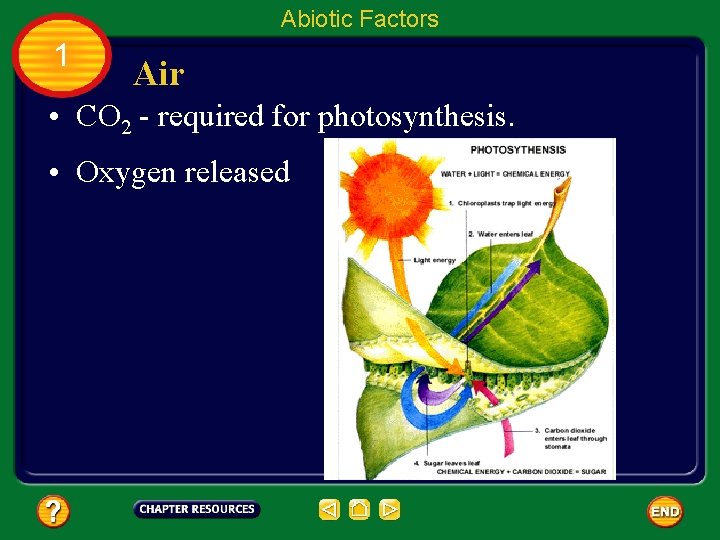
Abiotic Factors 1 Air • CO 2 - required for photosynthesis. • Oxygen released
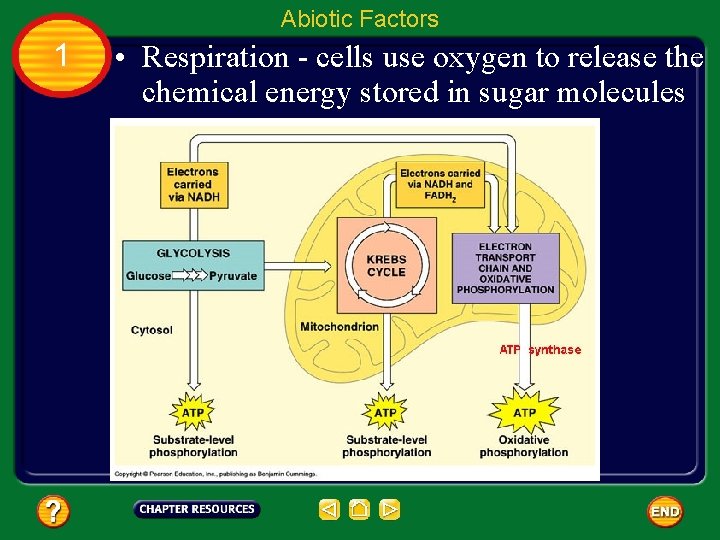
Abiotic Factors 1 • Respiration - cells use oxygen to release the chemical energy stored in sugar molecules
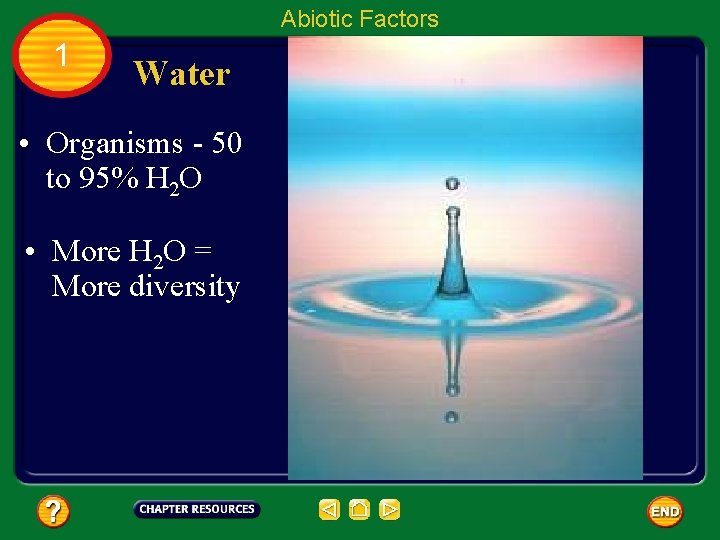
Abiotic Factors 1 Water • Organisms - 50 to 95% H 2 O • More H 2 O = More diversity
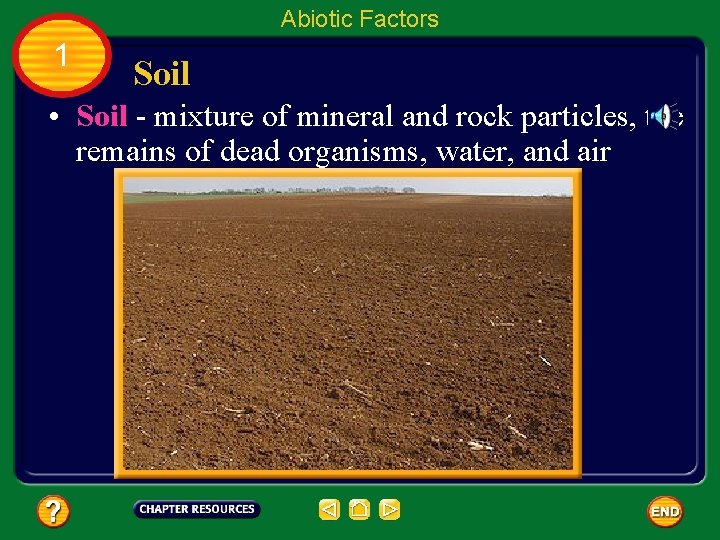
Abiotic Factors 1 Soil • Soil - mixture of mineral and rock particles, the remains of dead organisms, water, and air
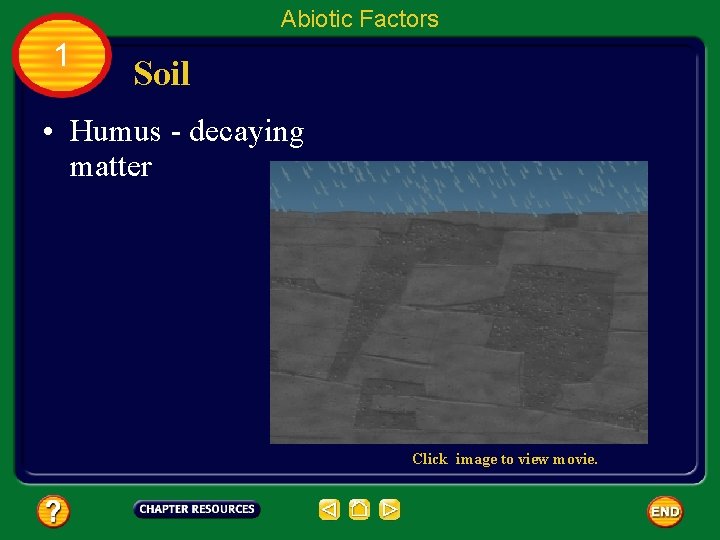
Abiotic Factors 1 Soil • Humus - decaying matter Click image to view movie.
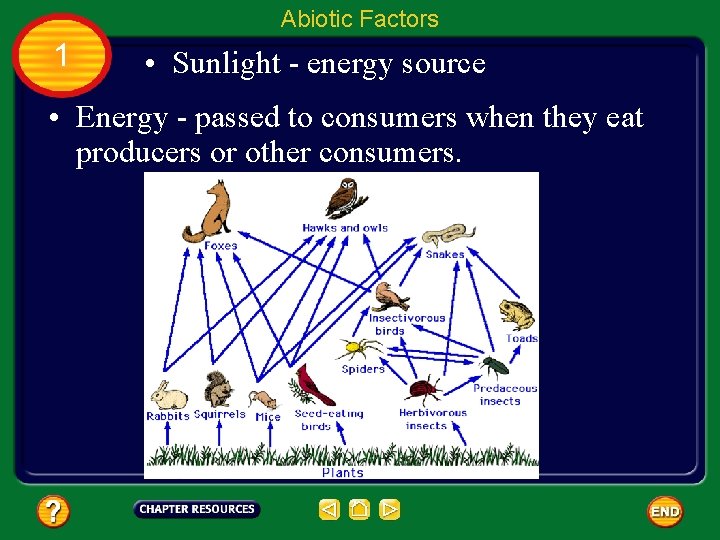
Abiotic Factors 1 • Sunlight - energy source • Energy - passed to consumers when they eat producers or other consumers.
Abiotic Factors 1 Temperature • Body temperature - 0°C to 50°C to survive
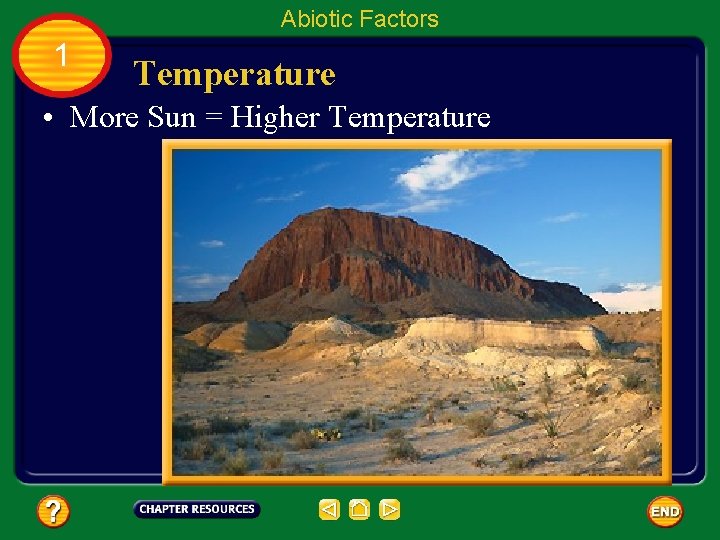
Abiotic Factors 1 Temperature • More Sun = Higher Temperature
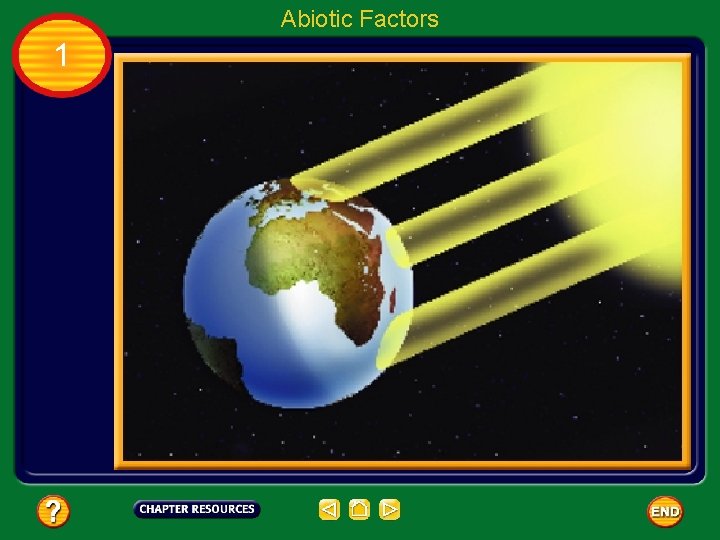
Abiotic Factors 1
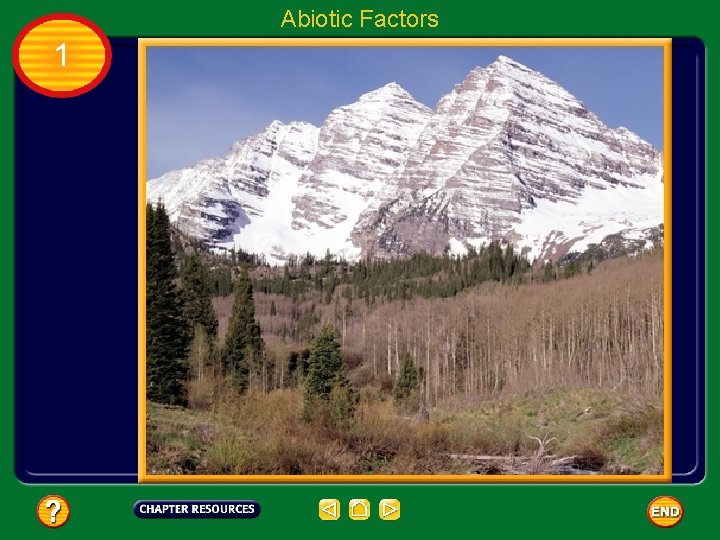
Abiotic Factors 1
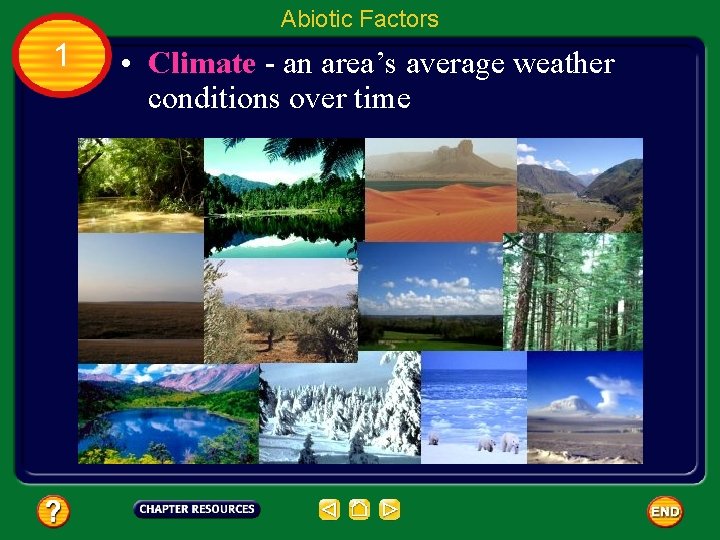
Abiotic Factors 1 • Climate - an area’s average weather conditions over time
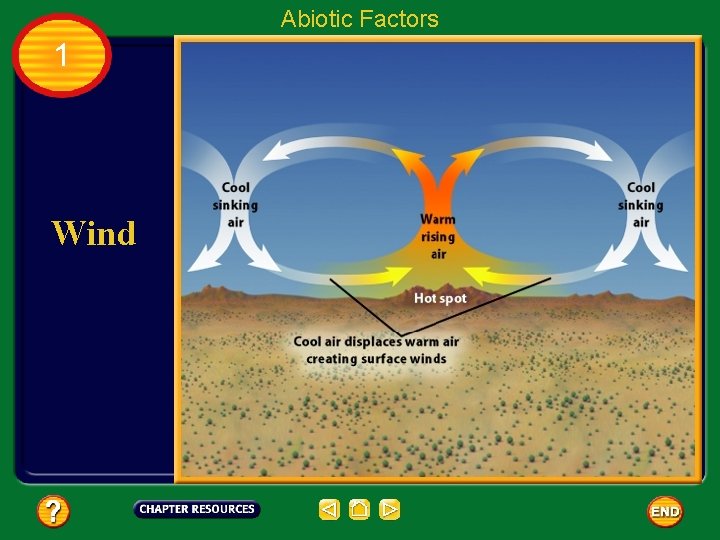
Abiotic Factors 1 Wind
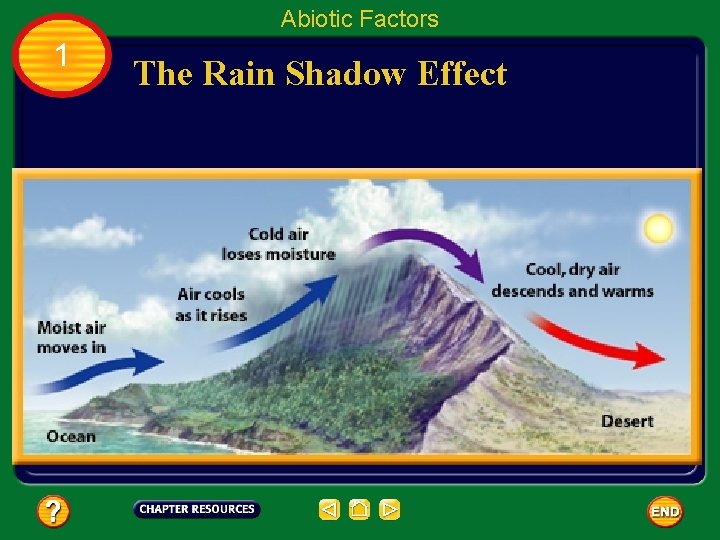
Abiotic Factors 1 The Rain Shadow Effect
Section Check 1 Question 1 Which is an abiotic factor? A. insects B. plants C. trees D. water
Section Check 1 Answer The answer is D. Non-living, physical features of the environment are abiotic.
Section Check 1 Question 2 _______ and _______ are the two most important components of climate for the majority of living things. Answer The answer is temperature and precipitation. The average temperature and rainfall in an area influence the type of life found there.
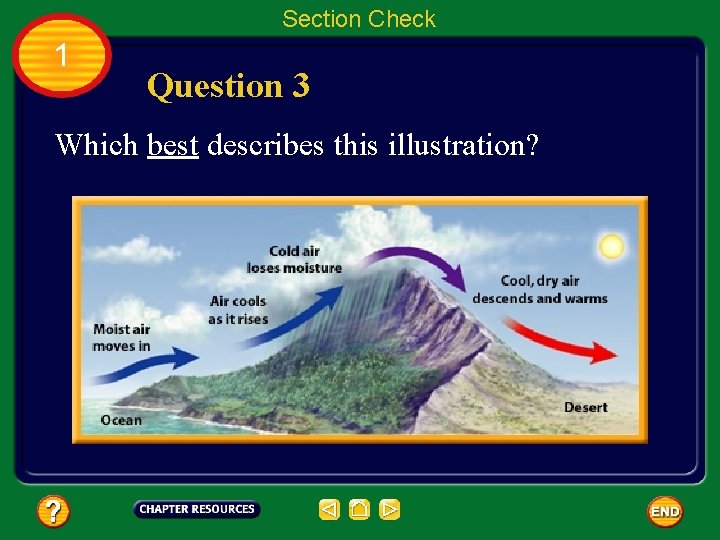
Section Check 1 Question 3 Which best describes this illustration?
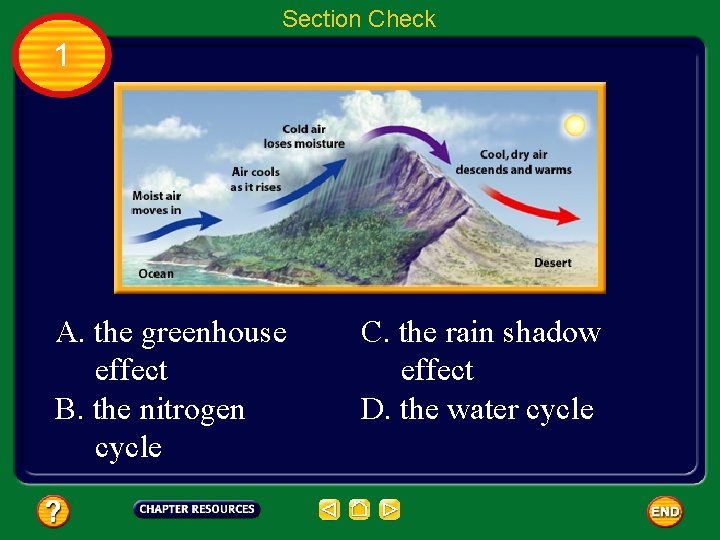
Section Check 1 A. the greenhouse effect B. the nitrogen cycle C. the rain shadow effect D. the water cycle
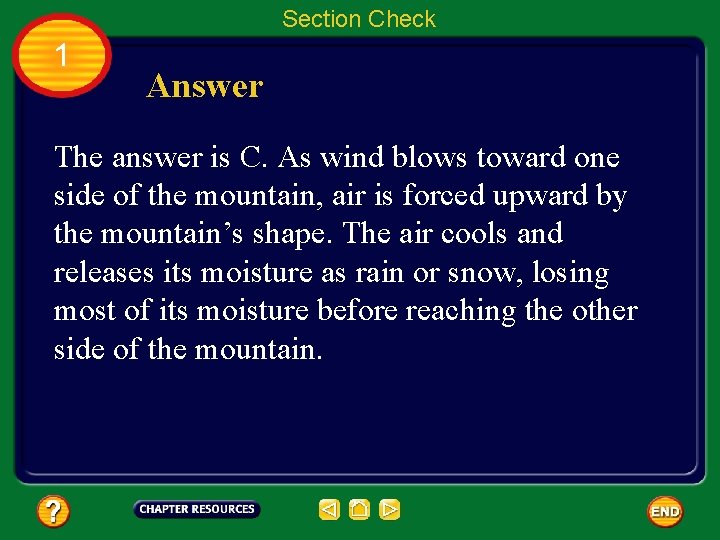
Section Check 1 Answer The answer is C. As wind blows toward one side of the mountain, air is forced upward by the mountain’s shape. The air cools and releases its moisture as rain or snow, losing most of its moisture before reaching the other side of the mountain.
Cycles in Nature 2 The Cycles of Matter • Biosphere - fixed amount of • Water • Carbon • Nitrogen • Oxygen • Constant supply of light
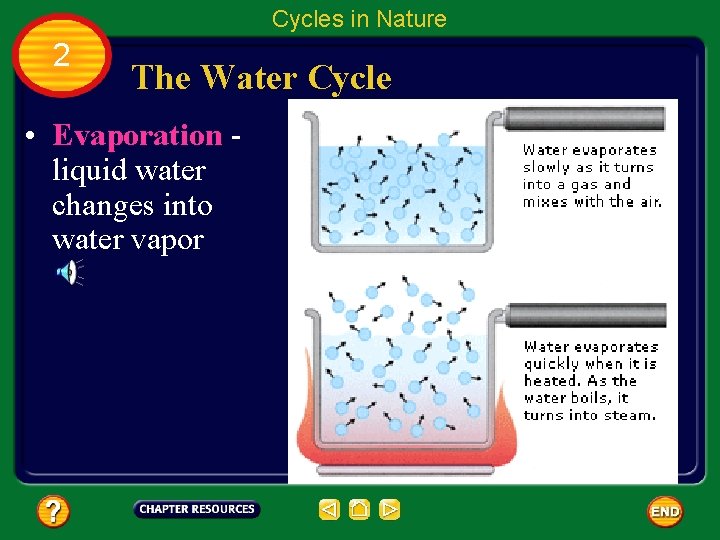
Cycles in Nature 2 The Water Cycle • Evaporation liquid water changes into water vapor
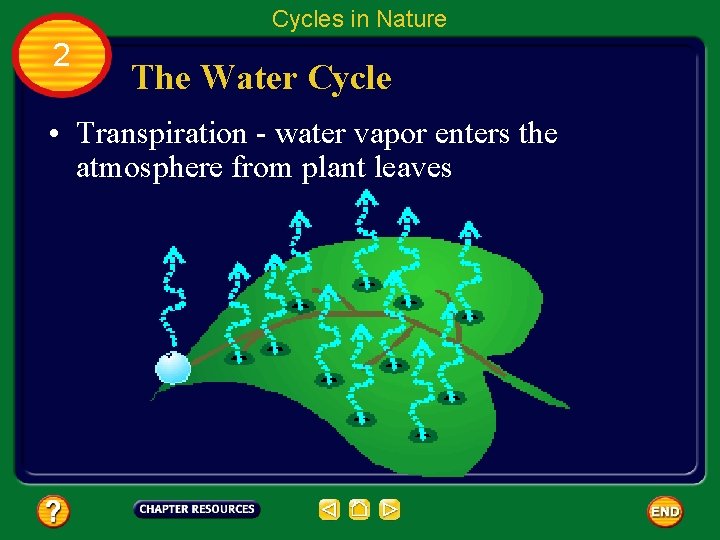
Cycles in Nature 2 The Water Cycle • Transpiration - water vapor enters the atmosphere from plant leaves
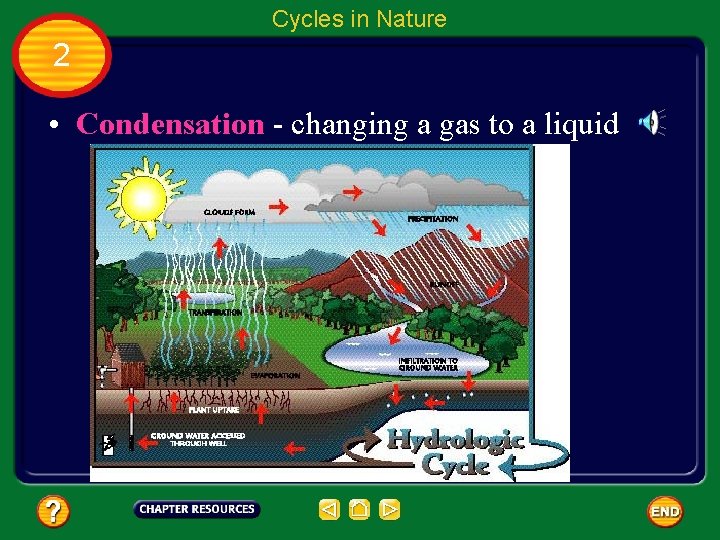
Cycles in Nature 2 • Condensation - changing a gas to a liquid
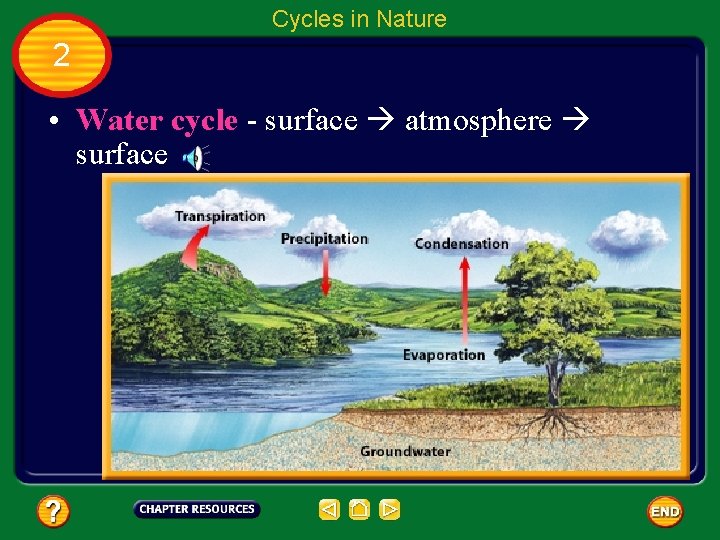
Cycles in Nature 2 • Water cycle - surface atmosphere surface
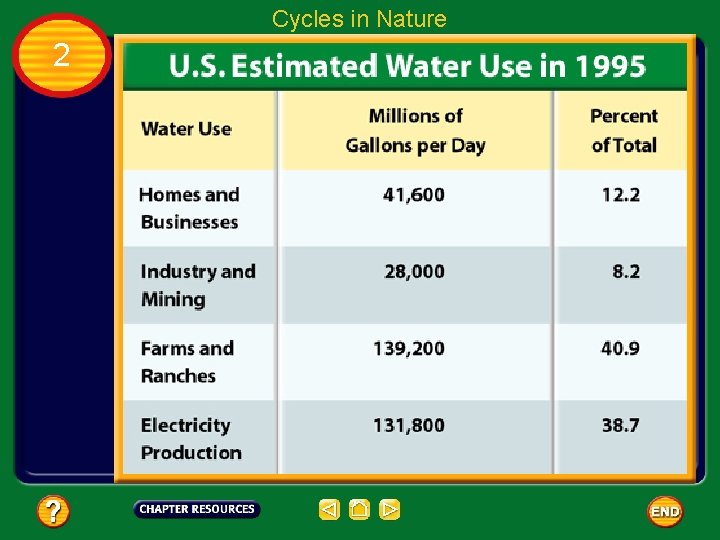
Cycles in Nature 2
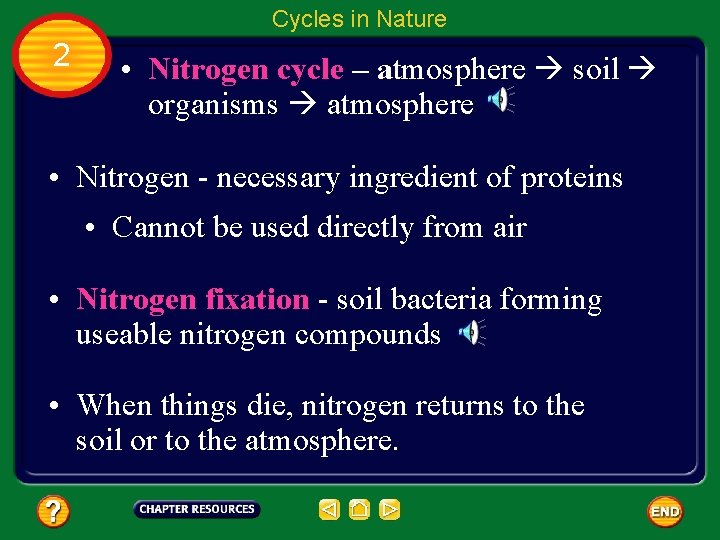
Cycles in Nature 2 • Nitrogen cycle – atmosphere soil organisms atmosphere • Nitrogen - necessary ingredient of proteins • Cannot be used directly from air • Nitrogen fixation - soil bacteria forming useable nitrogen compounds • When things die, nitrogen returns to the soil or to the atmosphere.
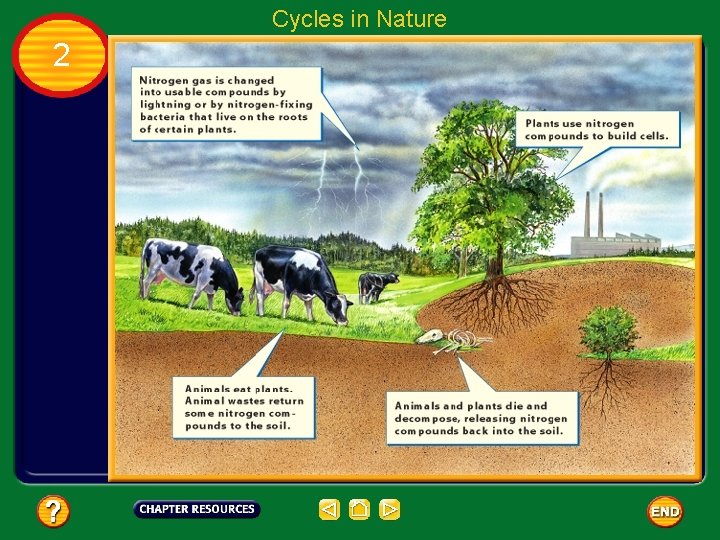
Cycles in Nature 2 The Nitrogen Cycle
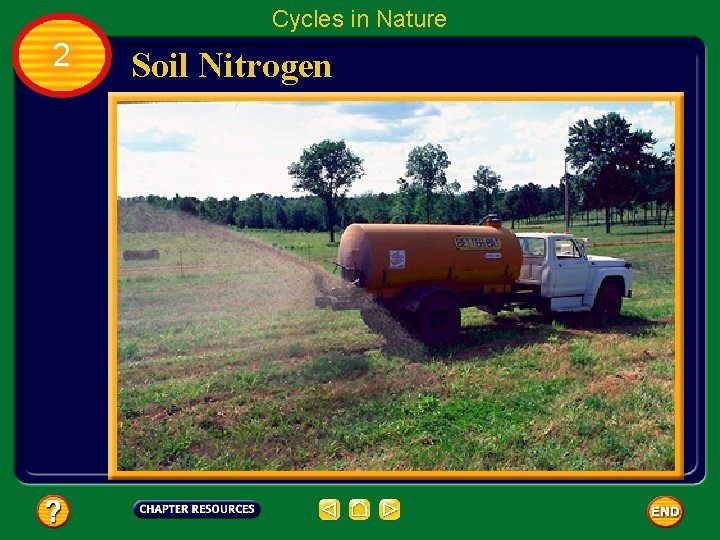
Cycles in Nature 2 Soil Nitrogen
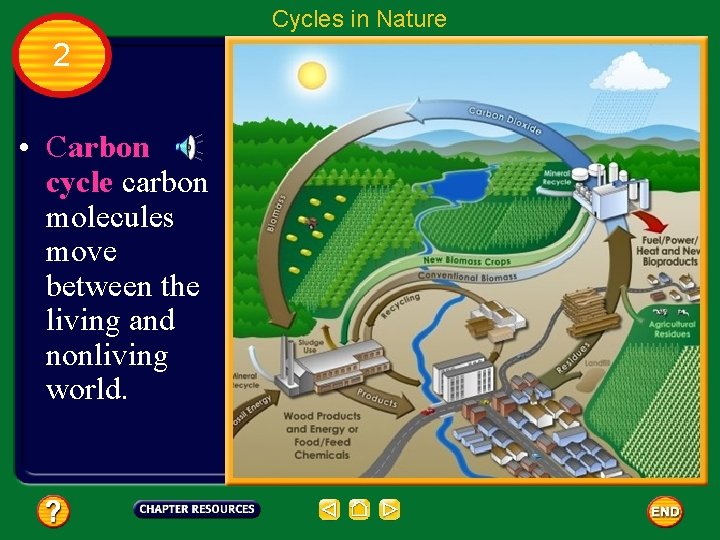
Cycles in Nature 2 • Carbon cycle carbon molecules move between the living and nonliving world.
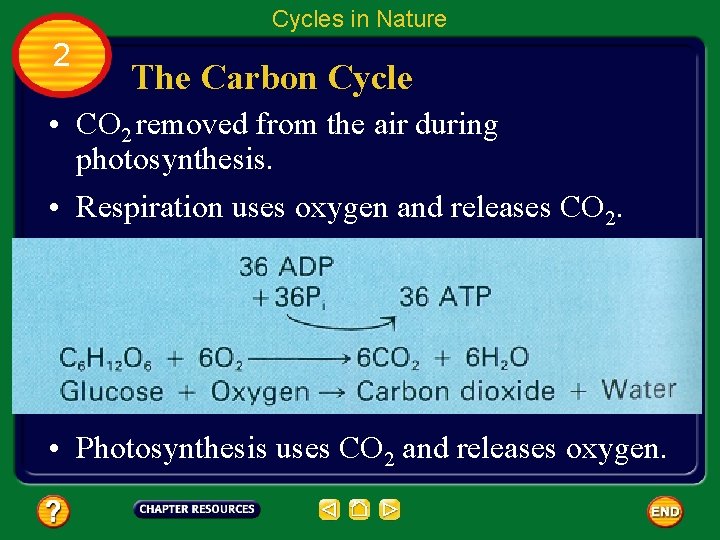
Cycles in Nature 2 The Carbon Cycle • CO 2 removed from the air during photosynthesis. • Respiration uses oxygen and releases CO 2. • Photosynthesis uses CO 2 and releases oxygen.
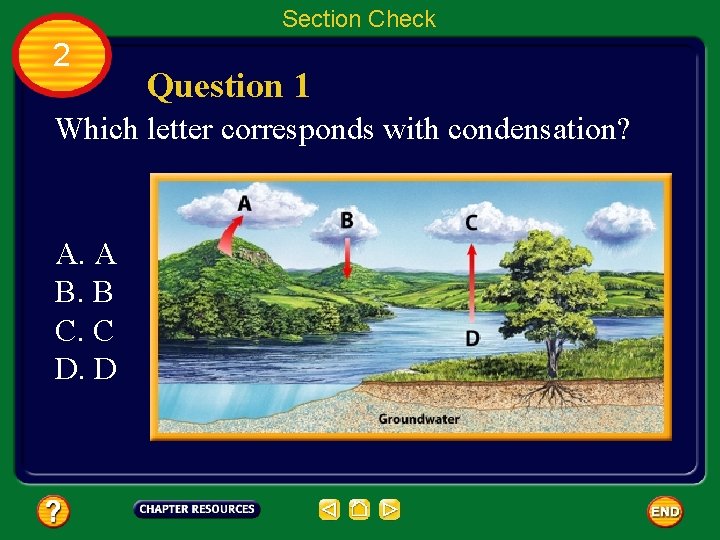
Section Check 2 Question 1 Which letter corresponds with condensation? A. A B. B C. C D. D
Section Check 2 Answer The answer is C. Condensation is the process of changing from a gas to a liquid.
Section Check 2 Question 2 _______ is the process by which certain soil bacteria transform nitrogen into the usable nitrogen compounds plants need. A. nitrogen cycle B. nitrogen elimination C. nitrogen fixation D. nitrogenation
Section Check 2 Answer The answer is C. The nitrogen cycle is the transfer of nitrogen from the atmosphere to the soil to living organisms, and back to the atmosphere.
Section Check 2 Question 3 Which is NOT a means of replacing nitrogen compounds in soil? A. animal manure B. compost C. fertilizers D. planting crops such as corn or wheat
Section Check 2 Answer The answer is D. When crops such as wheat and corn are planted, most of the plant is removed when it is harvested. The plants are not left in the field to decay and return their nitrogen compounds to the soil.
Energy Flow 3 Converting Energy • Matter - recycled • Energy - NOT recycled • converted from one form to another • Photosynthesis - light energy converted into chemical energy
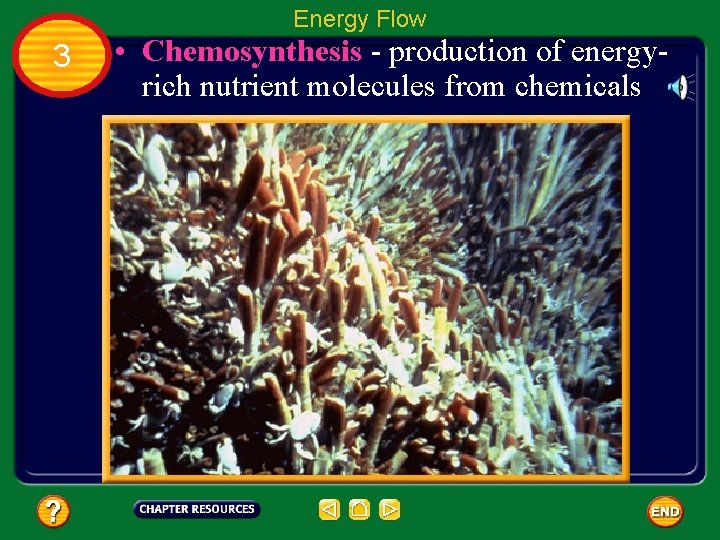
Energy Flow 3 • Chemosynthesis - production of energyrich nutrient molecules from chemicals
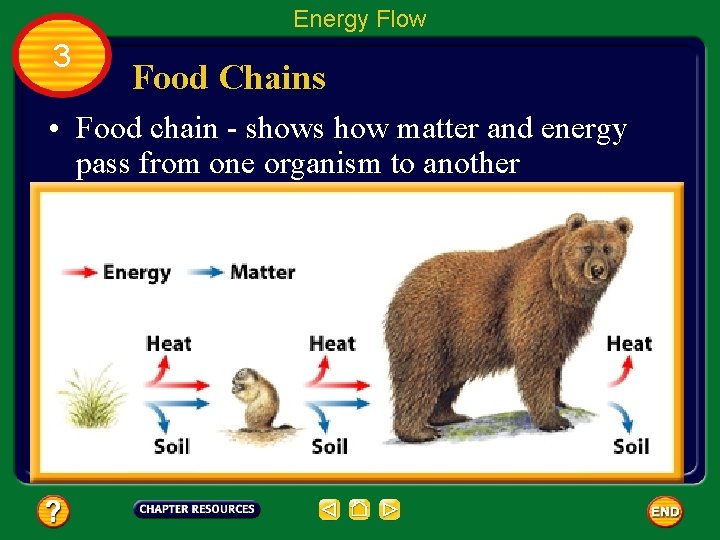
Energy Flow 3 Food Chains • Food chain - shows how matter and energy pass from one organism to another
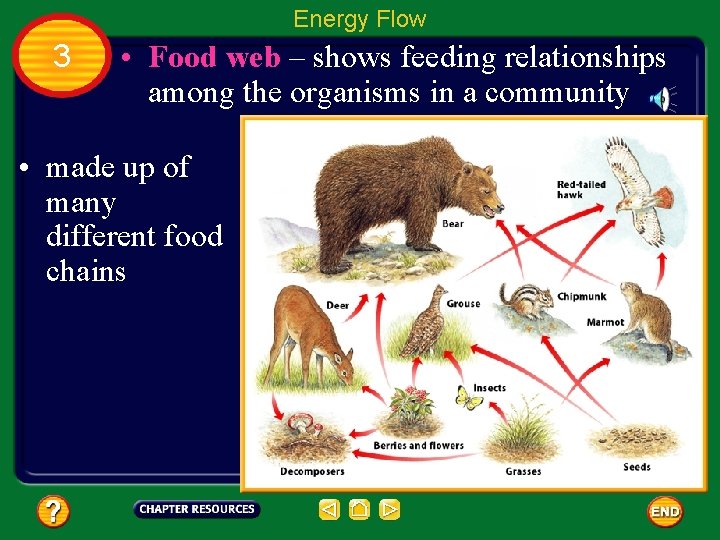
Energy Flow 3 • Food web – shows feeding relationships among the organisms in a community • made up of many different food chains
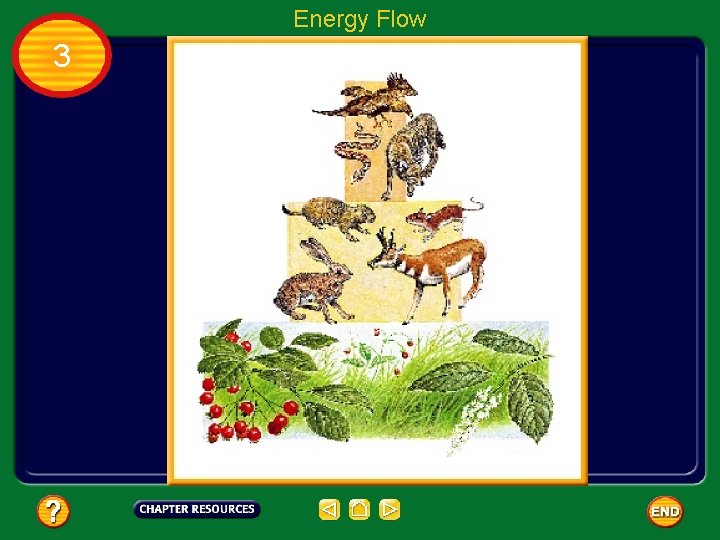
Energy Flow 3 Energy Pyramids • Available energy - reduced as you move from one level to the next in a food chain • Energy used for: respiration, digestion, life processes (most given off as heat)
Energy Flow 3
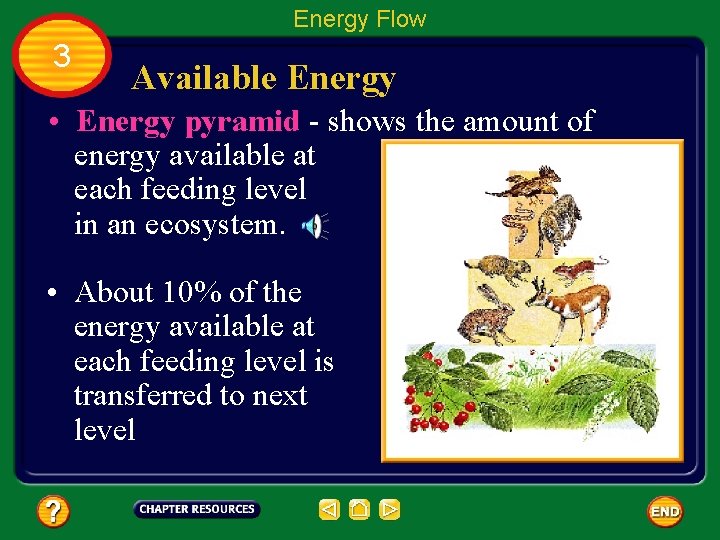
Energy Flow 3 Available Energy • Energy pyramid - shows the amount of energy available at each feeding level in an ecosystem. • About 10% of the energy available at each feeding level is transferred to next level
Section Check 3 Question 1 All living things are made of _______. Answer The answer is matter. Matter can be recycled over and over again.
Section Check 3 Question 2 The production of energy-rich nutrient molecules from chemicals is called _______. Answer The answer is chemosynthesis. Consumers living in hydrothermal vent communities rely on chemosynthetic bacteria for nutrients and energy.
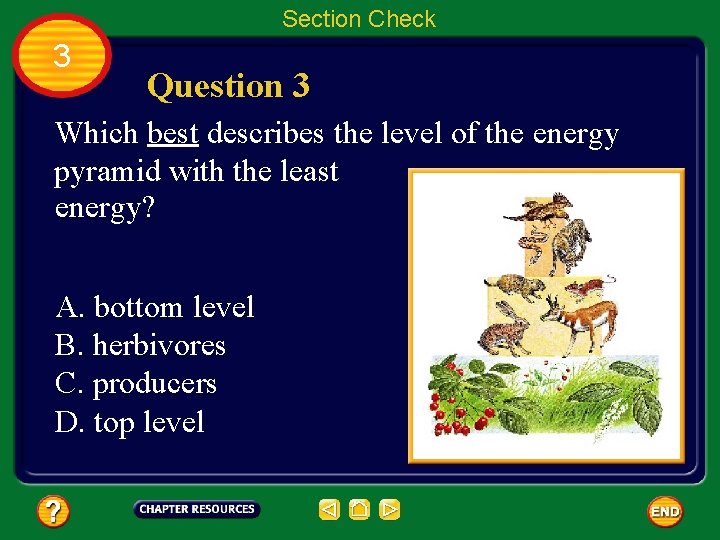
Section Check 3 Question 3 Which best describes the level of the energy pyramid with the least energy? A. bottom level B. herbivores C. producers D. top level
Section Check 3 Answer The answer is D. As you move up the pyramid, the transfer of energy is less efficient and each level becomes smaller. Carnivores are at the top level of the pyramid.
Help To advance to the next item or next page click on any of the following keys: mouse, space bar, enter, down or forward arrow. Click on this icon to return to the table of contents Click on this icon to return to the previous slide Click on this icon to move to the next slide Click on this icon to open the resources file. Click on this icon to go to the end of the presentation.
End of Chapter Summary File
- Slides: 53