
Tablature Notation The earliest known printed example of
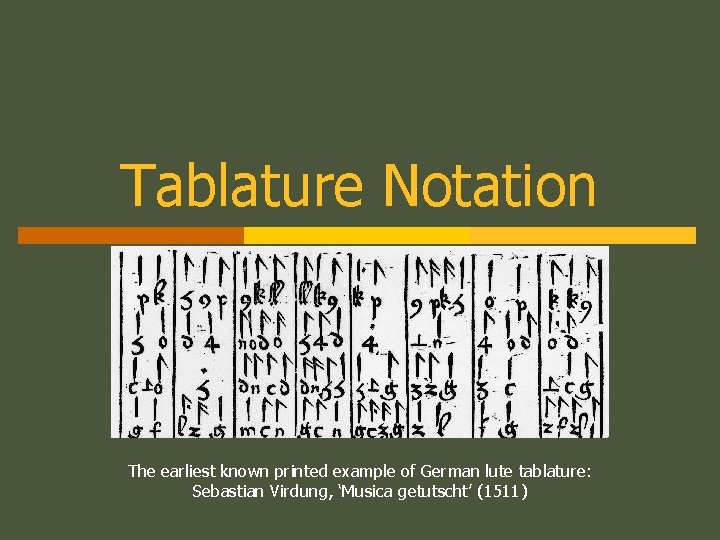
Tablature Notation The earliest known printed example of German lute tablature: Sebastian Virdung, ‘Musica getutscht’ (1511)
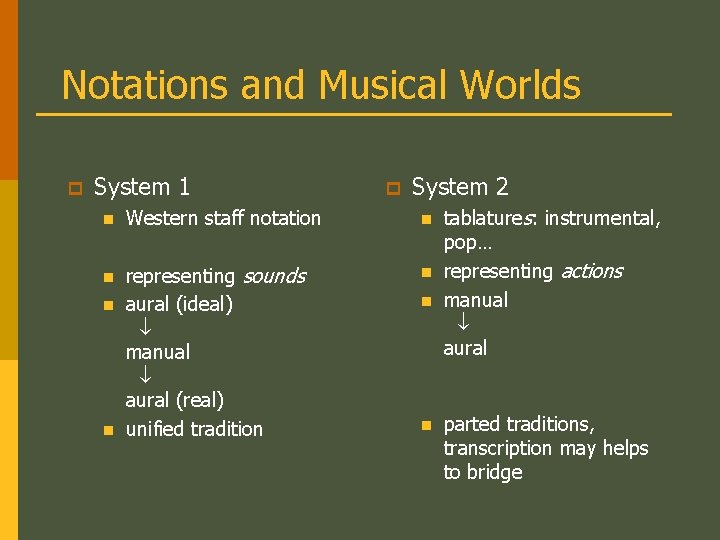
Notations and Musical Worlds p System 1 p System 2 n Western staff notation n n representing sounds aural (ideal) manual aural (real) unified tradition n n tablatures: instrumental, pop… representing actions manual aural parted traditions, transcription may helps to bridge

Tablature Notation from Latin tabula, table, score; It. intavolatura, Ger. Tabulatur p use 2 systems of letters, numerals, diagrams or signs to indicate playing actions that produce the desired pitch and rhythm p used since the early 14 th c. mainly for organ and lute, and also for folk instruments—easy to learn p
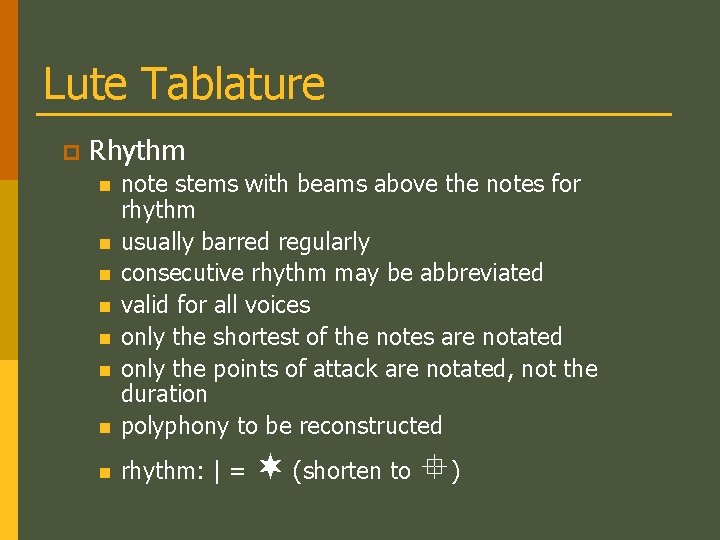
Lute Tablature p Rhythm n note stems with beams above the notes for rhythm usually barred regularly consecutive rhythm may be abbreviated valid for all voices only the shortest of the notes are notated only the points of attack are notated, not the duration polyphony to be reconstructed n rhythm: | = n n n (shorten to )
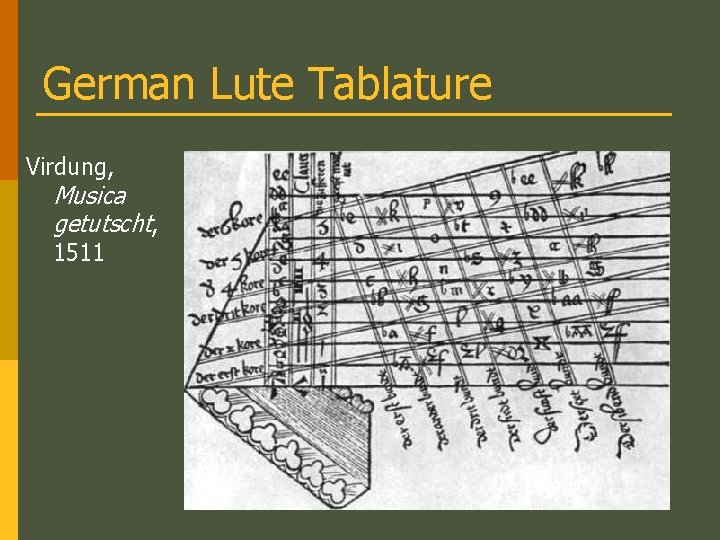
German Lute Tablature Virdung, Musica getutscht, 1511

German Lute Tablature invented in 15 th c. for 5 -course (string) lute p usual 16 th-c. tuning: 4 -4 -3 -4 -4 in A p
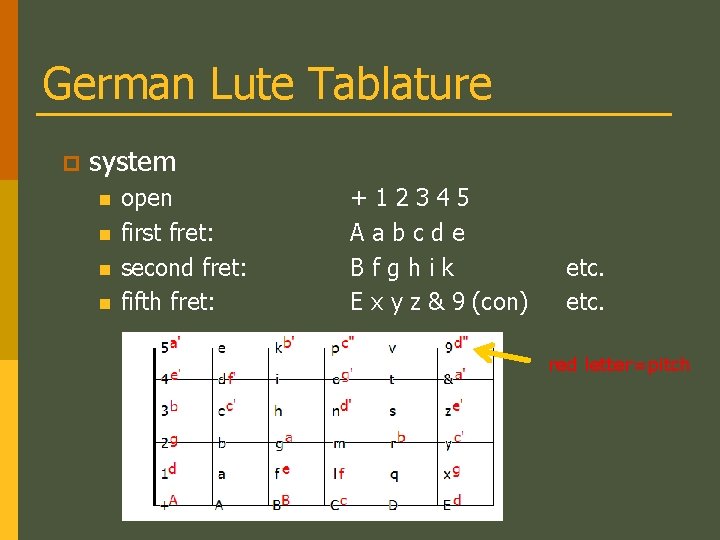
German Lute Tablature p system n n open first fret: second fret: fifth fret: +12345 Aabcde Bfghik E x y z & 9 (con) etc. red letter=pitch
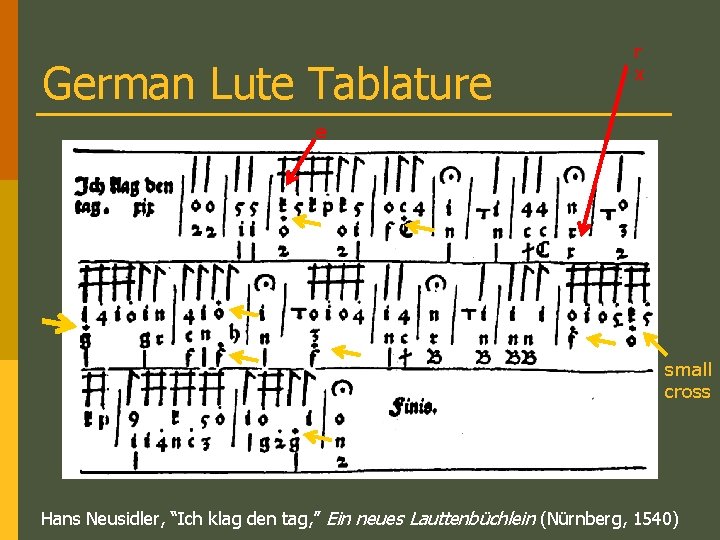
German Lute Tablature r x e small cross Hans Neusidler, “Ich klag den tag, ” Ein neues Lauttenbüchlein (Nürnberg, 1540)
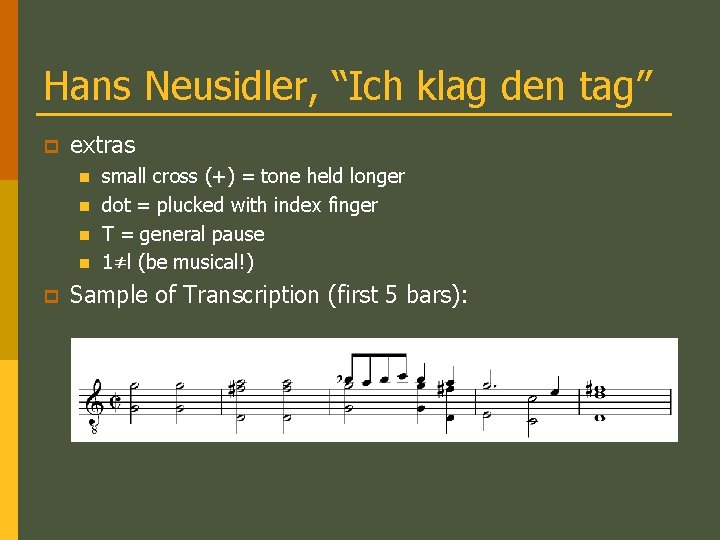
Hans Neusidler, “Ich klag den tag” p extras n n p small cross (+) = tone held longer dot = plucked with index finger T = general pause 1≠l (be musical!) Sample of Transcription (first 5 bars):

Transcription: Steps meter, key p function: for music or for playing p voice-leading p number of staff p transposition p
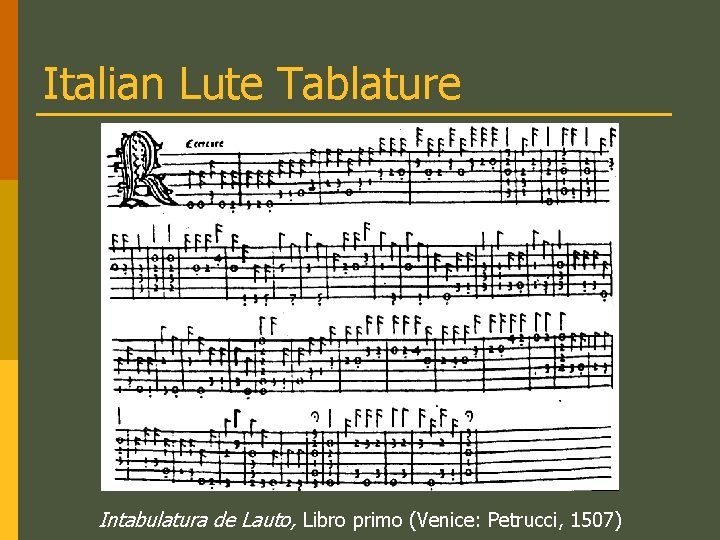
Italian Lute Tablature Intabulatura de Lauto, Libro primo (Venice: Petrucci, 1507)
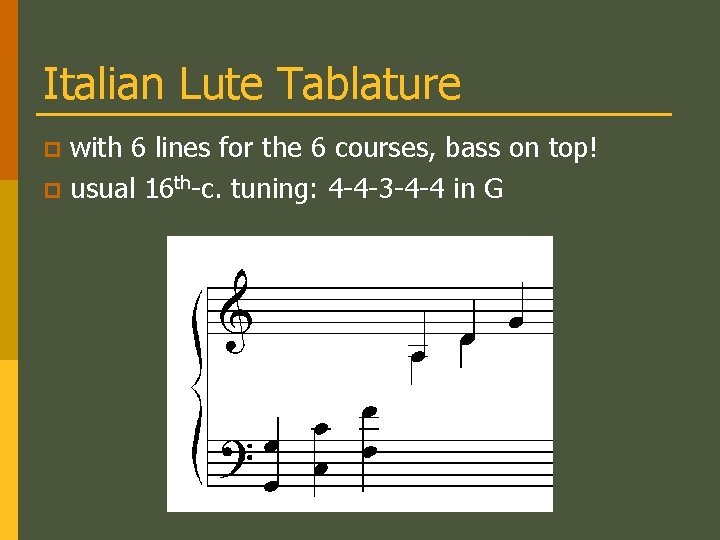
Italian Lute Tablature with 6 lines for the 6 courses, bass on top! p usual 16 th-c. tuning: 4 -4 -3 -4 -4 in G p
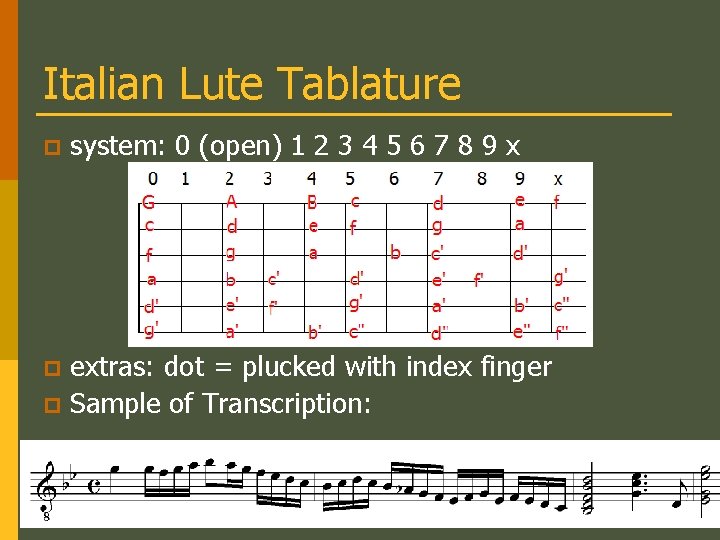
Italian Lute Tablature p system: 0 (open) 1 2 3 4 5 6 7 8 9 x extras: dot = plucked with index finger p Sample of Transcription: p
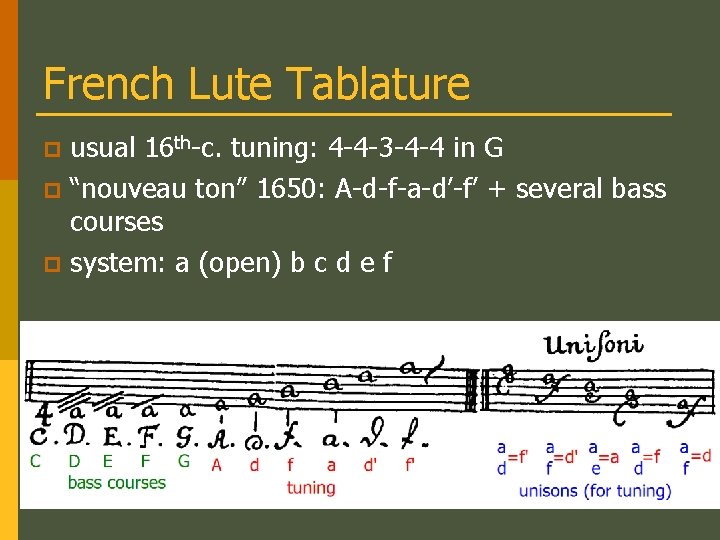
French Lute Tablature usual 16 th-c. tuning: 4 -4 -3 -4 -4 in G p “nouveau ton” 1650: A-d-f-a-d’-f’ + several bass courses p system: a (open) b c d e f p
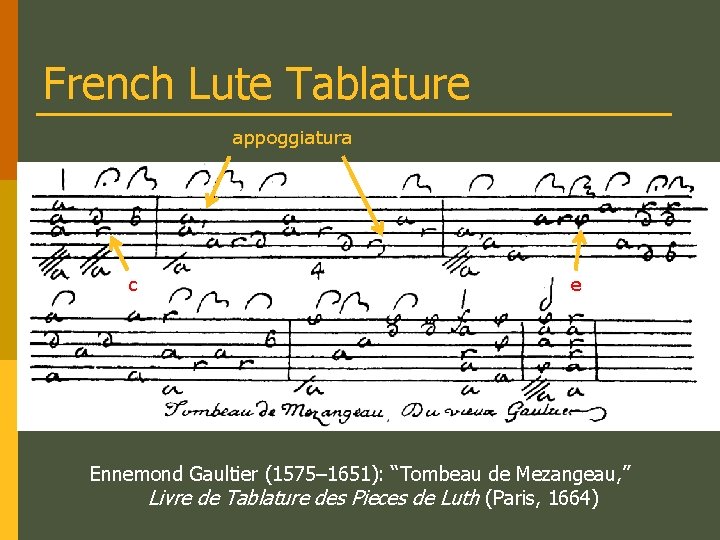
French Lute Tablature appoggiatura c e Ennemond Gaultier (1575– 1651): “Tombeau de Mezangeau, ” Livre de Tablature des Pieces de Luth (Paris, 1664)

French Lute Tablature: Sample of Transcription
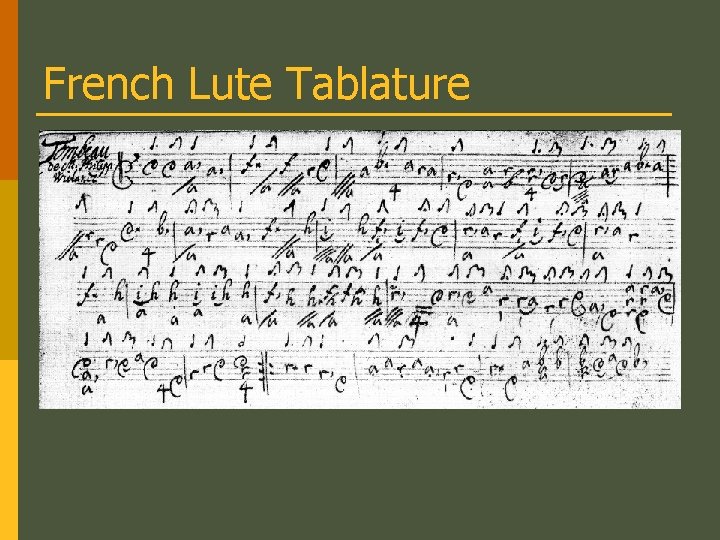
French Lute Tablature
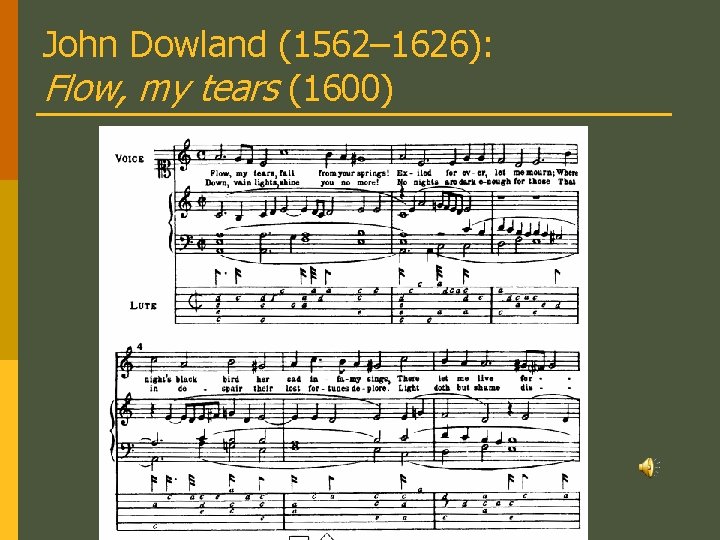
John Dowland (1562– 1626): Flow, my tears (1600)
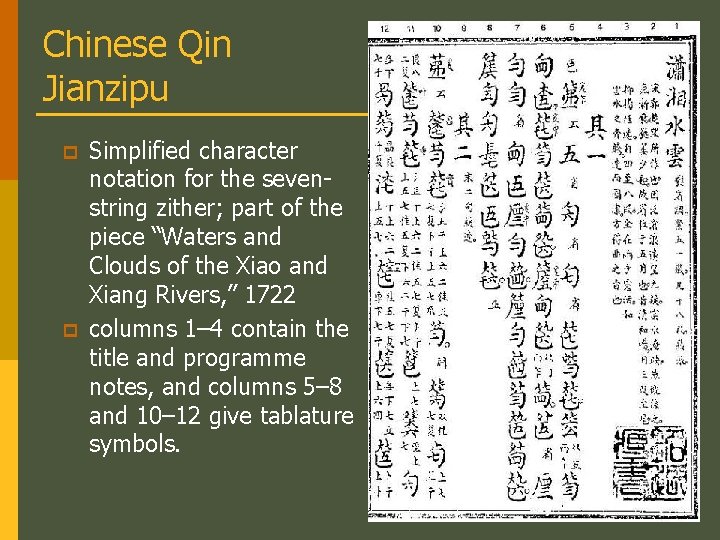
Chinese Qin Jianzipu p p Simplified character notation for the sevenstring zither; part of the piece “Waters and Clouds of the Xiao and Xiang Rivers, ” 1722 columns 1– 4 contain the title and programme notes, and columns 5– 8 and 10– 12 give tablature symbols.
- Slides: 19