
TA FORM Created by Inge Foley What is

TA FORM Created by Inge Foley
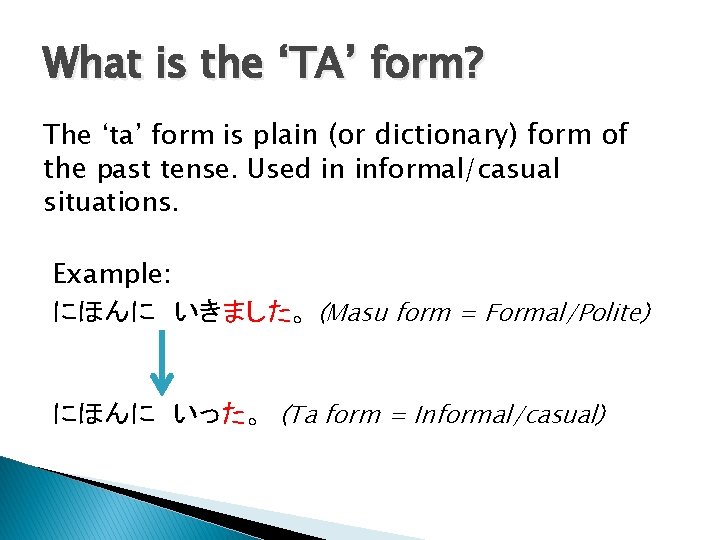
What is the ‘TA’ form? The ‘ta’ form is plain (or dictionary) form of the past tense. Used in informal/casual situations. Example: にほんに いきました。 (Masu form = Formal/Polite) にほんに いった。 (Ta form = Informal/casual)
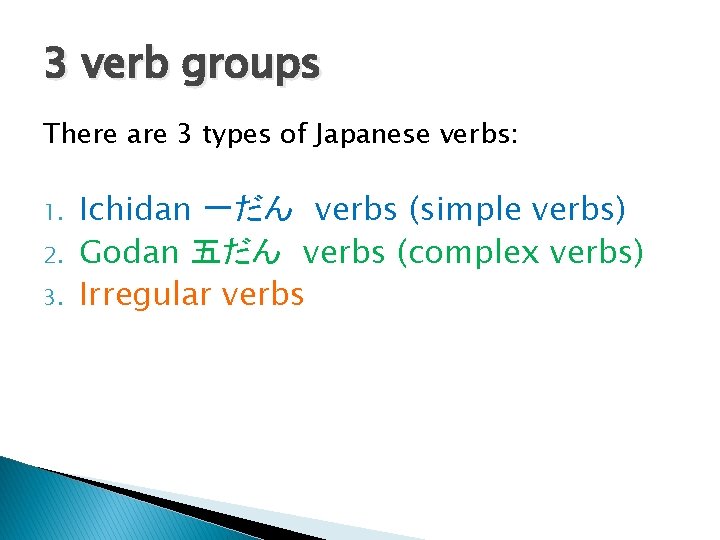
3 verb groups There are 3 types of Japanese verbs: 1. 2. 3. Ichidan 一だん verbs (simple verbs) Godan 五だん verbs (complex verbs) Irregular verbs


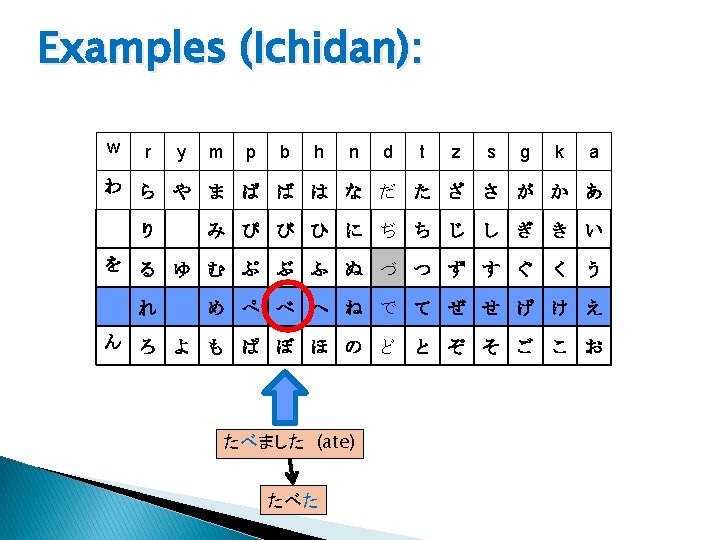
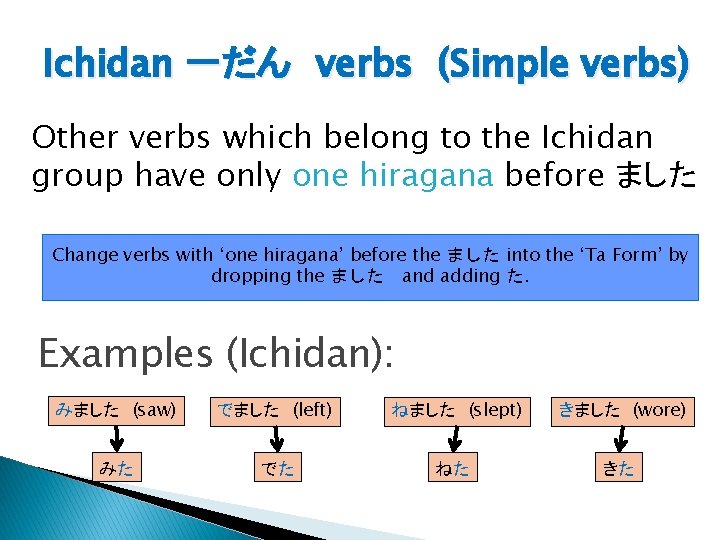
Ichidan 一だん verbs (Simple verbs) Other verbs which belong to the Ichidan group have only one hiragana before ました Change verbs with ‘one hiragana’ before the ました into the ‘Ta Form’ by dropping the ました and adding た. Examples (Ichidan): みました (saw) でました (left) ねました (slept) きました (wore) みた でた ねた きた
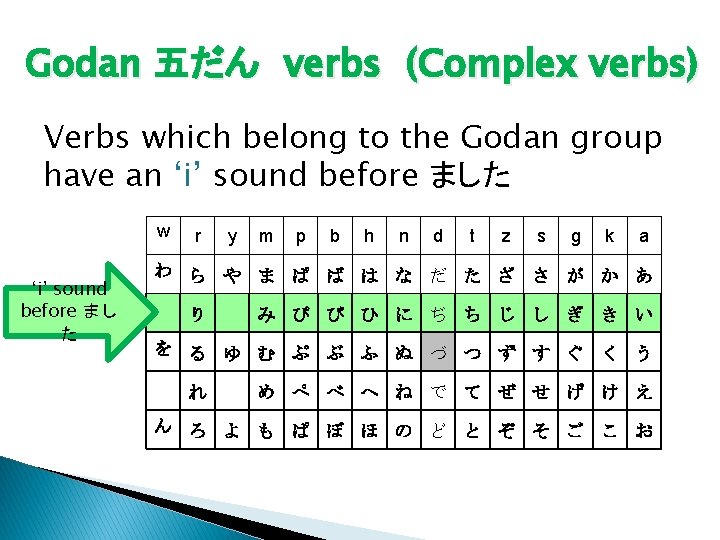


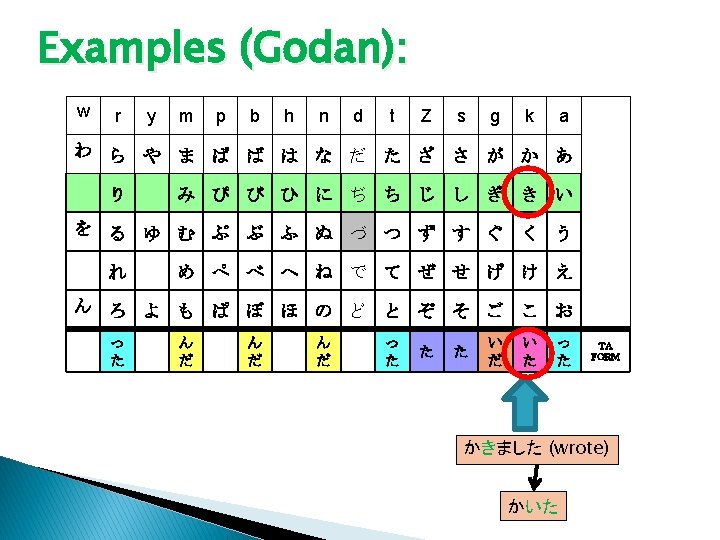
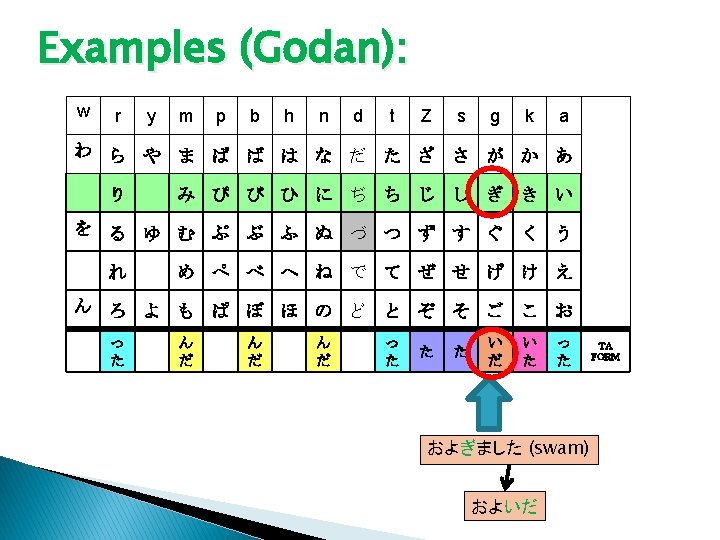
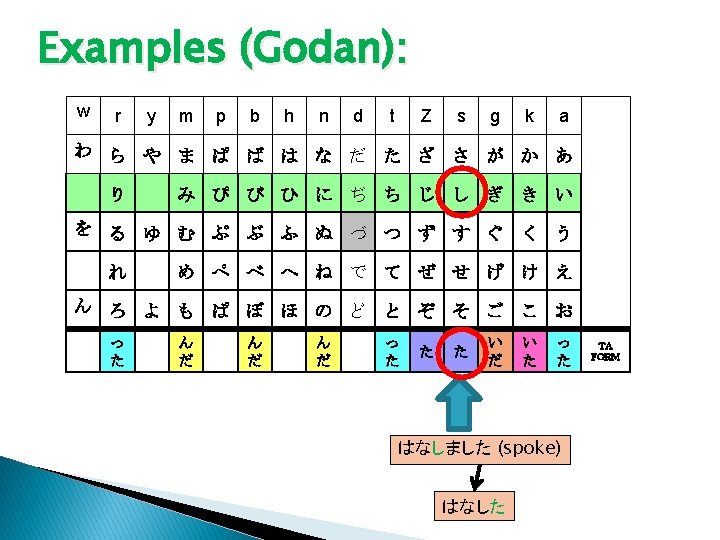
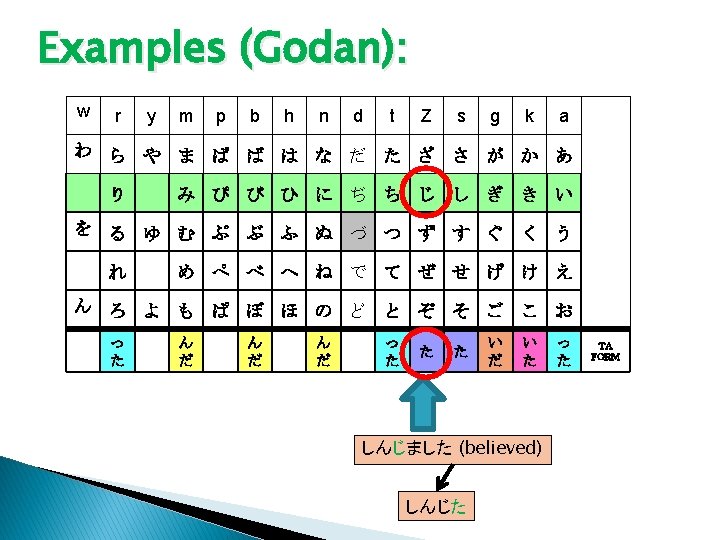
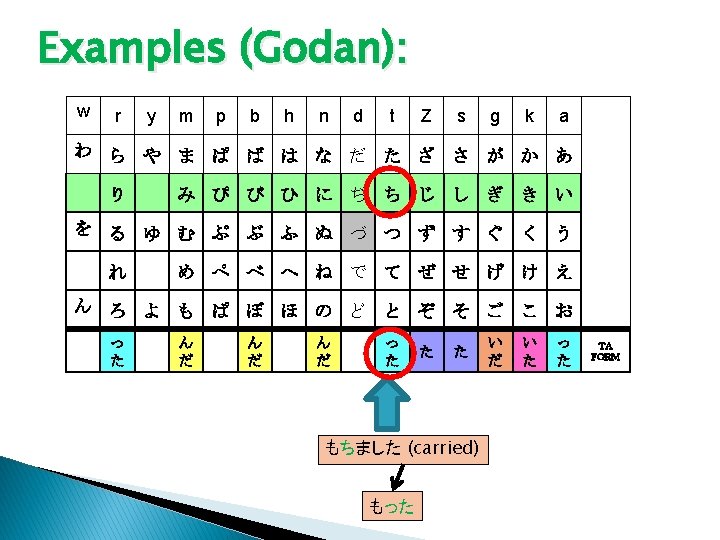
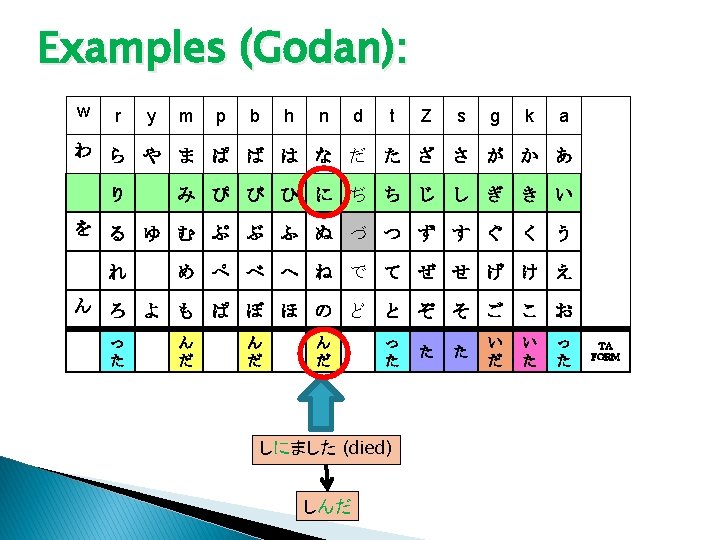
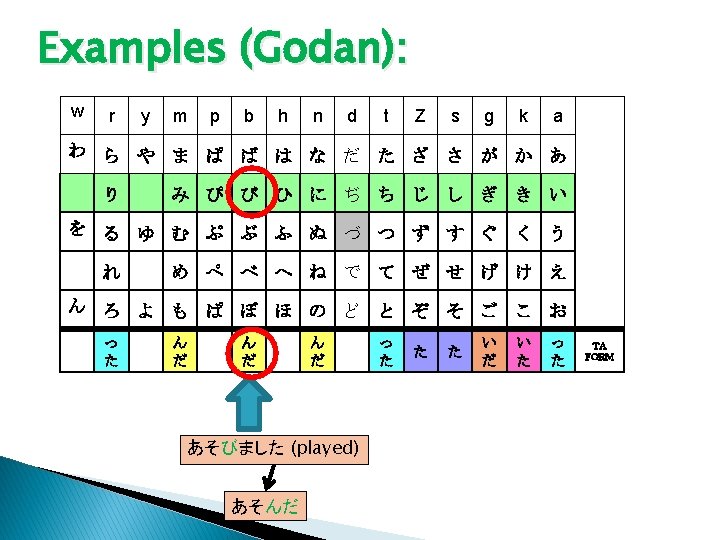
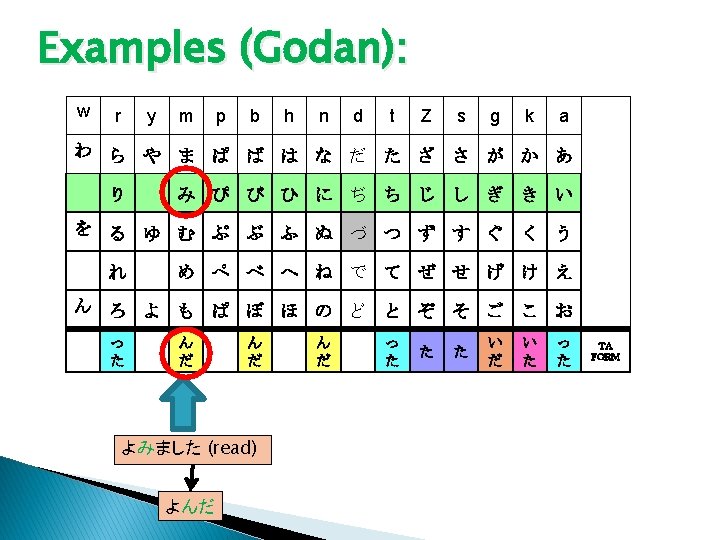
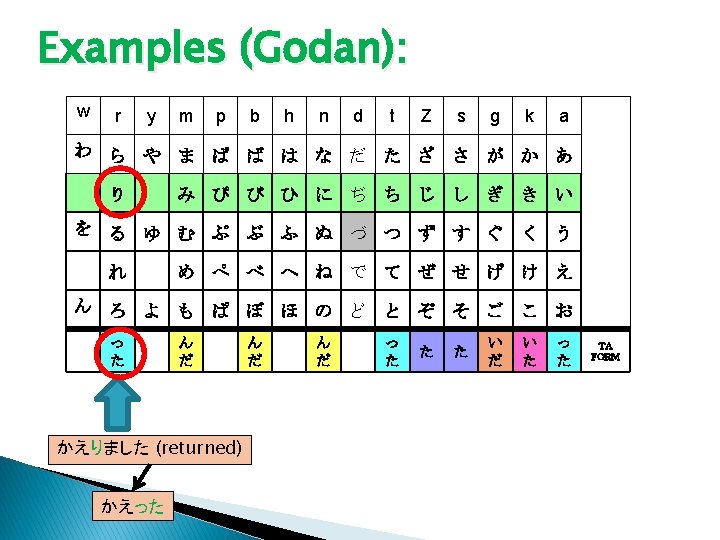
IRREGULAR - しました きました いきました and some exceptions
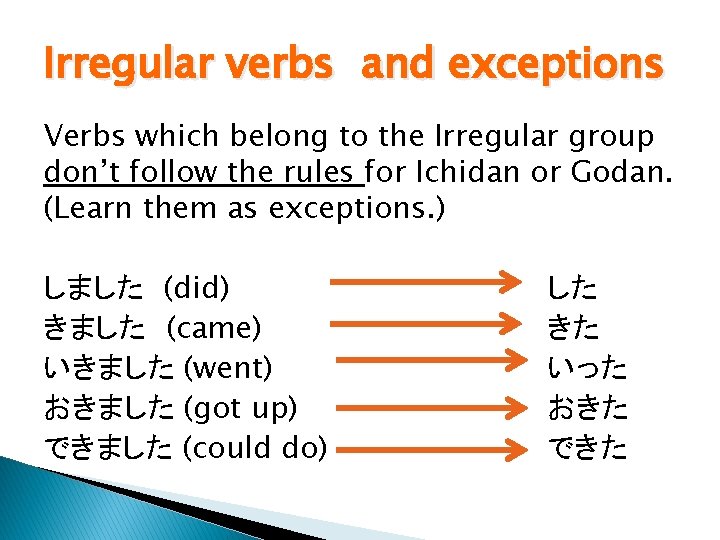
Irregular verbs and exceptions Verbs which belong to the Irregular group don’t follow the rules for Ichidan or Godan. (Learn them as exceptions. ) しました (did) きました (came) いきました (went) おきました (got up) できました (could do) した きた いった おきた できた
Ta Form Rule Summary
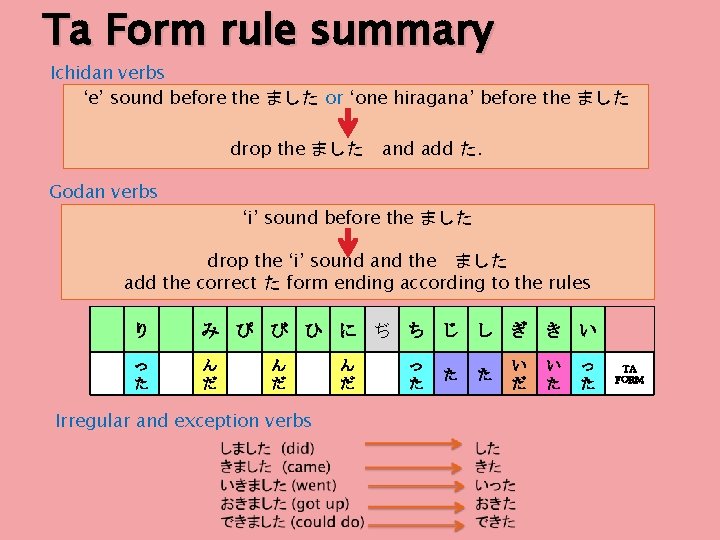
Ta Form rule summary Ichidan verbs ‘e’ sound before the ました or ‘one hiragana’ before the ました drop the ました and add た. Godan verbs ‘i’ sound before the ました drop the ‘i’ sound and the ました add the correct た form ending according to the rules り み ぴ び ひ に ぢ ち じ し ぎ き い っ た ん だ っ た た た い だ い た っ た ん だ Irregular and exception verbs ん だ TA FORM
Practise
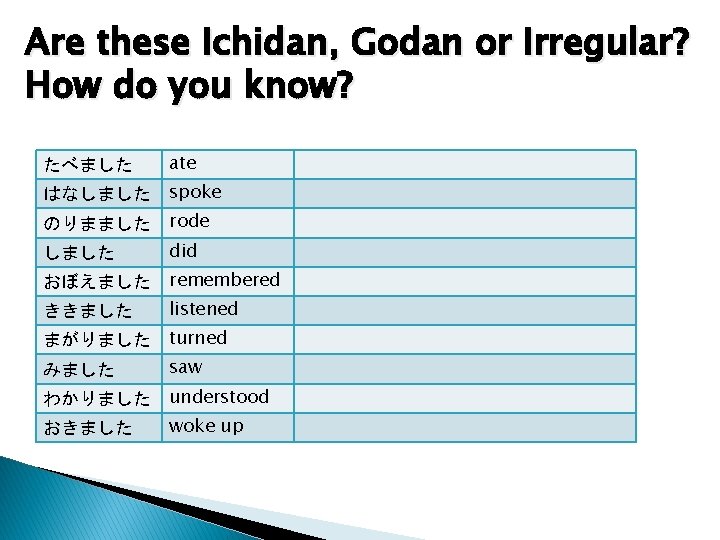
Are these Ichidan, Godan or Irregular? How do you know? たべました ate はなしました spoke のりまました rode しました did おぼえました remembered ききました listened まがりました turned みました saw わかりました understood おきました woke up
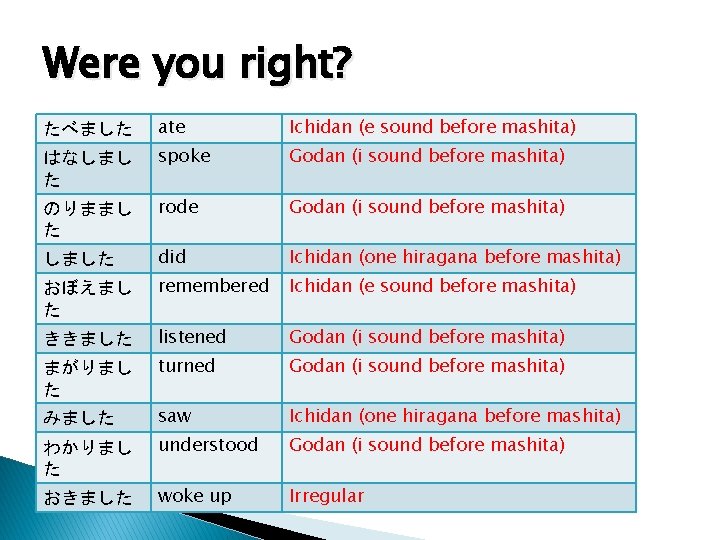
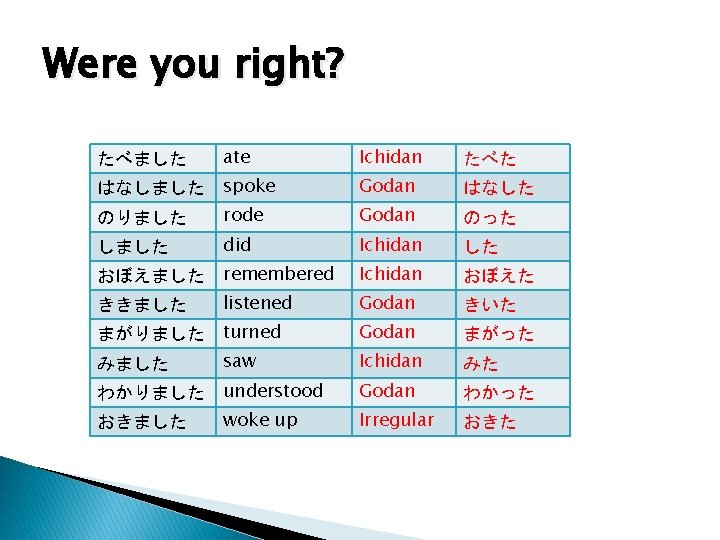
Were you right? たべました ate Ichidan (e sound before mashita) はなしまし た spoke Godan (i sound before mashita) のりままし た rode Godan (i sound before mashita) しました did Ichidan (one hiragana before mashita) おぼえまし た remembered Ichidan (e sound before mashita) ききました listened Godan (i sound before mashita) まがりまし た turned Godan (i sound before mashita) みました saw Ichidan (one hiragana before mashita) わかりまし た understood Godan (i sound before mashita) おきました woke up Irregular
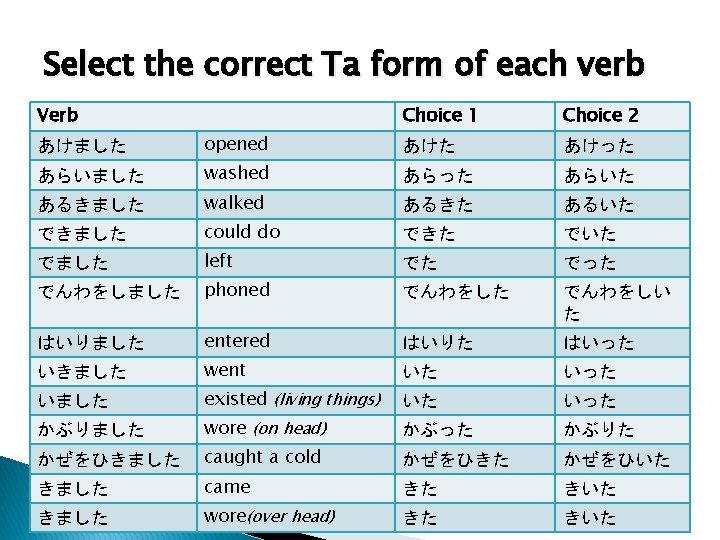

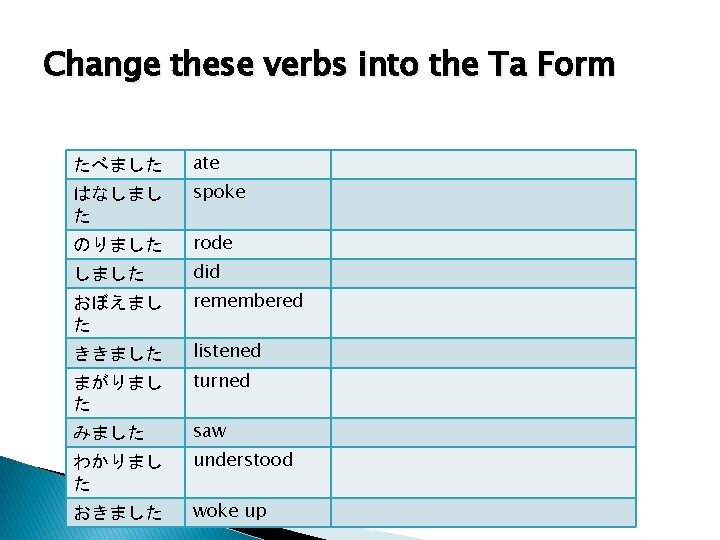
Change these verbs into the Ta Form たべました ate はなしまし た spoke のりました rode しました did おぼえまし た remembered ききました listened まがりまし た turned みました saw わかりまし た understood おきました woke up
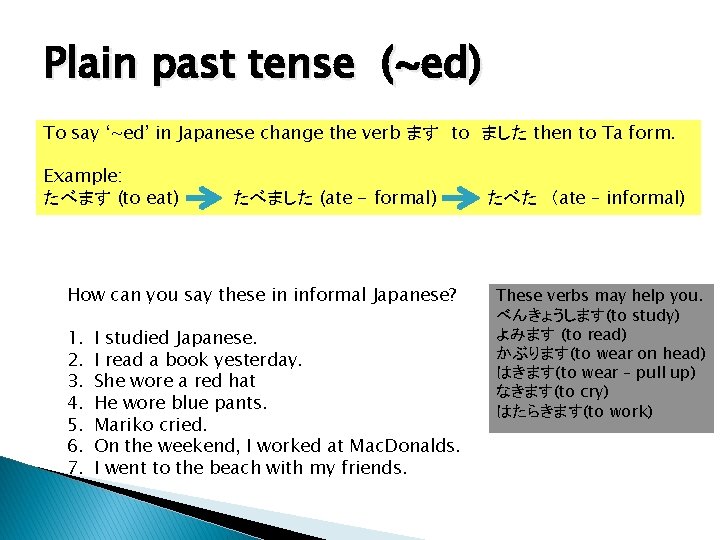
Plain past tense (~ed) To say ‘~ed’ in Japanese change the verb ます to ました then to Ta form. Example: たべます (to eat) たべました (ate - formal) How can you say these in informal Japanese? 1. 2. 3. 4. 5. 6. 7. I studied Japanese. I read a book yesterday. She wore a red hat He wore blue pants. Mariko cried. On the weekend, I worked at Mac. Donalds. I went to the beach with my friends. たべた (ate – informal) These verbs may help you. べんきょうします(to study) よみます (to read) かぶります(to wear on head) はきます(to wear – pull up) なきます(to cry) はたらきます(to work)
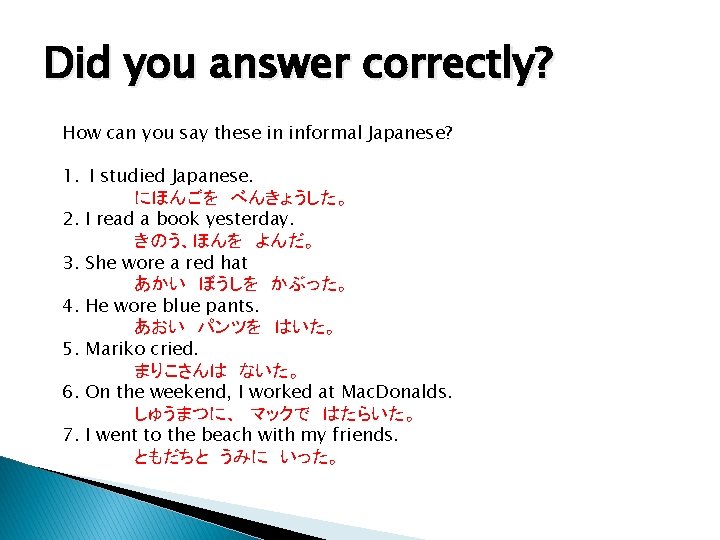
Did you answer correctly? How can you say these in informal Japanese? 1. I studied Japanese. にほんごを べんきょうした。 2. I read a book yesterday. きのう、ほんを よんだ。 3. She wore a red hat あかい ぼうしを かぶった。 4. He wore blue pants. あおい パンツを はいた。 5. Mariko cried. まりこさんは ないた。 6. On the weekend, I worked at Mac. Donalds. しゅうまつに、 マックで はたらいた。 7. I went to the beach with my friends. ともだちと うみに いった。
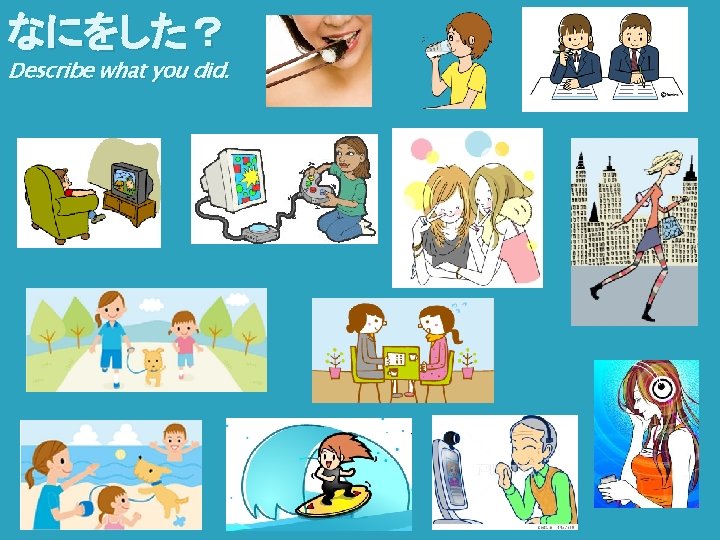
なにをした? Describe what you did.
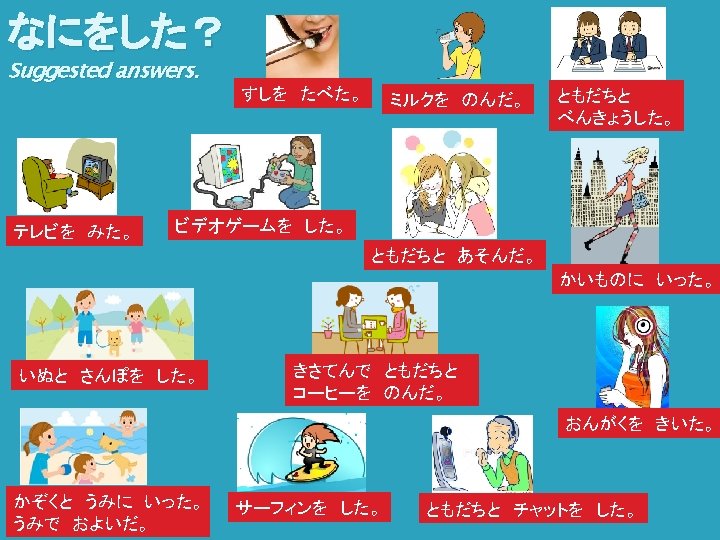
TA FORM Negatives
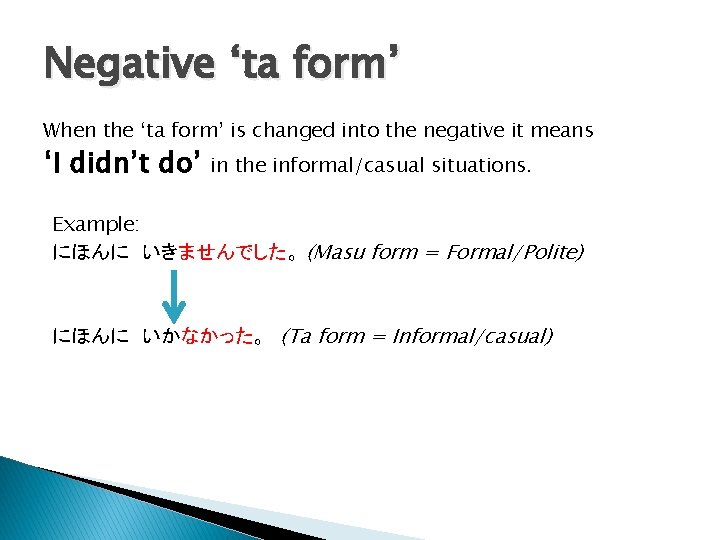
Negative ‘ta form’ When the ‘ta form’ is changed into the negative it means ‘I didn’t do’ in the informal/casual situations. Example: にほんに いきませんでした。 (Masu form = Formal/Polite) にほんに いかなかった。 (Ta form = Informal/casual)
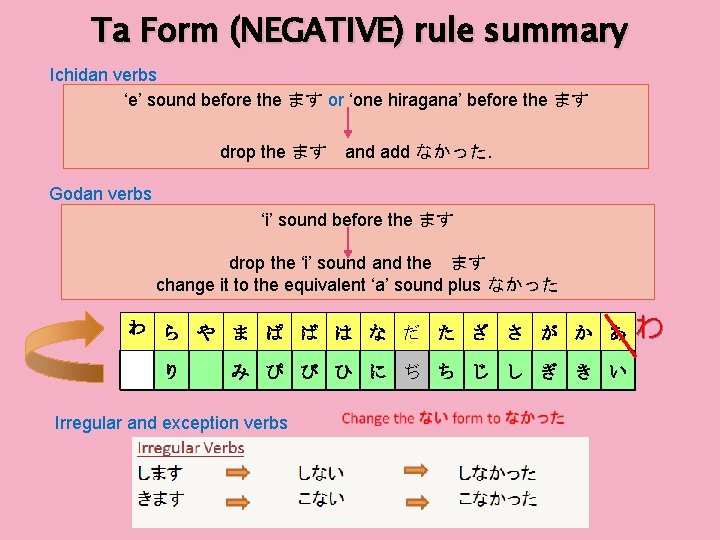
Ta Form (NEGATIVE) rule summary Ichidan verbs ‘e’ sound before the ます or ‘one hiragana’ before the ます drop the ます and add なかった. Godan verbs ‘i’ sound before the ます drop the ‘i’ sound and the ます change it to the equivalent ‘a’ sound plus なかった わ ら や ま ぱ ば は な だ た ざ さ が か あ り み ぴ び ひ に ぢ じ し ぎ Irregular and exception verbs ち き い わ
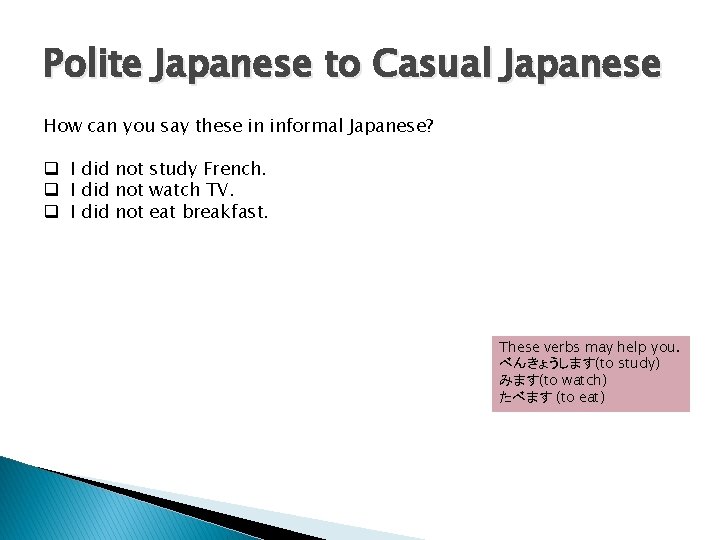
Polite Japanese to Casual Japanese How can you say these in informal Japanese? q I did not study French. q I did not watch TV. q I did not eat breakfast. These verbs may help you. べんきょうします(to study) みます(to watch) たべます (to eat)
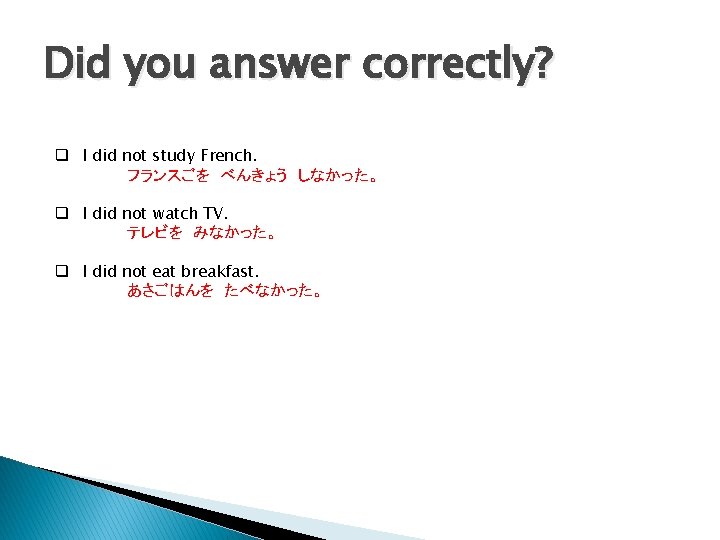
Did you answer correctly? q I did not study French. フランスごを べんきょう しなかった。 q I did not watch TV. テレビを みなかった。 q I did not eat breakfast. あさごはんを たべなかった。
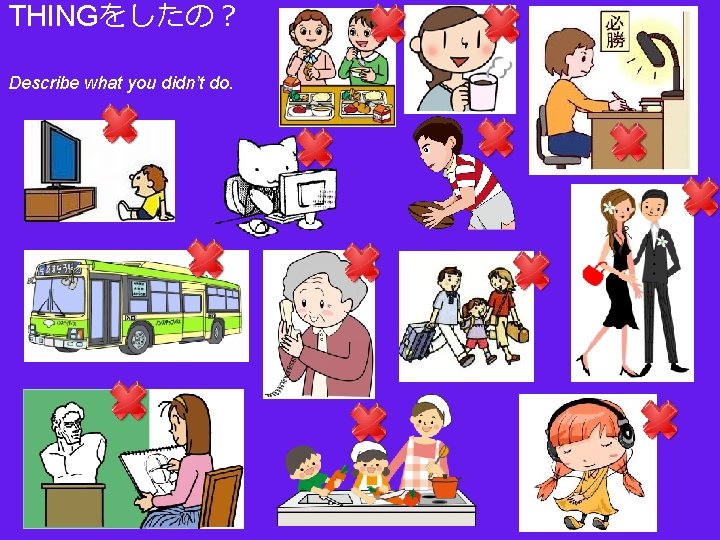
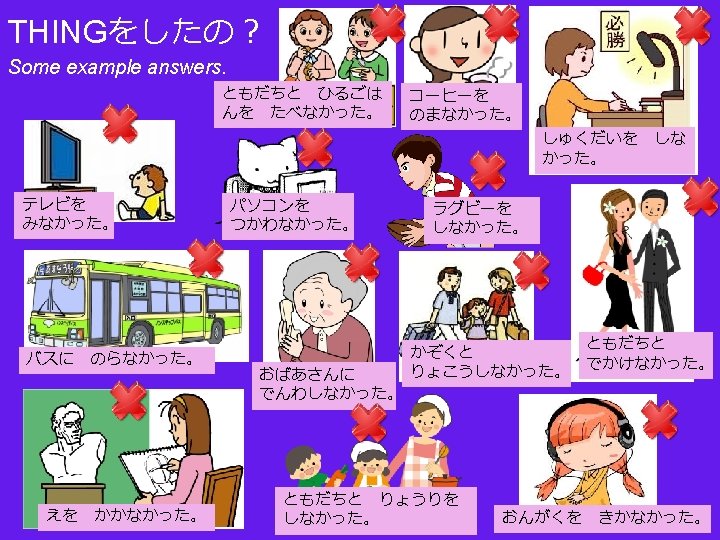
THINGをしたの? Describe what you didn’t do.
- Slides: 43