
T995 Muon DetectorTail Catcher RD Using Strip scintillator


- Slides: 26
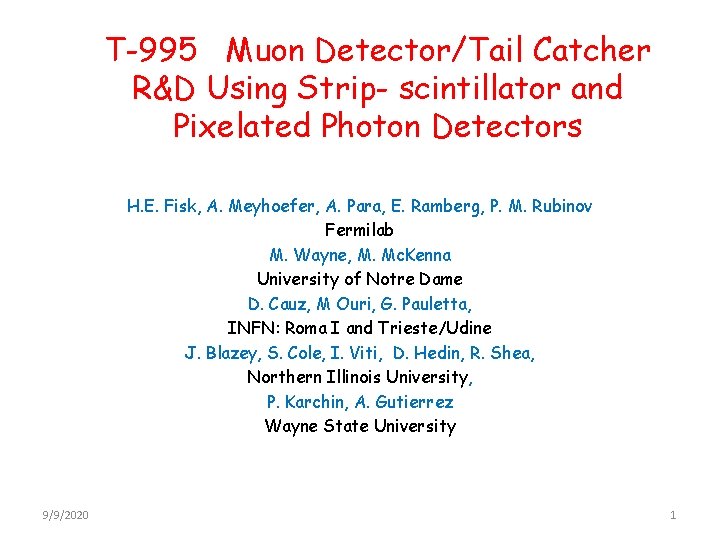
T-995 Muon Detector/Tail Catcher R&D Using Strip- scintillator and Pixelated Photon Detectors H. E. Fisk, A. Meyhoefer, A. Para, E. Ramberg, P. M. Rubinov Fermilab M. Wayne, M. Mc. Kenna University of Notre Dame D. Cauz, M Ouri, G. Pauletta, INFN: Roma I and Trieste/Udine J. Blazey, S. Cole, I. Viti, D. Hedin, R. Shea, Northern Illinois University, P. Karchin, A. Gutierrez Wayne State University 9/9/2020 1
Our Mascot On his way to MTest! 9/9/2020 2
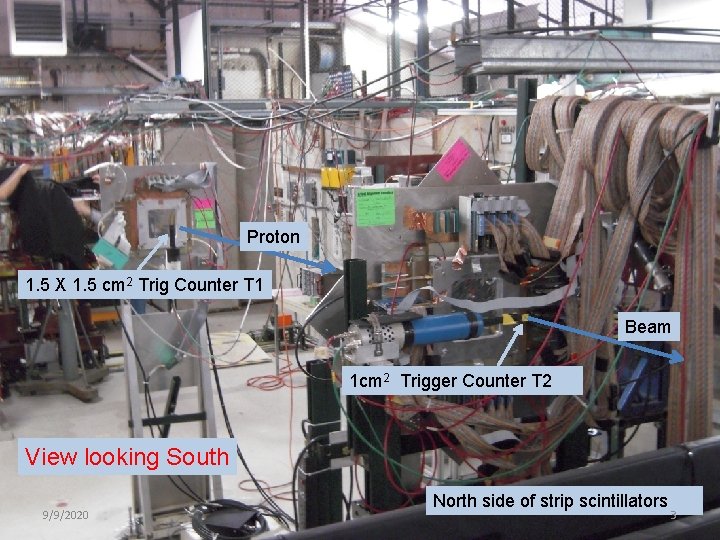
Proton 1. 5 X 1. 5 cm 2 Trig Counter T 1 Beam 1 cm 2 Trigger Counter T 2 View looking South 9/9/2020 North side of strip scintillators 3
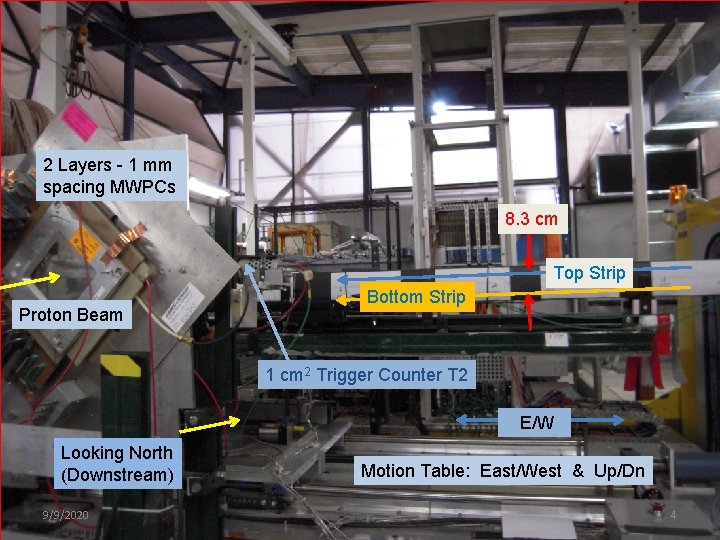
2 Layers - 1 mm spacing MWPCs 8. 3 cm Top Strip Proton Beam Bottom Strip 1 cm 2 Trigger Counter T 2 E/W Looking North (Downstream) 9/9/2020 Motion Table: East/West & Up/Dn 4
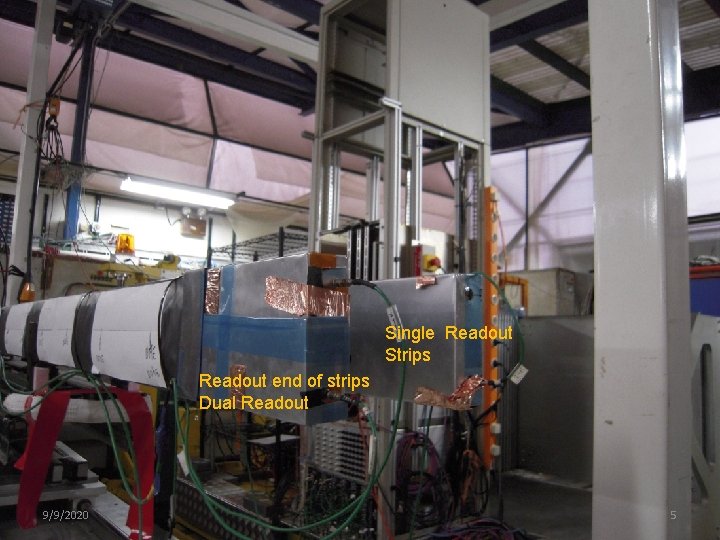
Single Readout Strips Readout end of strips Dual Readout 9/9/2020 5
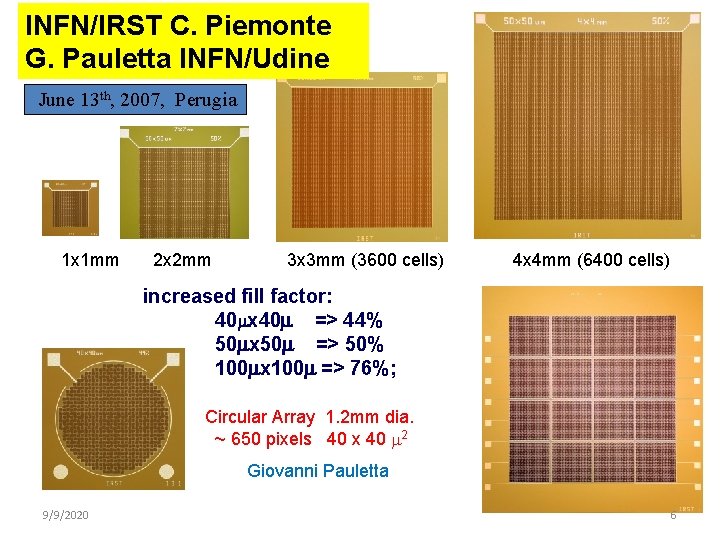
INFN/IRST C. Piemonte G. Pauletta INFN/Udine June 13 th, 2007, Perugia 1 x 1 mm 2 x 2 mm 3 x 3 mm (3600 cells) 4 x 4 mm (6400 cells) increased fill factor: 40 mx 40 m => 44% 50 mx 50 m => 50% 100 mx 100 m => 76%; Circular Array 1. 2 mm dia. ~ 650 pixels 40 x 40 m 2 Giovanni Pauletta 9/9/2020 6
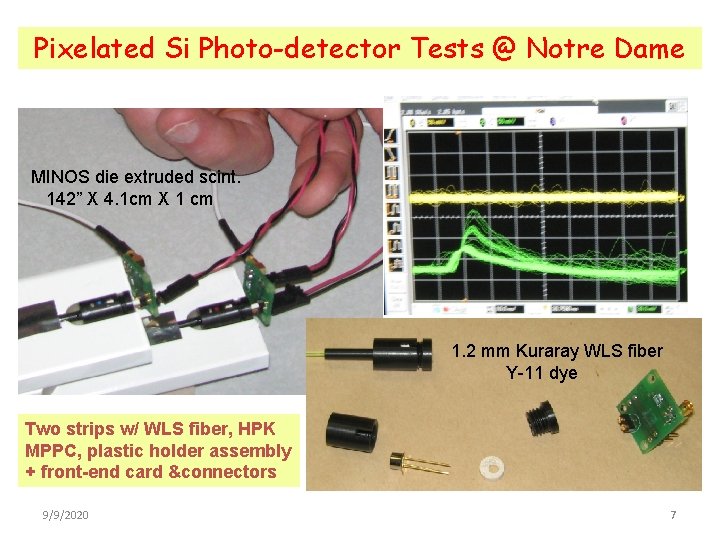
Pixelated Si Photo-detector Tests @ Notre Dame MINOS die extruded scint. 142” X 4. 1 cm X 1 cm 1. 2 mm Kuraray WLS fiber FE Card Y-11 dye Two strips w/ WLS fiber, HPK MPPC, plastic holder assembly + front-end card &connectors 9/9/2020 MPPC 28 May 2008 7
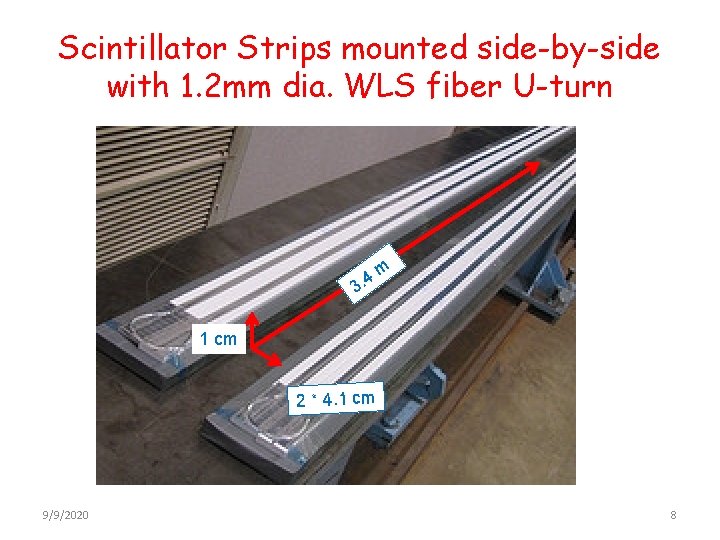
Scintillator Strips mounted side-by-side with 1. 2 mm dia. WLS fiber U-turn 3. 4 m 1 cm 2 * 4. 1 cm 9/9/2020 8
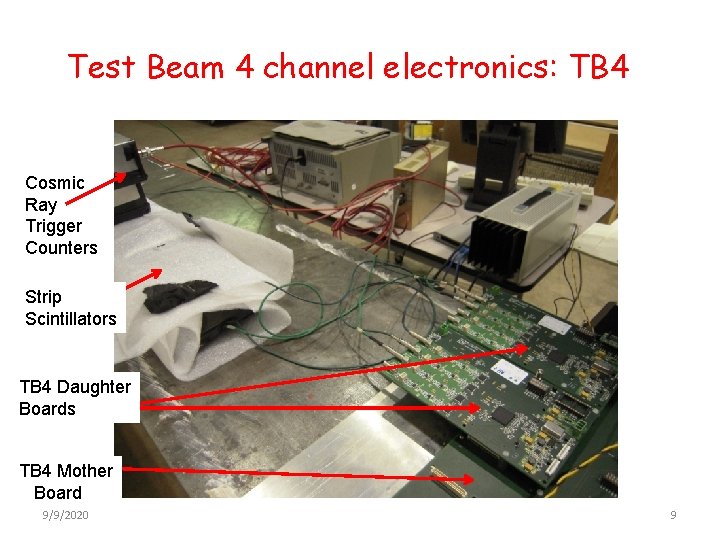
Test Beam 4 channel electronics: TB 4 Cosmic Ray Trigger Counters Strip Scintillators TB 4 Daughter Boards TB 4 Mother Board 9/9/2020 9
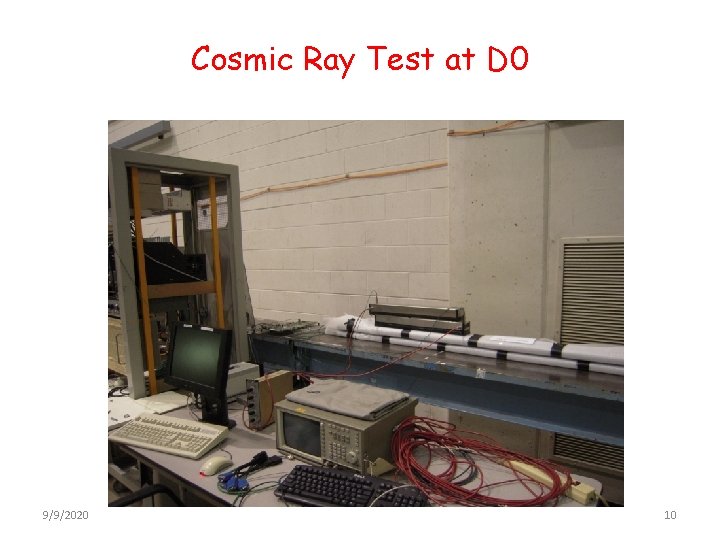
Cosmic Ray Test at D 0 9/9/2020 10
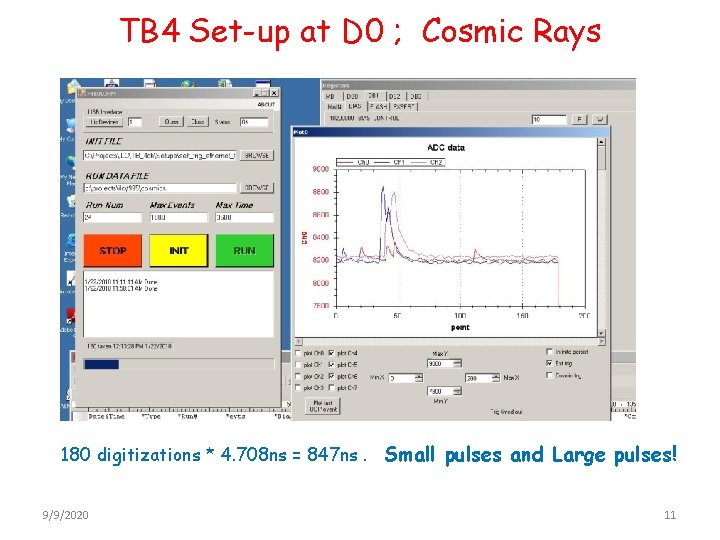
TB 4 Set-up at D 0 ; Cosmic Rays 180 digitizations * 4. 708 ns = 847 ns. Small pulses and Large pulses! 9/9/2020 11
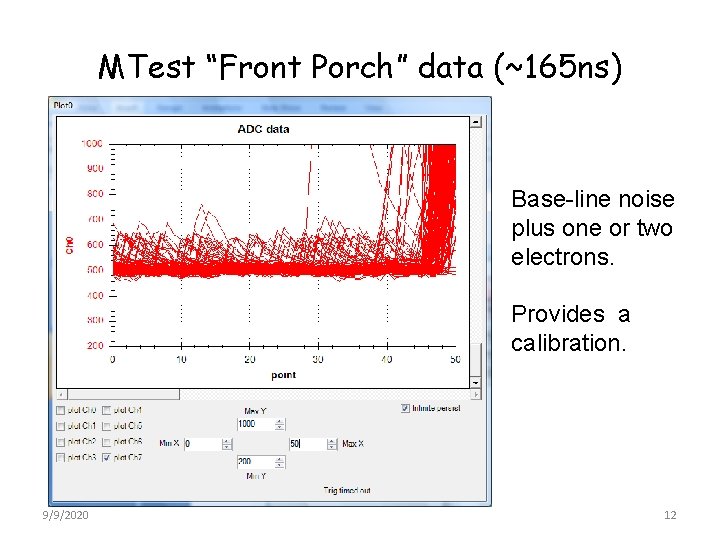
MTest “Front Porch” data (~165 ns) Base-line noise plus one or two electrons. Provides a calibration. 9/9/2020 12
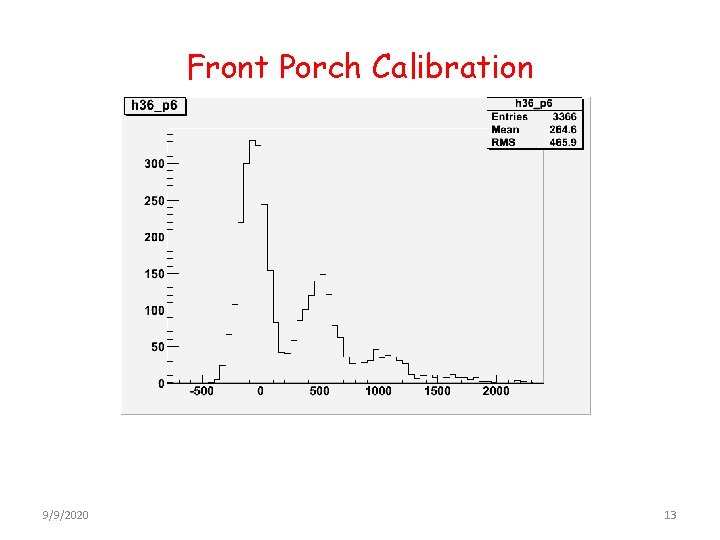
Front Porch Calibration 9/9/2020 13
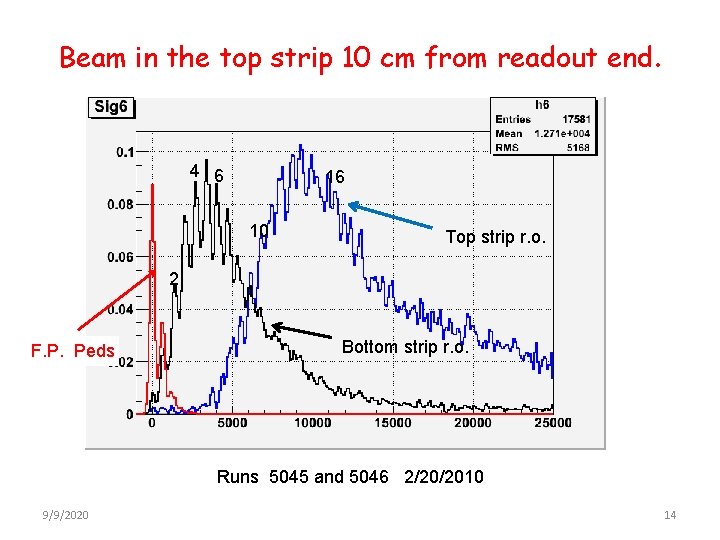
Beam in the top strip 10 cm from readout end. 4 6 16 10 Top strip r. o. 2 F. P. Peds Bottom strip r. o. Runs 5045 and 5046 2/20/2010 9/9/2020 14
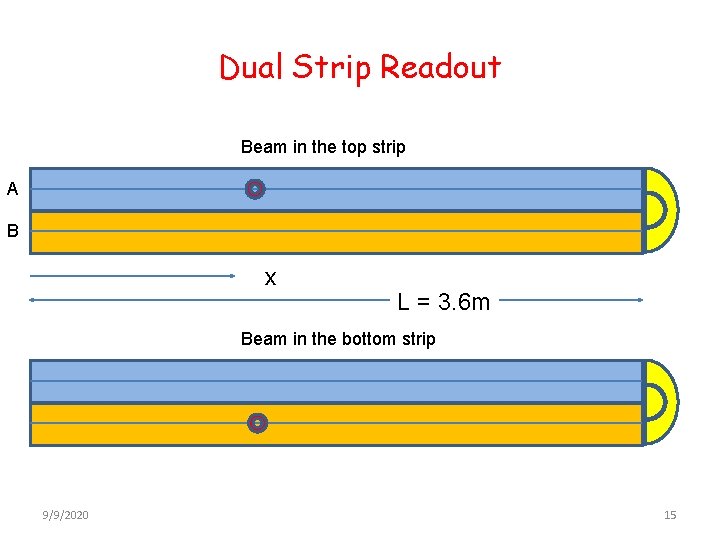
Dual Strip Readout Beam in the top strip A B x L = 3. 6 m Beam in the bottom strip 9/9/2020 15
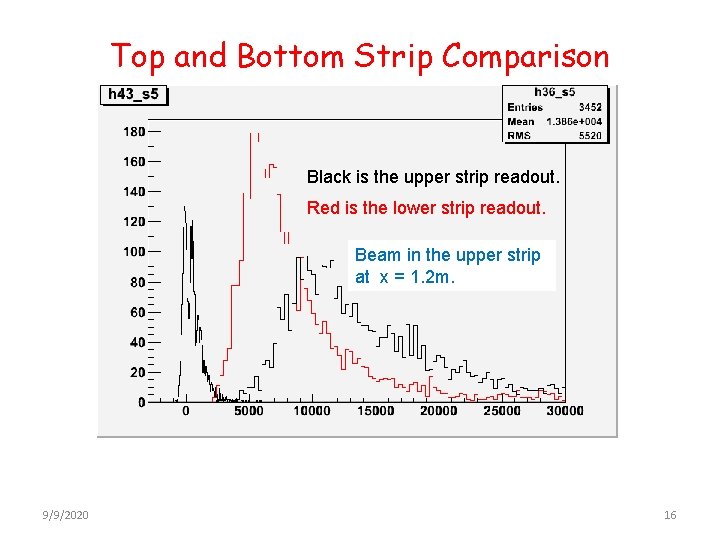
Top and Bottom Strip Comparison Black is the upper strip readout. Red is the lower strip readout. Beam in the upper strip at x = 1. 2 m. 9/9/2020 16
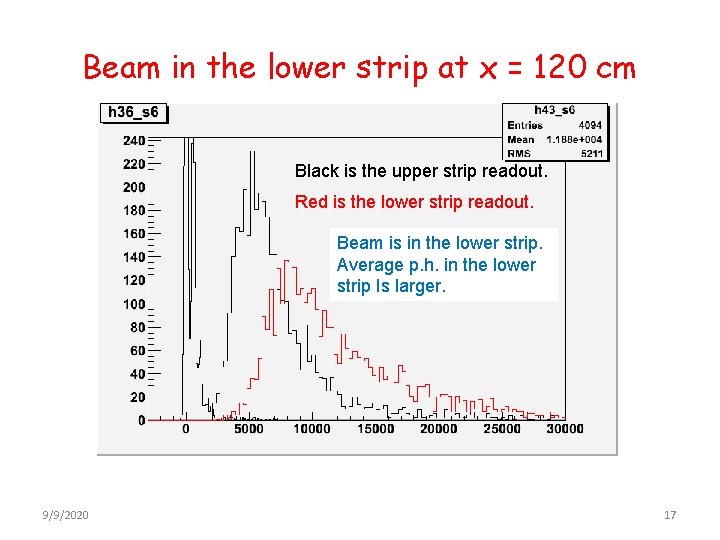
Beam in the lower strip at x = 120 cm Black is the upper strip readout. Red is the lower strip readout. Beam is in the lower strip. Average p. h. in the lower strip Is larger. 9/9/2020 17
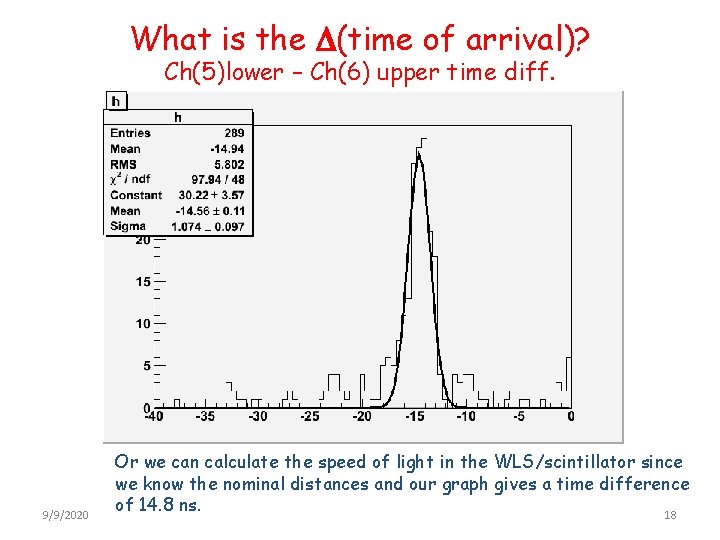
What is the D(time of arrival)? Ch(5)lower – Ch(6) upper time diff. A time distribution 9/9/2020 Or we can calculate the speed of light in the WLS/scintillator since we know the nominal distances and our graph gives a time difference of 14. 8 ns. 18
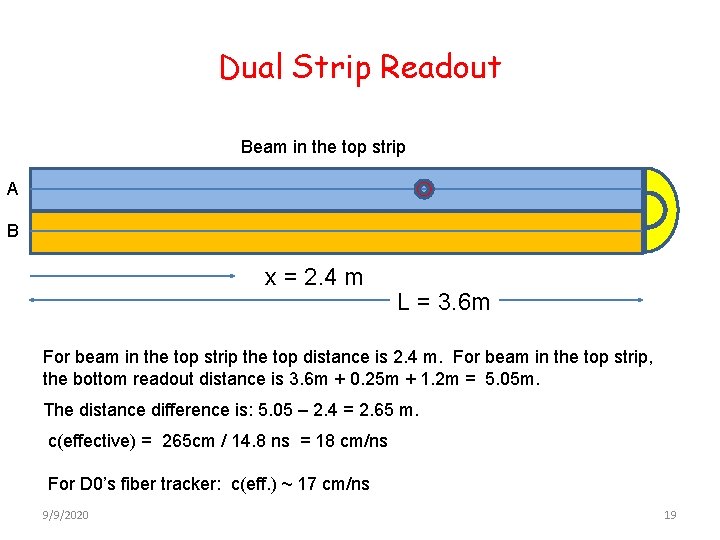
Dual Strip Readout Beam in the top strip A B x = 2. 4 m L = 3. 6 m For beam in the top strip the top distance is 2. 4 m. For beam in the top strip, the bottom readout distance is 3. 6 m + 0. 25 m + 1. 2 m = 5. 05 m. The distance difference is: 5. 05 – 2. 4 = 2. 65 m. c(effective) = 265 cm / 14. 8 ns = 18 cm/ns For D 0’s fiber tracker: c(eff. ) ~ 17 cm/ns 9/9/2020 19
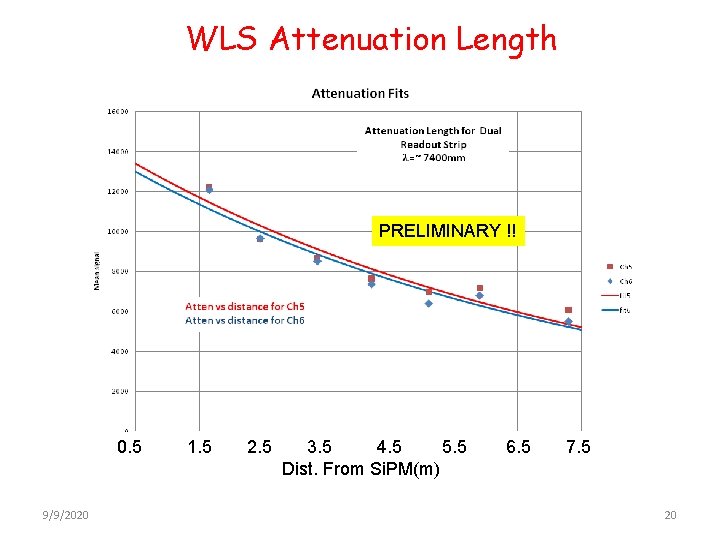
WLS Attenuation Length PRELIMINARY !! 0. 5 9/9/2020 1. 5 2. 5 3. 5 4. 5 5. 5 Dist. From Si. PM(m) 6. 5 7. 5 20
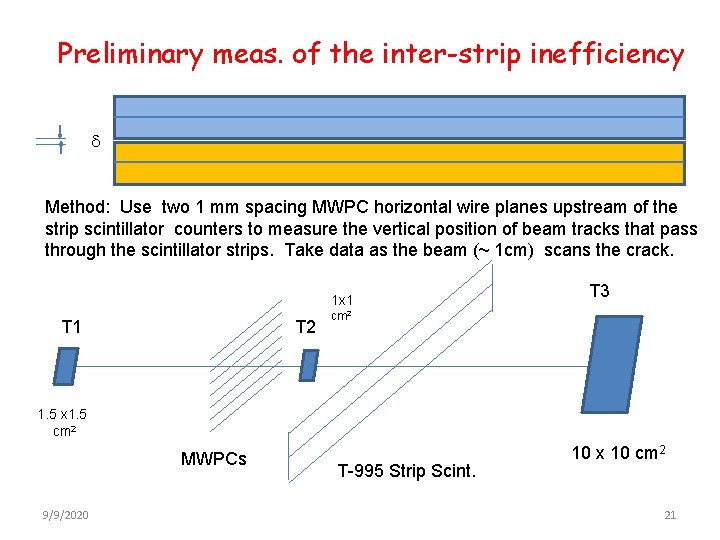
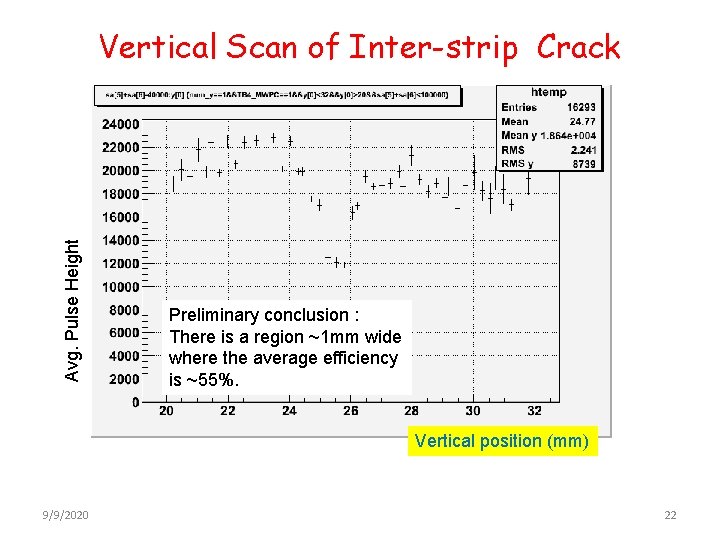
Preliminary meas. of the inter-strip inefficiency d Method: Use two 1 mm spacing MWPC horizontal wire planes upstream of the strip scintillator counters to measure the vertical position of beam tracks that pass through the scintillator strips. Take data as the beam (~ 1 cm) scans the crack. 1 x 1 T 2 T 3 cm 2 1. 5 x 1. 5 cm 2 MWPCs 9/9/2020 T-995 Strip Scint. 10 x 10 cm 2 21
Avg. Pulse Height Vertical Scan of Inter-strip Crack Preliminary conclusion : There is a region ~1 mm wide where the average efficiency is ~55%. Vertical position (mm) 9/9/2020 22
Summary/Conclusions • The TB 4 front-end and data acquisition electronics works very well. Of course it helps to have the architect in residence! • The pixelated photon detectors (PPDs) have worked very well. Seeing many photo-peaks is exciting and useful. We have adequate signal, but more data analyses are needed to write a NIM paper. • Calibration using noise pulses works well. The “no threshold” noise of ~ few MHz does not seem to be a problem for muon detectors. • MTest is a good facility. We have appreciated the significant help from our MTest hosts, techs, etc. • We have more measurements to make and additional hardware to test. Special thanks to FBK/IRST for pixelated photon detectors. 9/9/2020 23
9/9/2020 24
9/9/2020 25
9/9/2020 26