
T Y BSc SEMESTER V HORTICULTURE UNIT I
T. Y. BSc SEMESTER V HORTICULTURE UNIT: I SERICULTURE By Mr. Vinodkumar Kushwaha Department of Botany SATISH PRADHAN DNYANASADHANA COLLEGE, THANE (W)
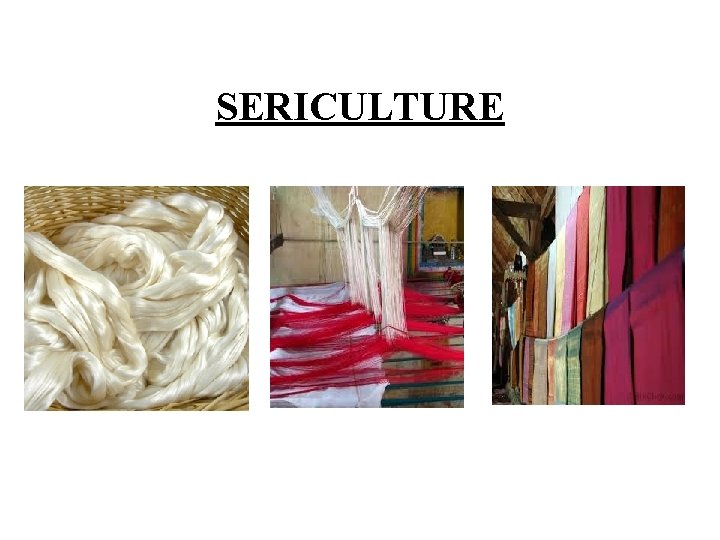
SERICULTURE
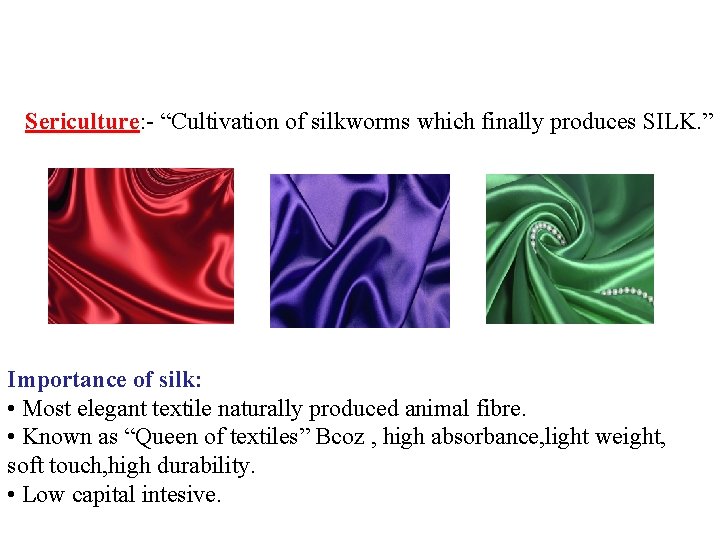
Sericulture: - “Cultivation of silkworms which finally produces SILK. ” Importance of silk: • Most elegant textile naturally produced animal fibre. • Known as “Queen of textiles” Bcoz , high absorbance, light weight, soft touch, high durability. • Low capital intesive.
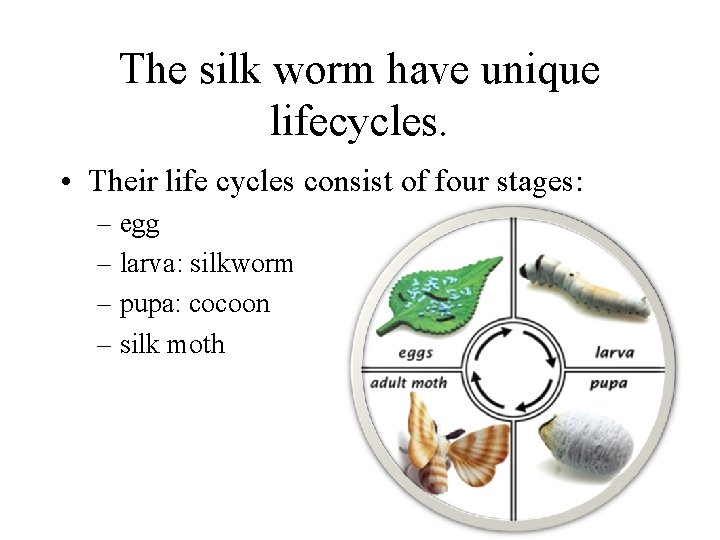
The silk worm have unique lifecycles. • Their life cycles consist of four stages: – egg – larva: silkworm – pupa: cocoon – silk moth
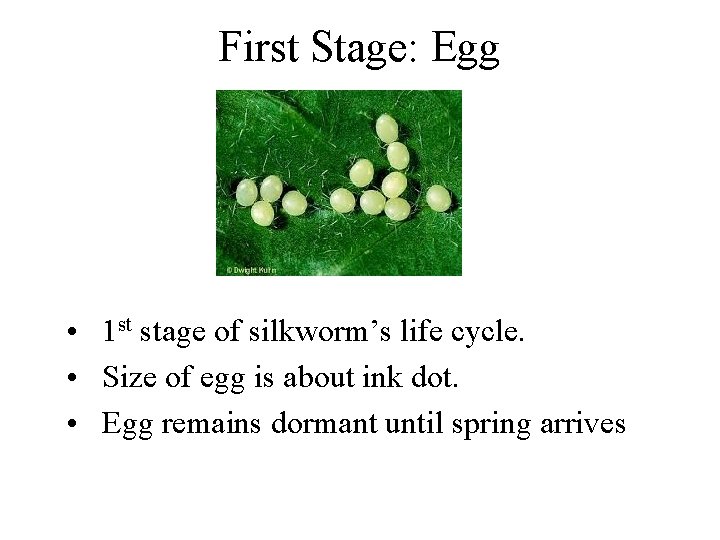
First Stage: Egg • 1 st stage of silkworm’s life cycle. • Size of egg is about ink dot. • Egg remains dormant until spring arrives
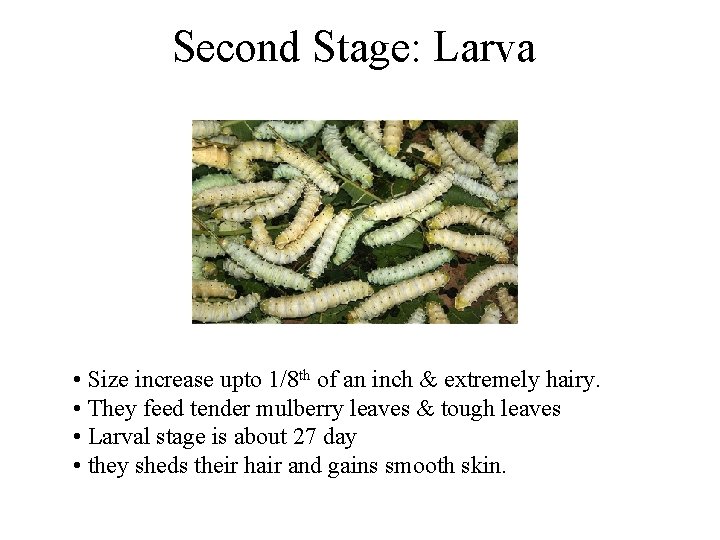
Second Stage: Larva • Size increase upto 1/8 th of an inch & extremely hairy. • They feed tender mulberry leaves & tough leaves • Larval stage is about 27 day • they sheds their hair and gains smooth skin.
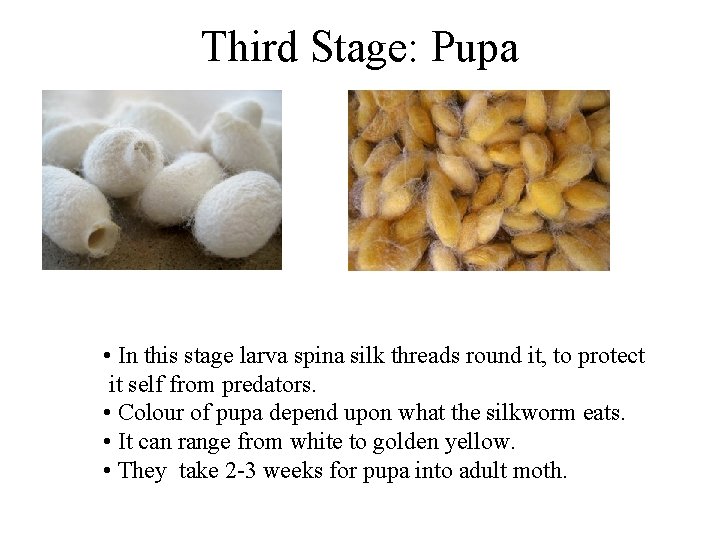
Third Stage: Pupa • In this stage larva spina silk threads round it, to protect it self from predators. • Colour of pupa depend upon what the silkworm eats. • It can range from white to golden yellow. • They take 2 -3 weeks for pupa into adult moth.
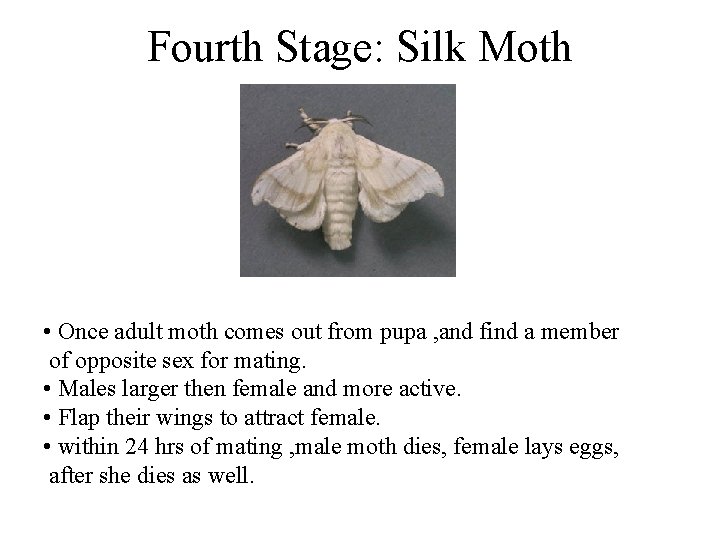
Fourth Stage: Silk Moth • Once adult moth comes out from pupa , and find a member of opposite sex for mating. • Males larger then female and more active. • Flap their wings to attract female. • within 24 hrs of mating , male moth dies, female lays eggs, after she dies as well.
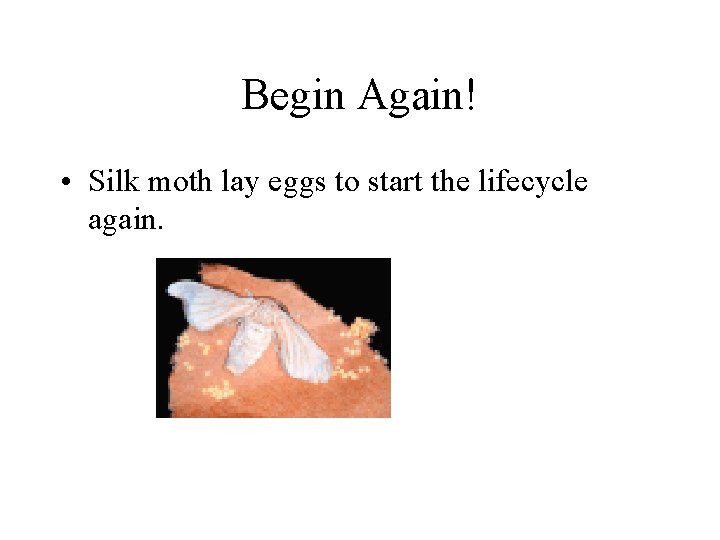
Begin Again! • Silk moth lay eggs to start the lifecycle again.
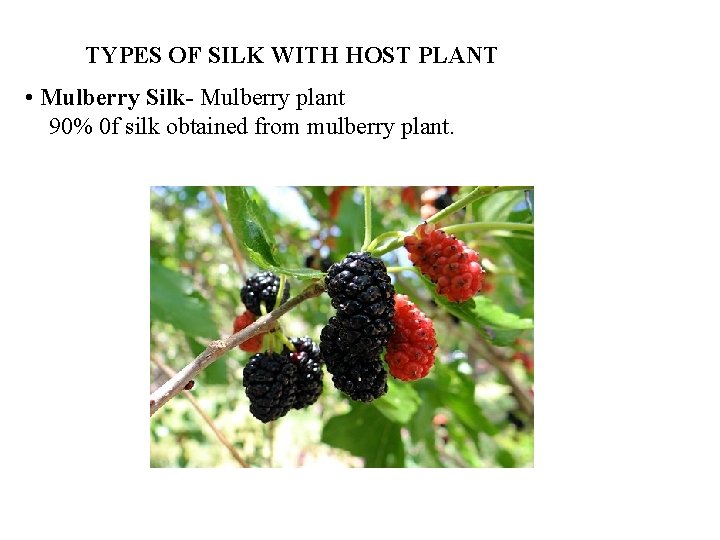
TYPES OF SILK WITH HOST PLANT • Mulberry Silk- Mulberry plant 90% 0 f silk obtained from mulberry plant.
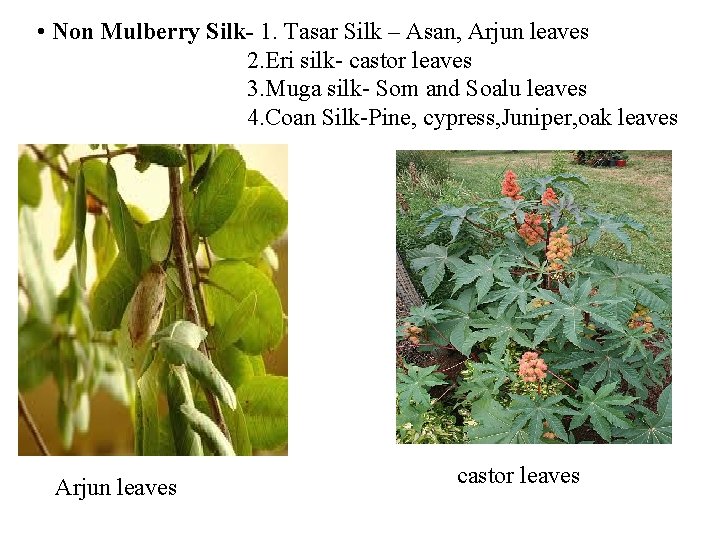
• Non Mulberry Silk- 1. Tasar Silk – Asan, Arjun leaves 2. Eri silk- castor leaves 3. Muga silk- Som and Soalu leaves 4. Coan Silk-Pine, cypress, Juniper, oak leaves Arjun leaves castor leaves
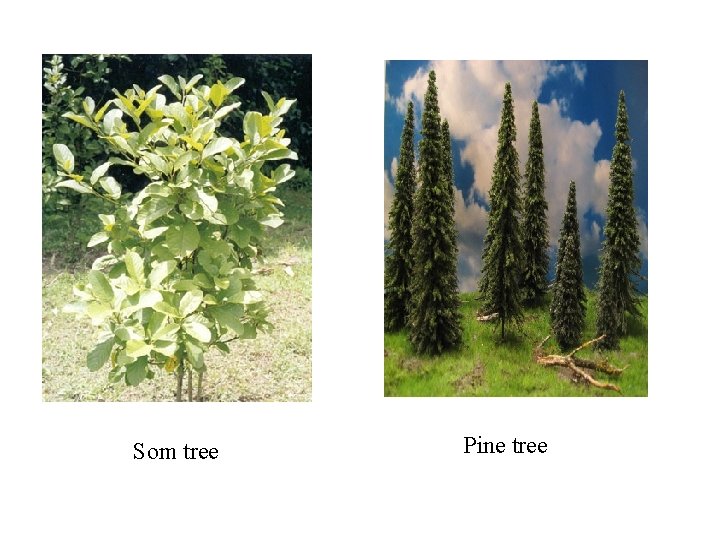
Som tree Pine tree

THANK YOU……
- Slides: 13