
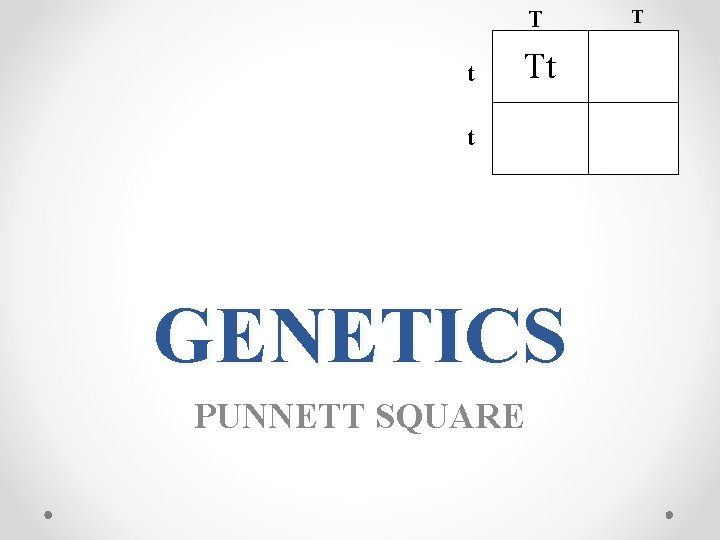
T t Tt t GENETICS PUNNETT SQUARE T
- Slides: 10
T t Tt t GENETICS PUNNETT SQUARE T
EXPECTATION Make predictions about possible outcomes of various genetic combinations of inherited characteristics.
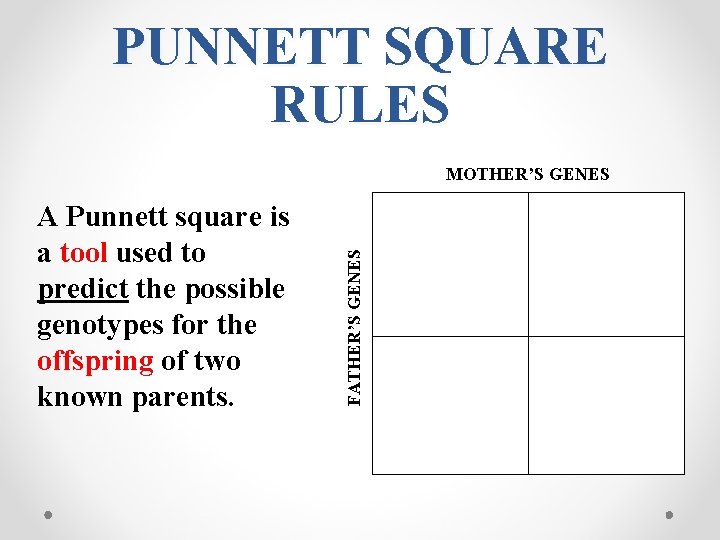
PUNNETT SQUARE RULES A Punnett square is a tool used to predict the possible genotypes for the offspring of two known parents. FATHER’S GENES MOTHER’S GENES
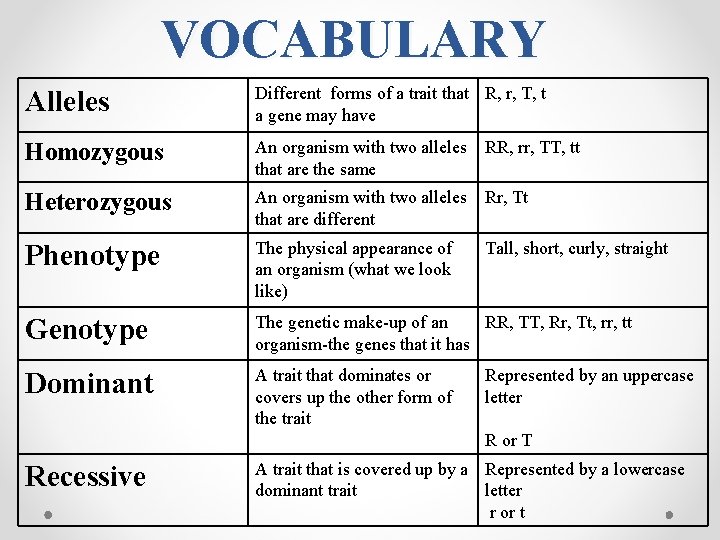
VOCABULARY Alleles Different forms of a trait that R, r, T, t a gene may have Homozygous An organism with two alleles that are the same RR, rr, TT, tt Heterozygous An organism with two alleles that are different Rr, Tt Phenotype The physical appearance of an organism (what we look like) Tall, short, curly, straight Genotype The genetic make-up of an RR, TT, Rr, Tt, rr, tt organism-the genes that it has Dominant A trait that dominates or covers up the other form of the trait Represented by an uppercase letter R or T Recessive A trait that is covered up by a Represented by a lowercase dominant trait letter r or t
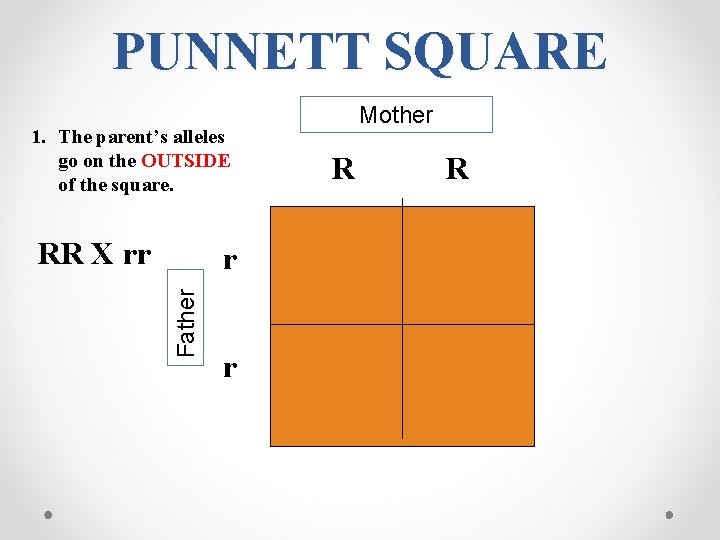
PUNNETT SQUARE 1. The parent’s alleles go on the OUTSIDE of the square. RR X rr Father r r Mother R R
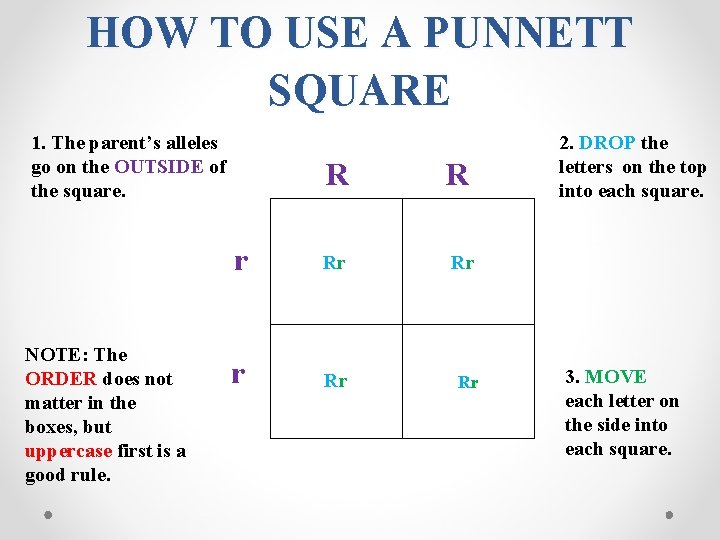
HOW TO USE A PUNNETT SQUARE 1. The parent’s alleles go on the OUTSIDE of the square. NOTE: The ORDER does not matter in the boxes, but uppercase first is a good rule. R R r Rr Rr 2. DROP the letters on the top into each square. 3. MOVE each letter on the side into each square.
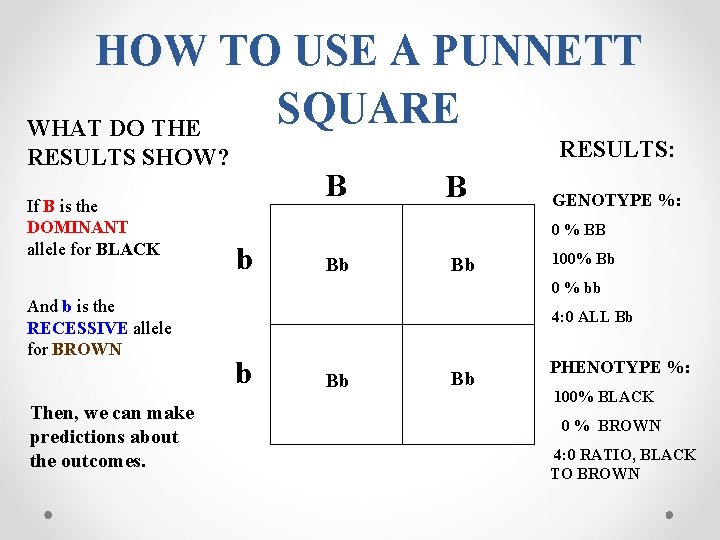
HOW TO USE A PUNNETT SQUARE WHAT DO THE RESULTS: RESULTS SHOW? If B is the DOMINANT allele for BLACK B B GENOTYPE %: 0 % BB b Bb Bb 100% Bb 0 % bb And b is the RECESSIVE allele for BROWN Then, we can make predictions about the outcomes. 4: 0 ALL Bb b Bb Bb PHENOTYPE %: 100% BLACK 0 % BROWN 4: 0 RATIO, BLACK TO BROWN
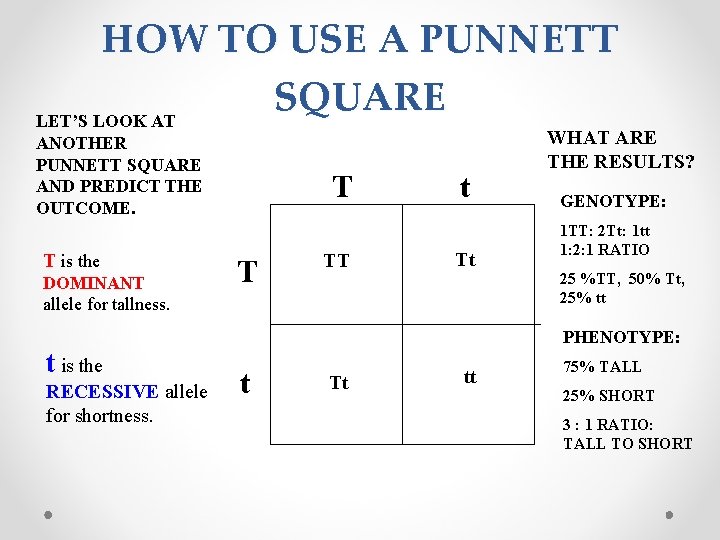
HOW TO USE A PUNNETT SQUARE LET’S LOOK AT ANOTHER PUNNETT SQUARE AND PREDICT THE OUTCOME. T is the DOMINANT allele for tallness. T T TT t Tt WHAT ARE THE RESULTS? GENOTYPE: 1 TT: 2 Tt: 1 tt 1: 2: 1 RATIO 25 %TT, 50% Tt, 25% tt PHENOTYPE: t is the RECESSIVE allele for shortness. t Tt tt 75% TALL 25% SHORT 3 : 1 RATIO: TALL TO SHORT
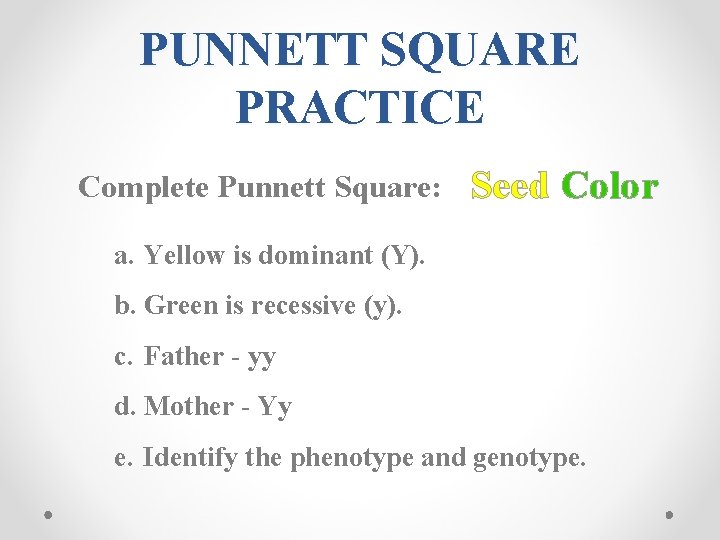
PUNNETT SQUARE PRACTICE Complete Punnett Square: Seed Color a. Yellow is dominant (Y). b. Green is recessive (y). c. Father - yy d. Mother - Yy e. Identify the phenotype and genotype.
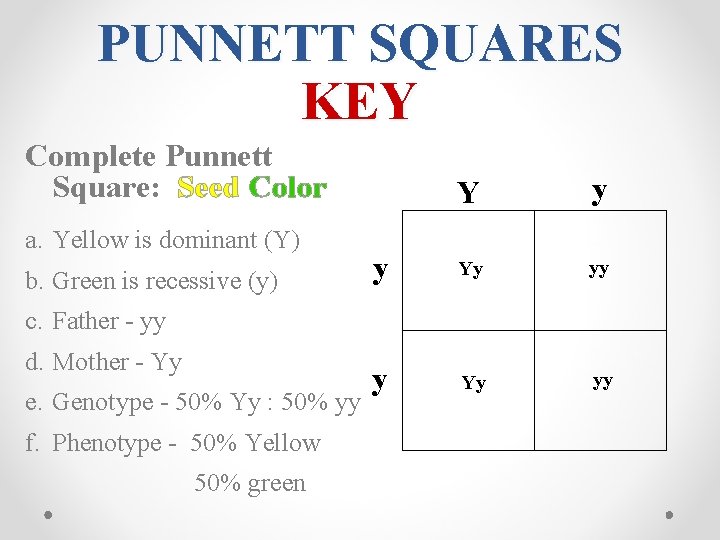
PUNNETT SQUARES KEY Complete Punnett Square: Seed Color a. Yellow is dominant (Y) b. Green is recessive (y) Y y y Yy yy c. Father - yy d. Mother - Yy e. Genotype - 50% Yy : 50% yy f. Phenotype - 50% Yellow 50% green