
T lymphocytes TCR TCR chains organised into variable
T lymphocytes
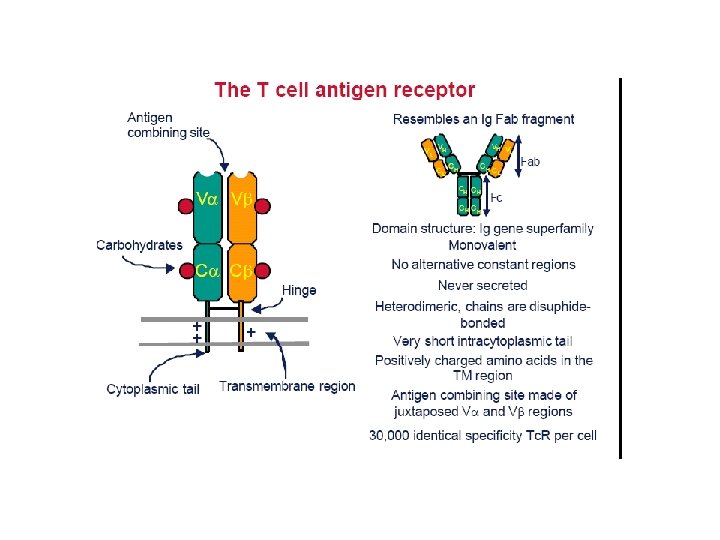
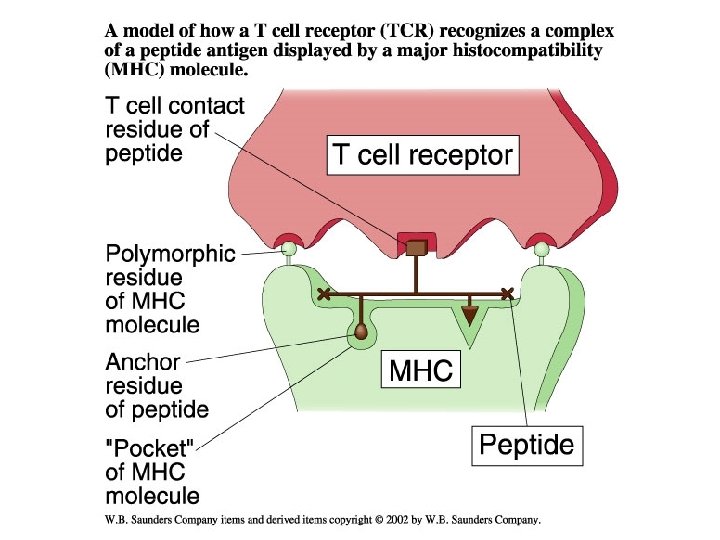
TCR • TCR chains organised into variable & constant domains’ • V regions contain 3 hypervariable CDRs. • Each chain also contains a short membraneproximal connecting region, a hydrophobic transmembrane segment & a short cytoplasmic tail.
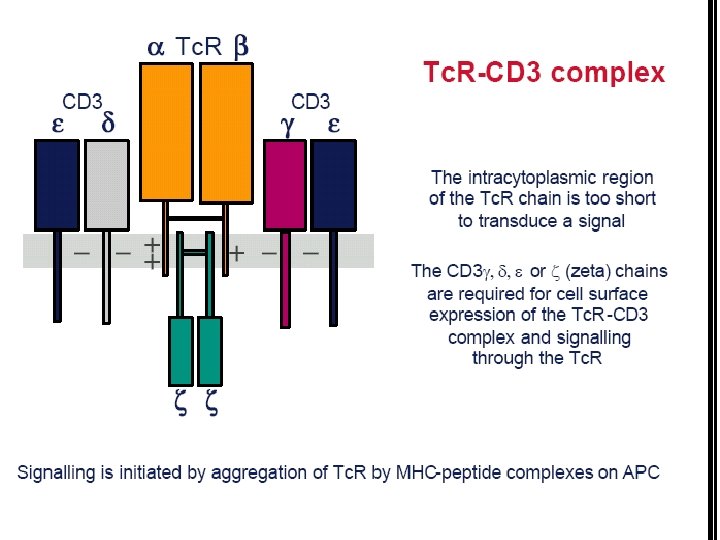
TCR/ CD 3 complex • TCR associates with CD 3 forming TCRCD 3 complex. • CD 3 contains 3 dimers : a heterodimer of , a hetero , homo of or hetero . • or TCR hetero determines the ligand binding specificity, CD 3 dimers required for signal transduction.
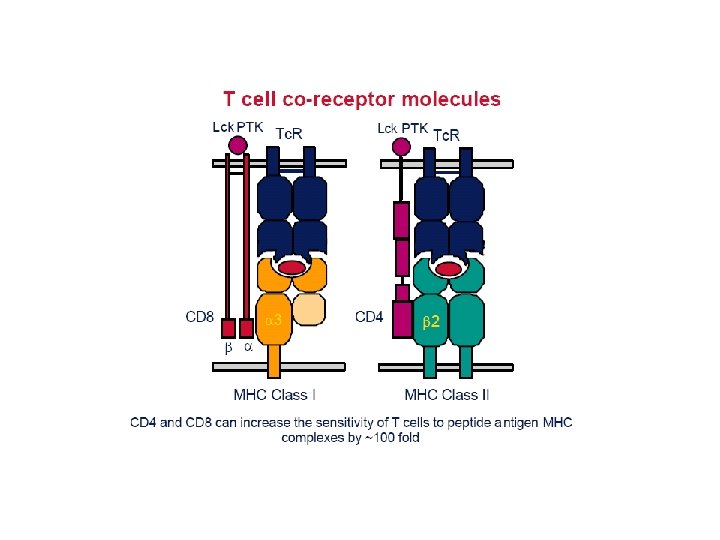
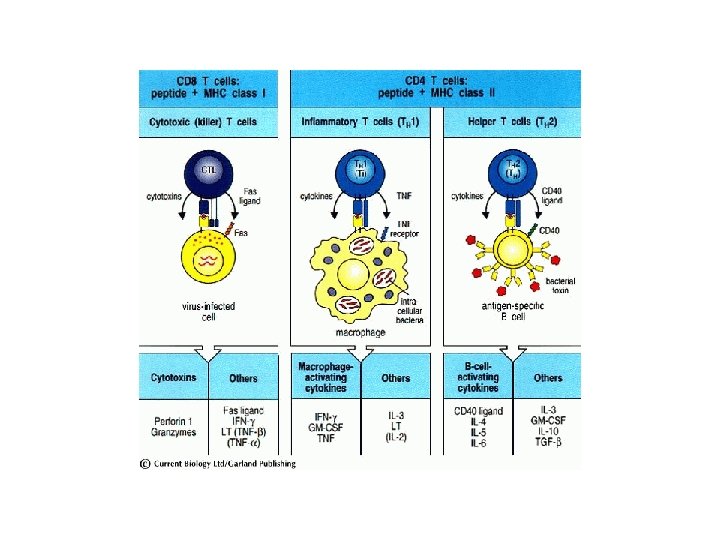
Co-receptors • CD 4 & CD 8 bind to the membraneproximal domains of MHC molecules thus strengthening the relatively weak interaction between the T cell receptor & peptide-MHC complex. • Also participate in signal transduction via long cytoplasmic tails.
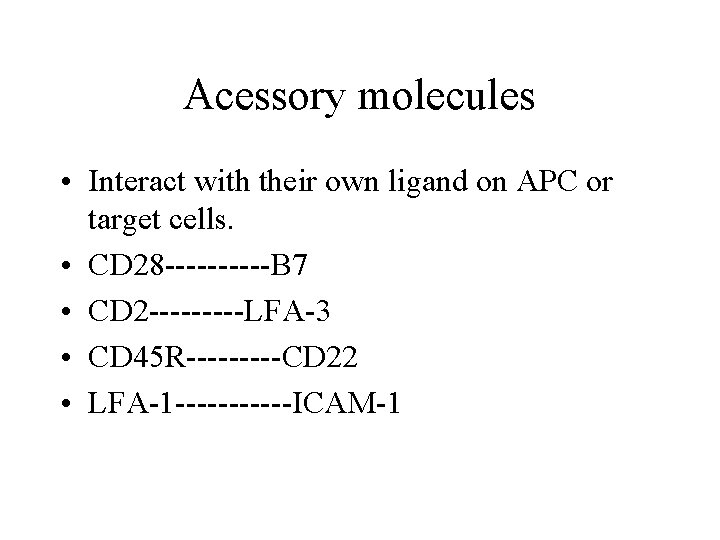
Acessory molecules • Interact with their own ligand on APC or target cells. • CD 28 -----B 7 • CD 2 -----LFA-3 • CD 45 R-----CD 22 • LFA-1 ------ICAM-1
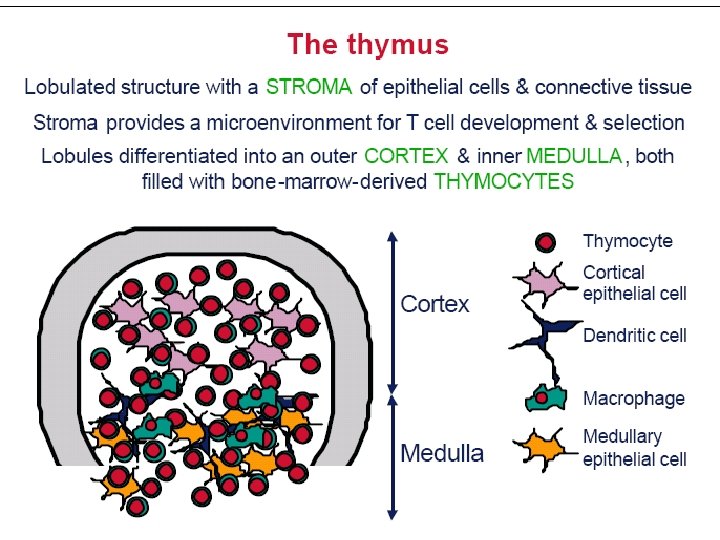
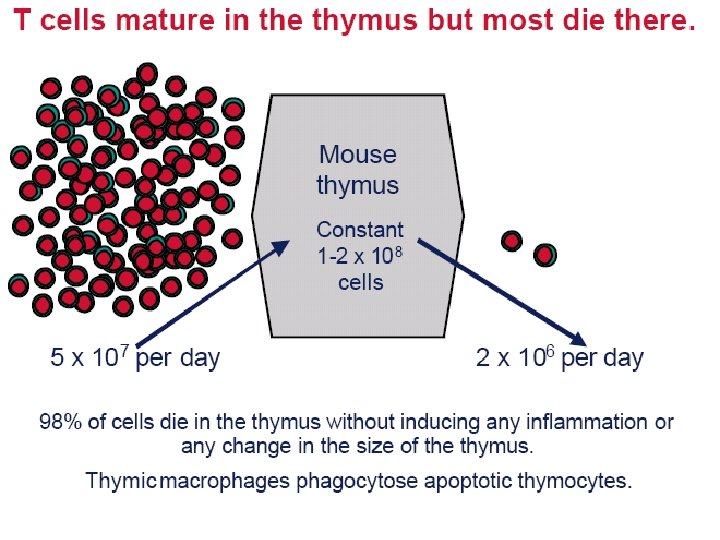
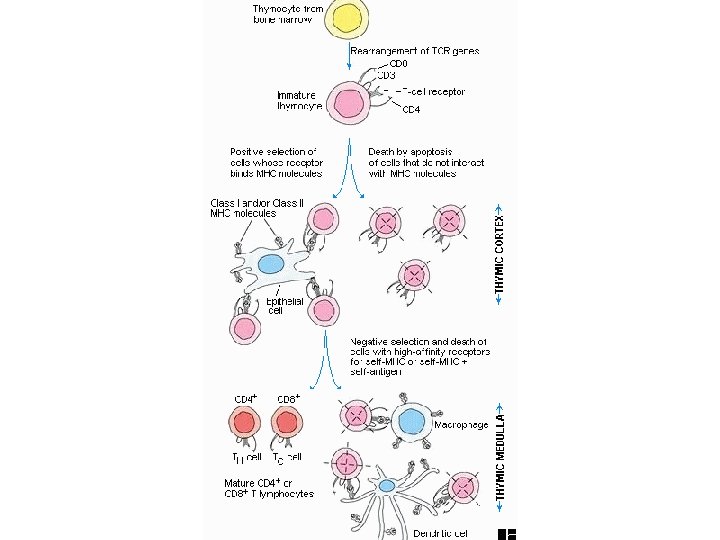
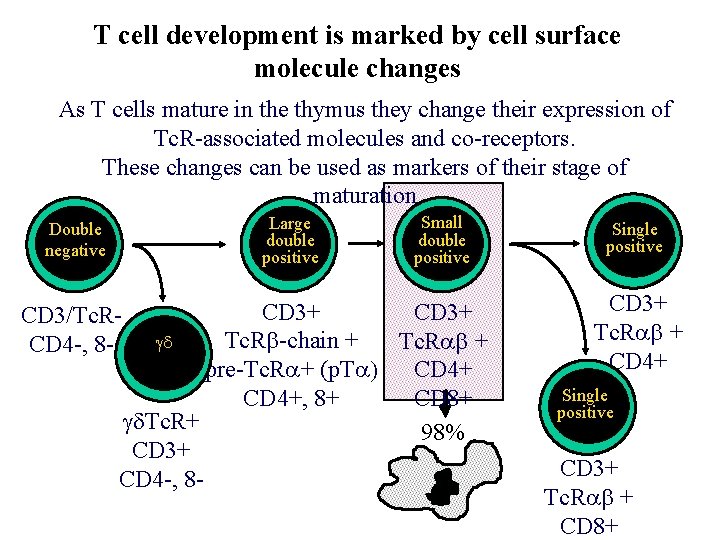
T cell development is marked by cell surface molecule changes As T cells mature in the thymus they change their expression of Tc. R-associated molecules and co-receptors. These changes can be used as markers of their stage of maturation Large double positive Double negative Small double positive CD 3+ Tc. R -chain + Tc. R + pre-Tc. R + (p. T CD 4+, 8+ CD 8+ Tc. R+ 98% CD 3+ CD 4 -, 8 - CD 3/Tc. RCD 4 -, 8 - Single positive CD 3+ Tc. R + CD 4+ Single positive CD 3+ Tc. R + CD 8+
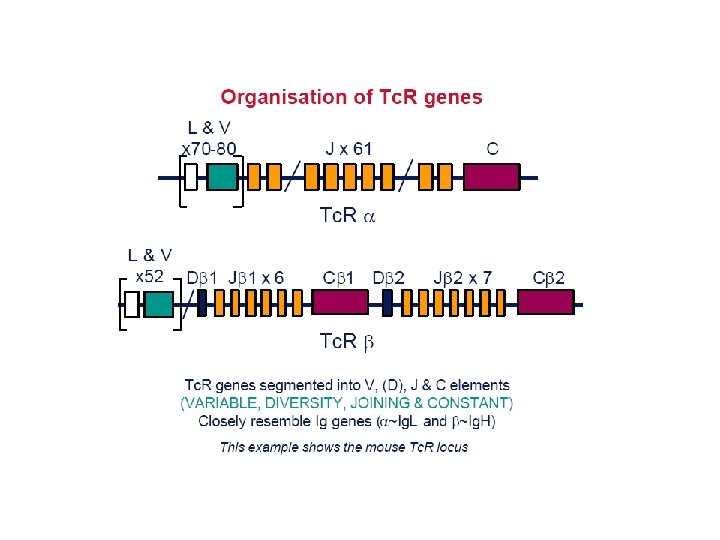
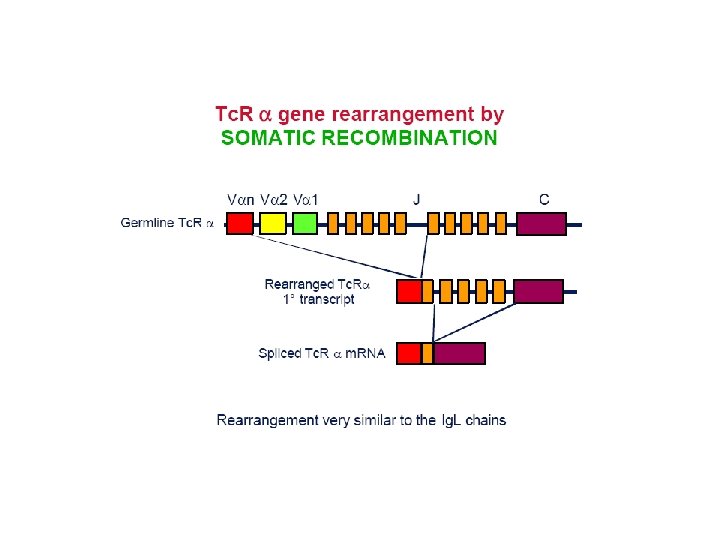
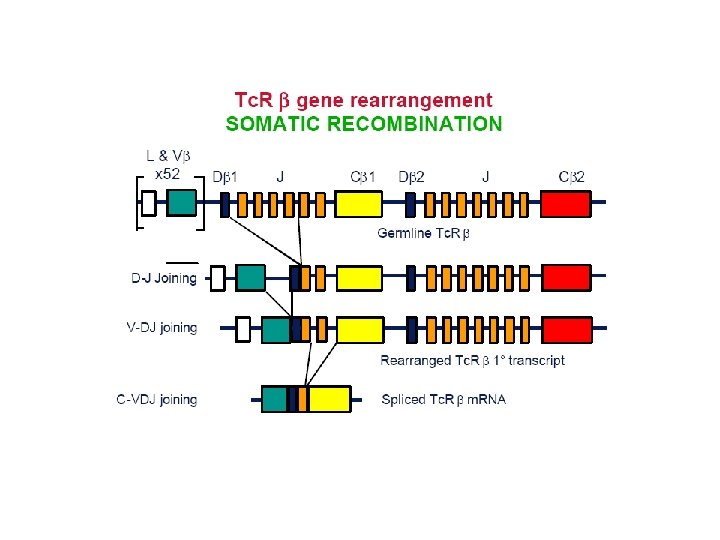
T cell development • Progenitor T cells from early sites of haematopoesis migrate to the thymus, enter cortex & slowly begin to proliferate. • Differentiating T cells progress through a series of stages that are marked by characterisitic changes in their cell-surface phenotype. • Thymocytes lack detectable cd 4 & cd 8, reffered to as “double negative”. • Some thymocytes make productive arrangements of both & chain genes develop into DN cd 3+ cells.
T cell development • Most DN stop proliferating & begin to rearrange TCR chain genes & express chain. • Newly synthesized chain combine with a 33 Kda glycoprotein known as pre-T chain & associate with cd 3 group to form Pre-TCR. • Signal transmitted through Pre-TCR, induced expression of both cd 4 & cd 8 DP(double-positive) cells • 98% of thymocytes die either because of failure in TCR rearrangement or thymic selection.
T cell development • DP thymocytes that express TCR-CD 3 complex & survive develop into either single –positive CD 4 thymocytes or singlepositive CD 8 thymocytes. • Cells then migrate to the periphery of the thymus.
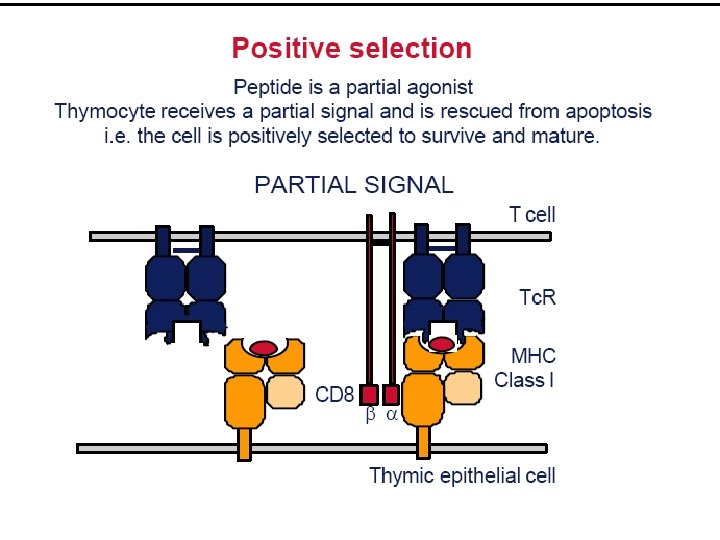
Positive Selection • Takes place in the cortical region of the thymus & involves the interaction of immature thymocytes with cortical epithelial cells. • Permits the survival of only those T cells whose TCRs recognize self-MHC mol. • Responsible for the creation of a self-MHC restricted repertoire of T cells.
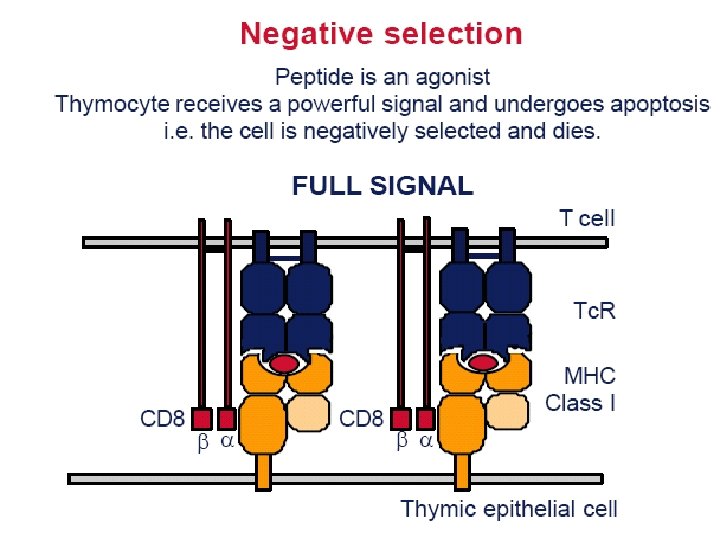
Negative Selection • Eliminates T cells that react with self-MHC or with self-MHC plus self peptides, in medulla. • Generates a primary T-cell repertoire that is self-tolerant.
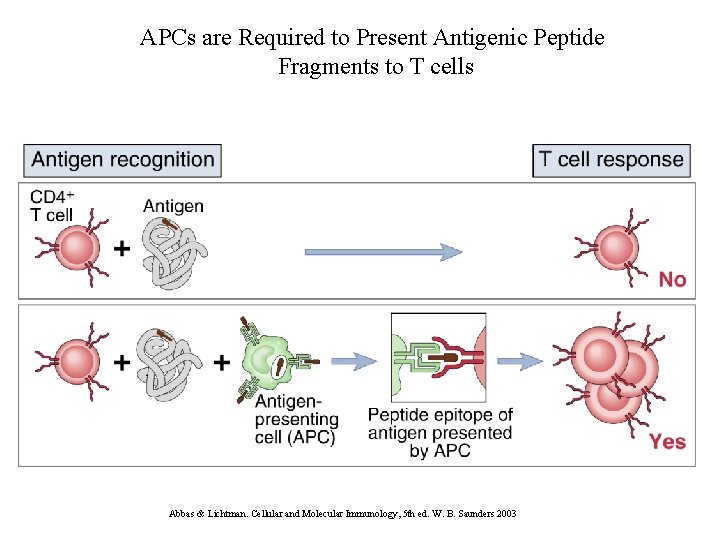
APCs are Required to Present Antigenic Peptide Fragments to T cells Abbas & Lichtman. Cellular and Molecular Immunology, 5 th ed. W. B. Saunders 2003
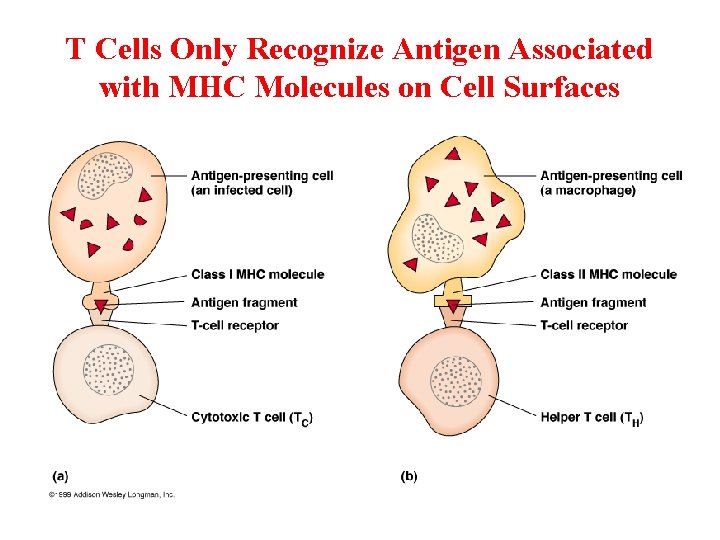
T Cells Only Recognize Antigen Associated with MHC Molecules on Cell Surfaces
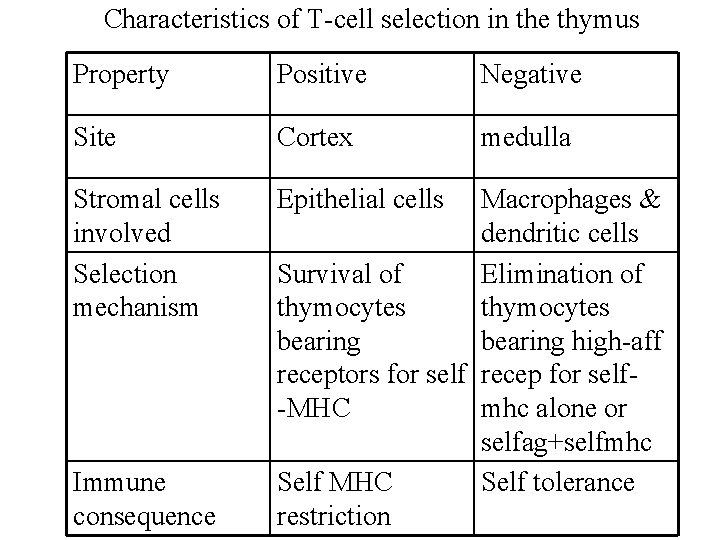
Characteristics of T-cell selection in the thymus Property Positive Negative Site Cortex medulla Stromal cells involved Selection mechanism Epithelial cells Immune consequence Macrophages & dendritic cells Survival of Elimination of thymocytes bearing high-aff receptors for self recep for self-MHC mhc alone or selfag+selfmhc Self MHC Self tolerance restriction
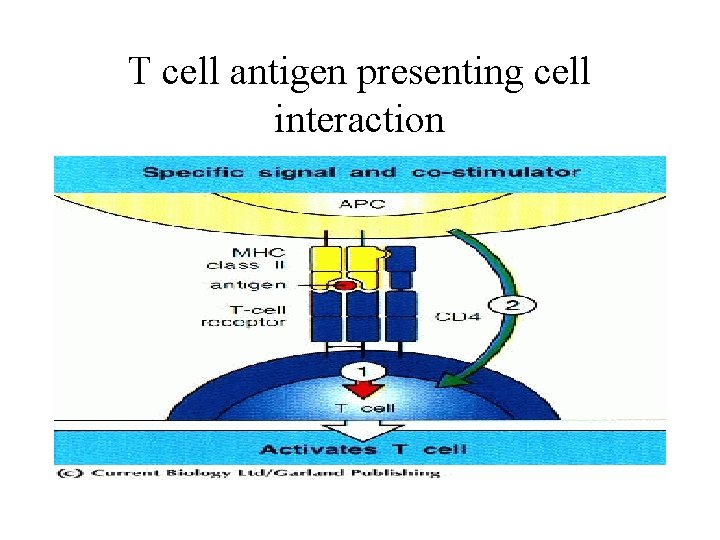
T cell antigen presenting cell interaction
- Slides: 29