
T level Delivery in 2020 Childcare and Education
- Slides: 17
T level Delivery in 2020 Childcare and Education and Digital: Digital Production, Design and Development
What is a T level • T Levels signify a big change in technical education • They will become one of the main choices for students post 16, alongside A levels and apprenticeships. • Equivalent to 3 A levels, the 2 -year courses have been developed in collaboration with employers and businesses to ensure the content prepares learners for the world of work and meets industry needs. • The Education and Childcare strand seeks to also provide a licence to practice (to be included in staff numbers) within early years settings • The awarding organisation is NCFE CACHE • The Digital strand supports learners to be competent professionals in the world of IT. • The awarding organisation is Pearson
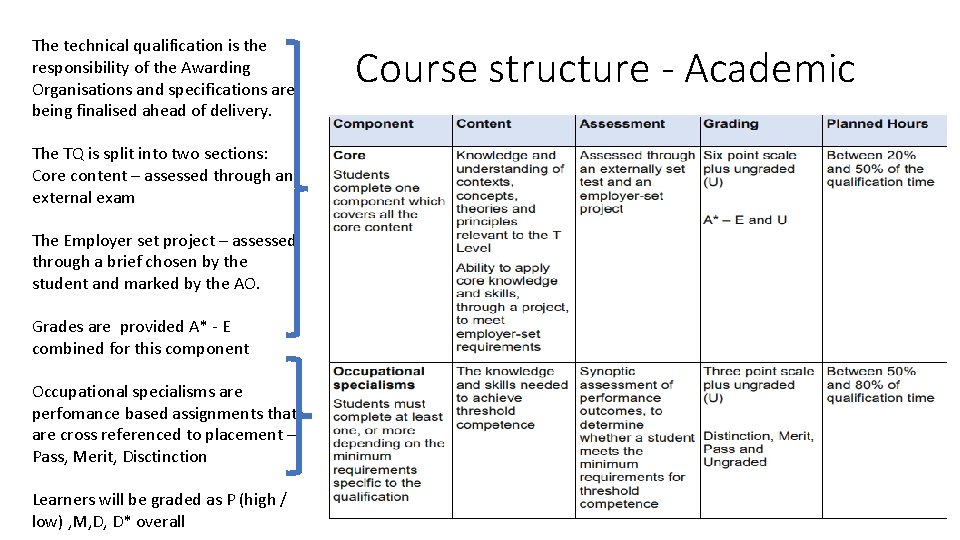
The technical qualification is the responsibility of the Awarding Organisations and specifications are being finalised ahead of delivery. The TQ is split into two sections: Core content – assessed through an external exam The Employer set project – assessed through a brief chosen by the student and marked by the AO. Grades are provided A* - E combined for this component Occupational specialisms are perfomance based assignments that are cross referenced to placement – Pass, Merit, Disctinction Learners will be graded as P (high / low) , M, D, D* overall Course structure - Academic
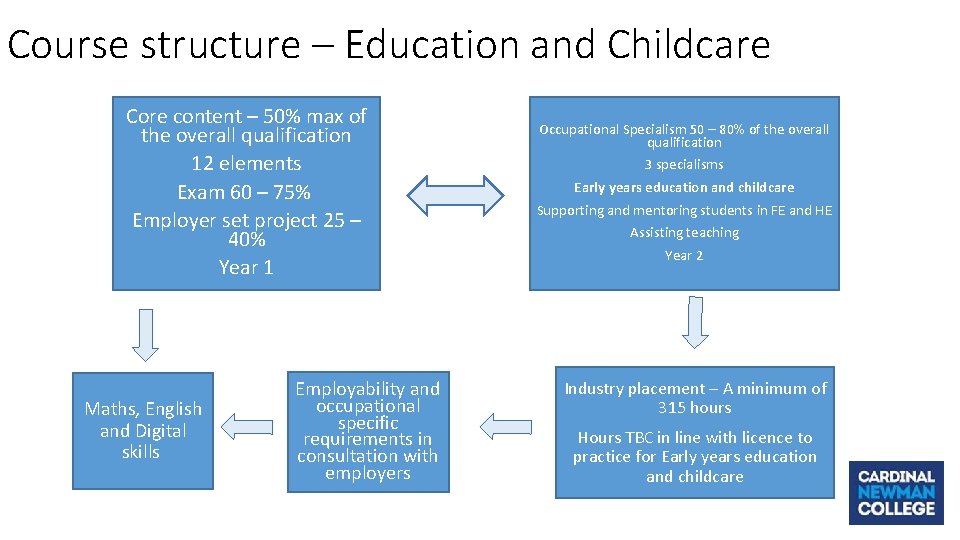
Course structure – Education and Childcare Core content – 50% max of the overall qualification 12 elements Exam 60 – 75% Employer set project 25 – 40% Year 1 Maths, English and Digital skills Employability and occupational specific requirements in consultation with employers Occupational Specialism 50 – 80% of the overall qualification 3 specialisms Early years education and childcare Supporting and mentoring students in FE and HE Assisting teaching Year 2 Industry placement – A minimum of 315 hours Hours TBC in line with licence to practice for Early years education and childcare
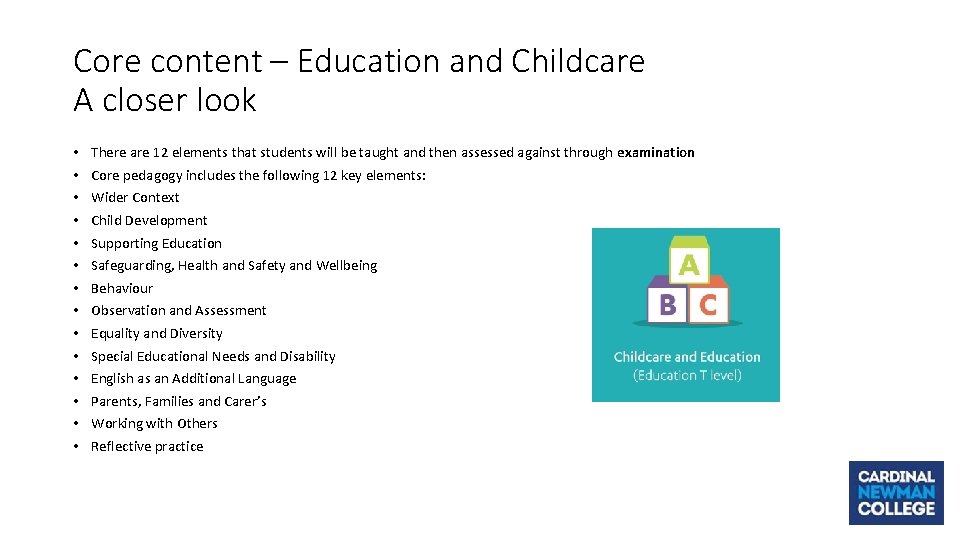
Core content – Education and Childcare A closer look • • • • There are 12 elements that students will be taught and then assessed against through examination Core pedagogy includes the following 12 key elements: Wider Context Child Development Supporting Education Safeguarding, Health and Safety and Wellbeing Behaviour Observation and Assessment Equality and Diversity Special Educational Needs and Disability English as an Additional Language Parents, Families and Carer’s Working with Others Reflective practice
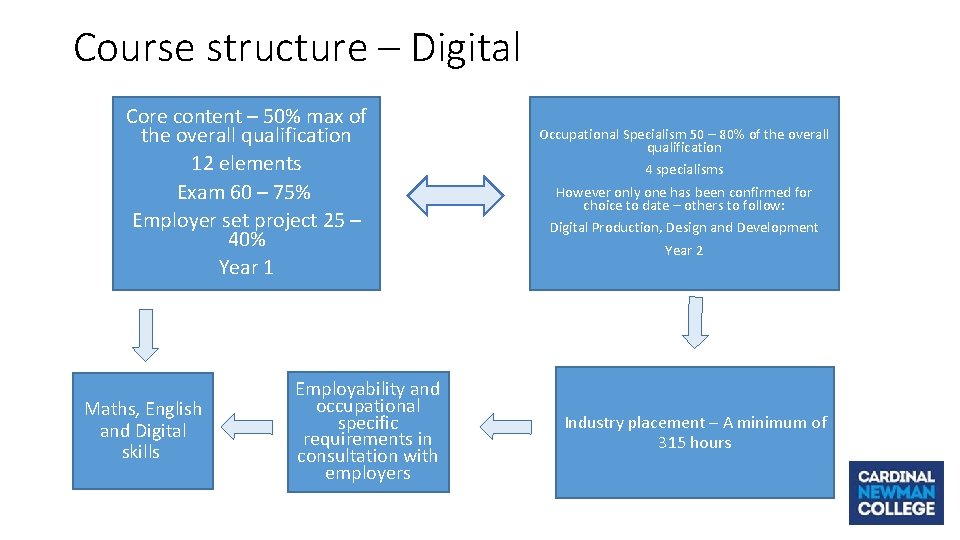
Course structure – Digital Core content – 50% max of the overall qualification 12 elements Exam 60 – 75% Employer set project 25 – 40% Year 1 Maths, English and Digital skills Employability and occupational specific requirements in consultation with employers Occupational Specialism 50 – 80% of the overall qualification 4 specialisms However only one has been confirmed for choice to date – others to follow: Digital Production, Design and Development Year 2 Industry placement – A minimum of 315 hours
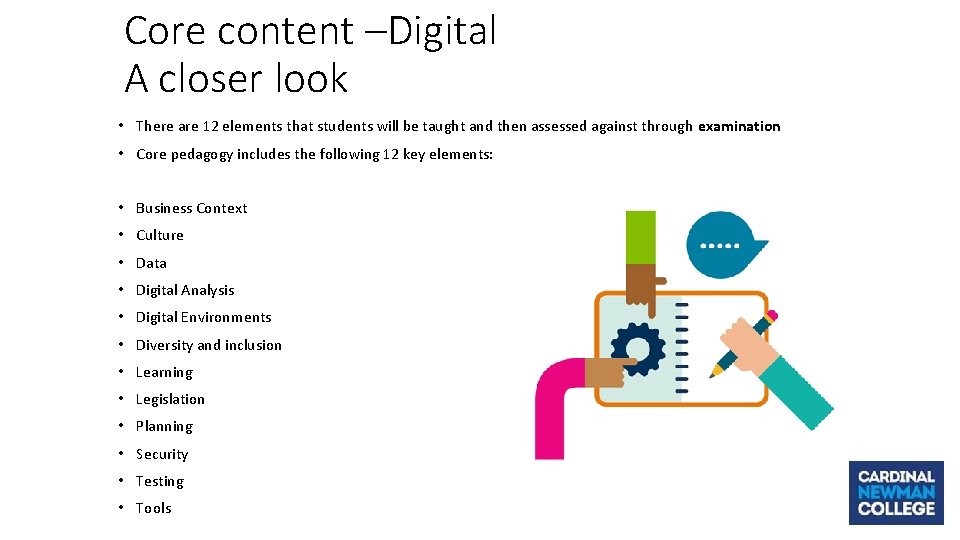
Core content –Digital A closer look • There are 12 elements that students will be taught and then assessed against through examination • Core pedagogy includes the following 12 key elements: • Business Context • Culture • Data • Digital Analysis • Digital Environments • Diversity and inclusion • Learning • Legislation • Planning • Security • Testing • Tools
Industrial Placements T-LEVELS PLACEMENT COORDINATORS
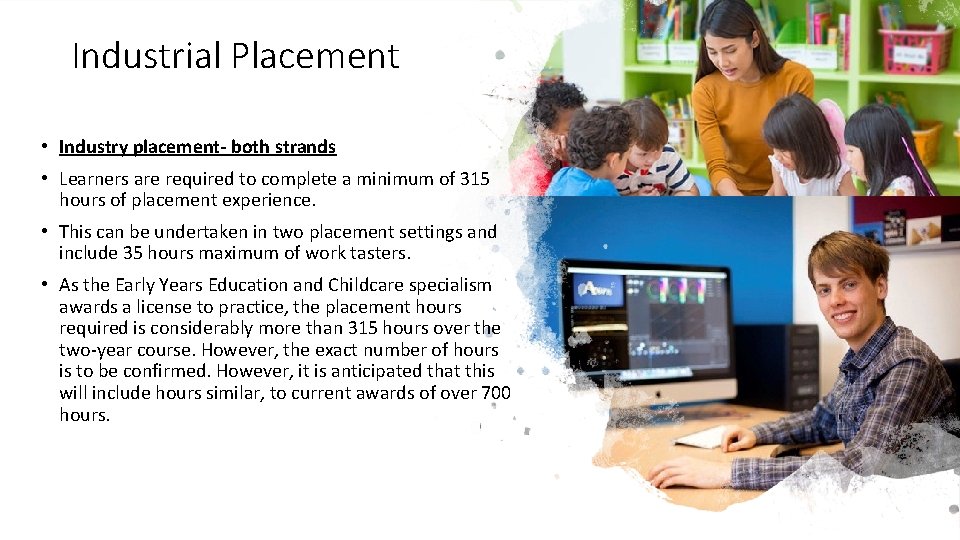
Industrial Placement • Industry placement- both strands • Learners are required to complete a minimum of 315 hours of placement experience. • This can be undertaken in two placement settings and include 35 hours maximum of work tasters. • As the Early Years Education and Childcare specialism awards a license to practice, the placement hours required is considerably more than 315 hours over the two-year course. However, the exact number of hours is to be confirmed. However, it is anticipated that this will include hours similar, to current awards of over 700 hours.
T-Level Placements • Need to complete at least 315 hours (approx. 45 days) • This will be monitored and students must complete in full in order to successfully complete the T-Level qualification • Students will be visited 3 times during their placement. • 2 days weekly off timetable for placements
Preparation for Industrial Placement • Bespoke programme delivered alongside curriculum in Y 12. • It can be modified to suit length of delivery available per department – i. e. Fast Track PFIP (6 weeks)/ Induction Days. • Aim to prepare the student for the task of undertaking Placement. • To assist students to appreciate the working environment and enhance their ability to perform to • To enable the student to reflect on and learn from experience.
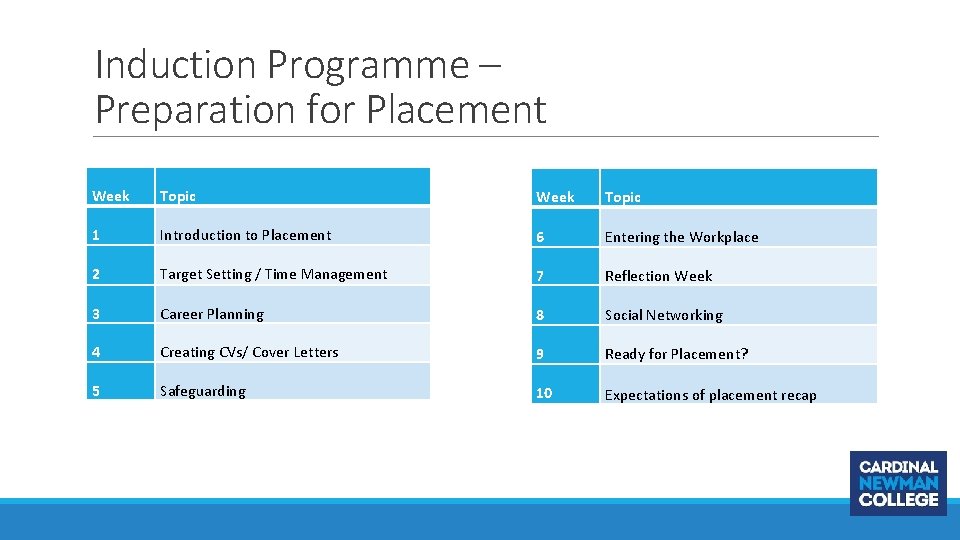
Induction Programme – Preparation for Placement Week Topic 1 Introduction to Placement 6 Entering the Workplace 2 Target Setting / Time Management 7 Reflection Week 3 Career Planning 8 Social Networking 4 Creating CVs/ Cover Letters 9 Ready for Placement? 5 Safeguarding 10 Expectations of placement recap
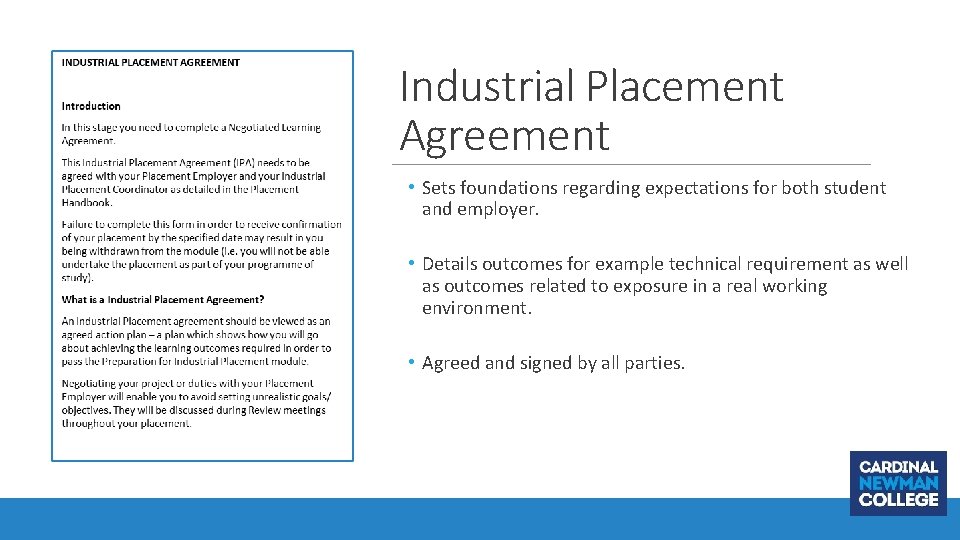
Industrial Placement Agreement • Sets foundations regarding expectations for both student and employer. • Details outcomes for example technical requirement as well as outcomes related to exposure in a real working environment. • Agreed and signed by all parties.
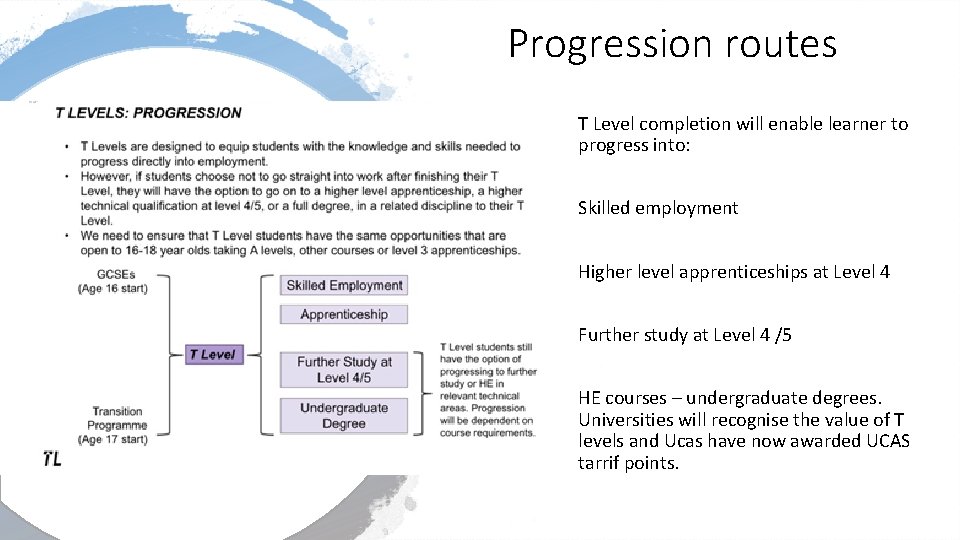
Progression routes T Level completion will enable learner to progress into: Skilled employment Higher level apprenticeships at Level 4 Further study at Level 4 /5 HE courses – undergraduate degrees. Universities will recognise the value of T levels and Ucas have now awarded UCAS tarrif points.
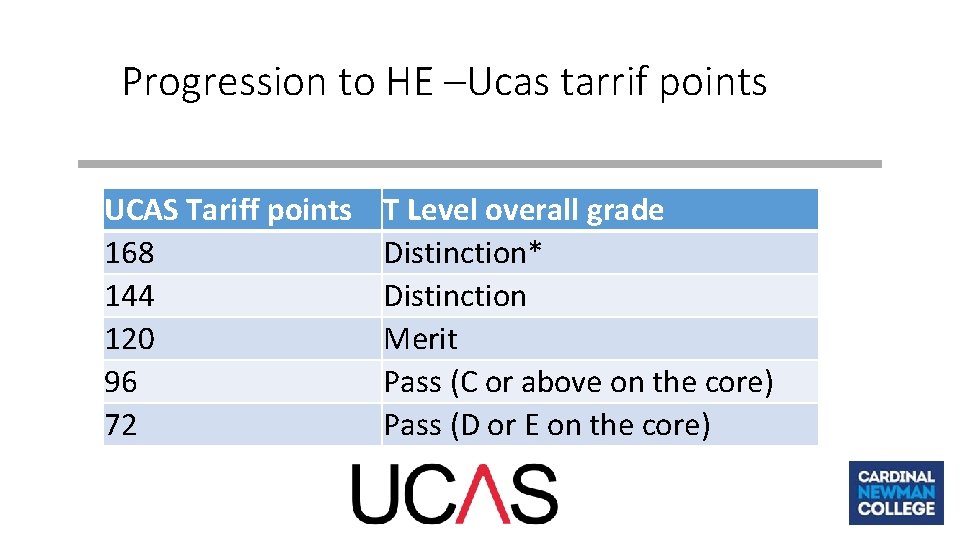
Progression to HE –Ucas tarrif points UCAS Tariff points 168 144 120 96 72 T Level overall grade Distinction* Distinction Merit Pass (C or above on the core) Pass (D or E on the core)
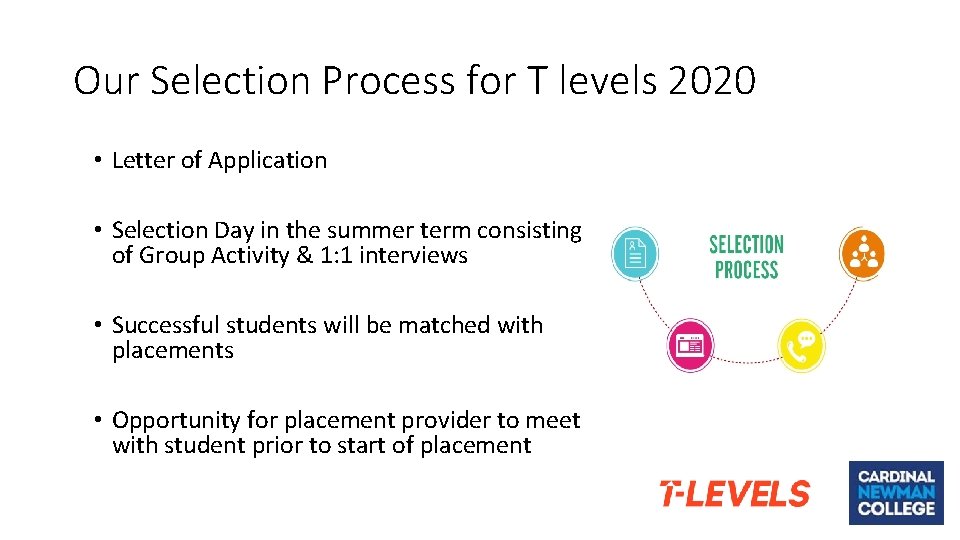
Our Selection Process for T levels 2020 • Letter of Application • Selection Day in the summer term consisting of Group Activity & 1: 1 interviews • Successful students will be matched with placements • Opportunity for placement provider to meet with student prior to start of placement
T level Delivery in 2020 Childcare and Education and Digital: Digital Production, Design and Development