
T cell and B cell activation For Ab

T cell and B cell activation For Ab production against Antigens
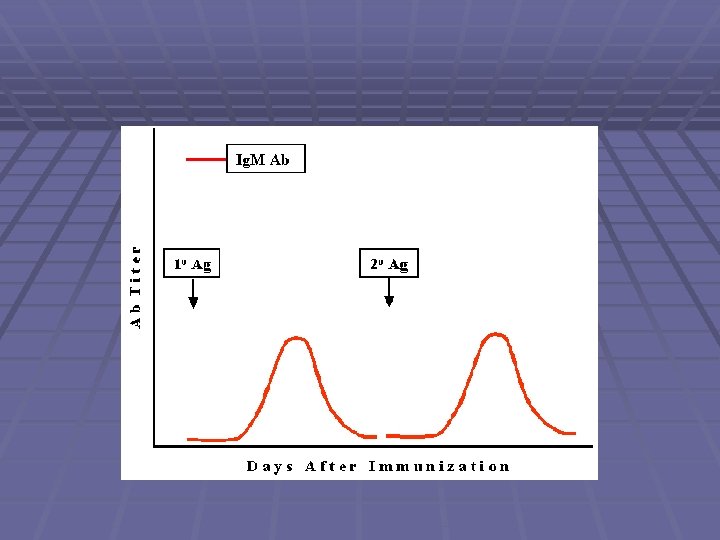
B cell activation § Antibody responses to protein antigens require Th cells § Antibody responses to nonprotein antigens don’t require Th cells
Th dependent Ab responses to proteins § Require recognition of the Ag by Th cells and cooperation between Ag specific T and B cells 1)Ag induced activation of the two cells 2)Physical contact between the cells 3)Ag presentation by B cells to differentiated Th 4) Expression of membrane and secreted molecules by the Th cells that bind to and activate the B cells
B cell activation § Activation of B cells initiated by binding of Ag to BCR as a first signal. § Second signal: Signaling by CR 2 § B cell receptor serves two key roles in B cell activation: 1)antigen-induced clustering of receptors deliver biochemical signals to the B cells that initiate the process of activation 2)The receptor bind Ag and internalizes it into endosomal vesicles for processing and presentation
Functional responses of B cells to Ag recognition § Ag recognition stimulates the entry of resting cells into G 1 stage of cell cycle § Activated B cells express more MHC-II and B 7 and also cytokine receptors
T cell activation § § 1) 2) 3) Naïve T cells recognize peptide –MHC and are activated in peripheral lymphoid organs , resulting in the proliferation and differentiation of these cells in to effector and memory cells Effector helper cells recognize Ag in lymphoid organs or other tissues and are activated to perform their effector functions They secrete cytokines that activate macrophages and help B cells The activation of T cells requires: Recognition of peptide –MHC complex Costimulator Cytokines produce by APC and by the T cells themselves
T cell activation § Earliest detectable responses of T cells to Ag recognition is the § § § § secretion of cytokines Increase their expression of cytokine receptors CD 69 (bind to sphingosine 1 –phosphate r. ) CD 25 CD 40 L(24 -48) CTLA-4(24 -48) CCR 7 CD 44
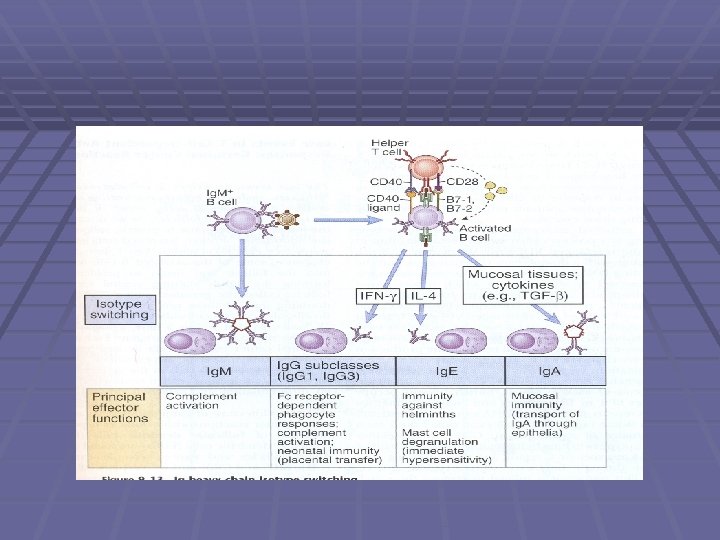
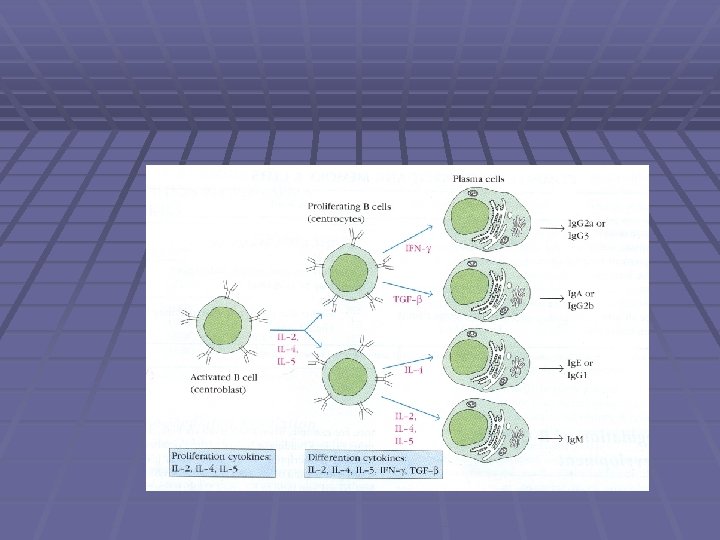
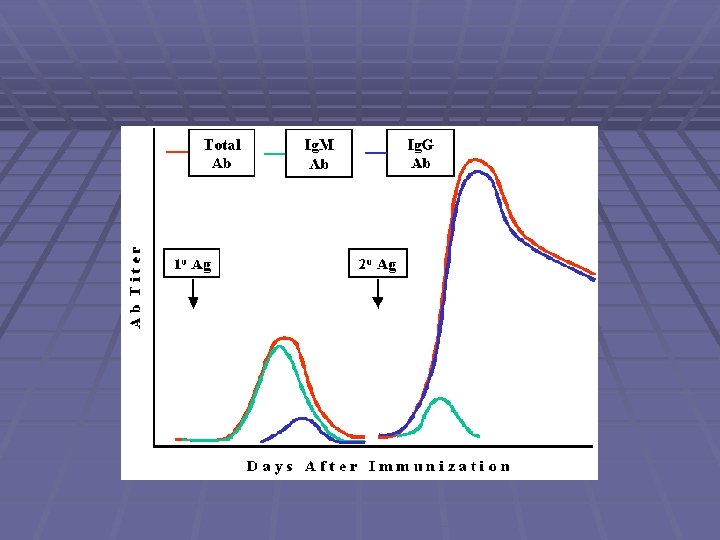
CD 40 – CD 40 L § Stimulates B cell proliferation and differentiation § Mutation in CD 40 L gene results in X-linked hyper Ig. M § § syndrome Enhance expression of B 7 molecules on B cells causing more T cell activation Activated Th cells secrete cytokines that act in concert with CD 40 L to stimulate B cell proliferation and production of different Ab isotypes Cytokines serve two principle functions in Ab response: B cell proliferation and differentiation and switching to different isotypes Induce affinity maturation
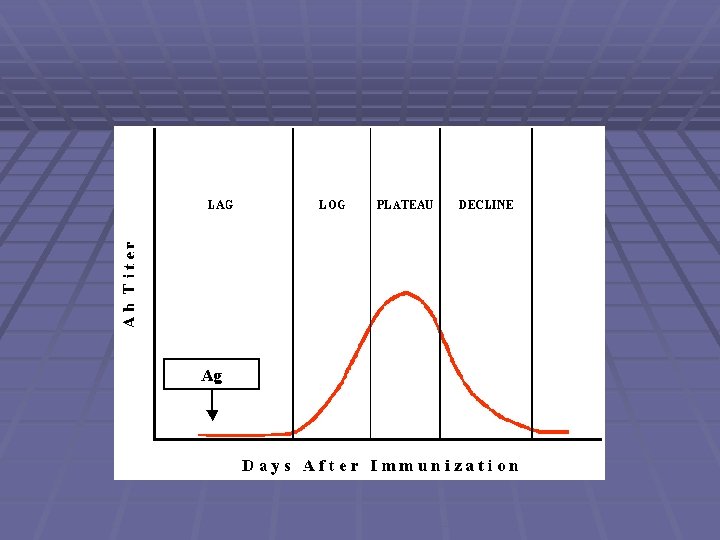
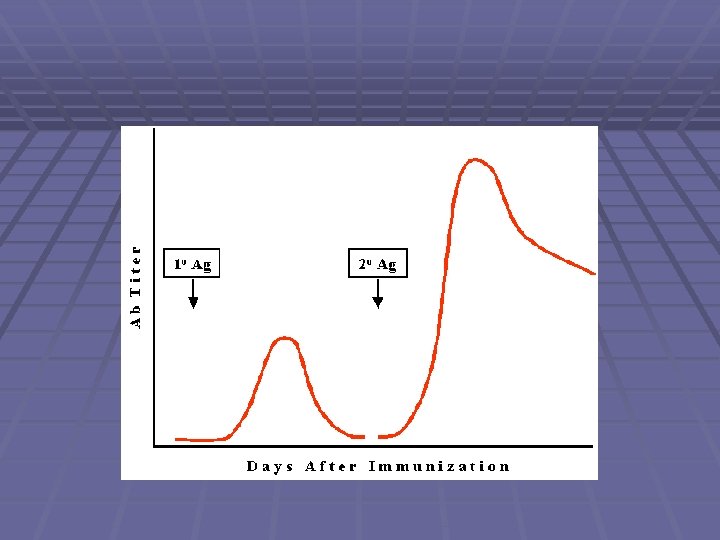
Ab response to proteins 1)Isotype switching 2) Affinity maturation 3)Memory cell production 4)Prolonged immunity 5)More Ab production
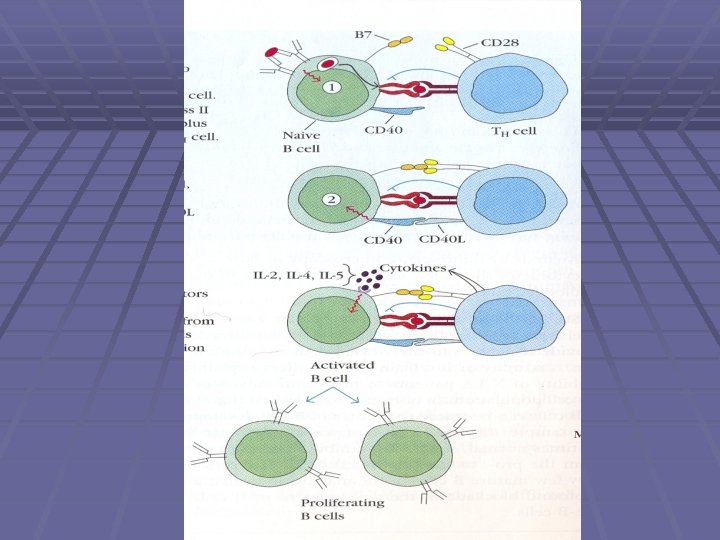
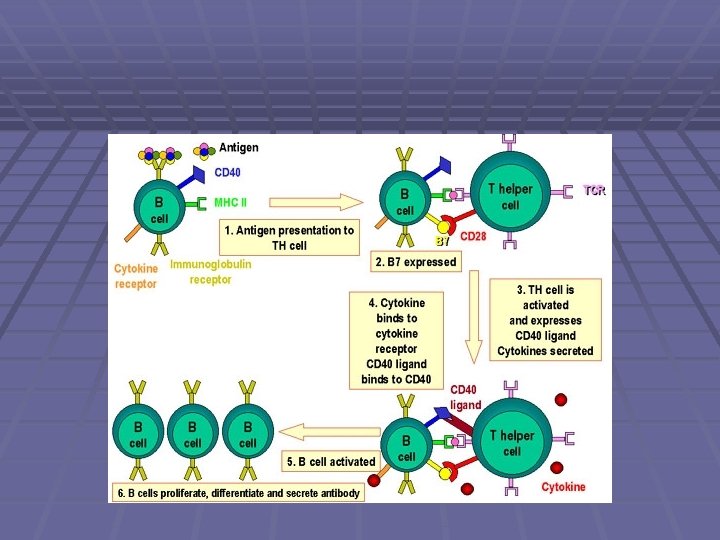
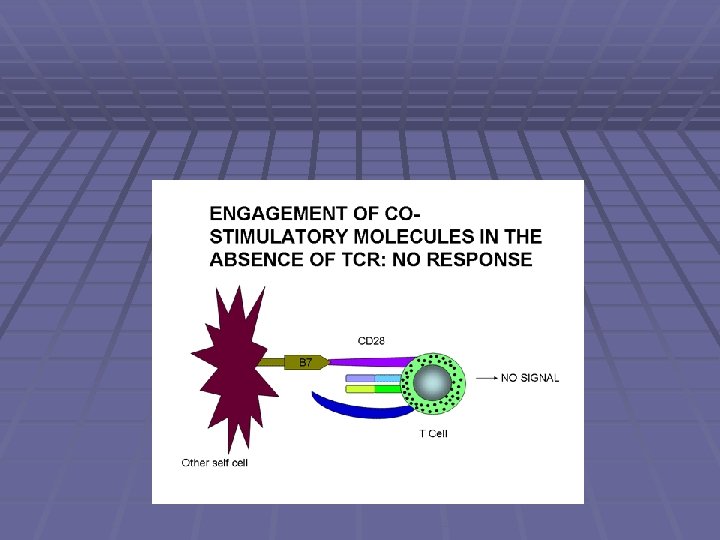
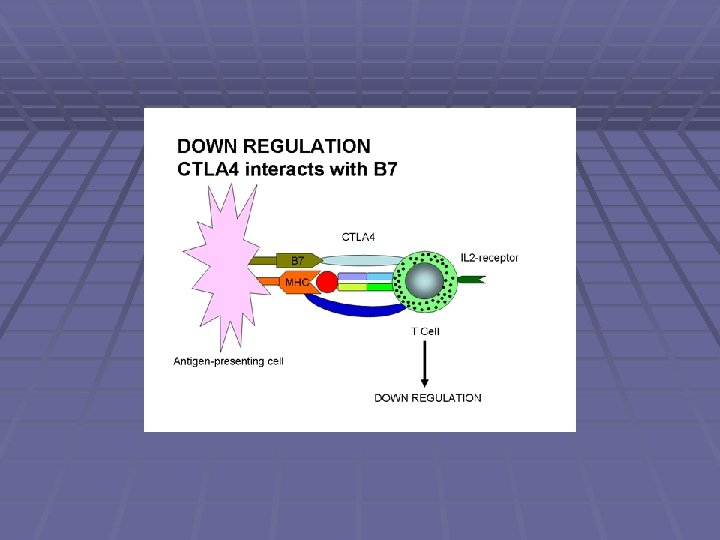
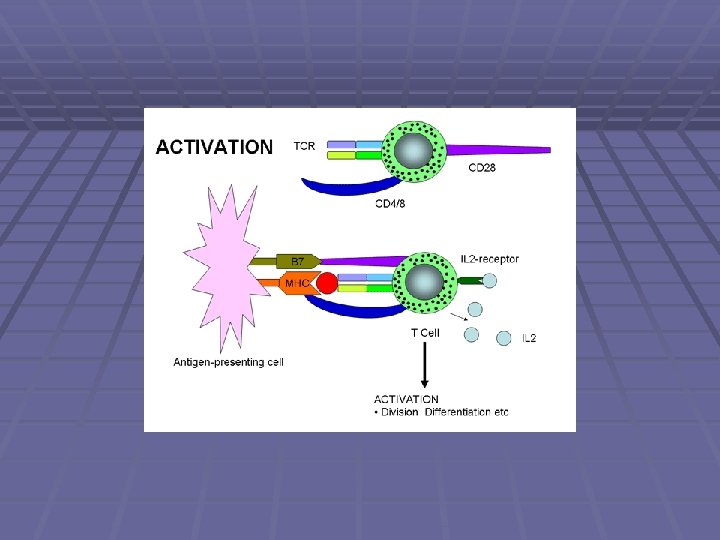
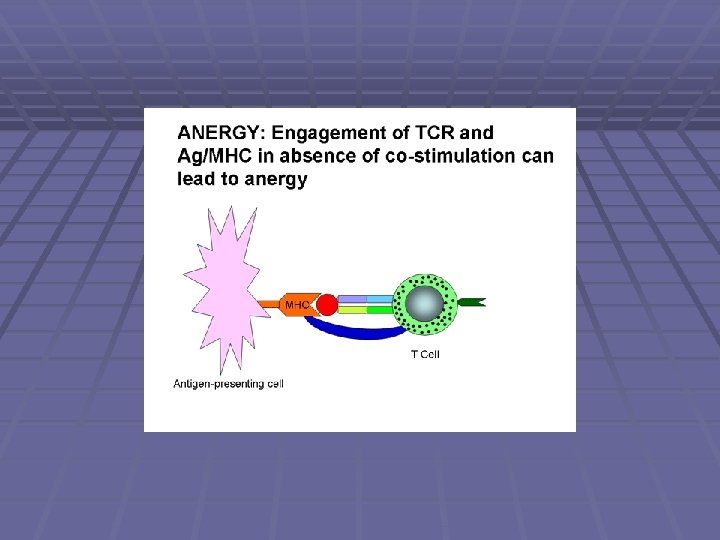
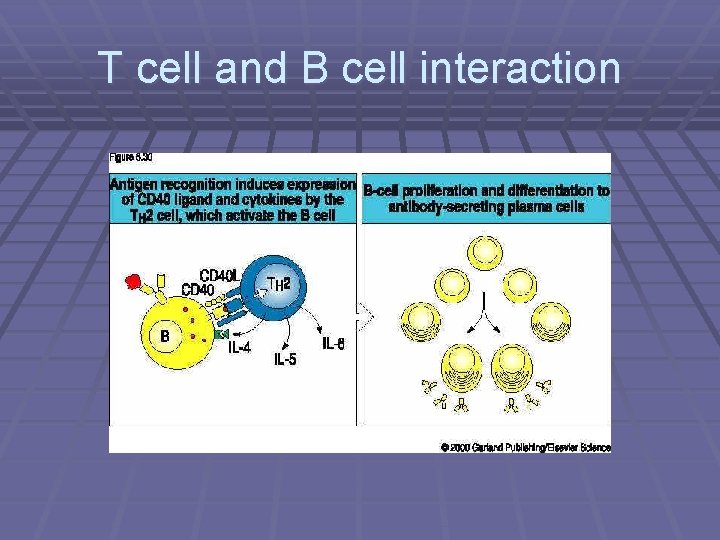
T cell and B cell interaction
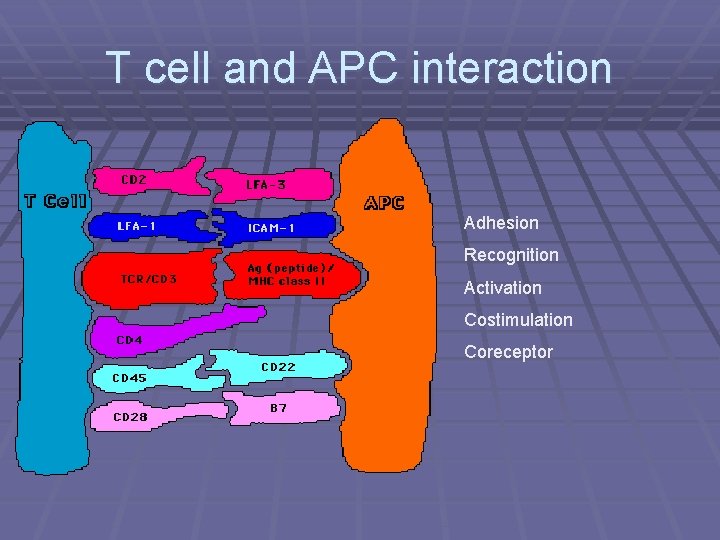
T cell and APC interaction Adhesion Recognition Activation Costimulation Coreceptor
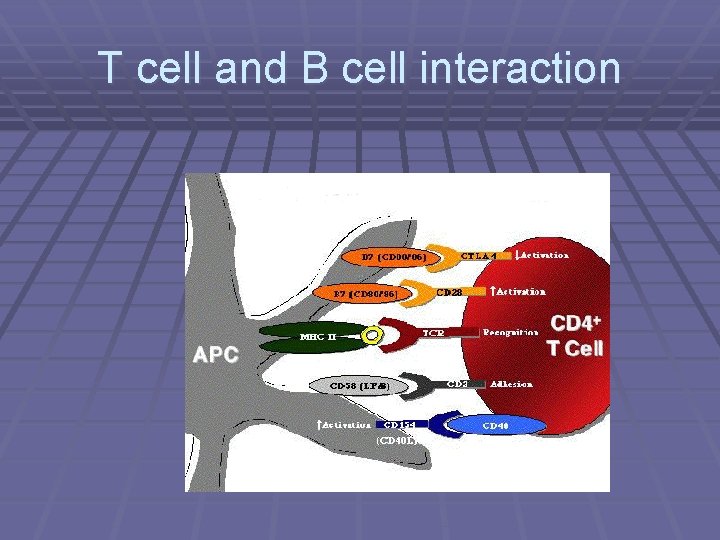
T cell and B cell interaction
CMI Lab. Diagnosis T cell count Skin test - Tuberculin, PPD - LTT (Lymphocyte transformation test( MLR (Mixed lymphocyte reaction , ( Lymphokine production Lymph node biopsy PC
HMI Lab. Diagnosis § § Serum Ig B cell count Specific Ab Plaque forming assay PC
WBC Function Tests § Phagocytic function § Chemotactic factors § CMI: - § § LTT, LMC, ADCC Skin tests HMI Vaccination Plaque forming test CBC Ig, ‘C 3, CH 50 PC
The Phagocytic Function § Defects of PMN function - Defects in the migration cascade Defects in the killing function Defects in both cascades § Defects of macrophage function - Defects in immune response, phagocytosis/killing microorganizing antitumor activity PC
Lab. Evaluation. 1 Initial screening test : CBC/Ig/CH 50, C 3/Skin test. 2 Specific neutrophil function assay Rebuck skin window Molecular assay (CD 11/CD 18 glycoprotein def(. Chemotaxis assay Oxygen burst activity Phagocytosis/Intracellular killing Degranulation assay Neutrophil-mediated antibody dependent cellular cytotoxicity (ADCC( PC
The Lymphocyte Transformation test § Chronic mucocutaneous candidiasis, § · Congenital or acquired immunodeficiency § § § disorders; · To study the integrity of lymphokine production, · Monitor immunosuppressive or immunoenhancing therapy, · Severe combined immune deficiency, · To predict allograft compatibility in the transplantation setting, · Di. George anomaly, · Nezelof syndrome.
Why LTT? § to assess the ability of the lymphocytes to proliferate and to recognize and respond to antigens
Types? mitogens assay § using nonspecific plant lectins § evaluates the mitotic response of T and B lymphocytes to a foreign antigen. § lymphocytes from the patient is incubated with a nonspecific mitogen for 72 hours. § The culture is labeled with tritiated thymidine § measured by a liquid scintillation spectrophotometer in counts per minute, antigen assay *uses specific antigens such as PPD, Candida, mumps, tetanus toxoid and streptokinase *After incubation of 4 ½ to 7 days *transformation is measured by the same method
§ § § § § T cell count Skin test - Tuberculin, PPD - LTT (Lymphocyte transformation test( MLR (Mixed lymphocyte reaction , ( Plaque forming assay Phagocytic function Specific neutrophil function assay Neutrophil-mediated antibody dependent cellular cytotoxicity (ADCC(
Fusion molecules § CTLA-4 : Ig Rheumatoid arthritis Transplant rejection Psoriasis Crohn’s disease
- Slides: 35