
T 5 Wk 4 English Unit Traditional stories
- Slides: 10
T 5 Wk 4 English Unit: Traditional stories from a different culture Tuesday I can retell the story of ‘The Great Kapok Tree’ using a wide vocabulary.
Why are cultural stories important? • Stories are universal (meaning something for everyone). • Stories preserve culture (meaning the way of life of particular groups of people) and pass on cultural knowledge from one generation to another. • Stories keep cultures alive. • Stories provide a timeless link to ancient traditions, legends and myths. But they also connect us and help us to understand our world.
Starter: What do you think are the features of a traditional tale?
Starter: What do you think are the features of a traditional tale? Possible answer: They often have animal characters, usually a hero and villain and have a moral. Which of these features do you think are in the story of ‘The Great Kapok Tree’?
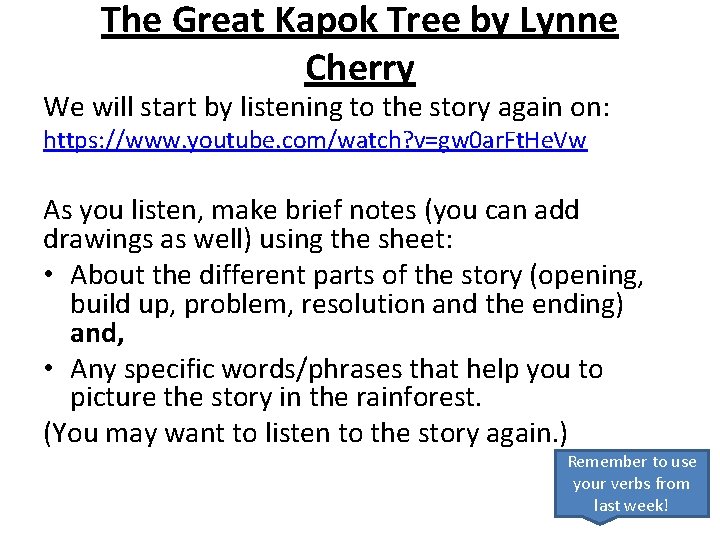
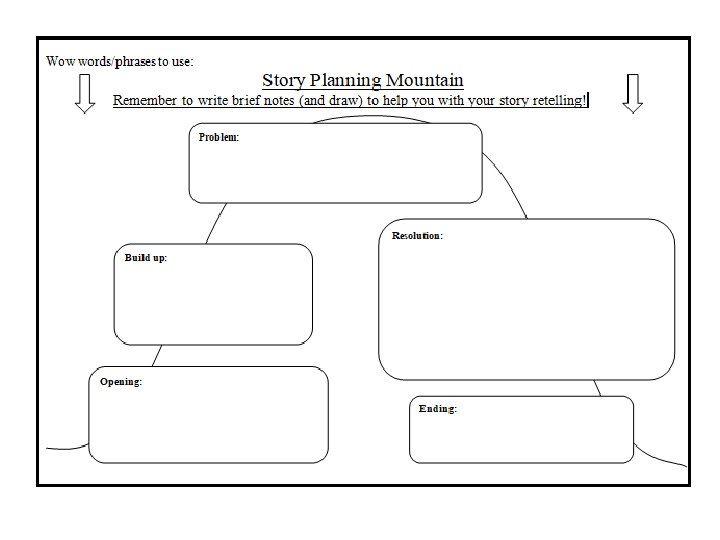
The Great Kapok Tree by Lynne Cherry We will start by listening to the story again on: https: //www. youtube. com/watch? v=gw 0 ar. Ft. He. Vw As you listen, make brief notes (you can add drawings as well) using the sheet: • About the different parts of the story (opening, build up, problem, resolution and the ending) and, • Any specific words/phrases that help you to picture the story in the rainforest. (You may want to listen to the story again. ) Remember to use your verbs from last week!
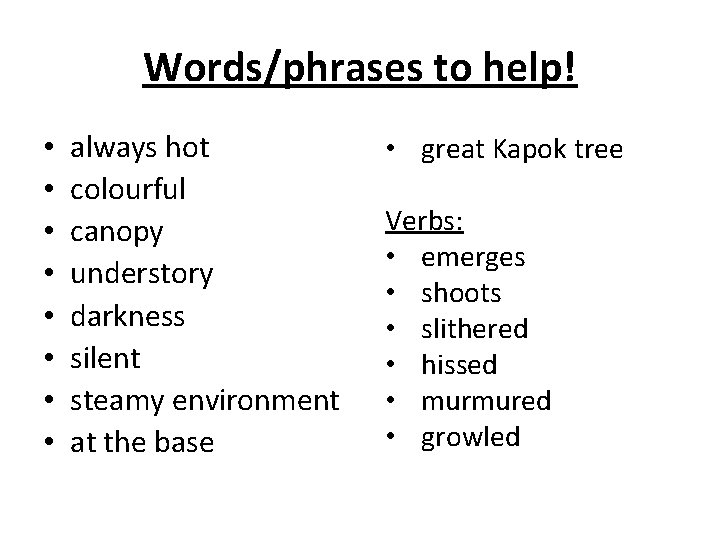
Words/phrases to help! • • always hot colourful canopy understory darkness silent steamy environment at the base • great Kapok tree Verbs: • emerges • shoots • slithered • hissed • murmured • growled
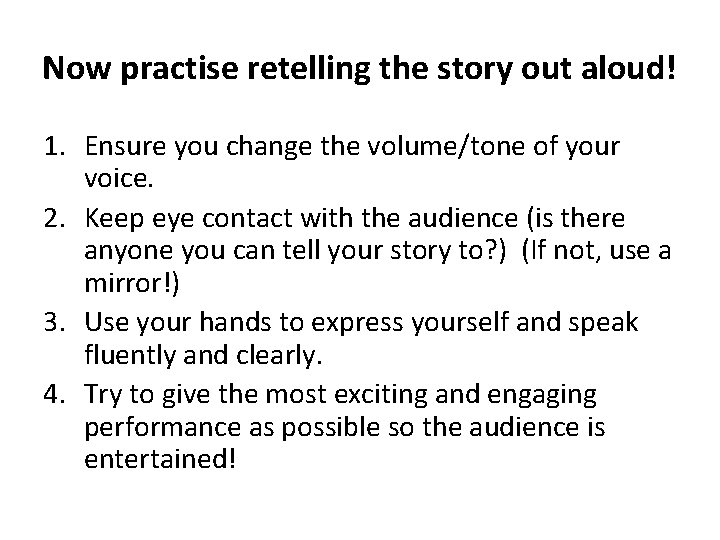
Now practise retelling the story out aloud! 1. Ensure you change the volume/tone of your voice. 2. Keep eye contact with the audience (is there anyone you can tell your story to? ) (If not, use a mirror!) 3. Use your hands to express yourself and speak fluently and clearly. 4. Try to give the most exciting and engaging performance as possible so the audience is entertained!
Challenge! Can you learn your story by heart and retell it without your notes?
How did you get on? Can you give any feedback on your performance – what was good about it, and what could be improved?