
T 1 D School Managing Type 1 Diabetes

T 1 D @ School Managing Type 1 Diabetes in the School Setting Edward Bellfield, MD, MPH, FAAP Associate Physician, Pediatric Endocrinology Southern California Permanente Medical Group Kaiser Permanente Medical Center Los Angeles | Panorama City
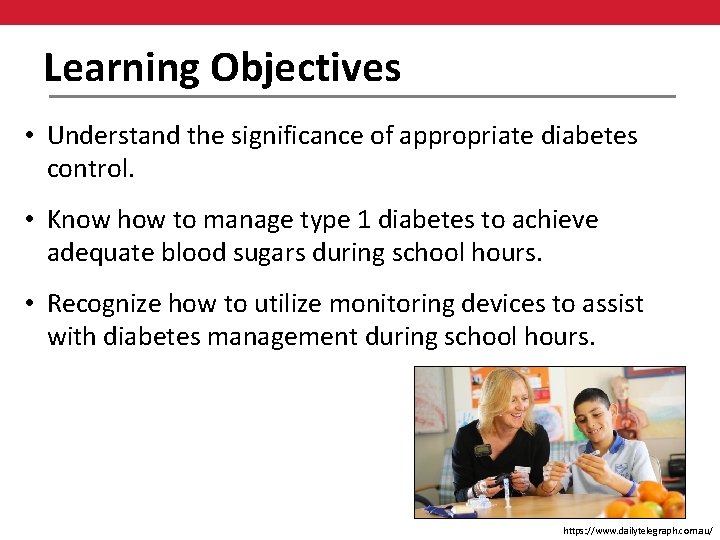
Learning Objectives • Understand the significance of appropriate diabetes control. • Know how to manage type 1 diabetes to achieve adequate blood sugars during school hours. • Recognize how to utilize monitoring devices to assist with diabetes management during school hours. https: //www. dailytelegraph. com. au/
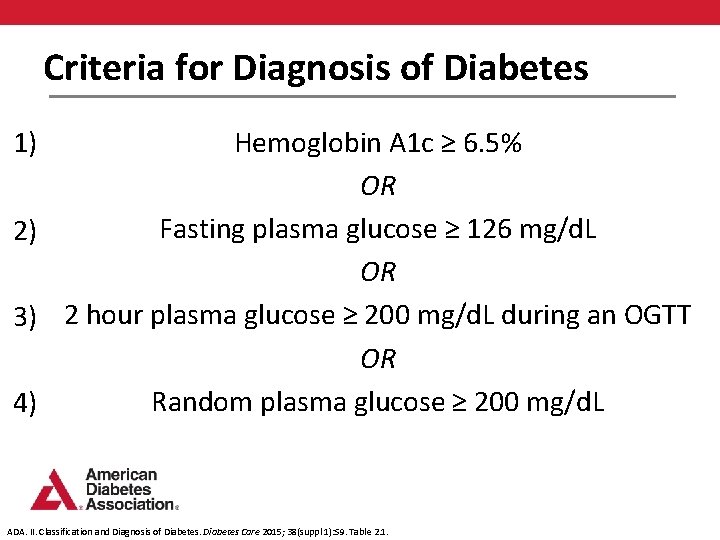
Criteria for Diagnosis of Diabetes Hemoglobin A 1 c ≥ 6. 5% OR Fasting plasma glucose ≥ 126 mg/d. L 2) OR 3) 2 hour plasma glucose ≥ 200 mg/d. L during an OGTT OR Random plasma glucose ≥ 200 mg/d. L 4) 1) ADA. II. Classification and Diagnosis of Diabetes Care 2015; 38(suppl 1): S 9. Table 2. 1.
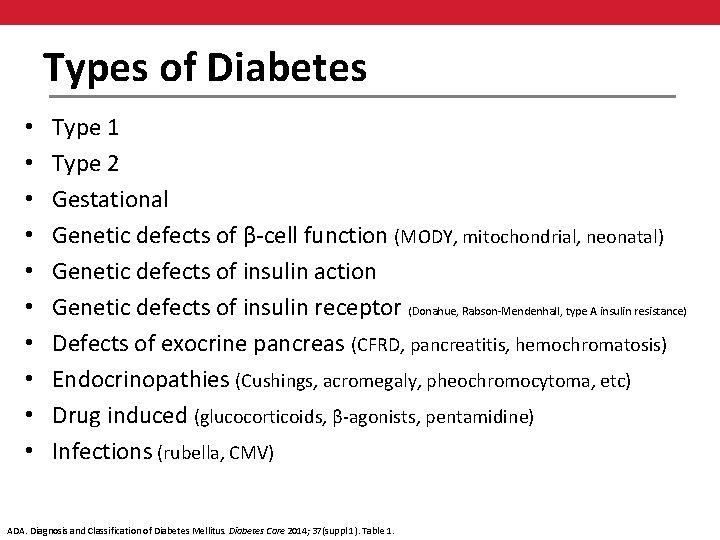
Types of Diabetes • • • Type 1 Type 2 Gestational Genetic defects of β-cell function (MODY, mitochondrial, neonatal) Genetic defects of insulin action Genetic defects of insulin receptor (Donahue, Rabson-Mendenhall, type A insulin resistance) Defects of exocrine pancreas (CFRD, pancreatitis, hemochromatosis) Endocrinopathies (Cushings, acromegaly, pheochromocytoma, etc) Drug induced (glucocorticoids, β-agonists, pentamidine) Infections (rubella, CMV) ADA. Diagnosis and Classification of Diabetes Mellitus. Diabetes Care 2014; 37(suppl 1). Table 1.
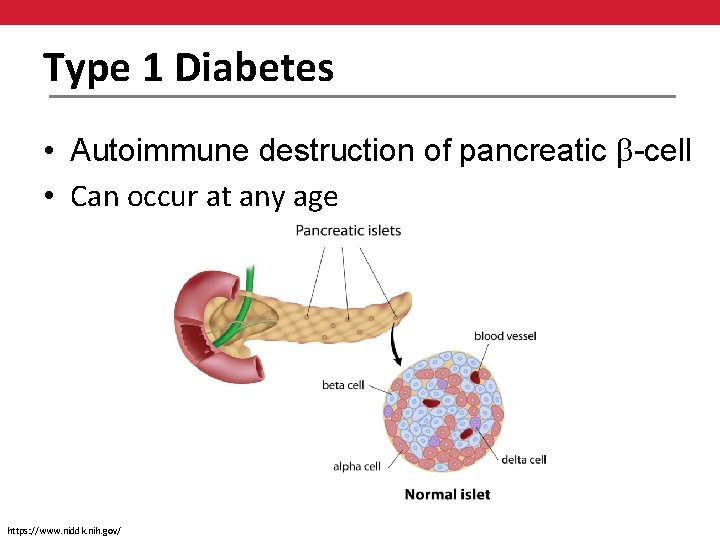
Type 1 Diabetes • Autoimmune destruction of pancreatic -cell • Can occur at any age https: //www. niddk. nih. gov/
Type 1 Diabetes • Pancreas unable to produce insulin • Insulin is necessary for normoglycemia Presenting signs/symptoms: • • • Polyuria, Polydipsia, Polyphagia Nocturnal enuresis Weight loss Fatigue, weakness Blurry vision Ketoacidosis: abdominal pain, nausea, vomiting, mental status changes
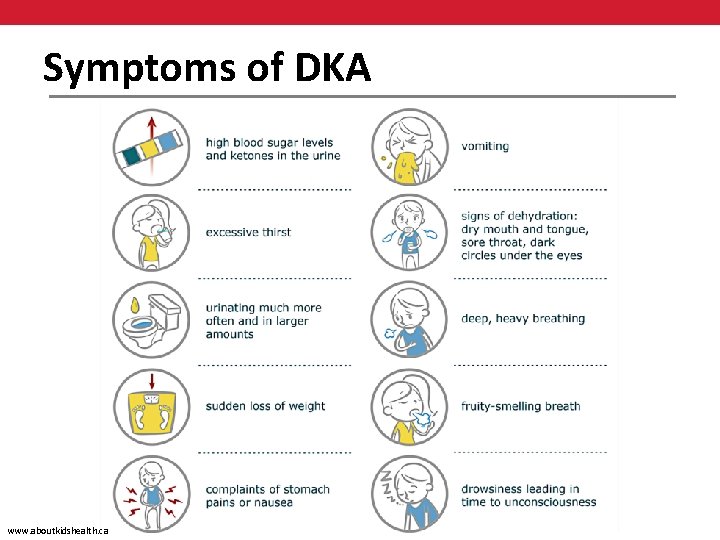
Symptoms of DKA www. aboutkidshealth. ca
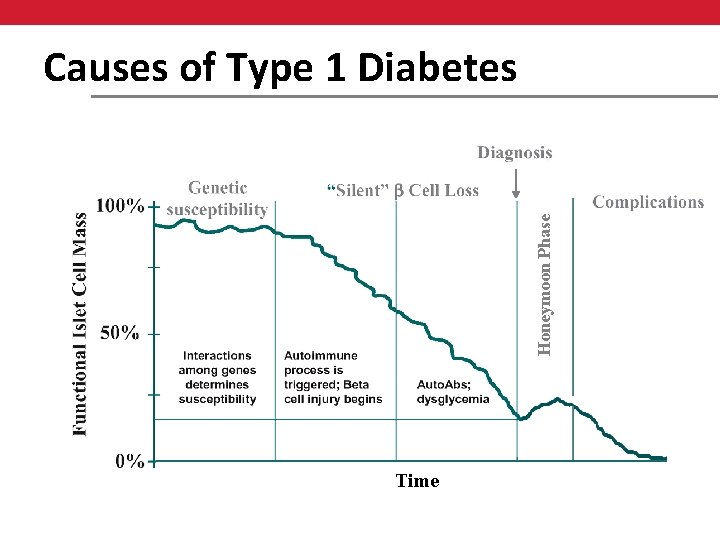
Honeymoon Phase Causes of Type 1 Diabetes Time
Epidemiology • 200, 000 people under the age of 20 years old have Type 1 diabetes. • Between 2011 -2012, 17, 900 children/adolescents under the age of 20 were diagnosed with Type 1 diabetes. • There was a 21% increase in people diagnosed with Type 1 diabetes between 2001 and 2009 under the age of 20. • Among people under the age of 20, non-Hispanic whites had the highest rates of new diagnosis of Type 1 diabetes. SEARCH for Diabetes in Youth Study, 2017
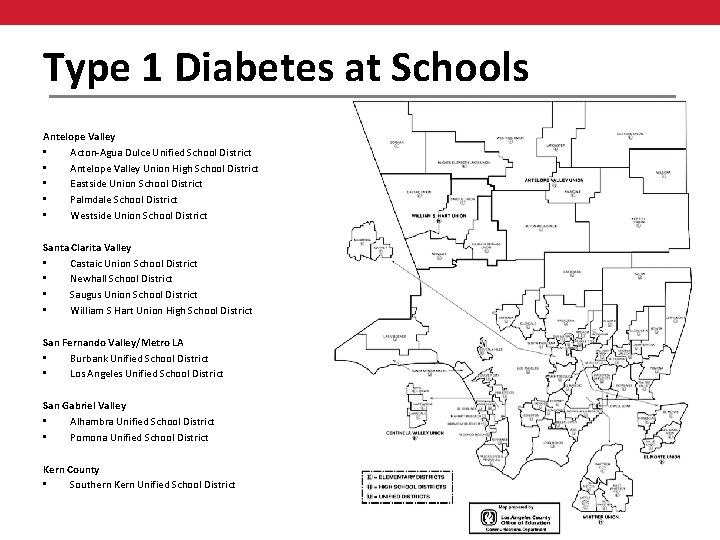
Type 1 Diabetes at Schools Antelope Valley • Acton-Agua Dulce Unified School District • Antelope Valley Union High School District • Eastside Union School District • Palmdale School District • Westside Union School District Santa Clarita Valley • Castaic Union School District • Newhall School District • Saugus Union School District • William S Hart Union High School District San Fernando Valley/Metro LA • Burbank Unified School District • Los Angeles Unified School District San Gabriel Valley • Alhambra Unified School District • Pomona Unified School District Kern County • Southern Kern Unified School District
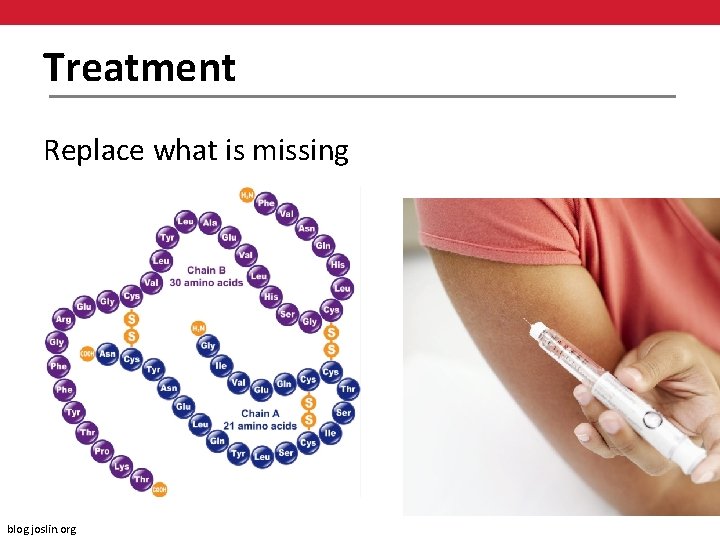
Treatment Replace what is missing blog. joslin. org
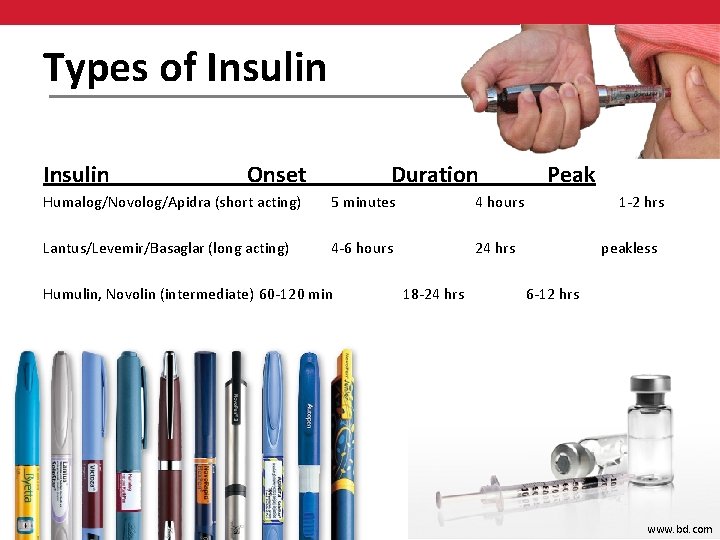
Types of Insulin Onset Duration Humalog/Novolog/Apidra (short acting) 5 minutes 4 hours Lantus/Levemir/Basaglar (long acting) 4 -6 hours 24 hrs Humulin, Novolin (intermediate) 60 -120 min 18 -24 hrs Peak 1 -2 hrs peakless 6 -12 hrs www. bd. com
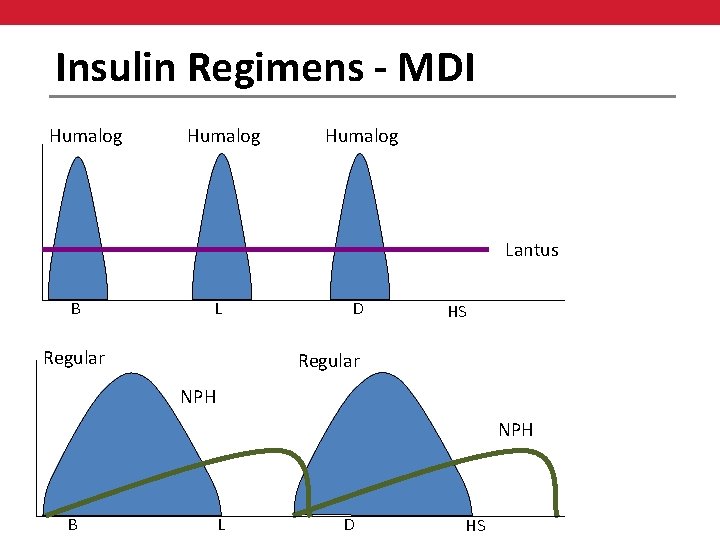
Insulin Regimens - MDI Humalog Lantus B L Regular D HS Regular NPH B L D HS
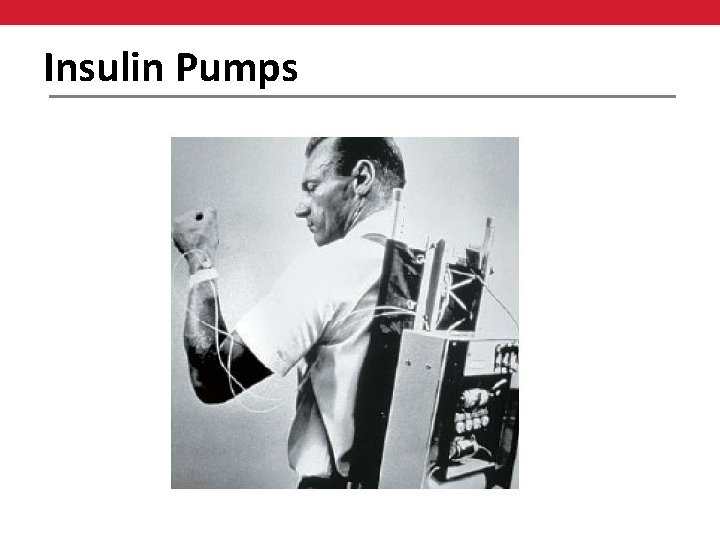
Insulin Pumps
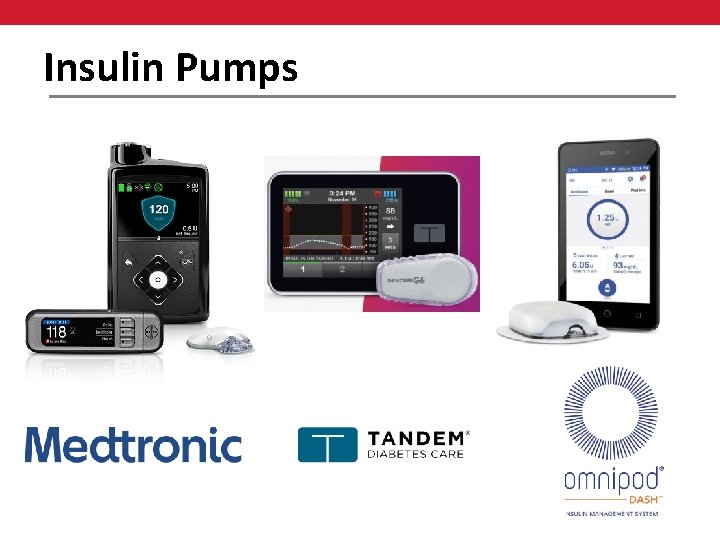
Insulin Pumps
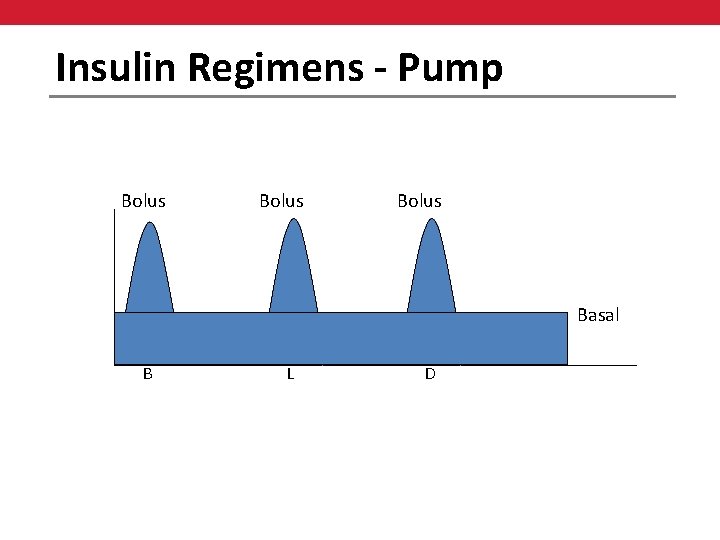
Insulin Regimens - Pump Bolus Basal B L D
Insulin Dosing • Insulin Sensitivity Factor (ISF) or Correction Factor (CF): # of points 1 unit of insulin will drop BG • Insulin-to-Carb Ratio or Carb Ratio (ICR): # of grams of carbohydrates 1 unit of insulin will cover • Goal Range or Target Blood Glucose (BG): All corrections should aim for a BG in this range.
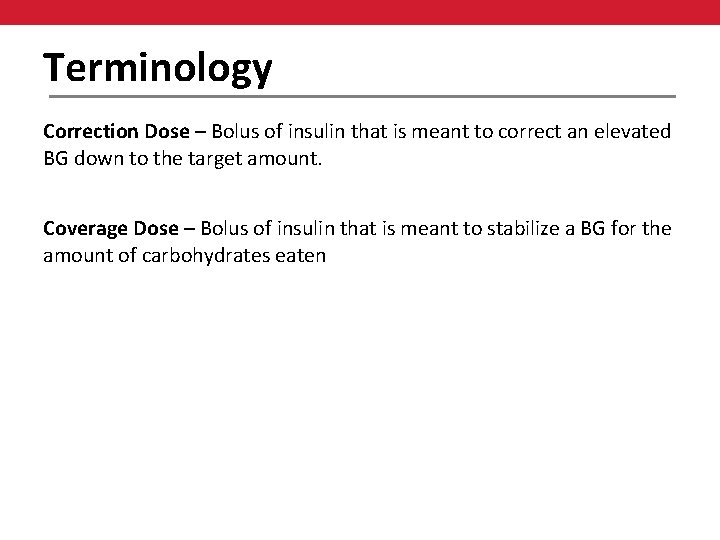
Terminology Correction Dose – Bolus of insulin that is meant to correct an elevated BG down to the target amount. Coverage Dose – Bolus of insulin that is meant to stabilize a BG for the amount of carbohydrates eaten
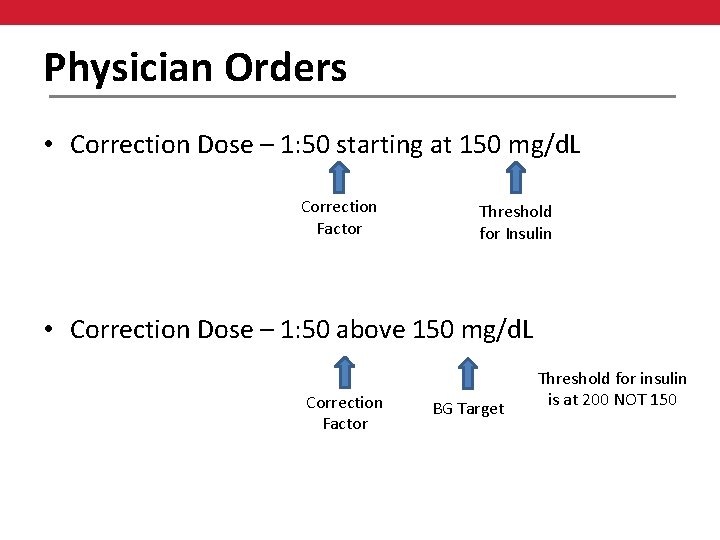
Physician Orders • Correction Dose – 1: 50 starting at 150 mg/d. L Correction Factor Threshold for Insulin • Correction Dose – 1: 50 above 150 mg/d. L Correction Factor BG Target Threshold for insulin is at 200 NOT 150
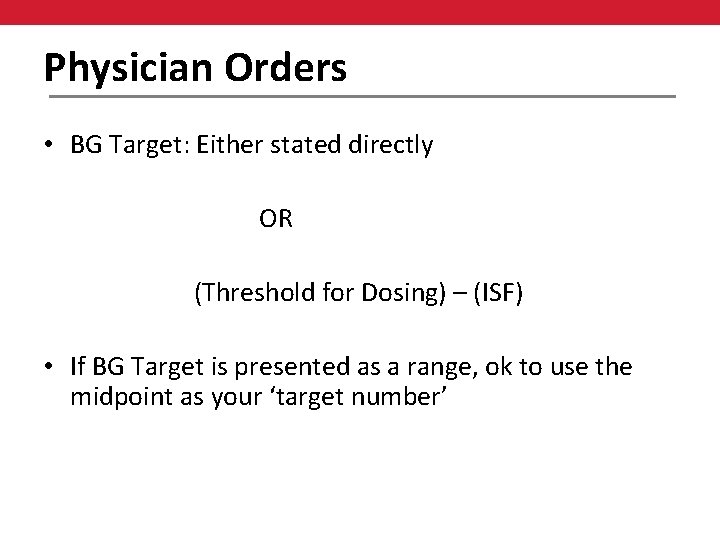
Physician Orders • BG Target: Either stated directly OR (Threshold for Dosing) – (ISF) • If BG Target is presented as a range, ok to use the midpoint as your ‘target number’
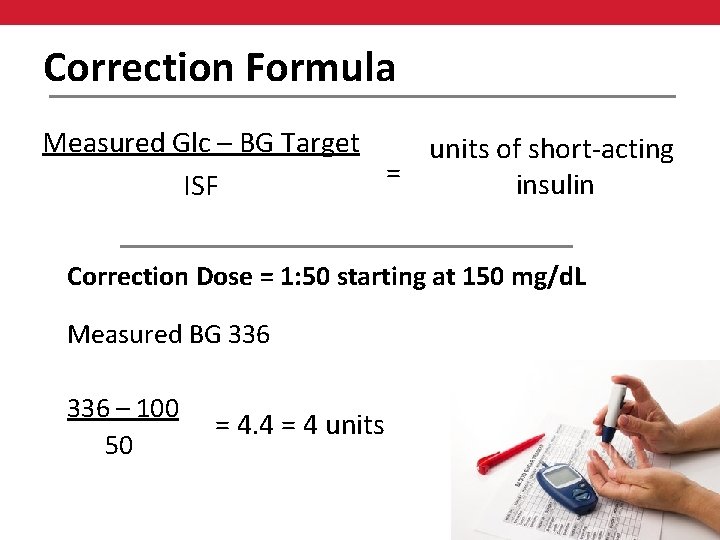
Correction Formula Measured Glc – BG Target units of short-acting = insulin ISF Correction Dose = 1: 50 starting at 150 mg/d. L Measured BG 336 – 100 50 = 4. 4 = 4 units
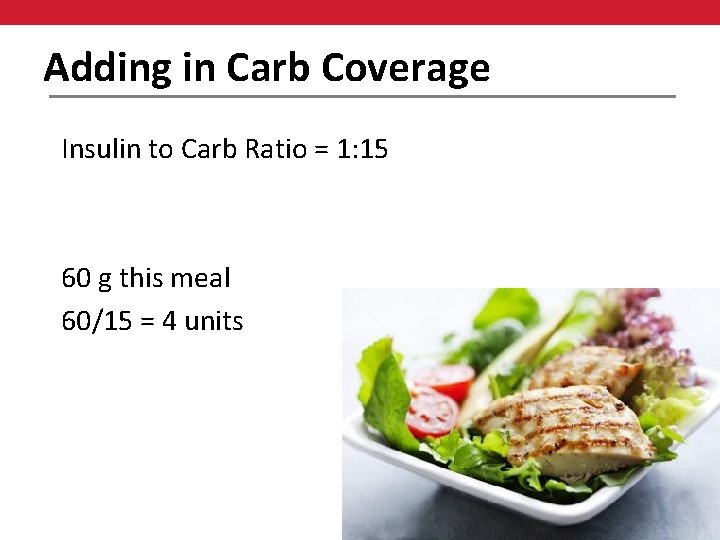
Adding in Carb Coverage Insulin to Carb Ratio = 1: 15 60 g this meal 60/15 = 4 units
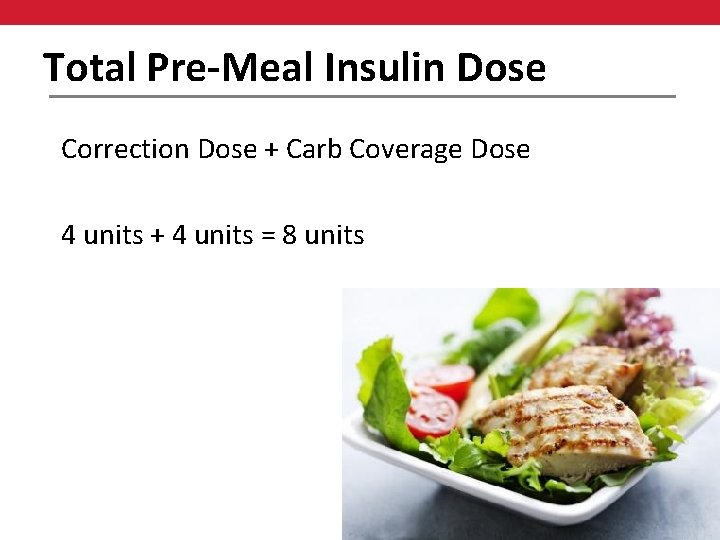
Total Pre-Meal Insulin Dose Correction Dose + Carb Coverage Dose 4 units + 4 units = 8 units
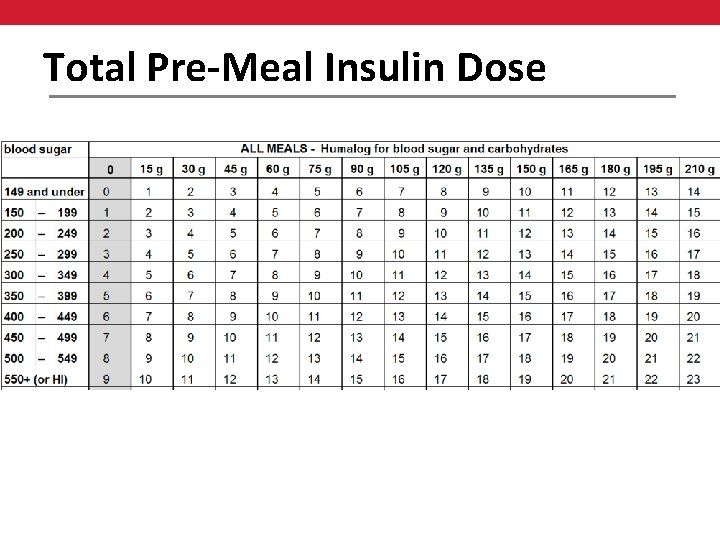
Total Pre-Meal Insulin Dose
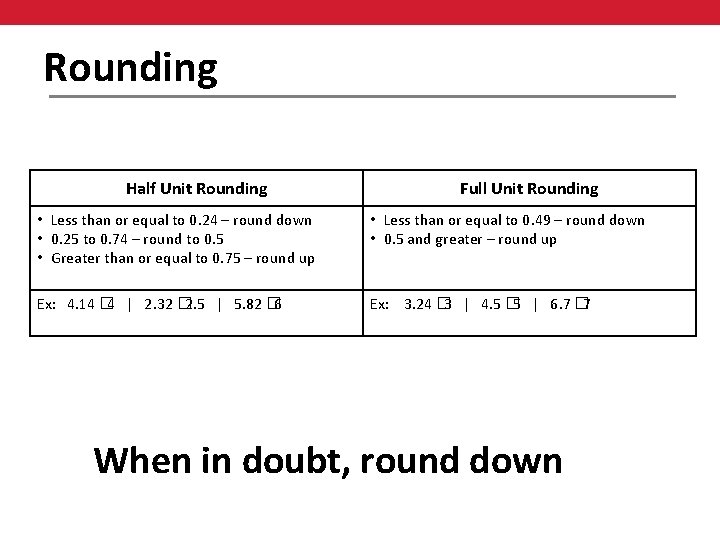
Rounding Half Unit Rounding Full Unit Rounding • Less than or equal to 0. 24 – round down • 0. 25 to 0. 74 – round to 0. 5 • Greater than or equal to 0. 75 – round up • Less than or equal to 0. 49 – round down • 0. 5 and greater – round up Ex: 4. 14 � 4 | 2. 32 � 2. 5 | 5. 82 � 6 Ex: 3. 24 � 3 | 4. 5 � 5 | 6. 7 � 7 When in doubt, round down
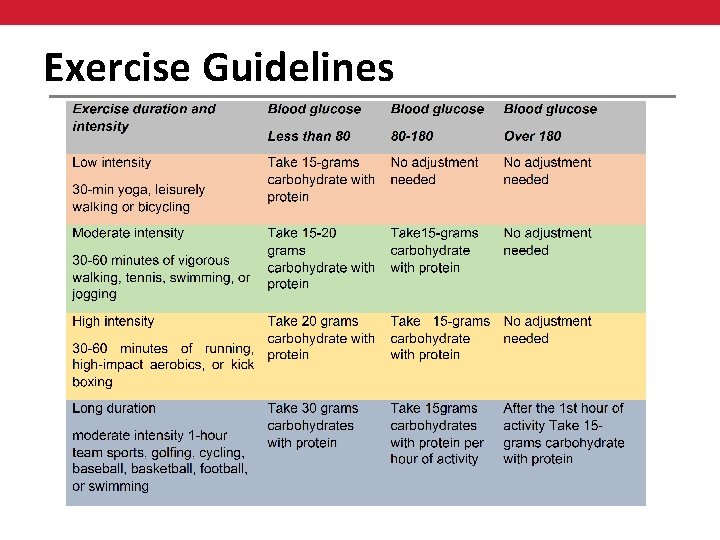
Exercise Guidelines

Troubleshooting - Highs Insulin Dosing Insufficient quantity Insufficient carb intake Calculation error Insulin Rx Expired/spoiled insulin Injection technique Supplies Expired/spoiled strips Student Physical activity Anxiety Illness/Infection/Injury
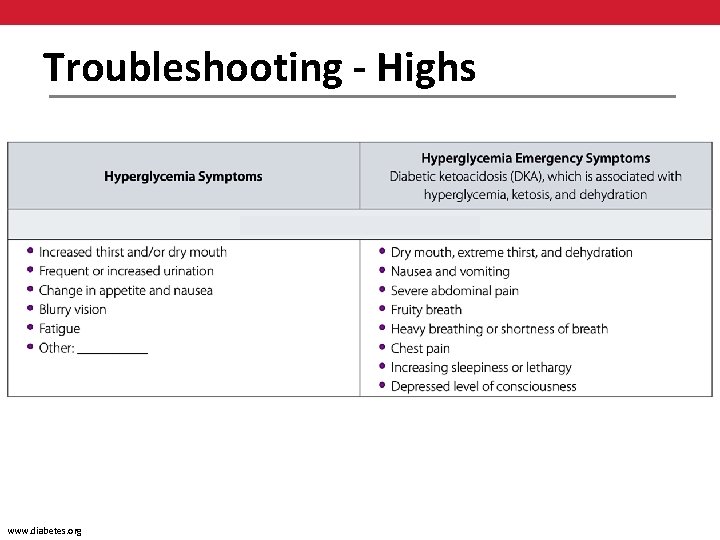
Troubleshooting - Highs www. diabetes. org
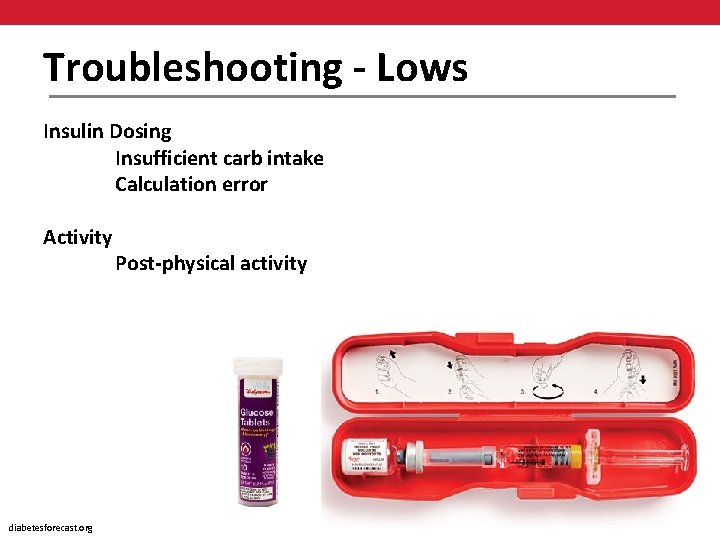
Troubleshooting - Lows Insulin Dosing Insufficient carb intake Calculation error Activity diabetesforecast. org Post-physical activity
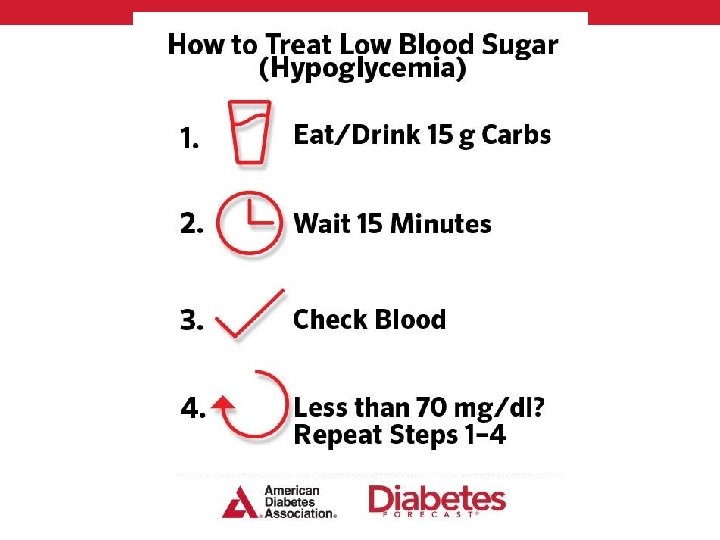
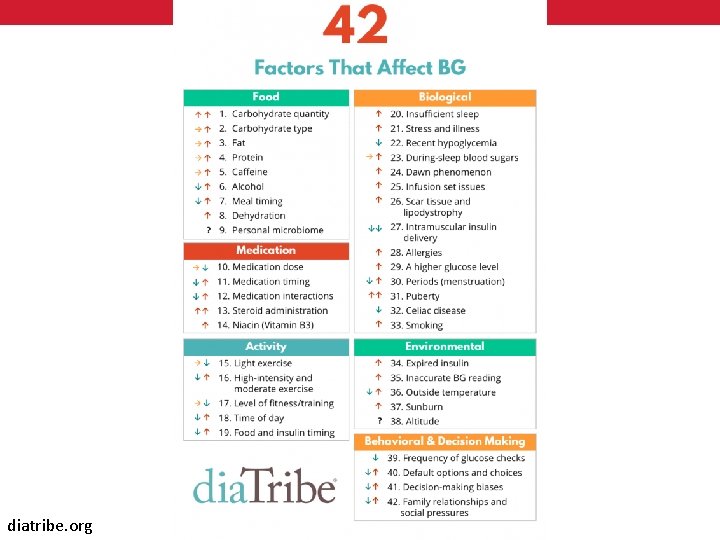
diatribe. org
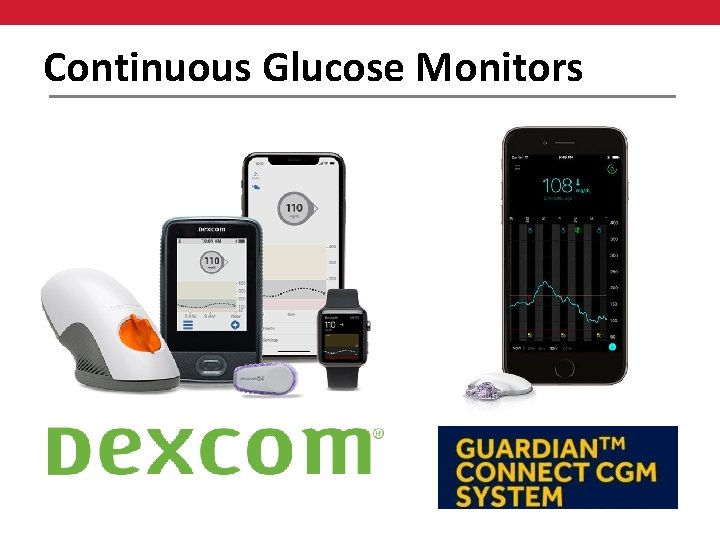
Continuous Glucose Monitors
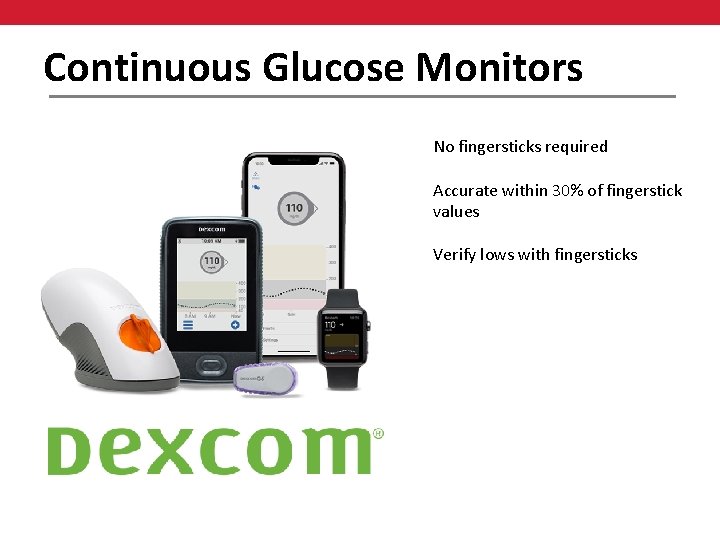
Continuous Glucose Monitors No fingersticks required Accurate within 30% of fingerstick values Verify lows with fingersticks
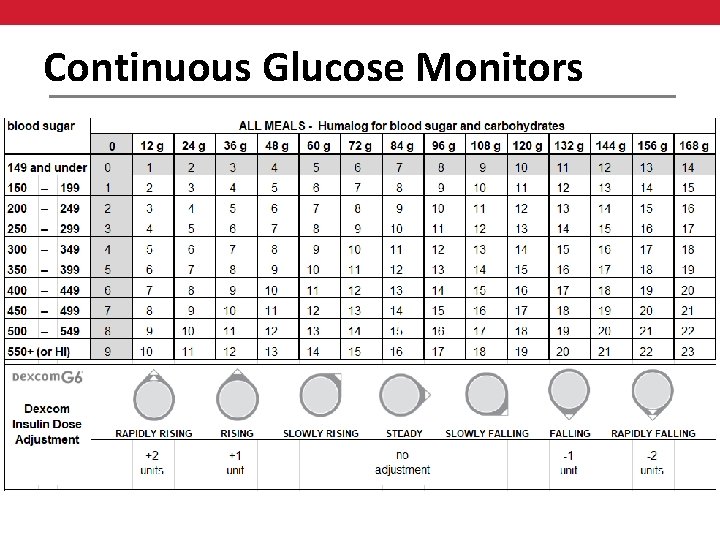
Continuous Glucose Monitors
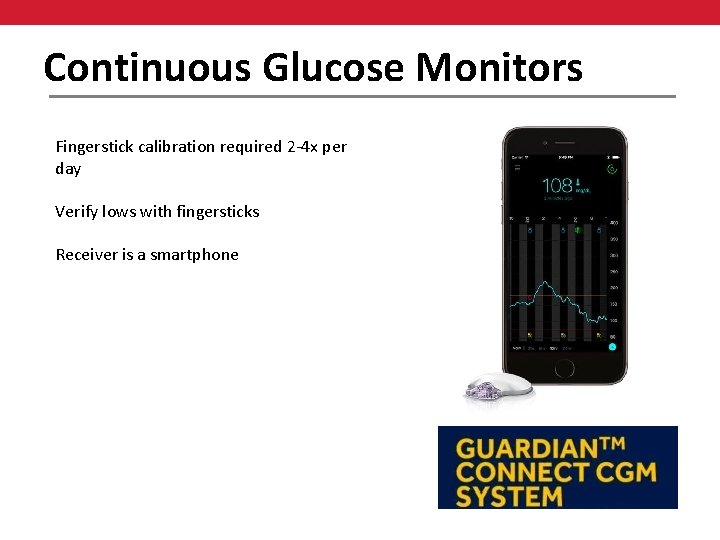
Continuous Glucose Monitors Fingerstick calibration required 2 -4 x per day Verify lows with fingersticks Receiver is a smartphone
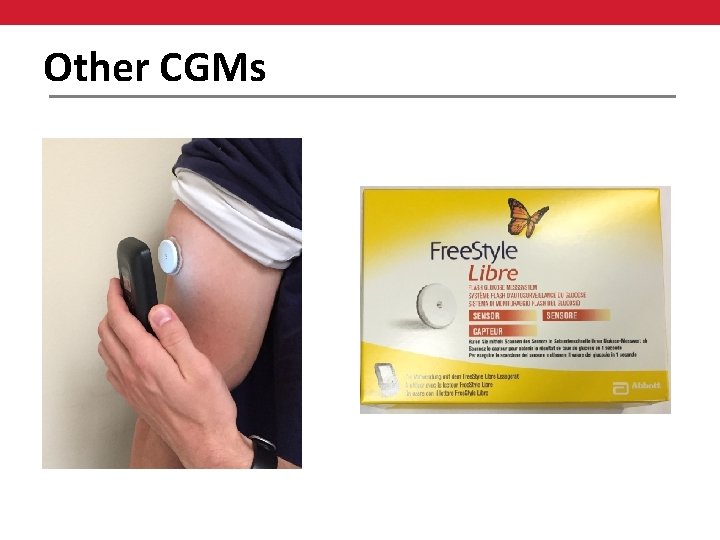
Other CGMs
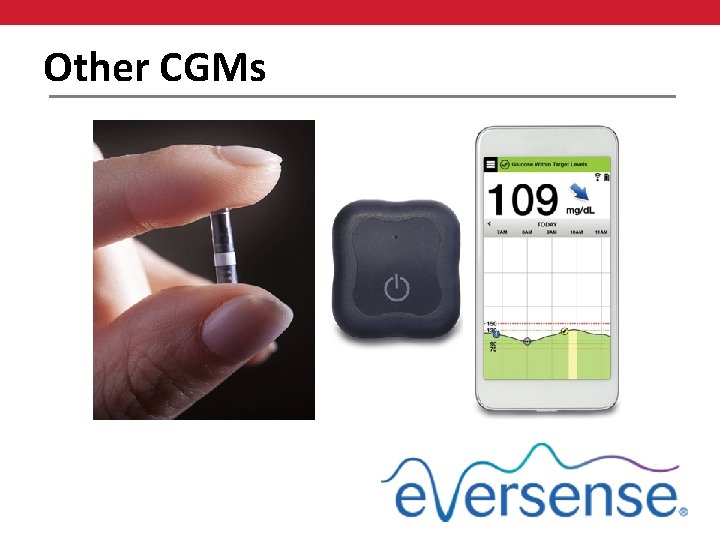
Other CGMs
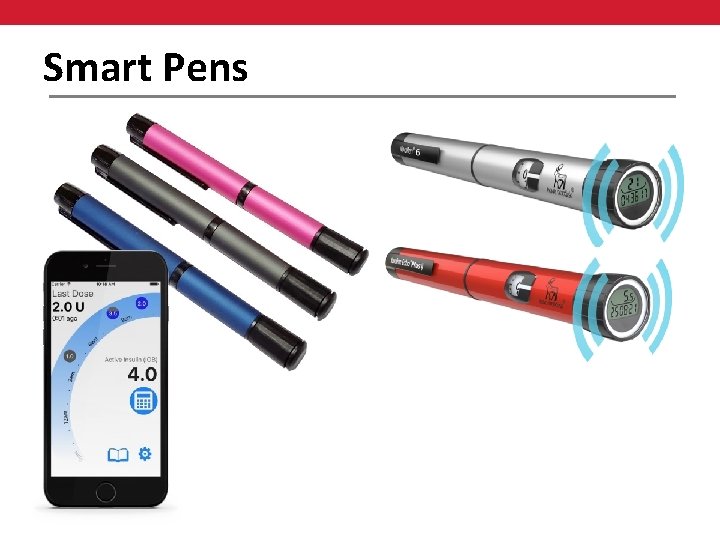
Smart Pens
Research for a Cure
Take Home Points • Type 1 diabetes is a lifelong chronic condition • Insulin is the main treatment • When in doubt, ask for help
- Slides: 41