
T 00 B BASIC LEAN TRAINING Introduction to
T 00 - B BASIC LEAN TRAINING Introduction to Lean The European Commission's support for the production of this publication does not constitute an endorsement of the contents, which reflect the views only of the authors, and the Commission cannot be held responsible for any use which may be made of the information contained therein.
Objectives The objectives of this chapter are: § General idea what Lean is about § Introduction to Lean examples
Know – Wonder – Learn (KWL) Chart TOPIC What do you already know (or think you know) about Lean? What do you wonder about Lean?
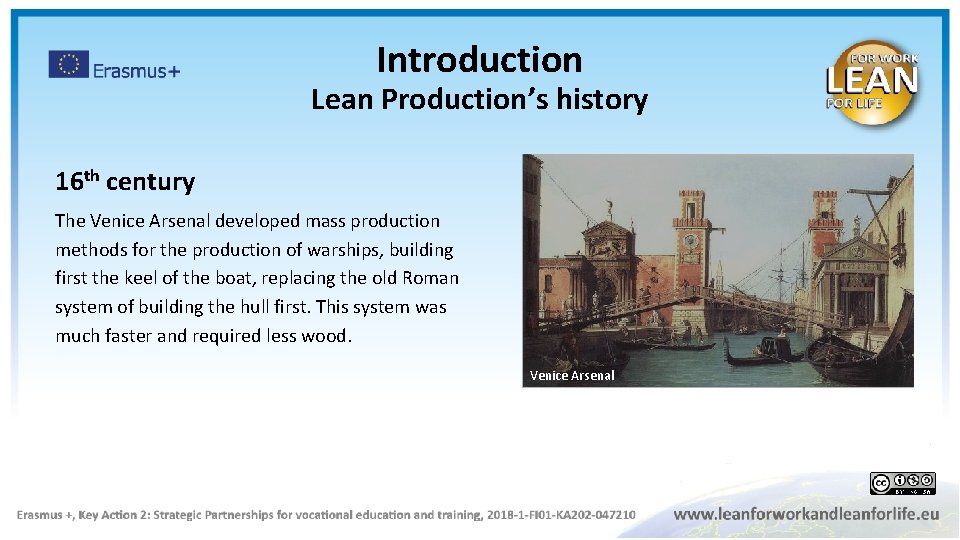
Introduction Lean Production’s history 16 th century The Venice Arsenal developed mass production methods for the production of warships, building first the keel of the boat, replacing the old Roman system of building the hull first. This system was much faster and required less wood. Venice Arsenal
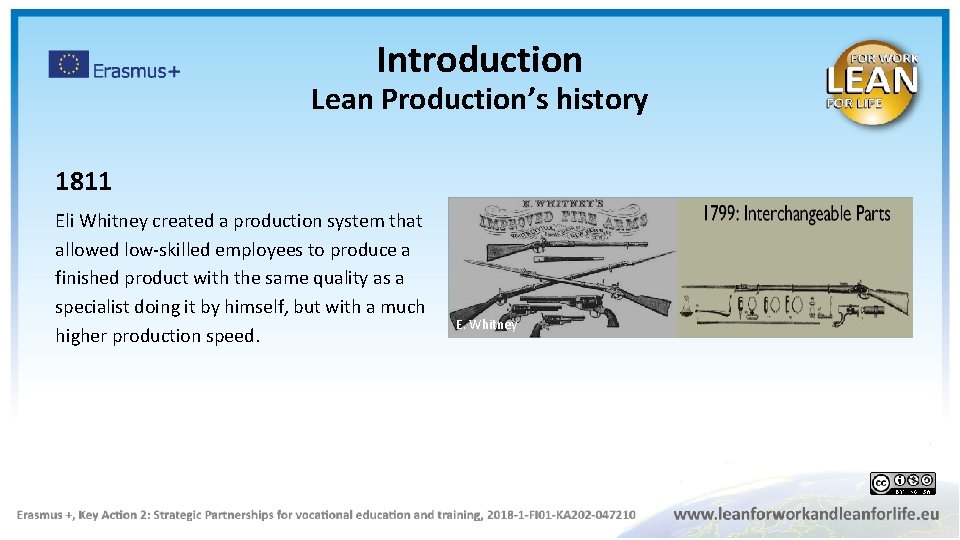
Introduction Lean Production’s history 1811 Eli Whitney created a production system that allowed low-skilled employees to produce a finished product with the same quality as a specialist doing it by himself, but with a much higher production speed. E. Whitney
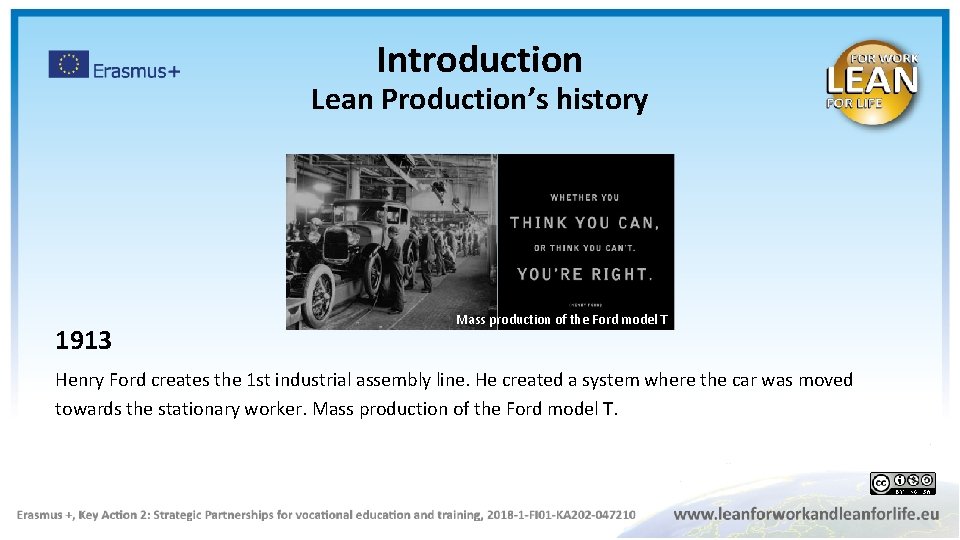
Introduction Lean Production’s history 1913 Mass production of the Ford model T Henry Ford creates the 1 st industrial assembly line. He created a system where the car was moved towards the stationary worker. Mass production of the Ford model T.
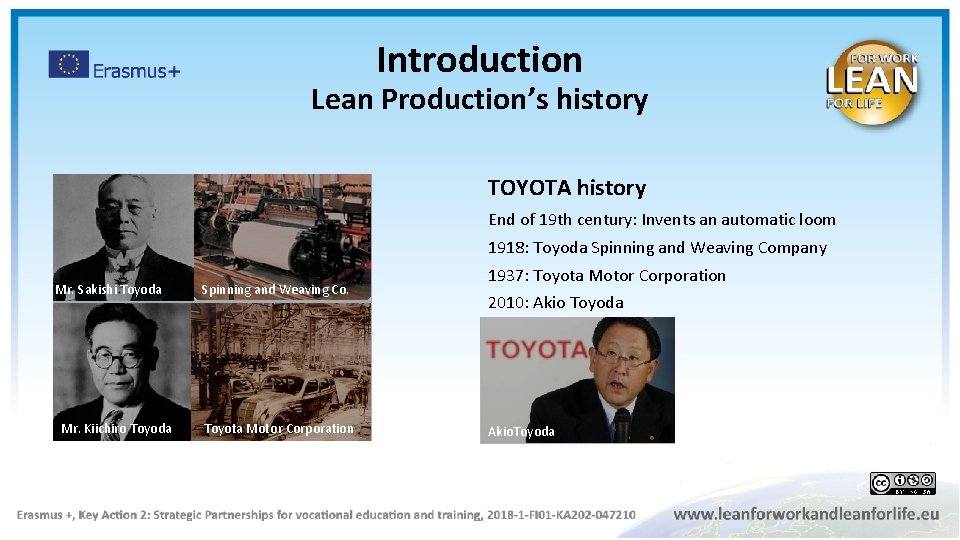
Introduction Lean Production’s history TOYOTA history End of 19 th century: Invents an automatic loom 1918: Toyoda Spinning and Weaving Company Mr. Sakishi Toyoda Mr. Kiichiro Toyoda Spinning and Weaving Co. Toyota Motor Corporation 1937: Toyota Motor Corporation 2010: Akio Toyoda Akio. Toyoda
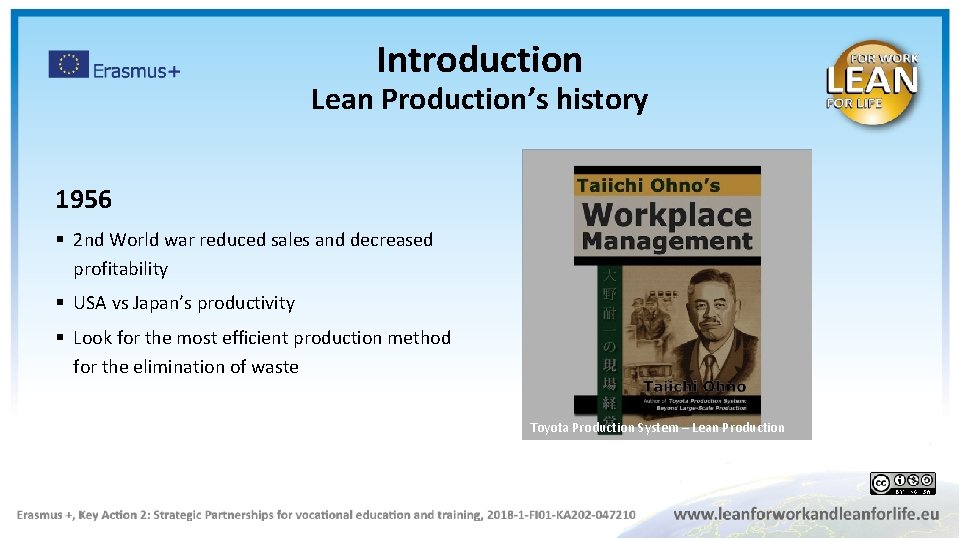
Introduction Lean Production’s history 1956 § 2 nd World war reduced sales and decreased profitability § USA vs Japan’s productivity § Look for the most efficient production method for the elimination of waste Toyota Production System – Lean Production
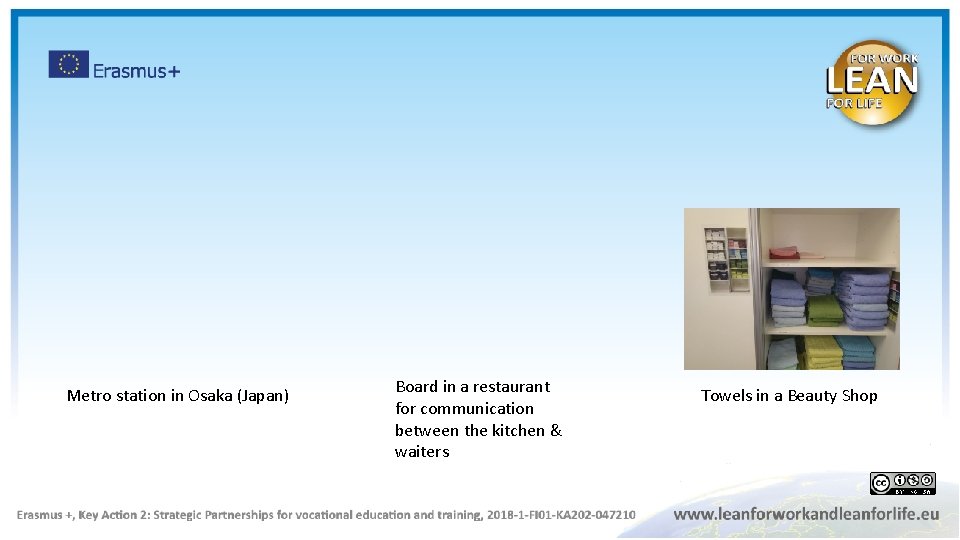
Metro station in Osaka (Japan) Board in a restaurant for communication between the kitchen & waiters Towels in a Beauty Shop
Introduction What is Lean? Lean § English term meaning ''fat-free ''. § Something that contains only that what is needed. Lean Manufacturing § Philosophy that focuses on maximizing customer value and eliminating waste. § Also linked to this concept is the establishment of continuous improvement of all operational processes by employees.

Introduction What is Lean? Lean Production § Production of a wide variety of products or services in small batches and with reduced manufacturing times. § Other focus areas are quality, flexibility and (low) cost. Lean Thinking § Management philosophy through which organizations develop competencies towards the gradual elimination of waste and the creation of customer value.
Introduction What is Lean? In the beginning… Lean = Toyota Production System (TPS) …Today, Lean combines TPS with other good methods. Lean Production / Lean Manufacturing means to produce and/or supply: § Just what is necessary and in the required quantity § When it is necessary § Where it is necessary
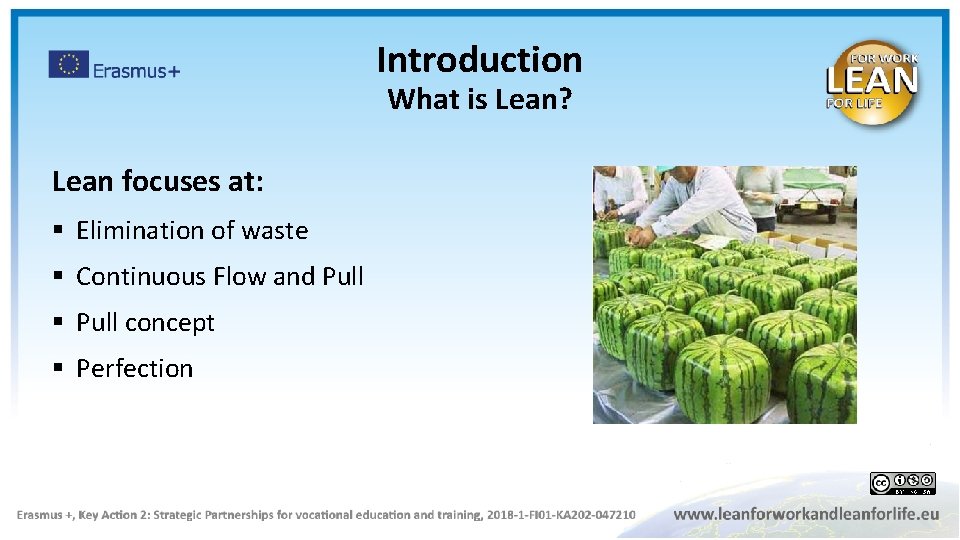
Introduction What is Lean? Lean focuses at: § Elimination of waste § Continuous Flow and Pull § Pull concept § Perfection
Introduction What is Lean? Advantages: • Reduced production or service time • Inventory reduction • Cost reduction • Increased productivity • Increased customer satisfaction
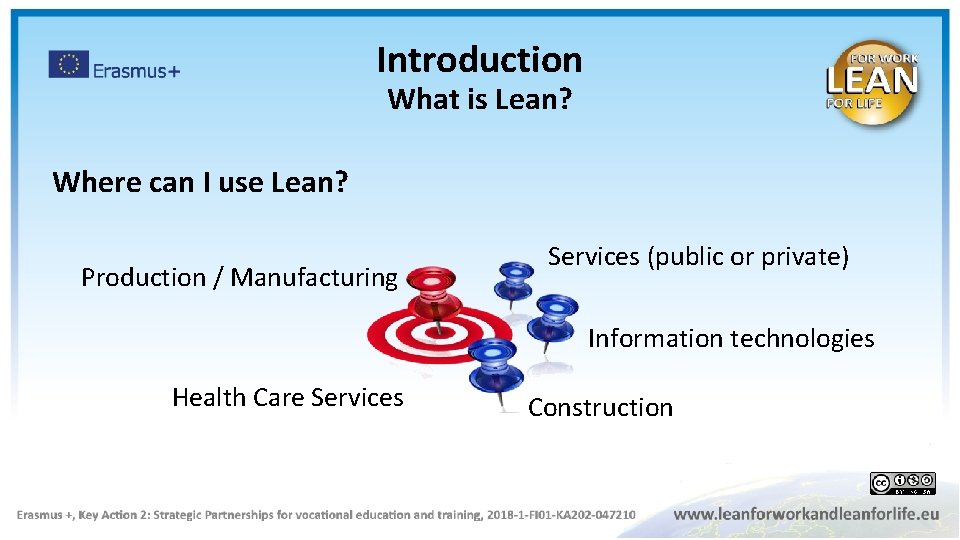
Introduction What is Lean? Where can I use Lean? Production / Manufacturing Services (public or private) Information technologies Health Care Services Construction
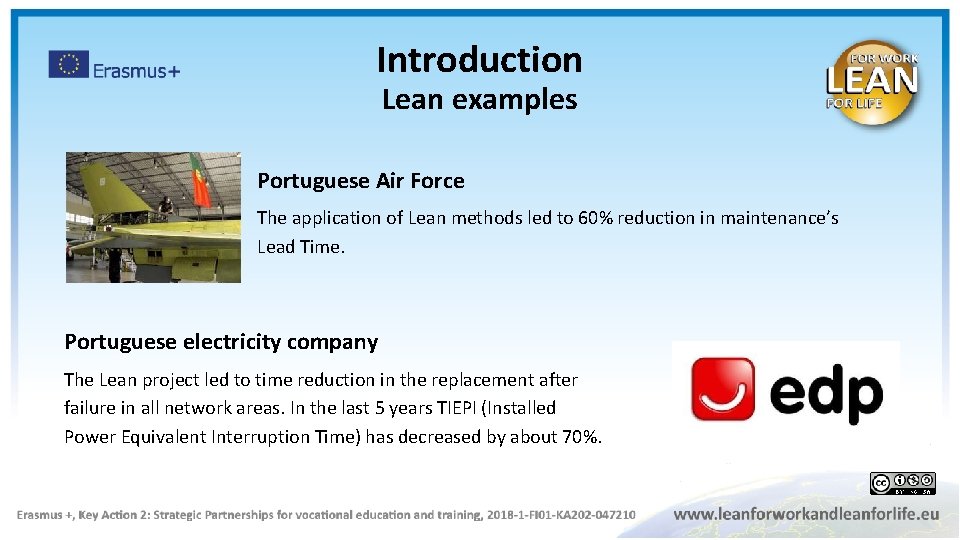
Introduction Lean examples Portuguese Air Force The application of Lean methods led to 60% reduction in maintenance’s Lead Time. Portuguese electricity company The Lean project led to time reduction in the replacement after failure in all network areas. In the last 5 years TIEPI (Installed Power Equivalent Interruption Time) has decreased by about 70%.
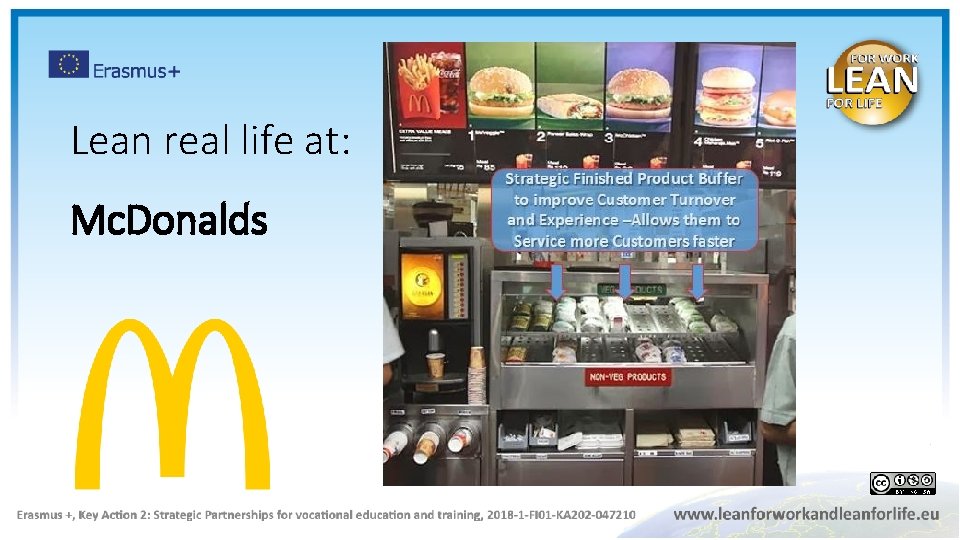
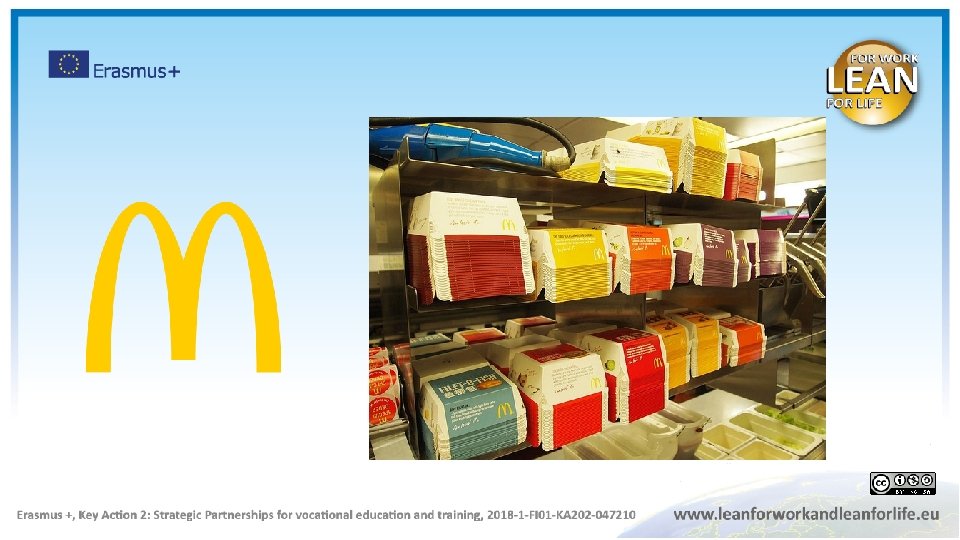
Lean real life at: Mc. Donalds
Introduction The change in the Market How markets operate…
Introduction The change in the Market According to the traditional logic, the price was imposed on the market With the development of economy markets functioning has changed: § § Quality Low cost/ Fair price Delivery times Variety Companies are no longer setting the price. This is defined by the CUSTOMER
Introduction The change in the Market The only way to guarantee the profit margin is a careful management of costs: § Support § Logistics § Services § Operational Cost reduction | Waste disposal | Value Creation
Other exercises §Ballpoint Pen Game
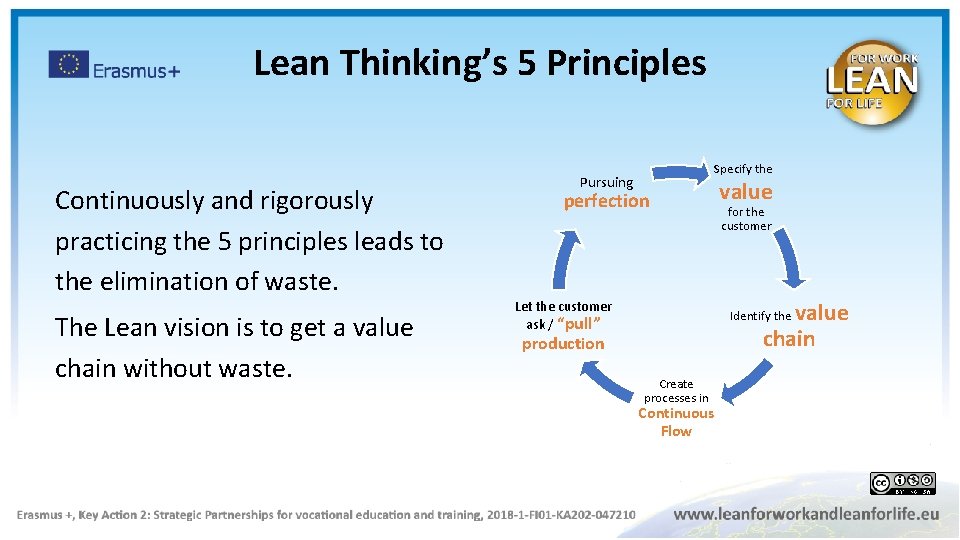
Lean Thinking’s 5 Principles Continuously and rigorously practicing the 5 principles leads to the elimination of waste. The Lean vision is to get a value chain without waste. Specify the Pursuing perfection value for the customer value chain Let the customer ask / “pull” Identify the production Create processes in Continuous Flow
LEAN FOR WORK AND LEAN FOR LIFE Train the trainer to teach Lean skills in VET
- Slides: 24