
Systems of Psychotherapy A Transtheoretical Analysis Chapter 3

- Slides: 32
Systems of Psychotherapy: A Transtheoretical Analysis Chapter 3. Psychodynamic Therapies
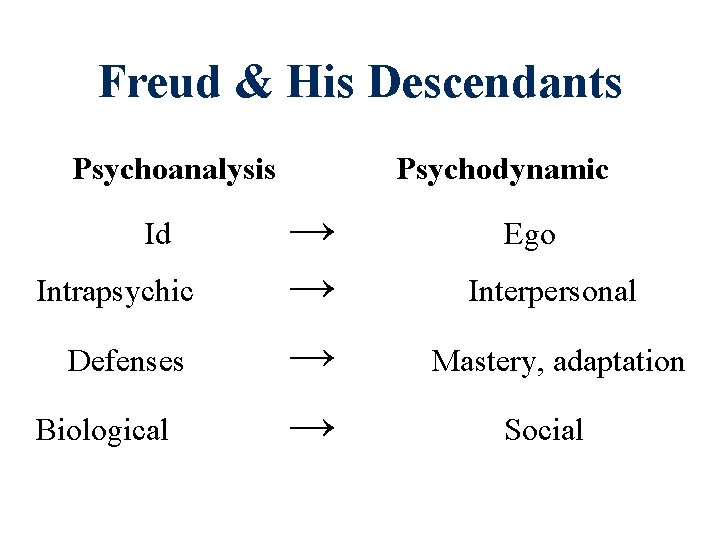
Freud & His Descendants Psychoanalysis Id Intrapsychic Defenses Biological Psychodynamic → → Ego Interpersonal Mastery, adaptation Social
A Sketch of Alfred Adler ♦ ♦ ♦ ♦ 1870 -1937 MD from Vienna University Began as ophthalmologist Colleague & early disciple of Freud & Alder had falling out in 1911 Developed Individual Psychology Moved to New York in 1935 Died of heart attack while on tour
Theory of Personality Striving for superiority ♦ Core motivation ♦ Can be expressed in many ways ♦ Reaction to inferiority We create fictional goals for living & ideal self Examples: ♦ Peace & happiness throughout the land ♦ Honesty is the best policy
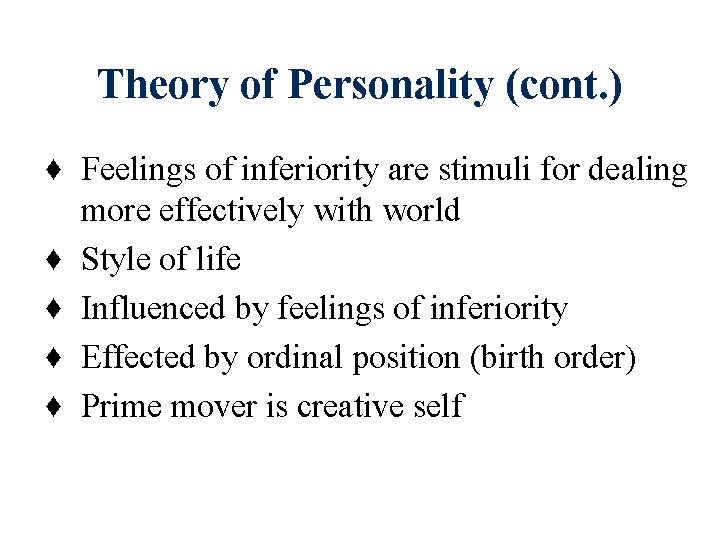
Theory of Personality (cont. ) ♦ Feelings of inferiority are stimuli for dealing more effectively with world ♦ Style of life ♦ Influenced by feelings of inferiority ♦ Effected by ordinal position (birth order) ♦ Prime mover is creative self
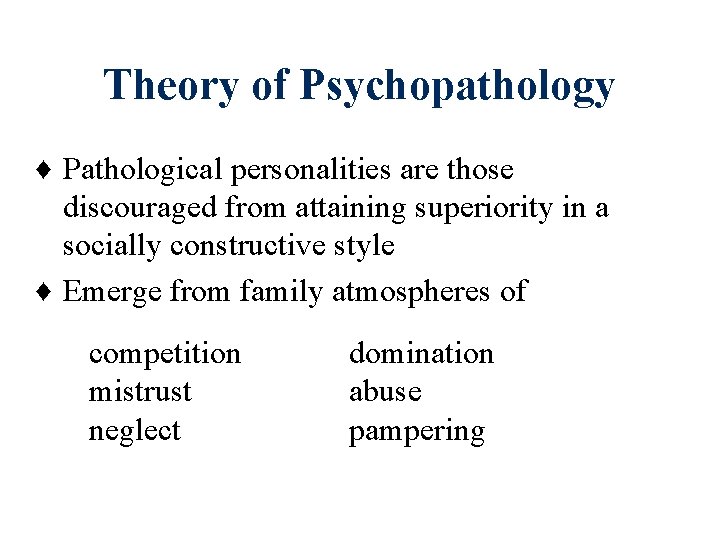
Theory of Psychopathology ♦ Pathological personalities are those discouraged from attaining superiority in a socially constructive style ♦ Emerge from family atmospheres of competition mistrust neglect domination abuse pampering
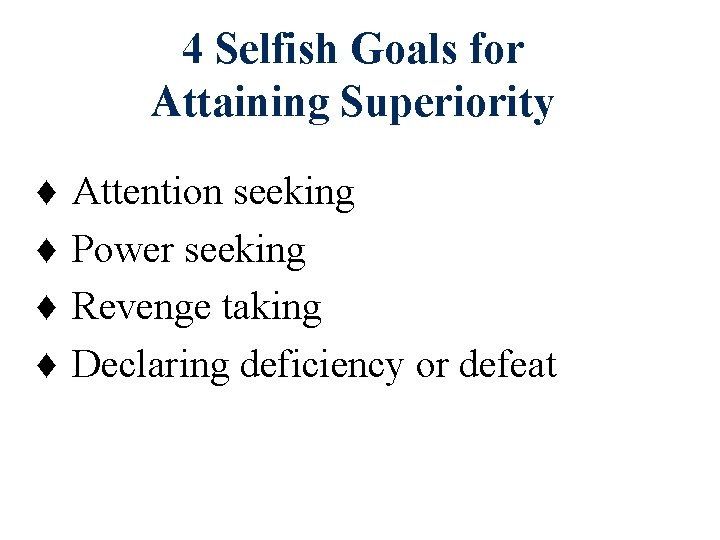
4 Selfish Goals for Attaining Superiority ♦ ♦ Attention seeking Power seeking Revenge taking Declaring deficiency or defeat
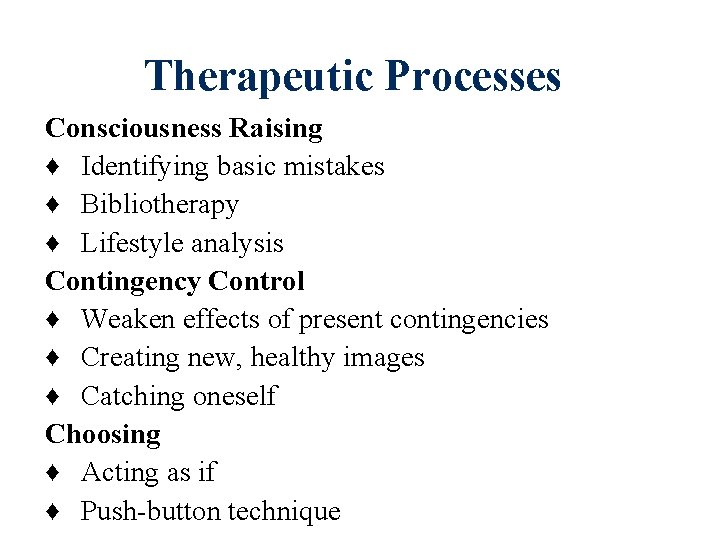
Therapeutic Processes Consciousness Raising ♦ Identifying basic mistakes ♦ Bibliotherapy ♦ Lifestyle analysis Contingency Control ♦ Weaken effects of present contingencies ♦ Creating new, healthy images ♦ Catching oneself Choosing ♦ Acting as if ♦ Push-button technique
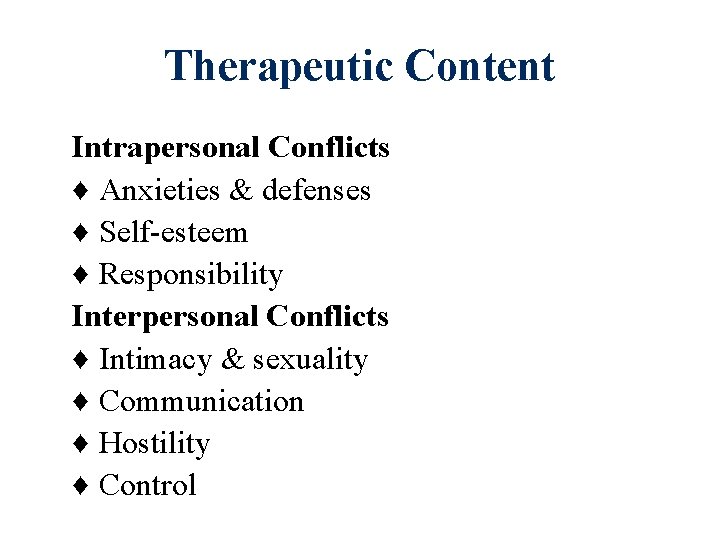
Therapeutic Content Intrapersonal Conflicts ♦ Anxieties & defenses ♦ Self-esteem ♦ Responsibility Interpersonal Conflicts ♦ Intimacy & sexuality ♦ Communication ♦ Hostility ♦ Control
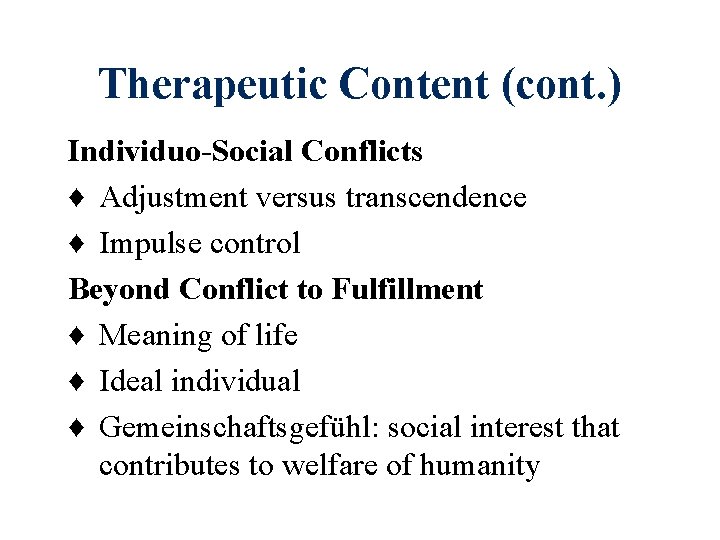
Therapeutic Content (cont. ) Individuo-Social Conflicts ♦ Adjustment versus transcendence ♦ Impulse control Beyond Conflict to Fulfillment ♦ Meaning of life ♦ Ideal individual ♦ Gemeinschaftsgefühl: social interest that contributes to welfare of humanity
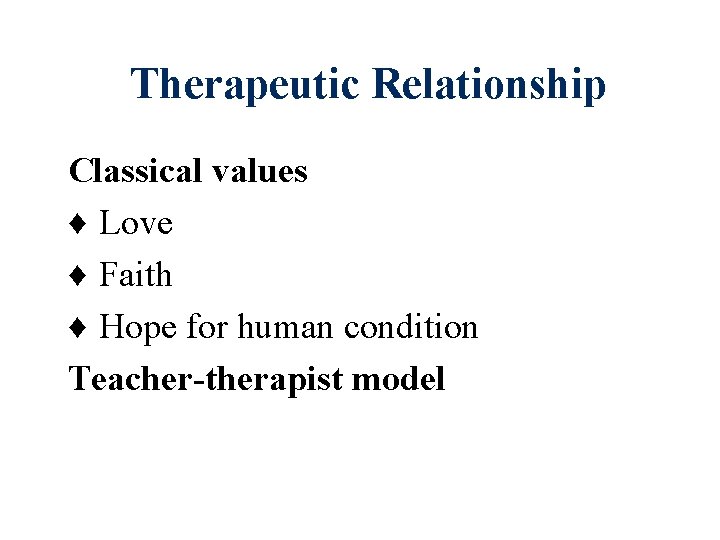
Therapeutic Relationship Classical values ♦ Love ♦ Faith ♦ Hope for human condition Teacher-therapist model
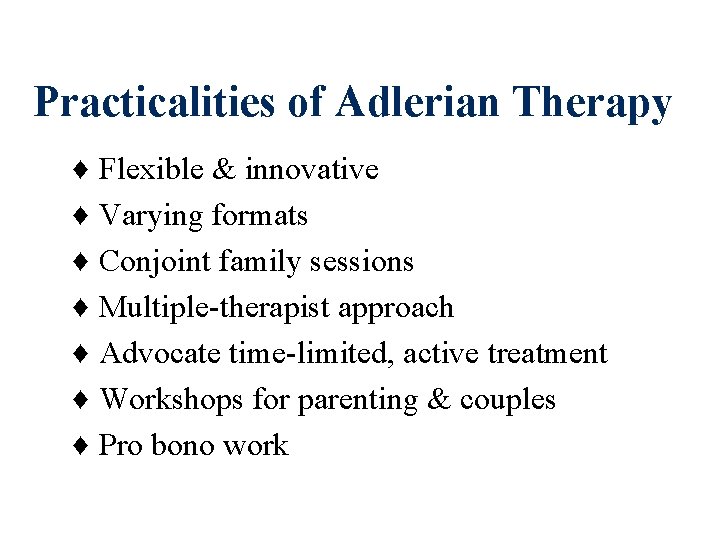
Practicalities of Adlerian Therapy ♦ ♦ ♦ ♦ Flexible & innovative Varying formats Conjoint family sessions Multiple-therapist approach Advocate time-limited, active treatment Workshops for parenting & couples Pro bono work
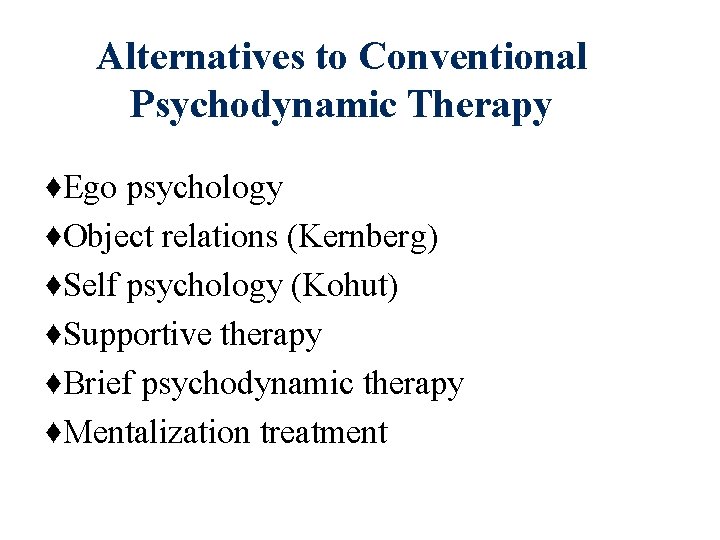
Alternatives to Conventional Psychodynamic Therapy ♦Ego psychology ♦Object relations (Kernberg) ♦Self psychology (Kohut) ♦Supportive therapy ♦Brief psychodynamic therapy ♦Mentalization treatment
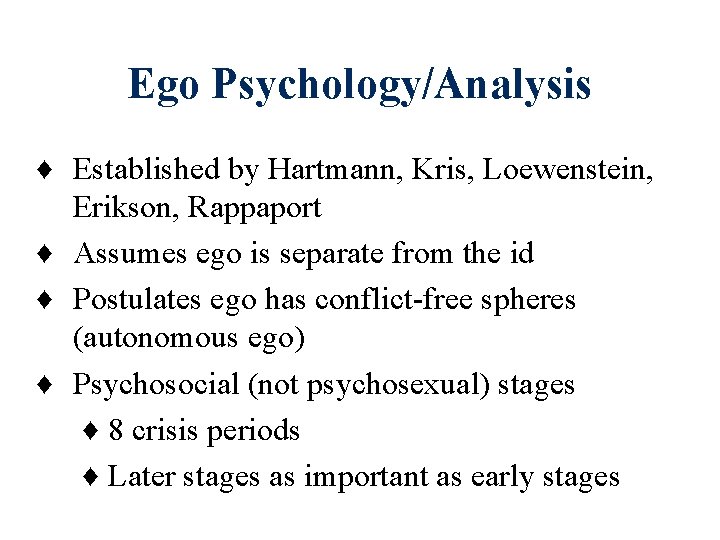
Ego Psychology/Analysis ♦ Established by Hartmann, Kris, Loewenstein, Erikson, Rappaport ♦ Assumes ego is separate from the id ♦ Postulates ego has conflict-free spheres (autonomous ego) ♦ Psychosocial (not psychosexual) stages ♦ 8 crisis periods ♦ Later stages as important as early stages
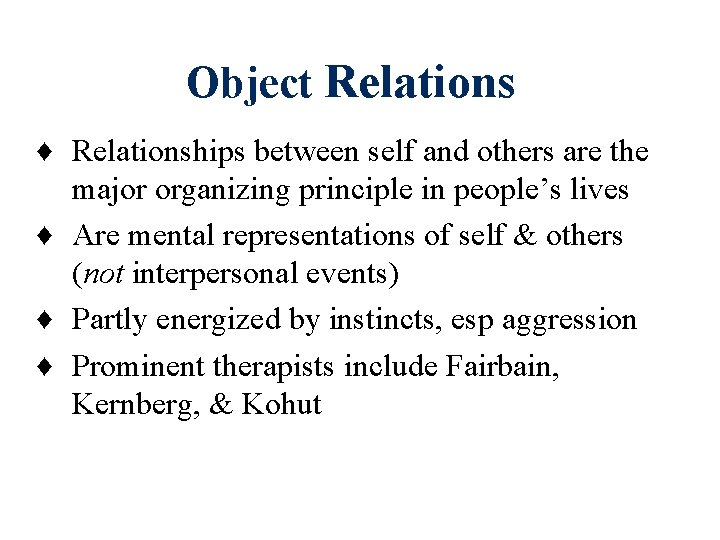
Object Relations ♦ Relationships between self and others are the major organizing principle in people’s lives ♦ Are mental representations of self & others (not interpersonal events) ♦ Partly energized by instincts, esp aggression ♦ Prominent therapists include Fairbain, Kernberg, & Kohut
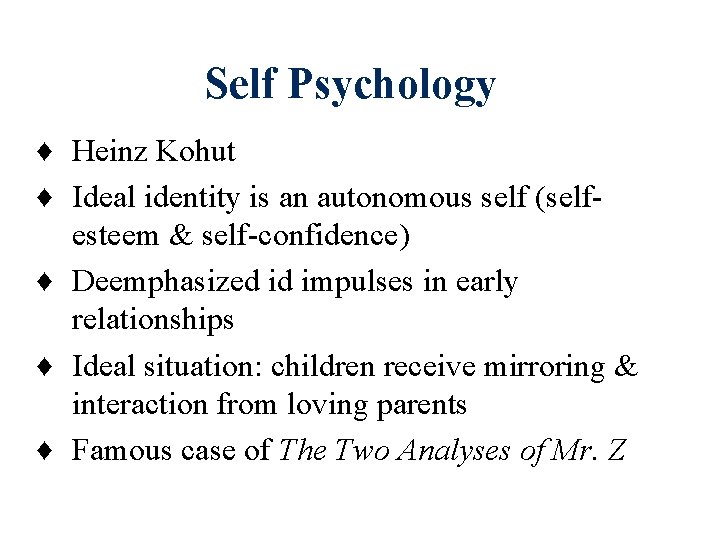
Self Psychology ♦ Heinz Kohut ♦ Ideal identity is an autonomous self (selfesteem & self-confidence) ♦ Deemphasized id impulses in early relationships ♦ Ideal situation: children receive mirroring & interaction from loving parents ♦ Famous case of The Two Analyses of Mr. Z
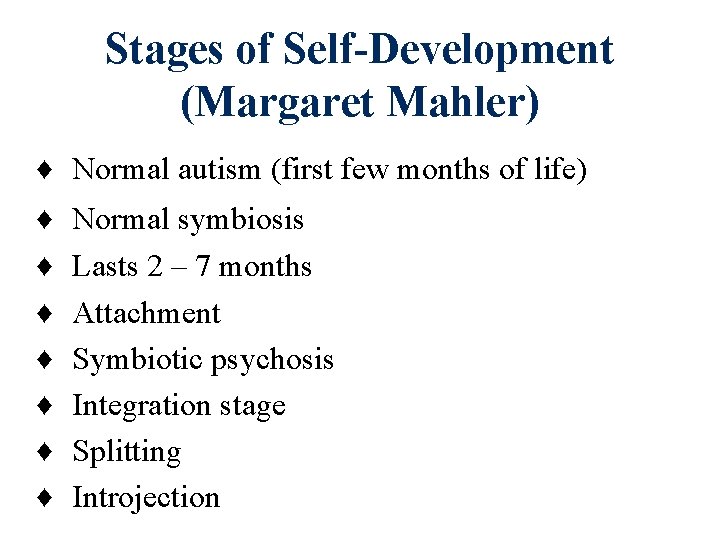
Stages of Self-Development (Margaret Mahler) ♦ Normal autism (first few months of life) ♦ ♦ ♦ ♦ Normal symbiosis Lasts 2 – 7 months Attachment Symbiotic psychosis Integration stage Splitting Introjection
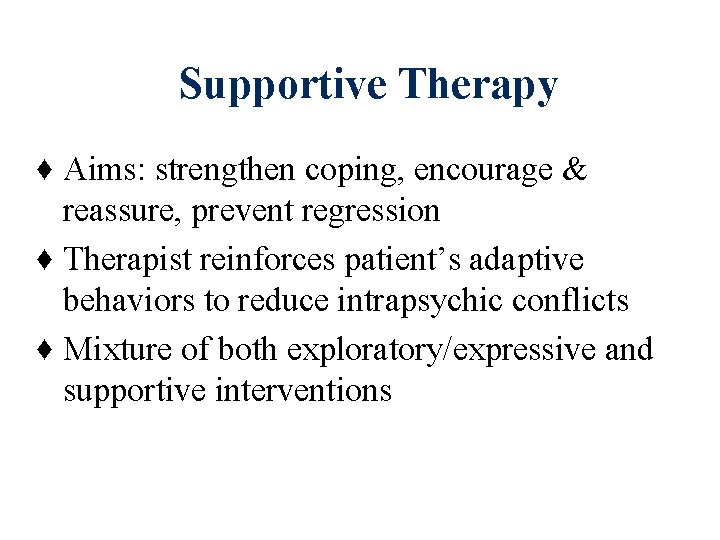
Supportive Therapy ♦ Aims: strengthen coping, encourage & reassure, prevent regression ♦ Therapist reinforces patient’s adaptive behaviors to reduce intrapsychic conflicts ♦ Mixture of both exploratory/expressive and supportive interventions
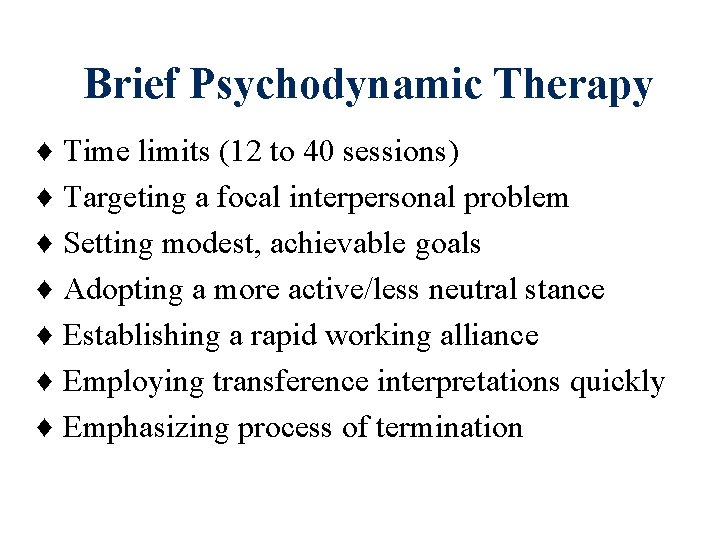
Brief Psychodynamic Therapy ♦ ♦ ♦ ♦ Time limits (12 to 40 sessions) Targeting a focal interpersonal problem Setting modest, achievable goals Adopting a more active/less neutral stance Establishing a rapid working alliance Employing transference interpretations quickly Emphasizing process of termination
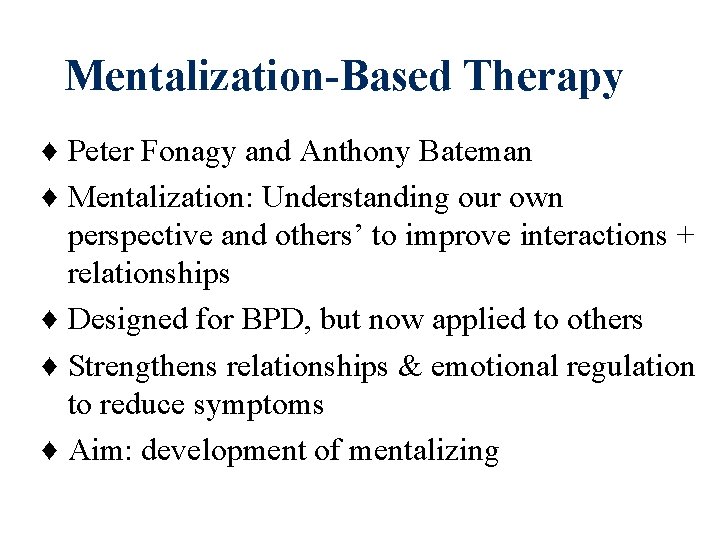
Mentalization-Based Therapy ♦ Peter Fonagy and Anthony Bateman ♦ Mentalization: Understanding our own perspective and others’ to improve interactions + relationships ♦ Designed for BPD, but now applied to others ♦ Strengthens relationships & emotional regulation to reduce symptoms ♦ Aim: development of mentalizing
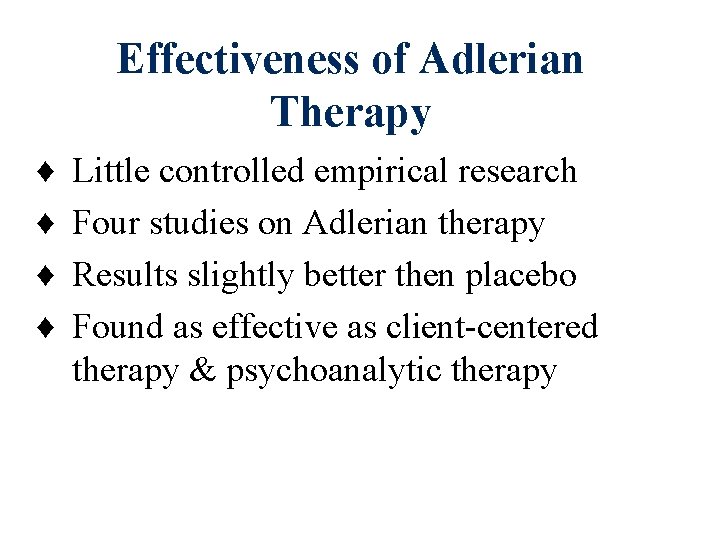
Effectiveness of Adlerian Therapy ♦ ♦ Little controlled empirical research Four studies on Adlerian therapy Results slightly better then placebo Found as effective as client-centered therapy & psychoanalytic therapy
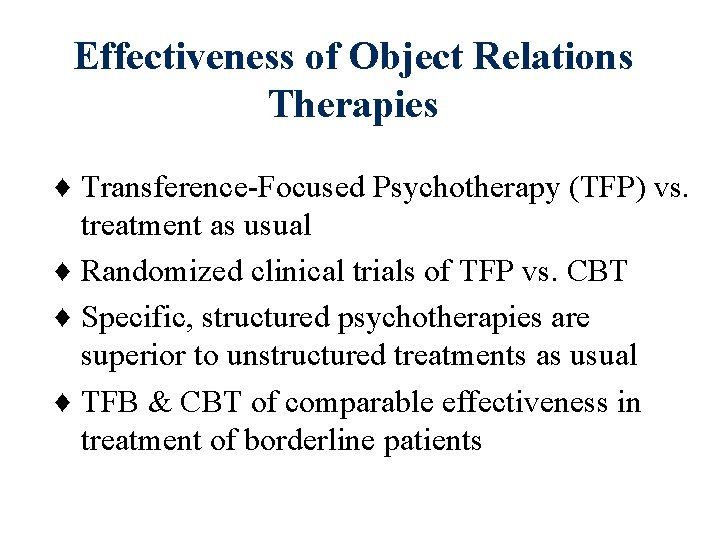
Effectiveness of Object Relations Therapies ♦ Transference-Focused Psychotherapy (TFP) vs. treatment as usual ♦ Randomized clinical trials of TFP vs. CBT ♦ Specific, structured psychotherapies are superior to unstructured treatments as usual ♦ TFB & CBT of comparable effectiveness in treatment of borderline patients
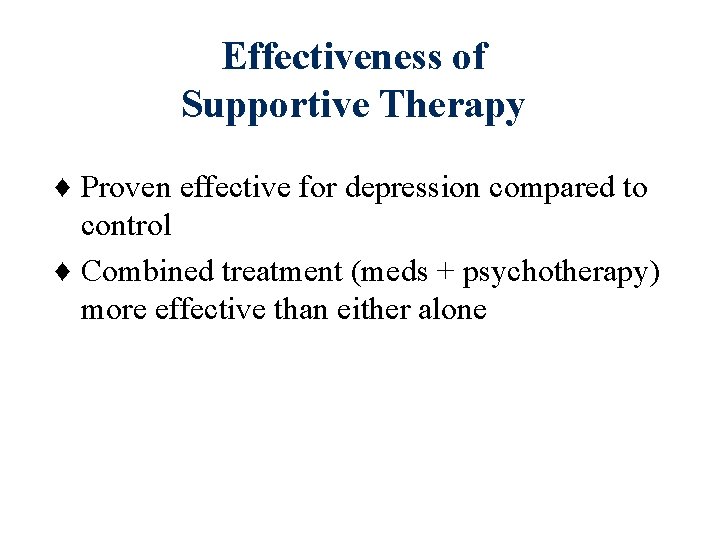
Effectiveness of Supportive Therapy ♦ Proven effective for depression compared to control ♦ Combined treatment (meds + psychotherapy) more effective than either alone
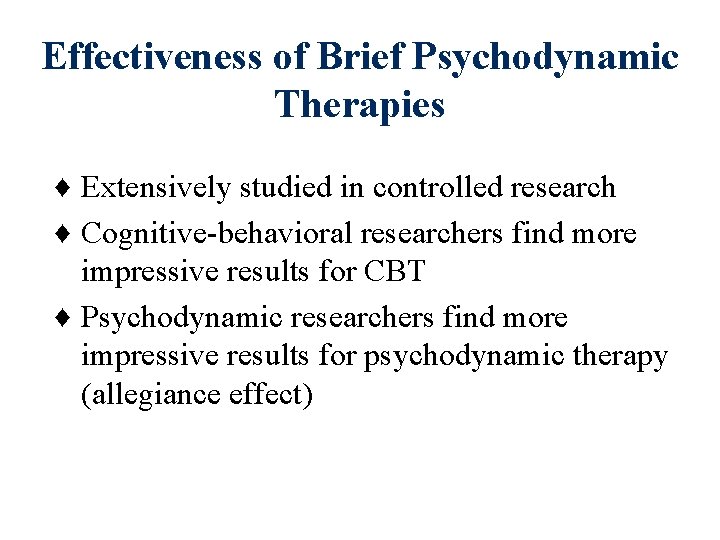
Effectiveness of Brief Psychodynamic Therapies ♦ Extensively studied in controlled research ♦ Cognitive-behavioral researchers find more impressive results for CBT ♦ Psychodynamic researchers find more impressive results for psychodynamic therapy (allegiance effect)
Effectiveness of Mentalization Treatments ♦ More effective than TAU for borderline patients at termination and 18 months later ♦ MBT effect persisted 5 years post-treatment ♦ Studies demonstrate success and costeffectiveness of MBT
Criticisms of Psychodynamic Therapies ♦ From a Psychoanalytic Perspective (rejects half of the personality, naïve, gimmicky) ♦ From a Cognitive-Behavioral Perspective (certain concepts are untestable, questionable theories) ♦ From a Cultural Perspective (sexist, ignore social factors, too individualistic) ♦ From an Integrative Perspective (lack of evidence and systemization)
Future Directions of Adlerian Therapy ♦ Future impact will probably be more indirect then direct ♦ Represented in cognitive and behavioral therapies ♦ Principal direction for Adlerians is to go “on beyond Adler”
Future Directions of Psychodynamic Therapy Increase attention to disturbances in infancy & early childhood Focus will shift from neuroses to personality disorders Determine which works best for which patient Time-limited psychodynamic therapy
Key Terms acting “as if” aggression instinct allegiance effect analytical psychology anamnesis archetypes attachment styles autonomous ego autonomous self basic mistakes bibliotherapy birth order/ordinal position catching oneself character analysis collective unconscious compensation compulsive lifestyle conflict-free spheres creative self drive theory effect size ego analysis ego psychology fictional finalism Gemeinschaftsgefühl (social interest) holding environment ideal self individual psychology inferiority complex
Key Terms (cont. ) introjection lifestyle analysis masculine protest meta-analysis mentalization-based treatment mirroring narcissistic personality normal autism normal symbiosis object relations organ inferiority psychodynamic therapies psychosocial stages of development push-button technique self-interest self psychology social interest splitting striving for superiority style of life/lifestyle supportive therapy symbiotic psychosis supportive-expressive therapy therapeutic, or working, alliance transference-focused psychotherapy (TFP) treatment manuals
Recommended Websites ♦ Anna Freud National Centre for Children and Families: www. annafreud. org/ ♦ APA Division of Psychoanalysis: www. apadivisions. org/division-39 ♦ International Association for Psychoanalytic Self Psychology (Kohut): www. iapsp. org/ ♦ International Society of Transference-Focused Psychotherapy www. istfp. org/ ♦ North American Society of Adlerian Psychology: www. alfredadler. org ♦ Society of Analytical Psychology (Jung): www. jungian-analysis. org/