
Systems of inequality in the classical era Caste



- Slides: 21
Systems of inequality in the classical era Caste and Class, Slavery and Patriarchy
Classical China – Class System �The most shaped by “state actions” than any other society – Powerful Centralized Bureaucracy - officials were the social elite �World’s first civil service exam – est. 124 bce by Emperor Wudi - around 30, 000 students by end of Han dynasty - scholar-gentry class
Terrace Farming
Classical China – Landlord Class �Landlord Class – Wealthy landowners - could evade taxes - often had military forces to challenge imperial authority - force smaller landowners out. �Wang Mang Reforms (1 st century BCE) – redistribute land, end slavery - reforms ended, Wang Mang assassinated
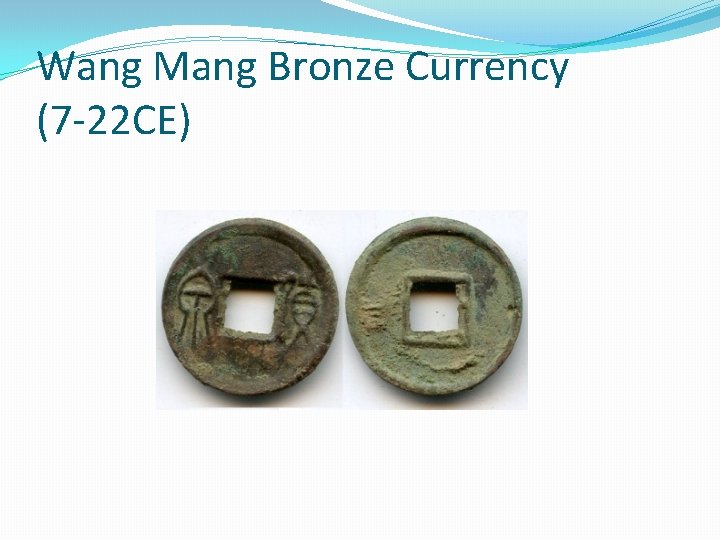
Wang Mang Bronze Currency (7 -22 CE)
Classical China – Peasants �Peasants - majority of Chinese population – high taxes (sometimes 2/3 of crops) - used as state labor - military conscription �Periodic Rebellions - Yellow Turban (186 CE) – provoked by floods and epidemics - unified by Daoism - periodic rebellions devastated economy and led to overthrow of the Han Dynasty
Classical China - Merchant Class �Cultural elite disliked merchants - “profiting from other people’s work” – efforts to control merchants - couldn’t hold public office - state monopolies - forced to “loan” to the state �However, merchants still became wealthy �They eventually won respect by purchasing estates and educating their sons
India - Caste �Caste in Portuguese means “purity of blood” - grew from interactions of diverse people in India - Aryan “light skinned people” migrated to India - development of economic and social differences �Since 500 BCE, an idea of 4 castes - Brahmins – priests - Ksatriyas – warriors and rulers - Vaisyas – peasants - Sudras – native people, very subordinate positions
Caste System �Job specialization by caste. No mobility �Jati – A caste within a caste �Karma + Reincarnation �Easier to exploit the poor?
Rome – A Slave Society �Domestication of animals – model for humans? �War, patriarchy, and private property ideas encouraged slavery �Women captured in war were probably the first slaves �Patriarchal “ownership” of women may have encouraged slavery �Varied considerably over place and time
Slavery � Classical Greece and Rome: slave emancipation was common �Aztec Empire: children of slaves were considered to be free �China – 1% of pop �Slave Rome/Greece – Sometimes over 50%
Roman Slavery �How you become a slave - massive enslavement of war prisoners - piracy - long-distance trade for Black Sea, East African slaves - natural reproduction - abandoned/exposed children �Not associated with a particular ethnic group �Little serious social critique of slavery, even within Christianity
Avoiding Roman Slavery � Cases of mass suicide of war prisoners to avoid slavery �“weapons of the weak” - theft, sabotage, poor work, curses � Flight �Occasional murder of owners
Rebellion �Rebellion - most famous was led by Spartacus in 73 b. c. e. - attracted perhaps 120, 000 slaves - eventual military defeat, crucifixion of 6, 000 rebels �Nothing on similar scale occurred in the West until Haiti in the 1790 s �Roman slave rebellions did not attempt to end slavery; participants just wanted freedom for themselves
Comparing Patriarchies of the Classical Era �Every human community has created a gender system �At least since the First Civilizations, the result has been patriarchy - men regarded as superior to women - men had greater legal and property rights - public life as male domain
Patriarchy �Polygamy was common - with sexual control of females of family �Notion that women need male protection and control �Patriarchy varied in different civilizations �Urbanization and empires restricted women more �Interaction of patriarchy and class: greatest restrictions on upper-class women. Why?
Patriarchy in China �Confucianism �thinking about pairs of opposites applied in unequal terms �yang: masculine, related to Heaven, strength, rationality �yin: feminine, related to Earth, weakness, emotion �men’s sphere is public; women’s sphere is domestic � “three obediences”: woman is subordinated to father, then husband, then son �Han Dynasty –Empress Wu – women could own property, become priestesses
Comparing Patriarchies - Athens �Completely excluded from public life �Represented by a guardian in law; not even named in court proceedings �Aristotle: position justified in terms of women’s natural “inadequacy” compared to males
Patriarchy in Athens �Restricted to the home �Within home, lived separately from men �Married in mid-teens to men 10– 15 years older �Role in life: domestic management and bearing sons �Land normally passed through male heirs �Women could only negotiate small contracts
Comparing Patriarchies - Sparta �Sparta: militaristic regime very different from Athens - need to counter permanent threat of helot rebellion - Spartan male as warrior above all - situation gave women greater freedom - central female task was reproduction
Patriarchy in Sparta �Women encouraged to exercise �Not secluded like Athenian women �Married men about their own age (about 18) �Men were often preparing for or waging war, so women had larger role in household �Sparta, unlike Athens, discouraged homosexuality �- other Greek states approved homosexuality -Greek attitude toward sexual choice was quite casual