
Systems of Belief Indigenous African Religions African Indigenous
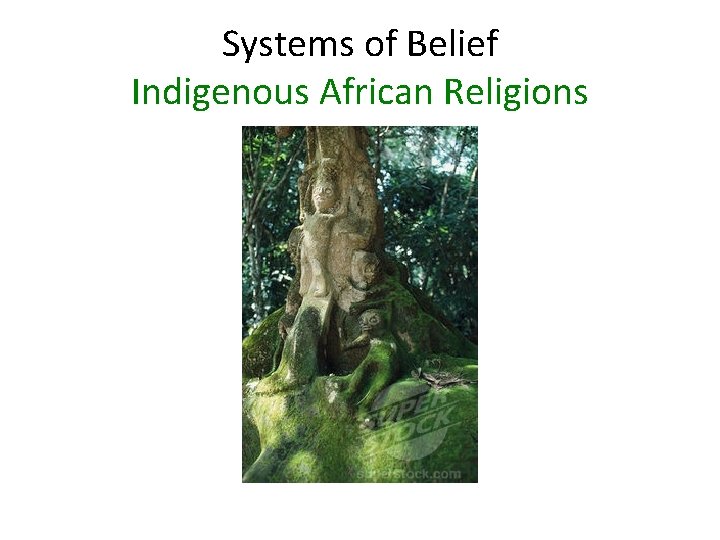
Systems of Belief Indigenous African Religions
African Indigenous Religions • Shaped by ethnic and social groupings and power structures. • Variations are present: can vary from place to place, maybe no single holy book, or institutional consistency, depends. • Foundational logic to belief
Some Common factors Supreme God Origins of life, human welfare, societal harmony, certain moral principles, etc. Multiple spiritual beings – intermediary spirits • Help to resolve difficulties, destroy evil or negative forces. Spirits of ancestors are very important (venerated)
Key features in traditional worldview • A Belief that: Humans can’t control nature, but they do interact with it in an act of reverence • forces in nature addressed – Shrines are holy places outside to place offerings, that help them communicate with spirits • People with a traditional belief mindset strive instead to control human forces (good or bad) because…. • A Belief that: Events can happen depending on the actions of people, and not just left to chance

Factors of traditional religion • Specialists: Priests, diviners, shamans • Spiritual Beings: invested with power Have attributes (qualities and personalities) Can solve problems “…humans must negotiate with them to have a meaningful life” (Falola 2001: 31)
Other religious roles • Secret societies Usually men, from specific districts or occupations, enforce law and order • Witches or sorcerers – (These people (men or women) specialize in sorcery, i. e. doing or undoing curses, witchcraft etc. )

Other characteristics • Processes of divination/individual consults • Rituals or ceremonies—life crisis, seasonal events, important civic matters. • festivals (Igbo yam festival; Yoruba annual masquerades) • celebrations • rites of passage (initiation ceremonies moving into adulthood)
Religion permeates public life • Many events in the community/ village/town or city “…all have religious undertones” Many events are marked by group ceremonies such as “…the transition from one season or moment to another. ” (Falola 2010: 34 -35)
General worldview in terms of an overall religious worldview African indigenous religions at their foundation tend to be more… • pluralistic: can accept more than one truth, allowance for multiplicity • Adaptive: respond to change, not rigid including practices and ideas • Accommodating: desire to respond to requests and assist others to feel welcome

Approach of Christian Missionaries during the pre-colonial and colonial era • Missionaries believed that Africans had no concept of religion or a supreme being. • Lacked knowledge of unique social logic and cultural values, practices were baffling. • They gravely misunderstood the role of intermediary spirits and gods.
- Slides: 10