
Systems Module Geography Lessons Lesson 7 Farming systems






- Slides: 36
Systems Module Geography Lessons Lesson 7 Farming systems Aim- How does the farming system work?
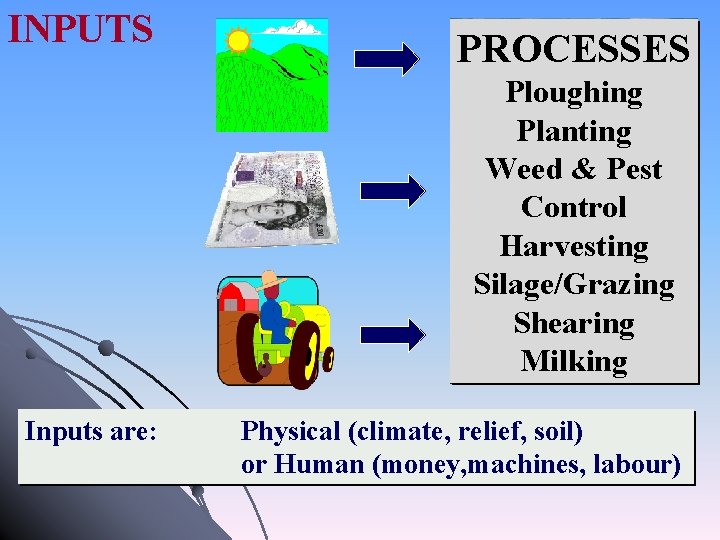
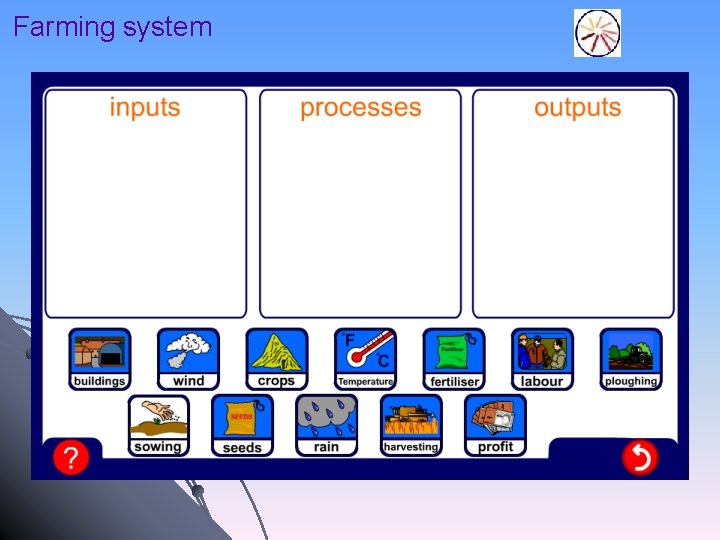
INPUTS PROCESSES Ploughing Planting Weed & Pest Control Harvesting Silage/Grazing Shearing Milking Inputs are: Physical (climate, relief, soil) or Human (money, machines, labour)
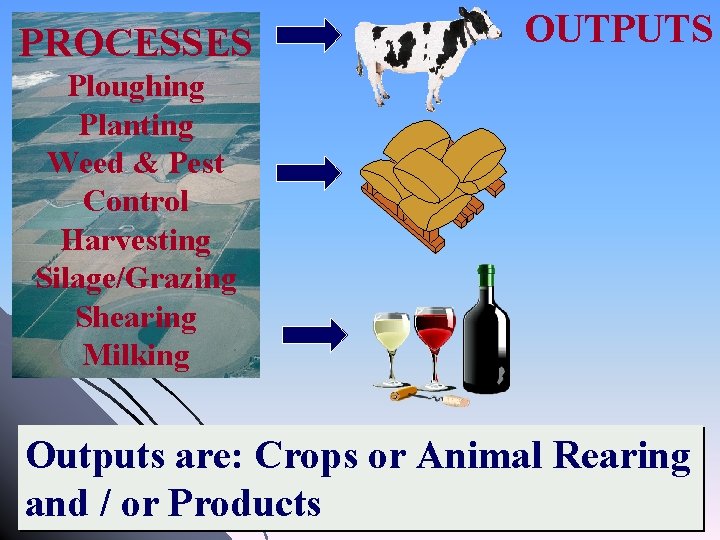
PROCESSES OUTPUTS Ploughing Planting Weed & Pest Control Harvesting Silage/Grazing Shearing Milking Outputs are: Crops or Animal Rearing and / or Products
Geography of Food -IPO for short
The Farmer is very important and is the DECISION-MAKER. Each individual farmers decision on what crops to grow or animals to rear, and which methods to use to maximise output, depends on an UNDERSTANDING of the most favourable physical and economic conditions for the farm. Sometimes, the farmer may have several choices and so the decision may depend upon individual likes and expertise. On other occasions the choice may be limited by extreme physical conditions or economic or political pressures.
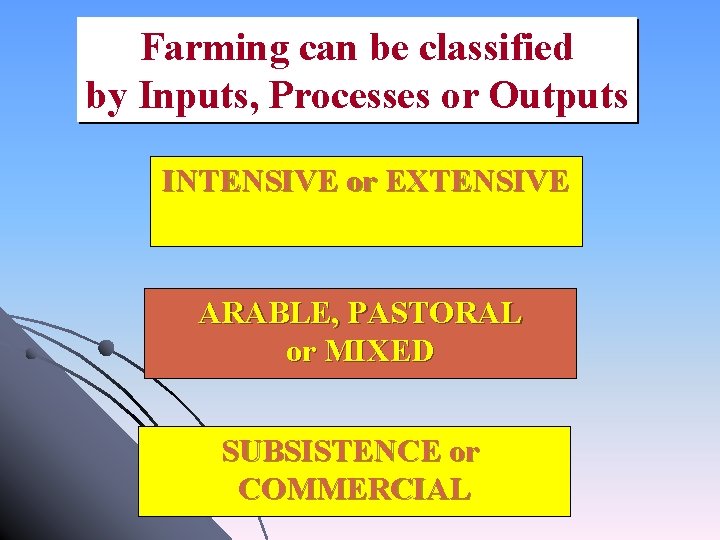
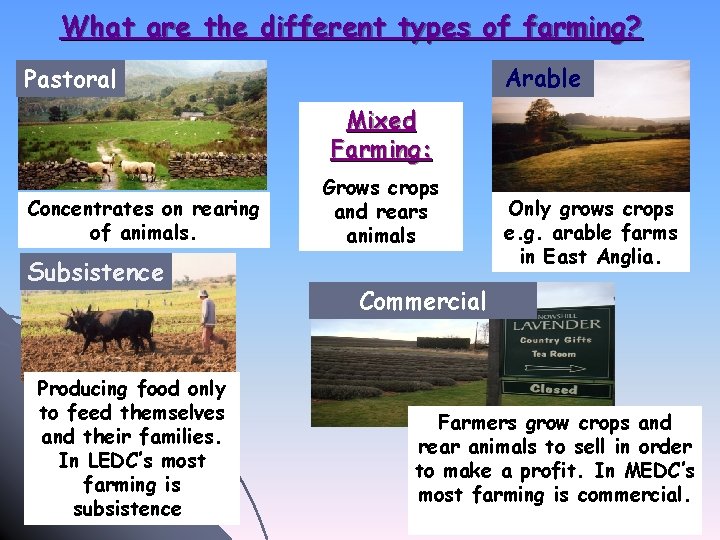
Farming can be classified by Inputs, Processes or Outputs INTENSIVE or EXTENSIVE ARABLE, PASTORAL or MIXED SUBSISTENCE or COMMERCIAL
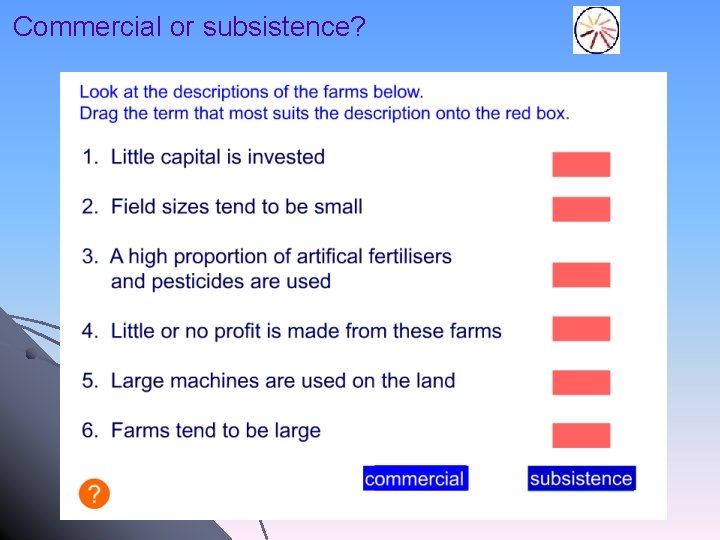
What are the different types of farming? Arable Pastoral Mixed Farming: Concentrates on rearing of animals. Subsistence Producing food only to feed themselves and their families. In LEDC’s most farming is subsistence. Grows crops and rears animals Only grows crops e. g. arable farms in East Anglia. Commercial Farmers grow crops and rear animals to sell in order to make a profit. In MEDC’s most farming is commercial.
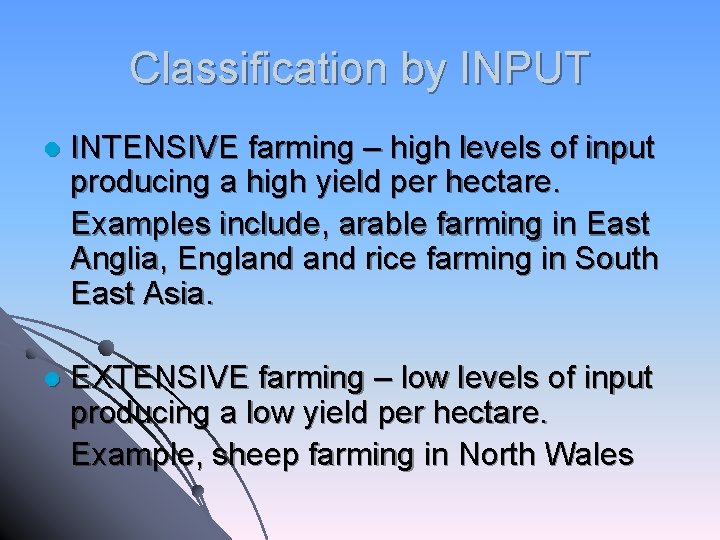
Classification by INPUT l INTENSIVE farming – high levels of input producing a high yield per hectare. Examples include, arable farming in East Anglia, England rice farming in South East Asia. l EXTENSIVE farming – low levels of input producing a low yield per hectare. Example, sheep farming in North Wales
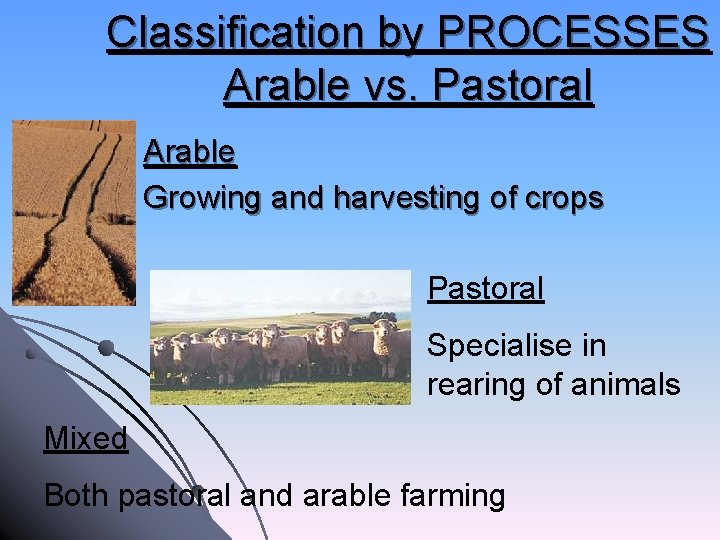
Classification by PROCESSES Arable vs. Pastoral Arable Growing and harvesting of crops Pastoral Specialise in rearing of animals Mixed Both pastoral and arable farming
Classification by OUTPUT SUBSISTENCE farming Produce is consumed by the farmer, any surplus is usually sold to buy other goods l l • COMMERCIAL farming The majority of produce is sold to make financial profit
Farming system
Arable, pastoral or mixed?
Commercial or subsistence?
Farming system
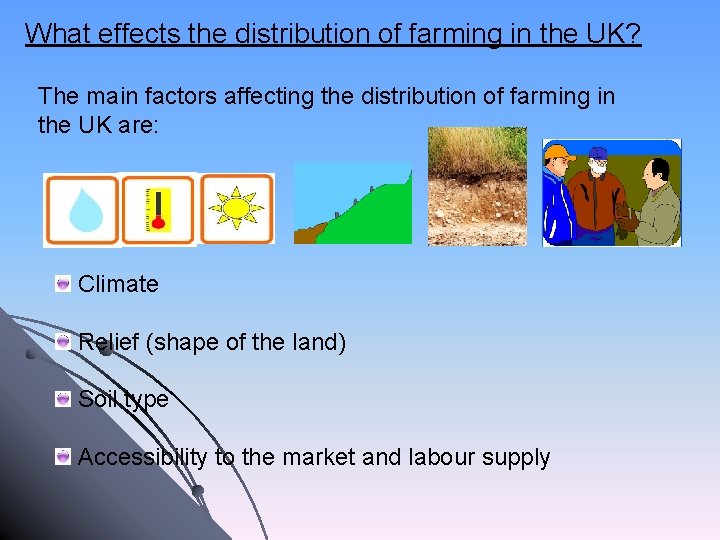
What effects the distribution of farming in the UK? The main factors affecting the distribution of farming in the UK are: Climate Relief (shape of the land) Soil type Accessibility to the market and labour supply
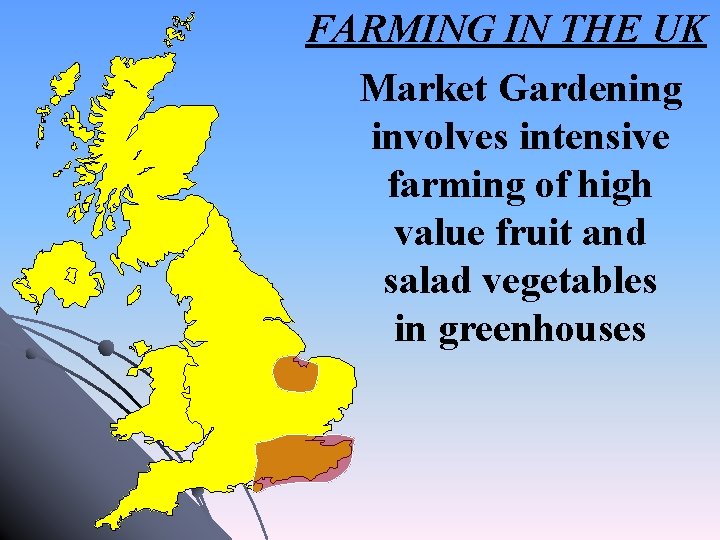
FARMING IN THE UK Market Gardening involves intensive farming of high value fruit and salad vegetables in greenhouses
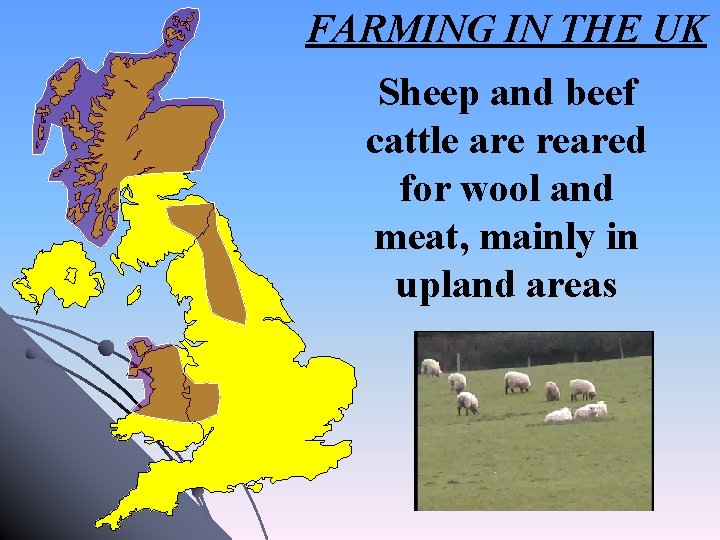
FARMING IN THE UK Sheep and beef cattle are reared for wool and meat, mainly in upland areas
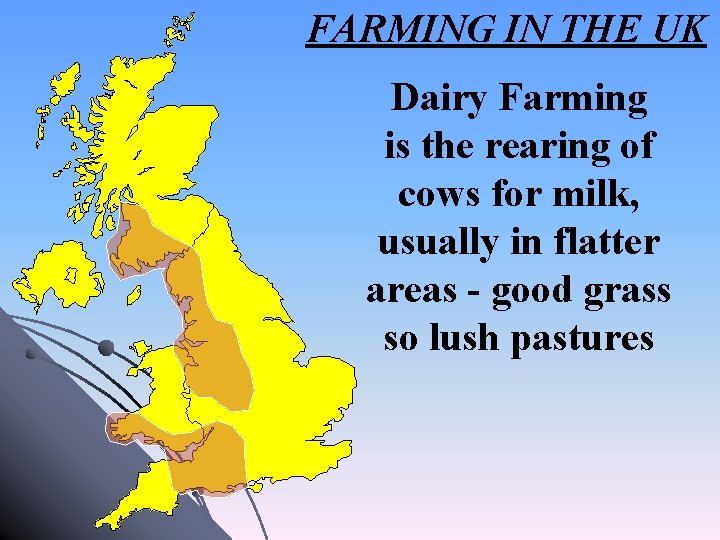
FARMING IN THE UK Dairy Farming is the rearing of cows for milk, usually in flatter areas good grass so lush pastures
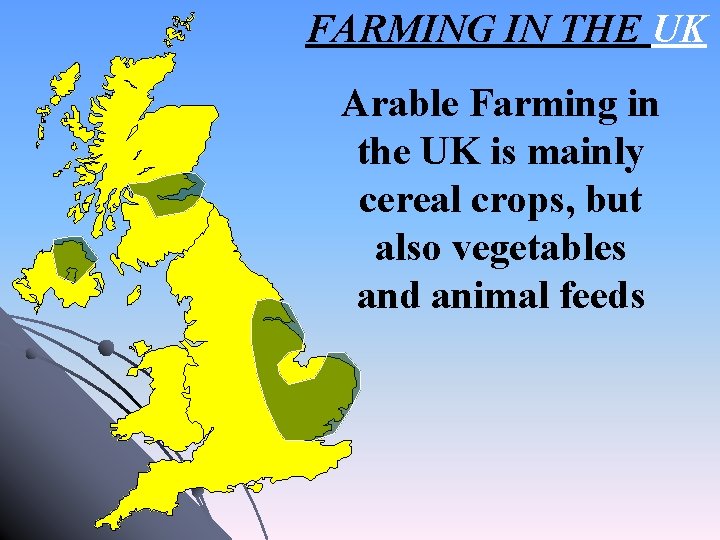
FARMING IN THE UK Arable Farming in the UK is mainly cereal crops, but also vegetables and animal feeds
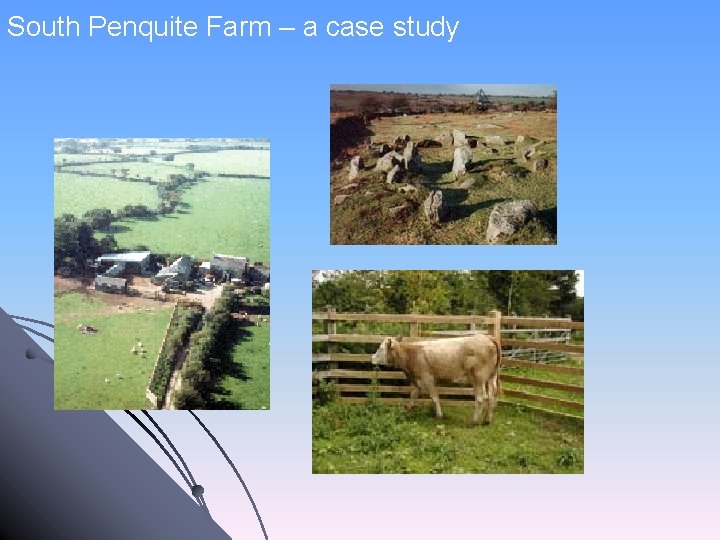
South Penquite Farm – a case study
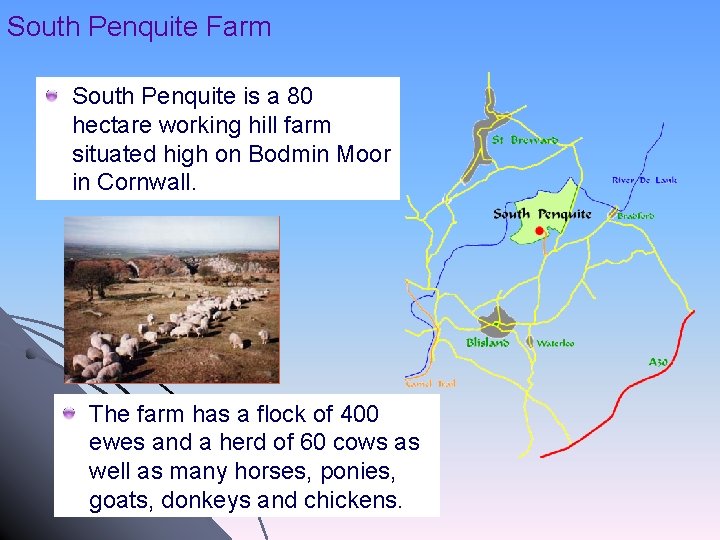
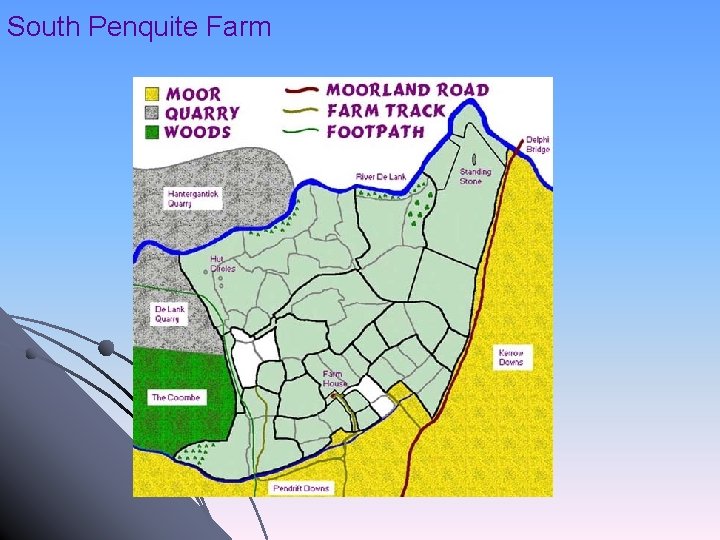
South Penquite Farm South Penquite is a 80 hectare working hill farm situated high on Bodmin Moor in Cornwall. The farm has a flock of 400 ewes and a herd of 60 cows as well as many horses, ponies, goats, donkeys and chickens.
South Penquite Farm
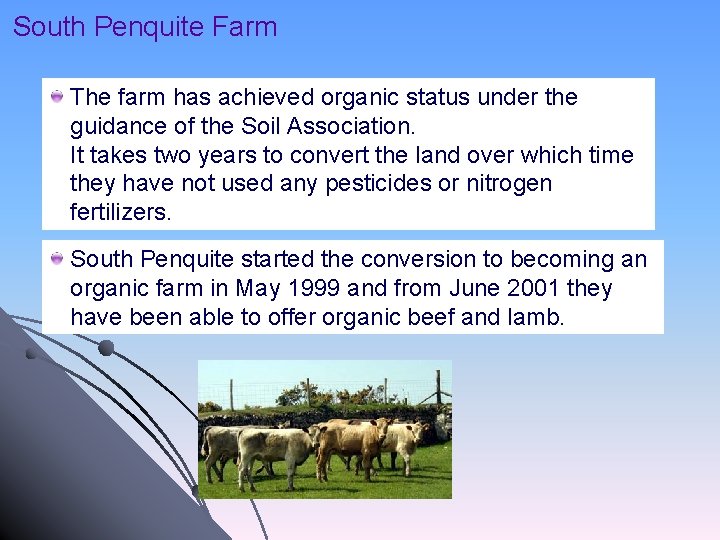
South Penquite Farm The farm has achieved organic status under the guidance of the Soil Association. It takes two years to convert the land over which time they have not used any pesticides or nitrogen fertilizers. South Penquite started the conversion to becoming an organic farm in May 1999 and from June 2001 they have been able to offer organic beef and lamb.
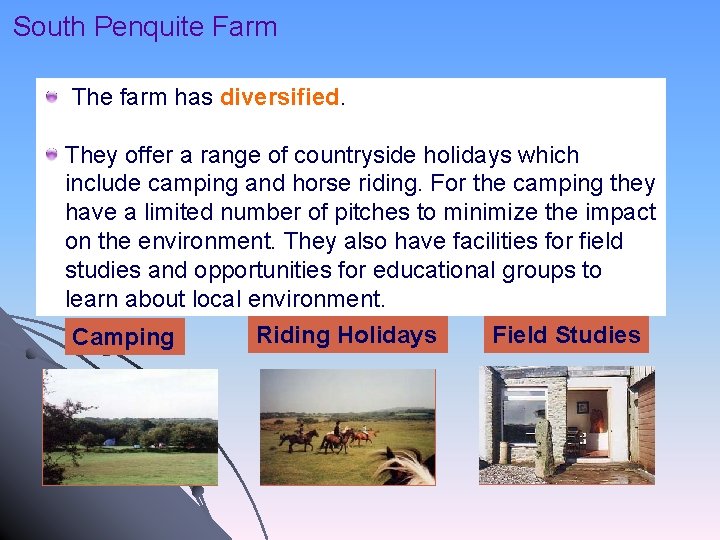
South Penquite Farm The farm has diversified. They offer a range of countryside holidays which include camping and horse riding. For the camping they have a limited number of pitches to minimize the impact on the environment. They also have facilities for field studies and opportunities for educational groups to learn about local environment. Camping Riding Holidays Field Studies
Organic quiz!
Task 3 l Using the information from this case study farm, write a list of bullet point notes, based on what you have learnt about Organic farming
Homework l In preparation for your next Geography lesson, you need to have researched ‘Organic Farming’ and ‘Intensive farming’ finding as much information as possible to either bring to the lesson or have a list of useful websites ready for the lesson. l Without doing this homework, you will jeopardise next lessons work and consequently your grade for the work
Intensive Farming (i) Land is cultivated intensively season after season and year after year by better agricultural methods and manpower. (ii) It is carried on in densely popu lated areas and the population pressure is high. (iii) Land holdings are smaller. (iv) Yield person is less but per hectare it is more, e. g. , Japan, India, and U. K.
Extensive Farming (i) Farming practice involving greater use of machinery. It is highly mechanized and the pro duce is increased by bringing more and more land under cul tivation. (ii) It is practiced in moderately populated areas. The popula tion pressure is less. (iii) Farms are large. (iv) Yield person is more but per hectare it is less, e. g. , USA, Canada
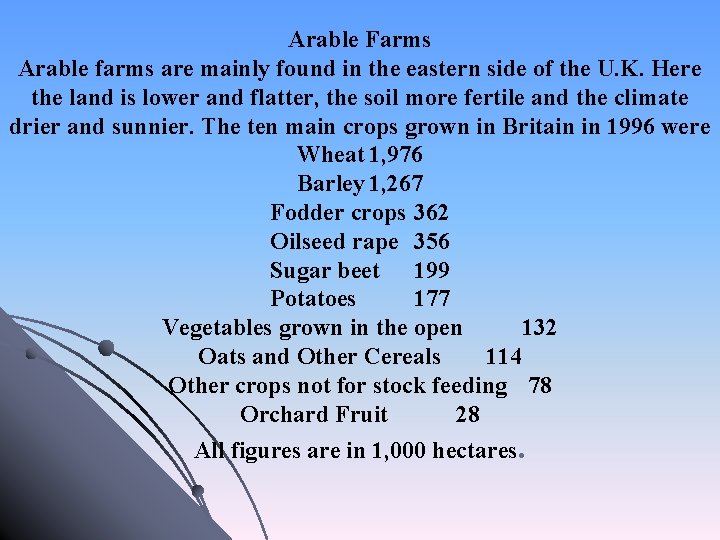
Arable Farms Arable farms are mainly found in the eastern side of the U. K. Here the land is lower and flatter, the soil more fertile and the climate drier and sunnier. The ten main crops grown in Britain in 1996 were Wheat 1, 976 Barley 1, 267 Fodder crops 362 Oilseed rape 356 Sugar beet 199 Potatoes 177 Vegetables grown in the open 132 Oats and Other Cereals 114 Other crops not for stock feeding 78 Orchard Fruit 28 All figures are in 1, 000 hectares.
Farming Problems The problems that have affected British farms include Overproduction Pollution by Chemicals Growth of Cities
Agricultural Issues Today Why the Decline? l Irregular hours l Children of farmers seek other opportunities l Once retired, who will buy their farms l Few young people can afford the capital cost of buying a farm l Start up costs are very high l Annual costs are high - veterinary, pesticides, equipment, vehicle repairs, seeds etc. l Debt or bankruptcy may result if prices of arm products do not increase faster than their cost of production l Damage of land
Damaging the Land Damage to the land occurs in three ways: Poor farming l Erosion l Contamination l
Damaging the Land Poor Farming l Damage occurs because of heavy leaching - soil loses nutrients because of excessive irrigation l Repeated use of heavy equipment compacts the soil and loses its ability to absorb water l Unplowed land - chemicals used to control weeds
Damaging the Land Erosion l Heavy wind and water action erodes the soil away blows the topsoil away Contamination l The use of fertilizers, herbicides and pesticides l Herbicides can be harmful to wildlife and humans l Pesticides will kill insects that destroy fruit, vegetables and grains etc. but also kill many successful species of insects