
Systems Engineering SE for ITS Using FHWAs New
- Slides: 55
Systems Engineering (SE) for ITS: Using FHWA’s New SE Handbook March 2007
Presenters • Emiliano Lopez – FHWA Office of Transportation Management – (202) 366 -2199 – Emiliano. Lopez@fhwa. dot. gov • Mac Lister – FHWA Resource Center – (708) 283 -3532 – Mac. Lister@fhwa. dot. gov 2
Poll 1 Who’s Participating in this T 3? (Please reply with the most appropriate answer: ) q Local/municipal agency q State agency q Federal agency q Education q Consultant q Other 3
Poll 2 Chances are that you already use some form of SE practice, but we would like to know your level of familiarity with SE. (Please reply with the most appropriate answer: ) q I am not familiar with SE. q I have heard of SE. q I am familiar with some SE concepts. q I have started using some SE methods. 4
Poll 3 Have you looked at or read the FHWA SE for ITS Handbook? (Again, please reply with the most appropriate answer: ) q No q I am aware of the Handbook q I have glanced at the Handbook q I have read portions of the Handbook q I have read most of the Handbook 5
Overview • • • Learning goals/outcomes New SE for ITS Handbook Benefits of using SE ”V” Model Overview of Handbook chapters Available SE training & resources 6
Learning Goals/Outcomes • Identify what is in the Handbook • Describe the key features of the Handbook • List key content chapters in the Handbook including: – technical processes – project management processes – applying SE 7
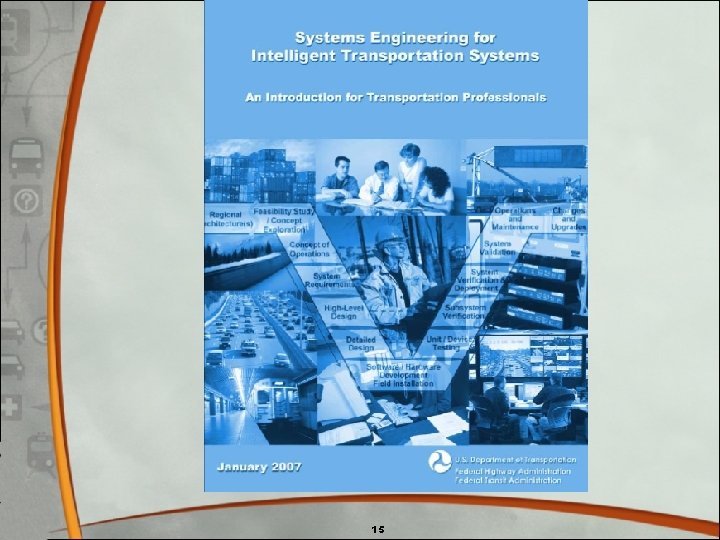
New SE for ITS Handbook • About the Handbook – Developed by FHWA SE Deployment Team – Designed for Federal and public ITS professionals – Provides a basic understanding of SE and how to apply it to ITS projects – Assists those deploying ITS projects – Available via CD and online using the following link: http: //ops. fhwa. dot. gov/publications/seitsguide/index. htm 8
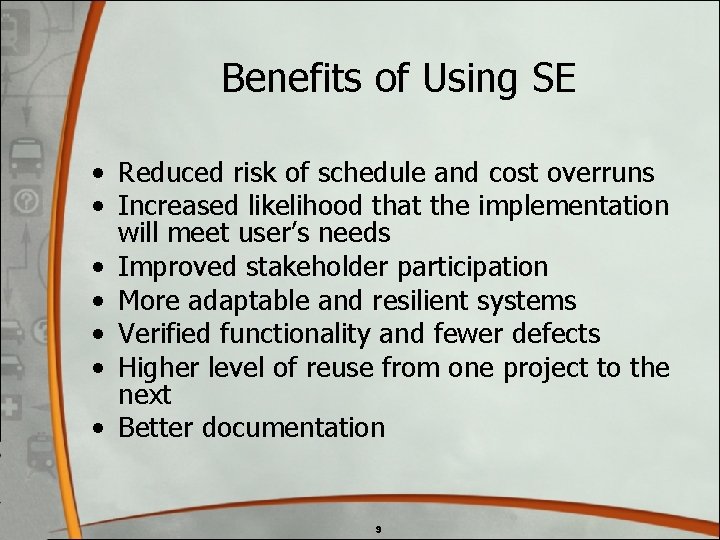
Benefits of Using SE • Reduced risk of schedule and cost overruns • Increased likelihood that the implementation will meet user’s needs • Improved stakeholder participation • More adaptable and resilient systems • Verified functionality and fewer defects • Higher level of reuse from one project to the next • Better documentation 9
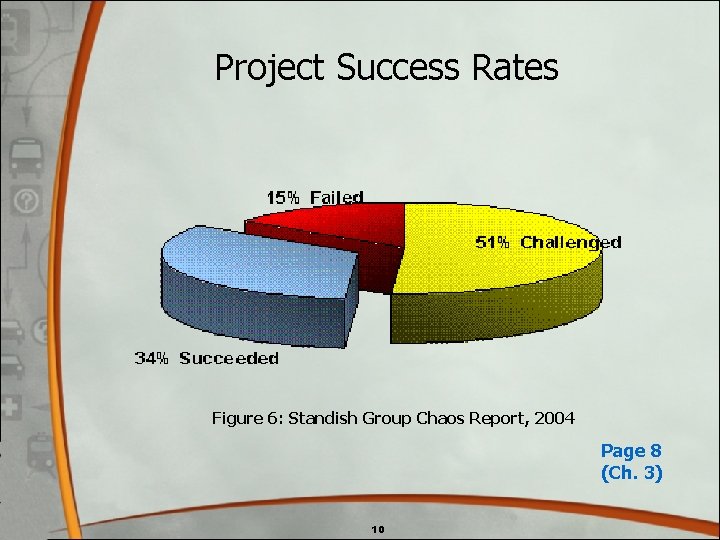
Project Success Rates Figure 6: Standish Group Chaos Report, 2004 Page 8 (Ch. 3) 10
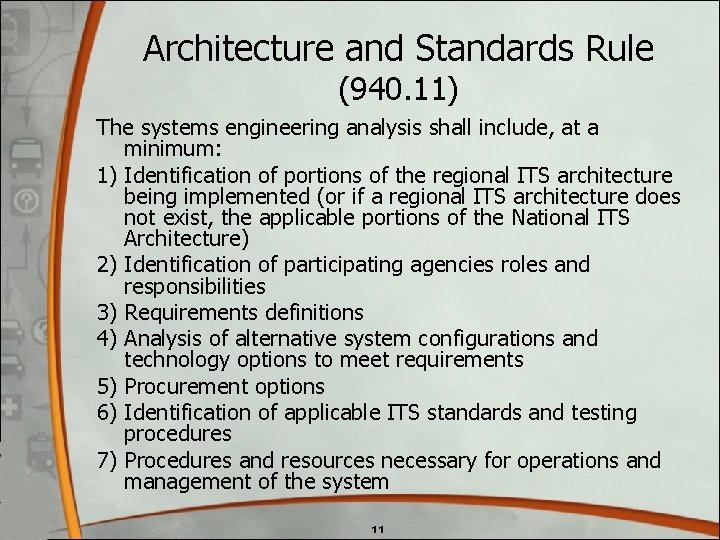
Architecture and Standards Rule (940. 11) The systems engineering analysis shall include, at a minimum: 1) Identification of portions of the regional ITS architecture being implemented (or if a regional ITS architecture does not exist, the applicable portions of the National ITS Architecture) 2) Identification of participating agencies roles and responsibilities 3) Requirements definitions 4) Analysis of alternative system configurations and technology options to meet requirements 5) Procurement options 6) Identification of applicable ITS standards and testing procedures 7) Procedures and resources necessary for operations and management of the system 11
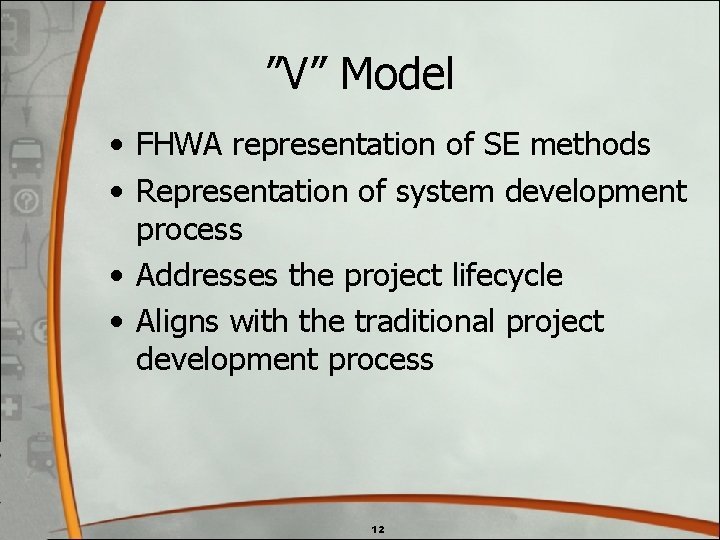
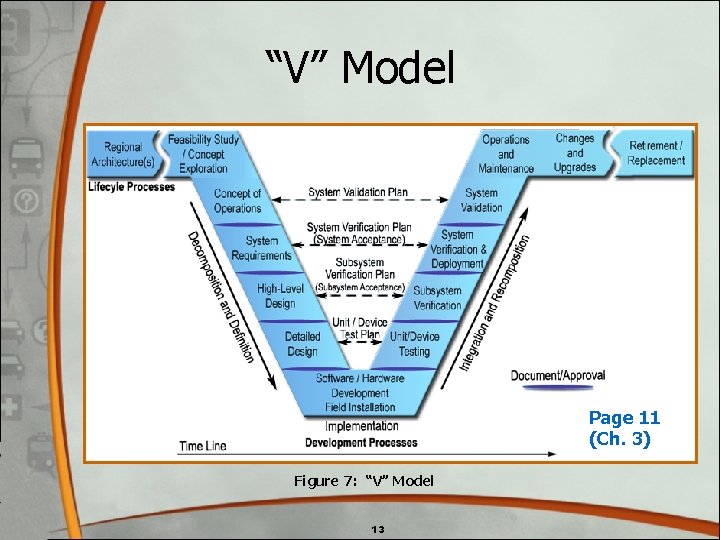
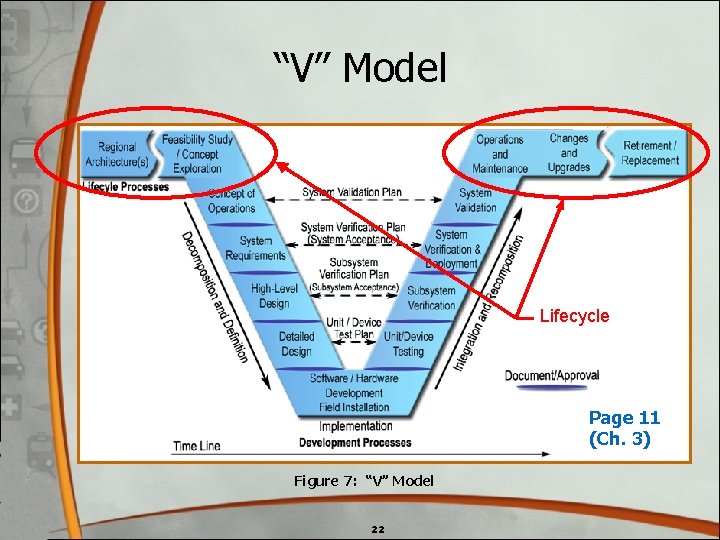
”V” Model • FHWA representation of SE methods • Representation of system development process • Addresses the project lifecycle • Aligns with the traditional project development process 12
“V” Model Page 11 (Ch. 3) Figure 7: “V” Model 13
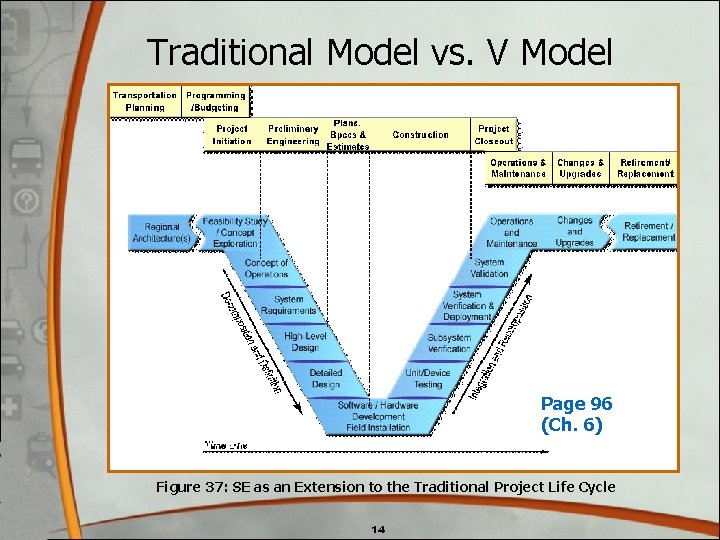
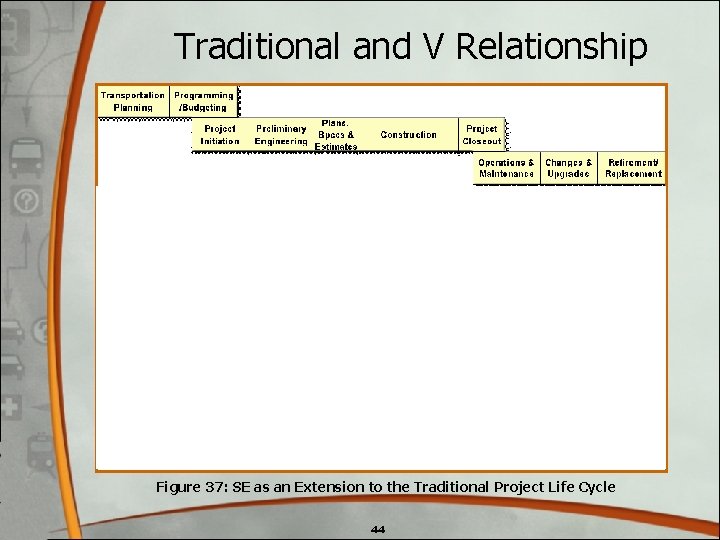
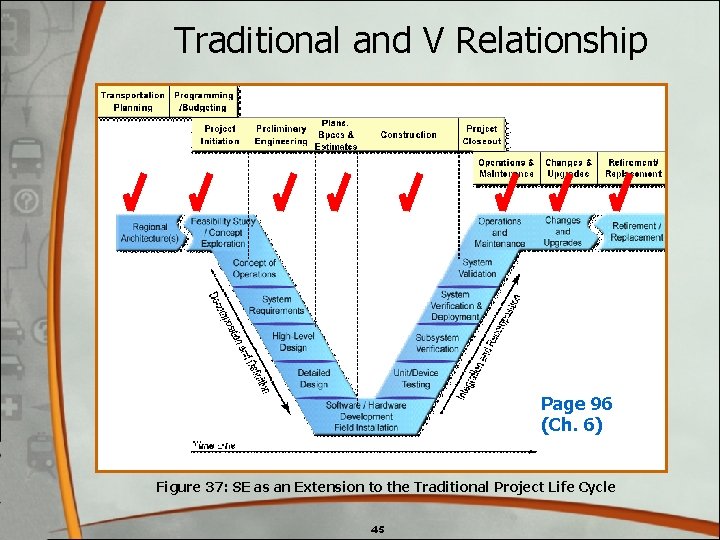
Traditional Model vs. V Model Page 96 (Ch. 6) Figure 37: SE as an Extension to the Traditional Project Life Cycle 14
15
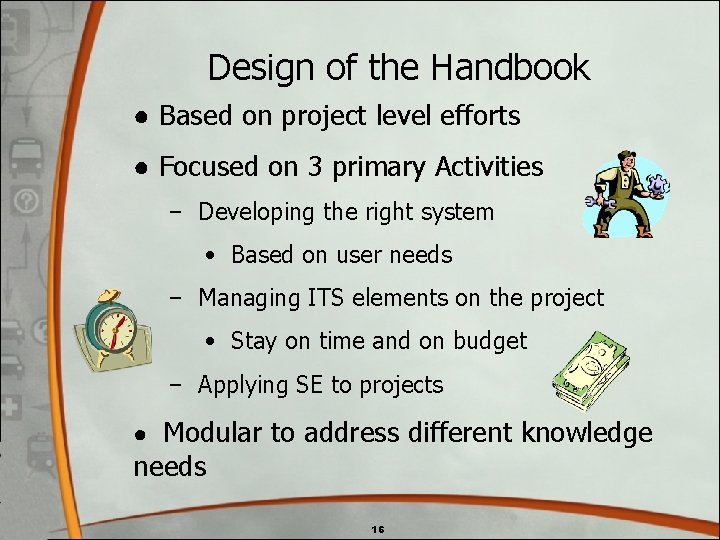
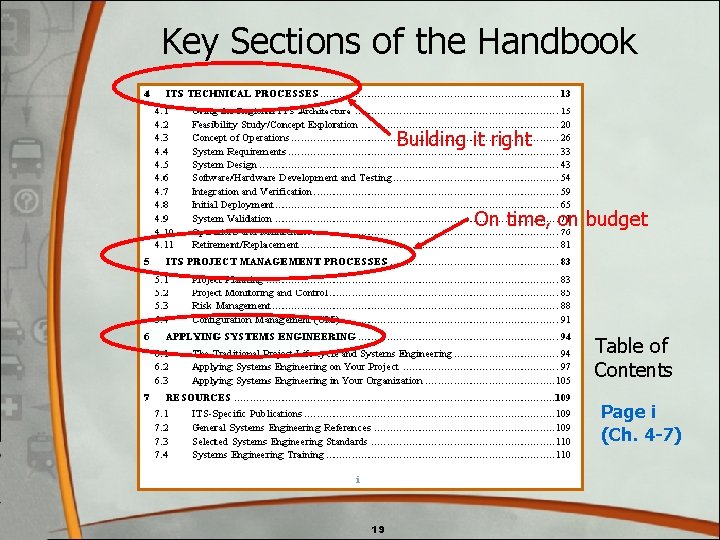
Design of the Handbook ● Based on project level efforts ● Focused on 3 primary Activities − Developing the right system • Based on user needs − Managing ITS elements on the project • Stay on time and on budget − Applying SE to projects ● Modular to address different knowledge needs 16
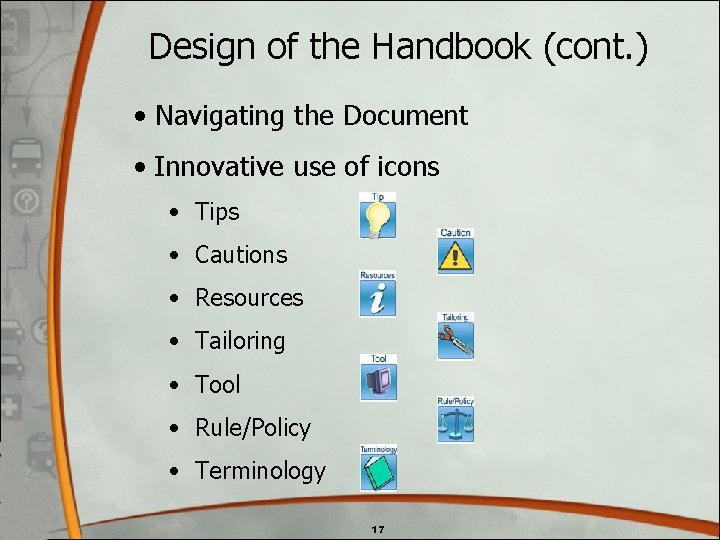
Design of the Handbook (cont. ) • Navigating the Document • Innovative use of icons • Tips • Cautions • Resources • Tailoring • Tool • Rule/Policy • Terminology 17
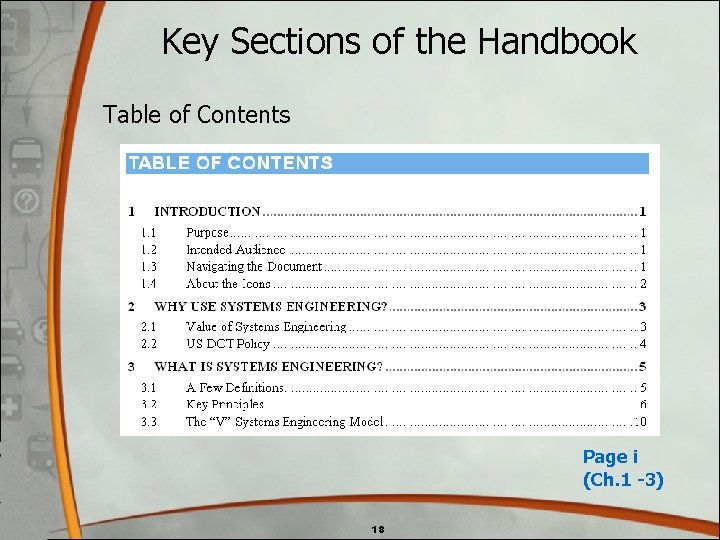
Key Sections of the Handbook Table of Contents Page i (Ch. 1 -3) 18
Key Sections of the Handbook Building it right On time, on budget Table of Contents Page i (Ch. 4 -7) 19
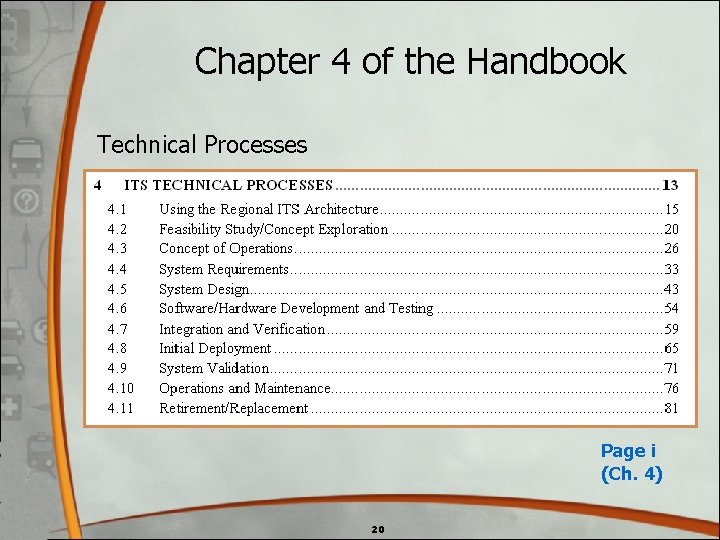
Chapter 4 of the Handbook Technical Processes Page i (Ch. 4) 20
Chapter 4: ITS Technical Processes • Explains SE through use of the“V” – – – Objectives Inputs (Things needed to begin this step) Processes (key activities) Outputs (Deliverables) Reviews (when it’s safe to move the project forward) • Aids in project definition, specification, design and build • Includes examples of SE documentation 21
“V” Model Lifecycle Page 11 (Ch. 3) Figure 7: “V” Model 22
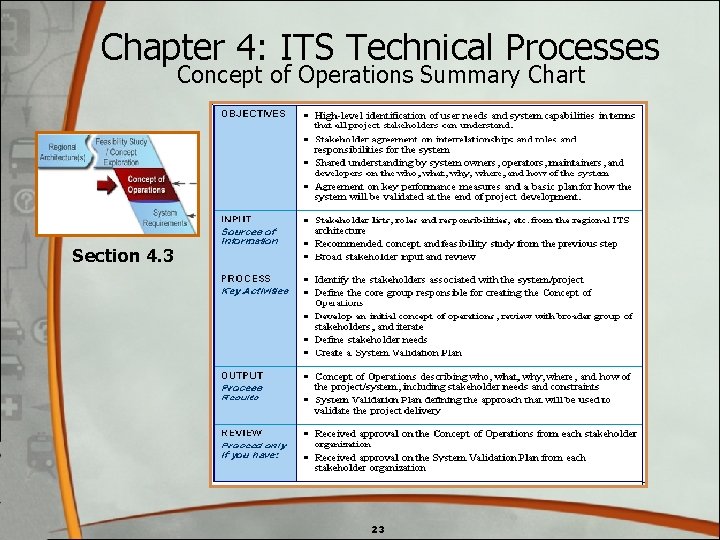
Chapter 4: ITS Technical Processes Concept of Operations Summary Chart Section 4. 3 23
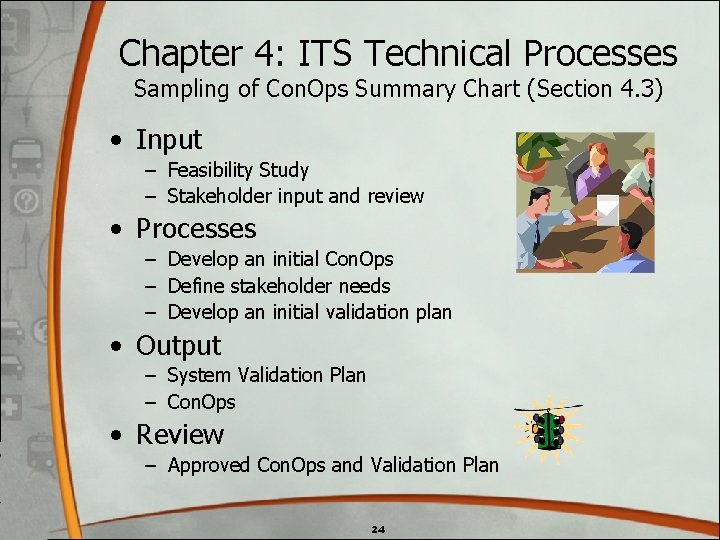
Chapter 4: ITS Technical Processes Sampling of Con. Ops Summary Chart (Section 4. 3) • Input – Feasibility Study – Stakeholder input and review • Processes – Develop an initial Con. Ops – Define stakeholder needs – Develop an initial validation plan • Output – System Validation Plan – Con. Ops • Review – Approved Con. Ops and Validation Plan 24
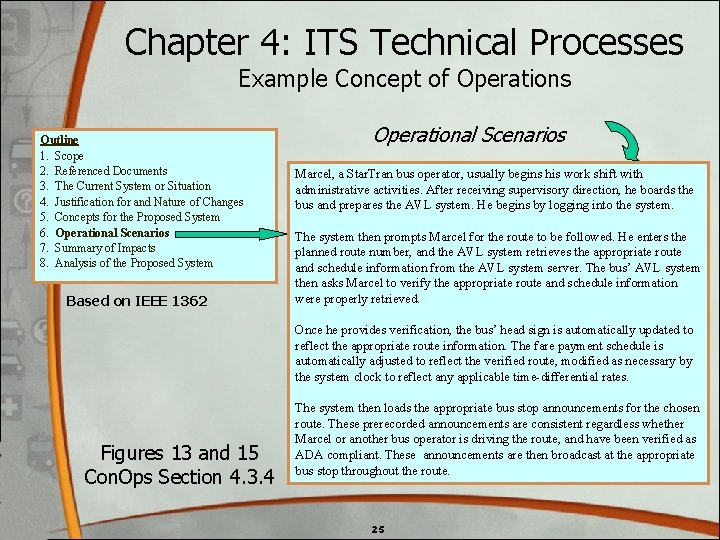
Chapter 4: ITS Technical Processes Example Concept of Operations Outline 1. Scope 2. Referenced Documents 3. The Current System or Situation 4. Justification for and Nature of Changes 5. Concepts for the Proposed System 6. Operational Scenarios 7. Summary of Impacts 8. Analysis of the Proposed System Based on IEEE 1362 Operational Scenarios Marcel, a Star. Tran bus operator, usually begins his work shift with administrative activities. After receiving supervisory direction, he boards the bus and prepares the AVL system. He begins by logging into the system. The system then prompts Marcel for the route to be followed. He enters the planned route number, and the AVL system retrieves the appropriate route and schedule information from the AVL system server. The bus’ AVL system then asks Marcel to verify the appropriate route and schedule information were properly retrieved. Once he provides verification, the bus’ head sign is automatically updated to reflect the appropriate route information. The fare payment schedule is automatically adjusted to reflect the verified route, modified as necessary by the system clock to reflect any applicable time-differential rates. Figures 13 and 15 Con. Ops Section 4. 3. 4 The system then loads the appropriate bus stop announcements for the chosen route. These prerecorded announcements are consistent regardless whether Marcel or another bus operator is driving the route, and have been verified as ADA compliant. These announcements are then broadcast at the appropriate bus stop throughout the route. 25
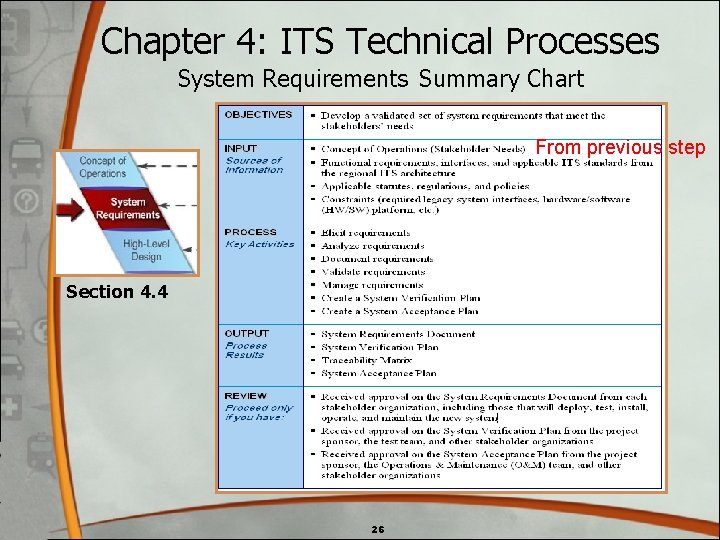
Chapter 4: ITS Technical Processes System Requirements Summary Chart From previous step Section 4. 4 26
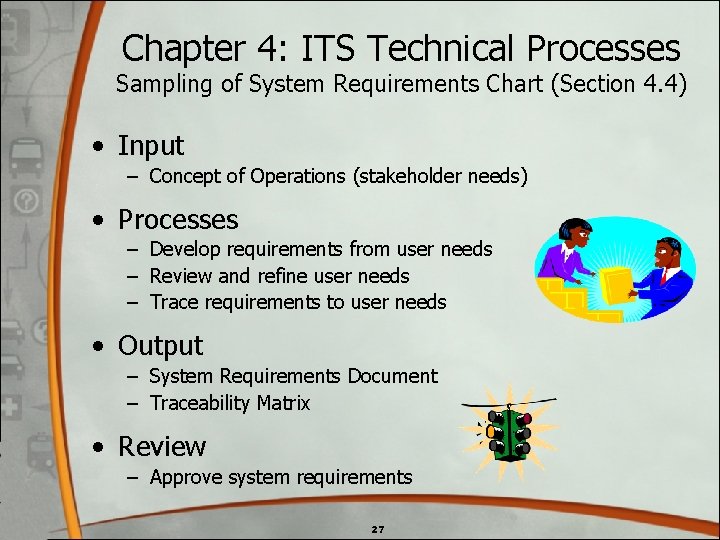
Chapter 4: ITS Technical Processes Sampling of System Requirements Chart (Section 4. 4) • Input – Concept of Operations (stakeholder needs) • Processes – Develop requirements from user needs – Review and refine user needs – Trace requirements to user needs • Output – System Requirements Document – Traceability Matrix • Review – Approve system requirements 27
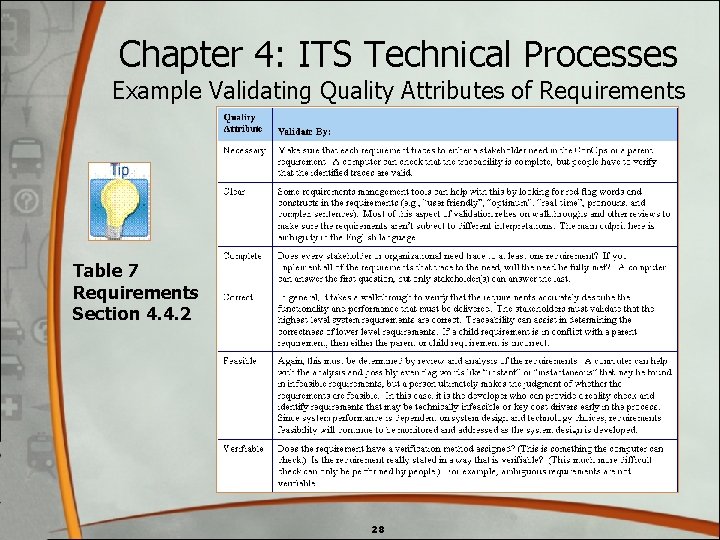
Chapter 4: ITS Technical Processes Example Validating Quality Attributes of Requirements Table 7 Requirements Section 4. 4. 2 28
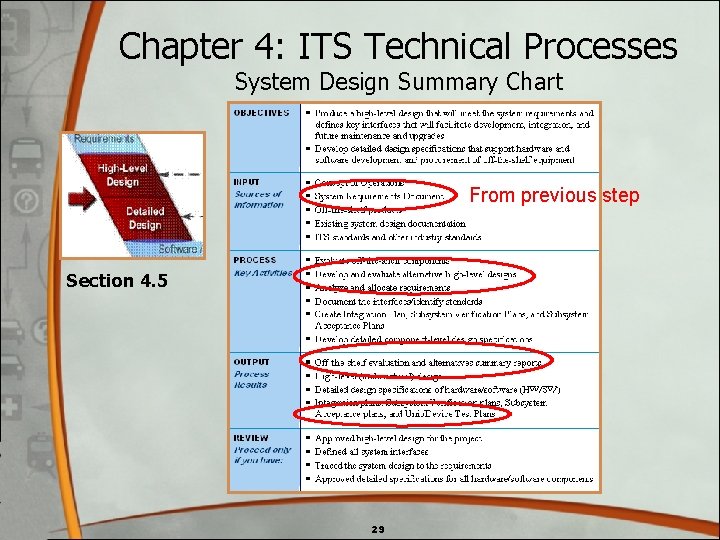
Chapter 4: ITS Technical Processes System Design Summary Chart From previous step Section 4. 5 29
Chapter 4: ITS Technical Processes SE Design Tailoring Advice (Section 4. 5. 1) • Leverage and optimize prior work – Reuse and build on existing design documentation – Update old documentation with new functionality or interfaces • Do not reinvent the wheel for each project 30
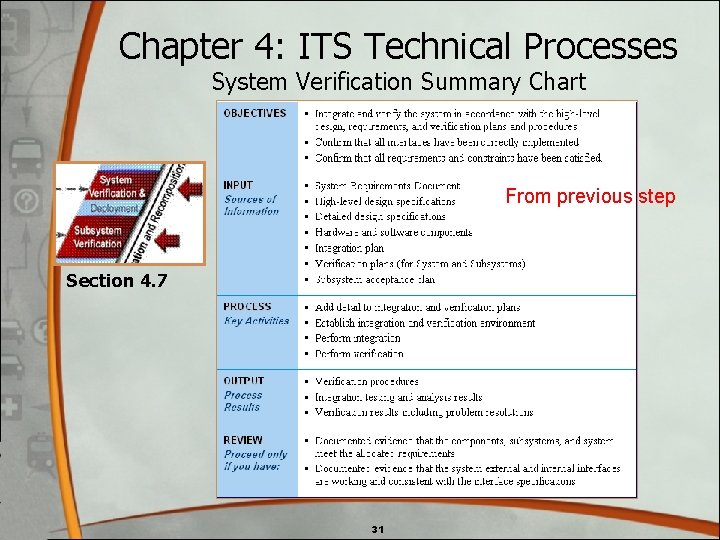
Chapter 4: ITS Technical Processes System Verification Summary Chart From previous step Section 4. 7 31
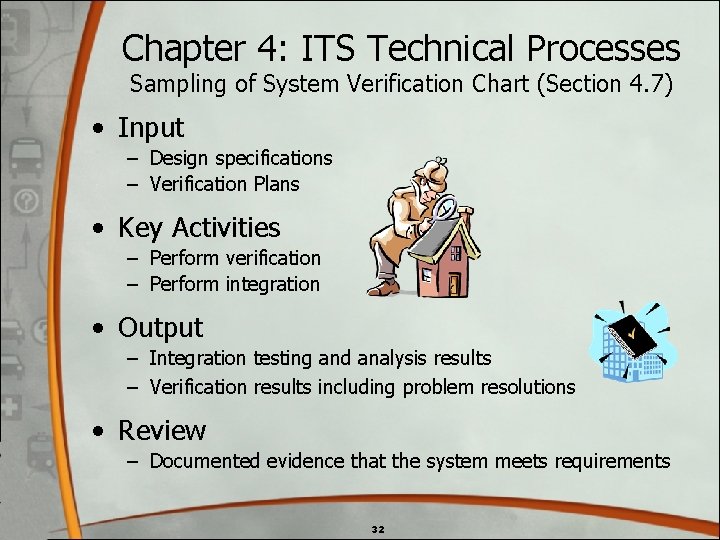
Chapter 4: ITS Technical Processes Sampling of System Verification Chart (Section 4. 7) • Input – Design specifications – Verification Plans • Key Activities – Perform verification – Perform integration • Output – Integration testing and analysis results – Verification results including problem resolutions • Review – Documented evidence that the system meets requirements 32
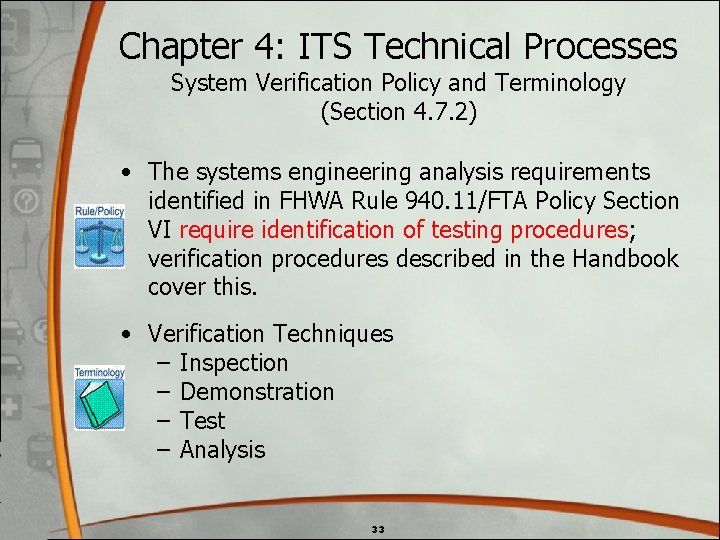
Chapter 4: ITS Technical Processes System Verification Policy and Terminology (Section 4. 7. 2) • The systems engineering analysis requirements identified in FHWA Rule 940. 11/FTA Policy Section VI require identification of testing procedures; verification procedures described in the Handbook cover this. • Verification Techniques – Inspection – Demonstration – Test – Analysis 33
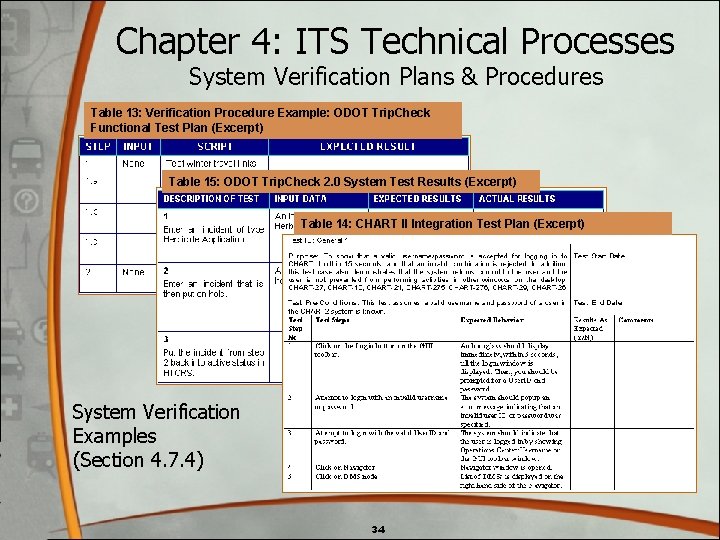
Chapter 4: ITS Technical Processes System Verification Plans & Procedures Table 13: Verification Procedure Example: ODOT Trip. Check Functional Test Plan (Excerpt) Table 15: ODOT Trip. Check 2. 0 System Test Results (Excerpt) Table 14: CHART II Integration Test Plan (Excerpt) System Verification Examples (Section 4. 7. 4) 34
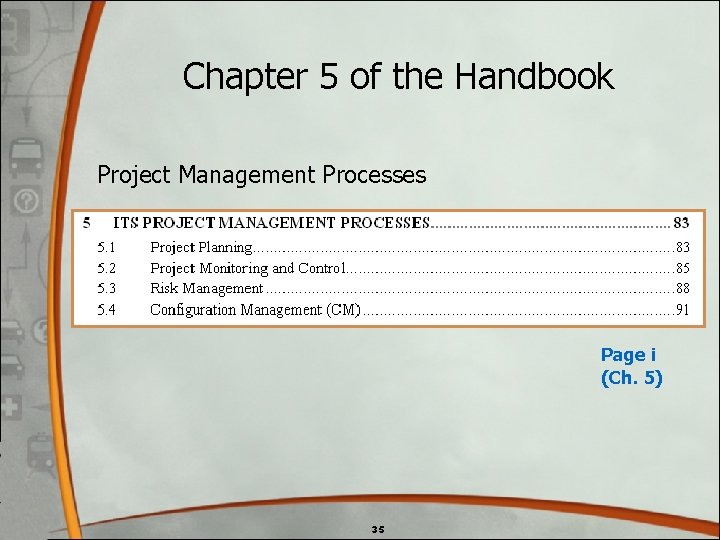
Chapter 5 of the Handbook Project Management Processes Page i (Ch. 5) 35
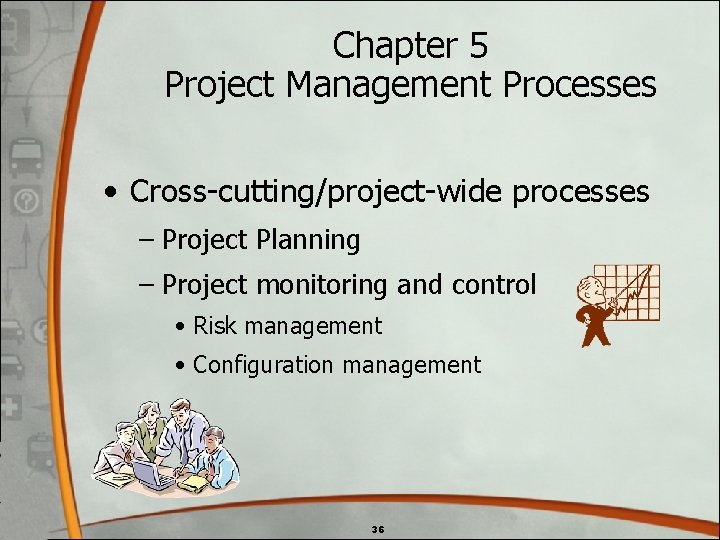
Chapter 5 Project Management Processes • Cross-cutting/project-wide processes – Project Planning – Project monitoring and control • Risk management • Configuration management 36
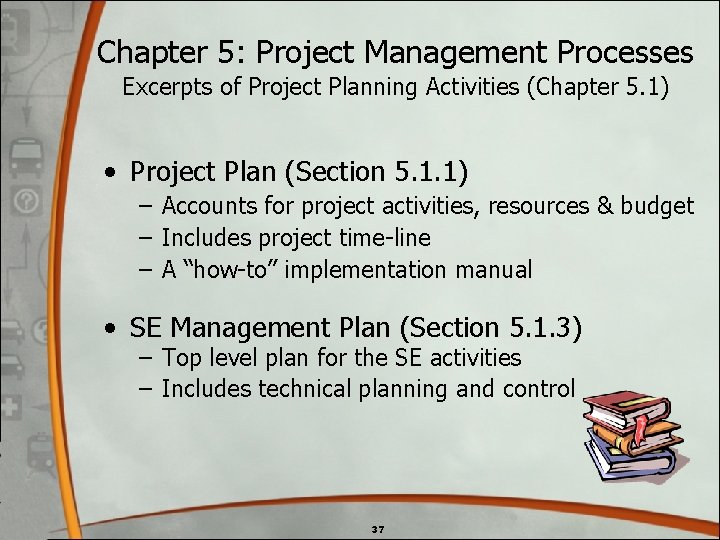
Chapter 5: Project Management Processes Excerpts of Project Planning Activities (Chapter 5. 1) • Project Plan (Section 5. 1. 1) – Accounts for project activities, resources & budget – Includes project time-line – A “how-to” implementation manual • SE Management Plan (Section 5. 1. 3) – Top level plan for the SE activities – Includes technical planning and control 37
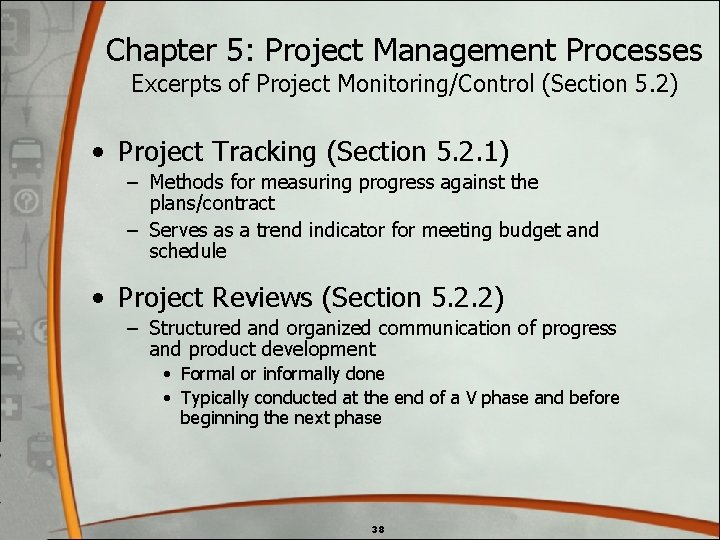
Chapter 5: Project Management Processes Excerpts of Project Monitoring/Control (Section 5. 2) • Project Tracking (Section 5. 2. 1) – Methods for measuring progress against the plans/contract – Serves as a trend indicator for meeting budget and schedule • Project Reviews (Section 5. 2. 2) – Structured and organized communication of progress and product development • Formal or informally done • Typically conducted at the end of a V phase and before beginning the next phase 38
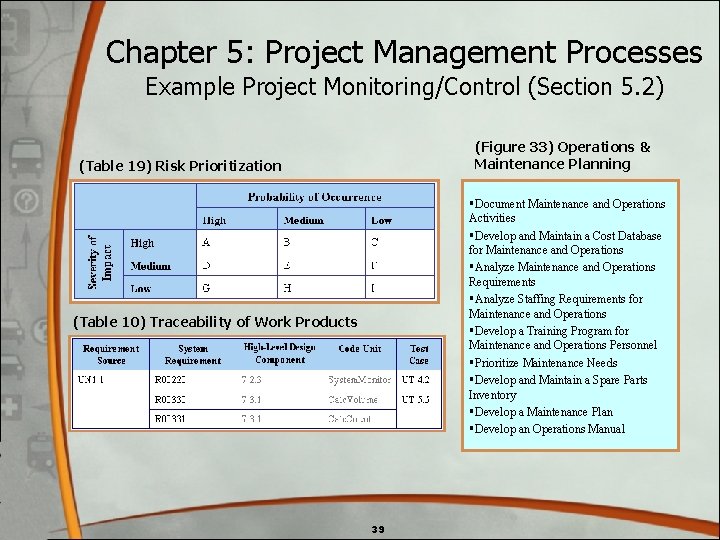
Chapter 5: Project Management Processes Example Project Monitoring/Control (Section 5. 2) (Figure 33) Operations & Maintenance Planning (Table 19) Risk Prioritization §Document Maintenance and Operations Activities §Develop and Maintain a Cost Database for Maintenance and Operations §Analyze Maintenance and Operations Requirements §Analyze Staffing Requirements for Maintenance and Operations §Develop a Training Program for Maintenance and Operations Personnel §Prioritize Maintenance Needs §Develop and Maintain a Spare Parts Inventory §Develop a Maintenance Plan §Develop an Operations Manual (Table 10) Traceability of Work Products 39
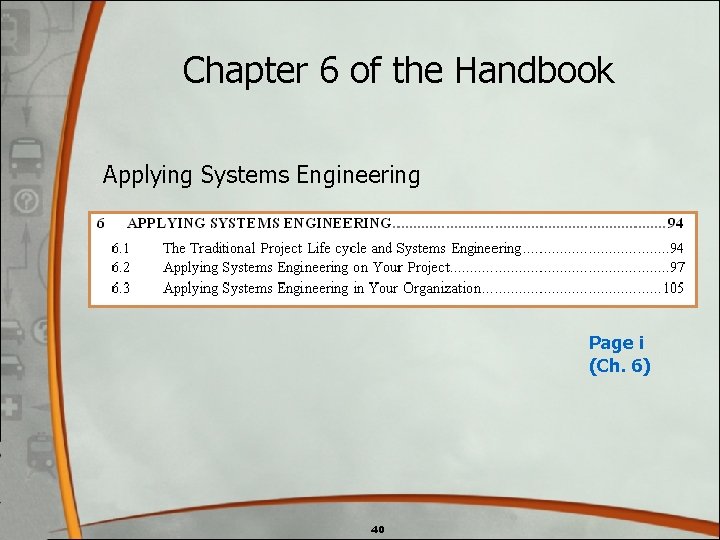
Chapter 6 of the Handbook Applying Systems Engineering Page i (Ch. 6) 40
Chapter 6 Applying Systems Engineering 1. Tailoring SE for your project 1. Enhances current project delivery practices 2. Helps focus on risky project steps 3. Allows selection of “as-needed” project deliverables and processes 4. Not an opportunity to skip steps! 1. Even the small projects need documented expectations 41
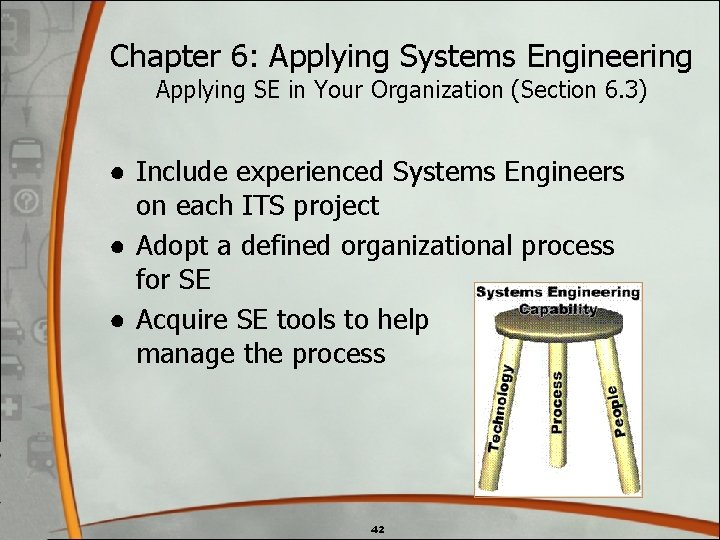
Chapter 6: Applying Systems Engineering Applying SE in Your Organization (Section 6. 3) ● Include experienced Systems Engineers on each ITS project ● Adopt a defined organizational process for SE ● Acquire SE tools to help manage the process 42
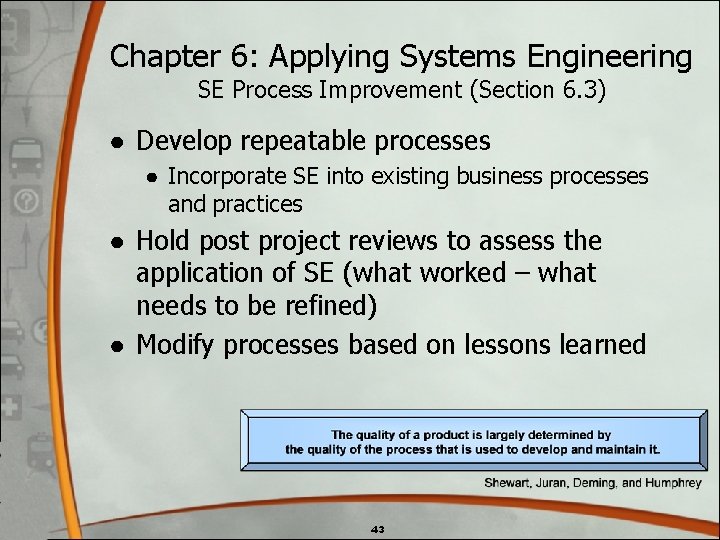
Chapter 6: Applying Systems Engineering SE Process Improvement (Section 6. 3) ● Develop repeatable processes ● Incorporate SE into existing business processes and practices ● Hold post project reviews to assess the application of SE (what worked – what needs to be refined) ● Modify processes based on lessons learned 43
Traditional and V Relationship Page 96 (Ch. 6) Figure 37: SE as an Extension to the Traditional Project Life Cycle 44
Traditional and V Relationship Page 96 (Ch. 6) Figure 37: SE as an Extension to the Traditional Project Life Cycle 45
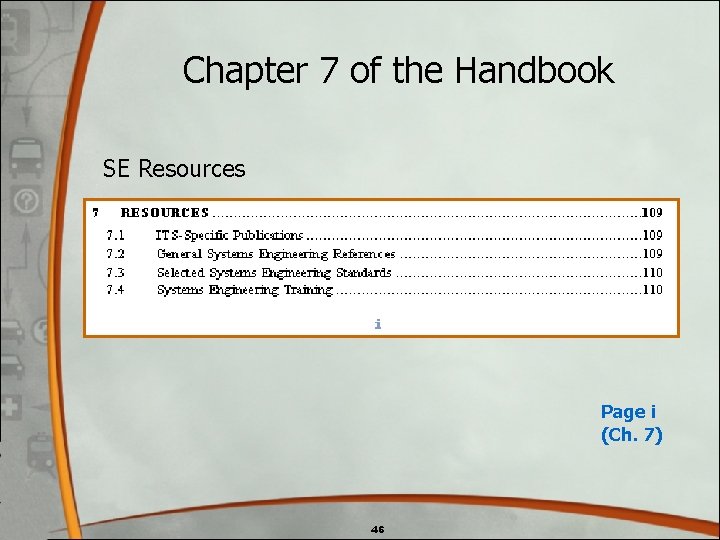
Chapter 7 of the Handbook SE Resources Page i (Ch. 7) 46
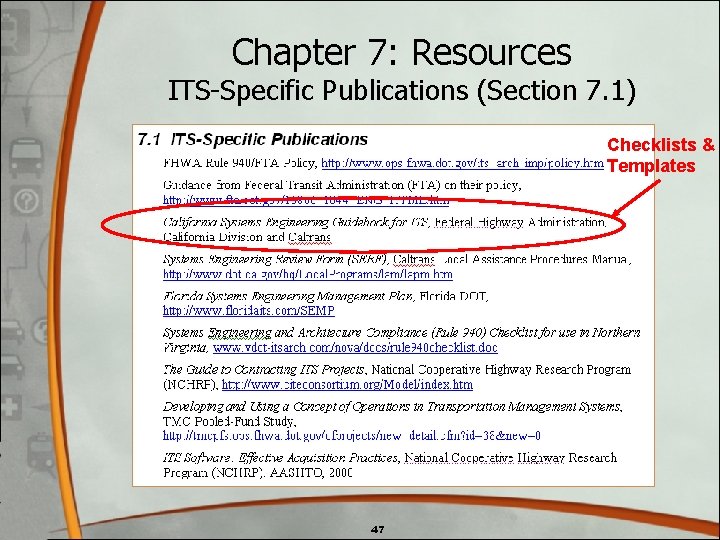
Chapter 7: Resources ITS-Specific Publications (Section 7. 1) Checklists & Templates 47
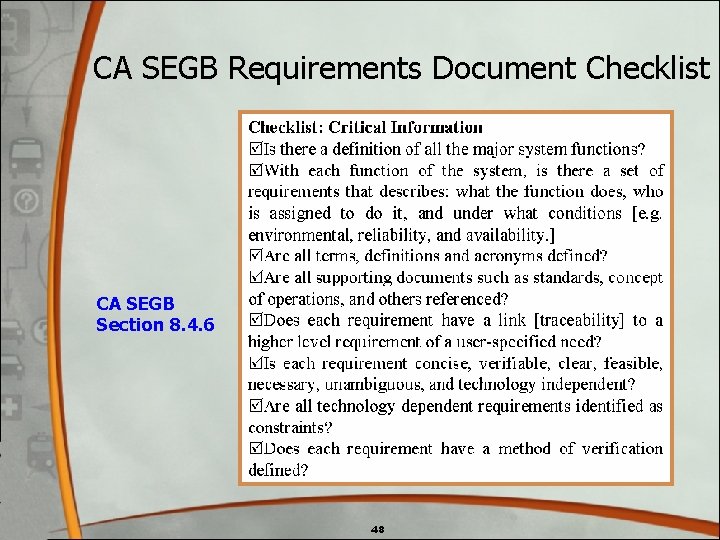
CA SEGB Requirements Document Checklist CA SEGB Section 8. 4. 6 48
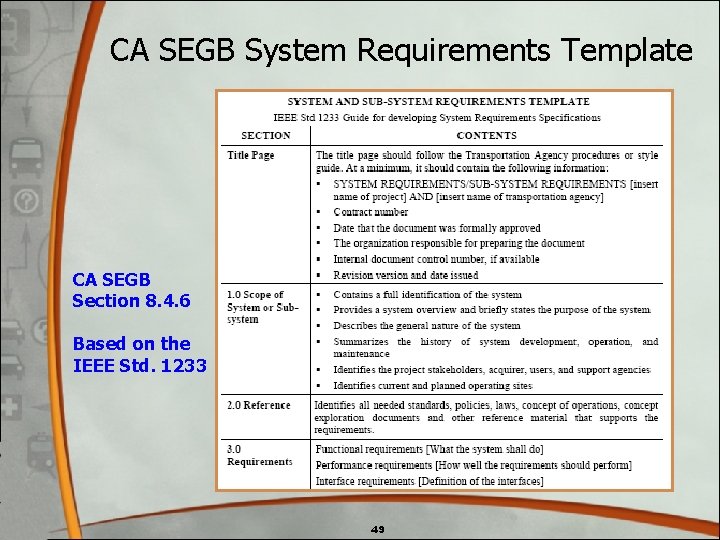
CA SEGB System Requirements Template CA SEGB Section 8. 4. 6 Based on the IEEE Std. 1233 49
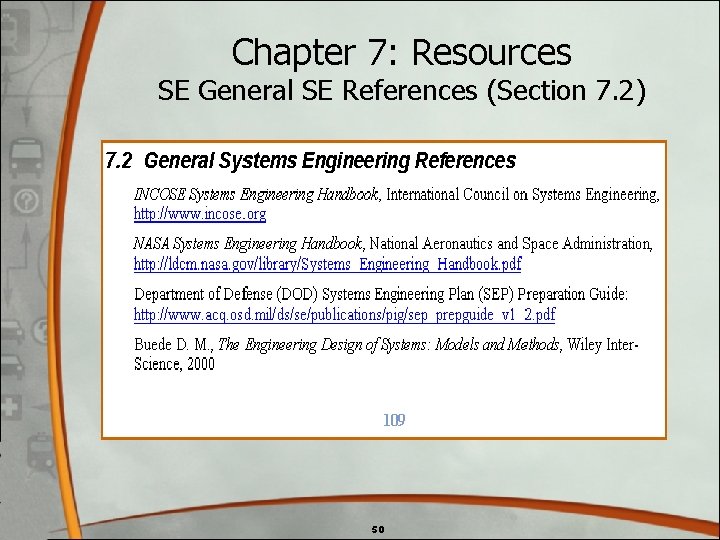
Chapter 7: Resources SE General SE References (Section 7. 2) 50
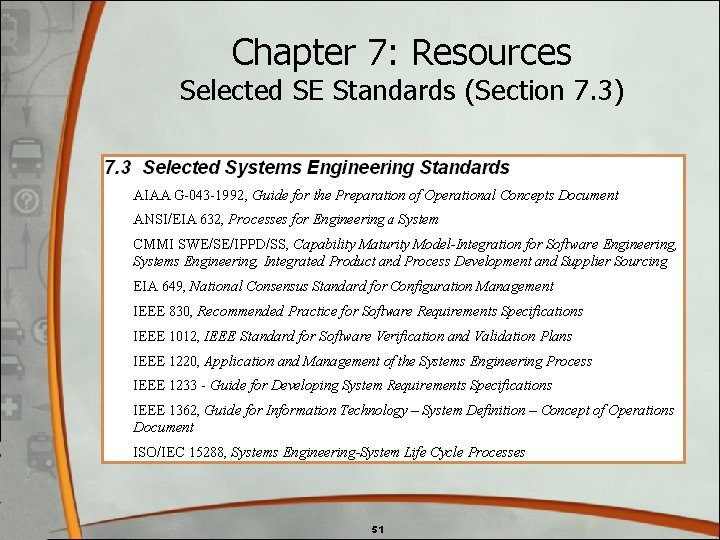
Chapter 7: Resources Selected SE Standards (Section 7. 3) 51
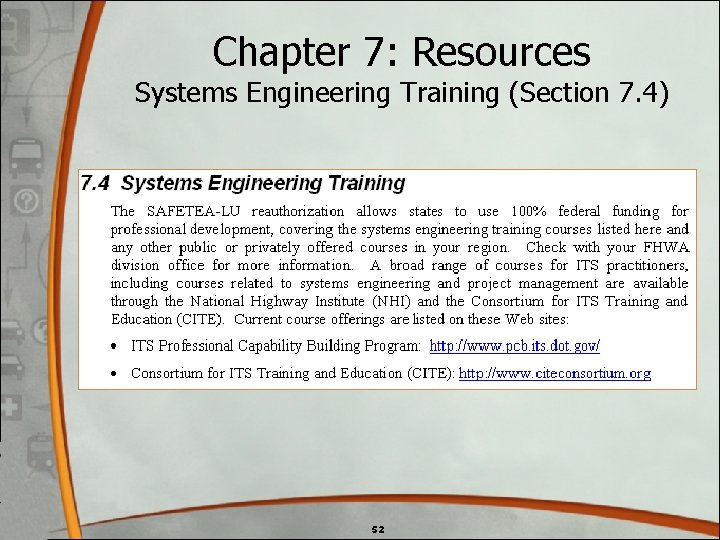
Chapter 7: Resources Systems Engineering Training (Section 7. 4) 52
Available SE Resources for ITS • Contact FHWA Resource Center/Division Offices • Systems Engineering Web Page (FHWA) http: //www. ops. fhwa. dot. gov/int_its_deployment/sys_eng. htm • Lessons Learned Knowledge Resource (ITS JPO) http: //www. itslessons. its. dot. gov/its/benecost. nsf/Lesson. System s. Eng Solutions Center (ITS JPO) -- Coming Soon Archived T 3 http: //www. pcb. its. dot. gov/T 3/archives. asp • • • California SE Guide Book http: //www. fhwa. dot. gov/cadiv/segb • Guide to Contracting ITS Projects (NCHRP) http: //www. trb. org/nchrp/its/index. htm 53
Relationship to the California SE Guide Book • Read the HQ SE for ITS Handbook first to get a solid foundation on what SE is and how to apply it • If needed, reference the CA Guide Book for specific details • In some cases, states/locals will only need to read the HQ SE for ITS Handbook in order to manage a project consultant/contractor • The CA Guide Book will be an additional reference for managing the consultant/contractor and crosschecking and validating the consultants’ work 54
Contact Information & Thank You • Emiliano Lopez – FHWA Office of Transportation Management – (202) 366 -2199 – Emiliano. Lopez@fhwa. dot. gov • Mac Lister – FHWA Resource Center – (708) 283 -3532 – Mac. Lister@fhwa. dot. gov Thank You! 55