
SYSTEMS DESIGN REVIEW Team Bass AGENDA PROJECT BACKGROUND

SYSTEMS DESIGN REVIEW Team Bass
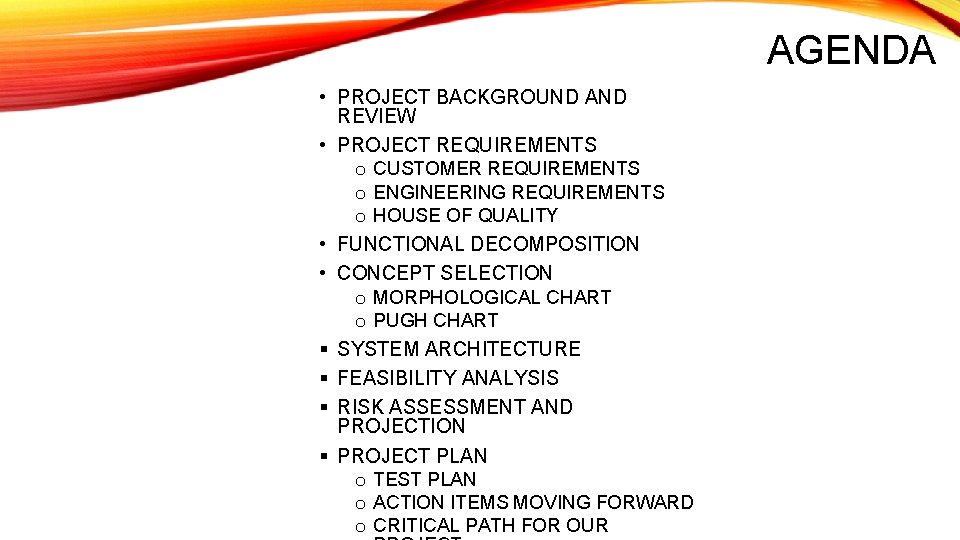
AGENDA • PROJECT BACKGROUND AND REVIEW • PROJECT REQUIREMENTS o CUSTOMER REQUIREMENTS o ENGINEERING REQUIREMENTS o HOUSE OF QUALITY • FUNCTIONAL DECOMPOSITION • CONCEPT SELECTION o MORPHOLOGICAL CHART o PUGH CHART § SYSTEM ARCHITECTURE § FEASIBILITY ANALYSIS § RISK ASSESSMENT AND PROJECTION § PROJECT PLAN o TEST PLAN o ACTION ITEMS MOVING FORWARD o CRITICAL PATH FOR OUR
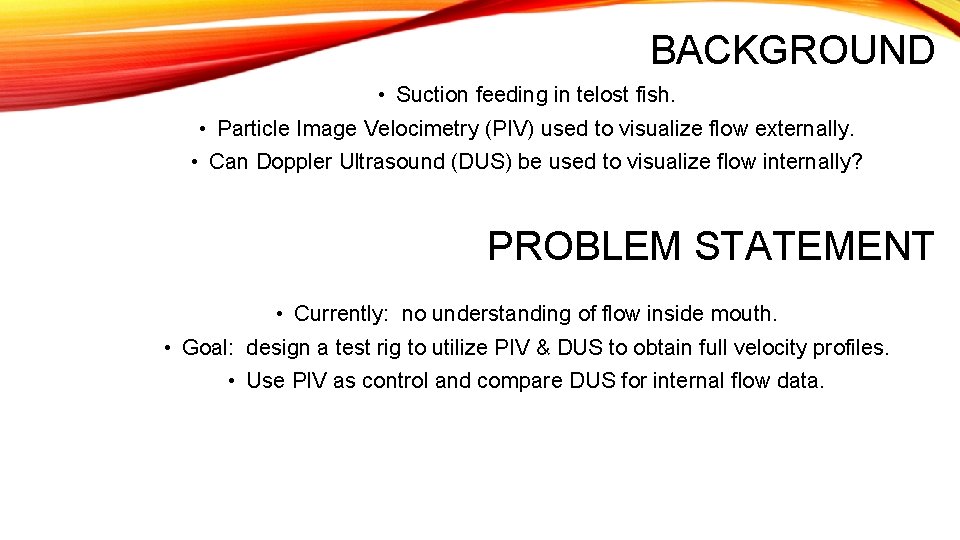
BACKGROUND • Suction feeding in telost fish. • Particle Image Velocimetry (PIV) used to visualize flow externally. • Can Doppler Ultrasound (DUS) be used to visualize flow internally? PROBLEM STATEMENT • Currently: no understanding of flow inside mouth. • Goal: design a test rig to utilize PIV & DUS to obtain full velocity profiles. • Use PIV as control and compare DUS for internal flow data.
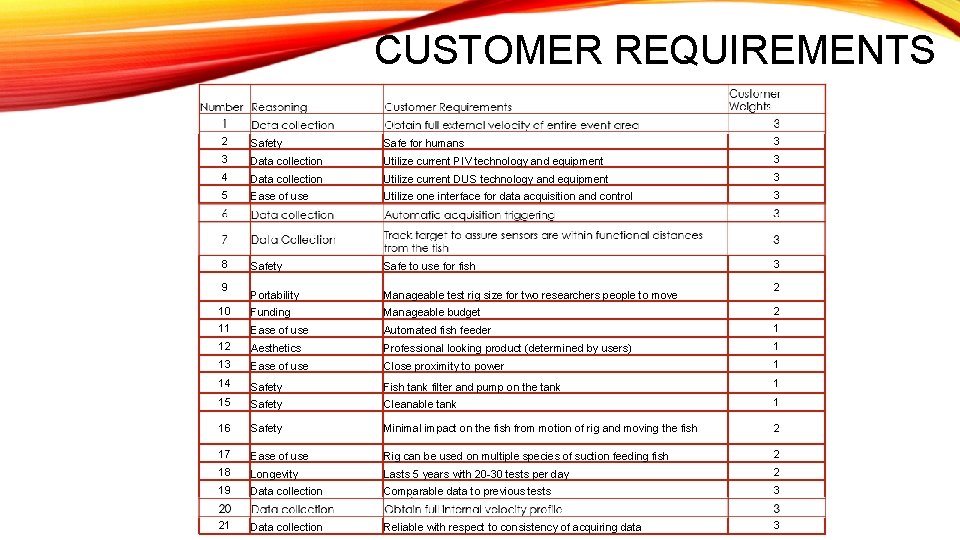
CUSTOMER REQUIREMENTS Number 1 Reasoning Customer Requirements Data collection Obtain full external velocity of entire event area 2 Safety Safe for humans 3 3 Data collection Utilize current PIV technology and equipment 3 4 Data collection Utilize current DUS technology and equipment 3 5 Ease of use Utilize one interface for data acquisition and control 3 6 Data collection Automatic acquisition triggering 3 7 Data Collection Track target to assure sensors are within functional distances from the fish 3 8 Safety Safe to use for fish 3 Portability Manageable test rig size for two researchers people to move 10 Funding Manageable budget 2 11 Ease of use Automated fish feeder 1 12 Aesthetics Professional looking product (determined by users) 1 13 Ease of use Close proximity to power 1 14 Safety Fish tank filter and pump on the tank 1 15 Safety Cleanable tank 1 16 Safety Minimal impact on the fish from motion of rig and moving the fish 2 17 Ease of use Rig can be used on multiple species of suction feeding fish 2 18 Longevity Lasts 5 years with 20 -30 tests per day 2 19 Data collection Comparable data to previous tests 3 20 Data collection Obtain full internal velocity profile 3 21 Data collection Reliable with respect to consistency of acquiring data 3 9 Customer Weights 3 2
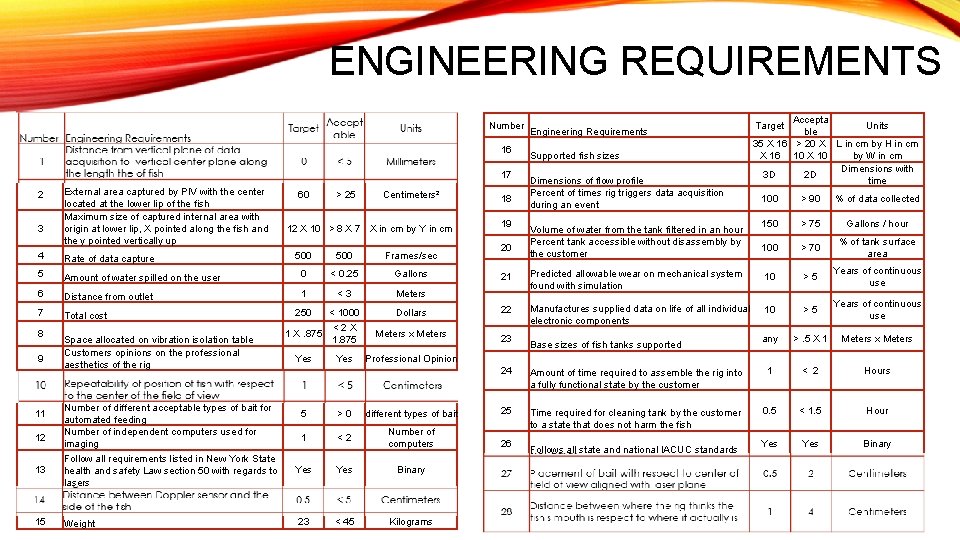
ENGINEERING REQUIREMENTS Number Target Accepta ble Units Distance from vertical plane of data acquisition to vertical center plane along the length the of fish 0 <5 Millimeters External area captured by PIV with the center located at the lower lip of the fish Maximum size of captured internal area with origin at lower lip, X pointed along the fish and the y pointed vertically up 60 Engineering Requirements Number 16 1 2 3 4 Rate of data capture 5 17 > 25 Centimeters² 12 X 10 > 8 X 7 X in cm by Y in cm 500 Frames/sec Amount of water spilled on the user 0 < 0. 25 Gallons 6 Distance from outlet 1 <3 Meters 7 Total cost 250 < 1000 1 X. 875 Yes 8 9 10 11 12 13 14 15 Space allocated on vibration isolation table Customers opinions on the professional aesthetics of the rig Repeatability of position of fish with respect to the center of the field of view Number of different acceptable types of bait for automated feeding Number of independent computers used for imaging Follow all requirements listed in New York State health and safety Law section 50 with regards to lasers Distance between Doppler sensor and the side of the fish Weight 18 19 20 Engineering Requirements Supported fish sizes Dimensions of flow profile Percent of times rig triggers data acquisition during an event Volume of water from the tank filtered in an hour Percent tank accessible without disassembly by the customer Accepta Units ble 35 X 16 > 20 X L in cm by H in cm X 16 10 X 10 by W in cm Dimensions with 3 D 2 D time Target 100 > 90 % of data collected 150 > 75 Gallons / hour 100 > 70 % of tank surface area 21 Predicted allowable wear on mechanical system found with simulation 10 >5 Years of continuous use Dollars 22 10 >5 Years of continuous use <2 X 1. 875 Manufactures supplied data on life of all individual electronic components Meters x Meters 23 any >. 5 X 1 Meters x Meters Yes Professional Opinion Base sizes of fish tanks supported 24 Amount of time required to assemble the rig into a fully functional state by the customer 1 < 2 Hours Time required for cleaning tank by the customer to a state that does not harm the fish 0. 5 < 1. 5 Hour Yes Binary 0. 5 2 Centimeters 1 4 Centimeters 1 <5 Centimeters 5 >0 different types of bait 25 1 <2 Number of computers 26 27 Placement of bait with respect to center of field of view aligned with laser plane 28 Distance between where the rig thinks the fish's mouth is respect to where it actually is Yes Binary 0. 5 <5 Centimeters 23 < 45 Kilograms Follows all state and national IACUC standards
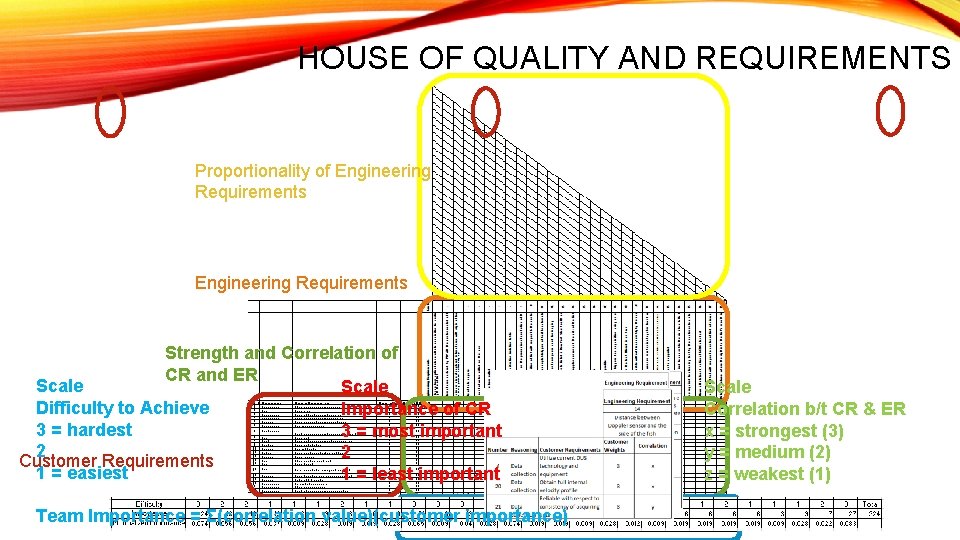
HOUSE OF QUALITY AND REQUIREMENTS Proportionality of Engineering Requirements Strength and Correlation of CR and ER Scale Difficulty to Achieve Importance of CR 3 = hardest 3 = most important 2 2 Customer Requirements 1 = easiest 1 = least important Team Importance = Σ(correlation value)(customer importance) Difficulty and Importance Scale Correlation b/t CR & ER x = strongest (3) y = medium (2) z = weakest (1)
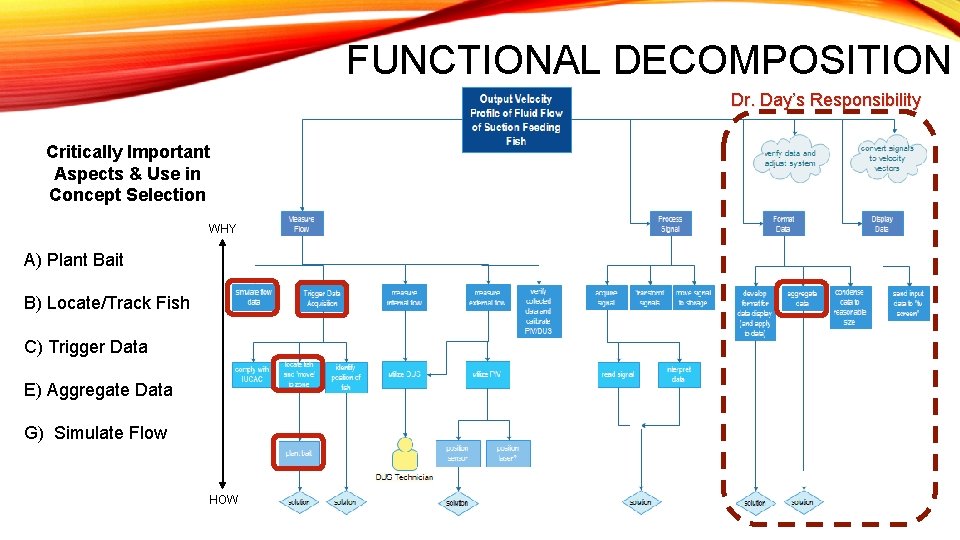
FUNCTIONAL DECOMPOSITION Dr. Day’s Responsibility Critically Important Aspects & Use in Concept Selection WHY A) Plant Bait B) Locate/Track Fish C) Trigger Data E) Aggregate Data G) Simulate Flow HOW

MORPHOLOGICAL CHART
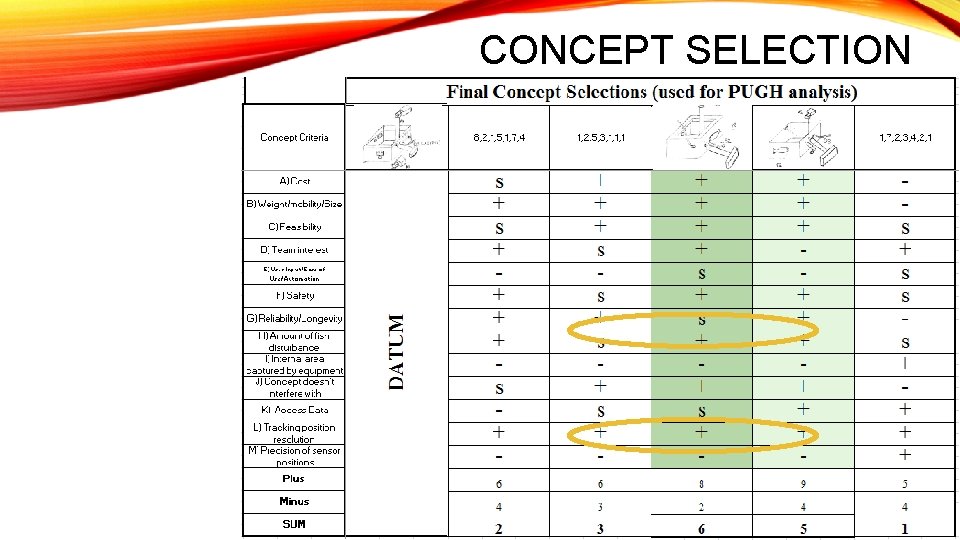
CONCEPT SELECTION
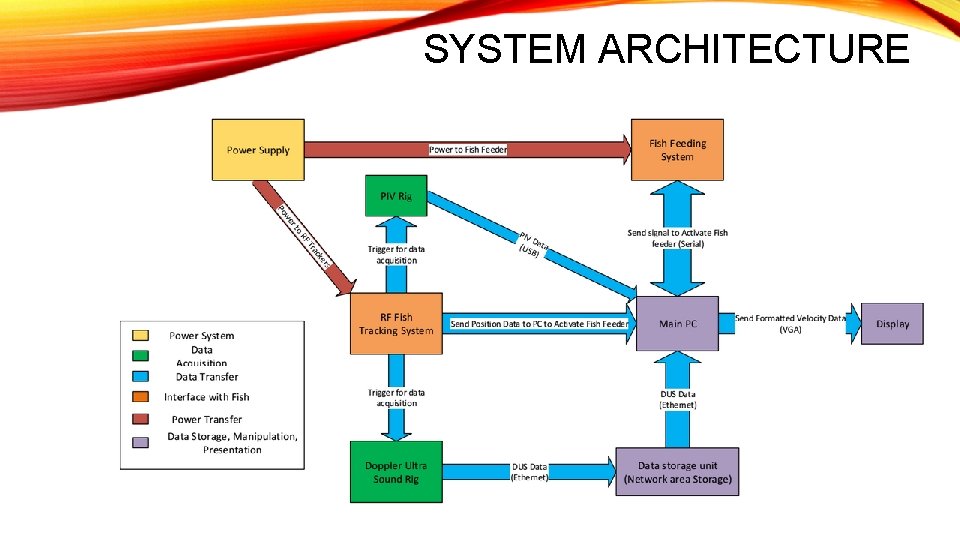
SYSTEM ARCHITECTURE
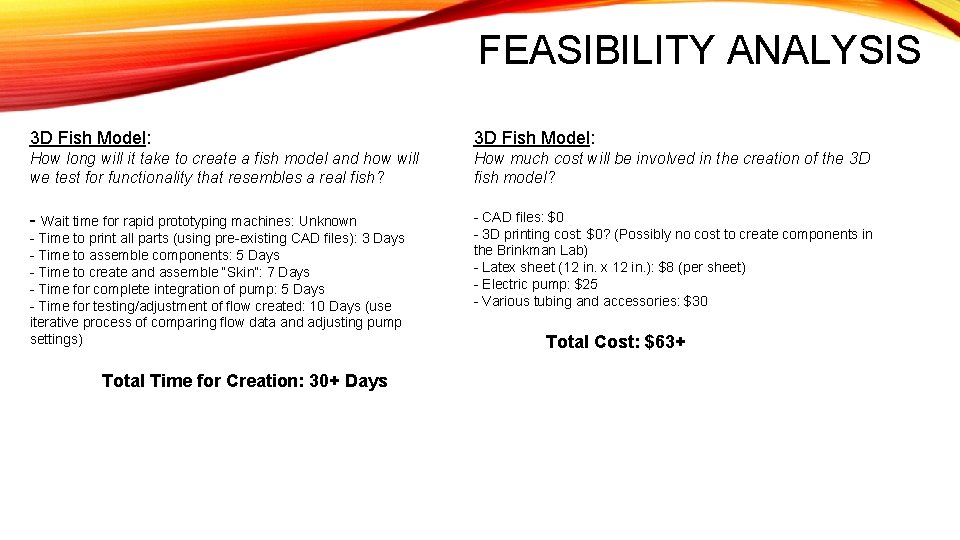
FEASIBILITY ANALYSIS 3 D Fish Model: How long will it take to create a fish model and how will we test for functionality that resembles a real fish? How much cost will be involved in the creation of the 3 D fish model? - Wait time for rapid prototyping machines: Unknown - CAD files: $0 - 3 D printing cost: $0? (Possibly no cost to create components in the Brinkman Lab) - Latex sheet (12 in. x 12 in. ): $8 (per sheet) - Electric pump: $25 - Various tubing and accessories: $30 - Time to print all parts (using pre-existing CAD files): 3 Days - Time to assemble components: 5 Days - Time to create and assemble “Skin”: 7 Days - Time for complete integration of pump: 5 Days - Time for testing/adjustment of flow created: 10 Days (use iterative process of comparing flow data and adjusting pump settings) Total Time for Creation: 30+ Days Total Cost: $63+
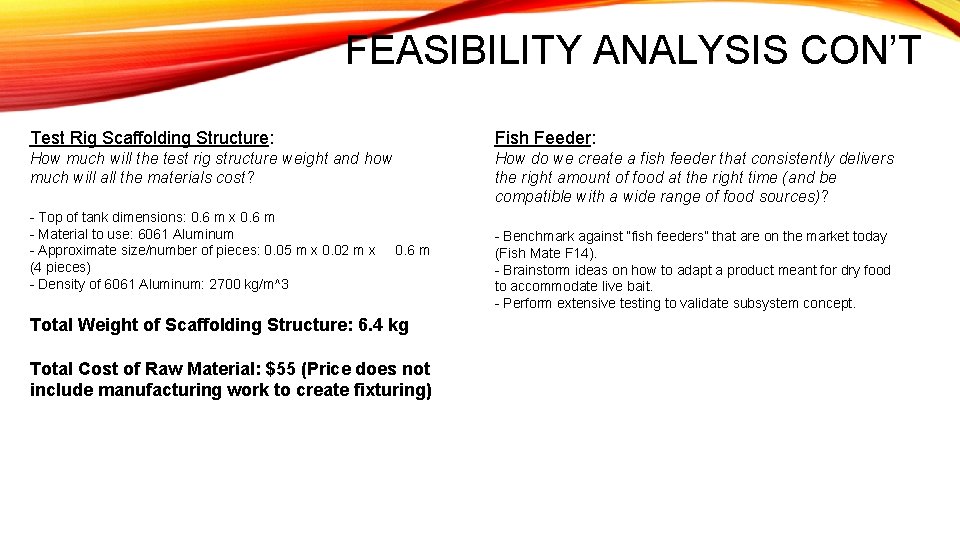
FEASIBILITY ANALYSIS CON’T Test Rig Scaffolding Structure: Fish Feeder: How much will the test rig structure weight and how much will all the materials cost? How do we create a fish feeder that consistently delivers the right amount of food at the right time (and be compatible with a wide range of food sources)? - Top of tank dimensions: 0. 6 m x 0. 6 m - Material to use: 6061 Aluminum - Approximate size/number of pieces: 0. 05 m x 0. 02 m x (4 pieces) - Density of 6061 Aluminum: 2700 kg/m^3 0. 6 m Total Weight of Scaffolding Structure: 6. 4 kg Total Cost of Raw Material: $55 (Price does not include manufacturing work to create fixturing) - Benchmark against “fish feeders” that are on the market today (Fish Mate F 14). - Brainstorm ideas on how to adapt a product meant for dry food to accommodate live bait. - Perform extensive testing to validate subsystem concept.
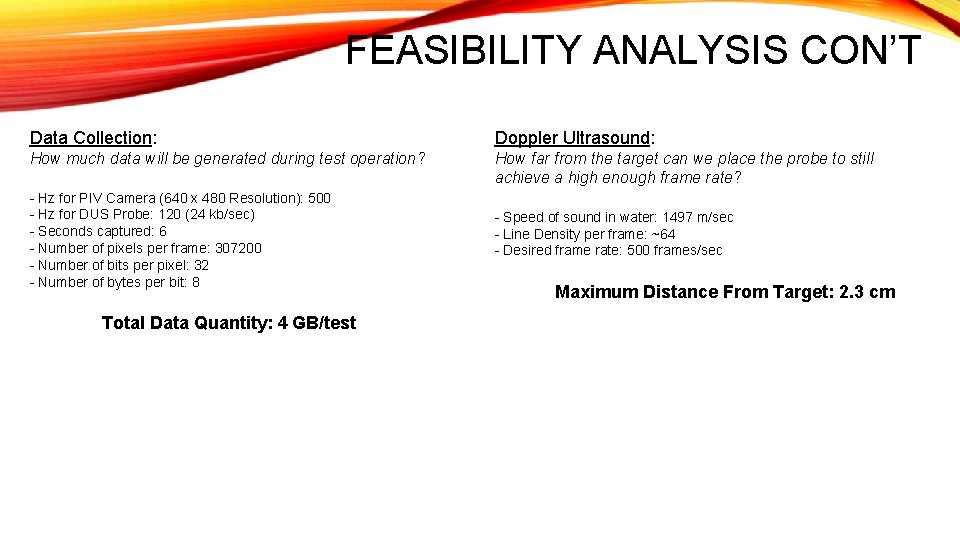
FEASIBILITY ANALYSIS CON’T Data Collection: Doppler Ultrasound: How much data will be generated during test operation? How far from the target can we place the probe to still achieve a high enough frame rate? - Hz for PIV Camera (640 x 480 Resolution): 500 - Hz for DUS Probe: 120 (24 kb/sec) - Seconds captured: 6 - Number of pixels per frame: 307200 - Number of bits per pixel: 32 - Number of bytes per bit: 8 Total Data Quantity: 4 GB/test - Speed of sound in water: 1497 m/sec - Line Density per frame: ~64 - Desired frame rate: 500 frames/sec Maximum Distance From Target: 2. 3 cm
RISK ASSESSMENT SCALE
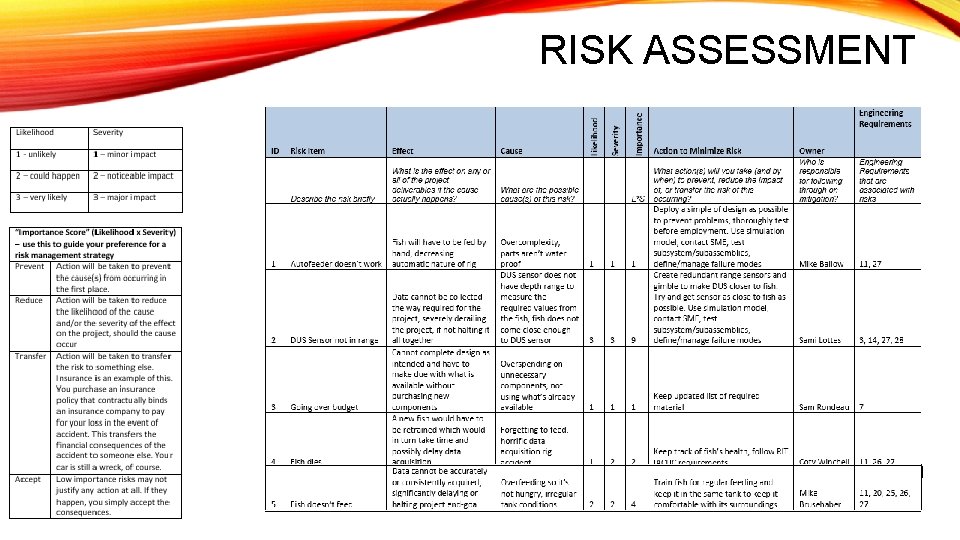
RISK ASSESSMENT
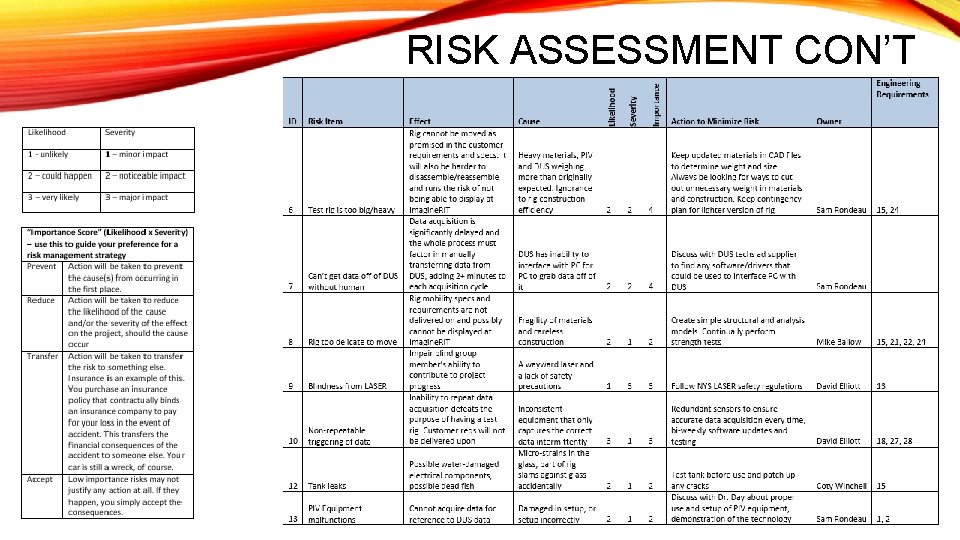
RISK ASSESSMENT CON’T
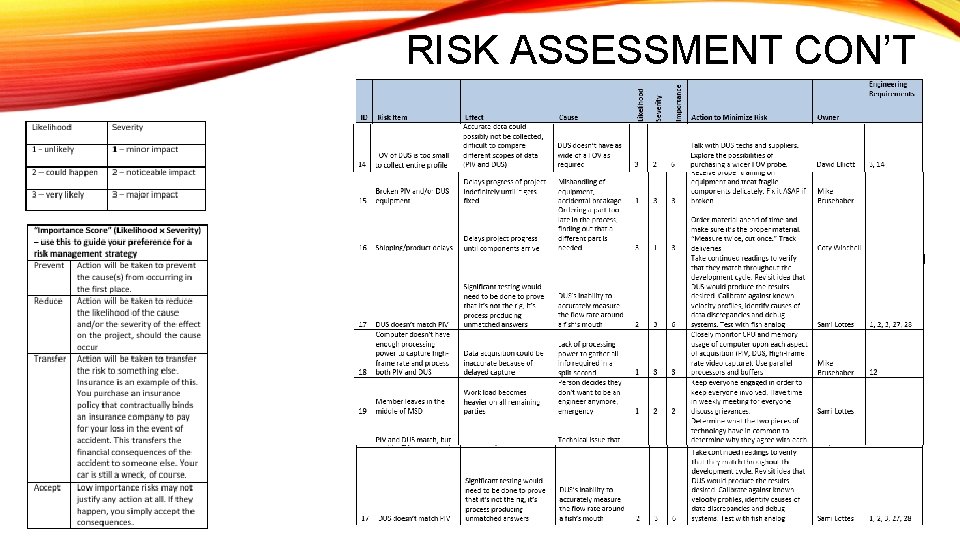
RISK ASSESSMENT CON’T
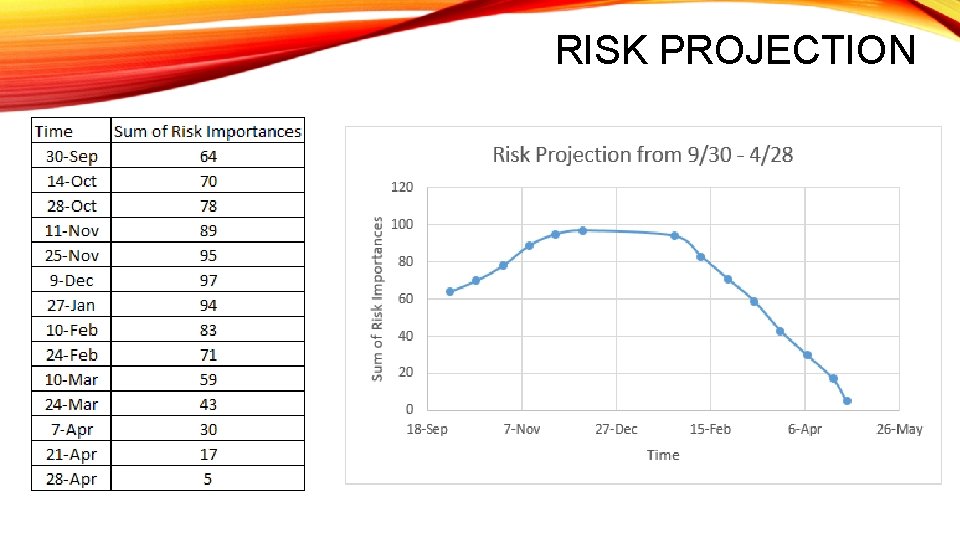
RISK PROJECTION
PROJECT PLAN
PROJECT PLAN
PROJECT PLAN
PROJECT PLAN
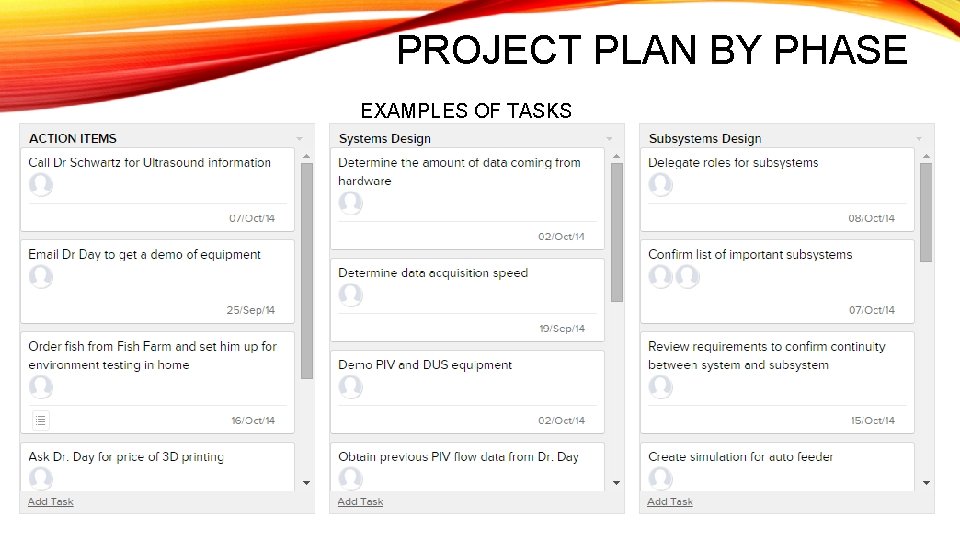
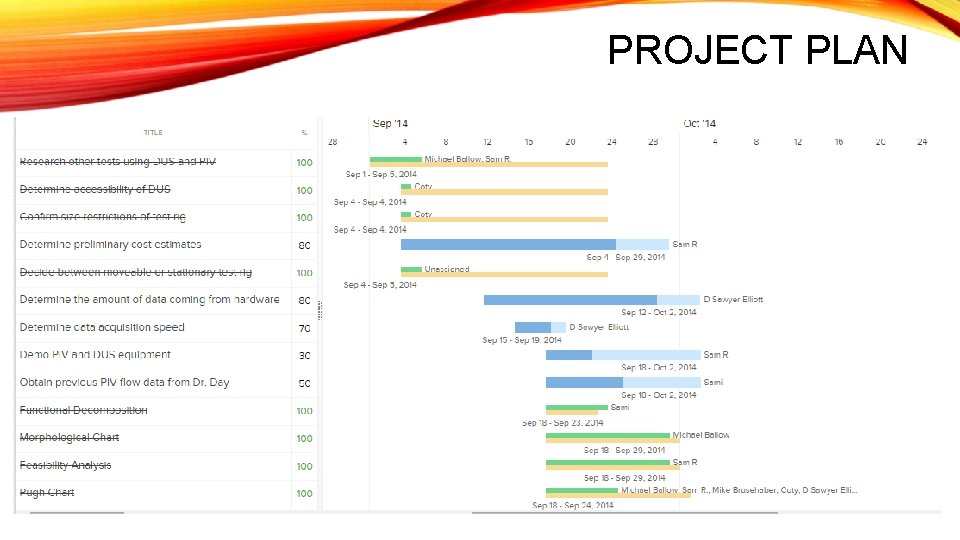
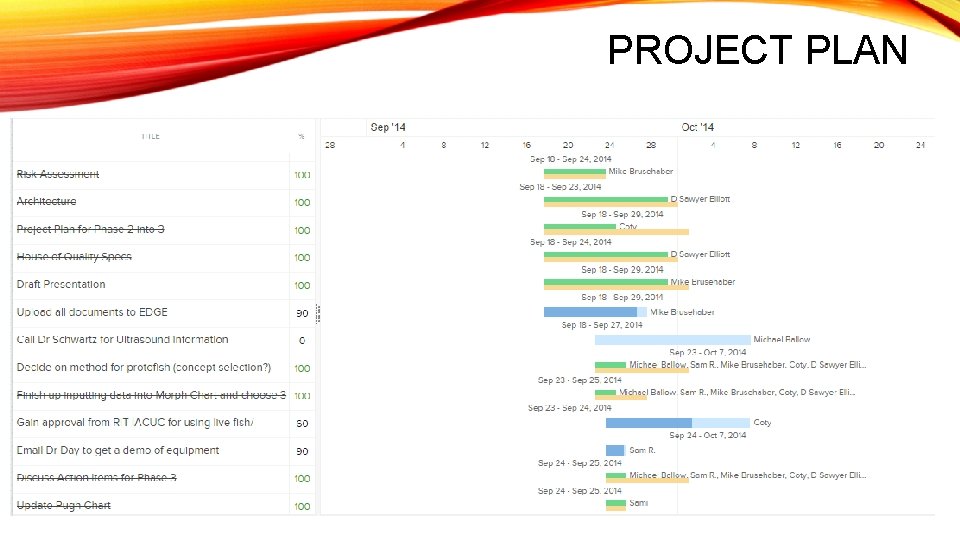
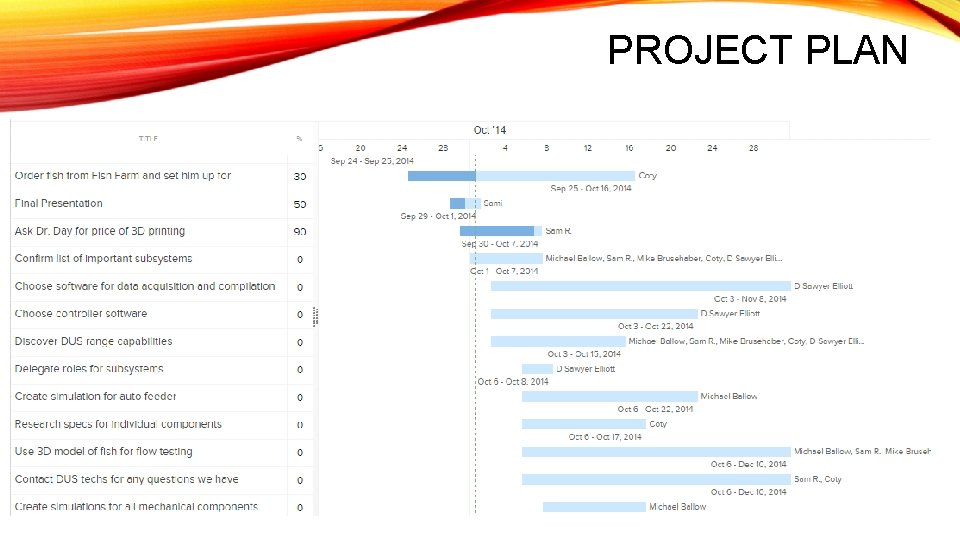
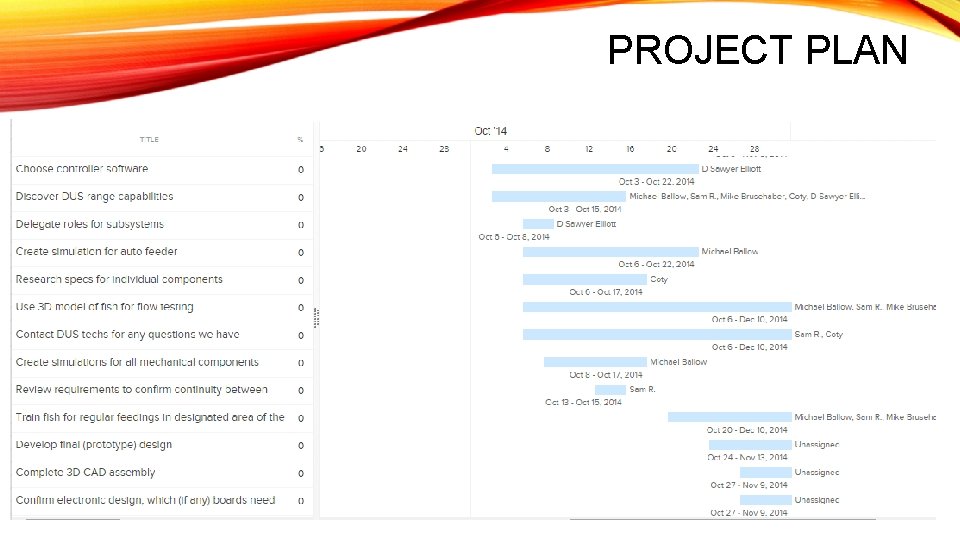
PROJECT PLAN BY PHASE EXAMPLES OF TASKS
TEST PLAN AND ACTION ITEMS FOR PHASE 3 Draft Test Plan Action Items for Phase 3 Simulations for mechanical components Call Dr Schwartz specs on Ultrasound machine (including features and capabilities) Use 3 D Model fish for flow rate testing Test and Behavior research on fish in varying environments Prototype automated fish feeders Continue to develop test plans Continue to demo equipment with Dr Day Order fish from fish farm and set up environment and behavior testing Confirm price of 3 D printing and access to materials for 3 D model fish Contact vendors, technicians, and experts (SME) Research/datasheets for individual components
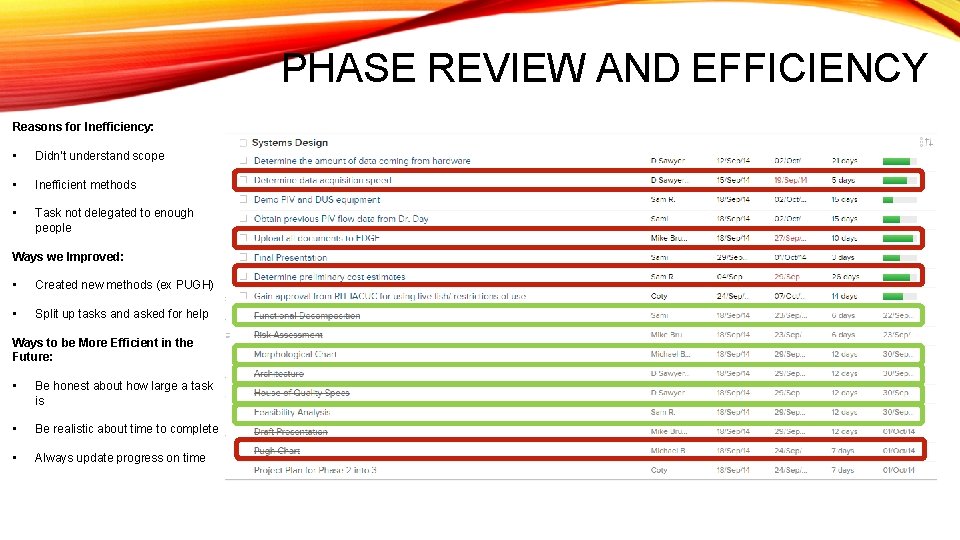
PHASE REVIEW AND EFFICIENCY Reasons for Inefficiency: • Didn’t understand scope • Inefficient methods • Task not delegated to enough people Ways we Improved: • Created new methods (ex PUGH) • Split up tasks and asked for help Ways to be More Efficient in the Future: • Be honest about how large a task is • Be realistic about time to complete • Always update progress on time

QUESTIONS?
- Slides: 26