
Systems Design For an Effective Crisis Response System
- Slides: 39
Systems Design For an Effective Crisis Response System to End Homelessness Kay Moshier Mc. Divitt SENIOR TECHNICAL ASSISTANCE SPECIALIST Florida Institute on Homelessness and Supportive Housing November 2, 2017 1
The National Alliance to End Homelessness is Working with a strong network of innovators, the leading national voice on the issue of the National Alliance to End Homelessness homelessness. The Alliance analyzes policy identifies and evaluates hundreds of policy and develops pragmatic, effective policy and program strategies and their impact on solutions. The Alliance works collaboratively homelessness. The Alliance’s Center for with the public, private, and nonprofit sectors to Capacity Building helps communities build state and local capacity, leading to replicate and customize the best of those stronger programs and policies that help strategies. The Center focuses on strategies communities achieve their goal of ending that are cost effective, data driven, and can homelessness. The Alliance provides data and be implemented at a scale that can research to policymakers and elected officials significantly reduce homelessness. in order to inform policy debates and educate the public and opinion leaders nationwide.
Workshop Overview Solutions and strategies to end IMPROVE ABILITY TO homelessness 1. Meet HEARTH Act Goals Design a &best 2. Prevent End Homelessness practice crisis response system Working together to make homeless rare, brief, and nonrecurring System Design Workshop AGENDA I. Crisis Response System Overview II. Core Elements of the Crisis Response System III. Implementing a Crisis Response System
CRISIS RESPONSE SYSTEM OVERVIEW
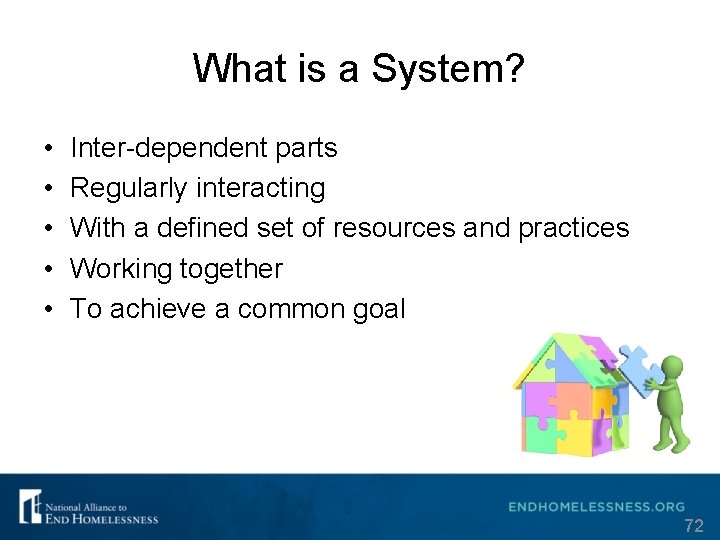
What is a System? • • • Inter-dependent parts Regularly interacting With a defined set of resources and practices Working together To achieve a common goal 72
An Effective Crisis Response System that Ends Homelessness • Homelessness is rare, brief, and non-recurring • Housing focused system: all interventions quickly end the episode of homelessness and move people to permanent housing • Right mix of interventions that match the needs • It is easily understood and navigated by persons experiencing homelessness 6
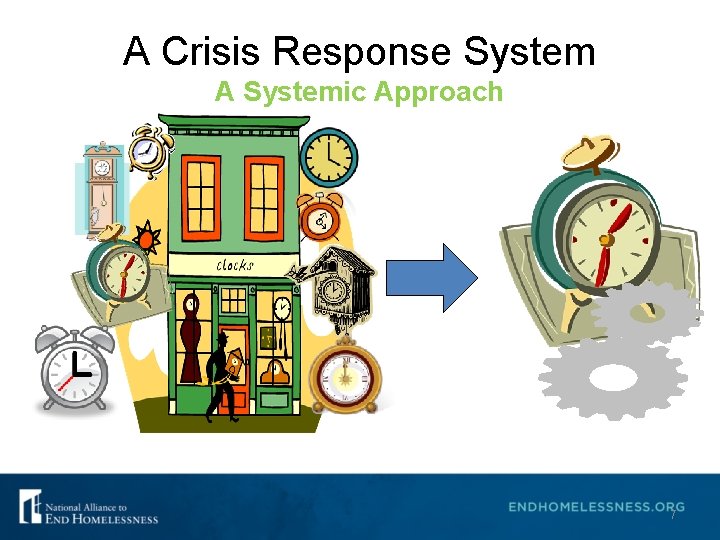
A Crisis Response System A Systemic Approach 7
An Effective Crisis Response System that Ends Homelessness and is Housing Focused • Uses ONLY interventions that end homelessness as quickly as possible • Allocates all resources (not just HUD) to most cost effective and efficient strategies that quickly rehouse all homeless people • Begins the conversation about re-housing as soon as someone becomes homeless • Targets services to those with highest housing barriers • Uses practices informed by data and research To make homelessness rare, brief, and non-recurring 8
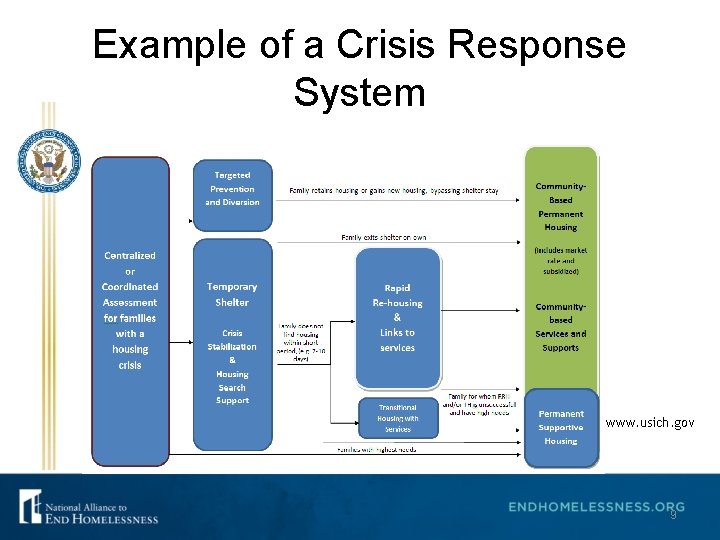
Example of a Crisis Response System www. usich. gov 9
What is System Flow? An efficient and coordinated process that moves people from homelessness to housing as quickly as possible 73
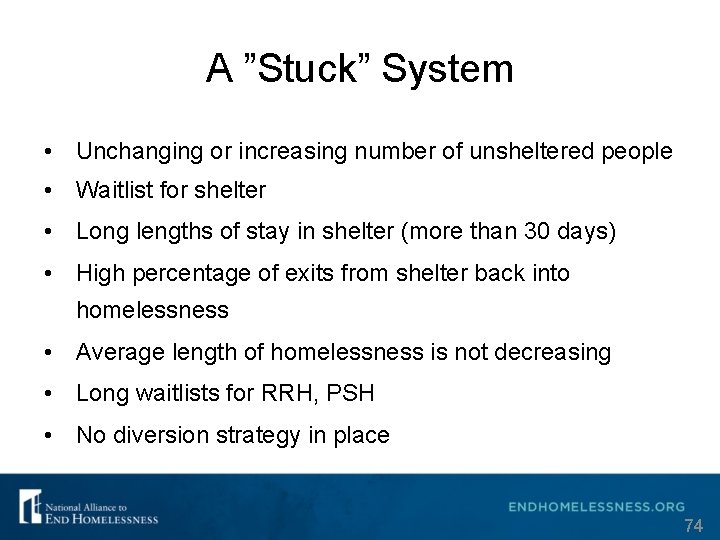
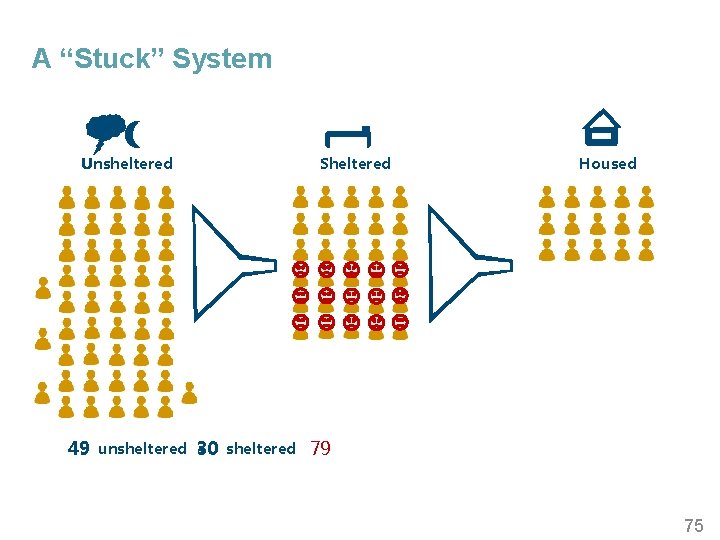
A ”Stuck” System • Unchanging or increasing number of unsheltered people • Waitlist for shelter • Long lengths of stay in shelter (more than 30 days) • High percentage of exits from shelter back into homelessness • Average length of homelessness is not decreasing • Long waitlists for RRH, PSH • No diversion strategy in place 74
A “Stuck” System Unsheltered Sheltered Housed + sheltered = 45 44 49 43 unsheltered 30 75 74 79 73 46 76 48 47 78 77 75
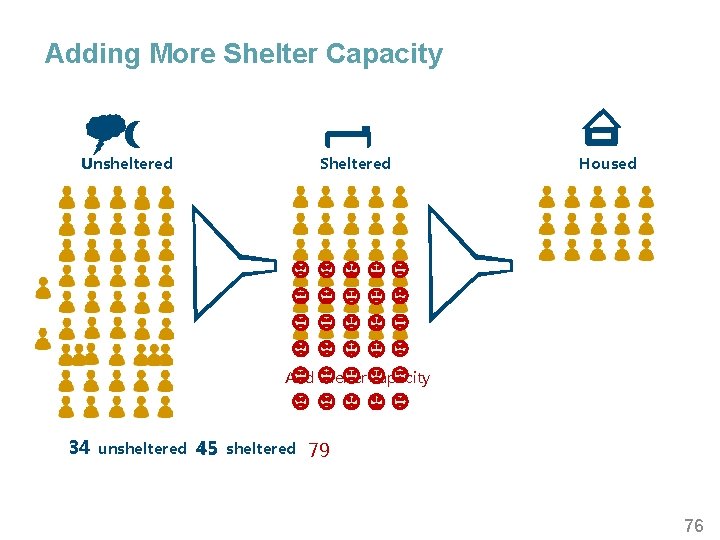
Adding More Shelter Capacity Unsheltered Sheltered Housed Add shelter capacity 45 + sheltered = 34 unsheltered 30 33 30 28 29 45 31 75 32 73 76 74 79 78 77 76
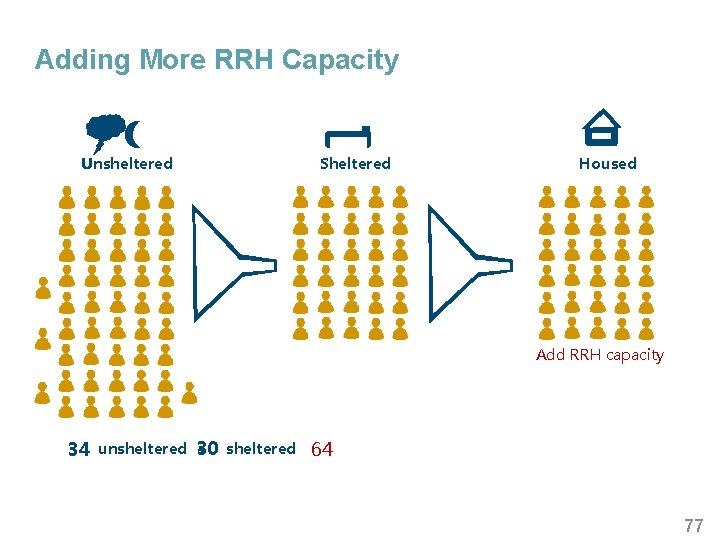
Adding More RRH Capacity Unsheltered Sheltered Housed Add RRH capacity 34 64 + sheltered = 40 70 45 43 75 73 71 42 70 72 37 67 41 40 39 69 34 39 69 38 68 32 62 33 63 35 unsheltered 30 65 36 66 77
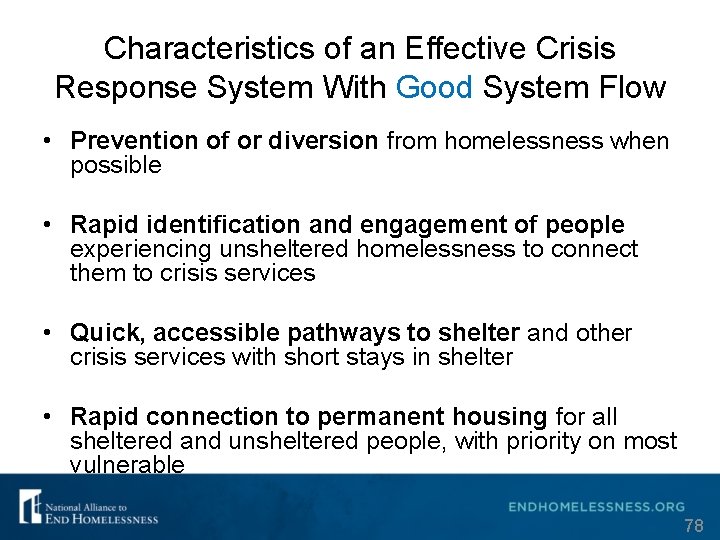
Characteristics of an Effective Crisis Response System With Good System Flow • Prevention of or diversion from homelessness when possible • Rapid identification and engagement of people experiencing unsheltered homelessness to connect them to crisis services • Quick, accessible pathways to shelter and other crisis services with short stays in shelter • Rapid connection to permanent housing for all sheltered and unsheltered people, with priority on most vulnerable 78
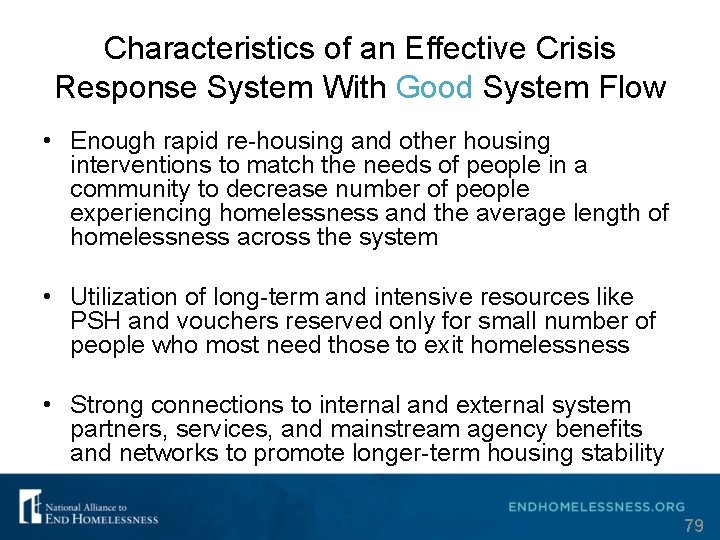
Characteristics of an Effective Crisis Response System With Good System Flow • Enough rapid re-housing and other housing interventions to match the needs of people in a community to decrease number of people experiencing homelessness and the average length of homelessness across the system • Utilization of long-term and intensive resources like PSH and vouchers reserved only for small number of people who most need those to exit homelessness • Strong connections to internal and external system partners, services, and mainstream agency benefits and networks to promote longer-term housing stability 79
KEY ELEMENTS OF A HOMELESS RESPONSE SYSTEM
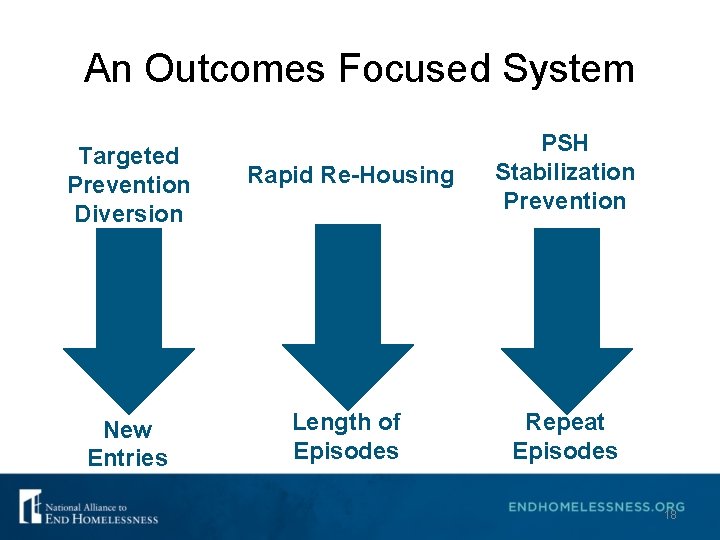
An Outcomes Focused System Targeted Prevention Diversion Rapid Re-Housing PSH Stabilization Prevention New Entries Length of Episodes Repeat Episodes 18
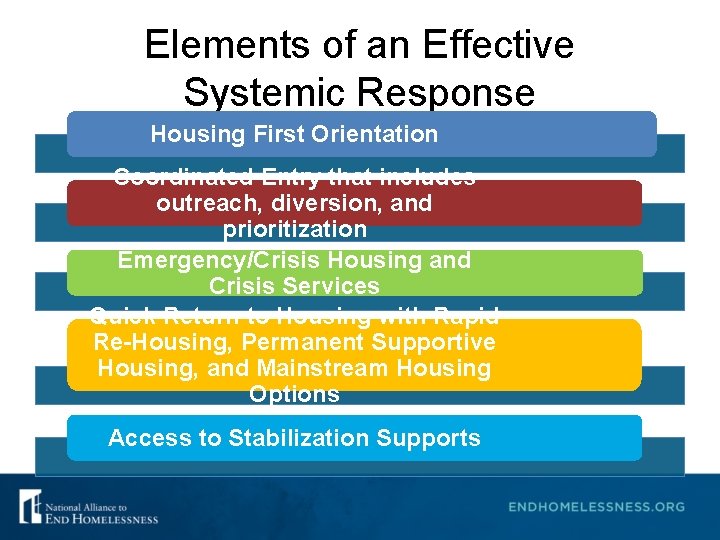
Elements of an Effective Systemic Response Housing First Orientation Coordinated Entry that includes outreach, diversion, and prioritization Emergency/Crisis Housing and Crisis Services Quick Return to Housing with Rapid Re-Housing, Permanent Supportive Housing, and Mainstream Housing Options Access to Stabilization Supports
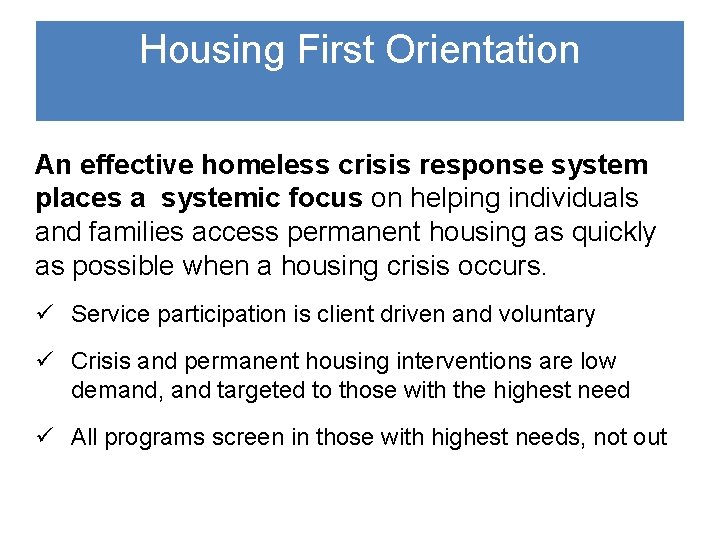
Housing First Orientation • Housing First is a paradigm shift from the traditional housing ready approach. • It follows a basic principle—that everyone is ready for housing, regardless of the complexity or severity of their needs. • Housing First is not a ‘program’, it is a systemwide orientation and response.
Housing First Orientation An effective homeless crisis response system places a systemic focus on helping individuals and families access permanent housing as quickly as possible when a housing crisis occurs. ü Service participation is client driven and voluntary ü Crisis and permanent housing interventions are low demand, and targeted to those with the highest need ü All programs screen in those with highest needs, not out
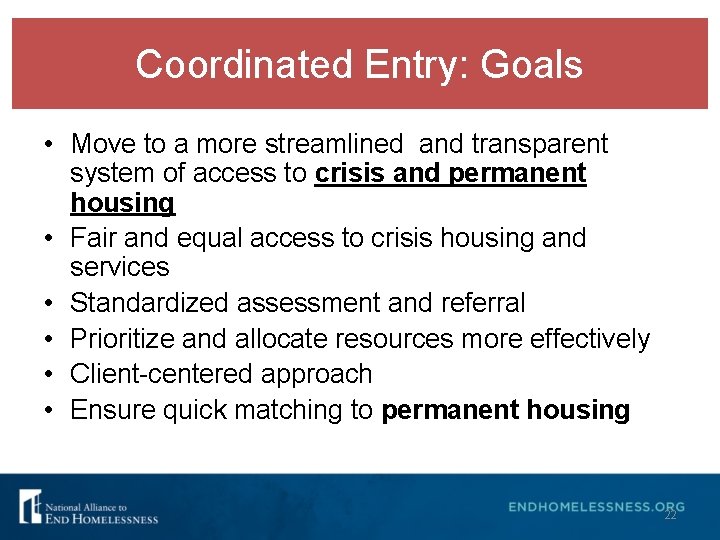
Coordinated Entry: Goals • Move to a more streamlined and transparent system of access to crisis and permanent housing • Fair and equal access to crisis housing and services • Standardized assessment and referral • Prioritize and allocate resources more effectively • Client-centered approach • Ensure quick matching to permanent housing 22
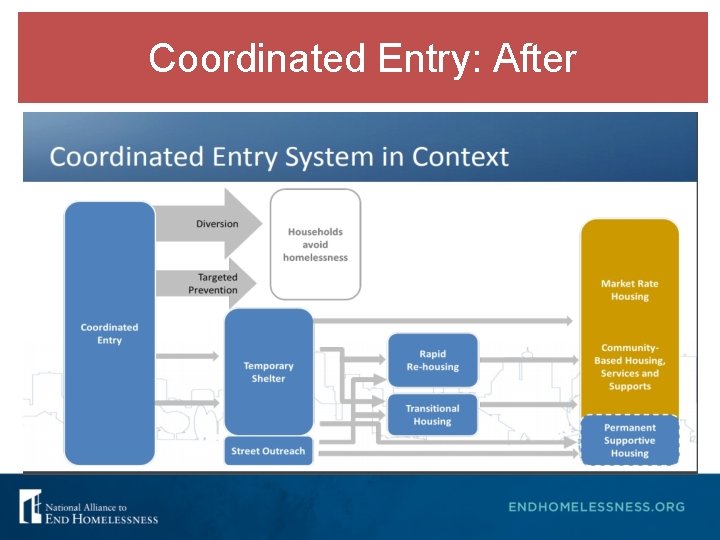
Coordinated Entry: After HUD Webinar 3. 17
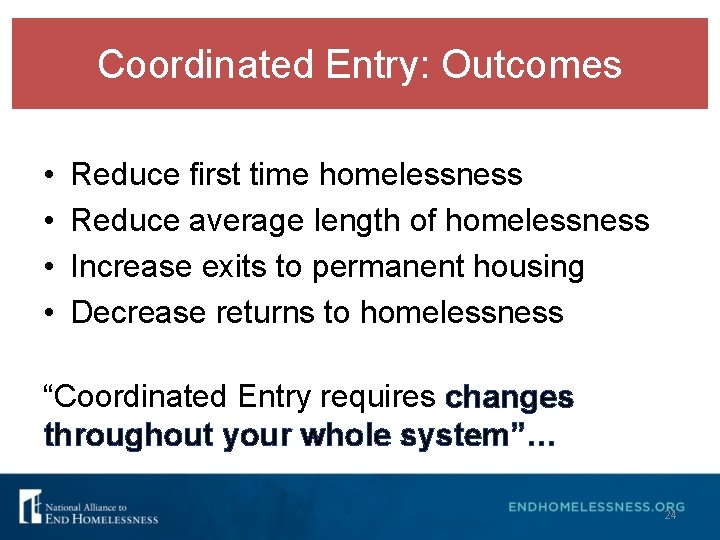
Coordinated Entry: Outcomes • • Reduce first time homelessness Reduce average length of homelessness Increase exits to permanent housing Decrease returns to homelessness “Coordinated Entry requires changes throughout your whole system”… 24
Homelessness Diversion is a strategy that prevents homelessness by helping people experiencing a housing crisis and seeking shelter to preserve their current housing situation or make immediate alternative arrangements without having to enter shelter • Diversion is NOT a separate “program” but rather part of the entire system • Diversion is problem solving and solution focused • Diversion should always be safe and appropriate for the client.
Outreach Overall goal of street outreach is to assist people to move off the streets and into housing as quickly as possible. • • Street outreach is mobile housing work Strength based and individualized Relational and engaging People who say “no” to shelter does not mean they will say “no” to housing-if they do say no, keep asking • Build community partnerships 26
Emergency/Crisis Housing Safe, appropriate, and immediate temporary low-barrier shelter, for people who have no viable alternatives, that serves as a first step to being quickly and permanently re-housed 27
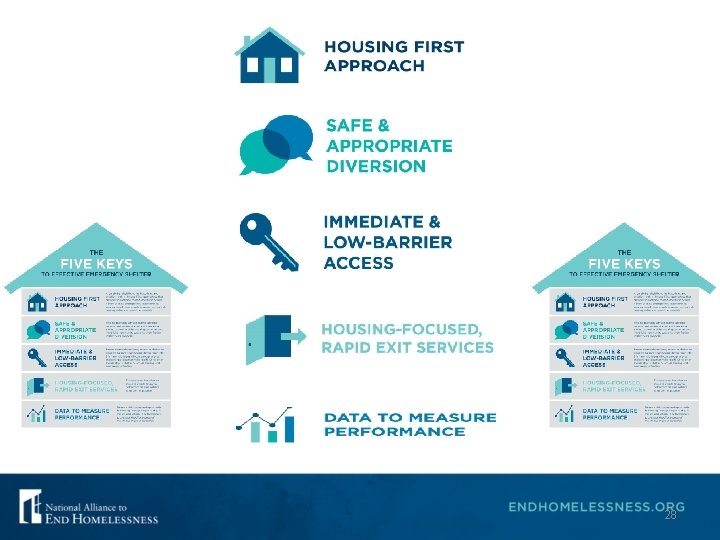
28
Quick Return to Permanent Housing Rapid Re-Housing Best Practice ü Major component of the crisis response system portfolio, not just a “program” ü System-wide policies and procedures ü Not a “one size fits all” model ü Embraces the 3 core components of Rapid Re. Housing ü Short-term, individualized, shallow subsidy ü Rapid re-housing is rapid
Quick Return to Permanent Housing Permanent Supportive Housing ü Uses system-wide policies and procedures ü Prioritizes chronically homeless people ü Reserved for those with highest housing barriers who need it the most ü Screens people in, not out – low demand ü Practices a Housing First approach for all units
Access to Stabilization Supports Best Practice Access to stabilization supports helps people further stabilize in housing, resolve future crisis, connect to community supports, prevent eviction and avoid returns to homelessness. 31
LOCAL IMPLEMENTATION DATA MATTERS 32
Restructuring to a Crisis Response System Next Steps • What does your system look like? • What do you need to change to quickly move people to permanent housing? • What do we have vs. what do we need? • How do we need to restructure our community system? 33
Why Data? Good data is essential to plan an end homelessness, evaluate programs, and properly (re-)allocate resources. – Point-in-time (PIT) and Housing Inventory Count (HIC) data – System - wide data – Program Level Data 34
Use Data 1. Get monthly data to measure performance of each strategy and programs within each strategy 2. Reallocate from low performing strategies to effective strategies 3. Make sure your “pie” is cut correctly 4. Engage all funders in your strategy 5. Measure and adjust Make sure you have the right interventions and programs…working as a system
Restructuring to a Crisis Response System – Identify the specific needs of those experiencing homelessness within the Co. C – Define what and how much of each intervention is necessary to meet those needs – Determine how resources (including reallocation) are used the implement the strategies to best meet those needs through a crisis response system – Set systemic measures that are analyzed regularly – Adjust as necessary to reach the goal of ending homelessness
REMEMBER An Effective Crisis Response System that Ends Homelessness Means: • Homelessness is rare, brief, and non-recurring • A housing focused system: all interventions quickly end the episode of homelessness and move people to permanent housing • The right mix of interventions that match the needs • It is easily understood and navigated by persons experiencing homelessness 37
Next Steps • What is one thing you will do in the next week around restructuring your homeless response system? 38
Thanks! Kay Moshier Mc. Divitt kmoshiermcdivitt@naeh. org Twitter @60_kay National Alliance to End Homelessness www. endhomelessness. org Twitter @naehomelessness