
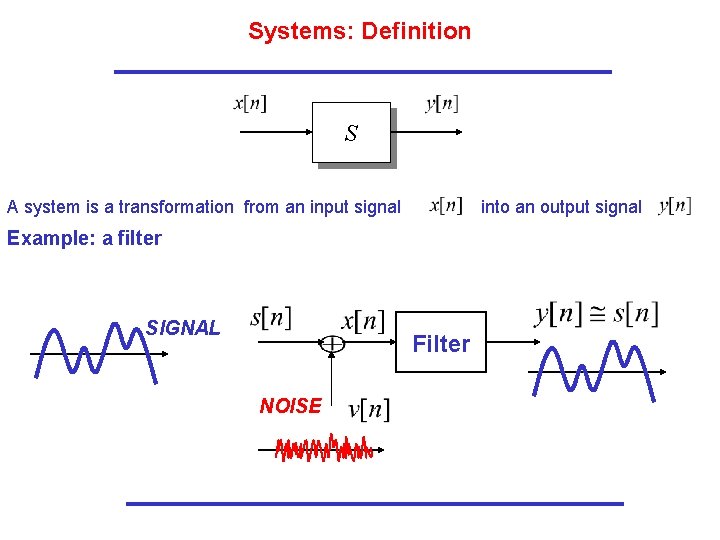
Systems Definition S A system is a transformation
- Slides: 22
Systems: Definition S A system is a transformation from an input signal. into an output signal Example: a filter SIGNAL Filter NOISE
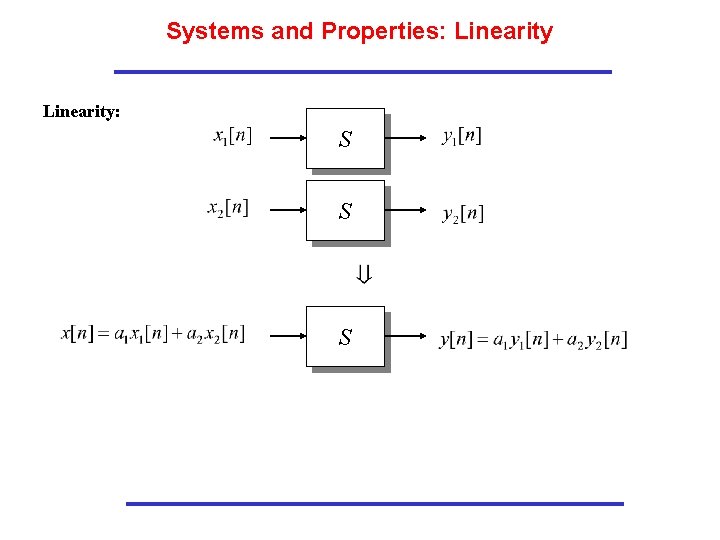
Systems and Properties: Linearity: S S S
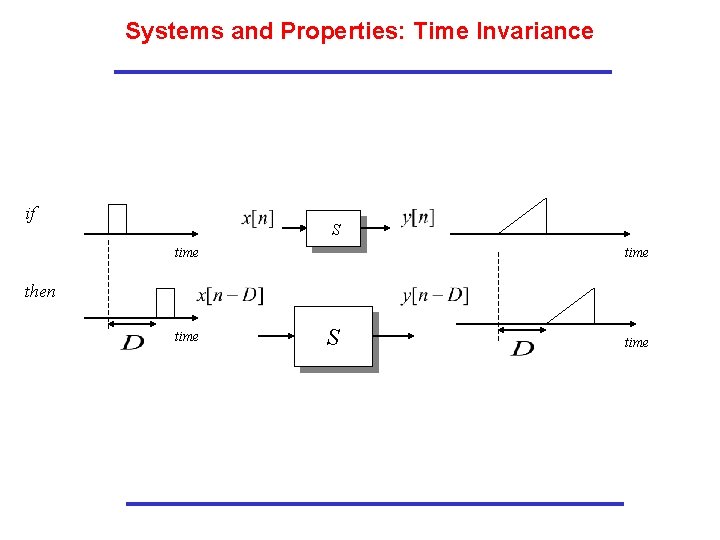
Systems and Properties: Time Invariance if S time then time S time
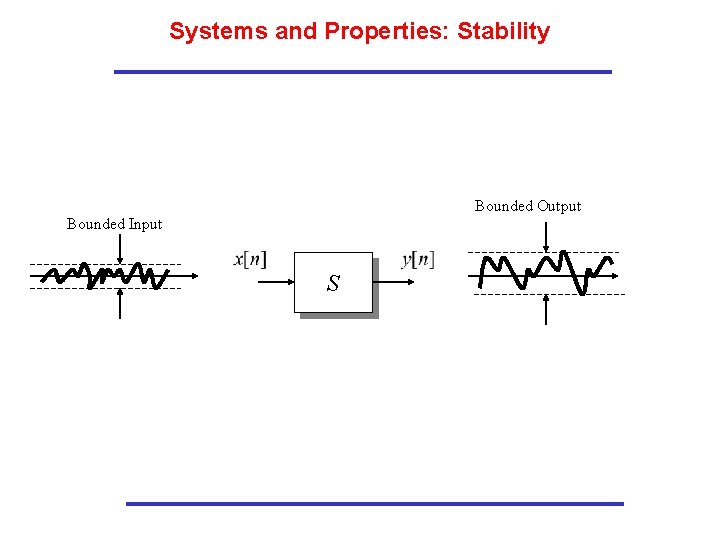
Systems and Properties: Stability Bounded Output Bounded Input S
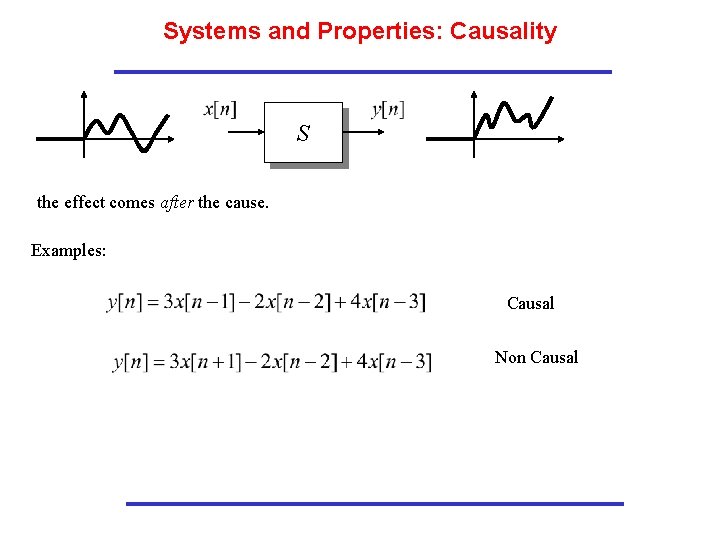
Systems and Properties: Causality S the effect comes after the cause. Examples: Causal Non Causal
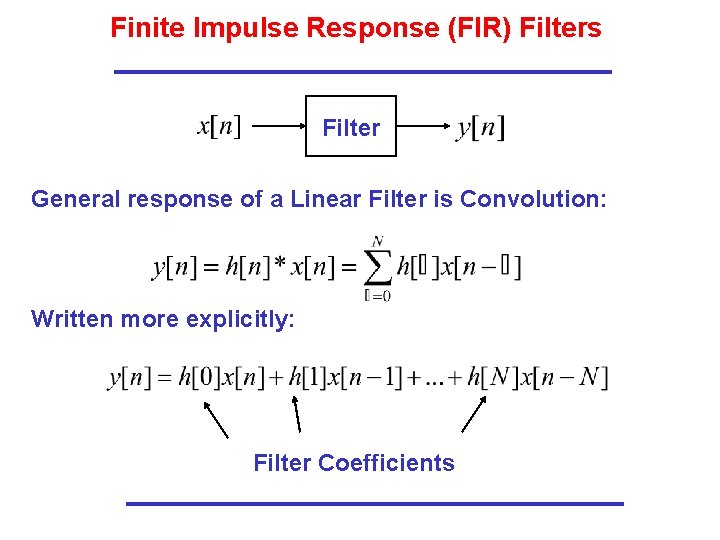
Finite Impulse Response (FIR) Filters Filter General response of a Linear Filter is Convolution: Written more explicitly: Filter Coefficients
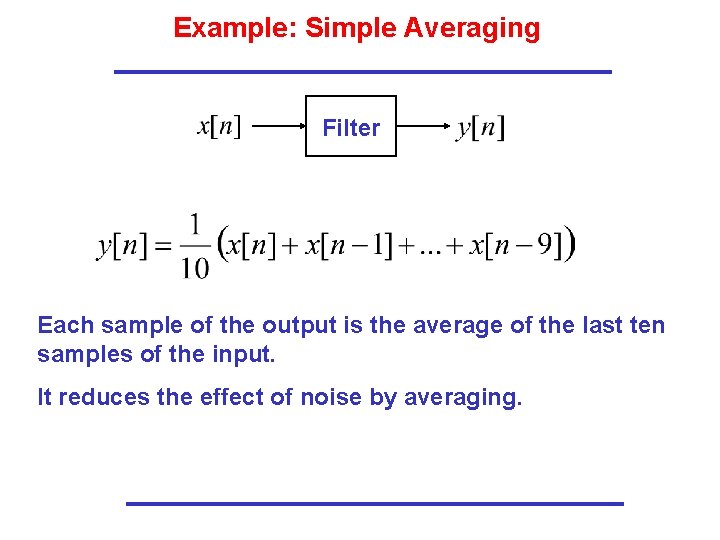
Example: Simple Averaging Filter Each sample of the output is the average of the last ten samples of the input. It reduces the effect of noise by averaging.
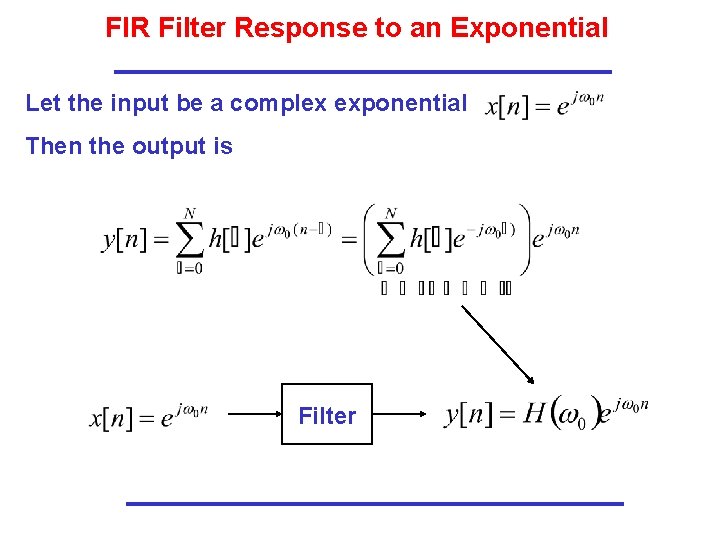
FIR Filter Response to an Exponential Let the input be a complex exponential Then the output is Filter
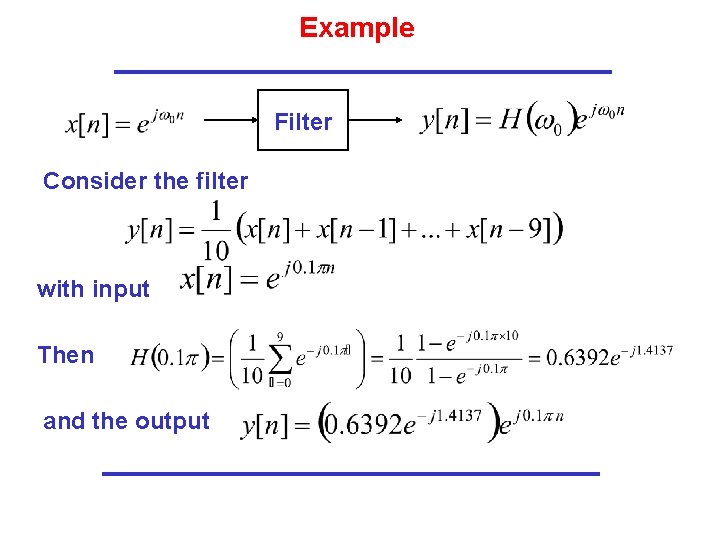
Example Filter Consider the filter with input Then and the output
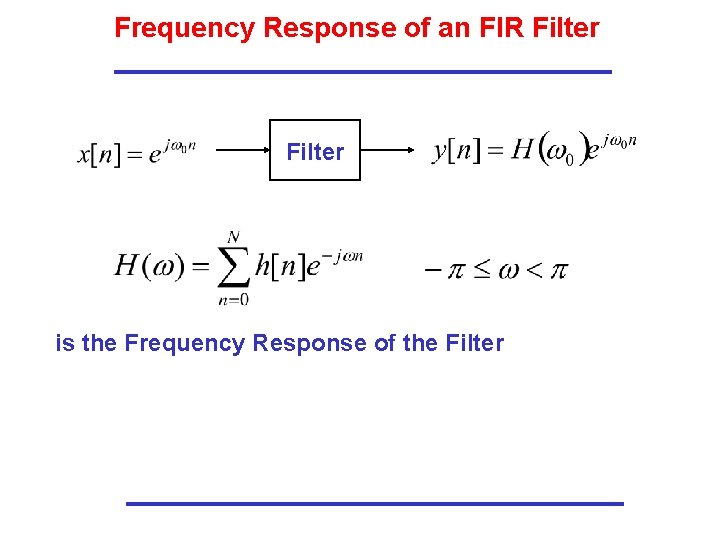
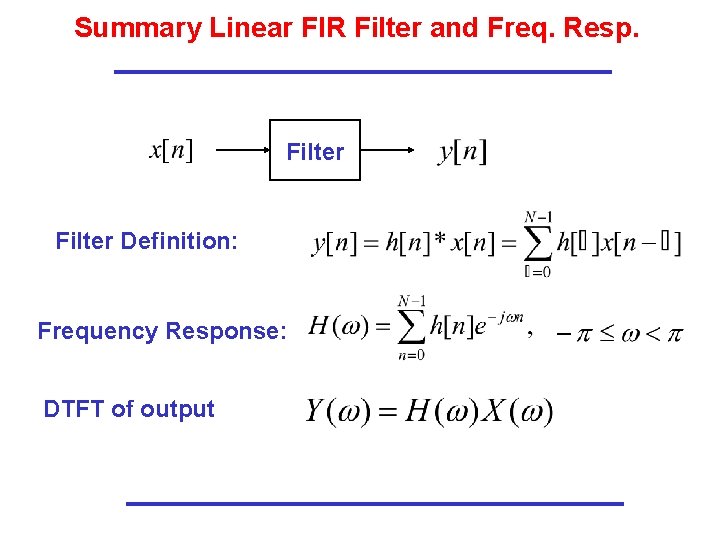
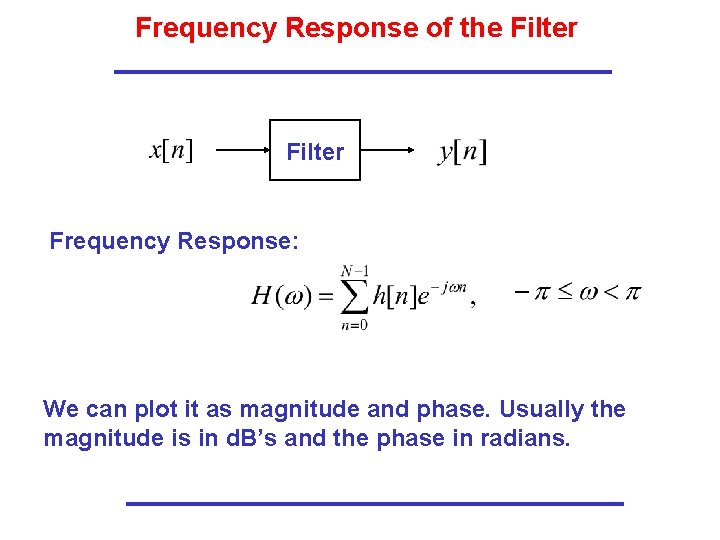
Frequency Response of an FIR Filter is the Frequency Response of the Filter
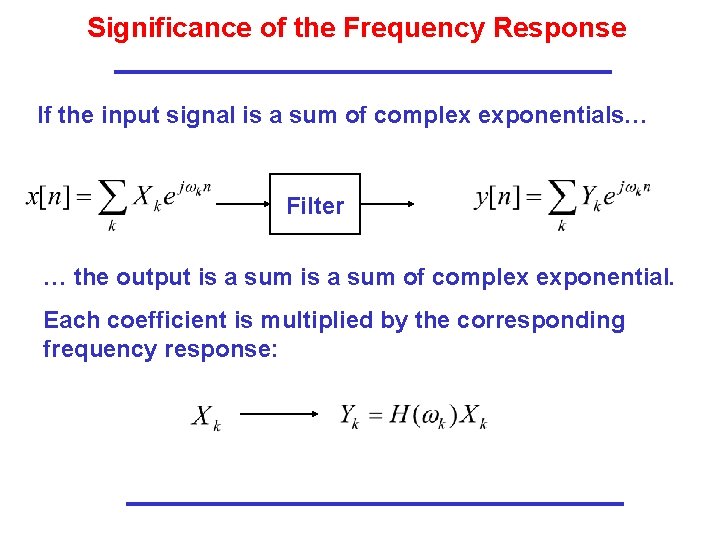
Significance of the Frequency Response If the input signal is a sum of complex exponentials… Filter … the output is a sum of complex exponential. Each coefficient is multiplied by the corresponding frequency response:
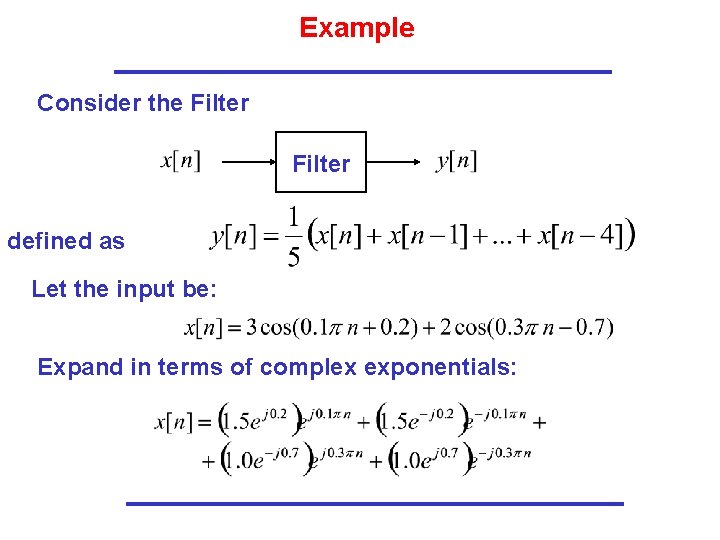
Example Consider the Filter defined as Let the input be: Expand in terms of complex exponentials:
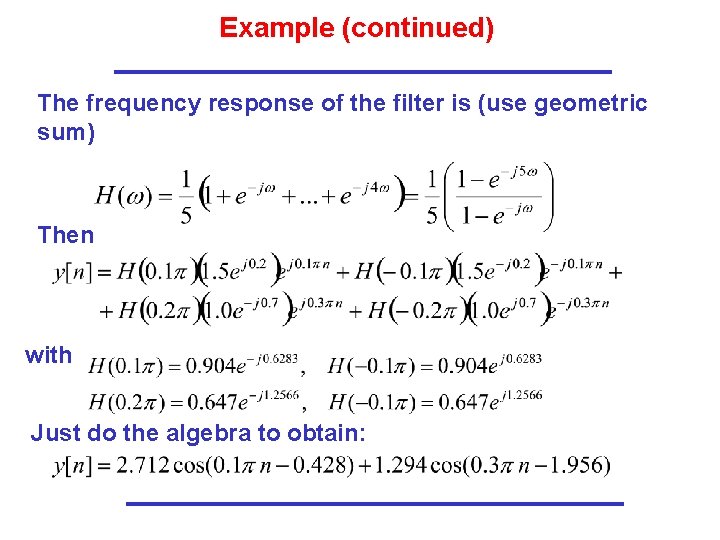
Example (continued) The frequency response of the filter is (use geometric sum) Then with Just do the algebra to obtain:
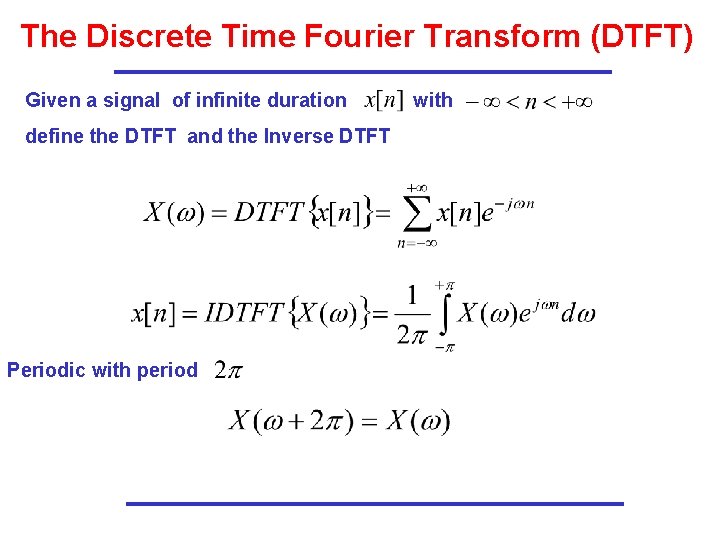
The Discrete Time Fourier Transform (DTFT) Given a signal of infinite duration define the DTFT and the Inverse DTFT Periodic with period with
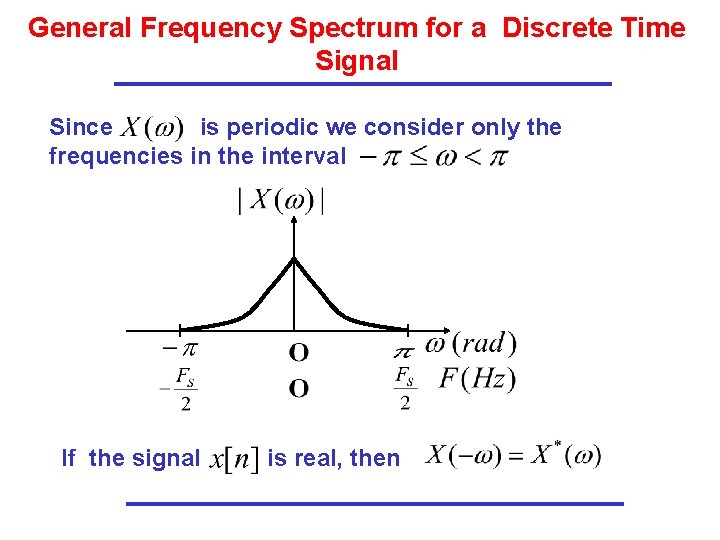
General Frequency Spectrum for a Discrete Time Signal Since is periodic we consider only the frequencies in the interval If the signal is real, then
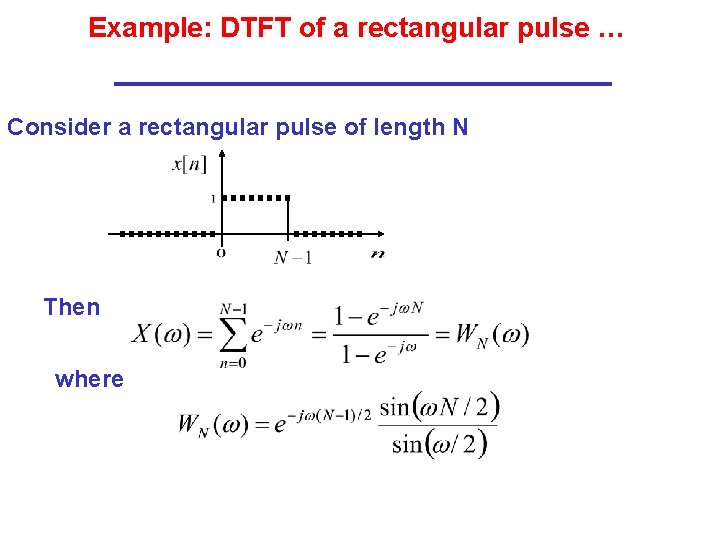
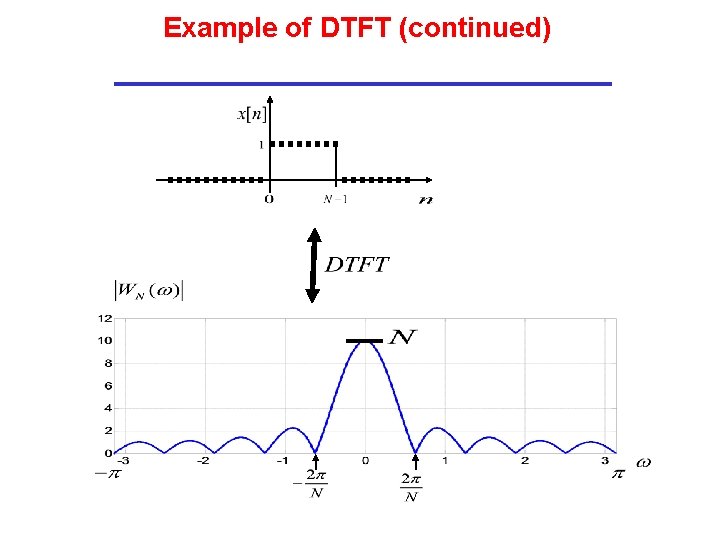
Example: DTFT of a rectangular pulse … Consider a rectangular pulse of length N Then where
Example of DTFT (continued)
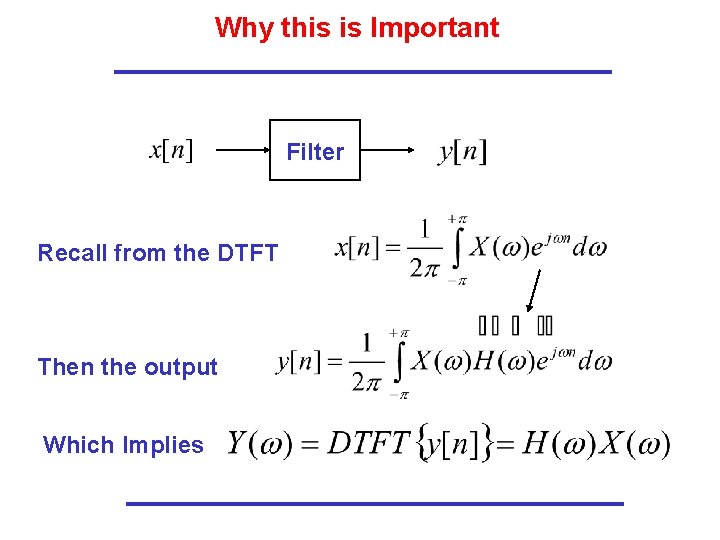
Why this is Important Filter Recall from the DTFT Then the output Which Implies
Summary Linear FIR Filter and Freq. Resp. Filter Definition: Frequency Response: DTFT of output
Frequency Response of the Filter Frequency Response: We can plot it as magnitude and phase. Usually the magnitude is in d. B’s and the phase in radians.
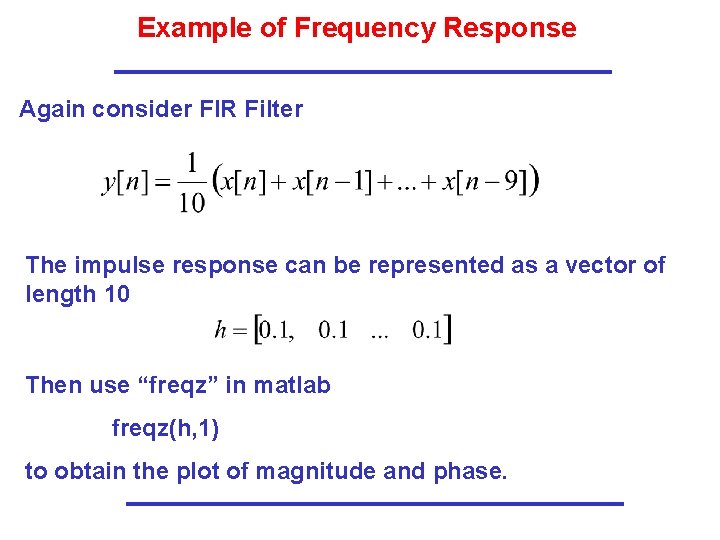
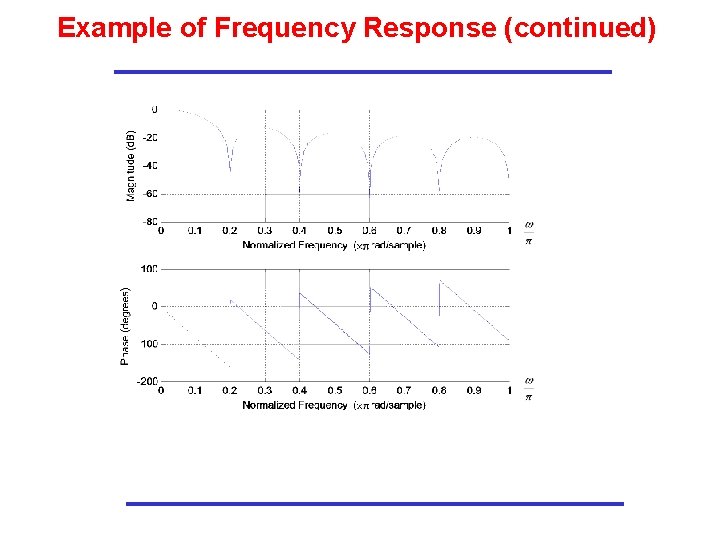
Example of Frequency Response Again consider FIR Filter The impulse response can be represented as a vector of length 10 Then use “freqz” in matlab freqz(h, 1) to obtain the plot of magnitude and phase.
Example of Frequency Response (continued)