
Systems Analysis of the Behavior and Economic Impacts
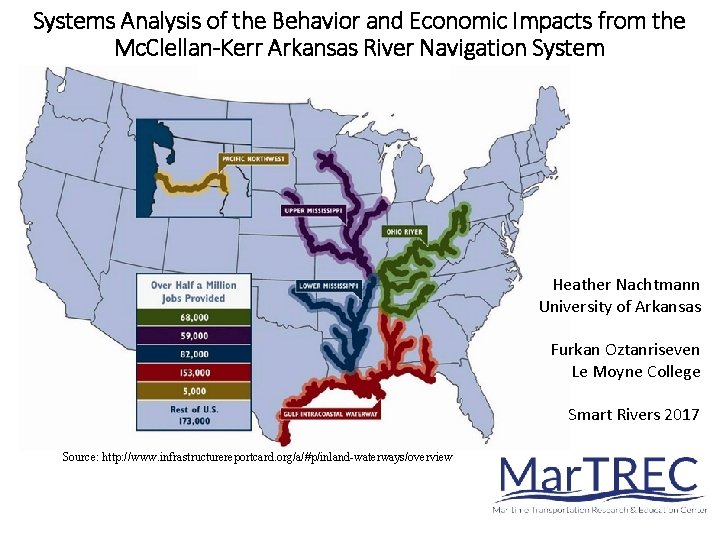
Systems Analysis of the Behavior and Economic Impacts from the Mc. Clellan-Kerr Arkansas River Navigation System Heather Nachtmann University of Arkansas Furkan Oztanriseven Le Moyne College Smart Rivers 2017 Source: http: //www. infrastructurereportcard. org/a/#p/inland-waterways/overview
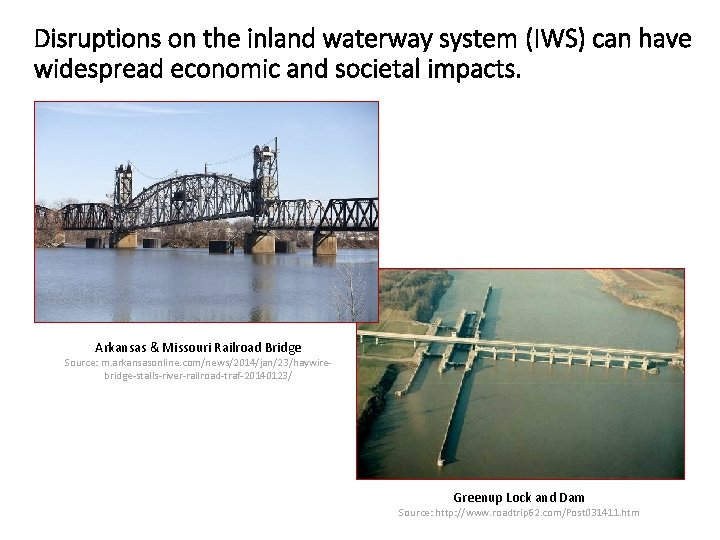
Disruptions on the inland waterway system (IWS) can have widespread economic and societal impacts. Arkansas & Missouri Railroad Bridge Source: m. arkansasonline. com/news/2014/jan/23/haywirebridge-stalls-river-railroad-traf-20140123/ Greenup Lock and Dam Source: http: //www. roadtrip 62. com/Post 031411. htm

Our maritime transportation simulator (Mar. Tran. S) studies the relationships between IWS components and economic impact factors.
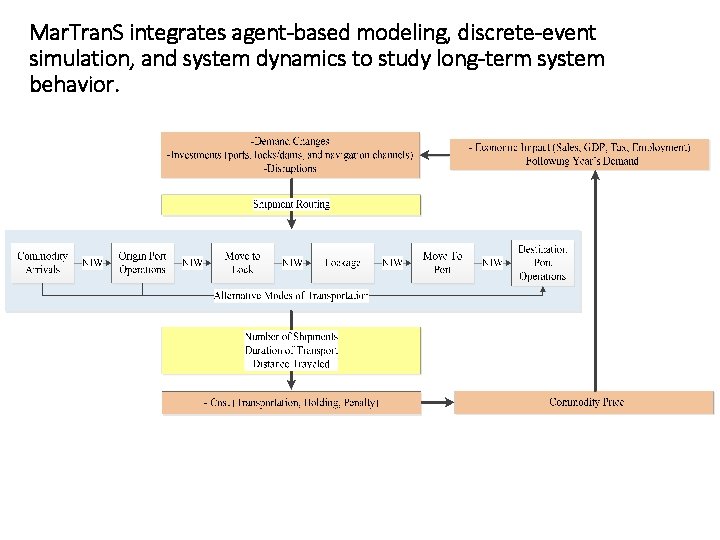
Mar. Tran. S integrates agent-based modeling, discrete-event simulation, and system dynamics to study long-term system behavior.
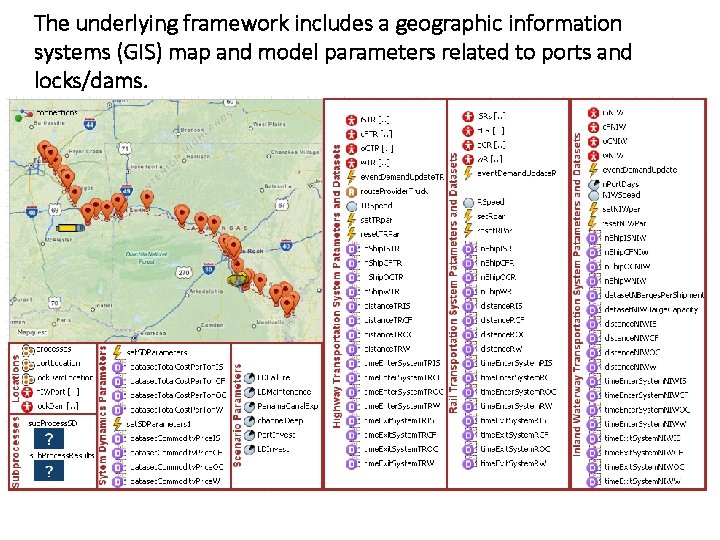
The underlying framework includes a geographic information systems (GIS) map and model parameters related to ports and locks/dams.
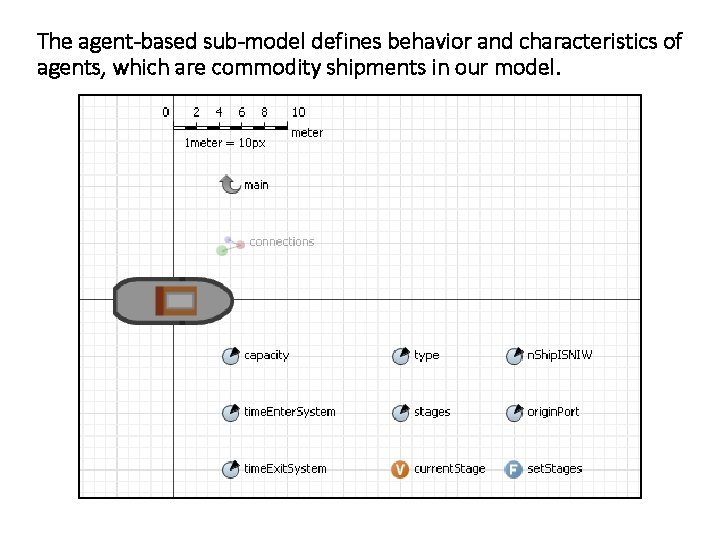
The agent-based sub-model defines behavior and characteristics of agents, which are commodity shipments in our model.
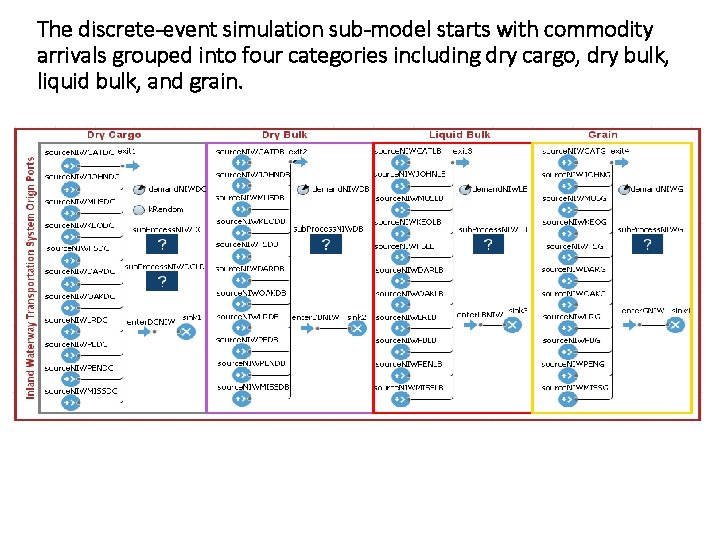
The discrete-event simulation sub-model starts with commodity arrivals grouped into four categories including dry cargo, dry bulk, liquid bulk, and grain.
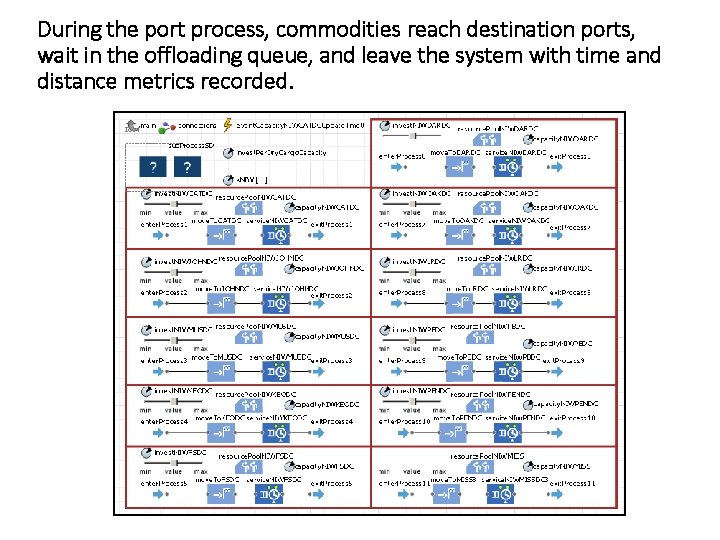
During the port process, commodities reach destination ports, wait in the offloading queue, and leave the system with time and distance metrics recorded.
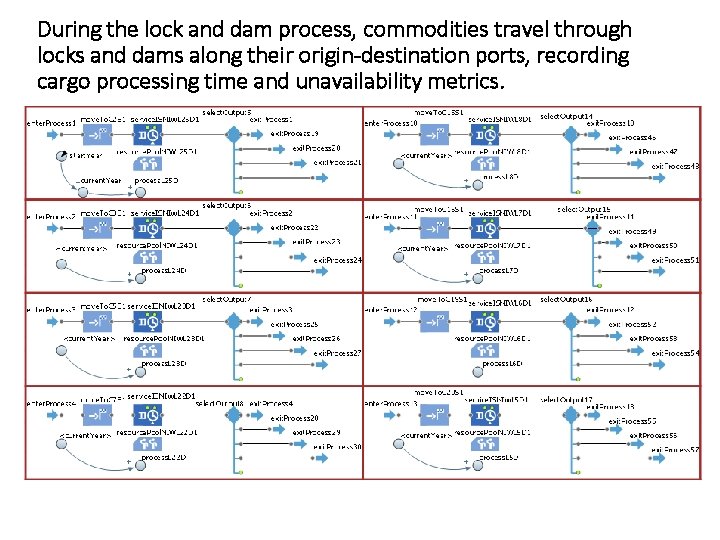
During the lock and dam process, commodities travel through locks and dams along their origin-destination ports, recording cargo processing time and unavailability metrics.
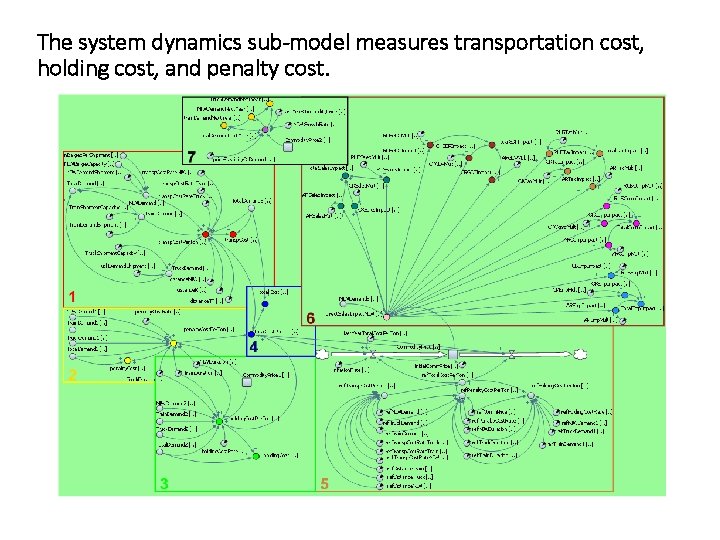
The system dynamics sub-model measures transportation cost, holding cost, and penalty cost.
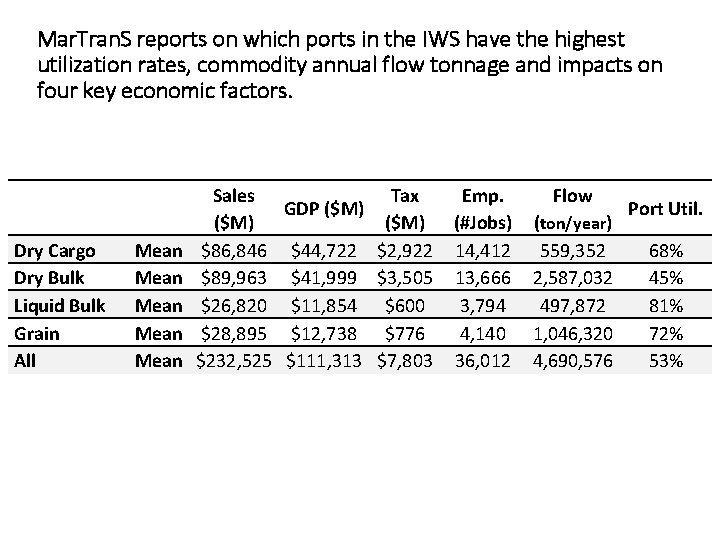
Mar. Tran. S reports on which ports in the IWS have the highest utilization rates, commodity annual flow tonnage and impacts on four key economic factors. Dry Cargo Dry Bulk Liquid Bulk Grain All Mean Mean Sales ($M) $86, 846 $89, 963 $26, 820 $28, 895 $232, 525 Tax ($M) $44, 722 $2, 922 $41, 999 $3, 505 $11, 854 $600 $12, 738 $776 $111, 313 $7, 803 GDP ($M) Emp. (#Jobs) 14, 412 13, 666 3, 794 4, 140 36, 012 Flow (ton/year) 559, 352 2, 587, 032 497, 872 1, 046, 320 4, 690, 576 Port Util. 68% 45% 81% 72% 53%
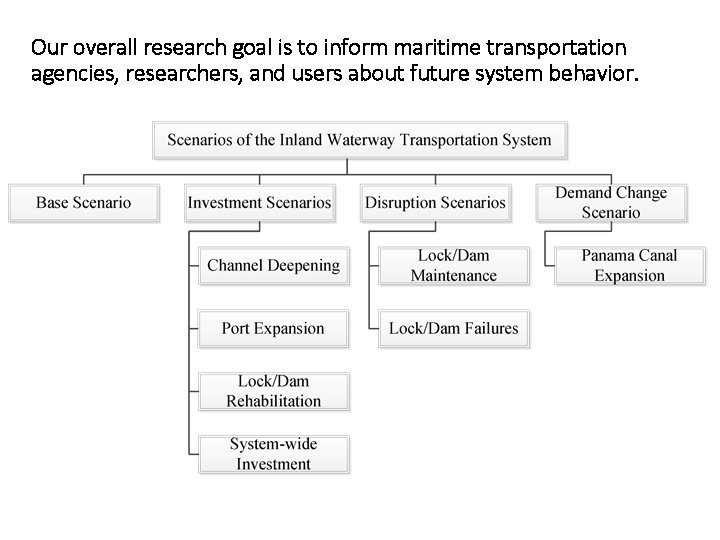
Our overall research goal is to inform maritime transportation agencies, researchers, and users about future system behavior.
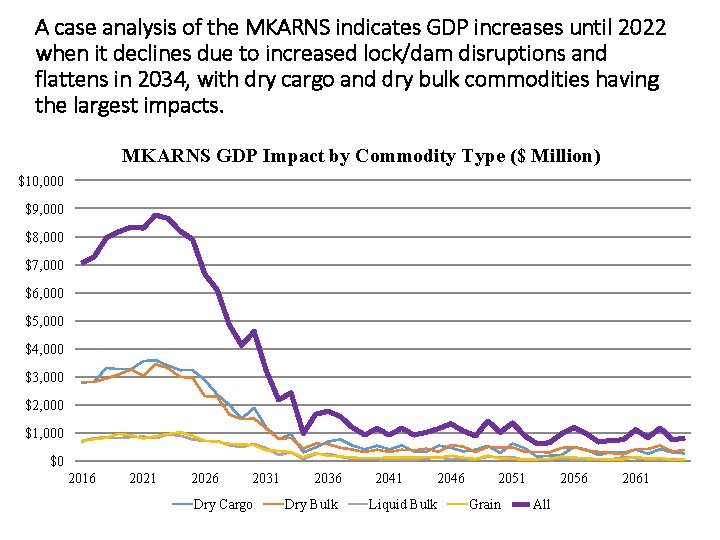
A case analysis of the MKARNS indicates GDP increases until 2022 when it declines due to increased lock/dam disruptions and flattens in 2034, with dry cargo and dry bulk commodities having the largest impacts. MKARNS GDP Impact by Commodity Type ($ Million) $10, 000 $9, 000 $8, 000 $7, 000 $6, 000 $5, 000 $4, 000 $3, 000 $2, 000 $1, 000 $0 2016 2021 2026 2031 Dry Cargo 2036 Dry Bulk 2041 2046 Liquid Bulk 2051 Grain 2056 All 2061
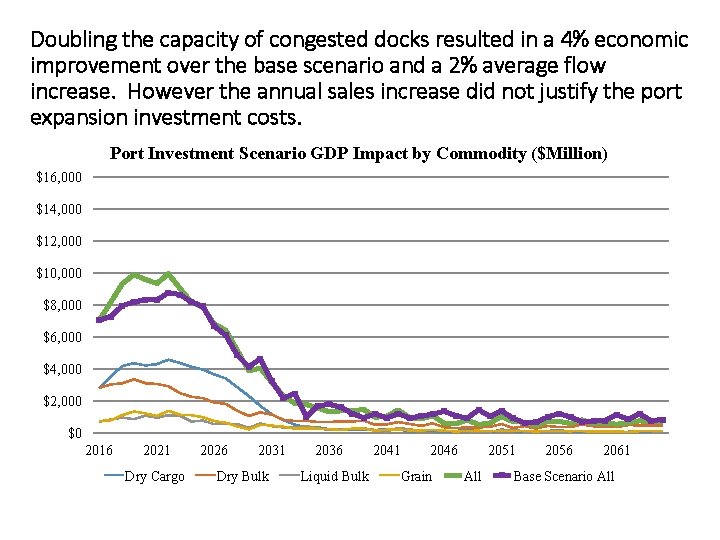
Doubling the capacity of congested docks resulted in a 4% economic improvement over the base scenario and a 2% average flow increase. However the annual sales increase did not justify the port expansion investment costs. Port Investment Scenario GDP Impact by Commodity ($Million) $16, 000 $14, 000 $12, 000 $10, 000 $8, 000 $6, 000 $4, 000 $2, 000 $0 2016 2021 Dry Cargo 2026 2031 Dry Bulk 2036 Liquid Bulk 2041 2046 Grain 2051 All 2056 2061 Base Scenario All
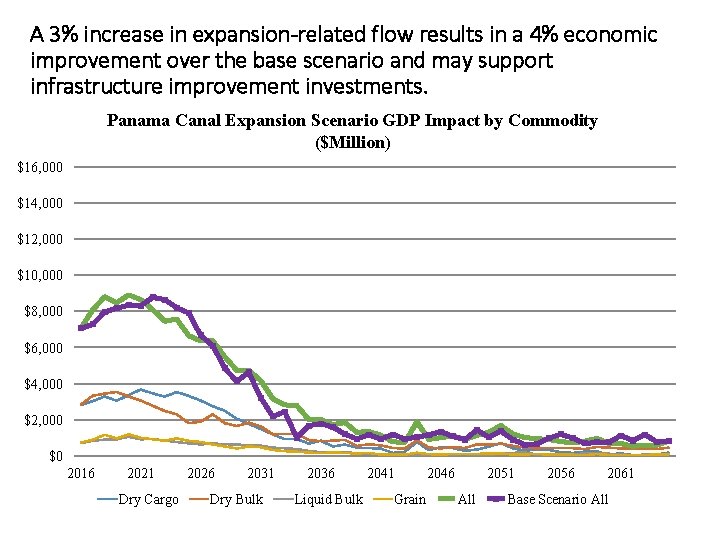
A 3% increase in expansion-related flow results in a 4% economic improvement over the base scenario and may support infrastructure improvement investments. Panama Canal Expansion Scenario GDP Impact by Commodity ($Million) $16, 000 $14, 000 $12, 000 $10, 000 $8, 000 $6, 000 $4, 000 $2, 000 $0 2016 2021 Dry Cargo 2026 2031 Dry Bulk 2036 Liquid Bulk 2041 Grain 2046 2051 All 2056 2061 Base Scenario All
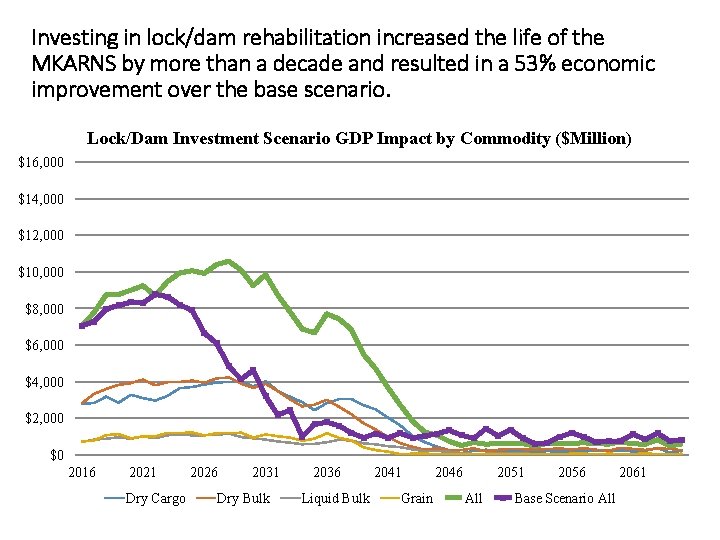
Investing in lock/dam rehabilitation increased the life of the MKARNS by more than a decade and resulted in a 53% economic improvement over the base scenario. Lock/Dam Investment Scenario GDP Impact by Commodity ($Million) $16, 000 $14, 000 $12, 000 $10, 000 $8, 000 $6, 000 $4, 000 $2, 000 $0 2016 2021 Dry Cargo 2026 2031 Dry Bulk 2036 Liquid Bulk 2041 Grain 2046 2051 All 2056 Base Scenario All 2061
- Slides: 16