
Systems Analysis and Design with UML Version 2



- Slides: 25
Systems Analysis and Design with UML Version 2. 0 An Object-Oriented Approach, Second Edition Chapter 3: Project Initiation Slide 1
PROJECT INITIATION Chapter 3 Slide 2
Key Ideas Projects being when someone sees an opportunity to create business value from using information technology. Feasibility analysis is used to aid in the decision of whether or not to proceed with the IS project. Slide 3
Key Ideas The project sponsor is a key person proposing development or adoption of the new information technology. The approval committee reviews proposals from various groups and units in the organization and decides which to commit to developing. Slide 4
IDENTIFYING BUSINESS VALUE Slide 5
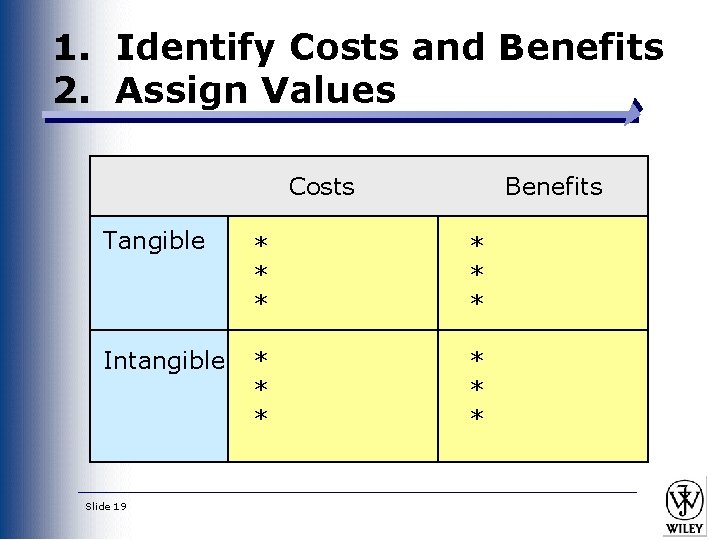
Business Value Business value is determined by weighing the cost against the benefits – both tangible and intangible. Tangible benefits are quantifiable and measurable. --save 500, 000 dollars in services, etc. Intangible benefits are improvements that are suspected to be able to give tangible benefits but are not as measurable. -improve customer service. Slide 6
System Request Lists key elements of the project Project name Project sponsor Business need Functionality Expected value Special issues or constraints Slide 7
FEASIBILITY ANALYSIS Slide 8
Feasibility Analysis Detailing Expected Costs and Benefits Technical feasibility Economic feasibility Organizational feasibility Slide 9
Technical Feasibility: Can We Build It? Familiarity with application Knowledge of business domain Familiarity with technology Extension of existing firm technologies Project size Number of people, time, and features Slide 10
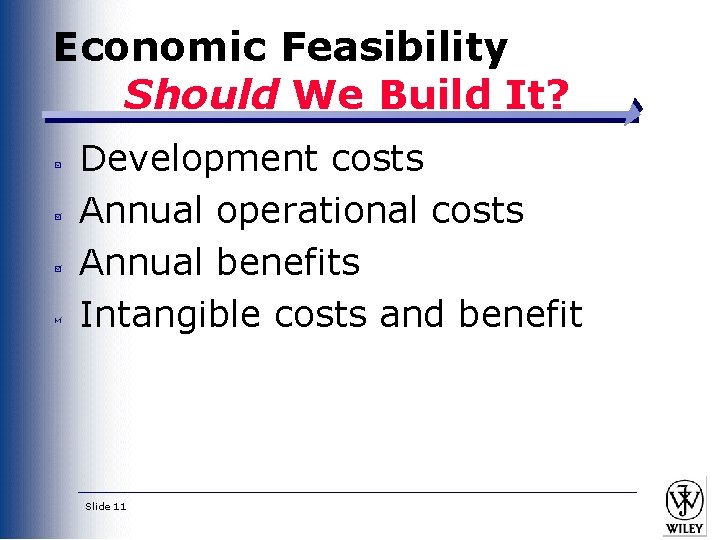
Economic Feasibility Should We Build It? Development costs Annual operational costs Annual benefits Intangible costs and benefit Slide 11
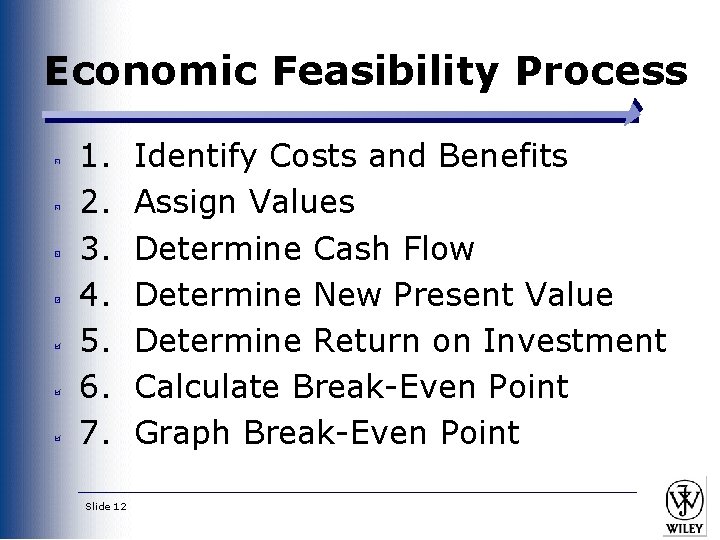
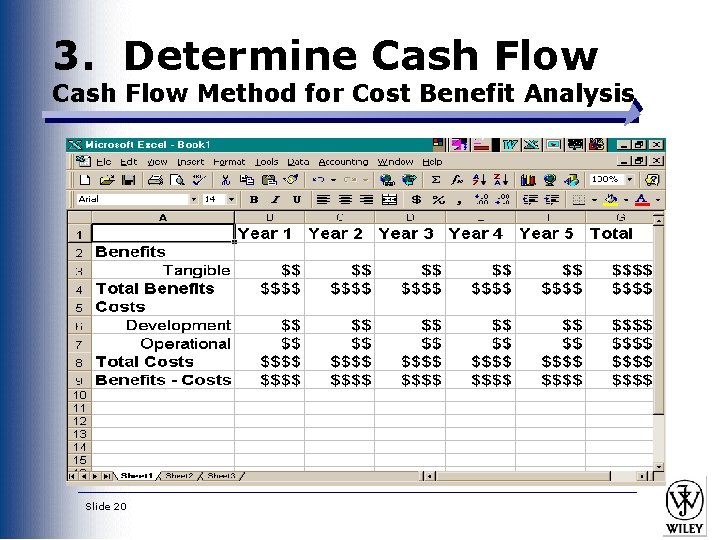
Economic Feasibility Process 1. 2. 3. 4. 5. 6. 7. Slide 12 Identify Costs and Benefits Assign Values Determine Cash Flow Determine New Present Value Determine Return on Investment Calculate Break-Even Point Graph Break-Even Point
Cost–Benefit Analysis Way of determining whether a possible course of action would be profitable Compare estimated future benefits against projected future costs Fundamental technique in deciding whether a client should computerize his/her business and in what way Slide 13
Cost–Benefit Analysis Compare estimated future benefits against costs Estimate benefits State all assumptions explicitly Slide 14
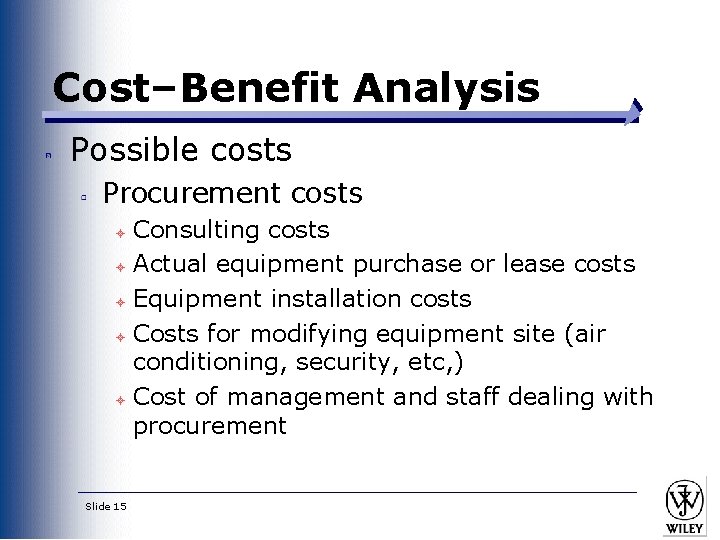
Cost–Benefit Analysis Possible costs Procurement costs Consulting costs ± Actual equipment purchase or lease costs ± Equipment installation costs ± Costs for modifying equipment site (air conditioning, security, etc, ) ± Cost of management and staff dealing with procurement ± Slide 15
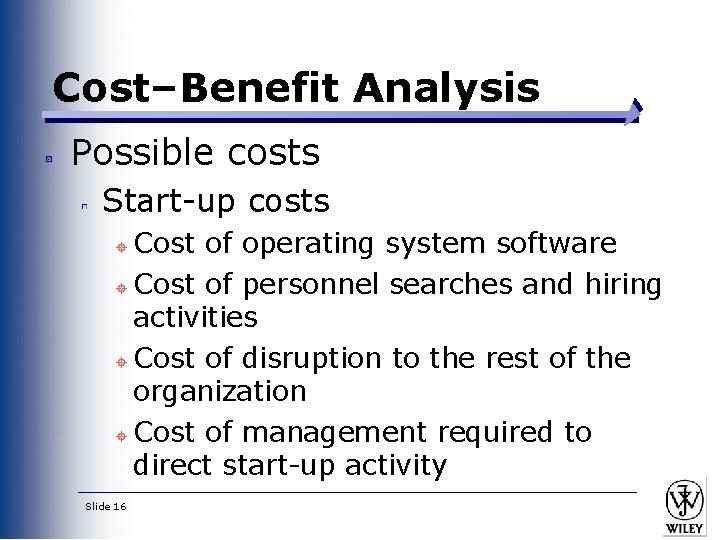
Cost–Benefit Analysis Possible costs Start-up costs Cost of operating system software ± Cost of personnel searches and hiring activities ± Cost of disruption to the rest of the organization ± Cost of management required to direct start-up activity ± Slide 16
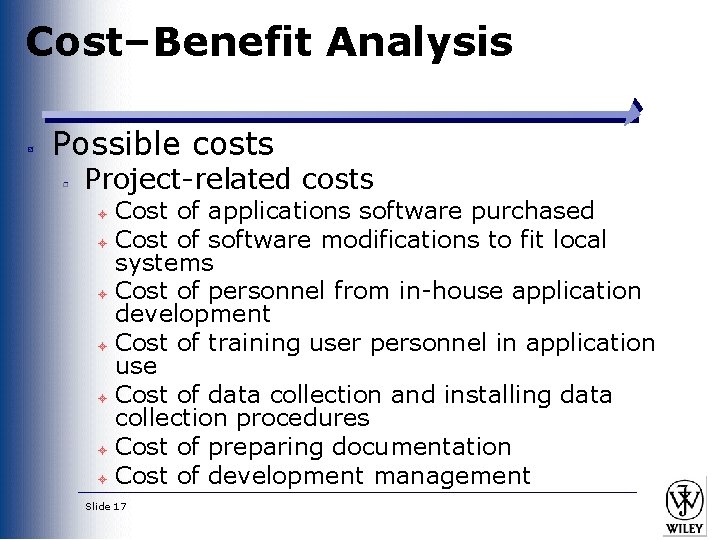
Cost–Benefit Analysis Possible costs Project-related costs Cost of applications software purchased ± Cost of software modifications to fit local systems ± Cost of personnel from in-house application development ± Cost of training user personnel in application use ± Cost of data collection and installing data collection procedures ± Cost of preparing documentation ± Cost of development management ± Slide 17
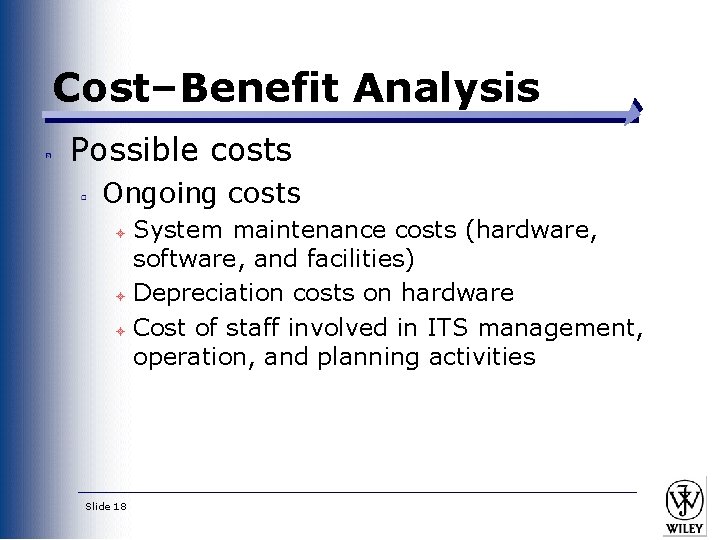
Cost–Benefit Analysis Possible costs Ongoing costs System maintenance costs (hardware, software, and facilities) ± Depreciation costs on hardware ± Cost of staff involved in ITS management, operation, and planning activities ± Slide 18
1. Identify Costs and Benefits 2. Assign Values Costs Benefits Tangible * * * Intangible * * * Slide 19
3. Determine Cash Flow Method for Cost Benefit Analysis Slide 20
4. Determine New Present Value Return on Investment Calculation RETURN ON INVESTMENT EQUALS Total (benefits - costs) Divided by Total costs Slide 21
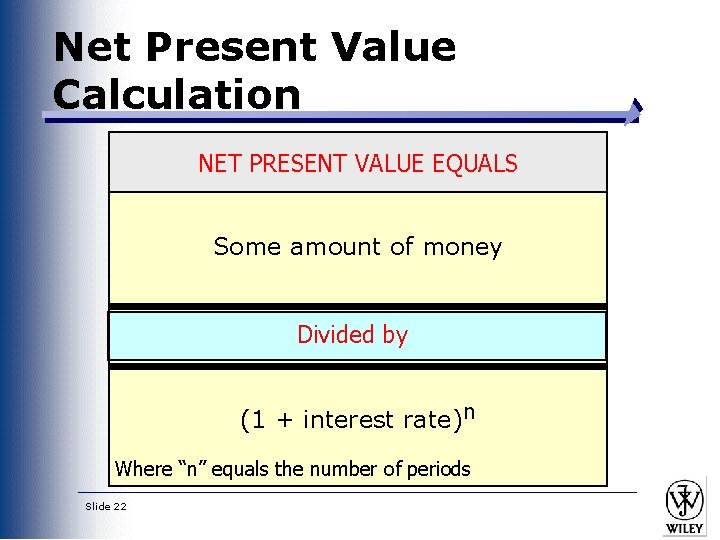
Net Present Value Calculation NET PRESENT VALUE EQUALS Some amount of money Divided by (1 + interest rate)n Where “n” equals the number of periods Slide 22
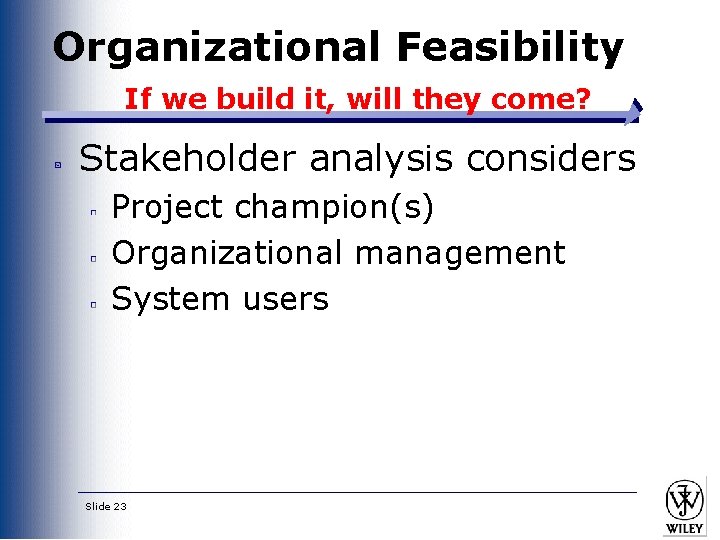
Organizational Feasibility If we build it, will they come? Stakeholder analysis considers Project champion(s) Organizational management System users Slide 23
Summary Project initiation involves creating and assessing goals and expectations for a new system Identifying the business value of the new project is a key to success The system request describes an overview of the proposed system. The feasibility study is concerned with insuring that technical, economic, and organizational benefits outweigh costs and risks Slide 24
Expanding the Domain For an excellent source of information on IT management see: www. cio. com Slide 25