
Systemic Approach In Teaching and Learning Linguistics and


- Slides: 31
Systemic Approach In Teaching and Learning Linguistics and Math In Primary Education Prof. Dr. Ameen F. M. Fahmy* & Prof. Dr. Asmaa Geith** *Faculty of Science, and Science Education Center, E-mail: fahmy@online. com. eg **Director of Center For Developing English Language Teaching (CDELT) Ain Shams University, Abbassia, Cairo, EGYPT 2008
Systemic Approach To Teaching and Learning (SATL) After globalization became a reality that we live and survive with its positive and negative impacts, and after the wide spread of the systematization in various disciplines and activities including tourism, commerce, economy, security, education etc. . The systemic approach has evolved in the field of teaching and learning in 1997, as a fruitful cooperation between Ain Shams University and Texas University at Austin (USA), and then the science education center (SEC) adopted it since 2000 until now.
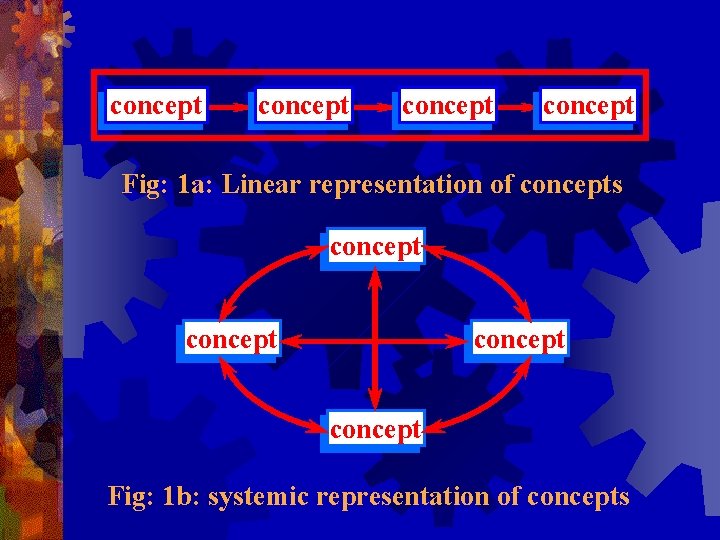
q What is the Meaning of SATL? By "systemic" we mean an arrangement of concepts or issues through interacting systems in which all relationships between concepts and issues are made clear and up front, to the learner (Fig. 1). SATL is a new way of teaching and learning, based on the idea that nowadays anything is related to everything globally. Students shouldn't learn isolated facts (by heart), but connect concepts and facts in a logical context. In contrast with the usual strategy we believe it is more difficult to obtain a global view of a collection of linearly arranged concepts than with the systemic representation, which stresses all relationships among concepts.
concept Fig: 1 a: Linear representation of concepts concept Fig: 1 b: systemic representation of concepts
q Why Systemic Approach? v. It verifies the major goals of educational system and proceeds towards systemic thinking and continuous growth of knowledge that is referred to as quality of education. v. It represents a theme and method of teaching and learning beside way of life that can be utilized in the management of various sides and activities of a normal citizen in all the scientific, and technological aspects. v. The challenges that face the world today such as terrorism, environmental pollution. . . etc. that requires preparation of human calibers to be able to systemic and creative thinking that stops such phenomena for the sake of a better
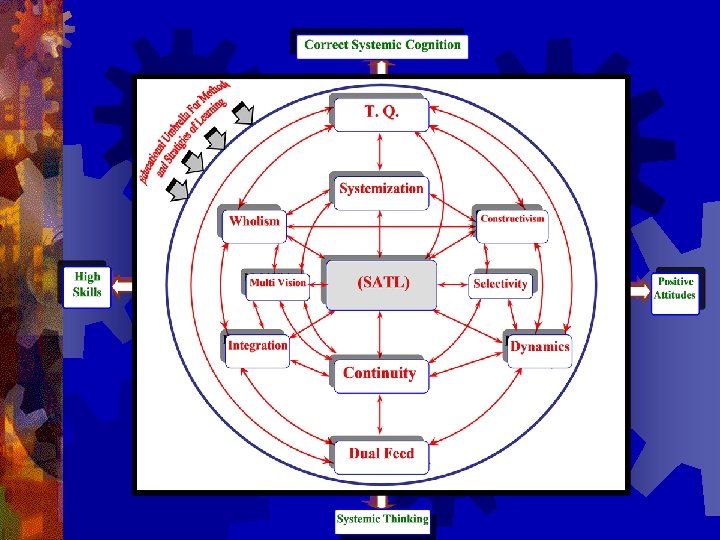
q. Theoretical bases on which the systemic ap is based: v SATL is based on the holistic vision for phenomena where linking different facts and concepts take place into a dynamic systemic network. This reflects the relationships which settles them into the cognitive construction of the learner and enables pupils to use it in different v situations. SATL was based on the systems analysis and theory of constructivism. v The following systemic diagram illustrates the criteria, and products of learning by SATL.
Application of SATL : SATL was applied in the fields of Basic, Environmental, Agricultural, Engineering, Medicinal, Linguistics. . . Sciences, in General and University Education. The statistical analysis of student achievement results shows that the students engaged with SATL materials and taught by teachers trained in systemics achieve at significantly higher levels of performance than those taught by the standard linear methods.
SATL In English Language Systemic Approach to Teaching and Learning (SATL) was found in Egypt (1997) and implemented successfully during academic years (2004/2005), (2005/2006) and (2006/2007) in English, Arabic Languages, and Math. Objectives of (SATLE): 1 - Enhancing pupil’s ability to make systemic relationships between letters to form words and words to form sentences and sentences to form comprehension. 2 - Developing pupil’s ability for learning and teachers capability for teaching. 3 - Promoting cooperative and interactive learning. 4 - Enhancing pupil’s ability to learn at higher level. (Synthesis, Analysis and Creativity). 5 - Helping the teacher to discover the gifted and talented students. 6 - Enhancing the ability to think globally which is quite important for the preparation of contemporary generations in the global age.
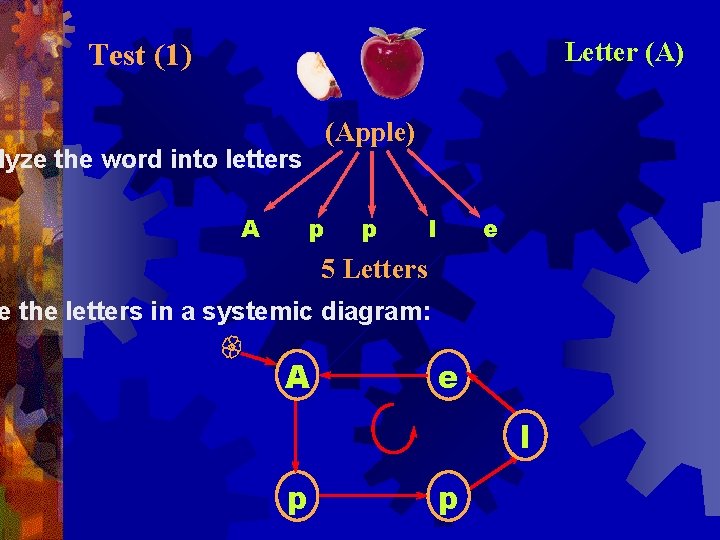
Letter (A) Test (1) (Apple) lyze the word into letters A p p l e 5 Letters e the letters in a systemic diagram: A e l p p
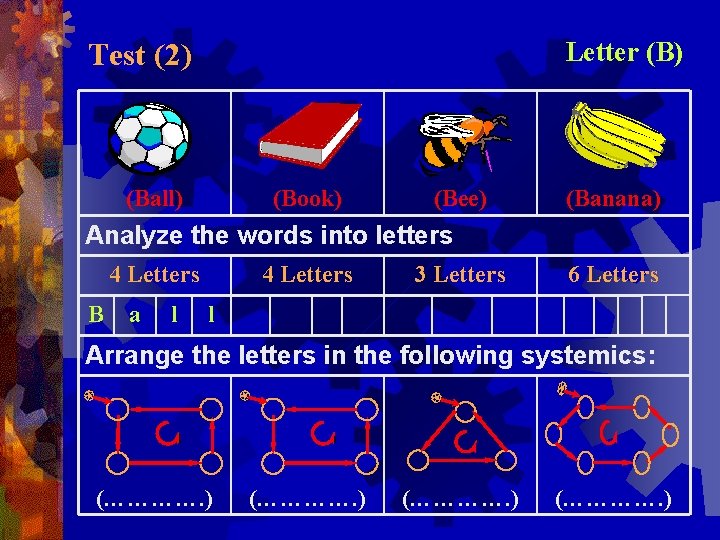
Letter (B) Test (2) (Ball) (Book) (Bee) (Banana) Analyze the words into letters 4 Letters B a l 4 Letters 3 Letters 6 Letters l Arrange the letters in the following systemics: (…………. )
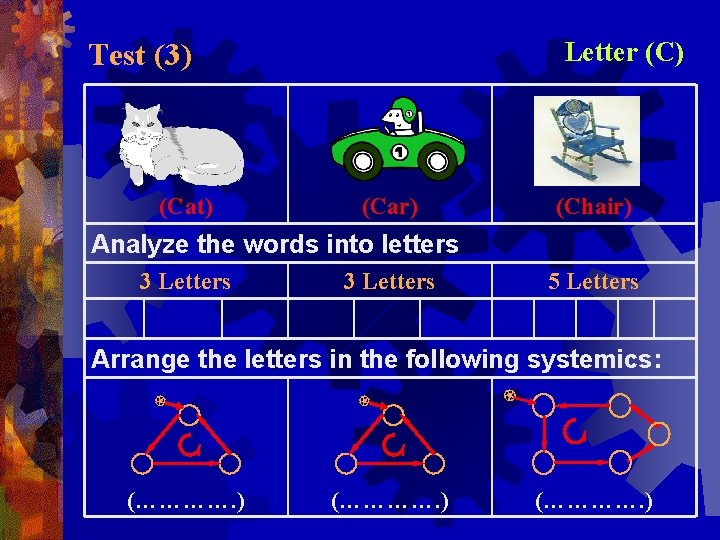
Letter (C) Test (3) (Cat) (Car) (Chair) Analyze the words into letters 3 Letters 5 Letters Arrange the letters in the following systemics: (…………. )
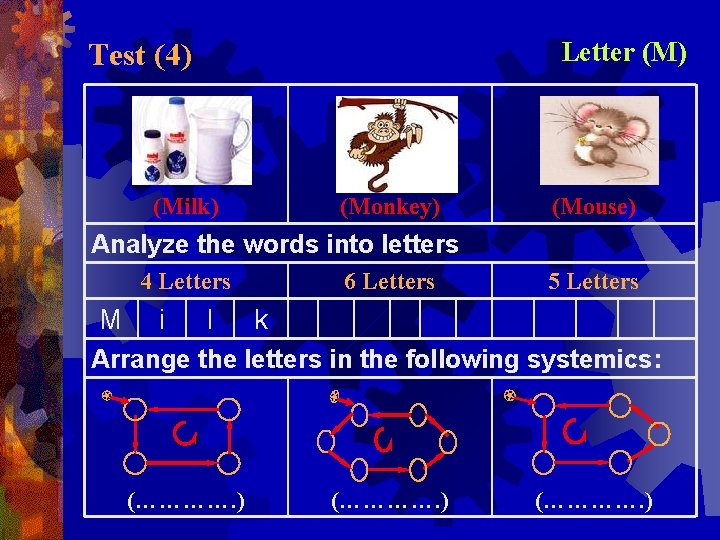
Letter (M) Test (4) (Milk) (Monkey) (Mouse) Analyze the words into letters 4 Letters M i l 6 Letters 5 Letters k Arrange the letters in the following systemics: (…………. )
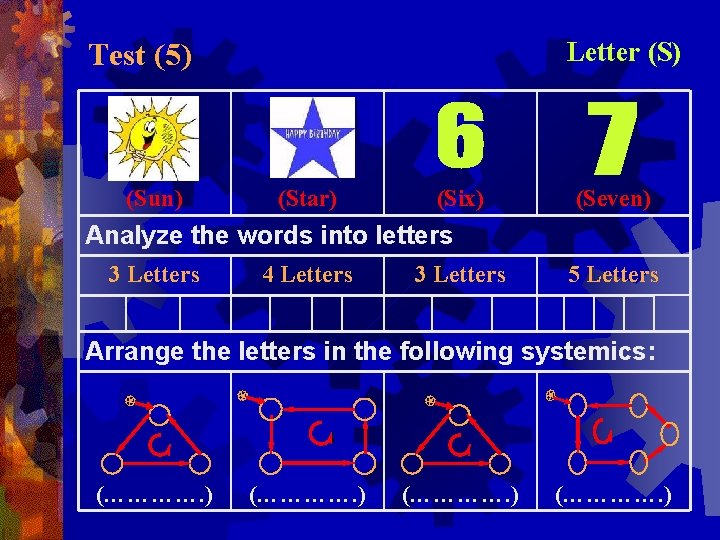
Letter (S) Test (5) (Sun) (Star) (Six) (Seven) Analyze the words into letters 3 Letters 4 Letters 3 Letters 5 Letters Arrange the letters in the following systemics: (…………. )
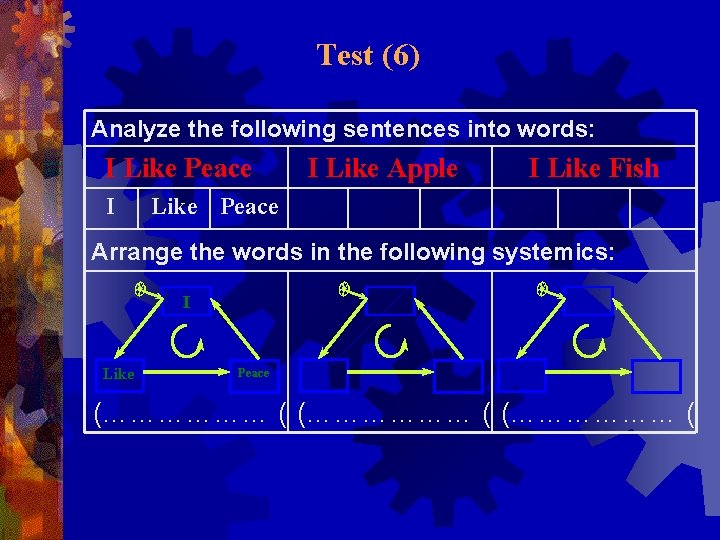
Test (6) Analyze the following sentences into words: I Like Peace I I Like Apple I Like Fish Like Peace Arrange the words in the following systemics: I Like Peace (……………… (
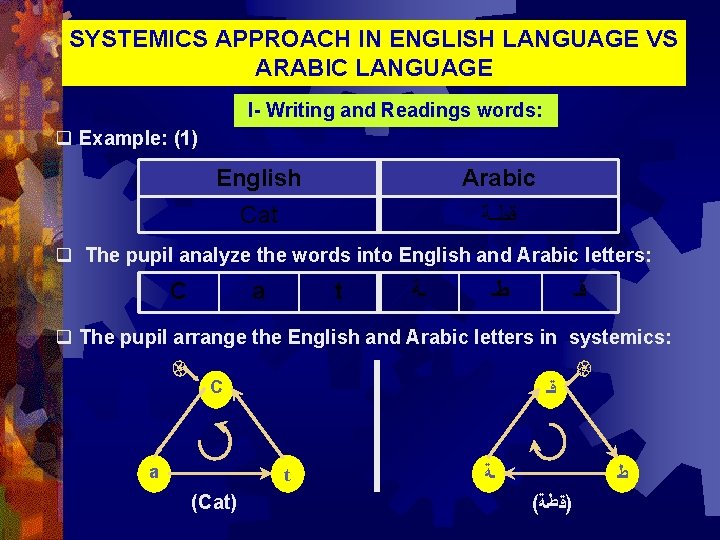
SYSTEMICS APPROACH IN ENGLISH LANGUAGE VS ARABIC LANGUAGE I- Writing and Readings words: q Example: (1) English Arabic Cat ﻗﻄـﺔ q The pupil analyze the words into English and Arabic letters: C a t ـﺔ ﻃـ ﻗـ q The pupil arrange the English and Arabic letters in systemics: C a ﻗـ t (Cat) ـﺔ ( )ﻗﻄـﺔ ﻁ
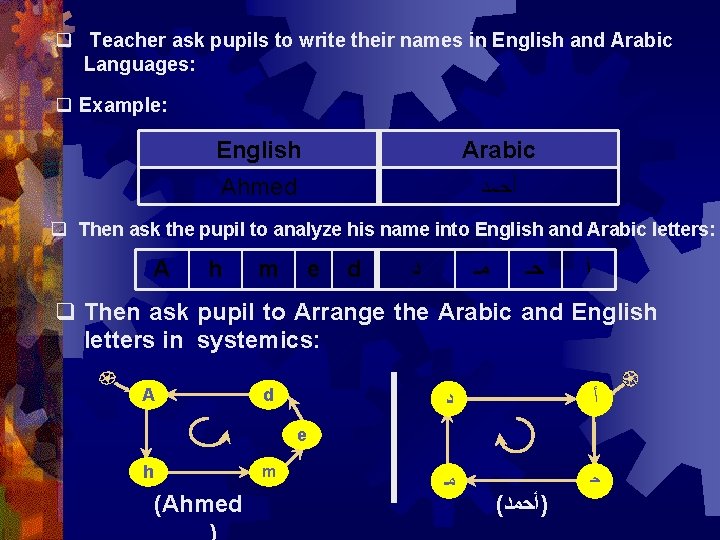
q Teacher ask pupils to write their names in English and Arabic Languages: q Example: English Arabic Ahmed ﺃﺤﻤﺪ q Then ask the pupil to analyze his name into English and Arabic letters: A h m e d ﺩ ﻣـ ﺣـ ﺃ q Then ask pupil to Arrange the Arabic and English letters in systemics: A d ﺩ ﺃ ﻤـ ﺤـ e h (Ahmed m ( )ﺃﺤﻤﺪ
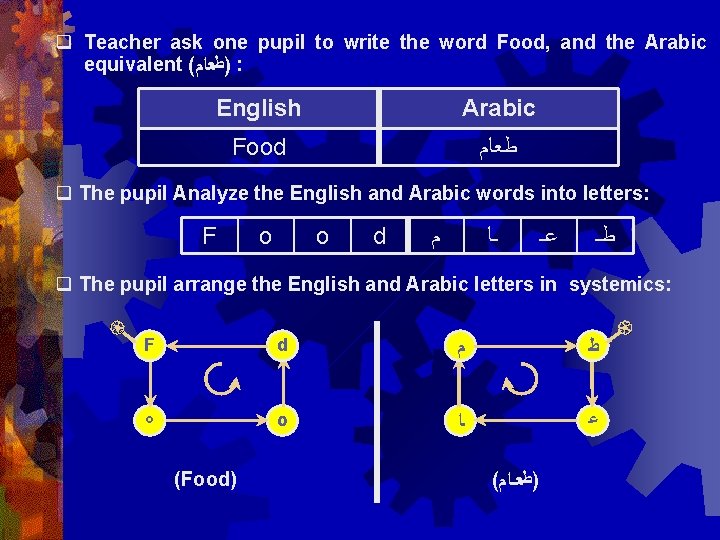
q Teacher ask one pupil to write the word Food, and the Arabic equivalent ( )ﻃﻌﺎﻡ : English Arabic Food ﻃﻌﺎﻡ q The pupil Analyze the English and Arabic words into letters: F o o d ﻡ ـﺎ ﻋـ ﻃـ q The pupil arrange the English and Arabic letters in systemics: F d ﻡ ﻁ o o ـﺎ ﻋـ (Food) ( )ﻃﻌــﺎﻡ
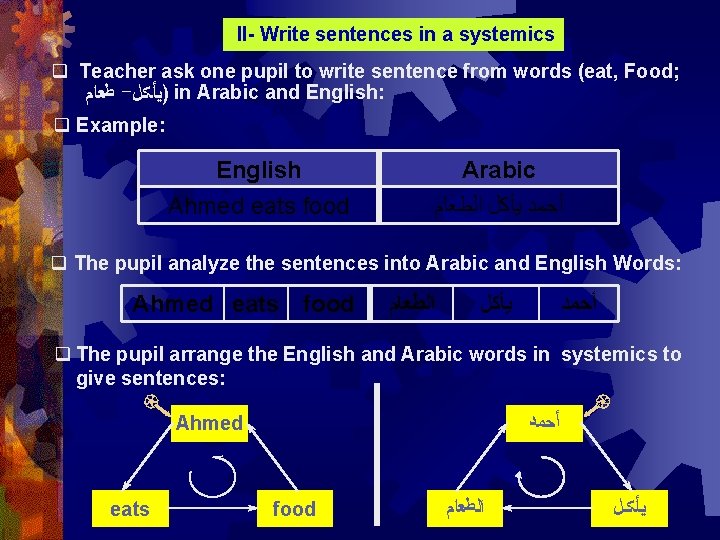
II- Write sentences in a systemics q Teacher ask one pupil to write sentence from words (eat, Food; ﻃﻌﺎﻡ - )ﻴﺄﻜﻞ in Arabic and English: q Example: English Ahmed eats food Arabic ﺃﺤﻤﺪ ﻳﺄﻜﻞ ﺍﻟﻄﻌﺎﻡ q The pupil analyze the sentences into Arabic and English Words: Ahmed eats food ﺍﻟﻄﻌﺎﻡ ﻳﺄﻜﻞ ﺃﺤﻤﺪ q The pupil arrange the English and Arabic words in systemics to give sentences: ﺃﺤﻤﺪ Ahmed eats food ﺍﻟﻄﻌﺎﻡ ﻴﺄﻜـﻞ
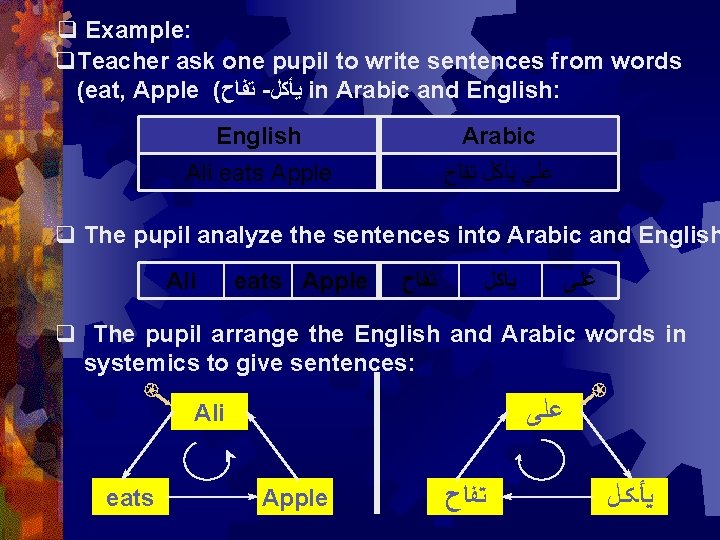
q Example: q. Teacher ask one pupil to write sentences from words (eat, Apple ( ﺗﻔﺎﺡ - ﻳﺄﻜﻞ in Arabic and English: English Arabic Ali eats Apple ﻋﻠﻲ ﻳﺄﻜﻞ ﺗﻔﺎﺡ q The pupil analyze the sentences into Arabic and English Ali eats Apple ﺗﻔﺎﺡ ﻳﺄﻜﻞ ﻋﻠﻰ q The pupil arrange the English and Arabic words in systemics to give sentences: ﻋﻠﻰ Ali eats Apple ﺗﻔﺎﺡ ﻴﺄﻜـﻞ
MATH
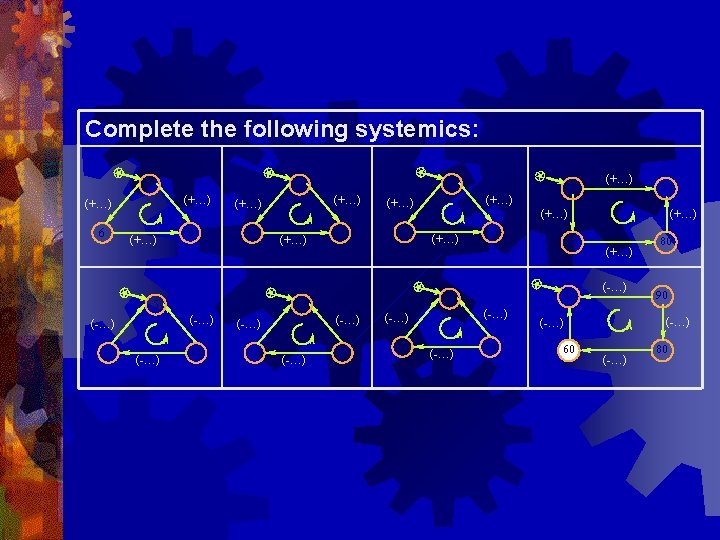
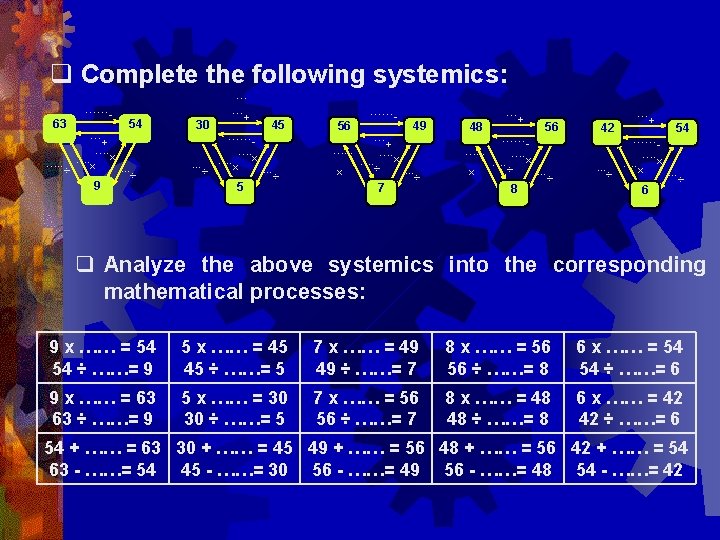
Complete the following systemics: 2 (+…) 6 (+…) 8 15 5 10 (-…) (+…) 20 15 (-…) 16 (-…) (+…) 40 20 (+…) 60 (-…) 60 40 (-…) 12 (+…) 90 (+…) 4 8 (-…) (+…) 40 30 10 16 (+…) (-…) 90 (-…) 60 80 (-…) 80
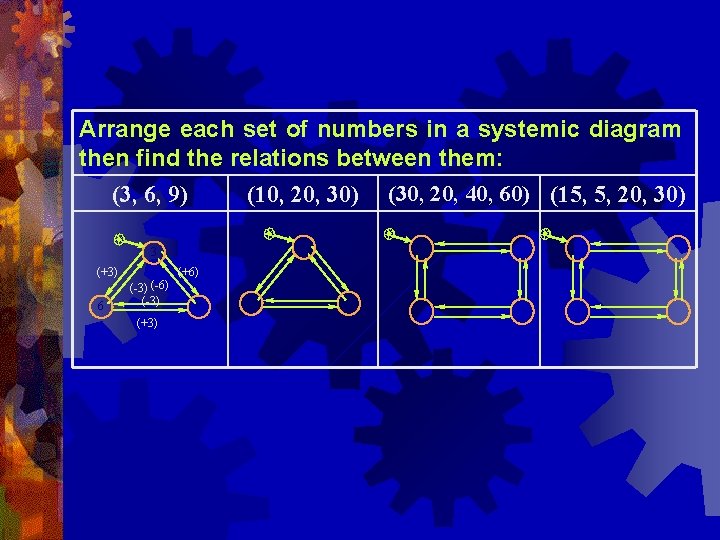
Arrange each set of numbers in a systemic diagram then find the relations between them: (3, 6, 9) (10, 20, 30) (30, 20, 40, 60) (15, 5, 20, 30) 3 (+3) 6 (+6) (-3) (-6) (-3) (+3) 9
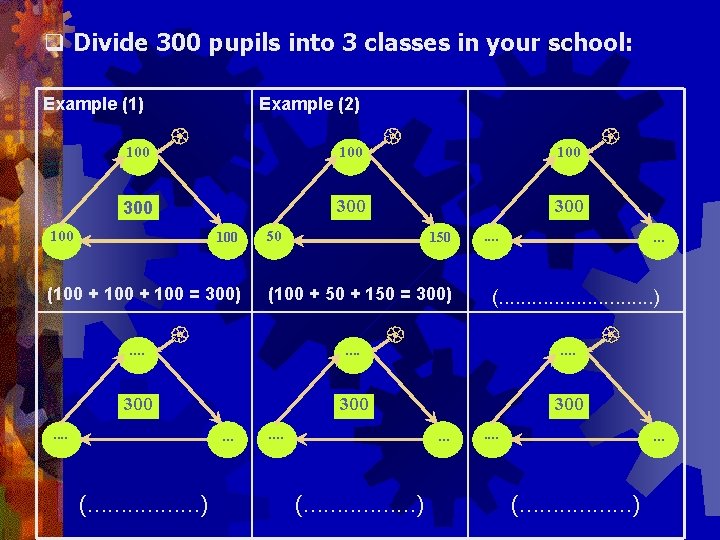
q Divide 300 pupils into 3 classes in your school: Example (1) Example (2) 100 100 300 300 100 (100 + 100 = 300) 50 150 (100 + 50 + 150 = 300) . . . . (. . . . ) . . . 300 300 . . . (. . . . )
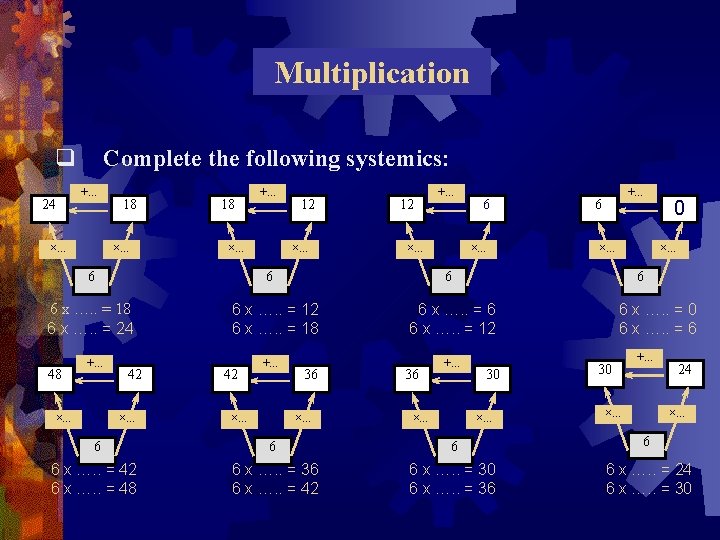
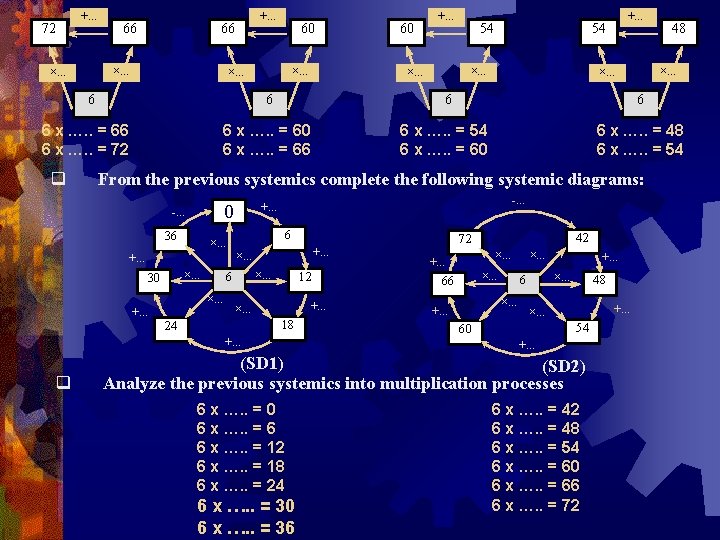
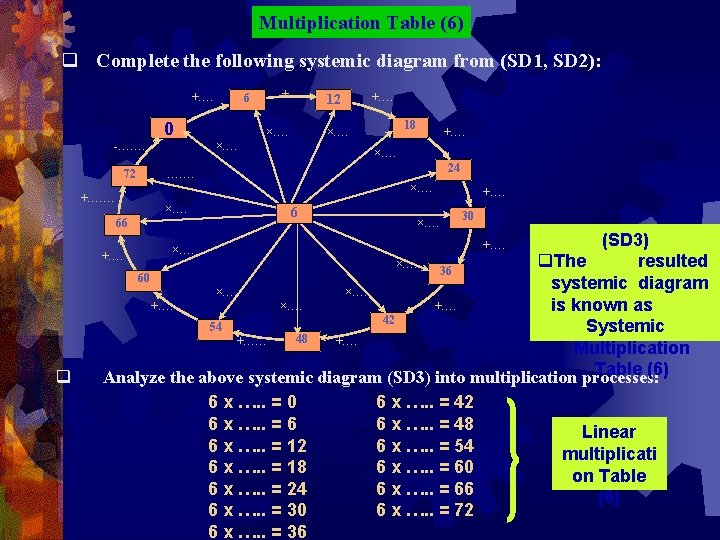
Multiplication Table (6) q Complete the following systemic diagram from (SD 1, SD 2): +…. 6 0 -……. 72 +…. ×…. 12 +…. 18 ×…. +…. ×…. 24 ……. ×…. +……. ×…. 66 6 ×…. +…. 30 (SD 3) +…. q. The resulted ×…. 36 60 systemic diagram ×…. +…. is known as 42 54 Systemic 48 +…… +…. Multiplication Table (6) Analyze the above systemic diagram (SD 3) into multiplication processes: +…. ×…. q 6 x …. . = 0 6 x …. . = 6 6 x …. . = 12 6 x …. . = 18 6 x …. . = 24 6 x …. . = 30 6 x …. . = 36 6 x …. . = 42 6 x …. . = 48 6 x …. . = 54 6 x …. . = 60 6 x …. . = 66 6 x …. . = 72 Linear multiplicati on Table (6)
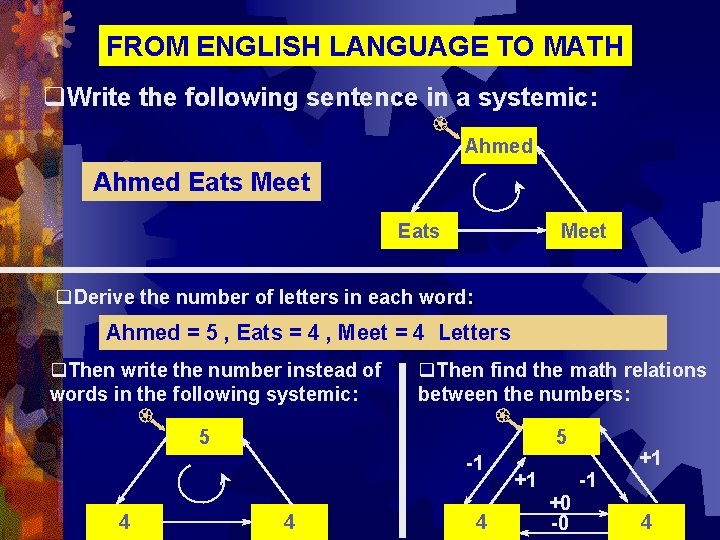
FROM ENGLISH LANGUAGE TO MATH q. Write the following sentence in a systemic: Ahmed Eats Meet q. Derive the number of letters in each word: Ahmed = 5 , Eats = 4 , Meet = 4 Letters q. Then write the number instead of words in the following systemic: q. Then find the math relations between the numbers: 5 5 -1 4 4 4 +1 +1 -1 +0 -0 4
REFERENCES q “Hand on Hand” for Primary one, Egyptian Ministry of Education (2005). q “Systemic Approach to Teaching and Learning English Language (SATLE) for Primary One”, Ameen F. M. Fahmy, Asmaa G. Gieth, Science Education Centre, Ain shams University, Egypt (2006)