
Systematic Zoology or Animal Taxonomy is the branch
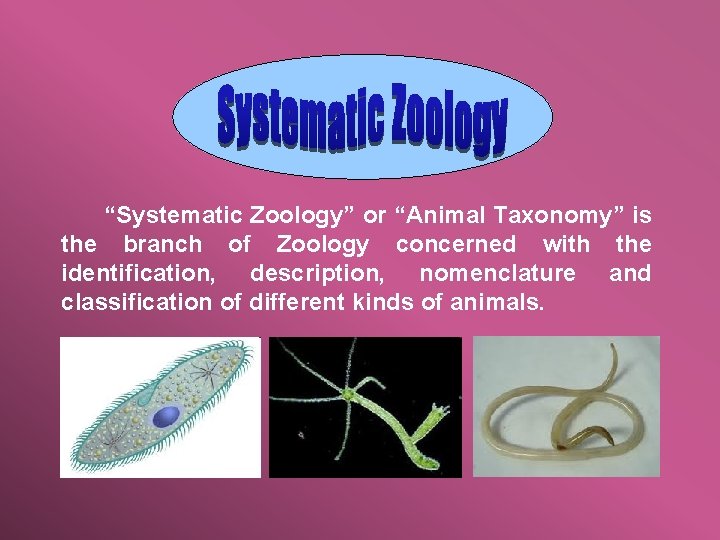
“Systematic Zoology” or “Animal Taxonomy” is the branch of Zoology concerned with the identification, description, nomenclature and classification of different kinds of animals.
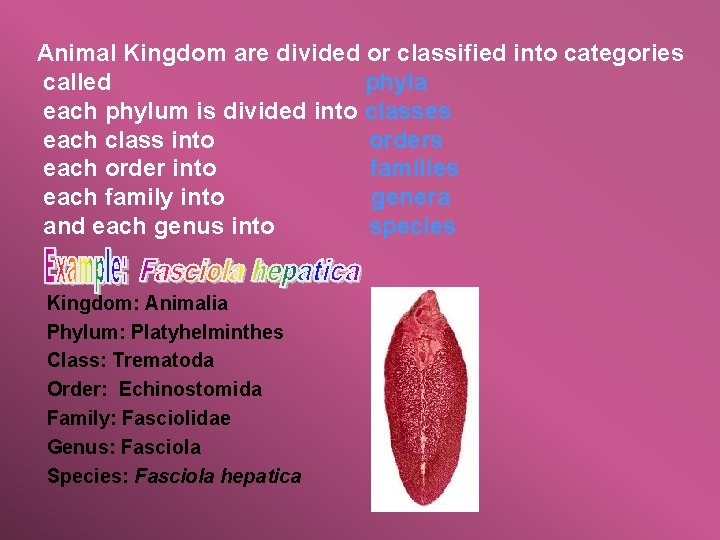
Animal Kingdom are divided or classified into categories called phyla each phylum is divided into classes each class into orders each order into families each family into genera and each genus into species Kingdom: Animalia Phylum: Platyhelminthes Class: Trematoda Order: Echinostomida Family: Fasciolidae Genus: Fasciola Species: Fasciola hepatica
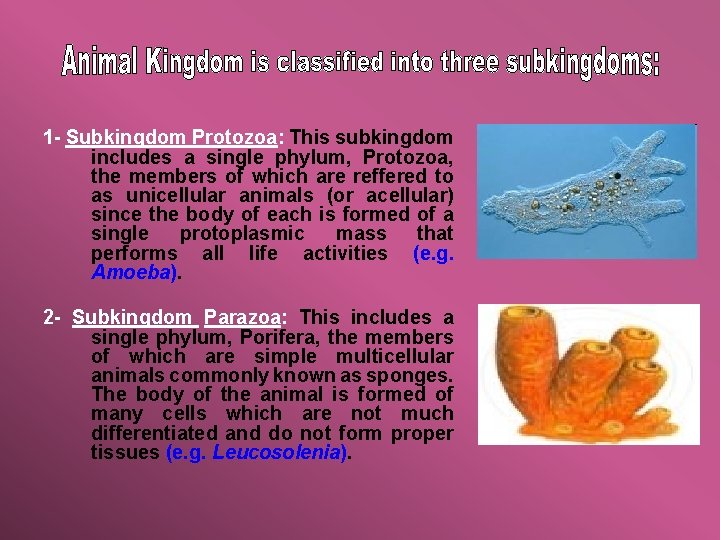
1 - Subkingdom Protozoa: This subkingdom includes a single phylum, Protozoa, the members of which are reffered to as unicellular animals (or acellular) since the body of each is formed of a single protoplasmic mass that performs all life activities (e. g. Amoeba). 2 - Subkingdom Parazoa: This includes a single phylum, Porifera, the members of which are simple multicellular animals commonly known as sponges. The body of the animal is formed of many cells which are not much differentiated and do not form proper tissues (e. g. Leucosolenia).
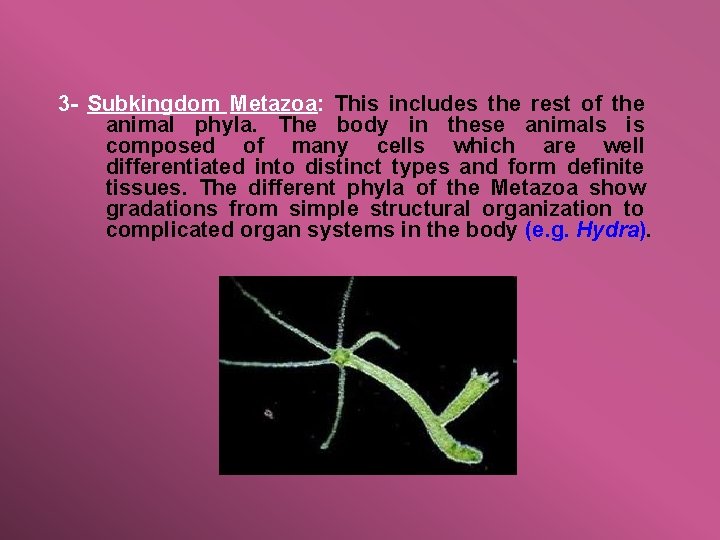
3 - Subkingdom Metazoa: This includes the rest of the animal phyla. The body in these animals is composed of many cells which are well differentiated into distinct types and form definite tissues. The different phyla of the Metazoa show gradations from simple structural organization to complicated organ systems in the body (e. g. Hydra).
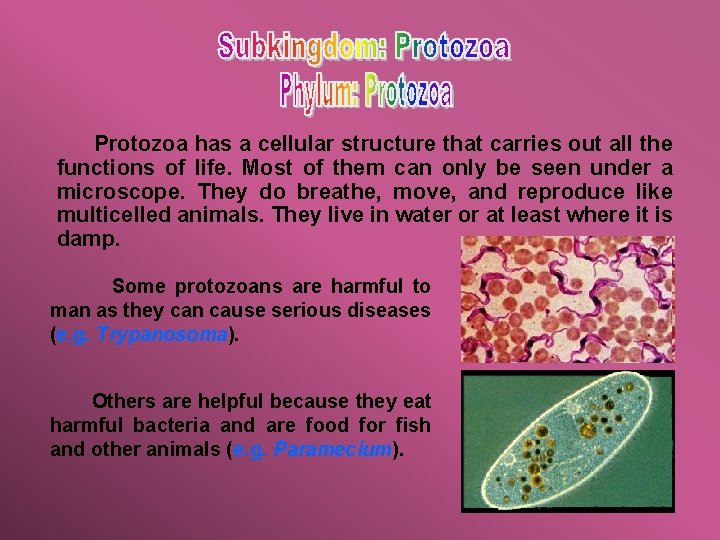
Protozoa has a cellular structure that carries out all the functions of life. Most of them can only be seen under a microscope. They do breathe, move, and reproduce like multicelled animals. They live in water or at least where it is damp. Some protozoans are harmful to man as they can cause serious diseases (e. g. Trypanosoma). Others are helpful because they eat harmful bacteria and are food for fish and other animals (e. g. Paramecium).
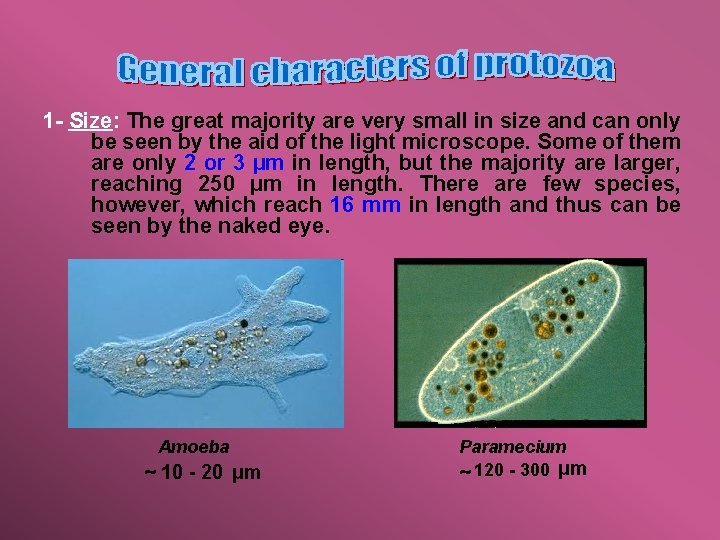
1 - Size: The great majority are very small in size and can only be seen by the aid of the light microscope. Some of them are only 2 or 3 µm in length, but the majority are larger, reaching 250 µm in length. There are few species, however, which reach 16 mm in length and thus can be seen by the naked eye. Amoeba 10 - 20 µm Paramecium 120 - 300 µm
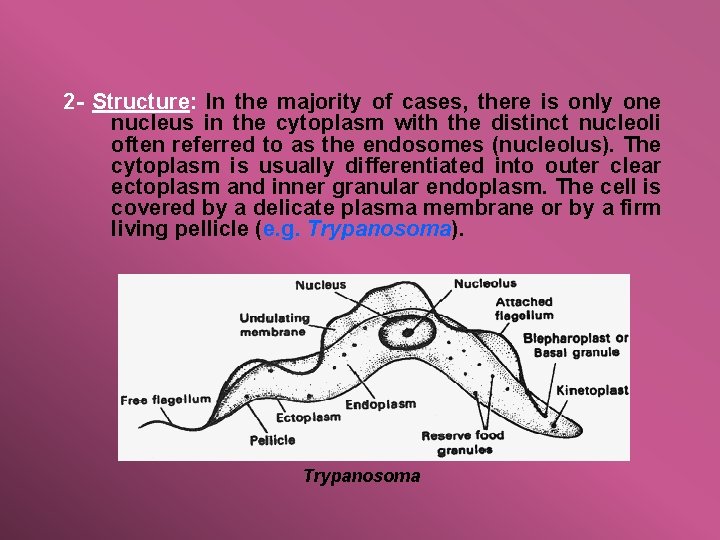
2 - Structure: In the majority of cases, there is only one nucleus in the cytoplasm with the distinct nucleoli often referred to as the endosomes (nucleolus). The cytoplasm is usually differentiated into outer clear ectoplasm and inner granular endoplasm. The cell is covered by a delicate plasma membrane or by a firm living pellicle (e. g. Trypanosoma). Trypanosoma
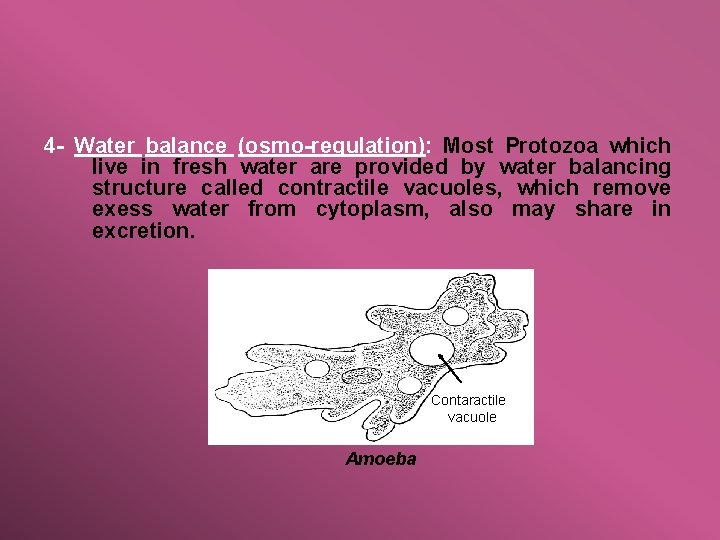
4 - Water balance (osmo-regulation): Most Protozoa which live in fresh water are provided by water balancing structure called contractile vacuoles, which remove exess water from cytoplasm, also may share in excretion. Contaractile vacuole Amoeba
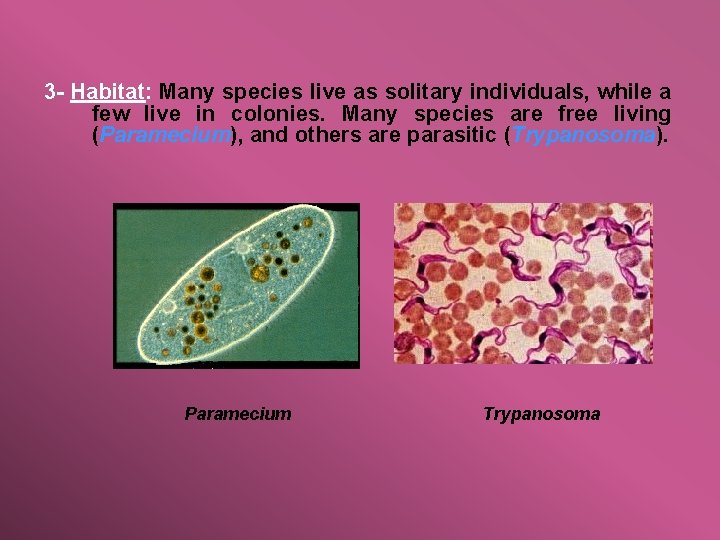
3 - Habitat: Many species live as solitary individuals, while a few live in colonies. Many species are free living (Paramecium), and others are parasitic (Trypanosoma). Paramecium Trypanosoma
5 - Nutrition: It may be a. Holophytic: In this type, the organism synthesizes its own complex organic food material from carbon dioxide and water in the presence of sunlight, as plants generally do (e. g. Euglena). b. Saprozoic: Feeding by absorbting solution of decayed organic and inorganic substances found in the surrounding medium by diffusion through the protozoan body surface. c. Holozoic: Is the most common type of nutrition in this phylum. In this type, the animal feeds actively on other organisms (bacteria, algae, smaller protozoa, etc. ) or on decaying organic matter.
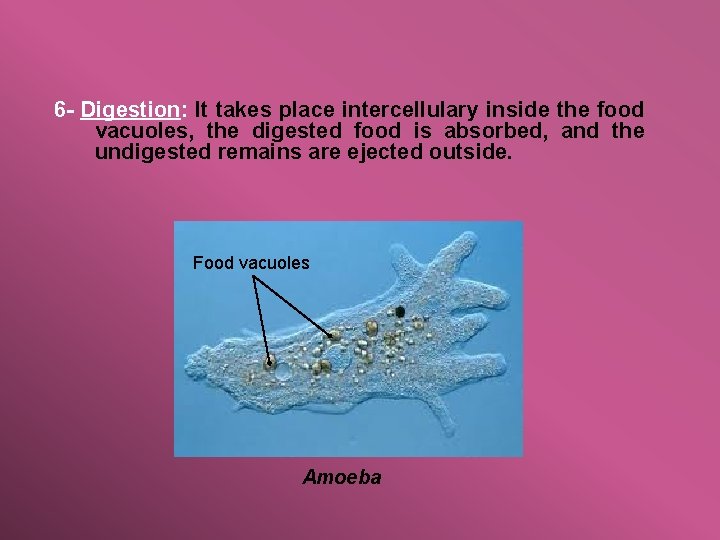
6 - Digestion: It takes place intercellulary inside the food vacuoles, the digested food is absorbed, and the undigested remains are ejected outside. Food vacuoles Amoeba
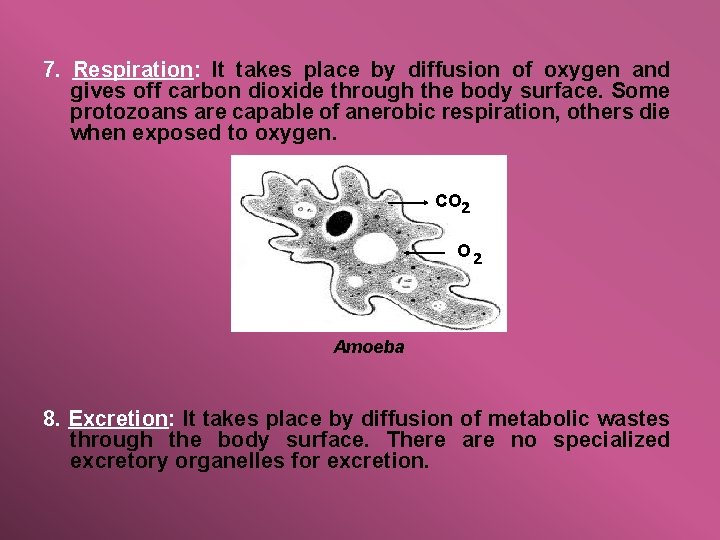
7. Respiration: It takes place by diffusion of oxygen and gives off carbon dioxide through the body surface. Some protozoans are capable of anerobic respiration, others die when exposed to oxygen. CO₂ O₂ Amoeba 8. Excretion: It takes place by diffusion of metabolic wastes through the body surface. There are no specialized excretory organelles for excretion.
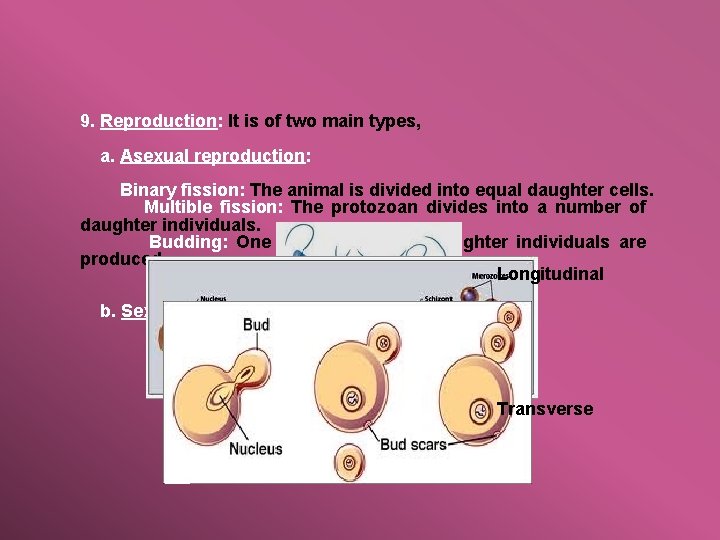
9. Reproduction: It is of two main types, a. Asexual reproduction: Binary fission: The animal is divided into equal daughter cells. Multible fission: The protozoan divides into a number of daughter individuals. Budding: One or more smaller daughter individuals are produced. Longitudinal b. Sexual reproduction: Transverse
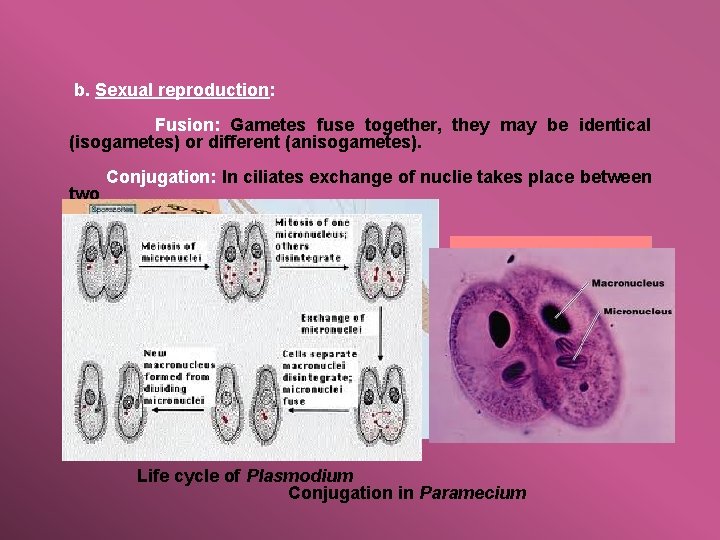
b. Sexual reproduction: Fusion: Gametes fuse together, they may be identical (isogametes) or different (anisogametes). two Conjugation: In ciliates exchange of nuclie takes place between Anaisogametes Life cycle of Plasmodium Conjugation in Paramecium
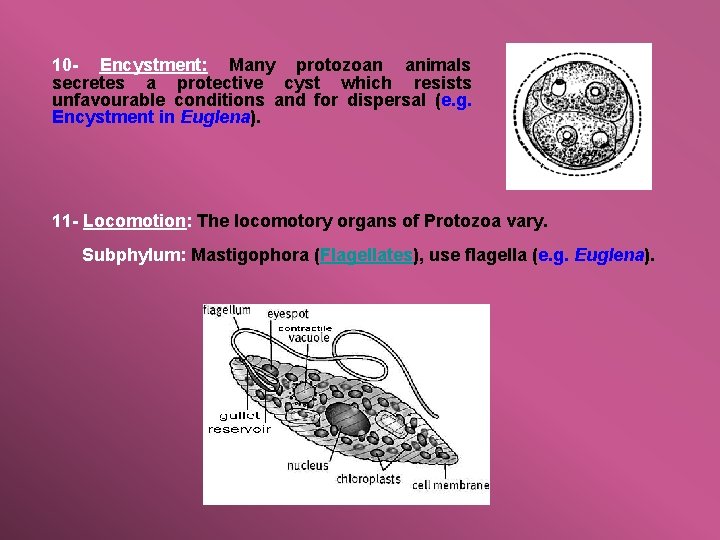
10 - Encystment: Many protozoan animals secretes a protective cyst which resists unfavourable conditions and for dispersal (e. g. Encystment in Euglena). 11 - Locomotion: The locomotory organs of Protozoa vary. Subphylum: Mastigophora (Flagellates), use flagella (e. g. Euglena).
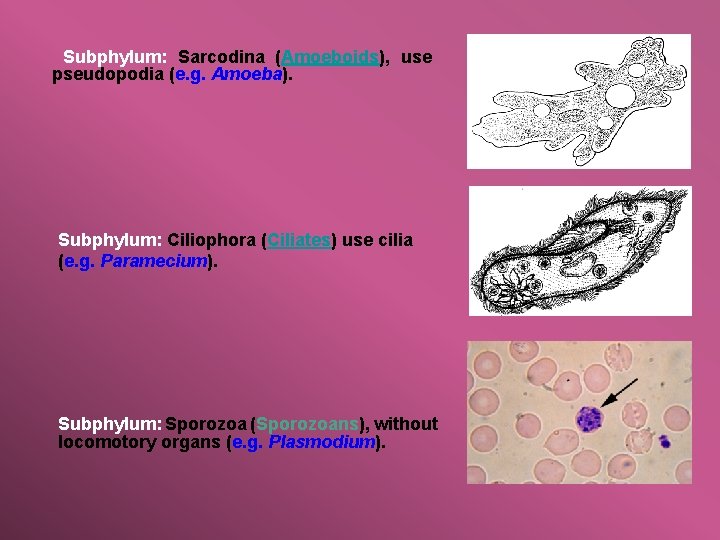
Subphylum: Sarcodina (Amoeboids), use pseudopodia (e. g. Amoeba). Subphylum: Ciliophora (Ciliates) use cilia (e. g. Paramecium). Subphylum: Sporozoa (Sporozoans), without locomotory organs (e. g. Plasmodium).
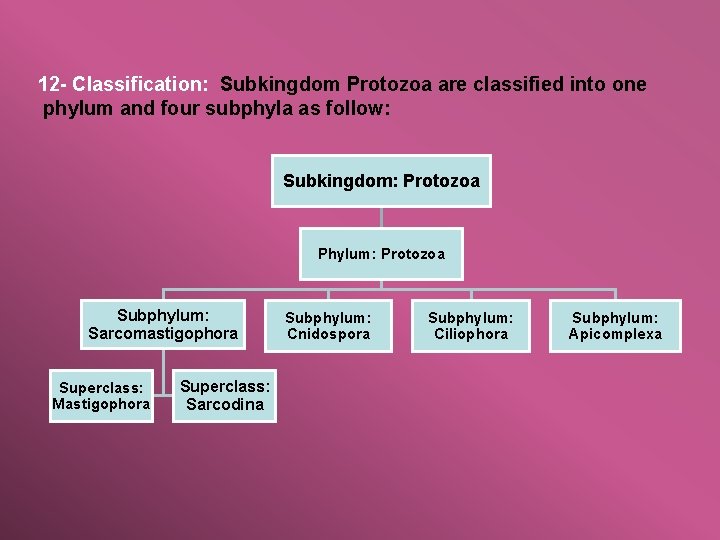
12 - Classification: Subkingdom Protozoa are classified into one phylum and four subphyla as follow: Subkingdom: Protozoa Phylum: Protozoa Subphylum: Sarcomastigophora Superclass: Mastigophora Superclass: Sarcodina Subphylum: Cnidospora Subphylum: Ciliophora Subphylum: Apicomplexa
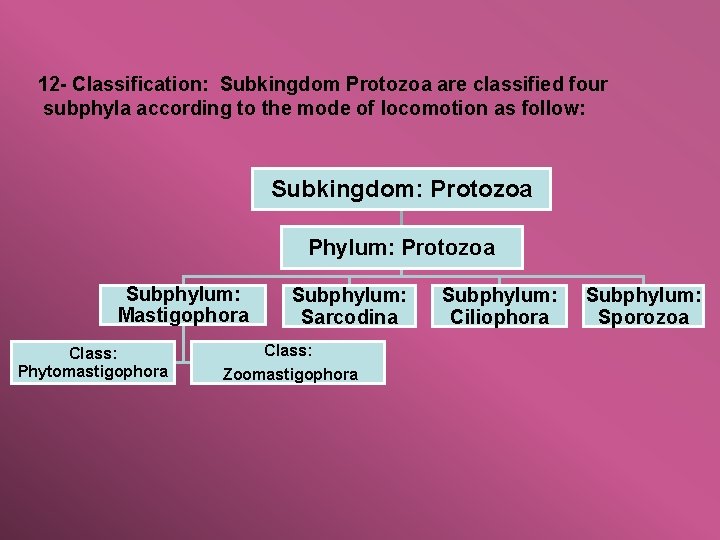
12 - Classification: Subkingdom Protozoa are classified four subphyla according to the mode of locomotion as follow: Subkingdom: Protozoa Phylum: Protozoa Subphylum: Mastigophora Class: Phytomastigophora Subphylum: Sarcodina Class: Zoomastigophora Subphylum: Ciliophora Subphylum: Sporozoa
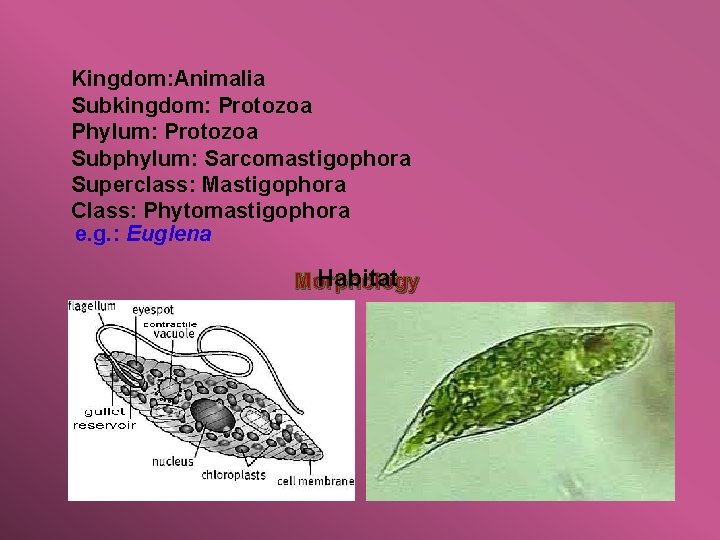
Kingdom: Animalia Subkingdom: Protozoa Phylum: Protozoa Subphylum: Sarcomastigophora Superclass: Mastigophora Class: Phytomastigophora e. g. : Euglena Habitat Morphology
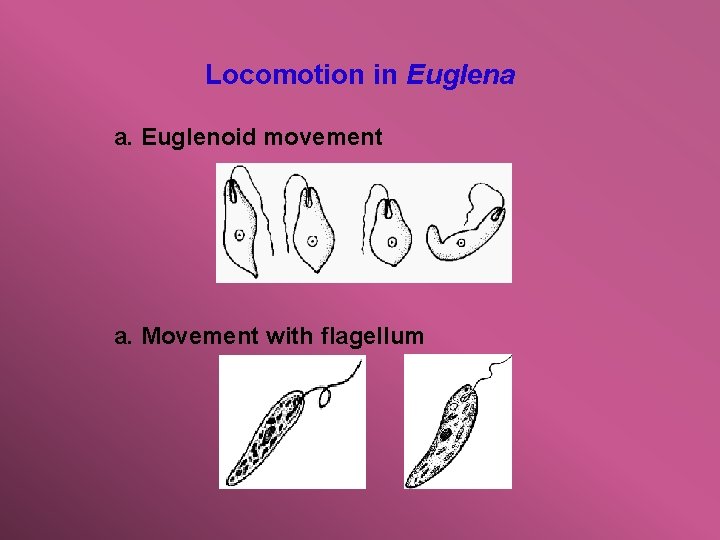
Locomotion in Euglena a. Euglenoid movement a. Movement with flagellum
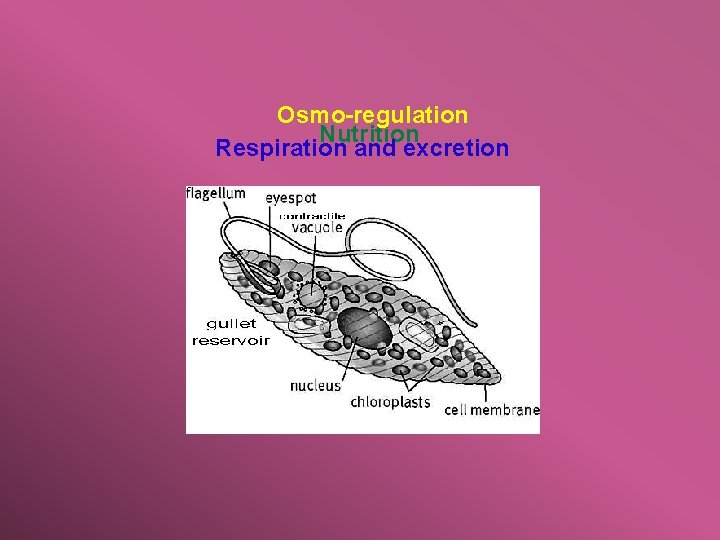
Osmo-regulation Nutrition Respiration and excretion
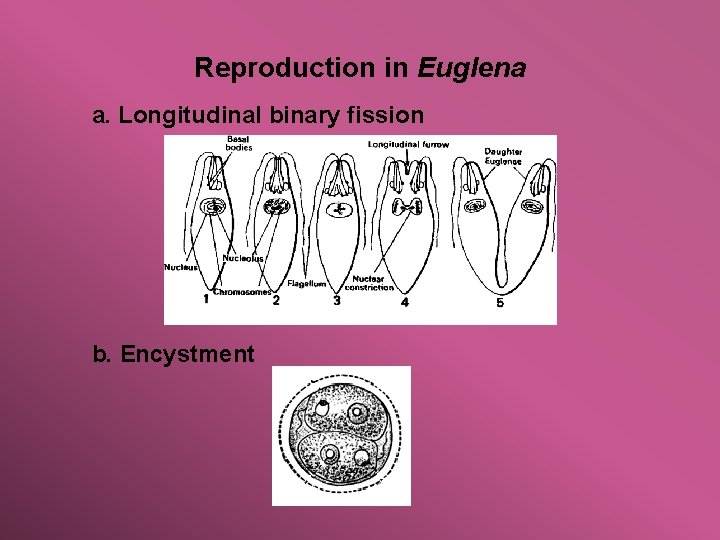
Reproduction in Euglena a. Longitudinal binary fission b. Encystment
• The presence of contractile vacuole system. Such a system is not known in the plant kingdom. • None of the known plants move by an organelle comparable in structure to the flagellum. • The plane of division in binary fission of Euglena and related flagellates is longitudinal, while in plants it is transverse. • The presence of an eye-spot in many flagellates and its absence in all known plants.
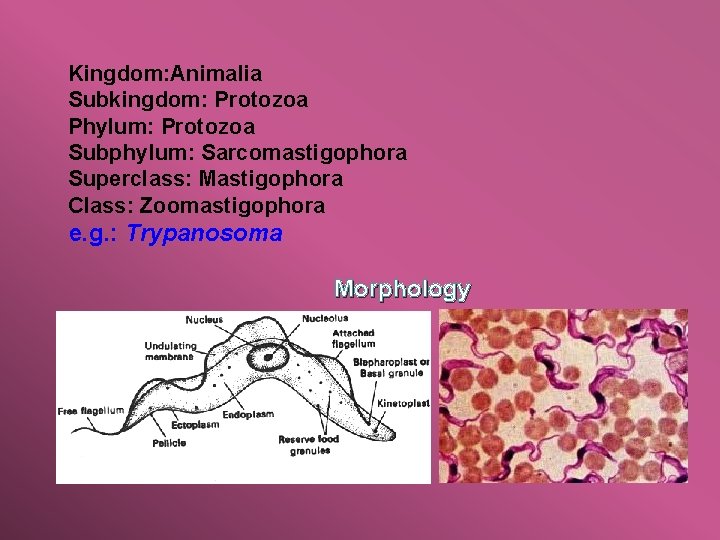
Kingdom: Animalia Subkingdom: Protozoa Phylum: Protozoa Subphylum: Sarcomastigophora Superclass: Mastigophora Class: Zoomastigophora e. g. : Trypanosoma Morphology
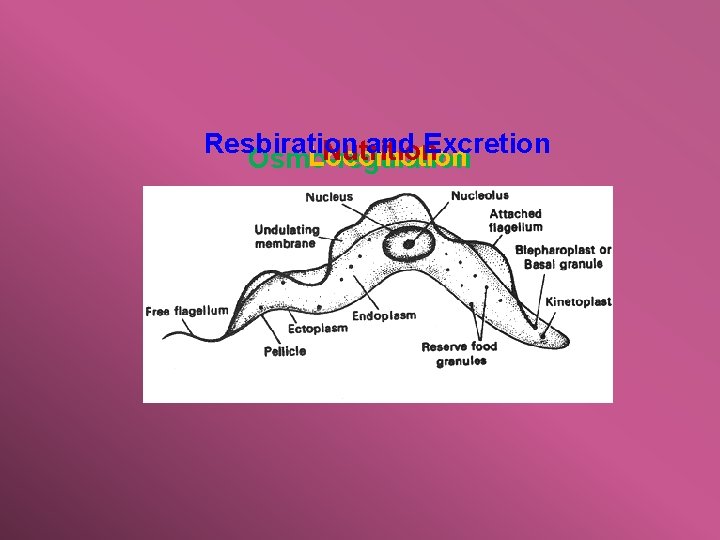
Resbiration and Excretion Nutrition Locomotion Osmo-regulation
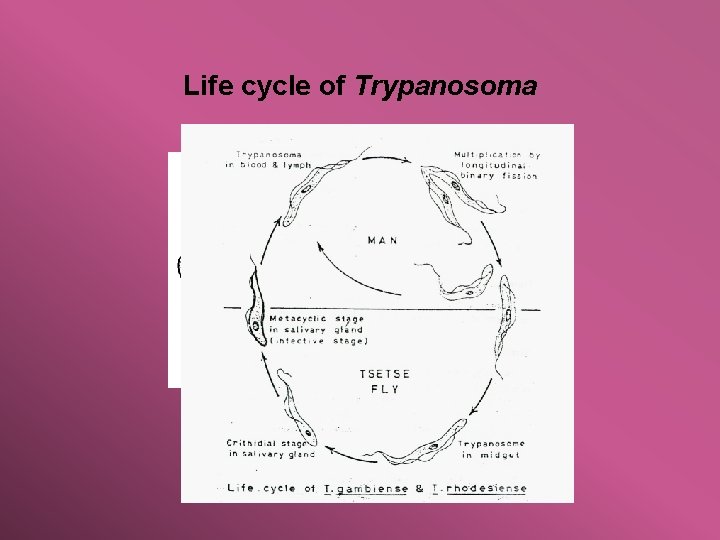
Life cycle of Trypanosoma Longitudinal binnary fission
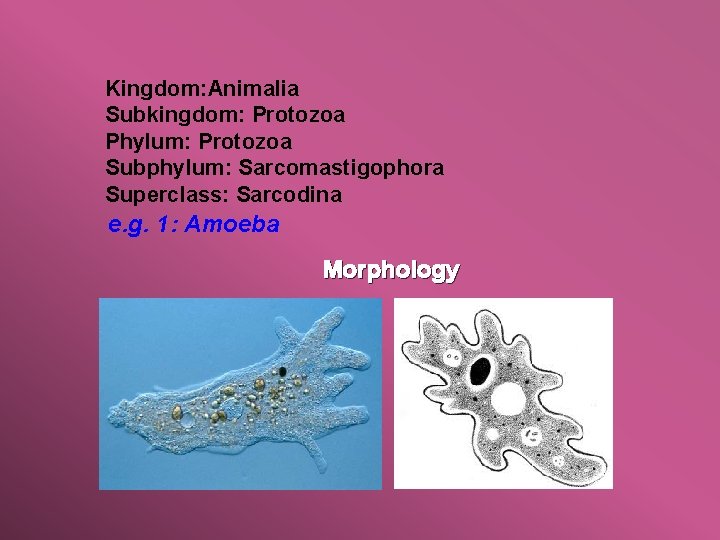
Kingdom: Animalia Subkingdom: Protozoa Phylum: Protozoa Subphylum: Sarcomastigophora Superclass: Sarcodina e. g. 1: Amoeba Morphology
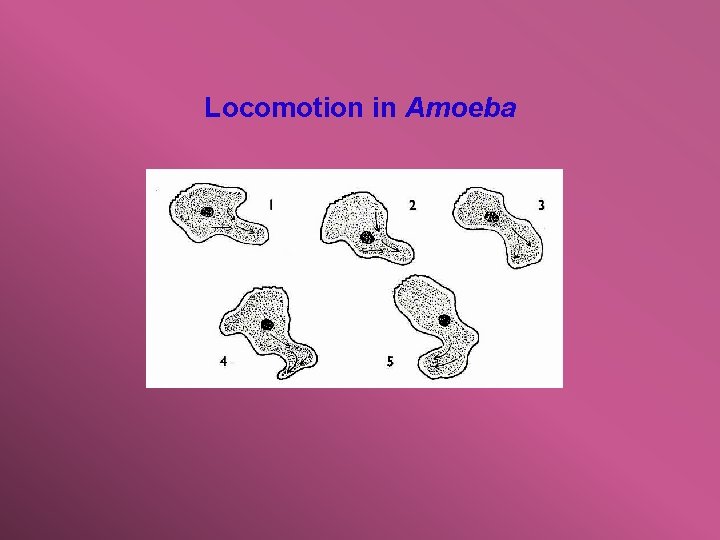
Locomotion in Amoeba
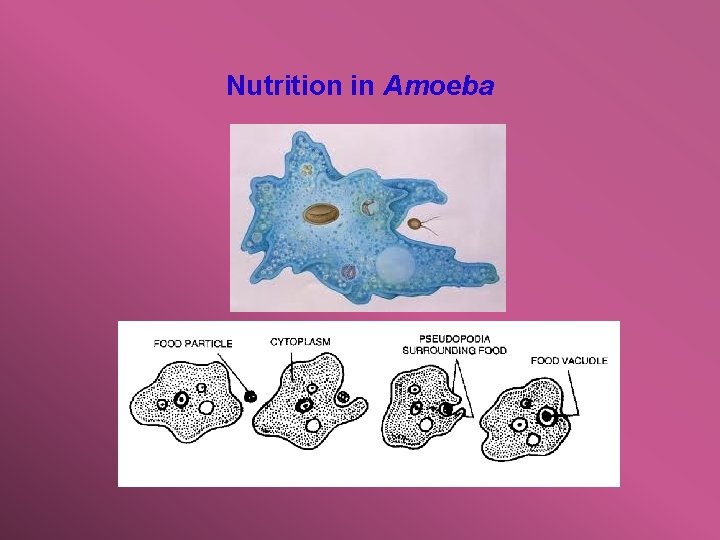
Nutrition in Amoeba
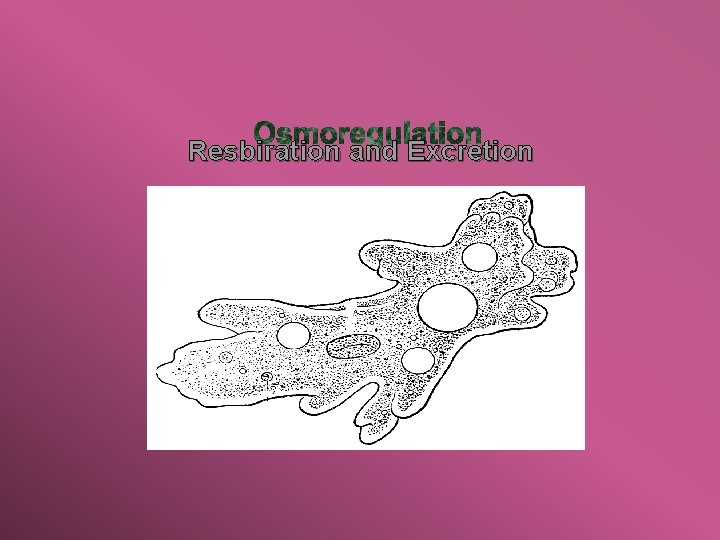
Resbiration and Excretion
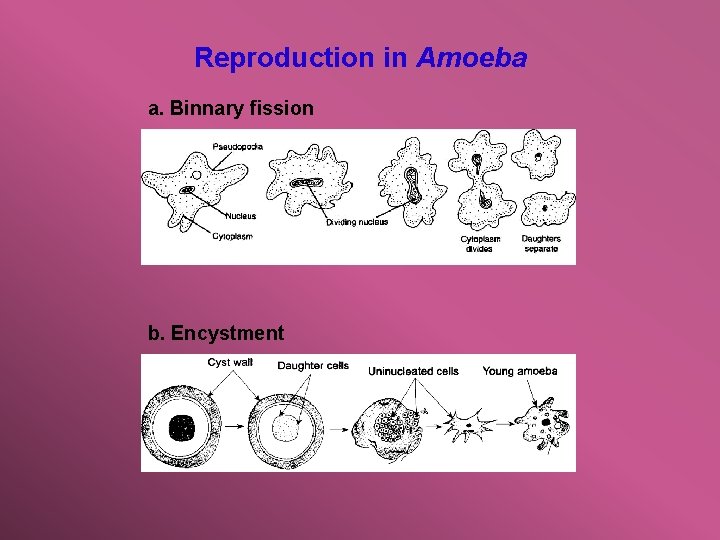
Reproduction in Amoeba a. Binnary fission b. Encystment
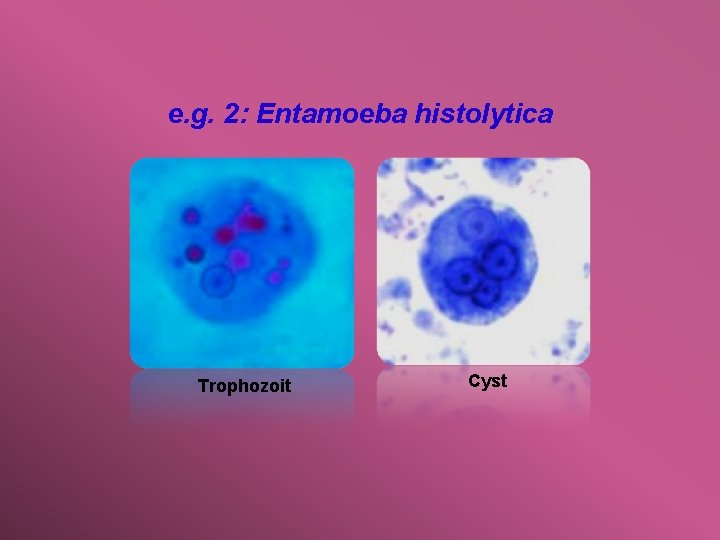
e. g. 2: Entamoeba histolytica Trophozoit Cyst
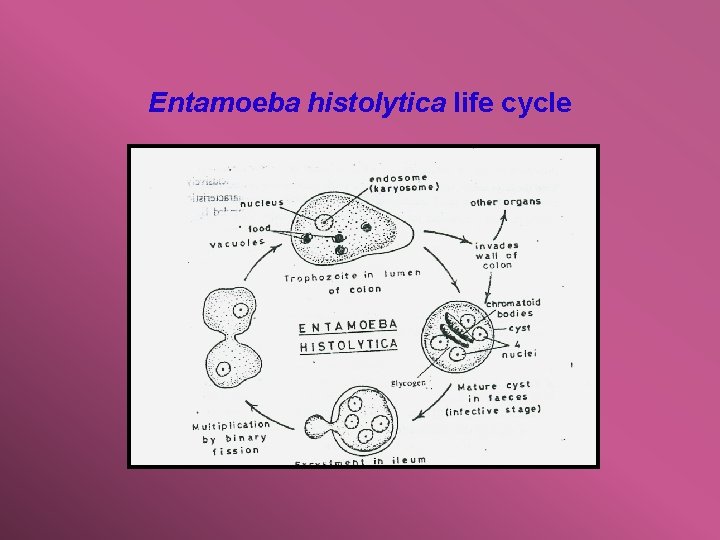
Entamoeba histolytica life cycle
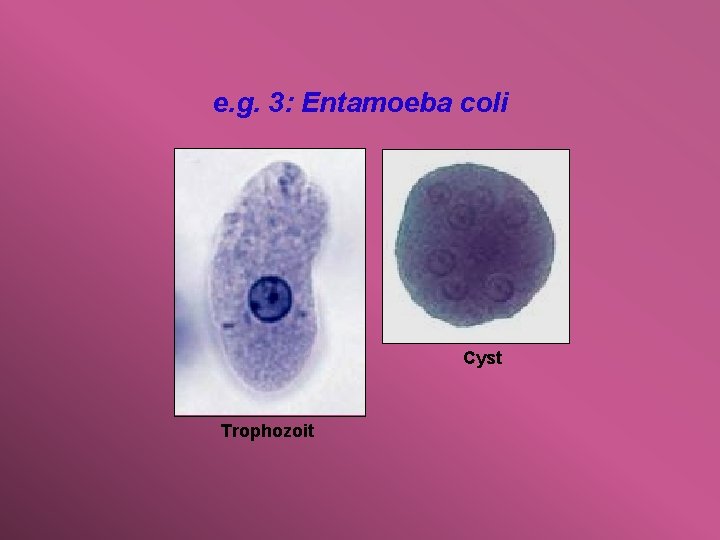
e. g. 3: Entamoeba coli Cyst Trophozoit
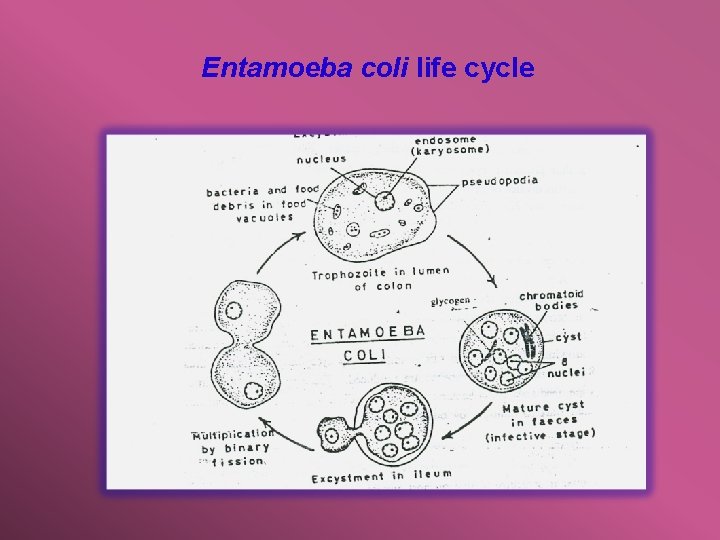
Entamoeba coli life cycle
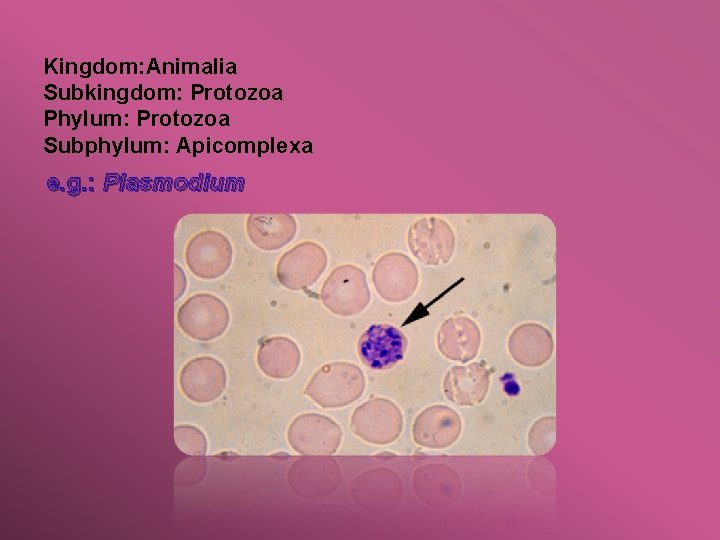
Kingdom: Animalia Subkingdom: Protozoa Phylum: Protozoa Subphylum: Apicomplexa e. g. : Plasmodium
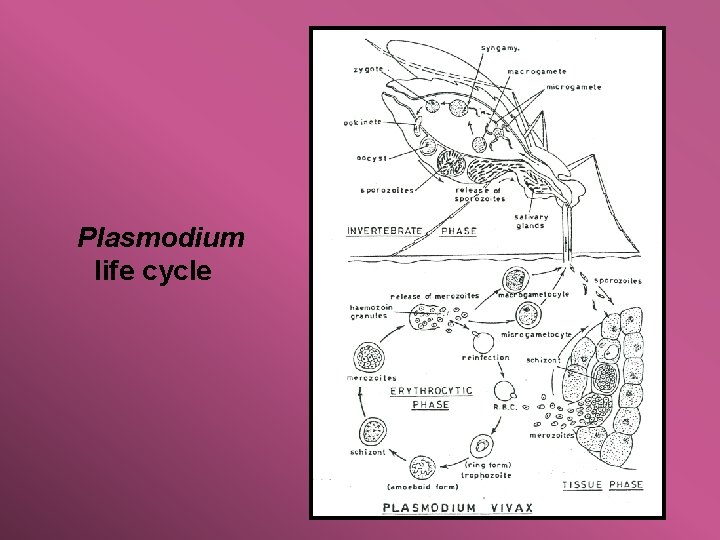
Plasmodium life cycle
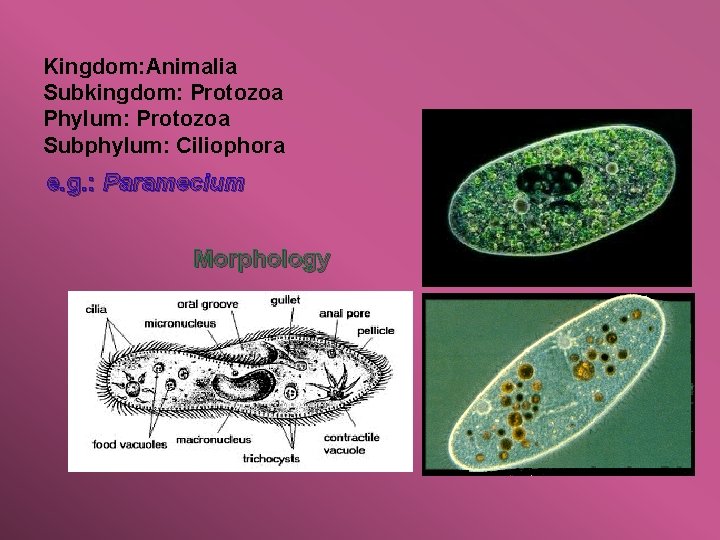
Kingdom: Animalia Subkingdom: Protozoa Phylum: Protozoa Subphylum: Ciliophora e. g. : Paramecium Morphology
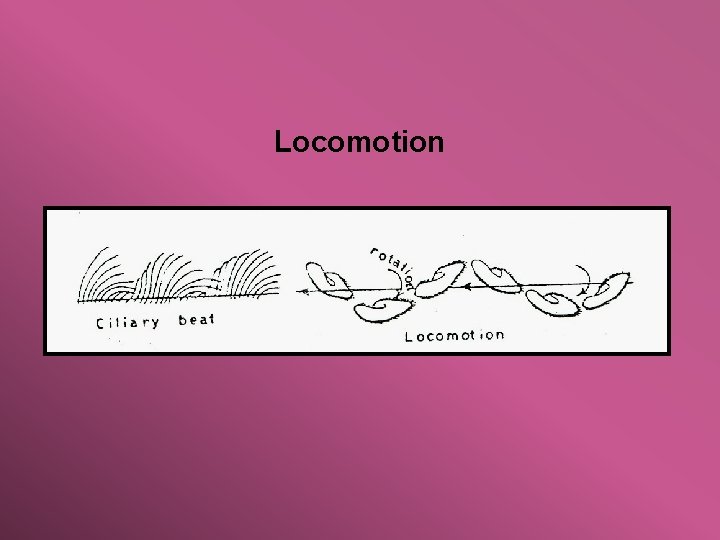
Locomotion
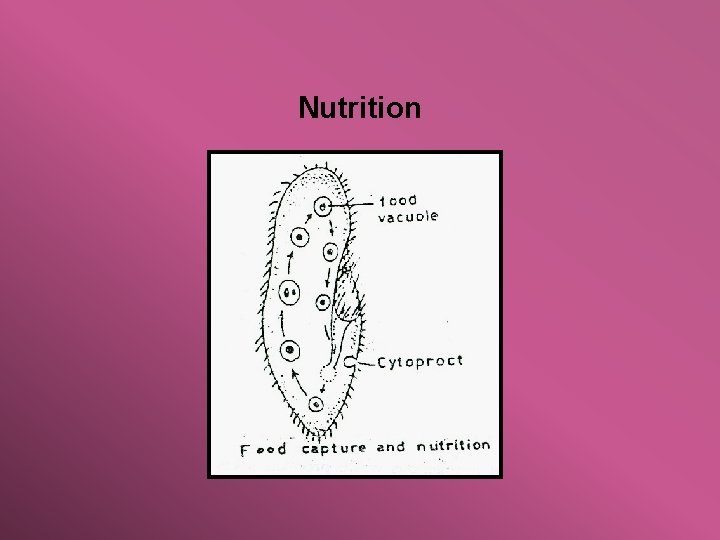
Nutrition
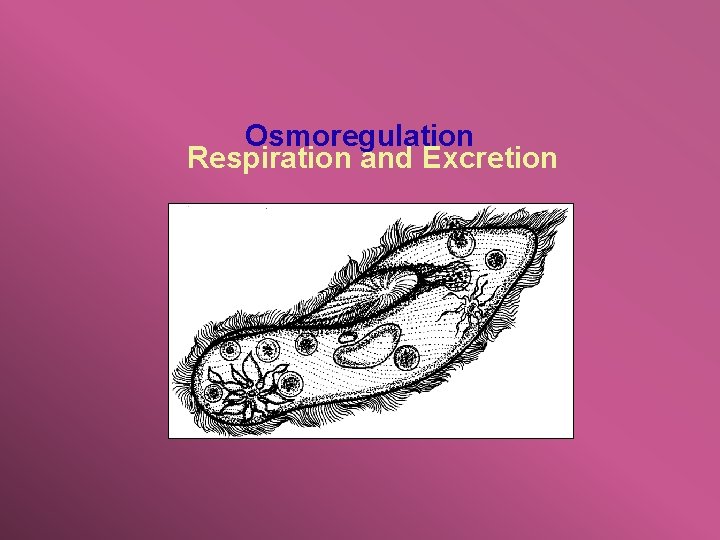
Osmoregulation Respiration and Excretion
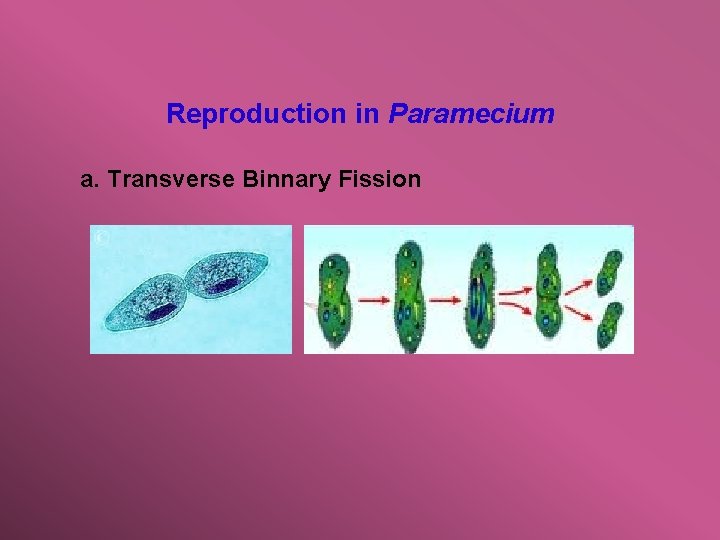
Reproduction in Paramecium a. Transverse Binnary Fission
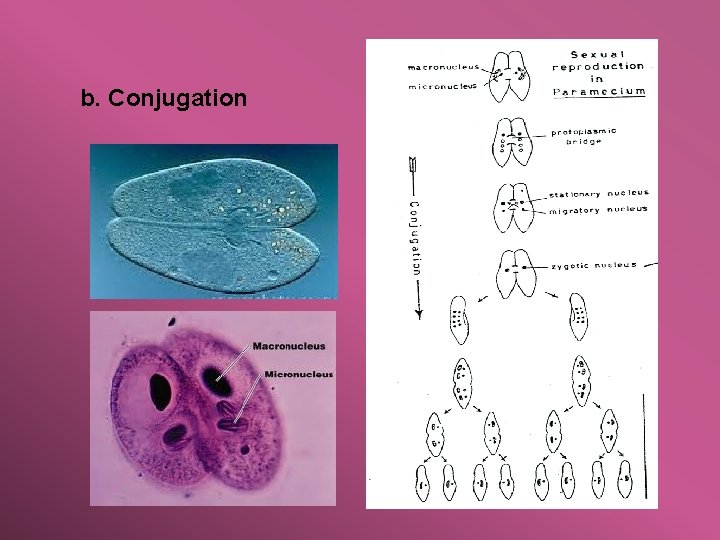
b. Conjugation

- Slides: 44