
Systematic Sampling Starter Questions Suggest how plants should

- Slides: 15
Systematic Sampling Starter Questions: • Suggest how plants should be chosen at sampling sites to avoid bias and to be representative. (2) • Explain how you would use a quadrat to estimate the number of dandelion plants in a field measuring 100 m by 150 m. (3)
What are examiner’s looking for? Suggest how plants should be chosen at each sampling site to avoid bias and to be representative. (2) large sample; how random coordinates are generated / how random places chosen;
What are examiner’s looking for? Explain how you would use a quadrat to estimate the number of dandelion plants in a field measuring 100 m by 150 m. (3) Principle of randomly placed quadrats and method of producing random quadrats; (Reject ‘throwing’) Valid method of obtaining no. dandelions in given area (mean per quadrat / total no. in many quadrats); Multiply to give estimate for total field area;
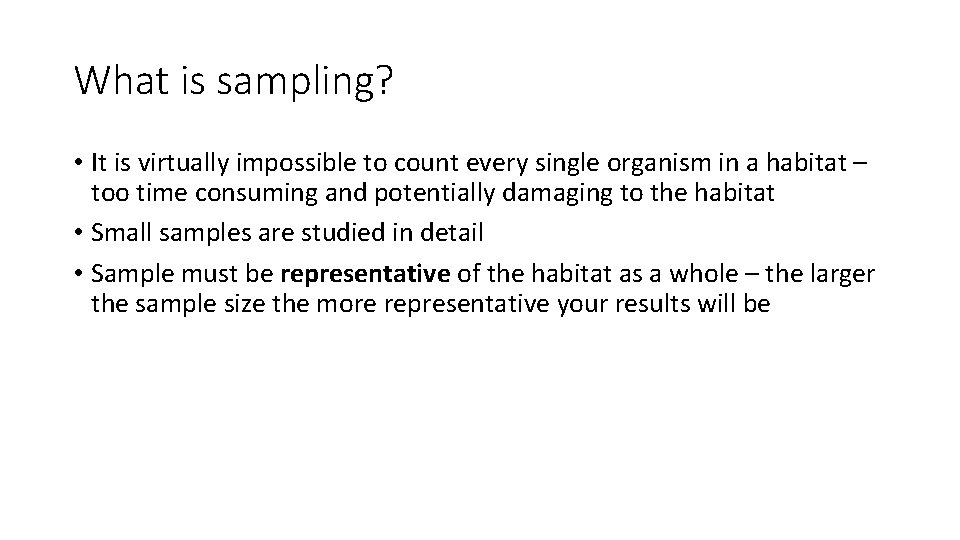
What is sampling? • It is virtually impossible to count every single organism in a habitat – too time consuming and potentially damaging to the habitat • Small samples are studied in detail • Sample must be representative of the habitat as a whole – the larger the sample size the more representative your results will be
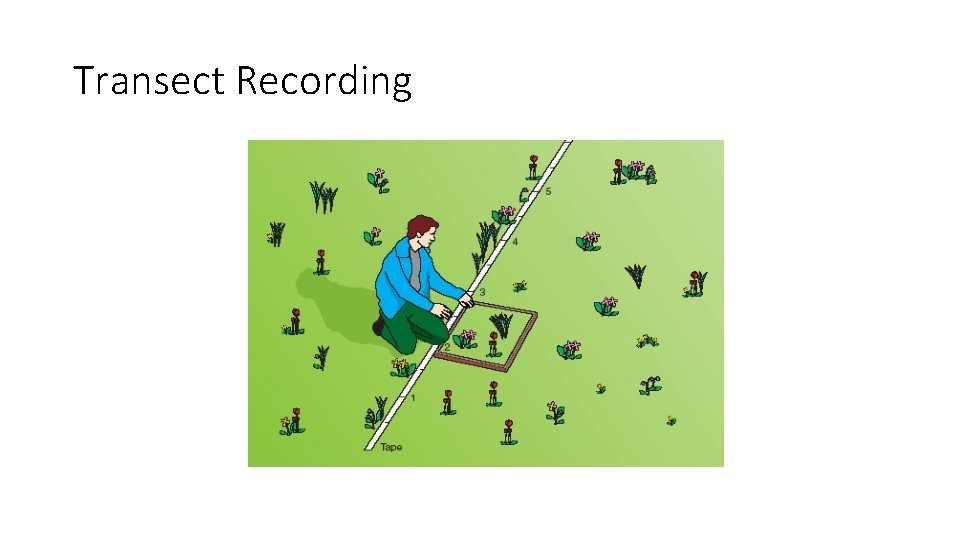
Transect Recording
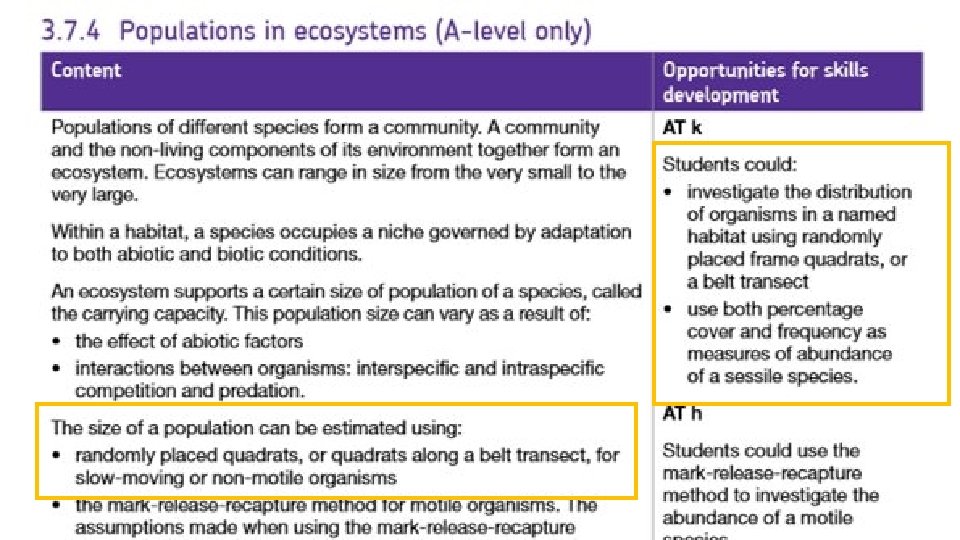
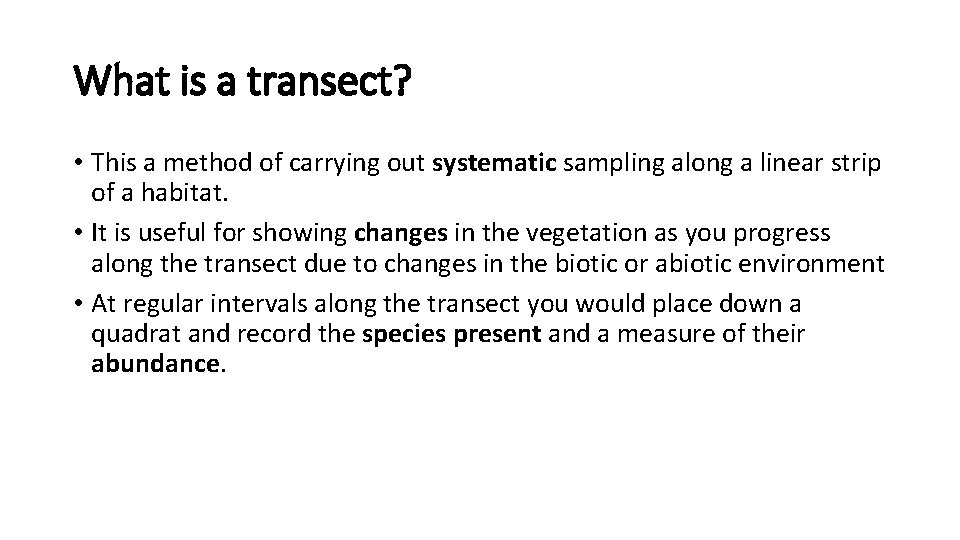
What is a transect? • This a method of carrying out systematic sampling along a linear strip of a habitat. • It is useful for showing changes in the vegetation as you progress along the transect due to changes in the biotic or abiotic environment • At regular intervals along the transect you would place down a quadrat and record the species present and a measure of their abundance.
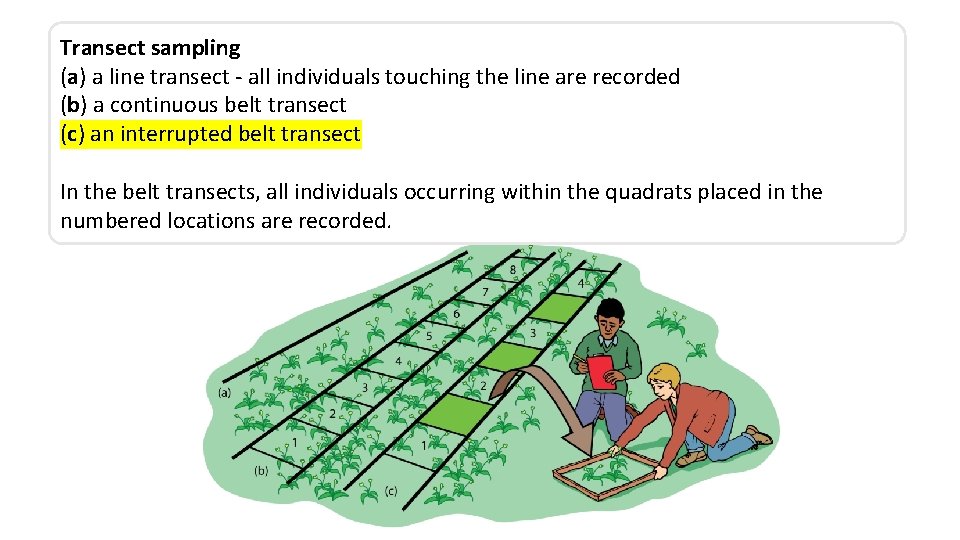
Transect sampling (a) a line transect - all individuals touching the line are recorded (b) a continuous belt transect (c) an interrupted belt transect In the belt transects, all individuals occurring within the quadrats placed in the numbered locations are recorded.
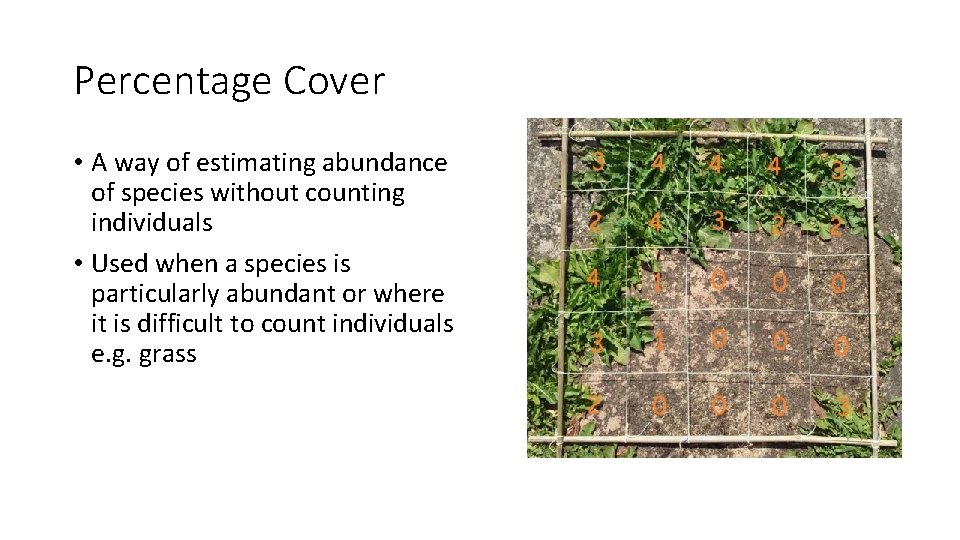
Percentage Cover • A way of estimating abundance of species without counting individuals • Used when a species is particularly abundant or where it is difficult to count individuals e. g. grass
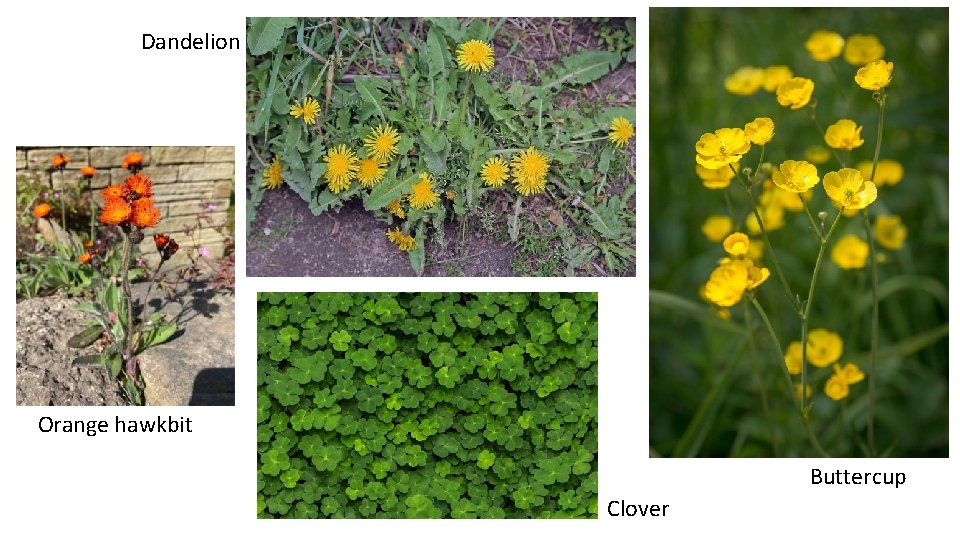
The Investigation: how does vegetation change with distance from a road? We will be looking at the changes in vegetation along a transect at right angles to the school’s back lane. How might the abiotic environment change along this transect? • Lay tape measure (or string) at right angles to the road to form a transect • Place a quadrat next to the tape measure at 0 m and then every 2 m along the transect (for about 10 m) • Record the percentage cover of: grass, dandelion, buttercup, clover, orange hawkbit bare ground
Dandelion Orange hawkbit Buttercup Clover
Describe how you could use a transect to investigate whether the distribution of dandelions changed with increased distance from the road. (4) Lay tape / rope at right angle / perpendicular to road; Take samples at regular / stated intervals; Using a quadrat; Count numbers / percentage cover of dandelions; Use several transects; 4 max
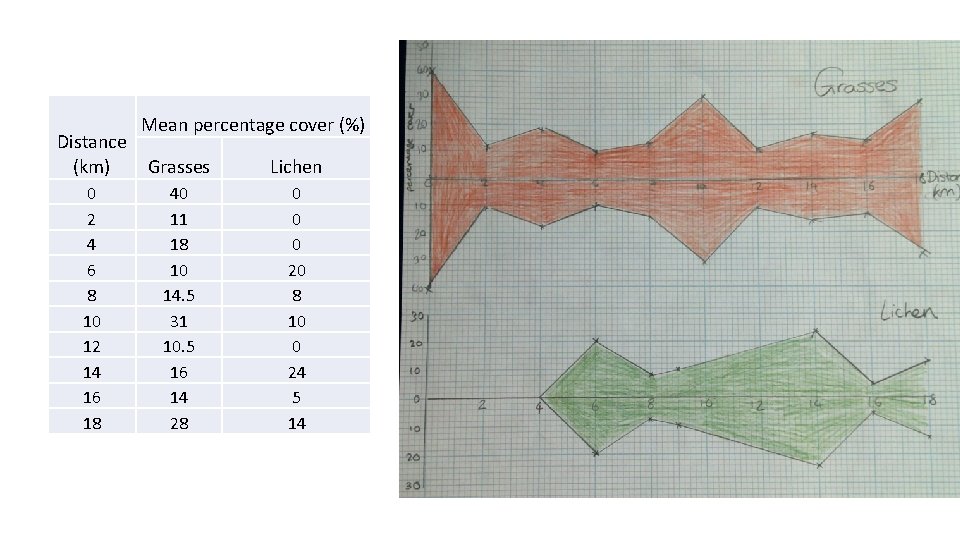
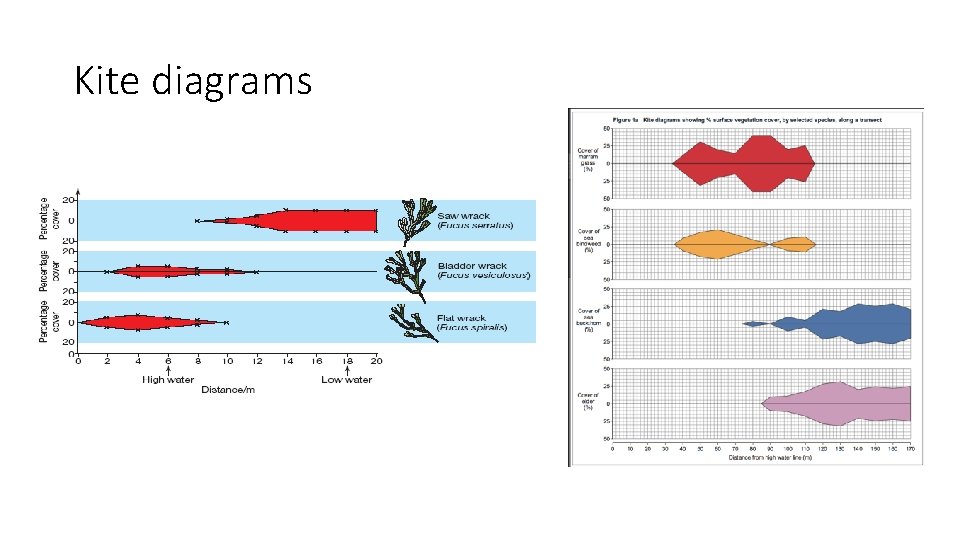
Write-up • Aim – briefly describe what you were trying to find out and why systematic sampling was used • Method – step by step method describing what you did • Results – stick in your results table • Analysis – create a kite diagram to show the distribution of each species changes with distance along the transect, describe your results and suggest possible reasons for any trends you identify • Evaluation – how could this investigation be improved?
Distance (km) 0 2 4 6 8 10 12 14 16 18 Mean percentage cover (%) Grasses Lichen 40 11 18 10 14. 5 31 10. 5 16 14 28 0 0 0 20 8 10 0 24 5 14
Kite diagrams