
Systematic electronphonon interaction strength measurements in hightemperature superconductors
- Slides: 21
Systematic electron-phonon interaction strength measurements in hightemperature superconductors with femtosecond spectroscopy Christoph Gadermaier Department of Complex Matter Jožef Štefan Insitute Ljubljana, Slovenia
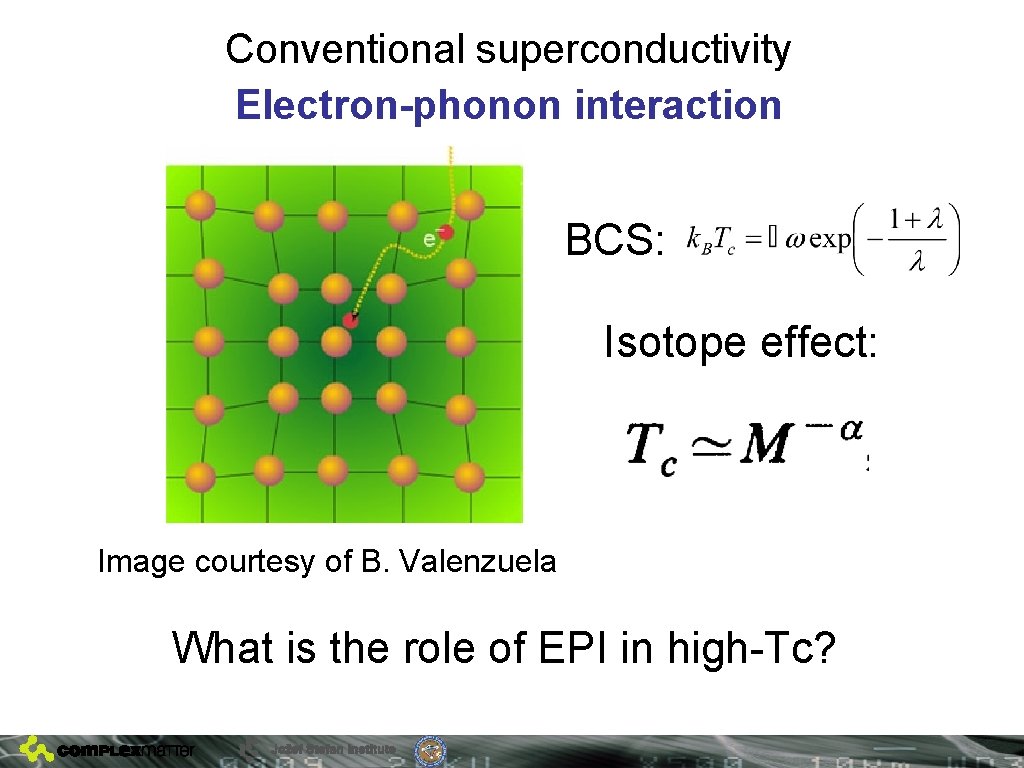
Conventional superconductivity Electron-phonon interaction BCS: Isotope effect: Image courtesy of B. Valenzuela What is the role of EPI in high-Tc?
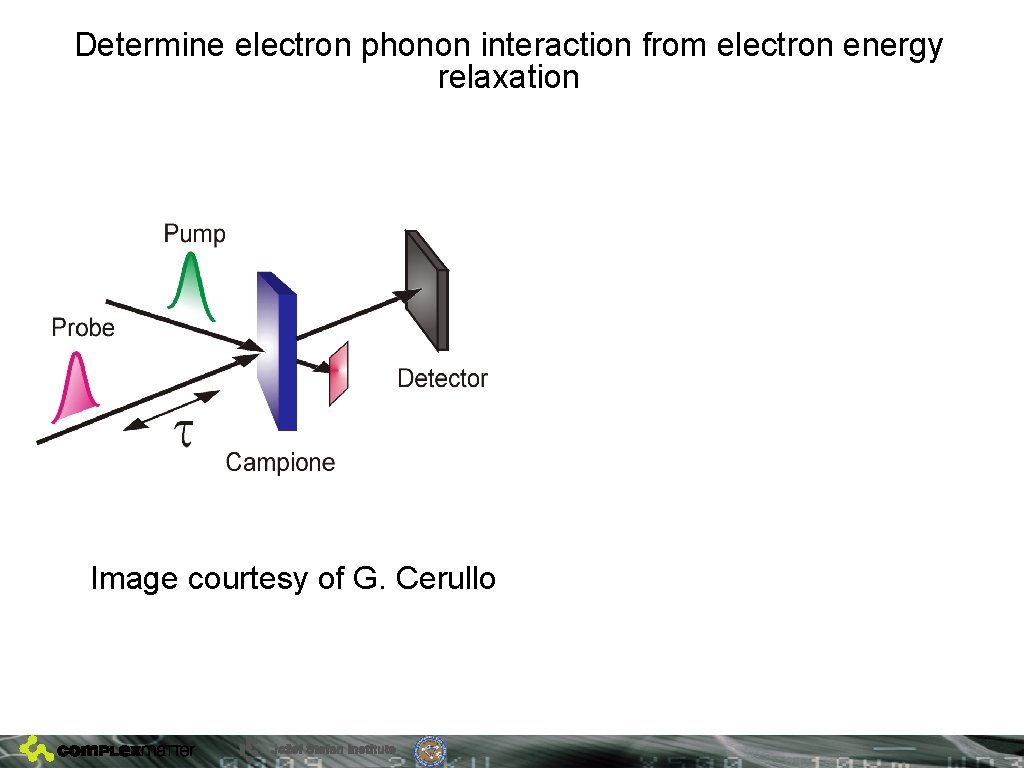
Determine electron phonon interaction from electron energy relaxation Image courtesy of G. Cerullo
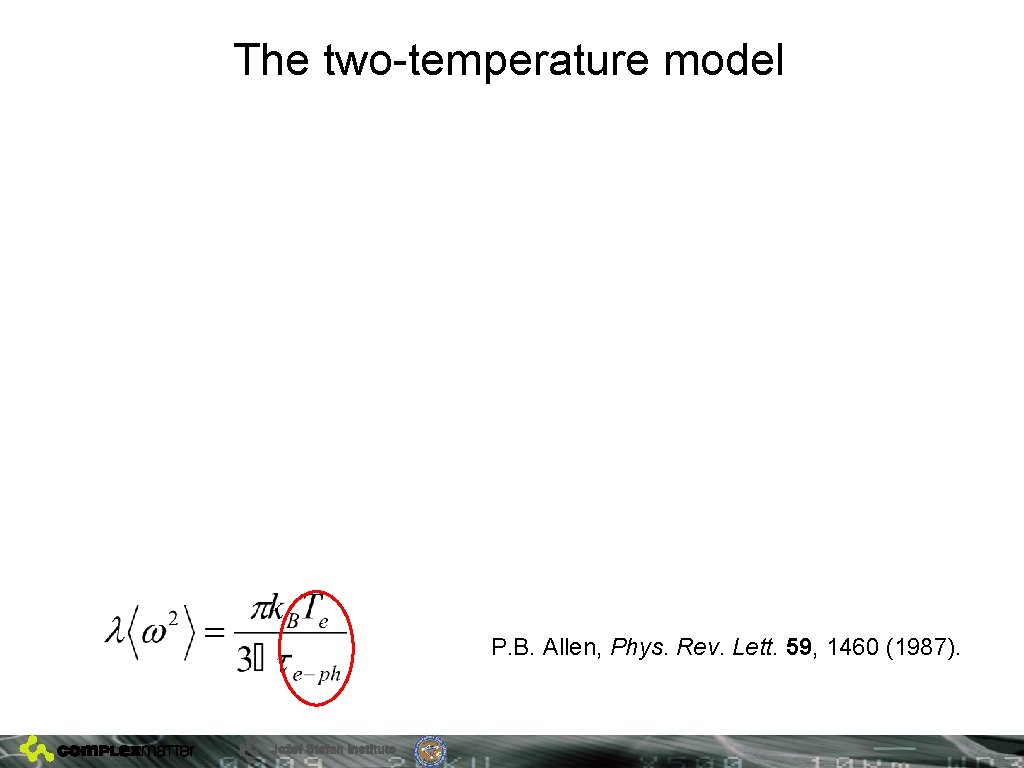
The two-temperature model P. B. Allen, Phys. Rev. Lett. 59, 1460 (1987).
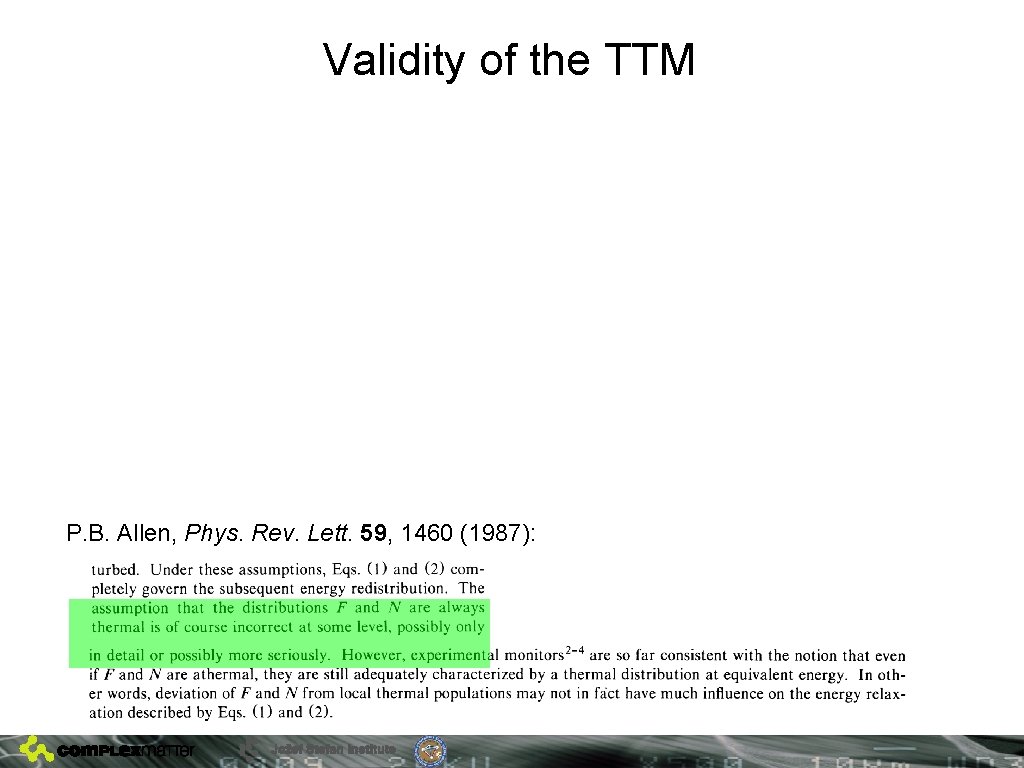
Validity of the TTM P. B. Allen, Phys. Rev. Lett. 59, 1460 (1987):
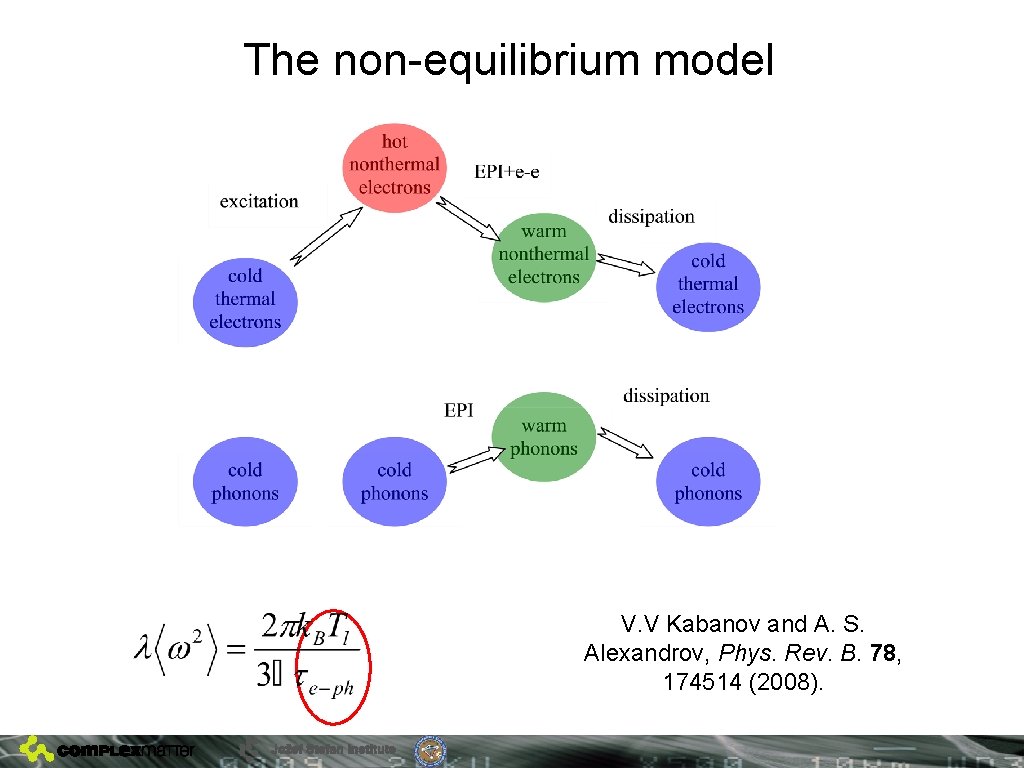
The non-equilibrium model V. V Kabanov and A. S. Alexandrov, Phys. Rev. B. 78, 174514 (2008).
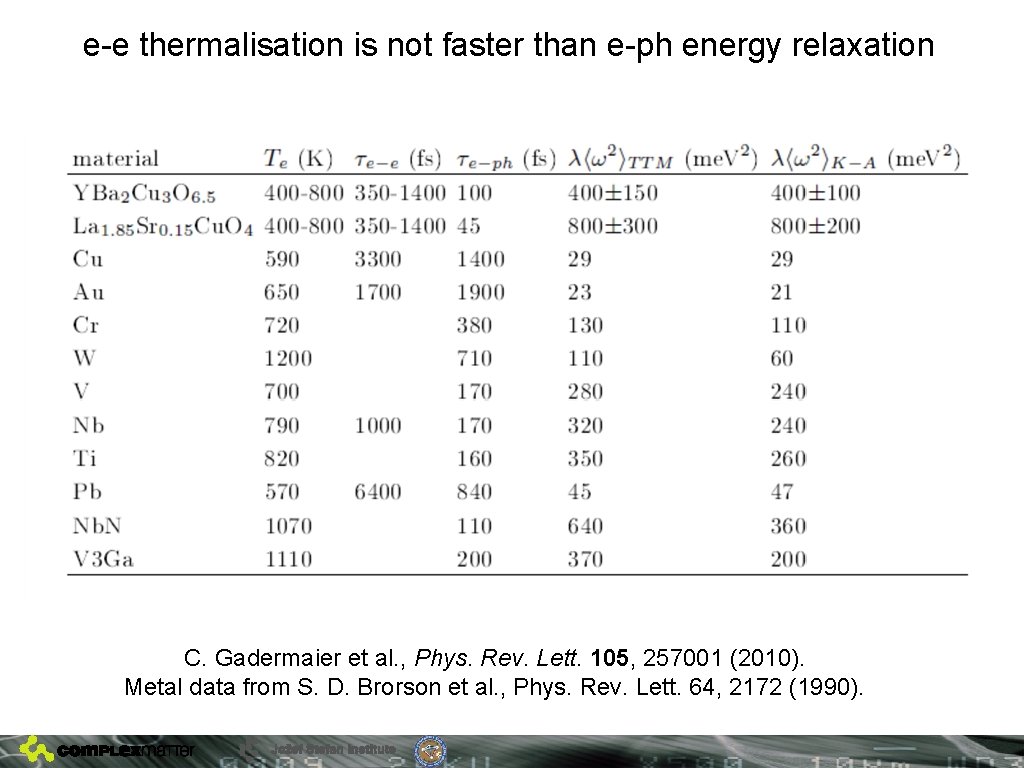
e-e thermalisation is not faster than e-ph energy relaxation C. Gadermaier et al. , Phys. Rev. Lett. 105, 257001 (2010). Metal data from S. D. Brorson et al. , Phys. Rev. Lett. 64, 2172 (1990).
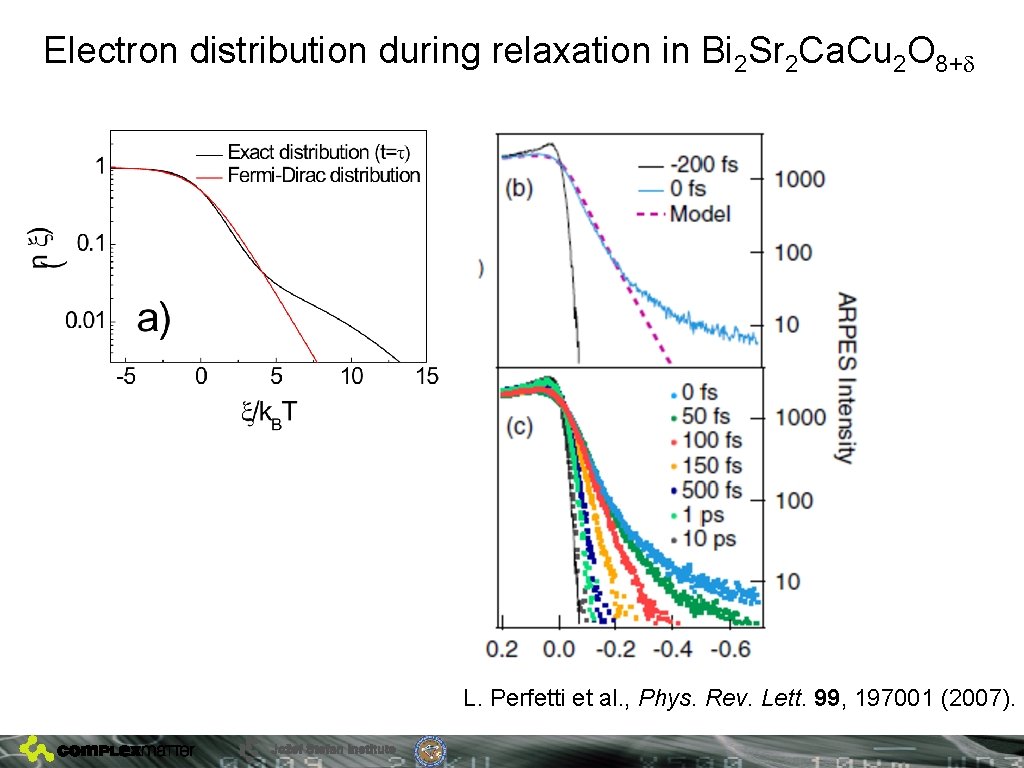
Electron distribution during relaxation in Bi 2 Sr 2 Ca. Cu 2 O 8+d L. Perfetti et al. , Phys. Rev. Lett. 99, 197001 (2007).
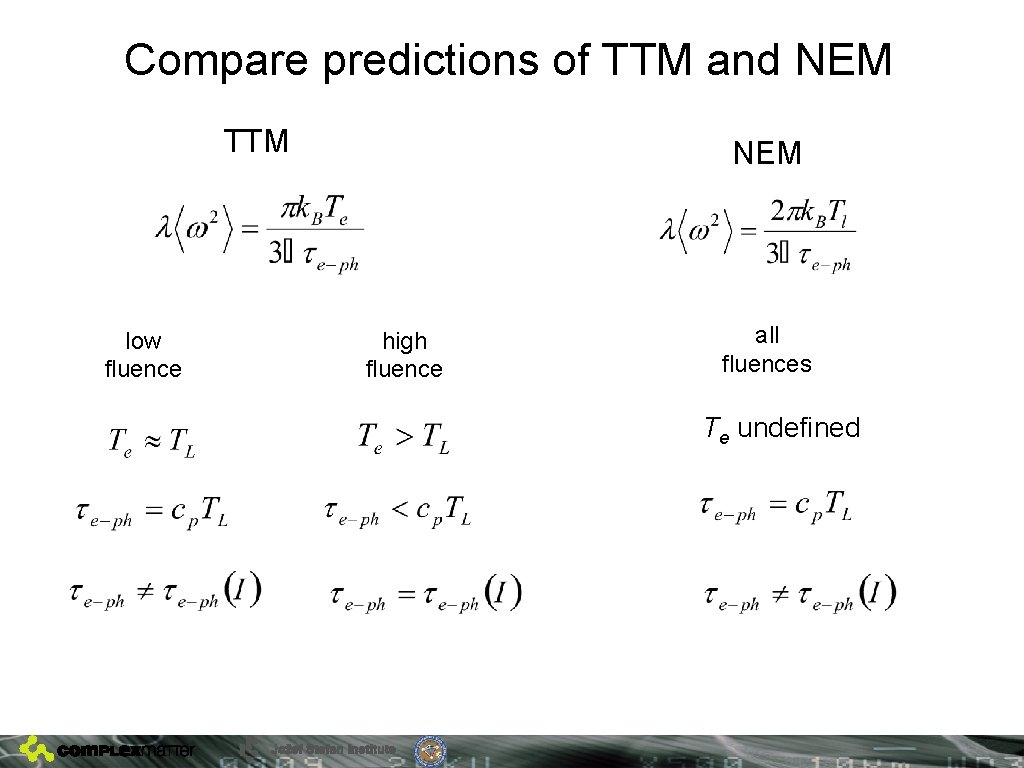
Compare predictions of TTM and NEM TTM low fluence NEM high fluence all fluences Te undefined
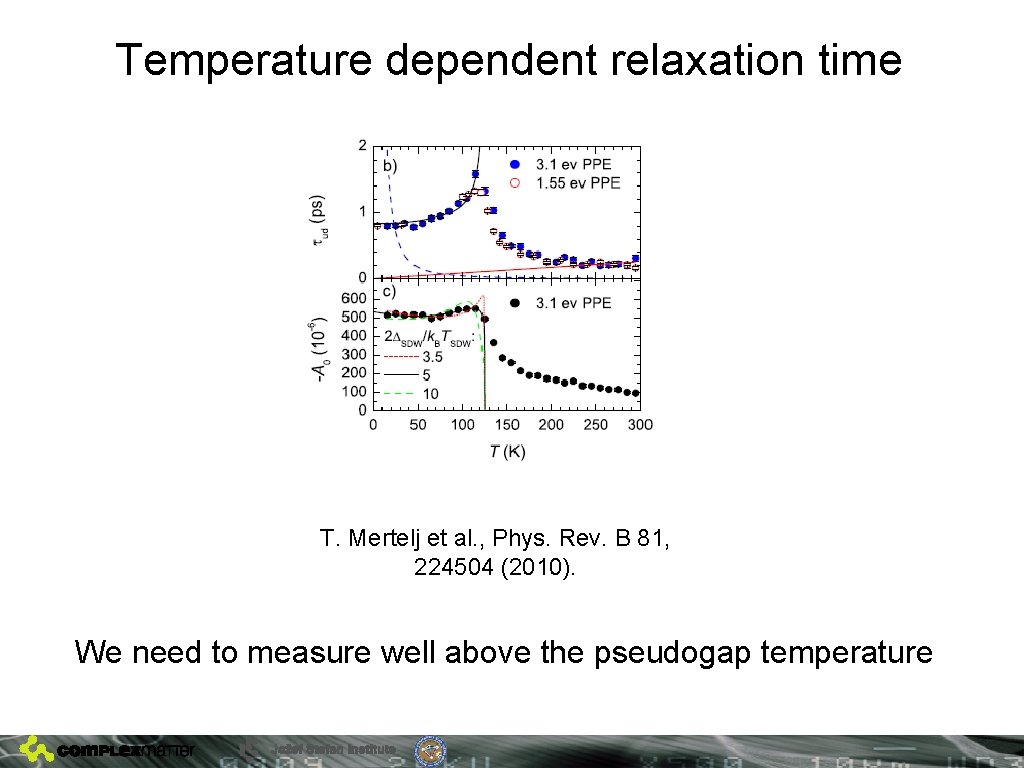
Temperature dependent relaxation time T. Mertelj et al. , Phys. Rev. B 81, 224504 (2010). We need to measure well above the pseudogap temperature
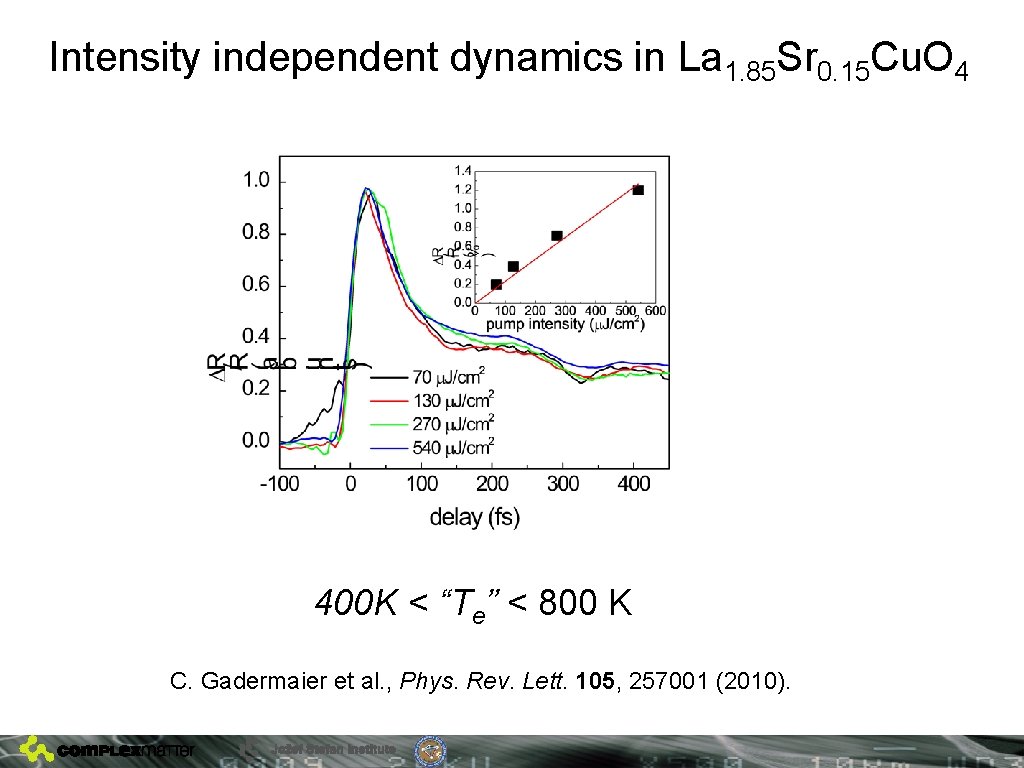
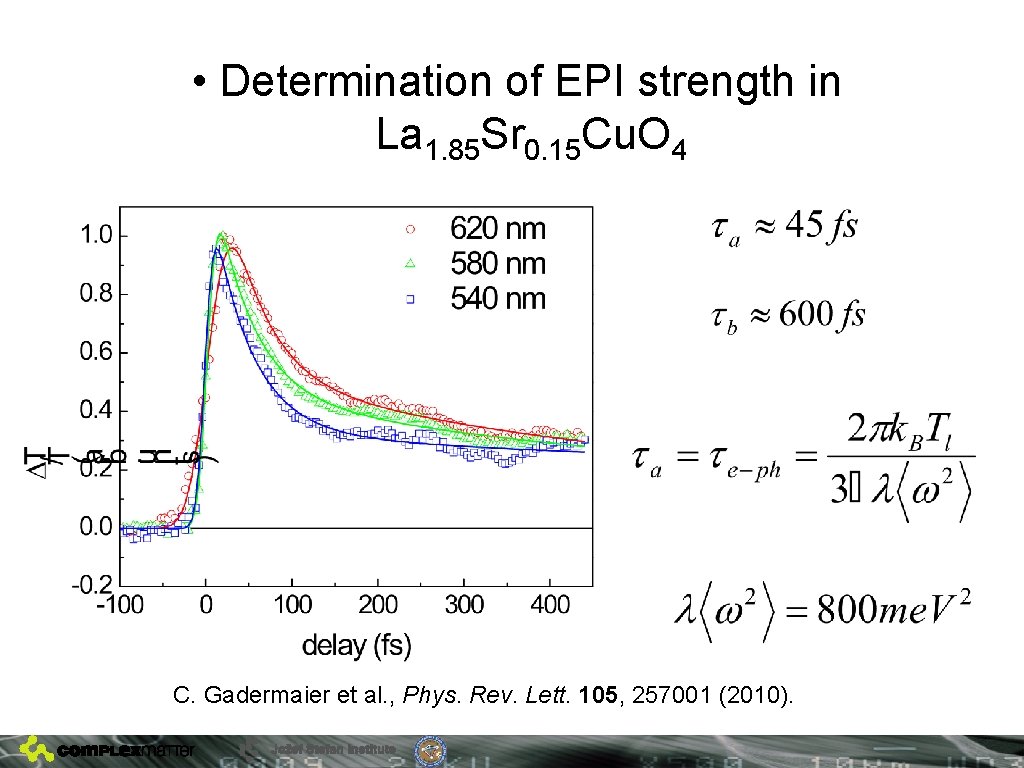
Intensity independent dynamics in La 1. 85 Sr 0. 15 Cu. O 4 400 K < “Te” < 800 K C. Gadermaier et al. , Phys. Rev. Lett. 105, 257001 (2010).
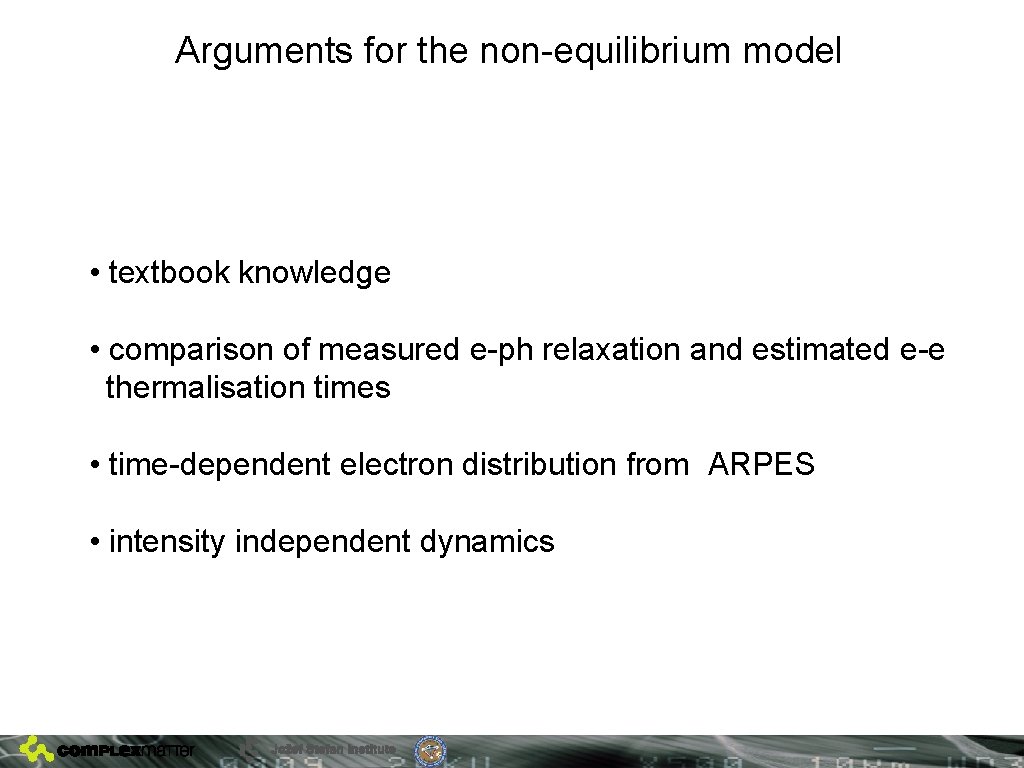
Arguments for the non-equilibrium model • textbook knowledge • comparison of measured e-ph relaxation and estimated e-e thermalisation times • time-dependent electron distribution from ARPES • intensity independent dynamics
• Determination of EPI strength in La 1. 85 Sr 0. 15 Cu. O 4 C. Gadermaier et al. , Phys. Rev. Lett. 105, 257001 (2010).
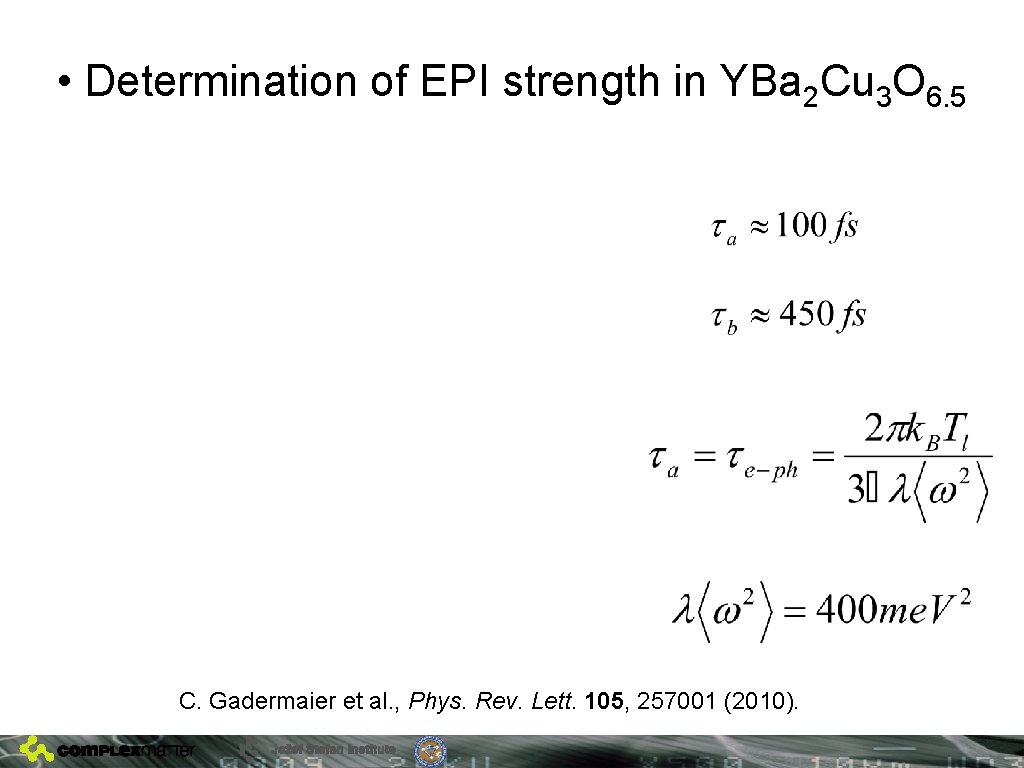
• Determination of EPI strength in YBa 2 Cu 3 O 6. 5 C. Gadermaier et al. , Phys. Rev. Lett. 105, 257001 (2010).
The role of e-ph interaction in high-Tc Unpublished material removed. Please contact christoph. gadermaier@ijs. si
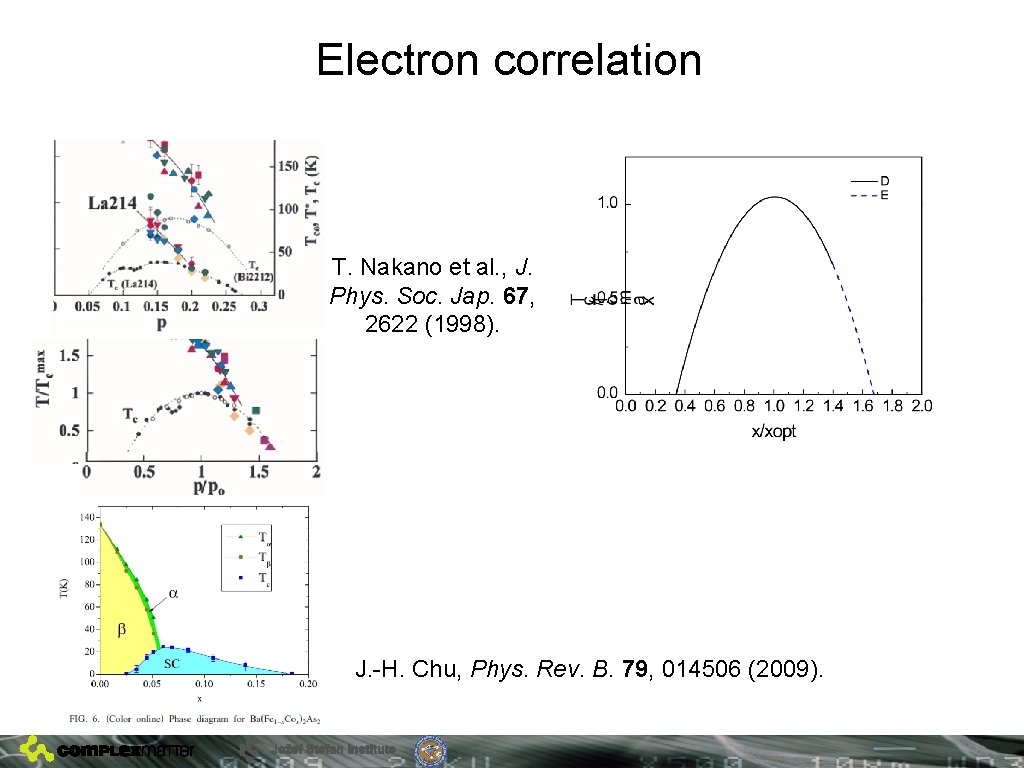
Electron correlation T. Nakano et al. , J. Phys. Soc. Jap. 67, 2622 (1998). J. -H. Chu, Phys. Rev. B. 79, 014506 (2009).
Collaborative electron-electron and electronphonon Unpublished material removed. Please contact christoph. gadermaier@ijs. si
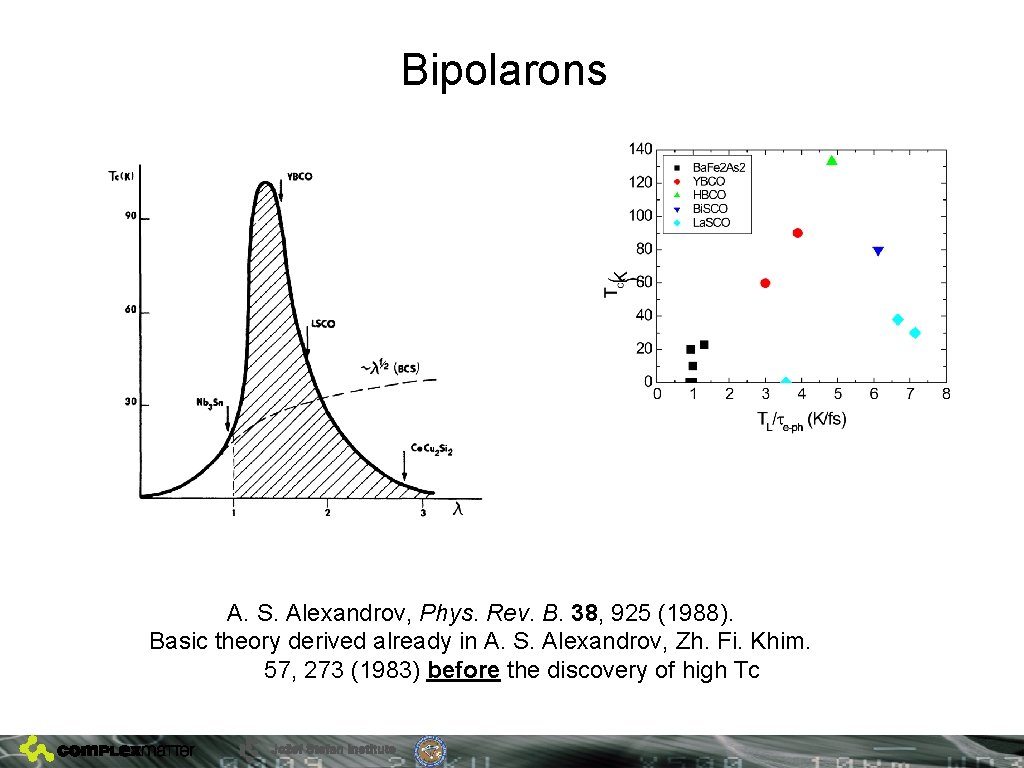
Bipolarons A. S. Alexandrov, Phys. Rev. B. 38, 925 (1988). Basic theory derived already in A. S. Alexandrov, Zh. Fi. Khim. 57, 273 (1983) before the discovery of high Tc
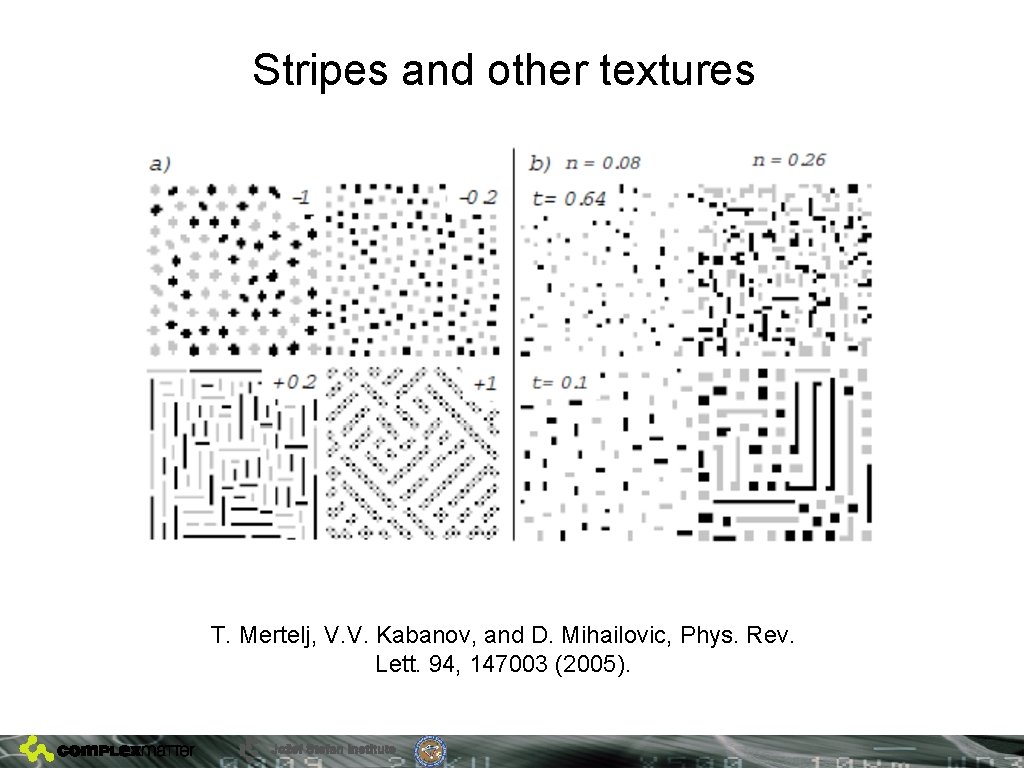
Stripes and other textures T. Mertelj, V. V. Kabanov, and D. Mihailovic, Phys. Rev. Lett. 94, 147003 (2005).
Conclusion • electron-phonon interaction is determined from electron energy relaxation • electron energy relaxation is described by the nonequilibrium model, qualitatively even for non-Fermi liquids → TL/te-ph is a good measure of electron-phonon interaction • almost universal dependence of Tc of optimally doped compounds on TL/te-ph, sharp maximum at 5 K/fs → high Tc is a collaborative effect of electron-phonon interaction and electron correlation
Acknowledgements • Primož Kušar, Viktor Kabanov, Tomaž Mertelj, Ljupka Stojchevska, Yasunori Toda, Dragan Mihailović • Sasha Alexandrov • Cristian Manzoni, Daniele Brida, Dario Polli, Giulio Cerullo • grazas pola súa atención