
Systematic Approach to Training and Adult Learning Uttam





- Slides: 41
Systematic Approach to Training and Adult Learning Uttam Acharya 9841252849
Objectives • At the end of the session participants will be able to: • Define systematic approach to training • Explain training cycle • Explain adult learning principles • Describe learning styles • Apply adult learning principles in training
Preview of Session • Training concept and Philosophy • Training Cycle • Training methods • Training evaluation • Adult learning • Learning style • Motivation to learn
Discussions Perception of “training” and “learning” ?
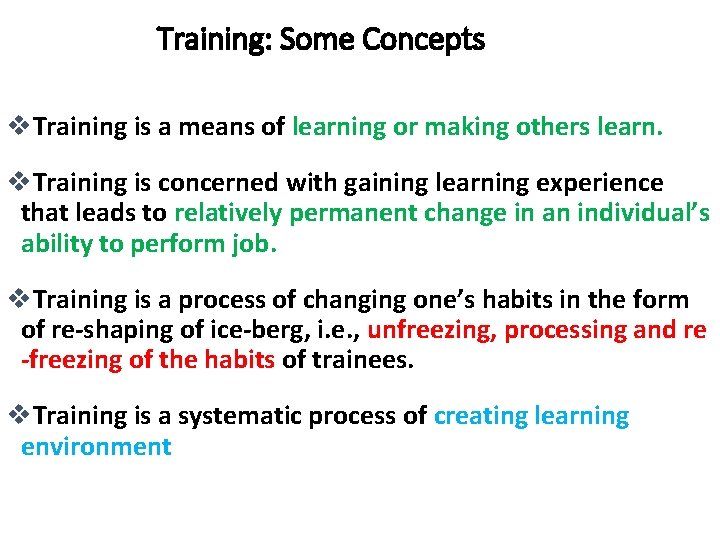
Training: Some Concepts v. Training is a means of learning or making others learn. v. Training is concerned with gaining learning experience that leads to relatively permanent change in an individual’s ability to perform job. v. Training is a process of changing one’s habits in the form of re-shaping of ice-berg, i. e. , unfreezing, processing and re -freezing of the habits of trainees. v. Training is a systematic process of creating learning environment
What training can do? • ? ? ? 7
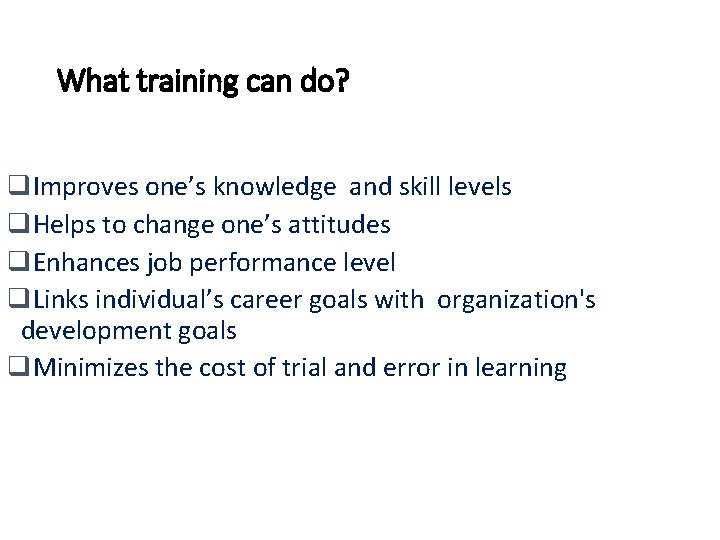
What training can do? q. Improves one’s knowledge and skill levels q. Helps to change one’s attitudes q. Enhances job performance level q. Links individual’s career goals with organization's development goals q. Minimizes the cost of trial and error in learning
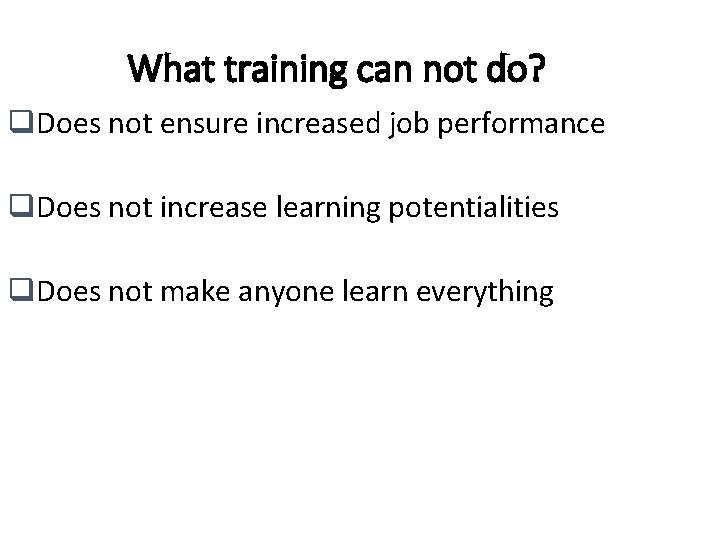
What training can not do? q. Does not ensure increased job performance q. Does not increase learning potentialities q. Does not make anyone learn everything
Training cycle? 10
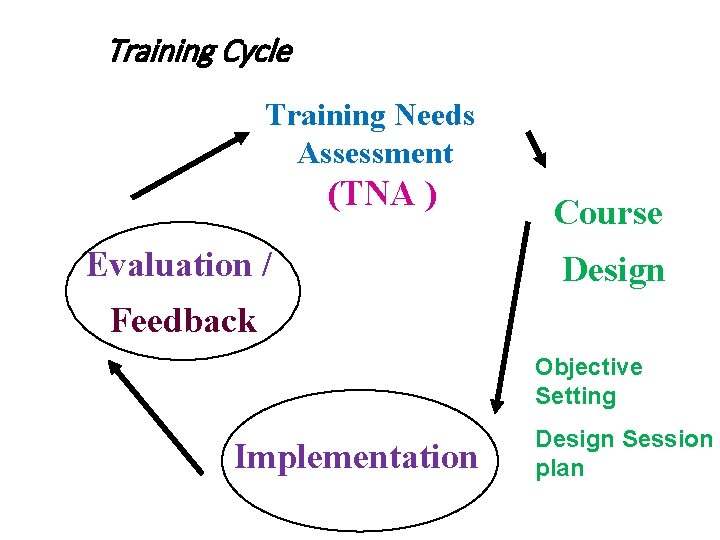
Training Cycle Training Needs Assessment (TNA ) Evaluation / Course Design Feedback Objective Setting Implementation Design Session plan
Training phases and actors ? Exercise • Pre training phase and actors ? • During training and actors ? • Post training phase and actors?
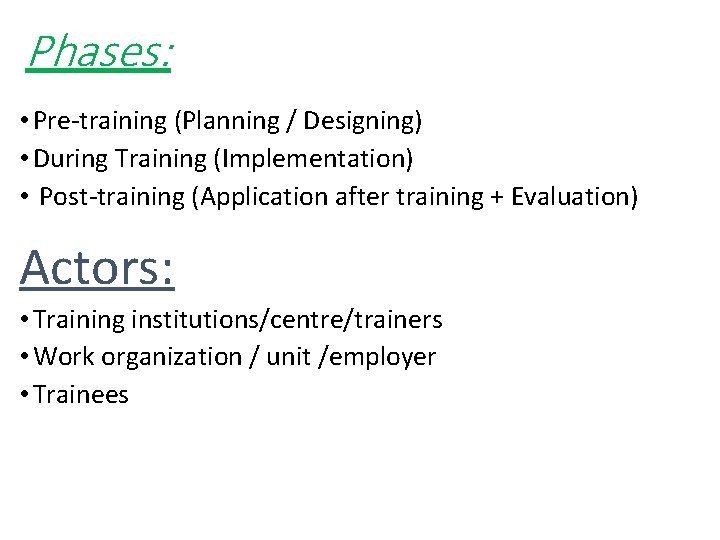
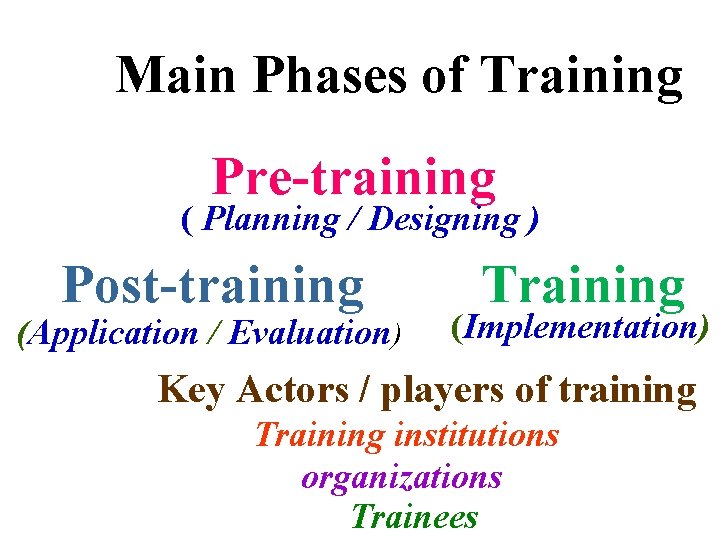
Phases: • Pre-training (Planning / Designing) • During Training (Implementation) • Post-training (Application after training + Evaluation) Actors: • Training institutions/centre/trainers • Work organization / unit /employer • Trainees
Assessment of Training Needs: (TNA) What is Training Need? The training need a gap between the competency required by the job and the competency currently possessed by the job holder.
15
Choice of Training Methods e. g. ring finger Each method is uniquely useful in a particular situation. The usefulness depends on: ·Training objectives ·Content (course) ·Level of trainees ·Availability of physical facilities and equipment ·Time availability ·Competency of trainer ·Temporal needs of the situation
How do we evaluate training? NASC 2016 17
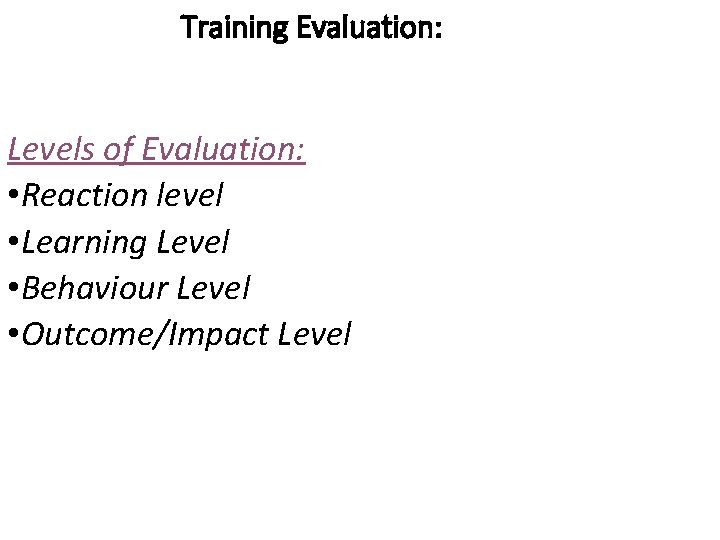
Training Evaluation: Levels of Evaluation: • Reaction level • Learning Level • Behaviour Level • Outcome/Impact Level
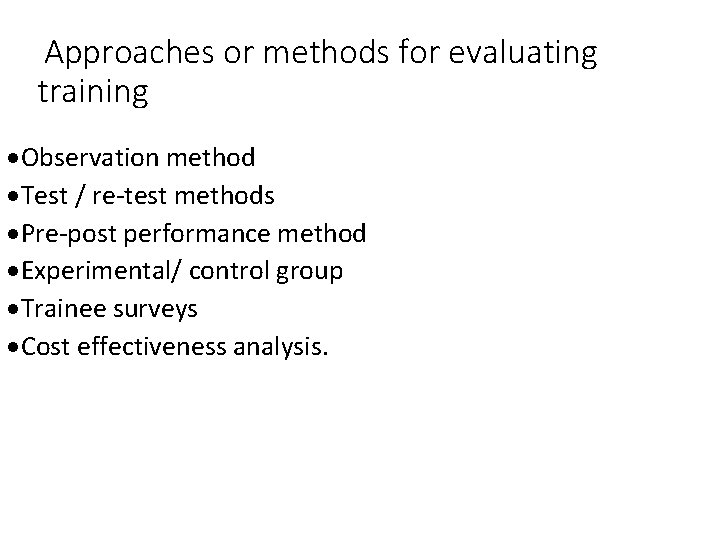
Approaches or methods for evaluating training ·Observation method ·Test / re-test methods ·Pre-post performance method ·Experimental/ control group ·Trainee surveys ·Cost effectiveness analysis.
Main Phases of Training Pre-training ( Planning / Designing ) Post-training (Application / Evaluation) Training (Implementation) Key Actors / players of training Training institutions organizations Trainees
Adult learning? • What is learning ? • How we learn? 21
Learning • There are many different theories of how people learn. • How trainees learn and also how you teach in educational programs. • It is interesting to think about our own particular way of learning and to recognize that everyone does not learn the way we do.
Learning!!!! • Burns conceives of learning as a relatively permanent change in behavior with behavior including both • Observable activity and • Internal processes such as thinking, attitudes and emotions. '
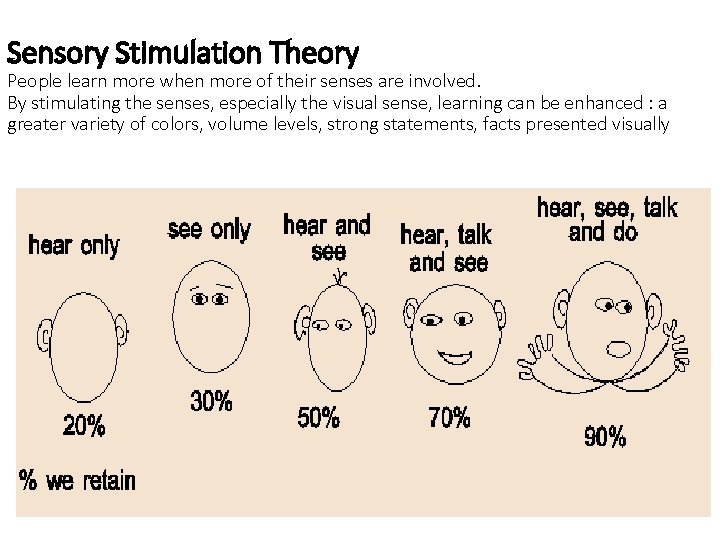
Sensory Stimulation Theory People learn more when more of their senses are involved. By stimulating the senses, especially the visual sense, learning can be enhanced : a greater variety of colors, volume levels, strong statements, facts presented visually 24
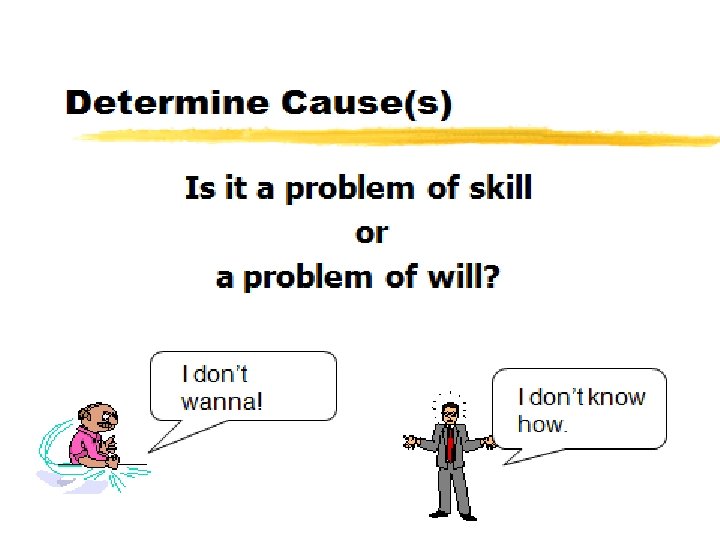
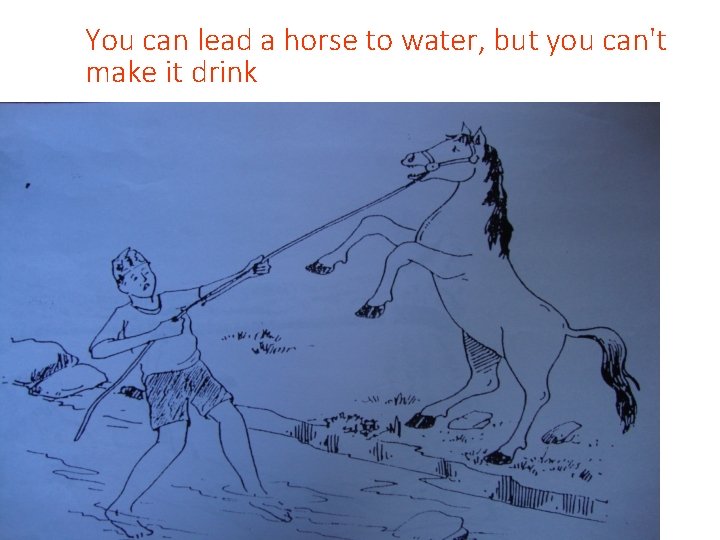
You can lead a horse to water, but you can't make it drink
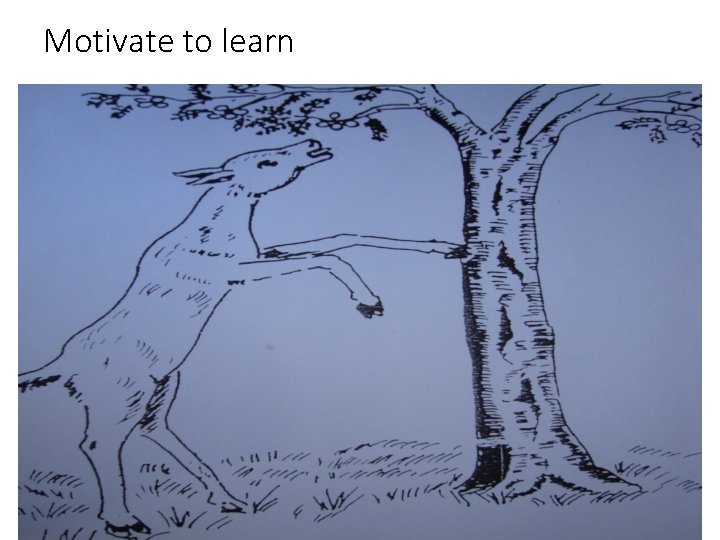
Motivate to learn
Characteristics of Adult? ? ? • Discussion
Adult Learning • Adult learners bring a great deal of experience to the learning environment. Trainers can use this as a resource. • Adults expect to have a high degree of influence on what they are to be trained for, and how they are to be trained. • The active participation of learners should be encouraged in designing and implementing training programs.
Adult learning • Adult learners expect to have a high degree of influence on how learning will be evaluated. • Adults expect their responses to be acted upon when asked for feedback on the progress of the program. • By adulthood people are self-directing. This is the concept that lies at the heart of andragogy.
An adult's emotional response can affect learning ( formal and informal setting) • Some adults can approach formal educational settings with anxiety and feelings of high or low selfefficacy. • for example: given two adults in a classroom where an exercise is about to begin, one individual may interpret the exercise in such a way that leads to a feeling of 'excitement', while the other person interprets the exercise in such a way that leads to the feeling of 'embarrassment'.
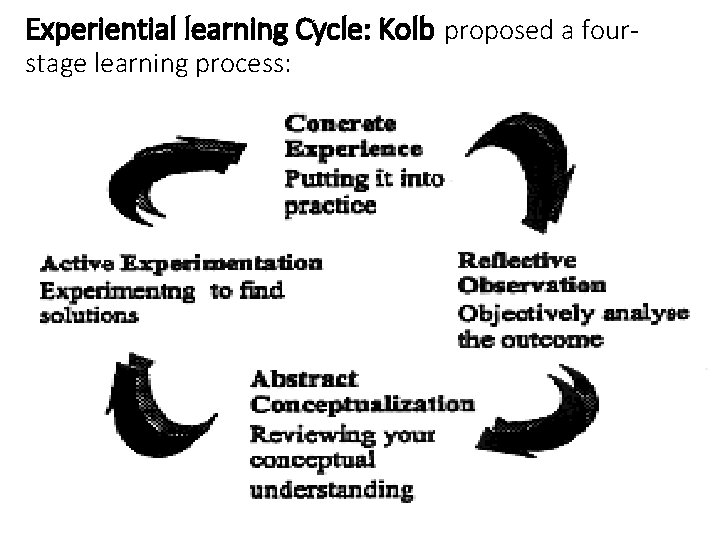
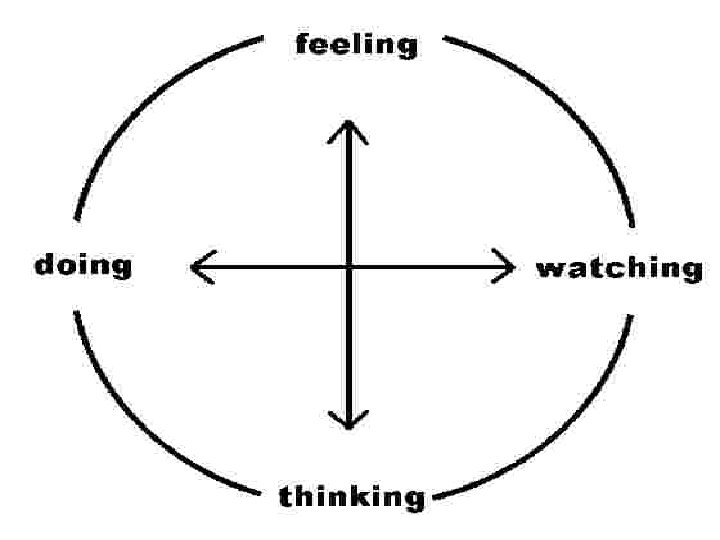
Experiential learning Cycle: Kolb proposed a fourstage learning process:
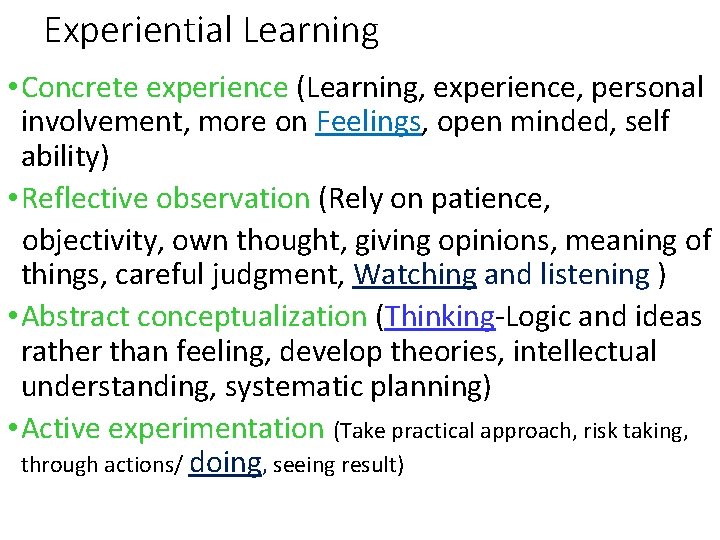
Experiential Learning • Concrete experience (Learning, experience, personal involvement, more on Feelings, open minded, self ability) • Reflective observation (Rely on patience, objectivity, own thought, giving opinions, meaning of things, careful judgment, Watching and listening ) • Abstract conceptualization (Thinking-Logic and ideas rather than feeling, develop theories, intellectual understanding, systematic planning) • Active experimentation (Take practical approach, risk taking, through actions/ doing, seeing result)
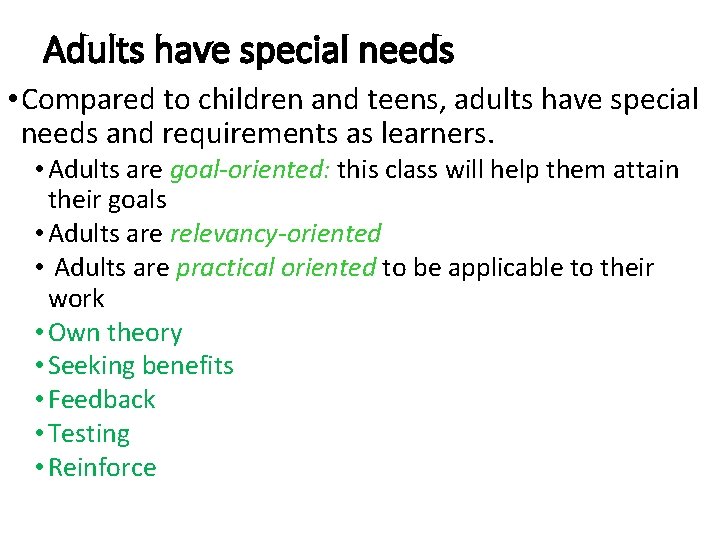
Adults have special needs • Compared to children and teens, adults have special needs and requirements as learners. • Adults are goal-oriented: this class will help them attain their goals • Adults are relevancy-oriented • Adults are practical oriented to be applicable to their work • Own theory • Seeking benefits • Feedback • Testing • Reinforce
Motivating factors)उतपररण ततवहर ) to Learn गरन
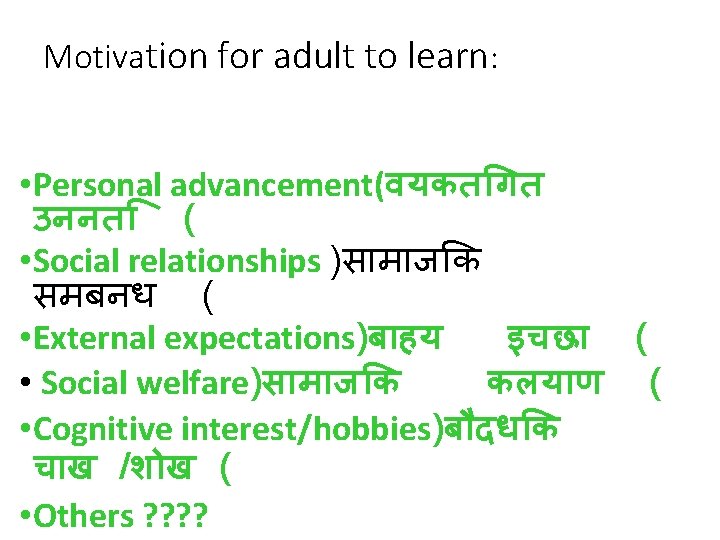
Motivation for adult to learn: • Personal advancement(वयकत गत उननत ( • Social relationships )स म ज क समबनध ( • External expectations)ब हय इचछ ( • Social welfare)स म ज क कलय ण ( • Cognitive interest/hobbies)ब दध क च ख /श ख ( • Others ? ?
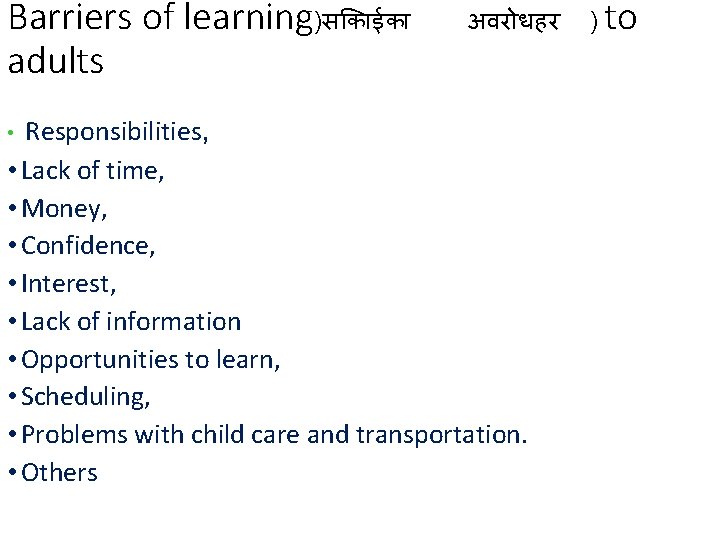
Barriers of learning)स क ईक adults अवर धहर Responsibilities, • Lack of time, • Money, • Confidence, • Interest, • Lack of information • Opportunities to learn, • Scheduling, • Problems with child care and transportation. • Others • ) to
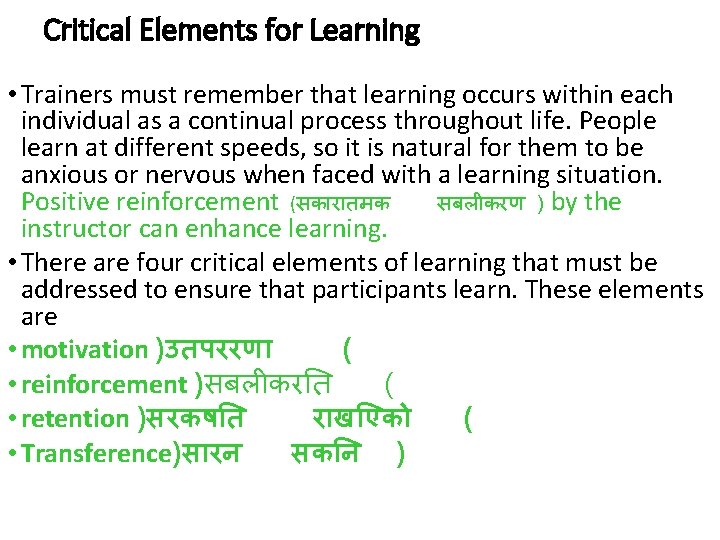
Critical Elements for Learning • Trainers must remember that learning occurs within each individual as a continual process throughout life. People learn at different speeds, so it is natural for them to be anxious or nervous when faced with a learning situation. Positive reinforcement (सक र तमक सबल करण ) by the instructor can enhance learning. • There are four critical elements of learning that must be addressed to ensure that participants learn. These elements are • motivation )उतपररण ( • reinforcement )सबल कर त ( • retention )सरकष त र ख एक ( • Transference)स रन सक न )
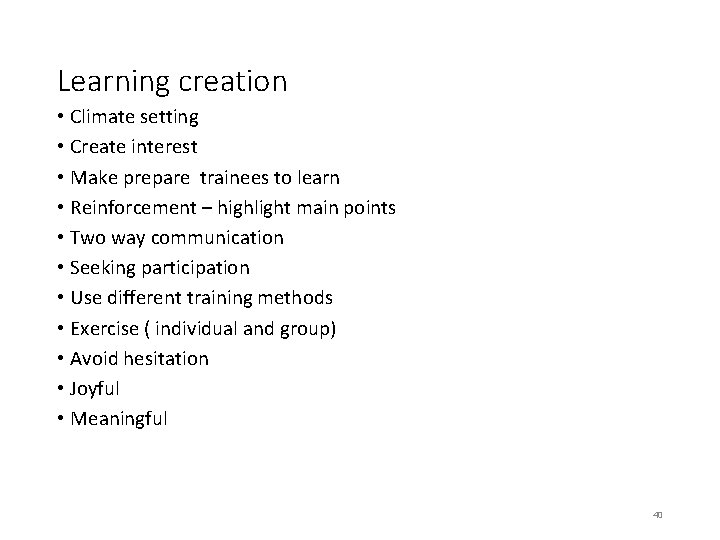
Learning creation • Climate setting • Create interest • Make prepare trainees to learn • Reinforcement – highlight main points • Two way communication • Seeking participation • Use different training methods • Exercise ( individual and group) • Avoid hesitation • Joyful • Meaningful 40
• Thank you for your attention