
System Thinking Liberias Pathway to building a resilient
“System Thinking” Liberia’s Pathway to building a resilient Health Information System (OHIE experience) J. Mike Mulbah Director, Monitoring & Evaluation & Coordinator, HIS Interoperability Initiatives Ministry of Health, Republic of Liberia Ally Shaban Workforce Technologist, Intra. Health International Emily Nicholson Technical Advisor, Intra. Health International
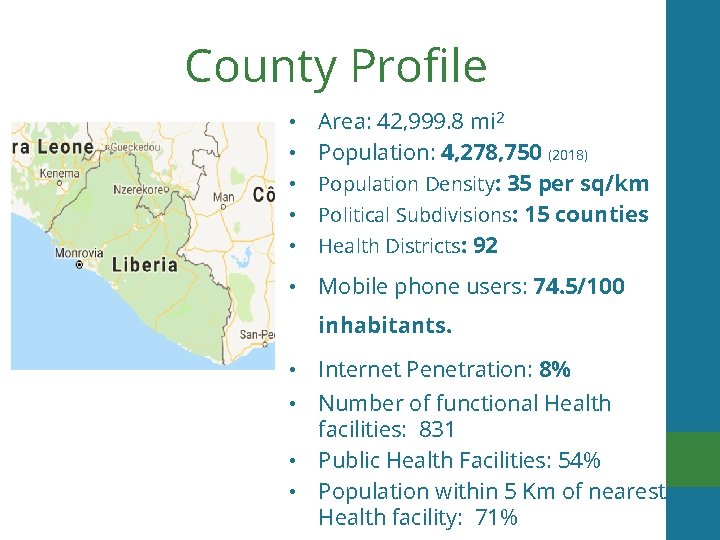
County Profile • • • Area: 42, 999. 8 mi 2 Population: 4, 278, 750 (2018) Population Density: 35 per sq/km Political Subdivisions: 15 counties Health Districts: 92 • Mobile phone users: 74. 5/100 inhabitants. • Internet Penetration: 8% • Number of functional Health facilities: 831 • Public Health Facilities: 54% • Population within 5 Km of nearest Health facility: 71%
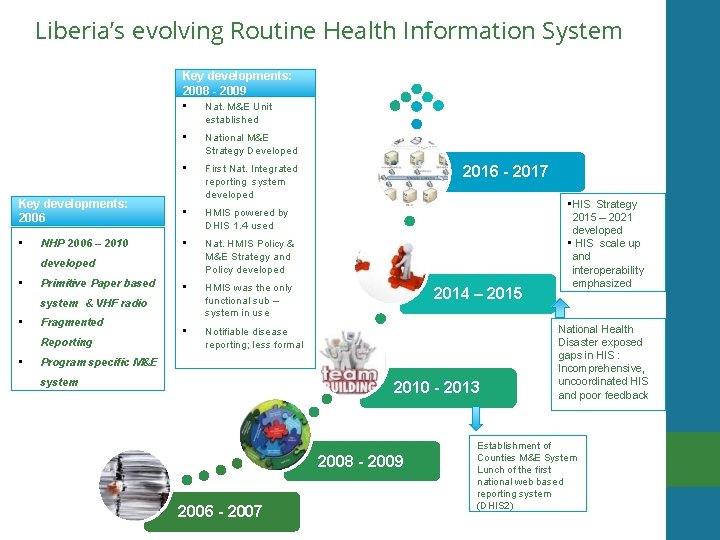
Liberia’s evolving Routine Health Information System Key developments: 2008 - 2009 • Nat. M&E Unit established • National M&E Strategy Developed • Key developments: 2006 First Nat. Integrated reporting system developed • HMIS powered by DHIS 1. 4 used • • Nat. HMIS Policy & M&E Strategy and Policy developed • HMIS was the only functional sub – system in use • Notifiable disease reporting; less formal NHP 2006 – 2010 developed • Primitive Paper based system & VHF radio • Fragmented Reporting • 2016 - 2017 2014 – 2015 Program specific M&E system 2010 - 2013 2008 - 2009 2006 - 2007 • HIS Strategy 2015 – 2021 developed • HIS scale up and interoperability emphasized National Health Disaster exposed gaps in HIS : Incomprehensive, uncoordinated HIS and poor feedback Establishment of Counties M&E System Lunch of the first national web based reporting system (DHIS 2)
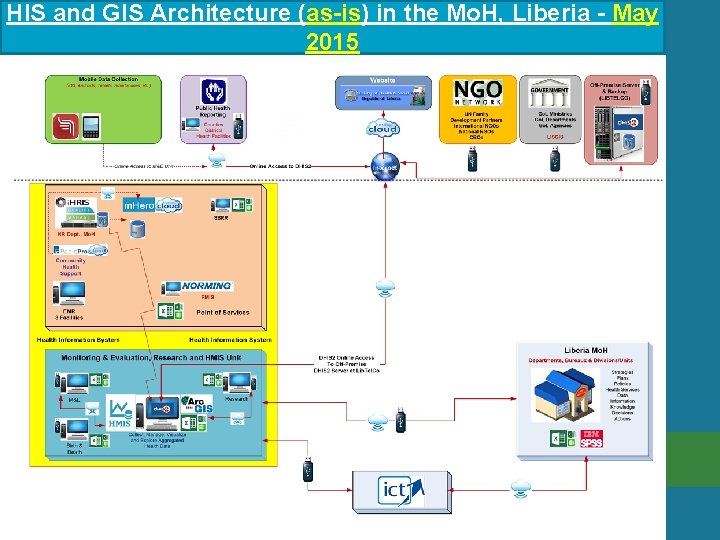
HIS and GIS Architecture (as-is) in the Mo. H, Liberia - May 2015
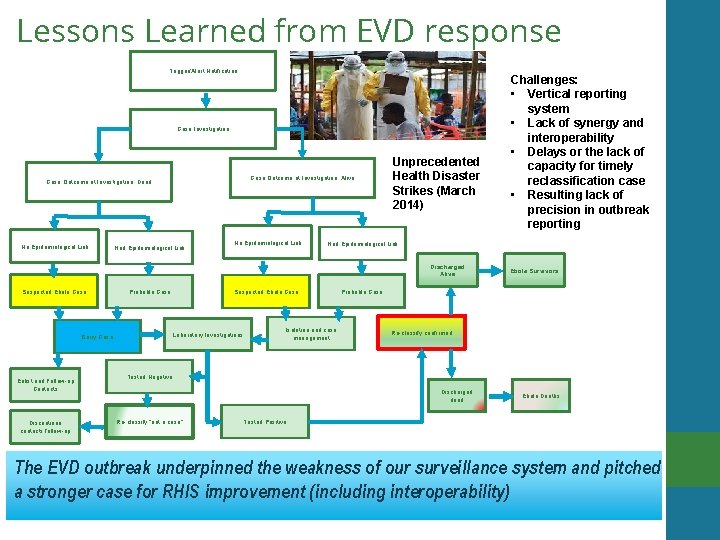
Lessons Learned from EVD response Trigger/Alert Notification Case Investigation Case Outcome at Investigation: Alive Case Outcome at Investigation: Dead No Epidemiological Link Had Epidemiological Link No Epidemiological Link Unprecedented Health Disaster Strikes (March 2014) Had Epidemiological Link Discharged Alive Suspected Ebola Case Burry Case Enlist and Follow-up Contacts Discontinue contacts follow-up Probable Case Suspected Ebola Case Laboratory Investigations Challenges: • Vertical reporting system • Lack of synergy and interoperability • Delays or the lack of capacity for timely reclassification case • Resulting lack of precision in outbreak reporting Isolation and case management Ebola Survivors Probable Case Re-classify confirmed Tested Negative Discharged dead Re-classify “not a case” Ebola Deaths Tested Positive The EVD outbreak underpinned the weakness of our surveillance system and pitched a stronger case for RHIS improvement (including interoperability)
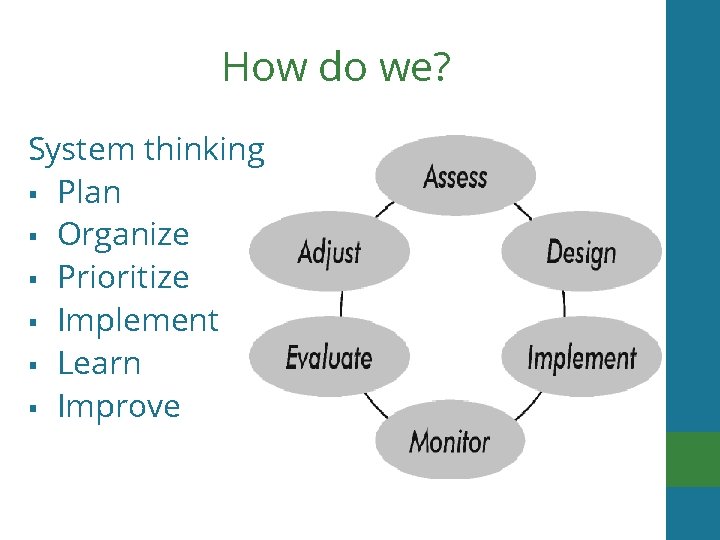
How do we? System thinking § Plan § Organize § Prioritize § Implement § Learn § Improve
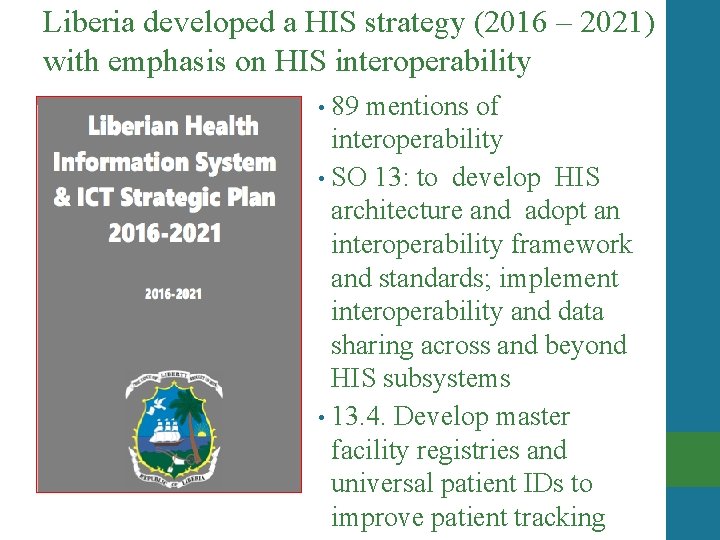
Liberia developed a HIS strategy (2016 – 2021) with emphasis on HIS interoperability 89 mentions of interoperability • SO 13: to develop HIS architecture and adopt an interoperability framework and standards; implement interoperability and data sharing across and beyond HIS subsystems • 13. 4. Develop master facility registries and universal patient IDs to improve patient tracking •
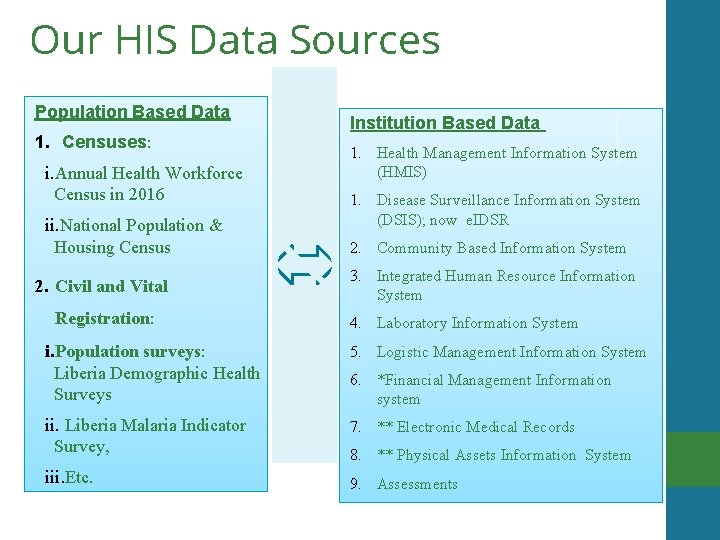
Our HIS Data Sources Population Based Data 1. Censuses: i. Annual Health Workforce Census in 2016 ii. National Population & Housing Census 2. Civil and Vital Registration: Institution Based Data 1. Health Management Information System (HMIS) 1. Disease Surveillance Information System (DSIS); now e. IDSR 2. Community Based Information System 3. Integrated Human Resource Information System 4. Laboratory Information System i. Population surveys: Liberia Demographic Health Surveys 5. Logistic Management Information System ii. Liberia Malaria Indicator Survey, 7. ** Electronic Medical Records iii. Etc. 9. Assessments 6. *Financial Management Information system 8. ** Physical Assets Information System
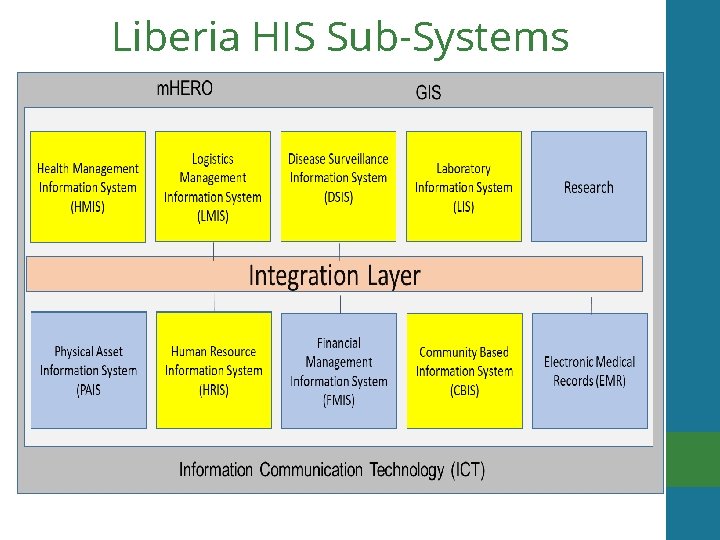
Liberia HIS Sub-Systems
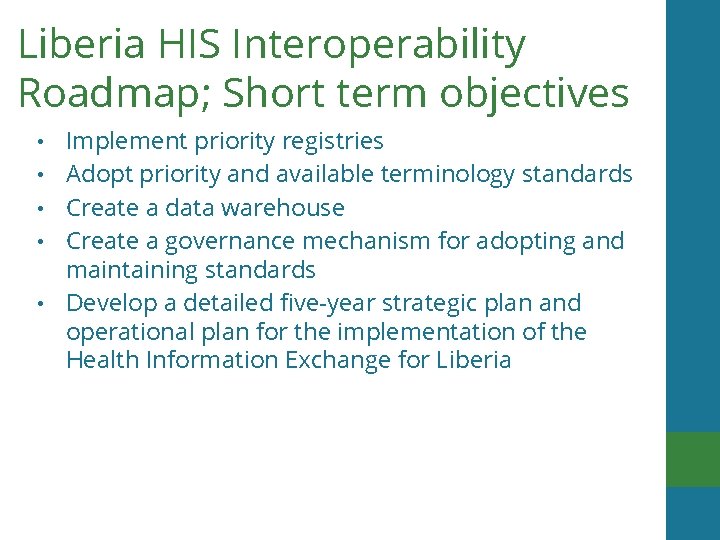
Liberia HIS Interoperability Roadmap; Short term objectives • Implement priority registries • Adopt priority and available terminology standards • Create a data warehouse • Create a governance mechanism for adopting and maintaining standards • Develop a detailed five-year strategic plan and operational plan for the implementation of the Health Information Exchange for Liberia
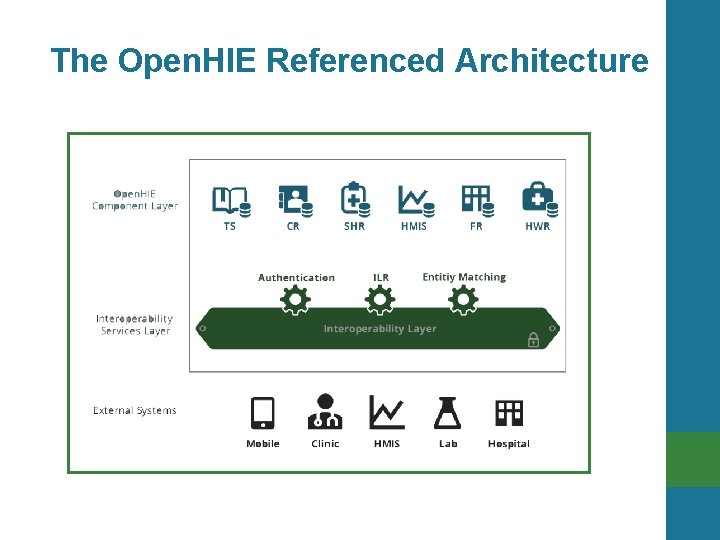
The Open. HIE Referenced Architecture
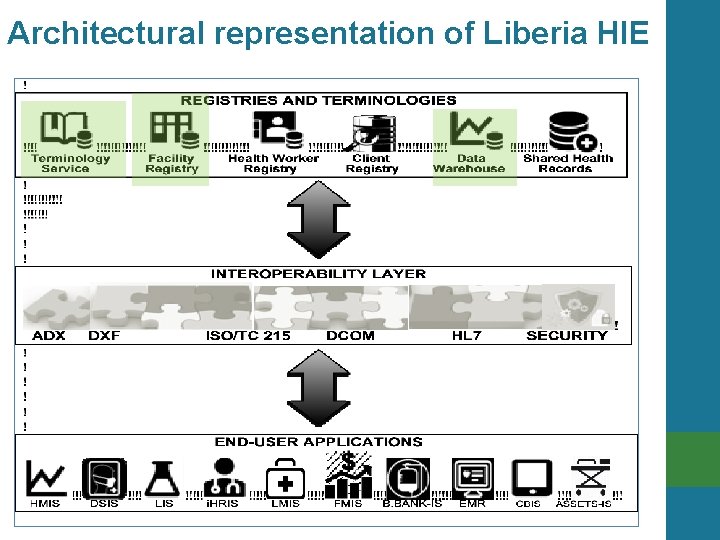
Architectural representation of Liberia HIE
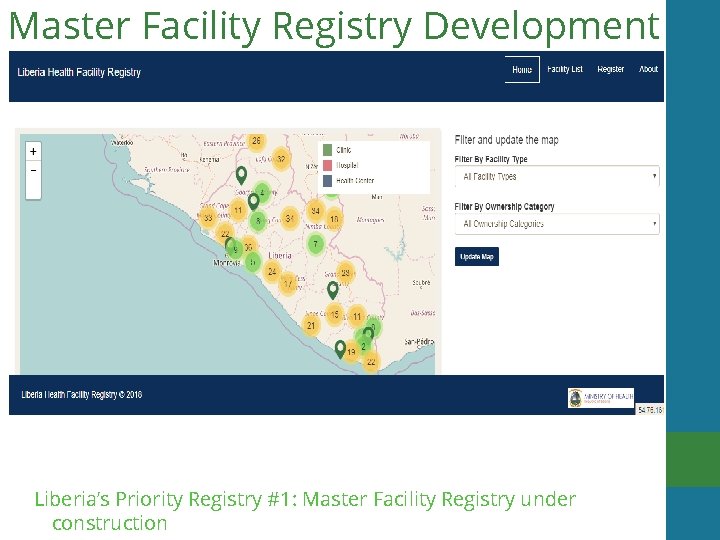
Master Facility Registry Development Liberia’s Priority Registry #1: Master Facility Registry under construction
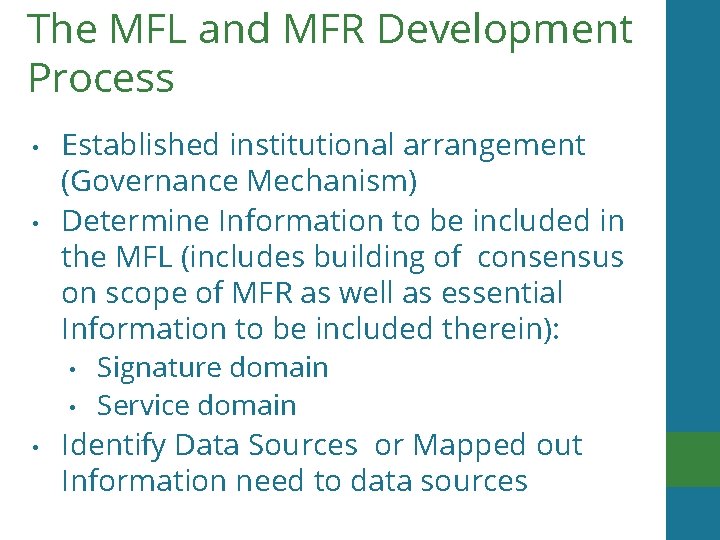
The MFL and MFR Development Process • • Established institutional arrangement (Governance Mechanism) Determine Information to be included in the MFL (includes building of consensus on scope of MFR as well as essential Information to be included therein): • • • Signature domain Service domain Identify Data Sources or Mapped out Information need to data sources
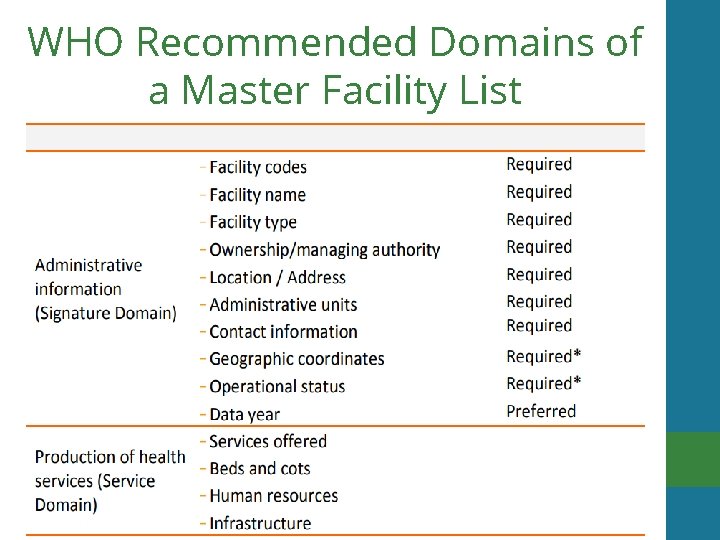
WHO Recommended Domains of a Master Facility List
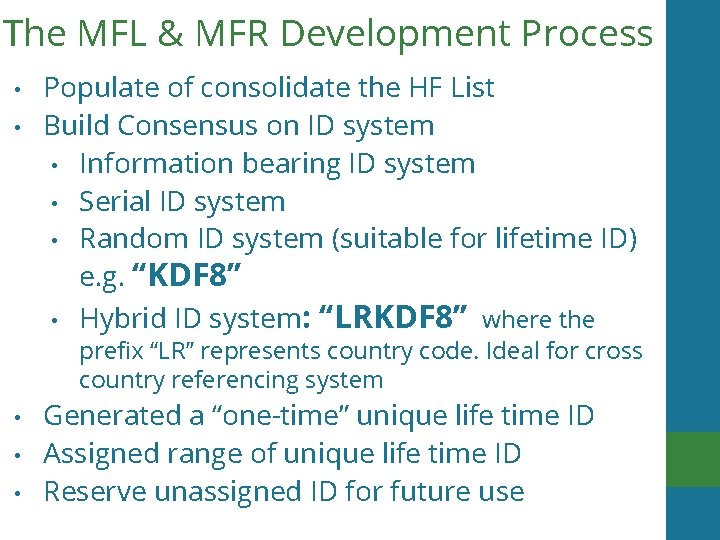
The MFL & MFR Development Process • • Populate of consolidate the HF List Build Consensus on ID system • Information bearing ID system • Serial ID system • Random ID system (suitable for lifetime ID) e. g. “KDF 8” • Hybrid ID system: “LRKDF 8” where the prefix “LR” represents country code. Ideal for cross country referencing system • • • Generated a “one-time” unique life time ID Assigned range of unique life time ID Reserve unassigned ID for future use
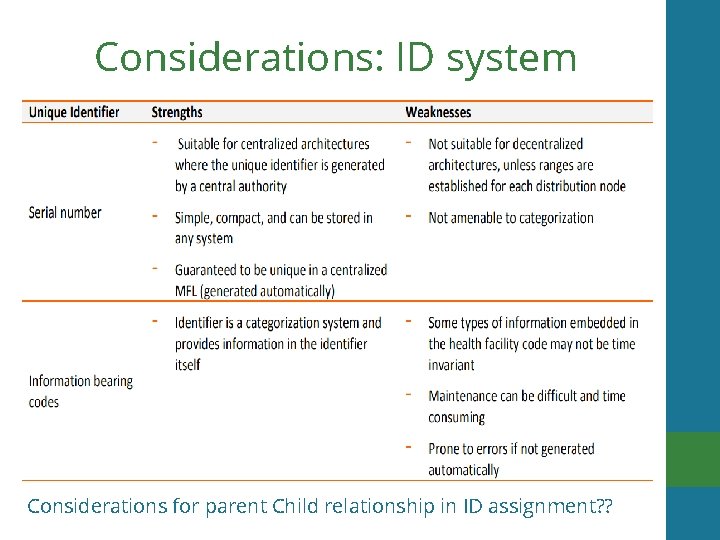
Considerations: ID system Considerations for parent Child relationship in ID assignment? ?
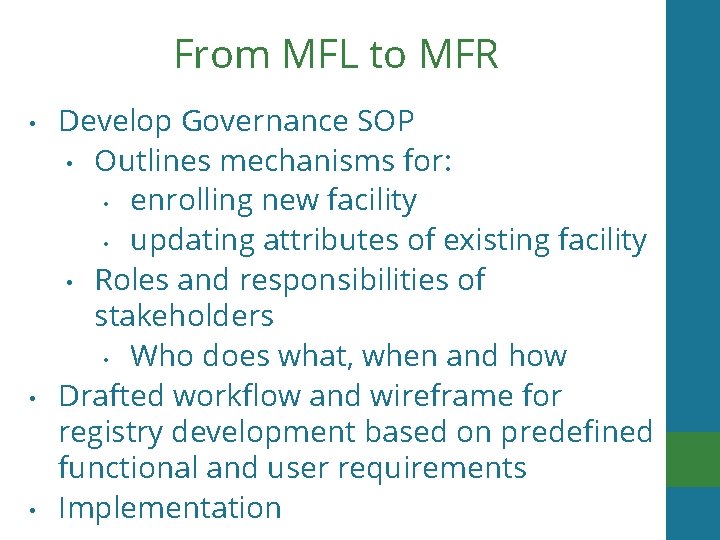
From MFL to MFR • • • Develop Governance SOP • Outlines mechanisms for: • enrolling new facility • updating attributes of existing facility • Roles and responsibilities of stakeholders • Who does what, when and how Drafted workflow and wireframe for registry development based on predefined functional and user requirements Implementation
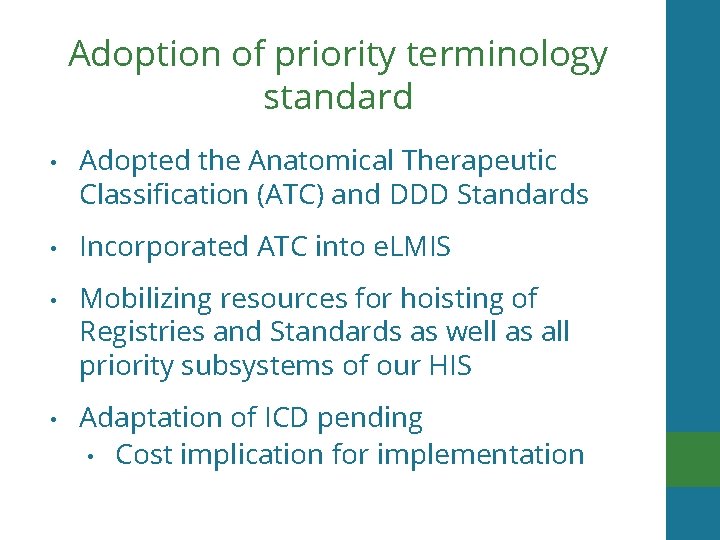
Adoption of priority terminology standard • Adopted the Anatomical Therapeutic Classification (ATC) and DDD Standards • Incorporated ATC into e. LMIS • Mobilizing resources for hoisting of Registries and Standards as well as all priority subsystems of our HIS • Adaptation of ICD pending • Cost implication for implementation
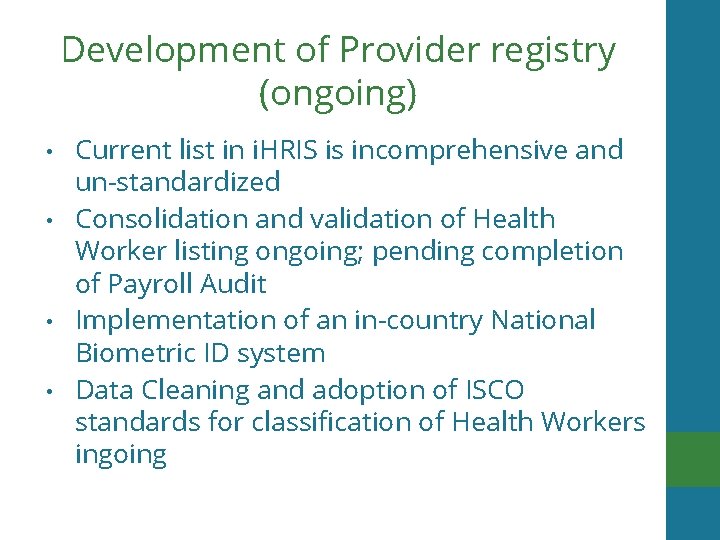
Development of Provider registry (ongoing) Current list in i. HRIS is incomprehensive and un-standardized • Consolidation and validation of Health Worker listing ongoing; pending completion of Payroll Audit • Implementation of an in-country National Biometric ID system • Data Cleaning and adoption of ISCO standards for classification of Health Workers ingoing •
Development of Client registry (differed) • Contingent on ICT Infrastructural readiness at Point of Service Delivery and on progress on implementation of National Identification registration system • Plan is to begin with Tertiary Health Facilities and later to Secondary Health Facilities and then Primary HFs • ICD implementation also a critical success driver
HIS Interoperability & Data Warehouse Pilots
HIS Interoperability Pilot Initiatives in Liberia Three HIS Interoperability Pilots to date. 1. The e. IDSR Pilot (Intra. Health, e. Health Africa and MOH) 2. The RMNCAH Interoperability Pilot (NPHIL/MOH, Zenysis Technology) 3. The Data Warehouse Pilot: (MOH & e. Health Africa)
Interoperability Pilots • RMNCAH Pilot: Ongoing • Initially involved the following subsystems: • • • DHIS 2 e. IDSR or IDSR information system LIS (mainly line list) Involves data harmonization use cases Some impressive results so far
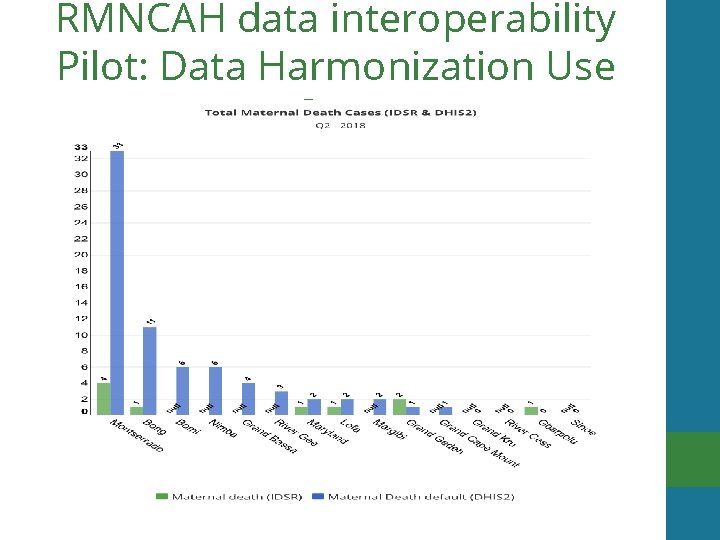
RMNCAH data interoperability Pilot: Data Harmonization Use Case
Data Warehouse Pilot MOH in collaboration with e. HEALTH Africa
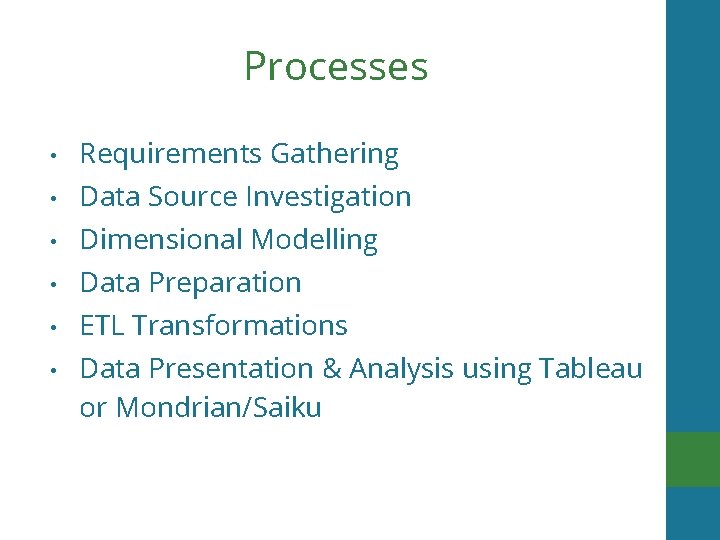
Processes • Requirements Gathering • Data Source Investigation • Dimensional Modelling • Data Preparation • ETL Transformations • Data Presentation & Analysis using Tableau or Mondrian/Saiku
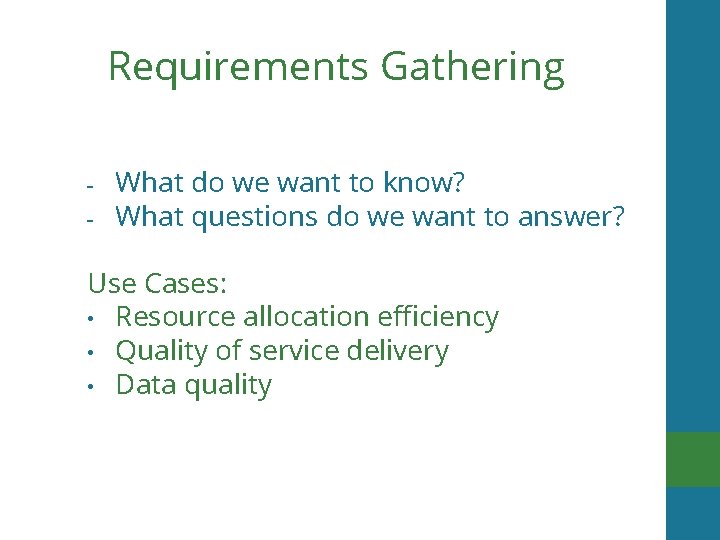
Requirements Gathering - What do we want to know? What questions do we want to answer? Use Cases: • Resource allocation efficiency • Quality of service delivery • Data quality
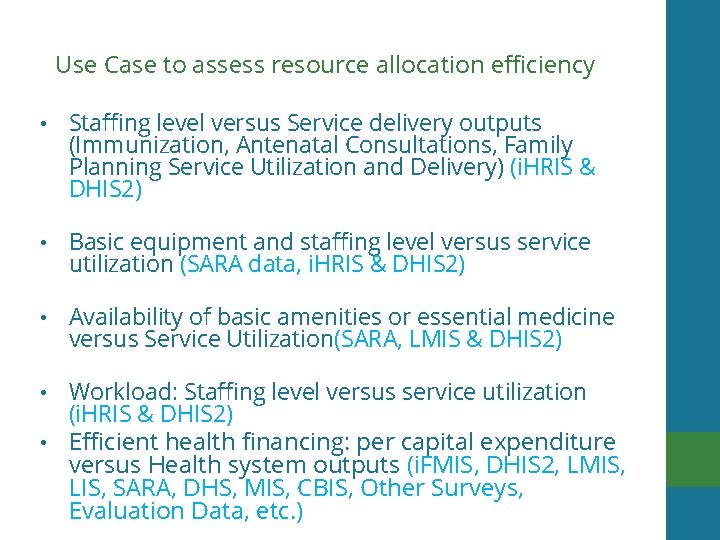
Use Case to assess resource allocation efficiency • Staffing level versus Service delivery outputs (Immunization, Antenatal Consultations, Family Planning Service Utilization and Delivery) (i. HRIS & DHIS 2) • Basic equipment and staffing level versus service utilization (SARA data, i. HRIS & DHIS 2) • Availability of basic amenities or essential medicine versus Service Utilization(SARA, LMIS & DHIS 2) • Workload: Staffing level versus service utilization (i. HRIS & DHIS 2) • Efficient health financing: per capital expenditure versus Health system outputs (i. FMIS, DHIS 2, LMIS, LIS, SARA, DHS, MIS, CBIS, Other Surveys, Evaluation Data, etc. )
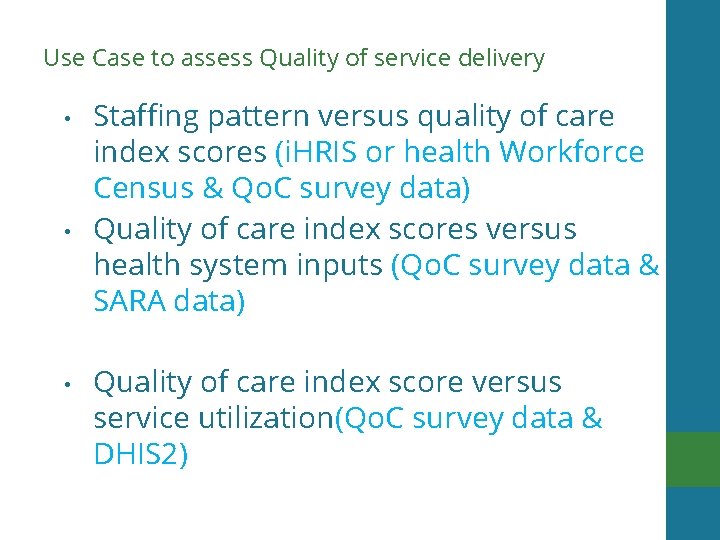
Use Case to assess Quality of service delivery • • • Staffing pattern versus quality of care index scores (i. HRIS or health Workforce Census & Qo. C survey data) Quality of care index scores versus health system inputs (Qo. C survey data & SARA data) Quality of care index score versus service utilization(Qo. C survey data & DHIS 2)
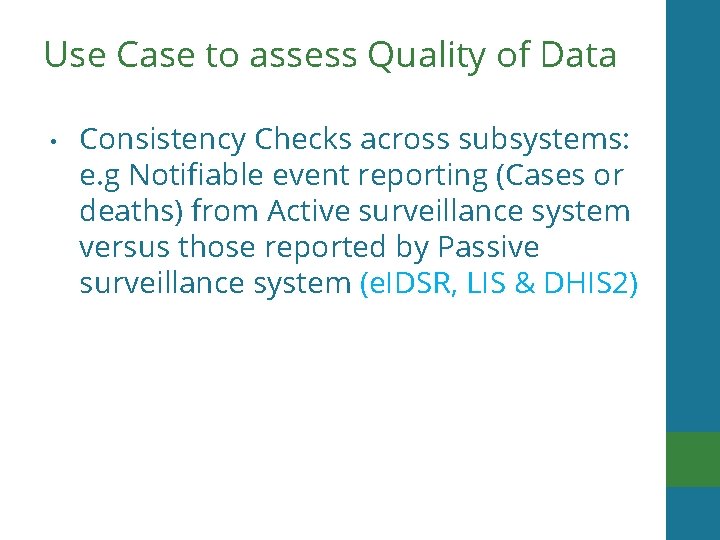
Use Case to assess Quality of Data • Consistency Checks across subsystems: e. g Notifiable event reporting (Cases or deaths) from Active surveillance system versus those reported by Passive surveillance system (e. IDSR, LIS & DHIS 2)
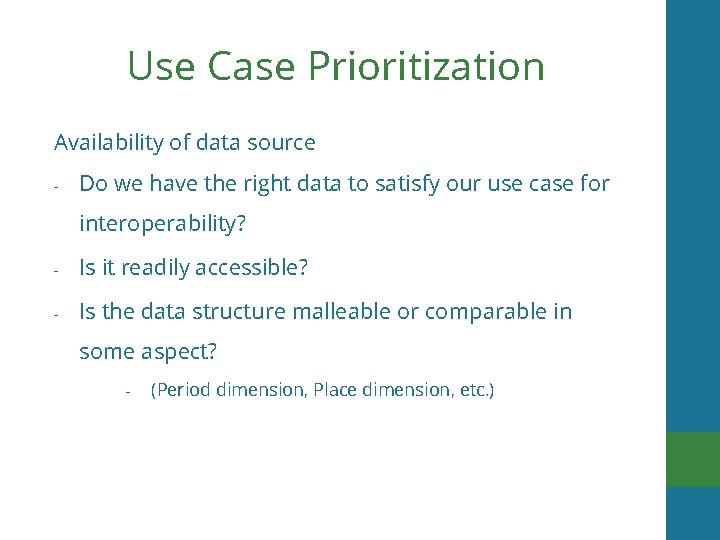
Use Case Prioritization Availability of data source - Do we have the right data to satisfy our use case for interoperability? - Is it readily accessible? - Is the data structure malleable or comparable in some aspect? - (Period dimension, Place dimension, etc. )
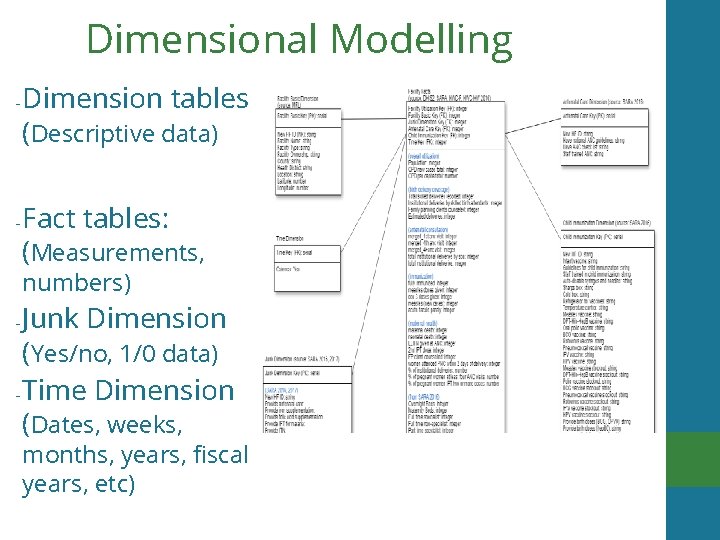
Dimensional Modelling - - Dimension tables (Descriptive data) Fact tables: (Measurements, numbers) Junk Dimension (Yes/no, 1/0 data) - Time Dimension (Dates, weeks, - months, years, fiscal years, etc)
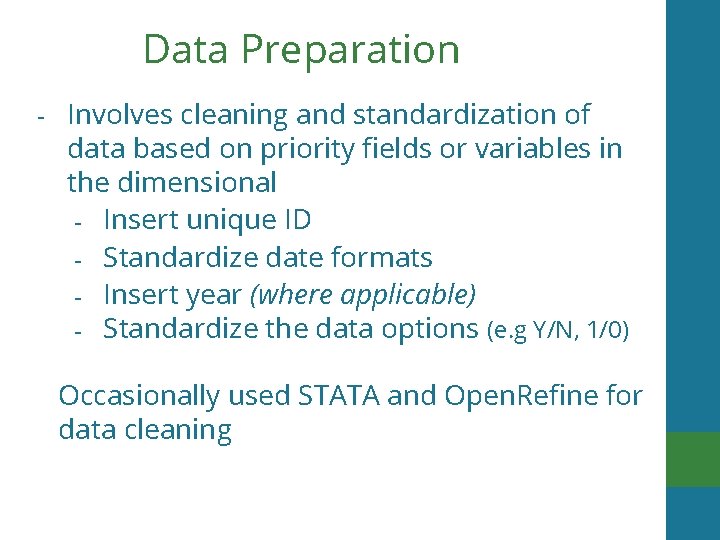
Data Preparation - Involves cleaning and standardization of data based on priority fields or variables in the dimensional - Insert unique ID - Standardize date formats - Insert year (where applicable) - Standardize the data options (e. g Y/N, 1/0) Occasionally used STATA and Open. Refine for data cleaning
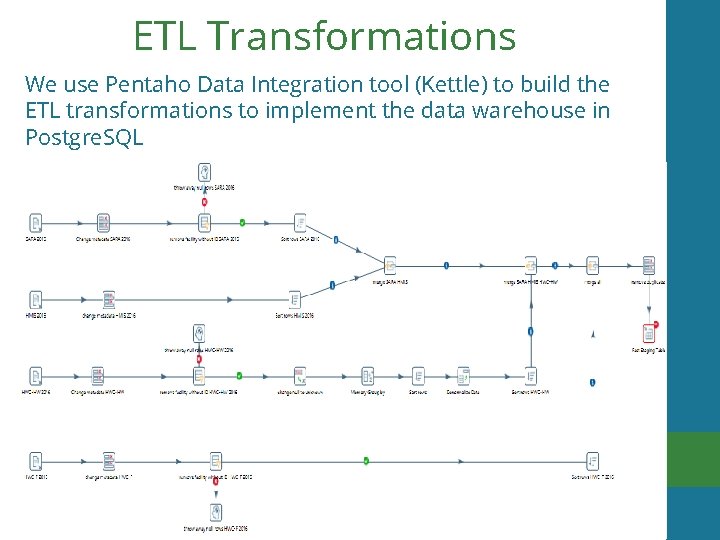
ETL Transformations We use Pentaho Data Integration tool (Kettle) to build the ETL transformations to implement the data warehouse in Postgre. SQL
Data Presentation & Analysis - - Connect Data Warehouse with Tableau Connect Data Warehouse with Mondrian/Saiku (open source application)

m. Hero
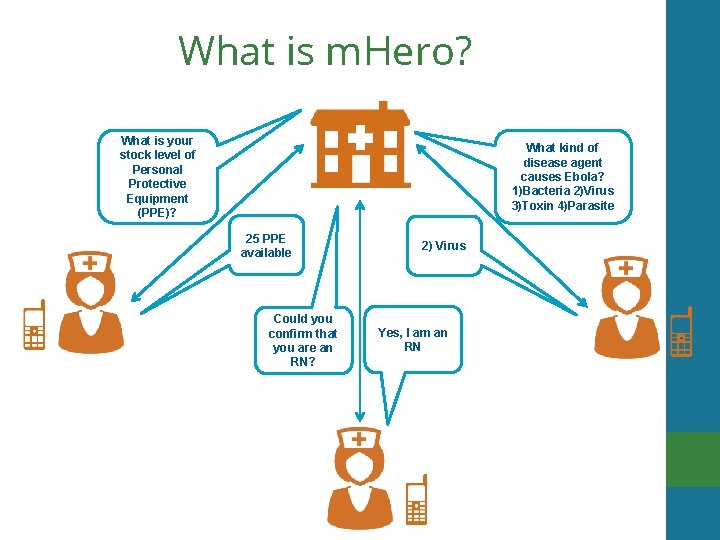
What is m. Hero? What is your stock level of Personal Protective Equipment (PPE)? What kind of disease agent causes Ebola? 1)Bacteria 2)Virus 3)Toxin 4)Parasite 25 PPE available Could you confirm that you are an RN? 2) Virus Yes, I am an RN
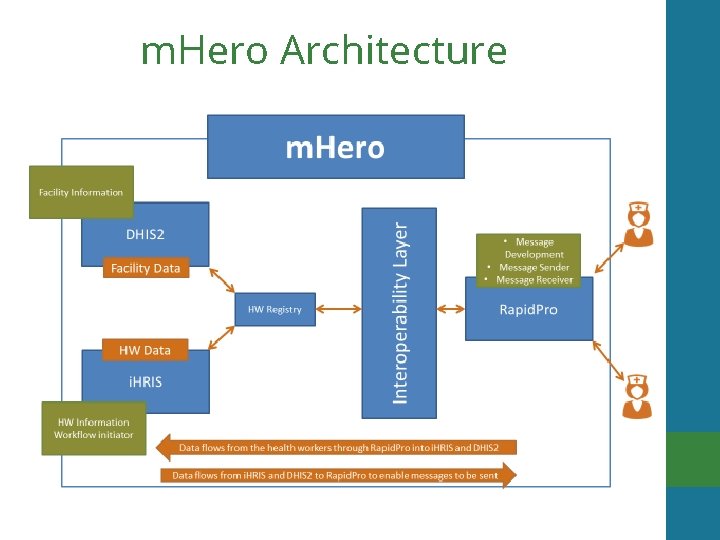
m. Hero Architecture
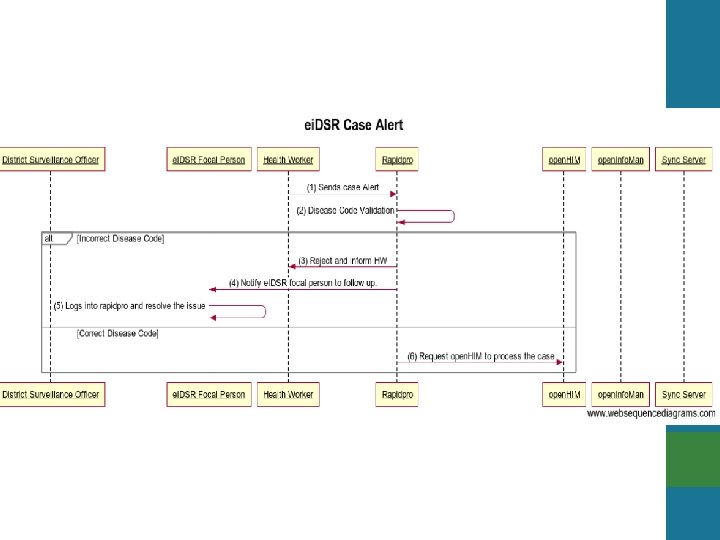
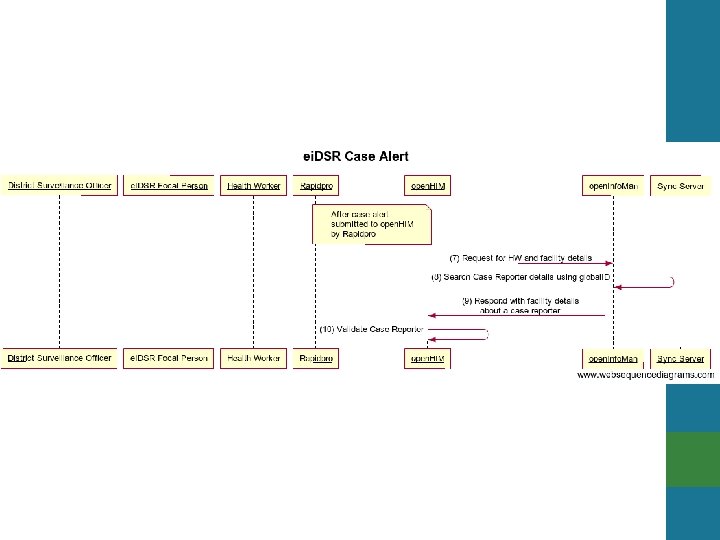
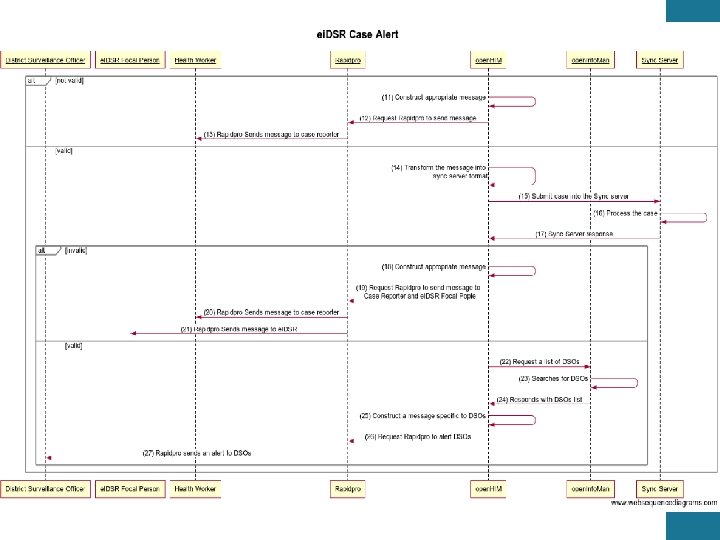
The e. IDSR pilot
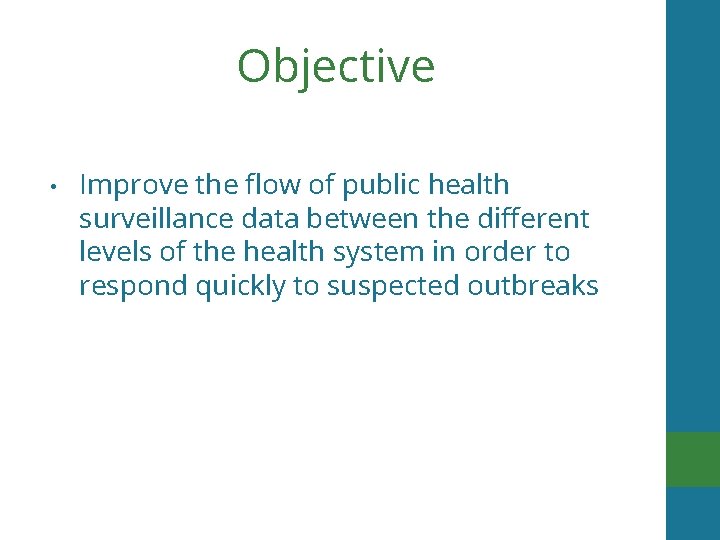
Objective • Improve the flow of public health surveillance data between the different levels of the health system in order to respond quickly to suspected outbreaks
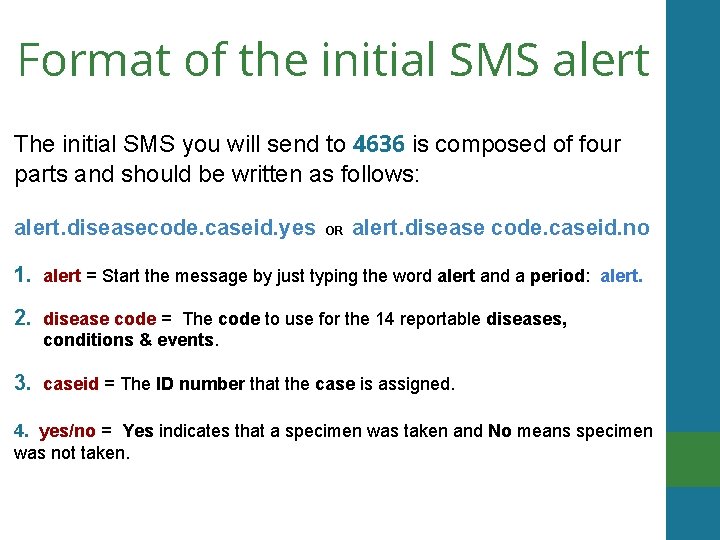
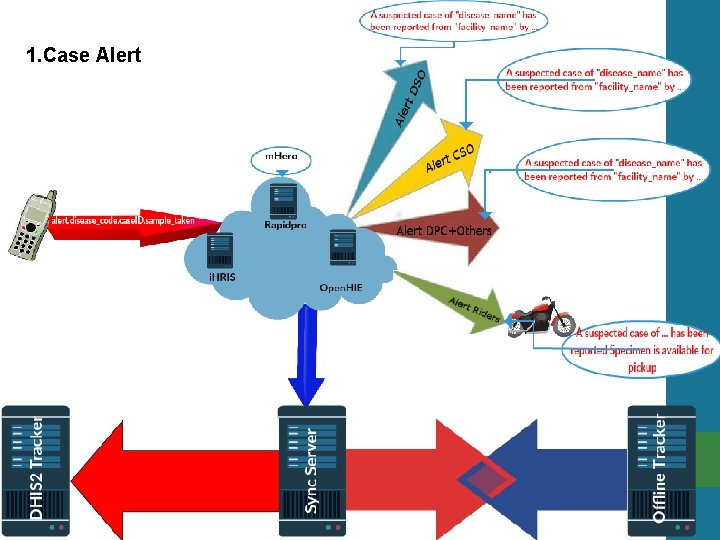
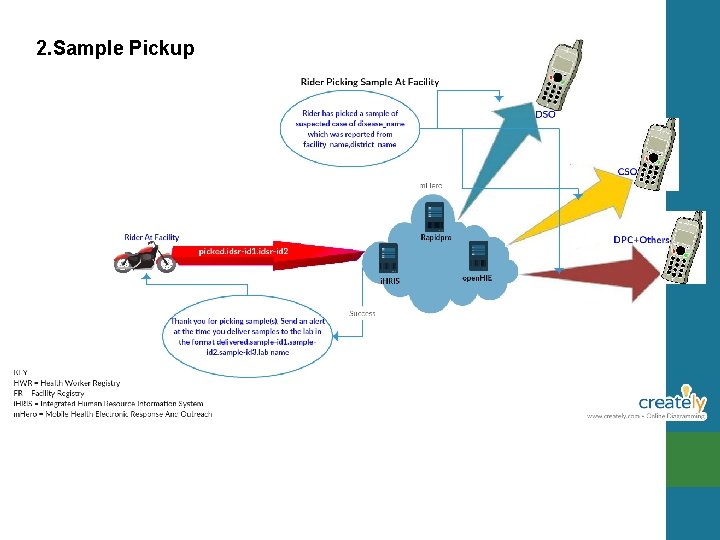
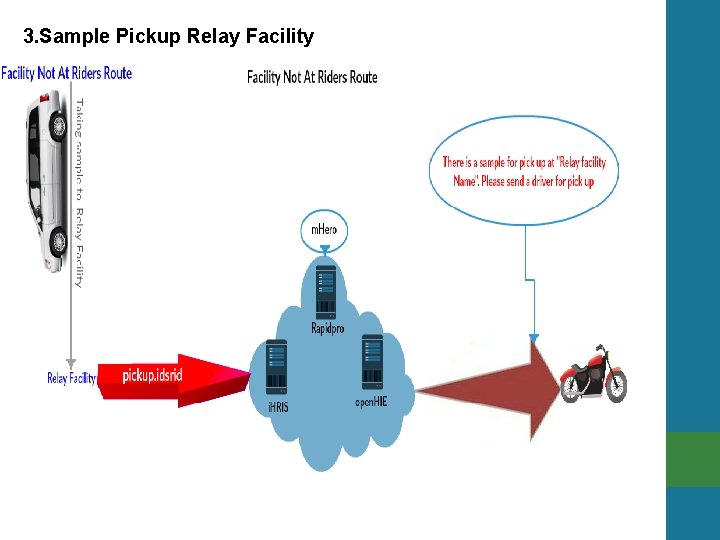
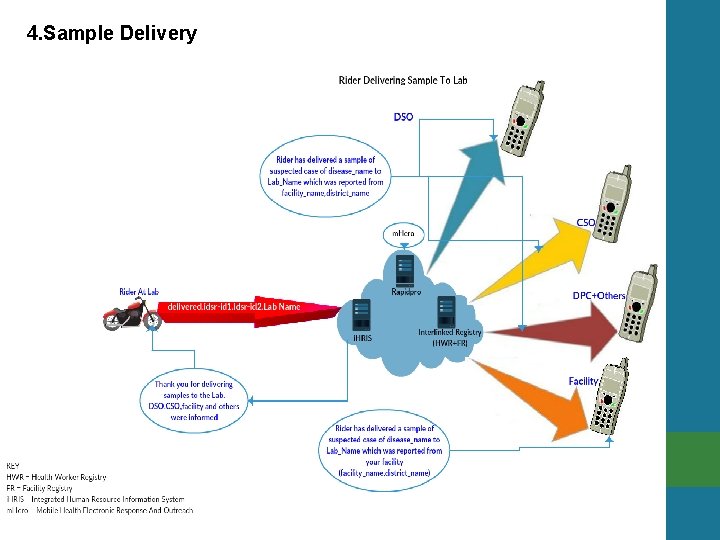
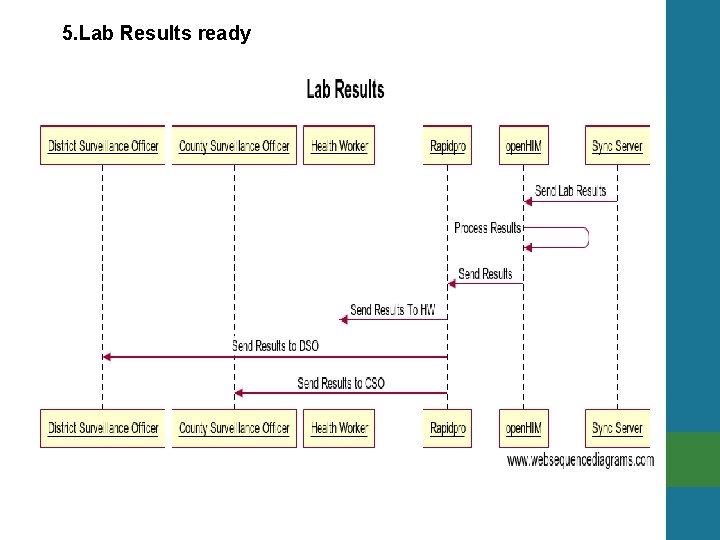
Format of the initial SMS alert The initial SMS you will send to 4636 is composed of four parts and should be written as follows: alert. diseasecode. caseid. yes OR alert. disease code. caseid. no 1. alert = Start the message by just typing the word alert and a period: alert. 2. disease code = The code to use for the 14 reportable diseases, conditions & events. 3. caseid = The ID number that the case is assigned. 4. yes/no = Yes indicates that a specimen was taken and No means specimen was not taken.
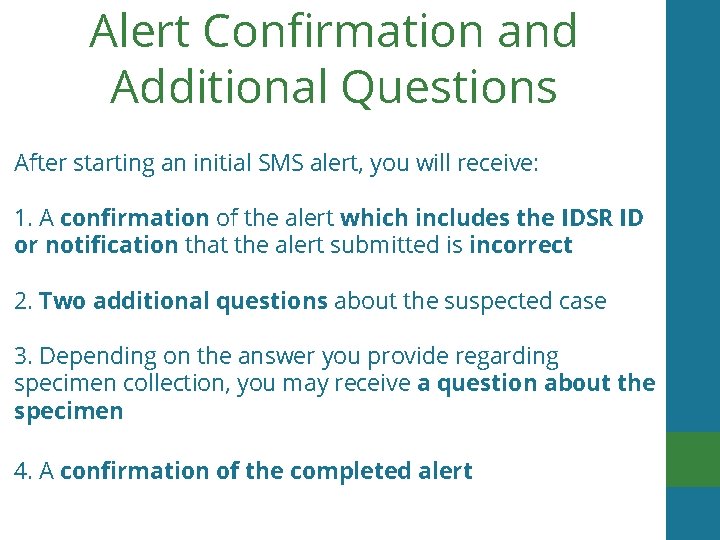
Alert Confirmation and Additional Questions After starting an initial SMS alert, you will receive: 1. A confirmation of the alert which includes the IDSR ID or notification that the alert submitted is incorrect 2. Two additional questions about the suspected case 3. Depending on the answer you provide regarding specimen collection, you may receive a question about the specimen 4. A confirmation of the completed alert
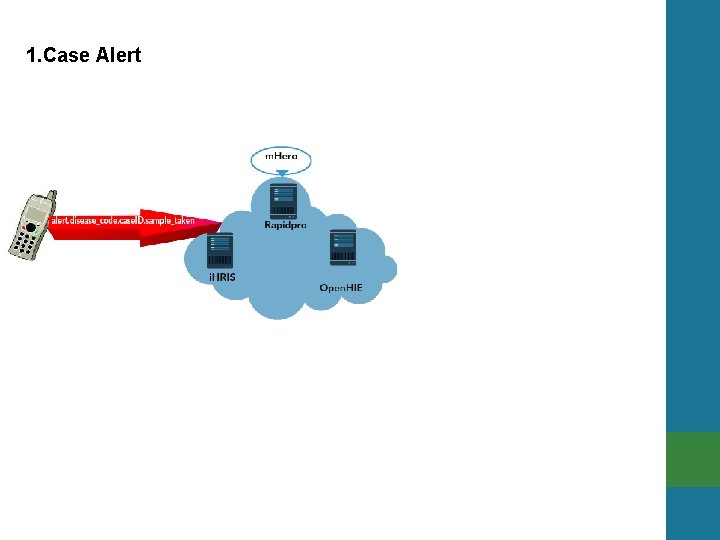
1. Case Alert
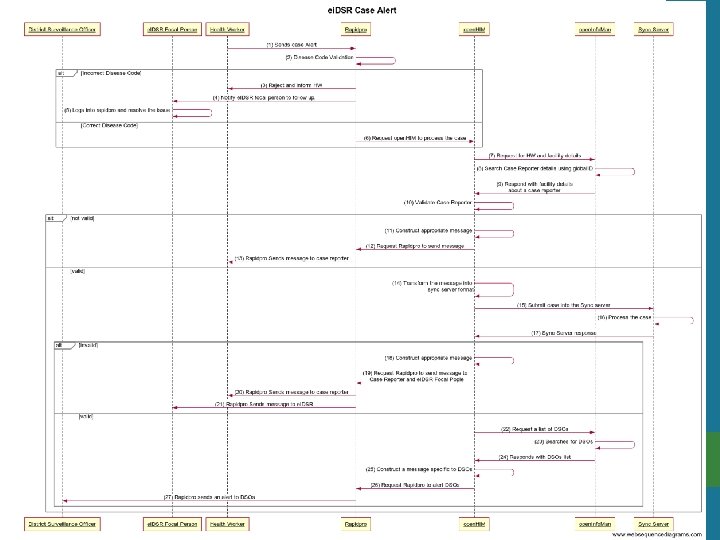
1. Case Alert
2. Sample Pickup
3. Sample Pickup Relay Facility
4. Sample Delivery
5. Lab Results ready
Technical/ Local technical Collaborating Implementing Partners Donors Acknowledgements

Wu ma ma wui tu su (in Lorma, Liberian dialect) Meaning: thanks for Listening
References • Mobile Phone Users (2014): http: //www. emansion. gov. lr/doc/CONSULTATIONDOCUMENT. pdf • Internet Penetration (2018): https: //www. internetworldstats. com/stats 1. htm

Wu ma ma wui tu su (in Lorma, Liberian dialect) Meaning: thanks for Listening
- Slides: 57