
System Reliability Resit Unal Engineering Management Systems Engineering
System Reliability Resit Unal Engineering Management & Systems Engineering Dept. Old Dominion University runal@odu. edu Slide 1
System Reliability • Science/Engineering is concerned with how products/systems work, but also need to understand, • The ways in which they fail, effects of failures, & aspects of design which affect the likelihood of failure. Slide 2
Defining Reliability is the probability that a system will perform as anticipated under given operating conditions. It can predict the probability that a system will operate for a specified # of hours or, Average time between failures (MTBF) Slide 3
System Lifecycle Costs (LCC) • 70 -80% of LCC are committed during design phase • Design fixes how system will be operated, maintained • Reliability is major cost driver (Failures, repair, lost time, redesign. . ) • Reliability and Maintainability must be designed in. Slide 4

Failure Patterns: Bathtub Curve λ(t) Failure Rate Decreasing λ(t) ↓ Burn-In Constant (Random Failure) Useful Life Increasing Failure λ(t)↑ Wear-out time Slide 5
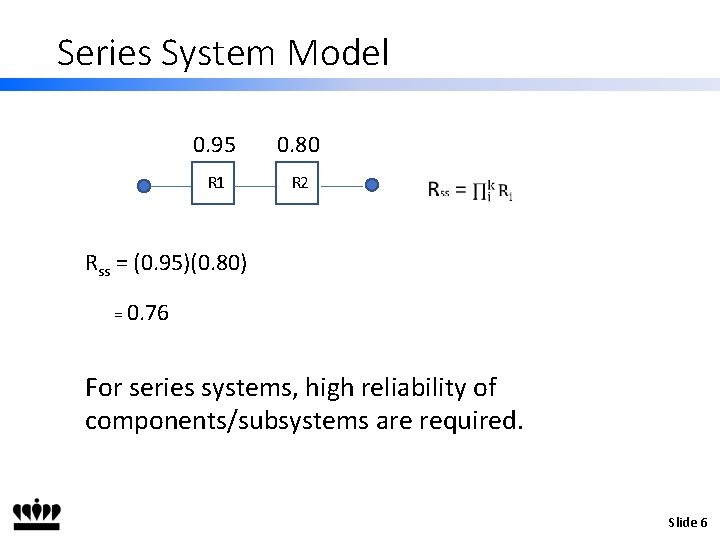
Series System Model 0. 95 0. 80 R 1 R 2 Rss = (0. 95)(0. 80) = 0. 76 For series systems, high reliability of components/subsystems are required. Slide 6
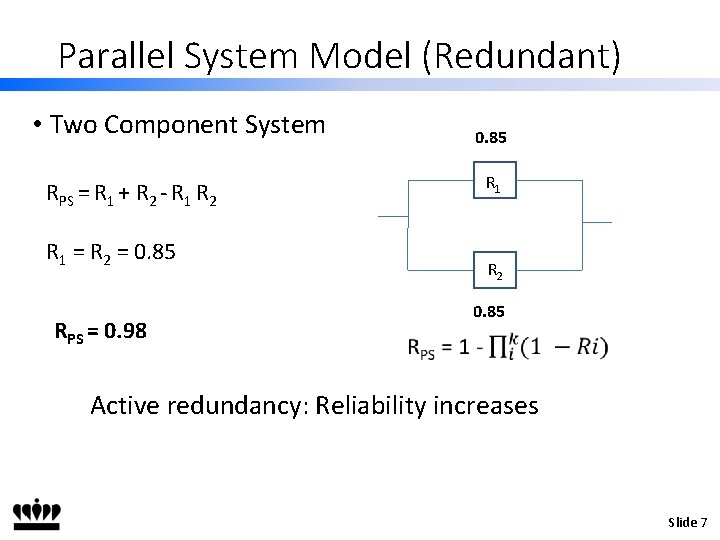
Parallel System Model (Redundant) • Two Component System RPS = R 1 + R 2 - R 1 R 2 R 1 = R 2 = 0. 85 RPS = 0. 98 0. 85 R 1 R 2 0. 85 Active redundancy: Reliability increases Slide 7
System Reliability Analysis Methods • Fault Tree Analysis • Failure Modes, Effects and Criticality Analysis (FMEA / FMECA) Slide 8
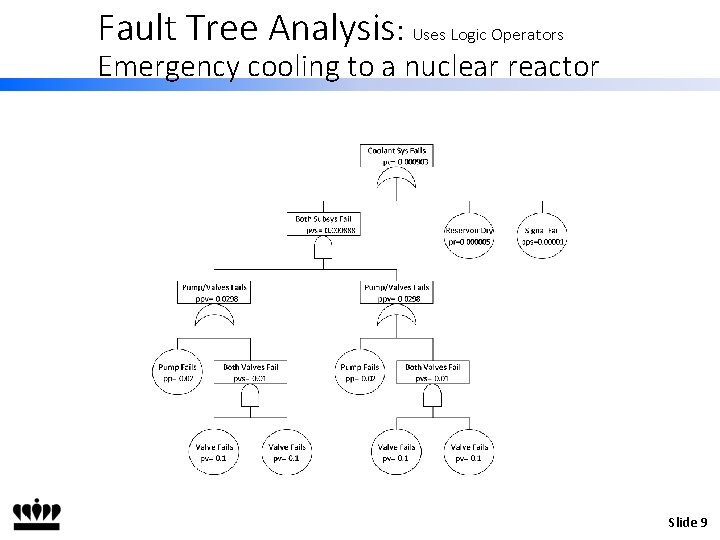
Fault Tree Analysis: Uses Logic Operators Emergency cooling to a nuclear reactor Slide 9
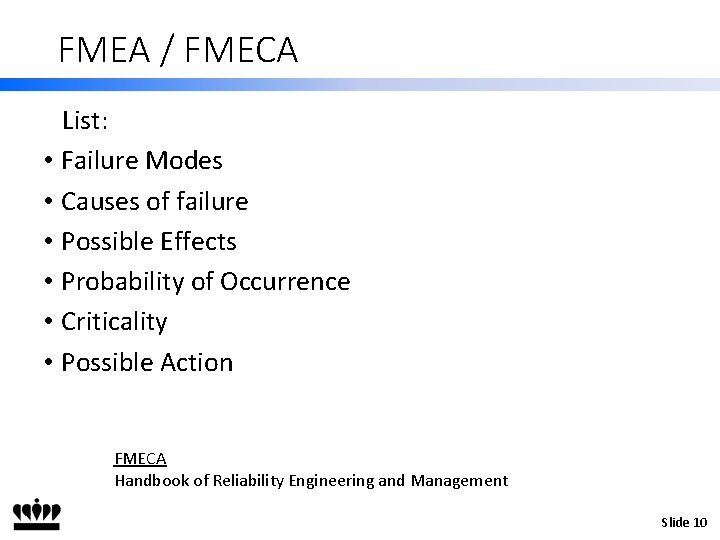
FMEA / FMECA List: • Failure Modes • Causes of failure • Possible Effects • Probability of Occurrence • Criticality • Possible Action FMECA Handbook of Reliability Engineering and Management Slide 10
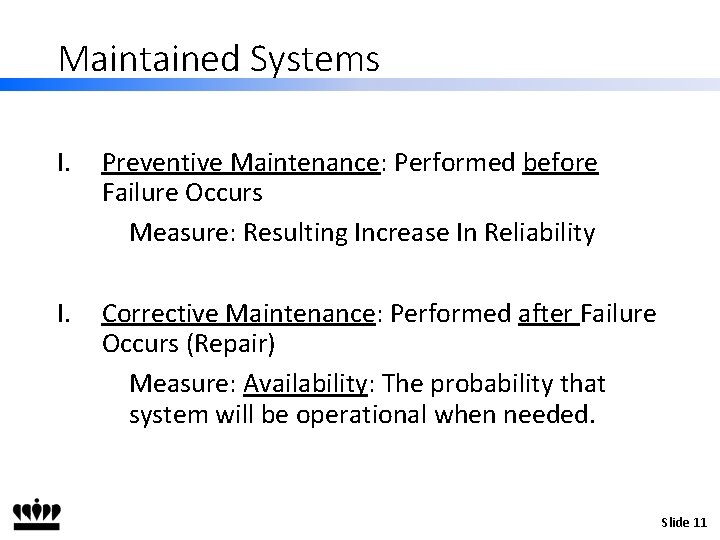
Maintained Systems I. Preventive Maintenance: Performed before Failure Occurs Measure: Resulting Increase In Reliability I. Corrective Maintenance: Performed after Failure Occurs (Repair) Measure: Availability: The probability that system will be operational when needed. Slide 11
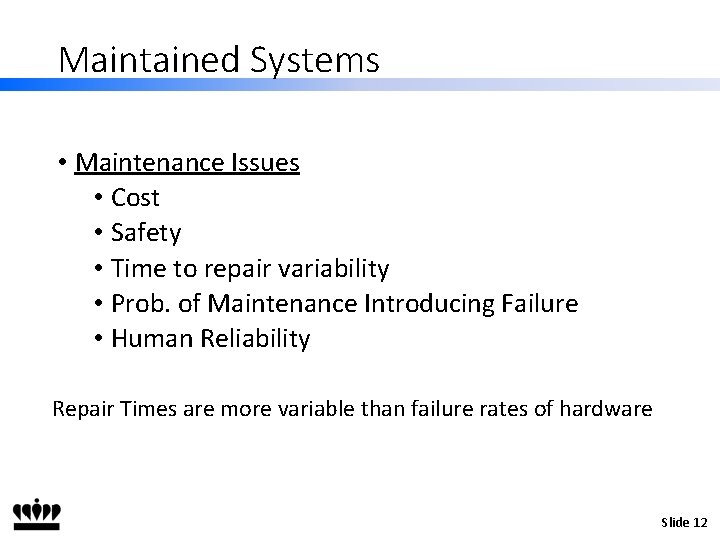
Maintained Systems • Maintenance Issues • Cost • Safety • Time to repair variability • Prob. of Maintenance Introducing Failure • Human Reliability Repair Times are more variable than failure rates of hardware Slide 12
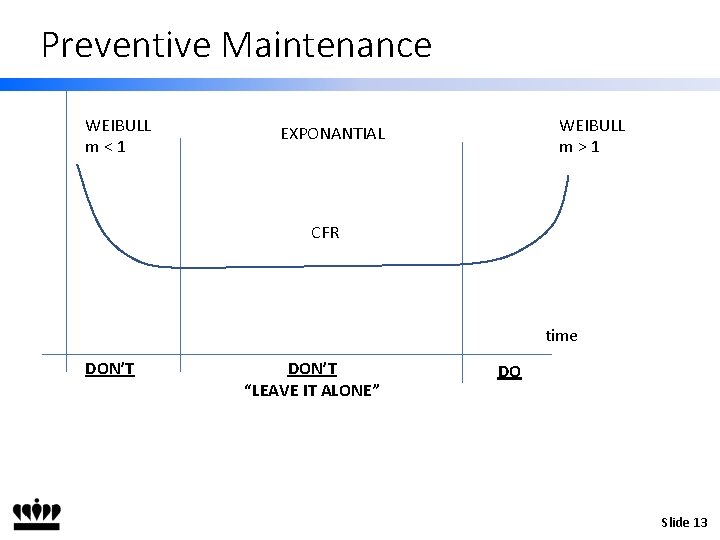
Preventive Maintenance WEIBULL m<1 WEIBULL m>1 EXPONANTIAL CFR time DON’T “LEAVE IT ALONE” DO Slide 13
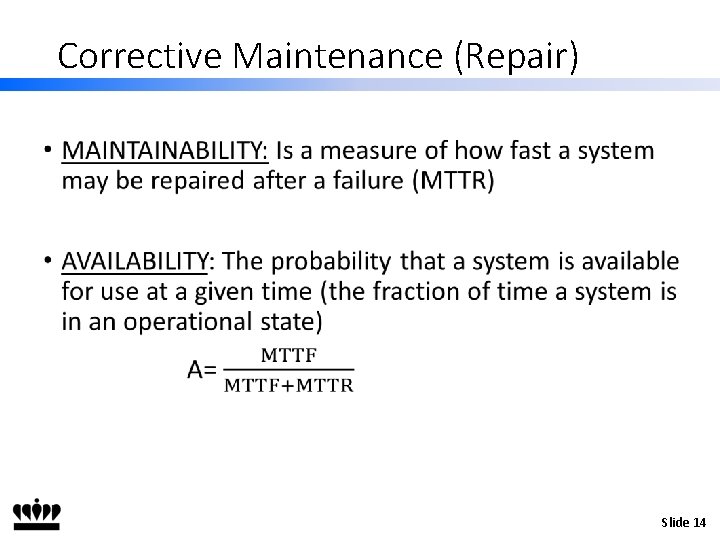
Corrective Maintenance (Repair) • Slide 14
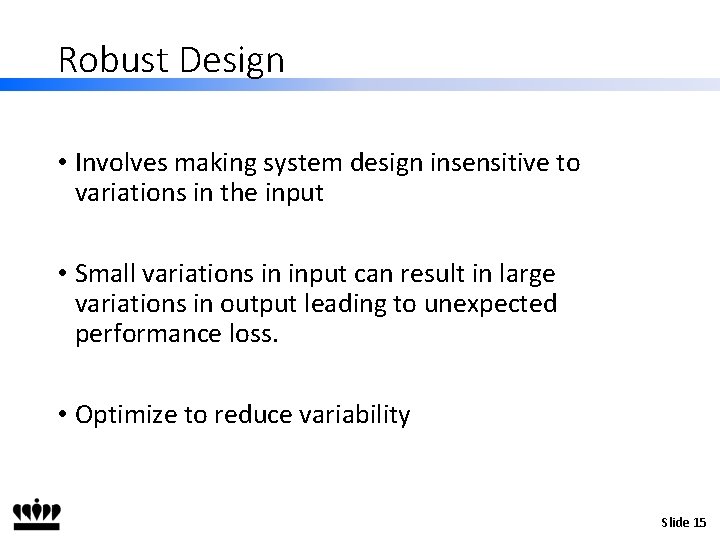
Robust Design • Involves making system design insensitive to variations in the input • Small variations in input can result in large variations in output leading to unexpected performance loss. • Optimize to reduce variability Slide 15
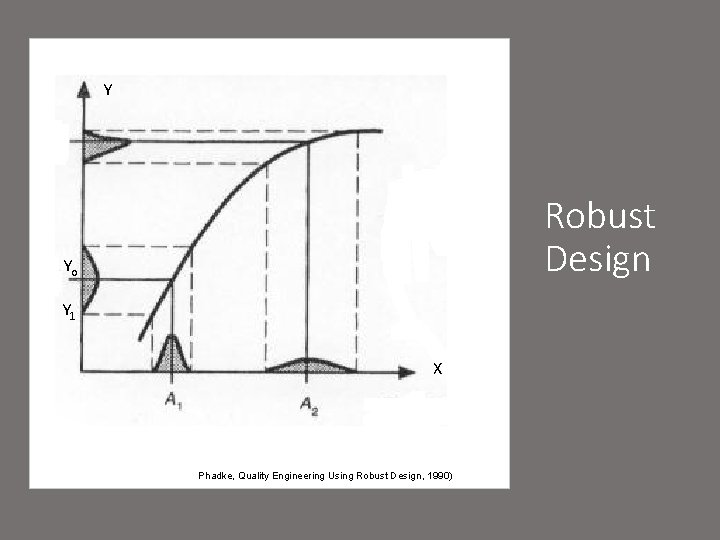
Y Robust Design Yo Y 1 X Phadke, Quality Engineering Using Robust Design, 1990) Slide 16
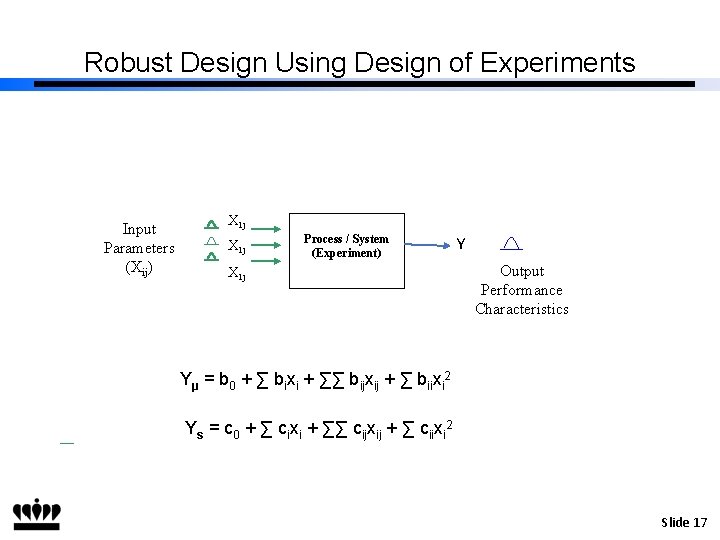
Robust Design Using Design of Experiments Input Parameters (Xij) X 1 j Process / System (Experiment) X 1 j Y Output Performance Characteristics Yµ = b 0 + ∑ bixi + ∑∑ bijxij + ∑ biixi 2 Ys = c 0 + ∑ cixi + ∑∑ cijxij + ∑ ciixi 2 Slide 17
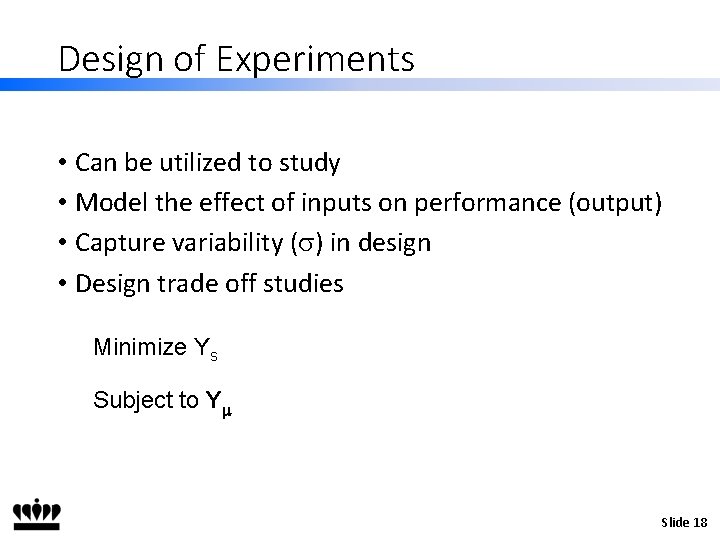
Design of Experiments • Can be utilized to study • Model the effect of inputs on performance (output) • Capture variability ( ) in design • Design trade off studies Minimize Ys Subject to Y Slide 18
Work in Progress • SOS Reliability Analysis (with Keating) • System Reliability & Maintainability Analysis • System Cost Analysis • Robust design, DOE 19
- Slides: 19