
System of Russian letters and sounds Spelling rules
![Transcription Stressed vowels are written in big, bold type − [а]. Pre-stressed vowels are](https://slidetodoc.com/presentation_image_h2/a4837be4faace96b44f00ed99b550d27/image-3.jpg "Transcription Stressed vowels are written in big, bold type − [а]. Pre-stressed vowels are")
![Spelling of е, ё, ю, я in stressed syllables: есть= [йэст’] to eat юноша](https://slidetodoc.com/presentation_image_h2/a4837be4faace96b44f00ed99b550d27/image-18.jpg "Spelling of е, ё, ю, я in stressed syllables: есть= [йэст’] to eat юноша")
![Qualitative reduction of vowels Unstressed vowels are reduced: окно → [акно] window молоко →](https://slidetodoc.com/presentation_image_h2/a4837be4faace96b44f00ed99b550d27/image-20.jpg "Qualitative reduction of vowels Unstressed vowels are reduced: окно → [акно] window молоко →")
![Spelling of и in the position after -ь и after ь → [йи] семьи](https://slidetodoc.com/presentation_image_h2/a4837be4faace96b44f00ed99b550d27/image-21.jpg "Spelling of и in the position after -ь и after ь → [йи] семьи")
![2) Separate spelling of soft consonants: семья [с’им’йа] family братья [брат’йа] brothers бьёт [б’йот]](https://slidetodoc.com/presentation_image_h2/a4837be4faace96b44f00ed99b550d27/image-25.jpg "2) Separate spelling of soft consonants: семья [с’им’йа] family братья [брат’йа] brothers бьёт [б’йот]")
![Pronunciation of the letter clusters -ться/-тся These letter clusters are pronounced like [ца]: -ться/-тся](https://slidetodoc.com/presentation_image_h2/a4837be4faace96b44f00ed99b550d27/image-34.jpg "Pronunciation of the letter clusters -ться/-тся These letter clusters are pronounced like [ца]: -ться/-тся")
- Slides: 37
System of Russian letters and sounds Spelling rules Pronunciation rules A few words about orthography
Introduction Dear friends! Look, listen, and read the comments! Memorize this useful information! Enjoy Russian spelling!
Transcription Stressed vowels are written in big, bold type − [а]. Pre-stressed vowels are written slightly smaller − [а], and the remaining unstressed vowels are written in even smaller type − [а].
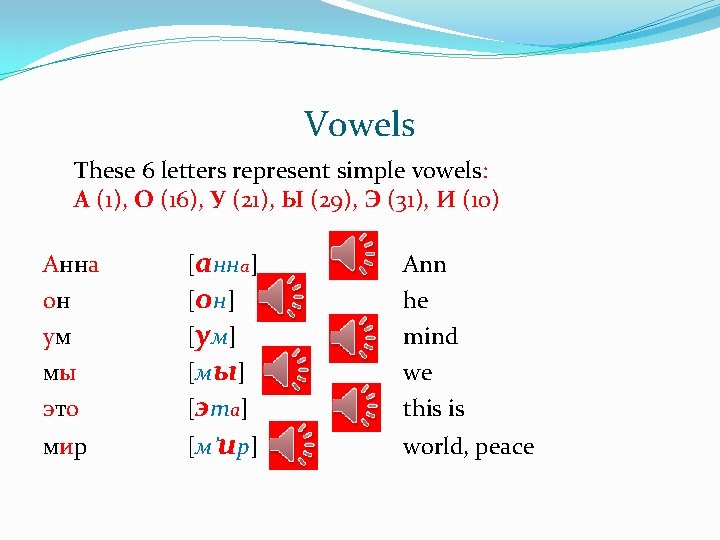
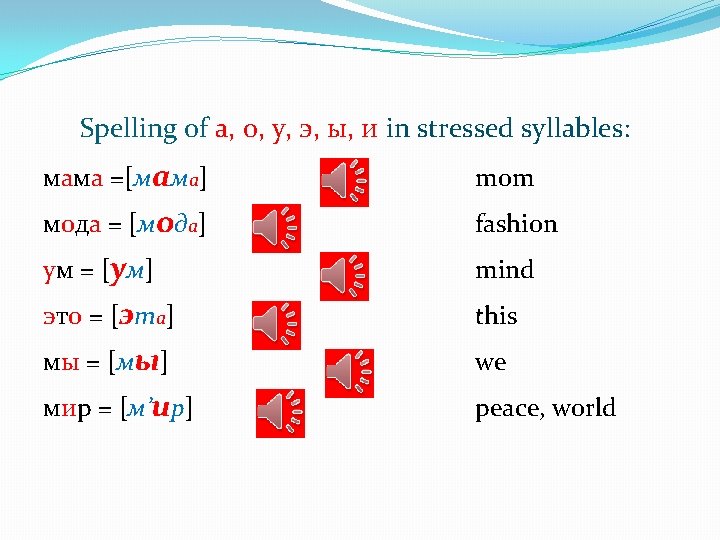
Vowels These 6 letters represent simple vowels: А (1), О (16), У (21), Ы (29), Э (31), И (10) Анна он ум мы это мир [анна] [он] [ум] [мы] [э т а ] [м’ир] Aaa Ann he mind we this is world, peace
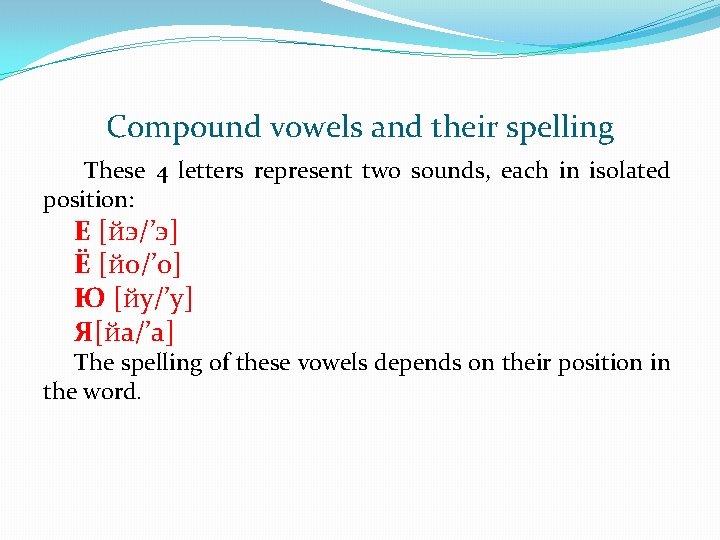
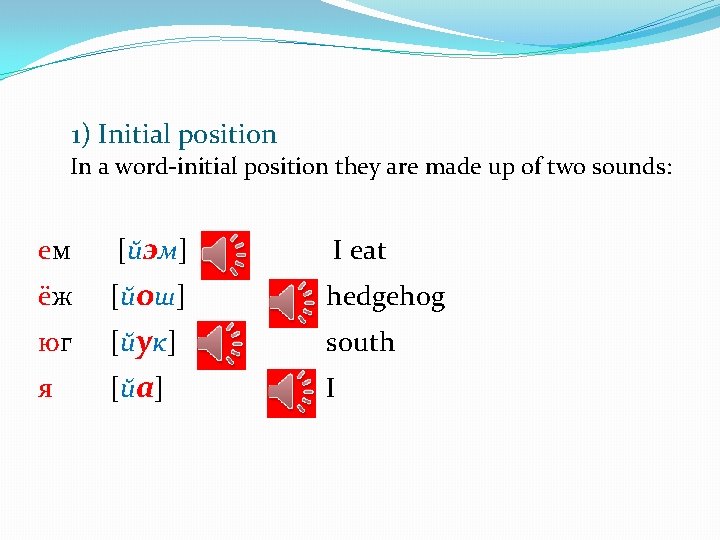
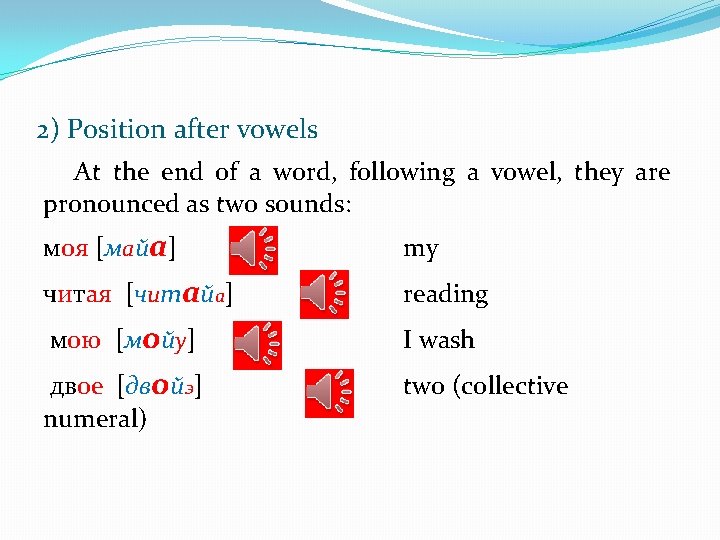
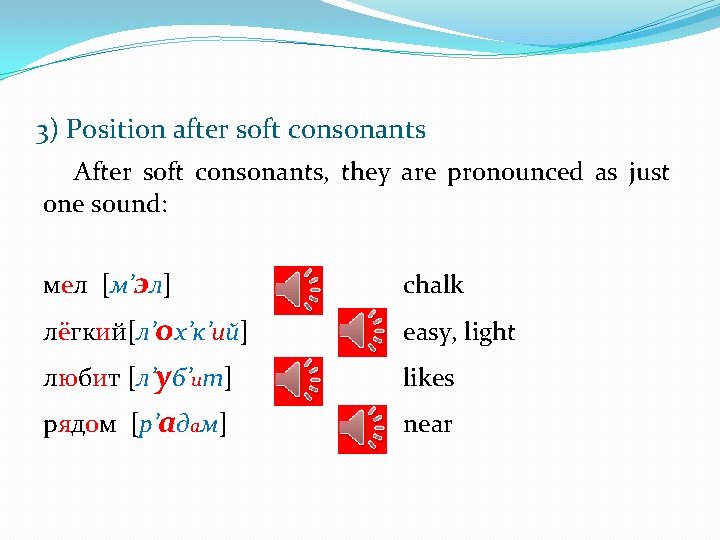
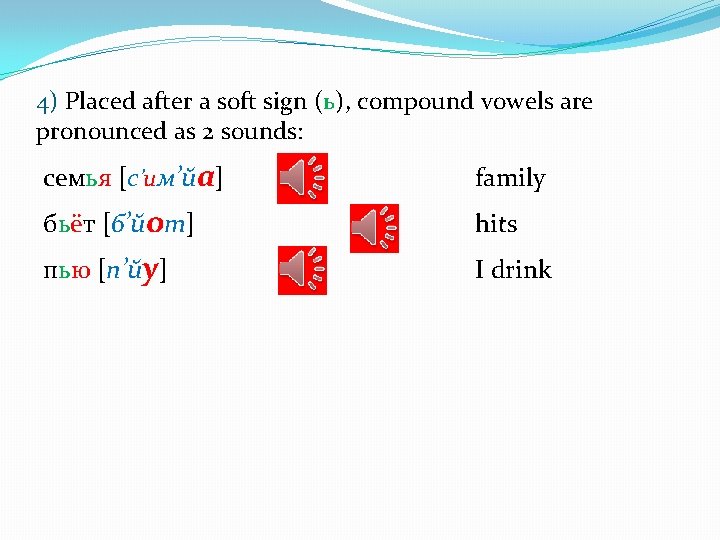
Compound vowels and their spelling These 4 letters represent two sounds, each in isolated position: Е [йэ/’э] Ё [йо/’о] Ю [йу/’у] Я[йа/’а] The spelling of these vowels depends on their position in the word.
1) Initial position In a word-initial position they are made up of two sounds: ем [йэм] I eat ёж [йош] hedgehog юг [йук] south я [йа] I
2) Position after vowels At the end of a word, following a vowel, they are pronounced as two sounds: моя [майа] my читая [читайа] reading мою [мойу] I wash двое [двойэ] numeral) two (collective
3) Position after soft consonants After soft consonants, they are pronounced as just one sound: мел [м’эл] chalk лёгкий[л’ох’к’ий] easy, light любит [л’уб’ит] likes рядом [р’адам] near
4) Placed after a soft sign (ь), compound vowels are pronounced as 2 sounds: семья [с’им’йа] family бьёт [б’йот] hits пью [п’йу] I drink
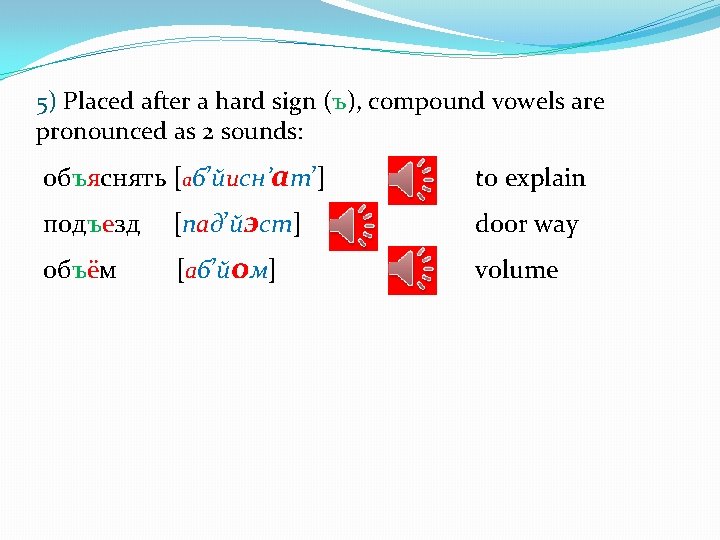
5) Placed after a hard sign (ъ), compound vowels are pronounced as 2 sounds: объяснять [аб’йисн’ат’] to explain подъезд [пад’йэст] door way объём [аб’йом] volume
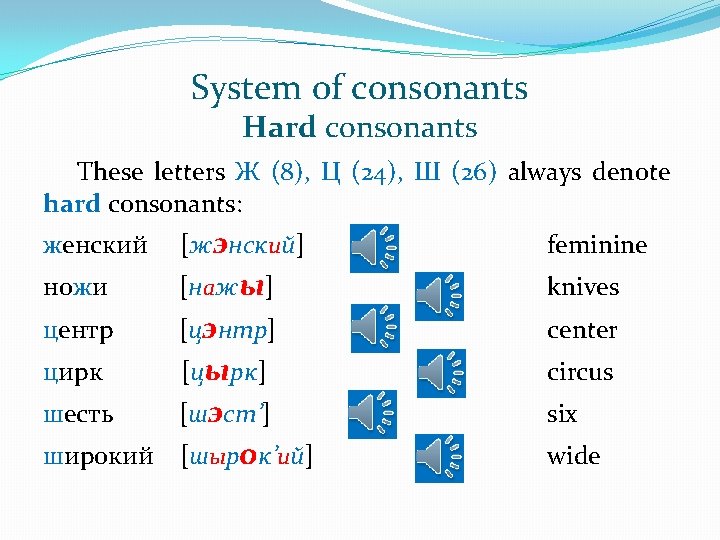
System of consonants Hard consonants These letters Ж (8), Ц (24), Ш (26) always denote hard consonants: женский [жэнский] feminine ножи [нажы] knives центр [цэнтр] center цирк [цырк] circus шесть [шэст’] six широкий [шырок’ий] wide
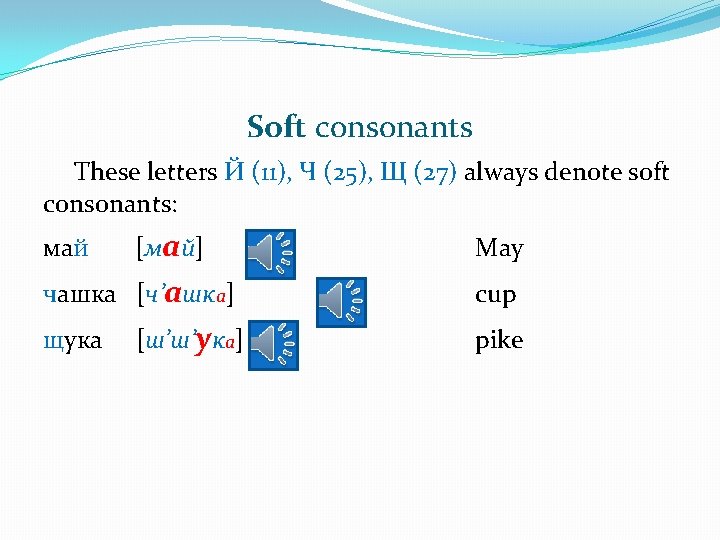
Soft consonants These letters Й (11), Ч (25), Щ (27) always denote soft consonants: май [май] чашка [ч’ашка] щука [ш’ш’ука] May cup pike
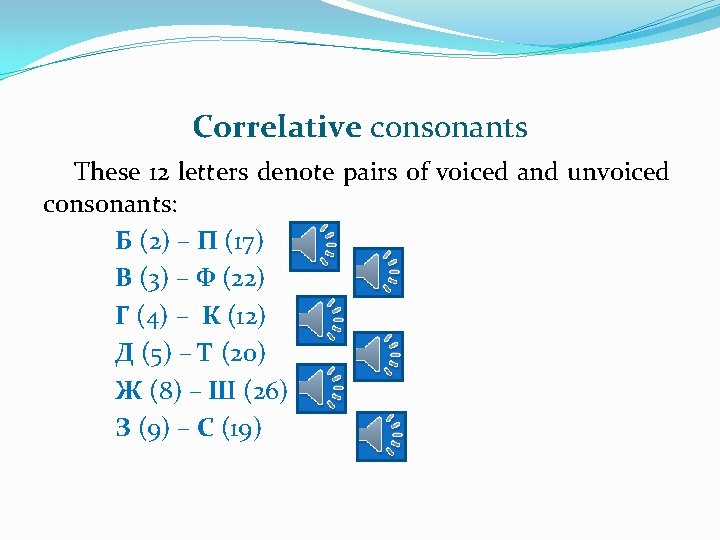
Correlative consonants These 12 letters denote pairs of voiced and unvoiced consonants: Б (2) – П (17) В (3) – Ф (22) Г (4) – К (12) Д (5) – Т (20) Ж (8) – Ш (26) З (9) – С (19)
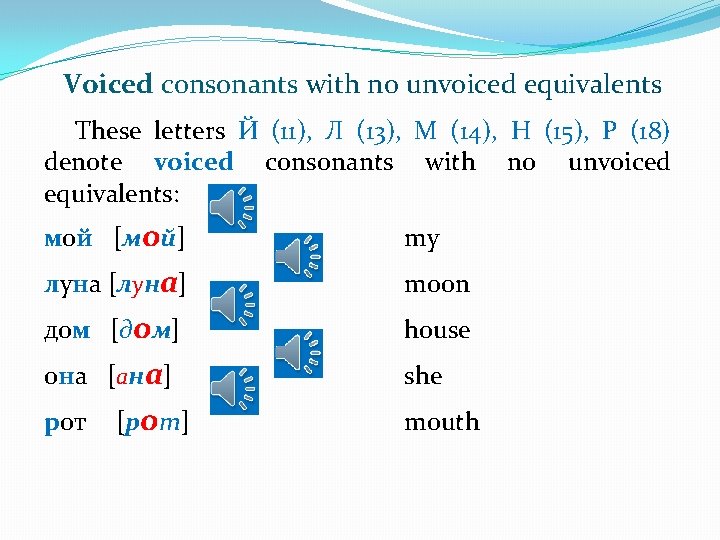
Voiced consonants with no unvoiced equivalents These letters Й (11), Л (13), М (14), Н (15), Р (18) denote voiced consonants with no unvoiced equivalents: мой [мой] my луна [луна] moon дом [дом] house она [ана] she рот [рот] mouth
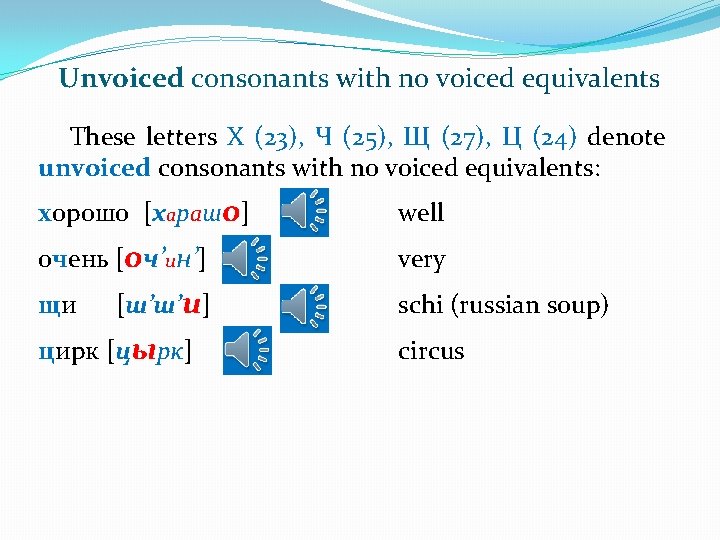
Unvoiced consonants with no voiced equivalents These letters Х (23), Ч (25), Щ (27), Ц (24) denote unvoiced consonants with no voiced equivalents: хорошо [харашо] well очень [оч’ин’] very щи [ш’ш’и] цирк [цырк] schi (russian soup) circus
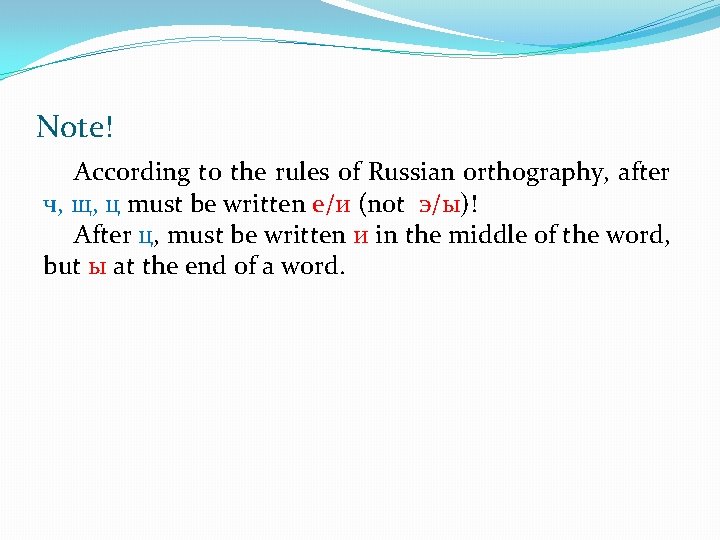
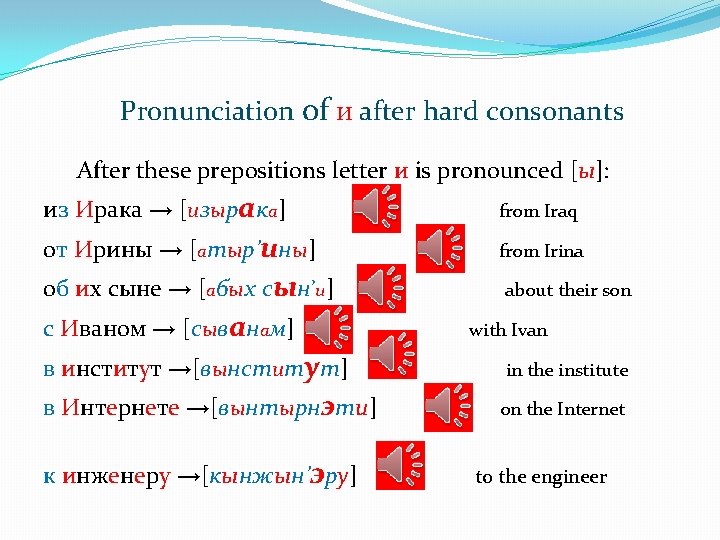
Note! According to the rules of Russian orthography, after ч, щ, ц must be written е/и (not э/ы)! After ц, must be written и in the middle of the word, but ы at the end of a word.
Spelling of е, ё, ю, я in stressed syllables: есть= [йэст’] to eat юноша = [йунаша] youth яблоко = [йаблака] apple ёлка = [йолка] fir-tree моё = [майо] my (neut. ) даёт = [дайот] gives Note! A syllable containing the letter Ё is always stressed.
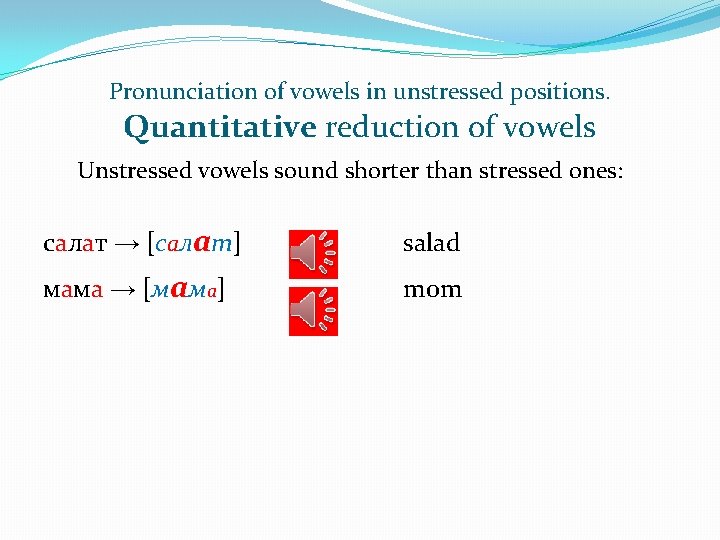
Pronunciation of vowels in unstressed positions. Quantitative reduction of vowels Unstressed vowels sound shorter than stressed ones: салат → [салат] salad мама → [мама] mom
Qualitative reduction of vowels Unstressed vowels are reduced: окно → [акно] window молоко → [малако] milk метро → [митро] metro занят → [зан’ит] busy этаж → [иташ] floor
Spelling of и in the position after -ь и after ь → [йи] семьи → [с’эм’йи] families чьи → [ч’ йи] whose
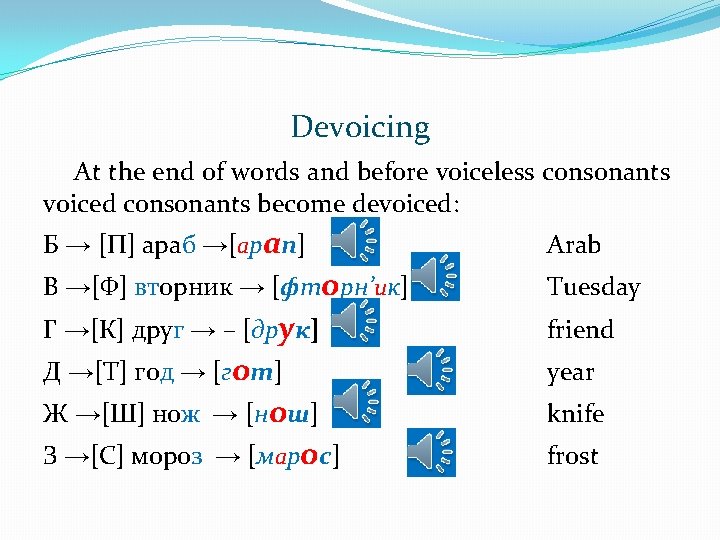
Devoicing At the end of words and before voiceless consonants voiced consonants become devoiced: Б → [П] араб →[арап] Arab В →[Ф] вторник → [фторн’ик] Tuesday Г →[К] друг → – [друк] friend Д →[Т] год → [гот] year Ж →[Ш] нож → [нош] knife З →[С] мороз → [марос] frost
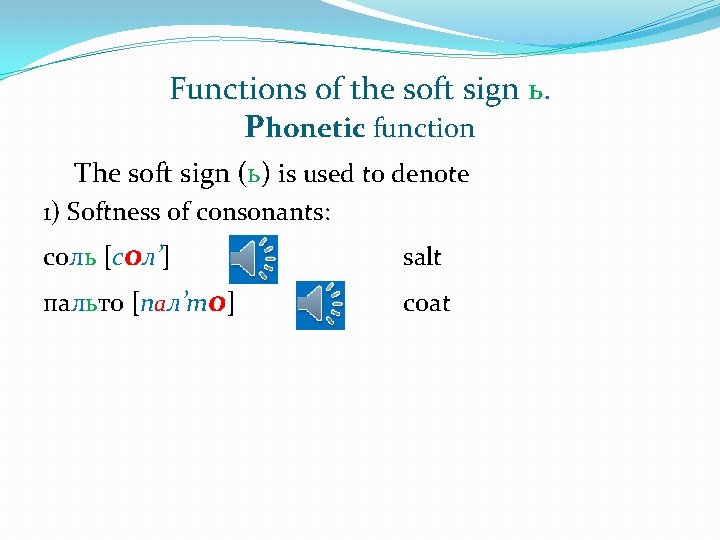
Functions of the soft sign ь. Phonetic function The soft sign (ь) is used to denote 1) Softness of consonants: соль [сол’] salt пальто [пал’то] coat
2) Separate spelling of soft consonants: семья [с’им’йа] family братья [брат’йа] brothers бьёт [б’йот] hits пью [п’йу] I drink
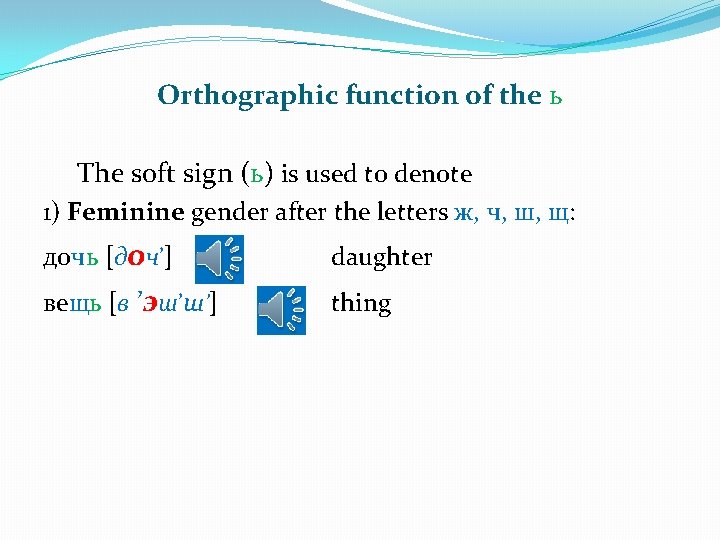
Orthographic function of the ь The soft sign (ь) is used to denote 1) Feminine gender after the letters ж, ч, ш, щ: дочь [доч’] daughter вещь [в ’эш’ш’] thing
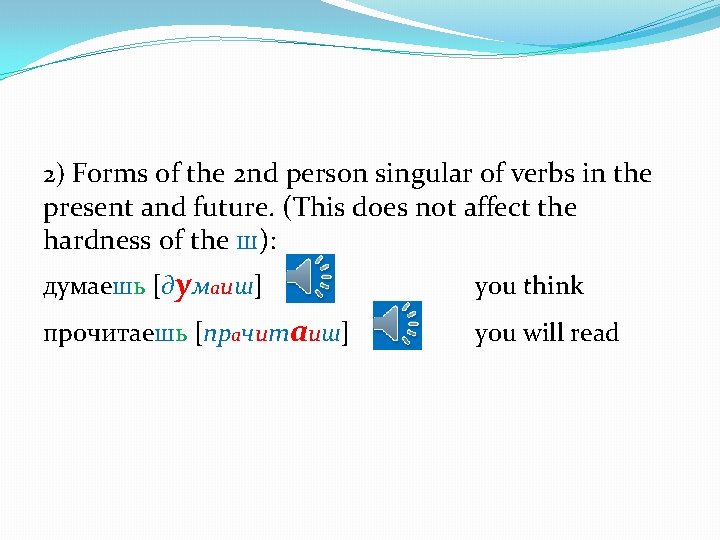
2) Forms of the 2 nd person singular of verbs in the present and future. (This does not affect the hardness of the ш): думаешь [думаиш] you think прочитаешь [прачитаиш] you will read
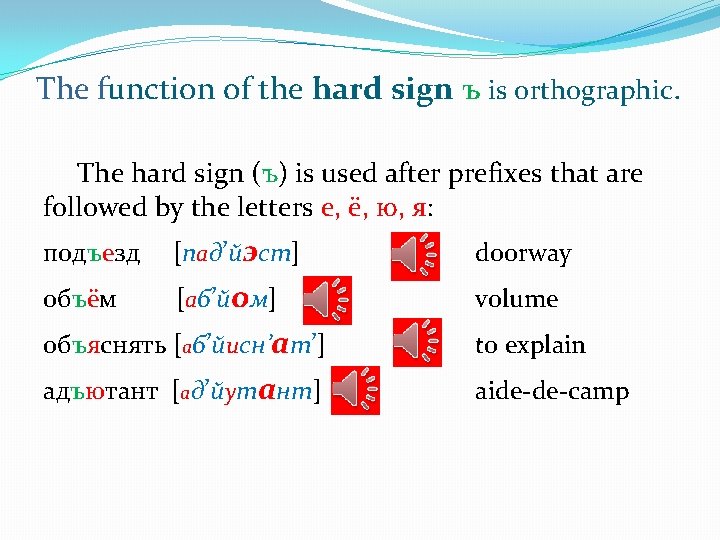
The function of the hard sign ъ is orthographic. The hard sign (ъ) is used after prefixes that are followed by the letters е, ё, ю, я: подъезд [пад’йэст] doorway объём [аб’йом] volume объяснять [аб’йисн’ат’] to explain адъютант [ад’йутант] aide-de-camp
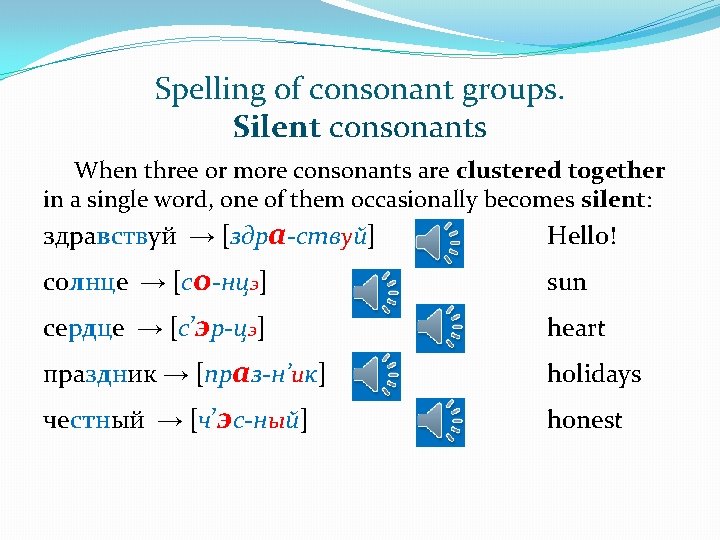
Spelling of consonant groups. Silent consonants When three or more consonants are clustered together in a single word, one of them occasionally becomes silent: здравствуй → [здра-ствуй] Hello! солнце → [cо-нцэ] sun сердце → [с’эр-цэ] heart праздник → [праз-н’ик] holidays честный → [ч’эс-ный] honest
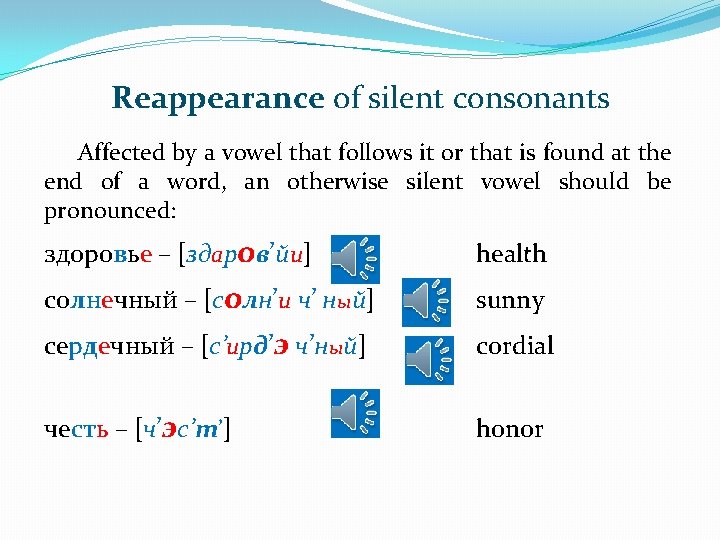
Reappearance of silent consonants Affected by a vowel that follows it or that is found at the end of a word, an otherwise silent vowel should be pronounced: здоровье – [здаров’йи] health солнечный – [солн’и ч’ ный] sunny сердечный – [с’ирд’э ч’ный] cordial честь – [ч’эс’т’] honor
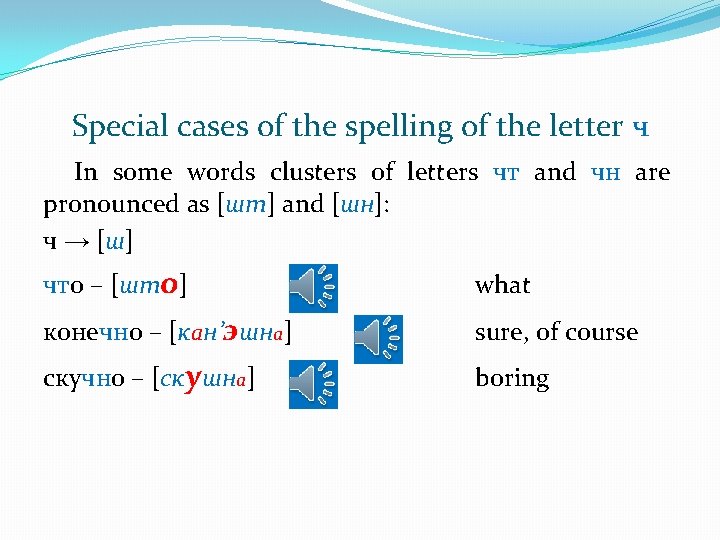
Special cases of the spelling of the letter ч In some words clusters of letters чт and чн are pronounced as [шт] and [шн]: ч → [ш] что – [што] what конечно – [кан’эшна] sure, of course скучно – [скушна] boring
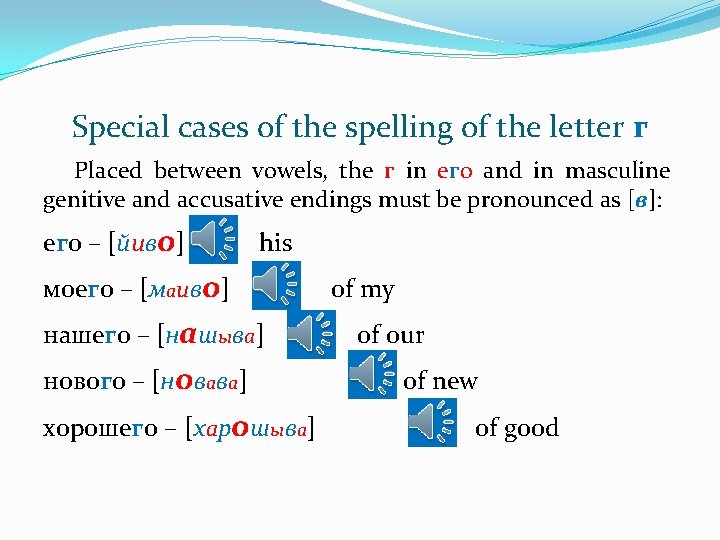
Special cases of the spelling of the letter г Placed between vowels, the г in его and in masculine genitive and accusative endings must be pronounced as [в]: его – [йиво] his моего – [маиво] нашего – [нашыва] нового – [новава] хорошего – [харошыва] of my of our of new of good
Pronunciation of the letter clusters -ться/-тся These letter clusters are pronounced like [ца]: -ться/-тся → [ца] учиться - [уч’ица] учится - [уч’ица]
6) Кедрова Г. Е. и др. Интернет-учебник по русской фонетике. URL: http: //www. philol. msu. ru/rus/galya 1/index 1. htm 7) Кирилл и Мефодий. URL: http: //www. krugosvet. ru/node/35197 8) Кириллица. URL: http: //ru. wikipedia. org/wiki/Кириллица 9) Махов Б. Ф. Русский алфавит как система. http: //www. rae. ru/use/? section=content&op=show_article& article_id=7781661
Text and presentation by I. Shigina Sound recording by E. Panferova Translation consultants: Karen Chilstrom (USA), A. Leonov, Ph. D