
System of Rice Intensification SRI Less can Produce

- Slides: 61
System of Rice Intensification (SRI) “Less can Produce more” Dr. A. SATYANARAYANA Director of Extension Acharya N. G. Ranga Agricultural University Rajendranagar, Hyderabad
Modern Agriculture Ø Overly Genocentric Ø Productivity gains were possible with increased use of inputs – Fertilizers, Pesticides, Water etc. They are now giving • Diminishing returns • Creating environmental hazards, health risks • Rising costs of production
21 st Century Agriculture needs to be Ø More productive in terms of - Land, Labour, Water, Capital, Energy, inputs Ø More environmentally benign Ø More robust in the face of climate change Ø More socially beneficial - reducing poverty, greater food security
Biological power and Eco-agriculture should be basic foundations for soil health Ø Micro organisms and other soil biota as creators and maintainers of soil fertility Ø Greater attention to plants roots
The basic idea of SRI Rice plants do best when their - roots can grow large because the plants are transplanted carefully at wider spacing and grown on soil that is kept well aerated with abundant and diverse soil microorganisms
The contribution of soil microbial activity need to be taken more seriously The microbial flora causes a large number of biochemical changes in the soil that determine the fertility of soil (De Datta, 1981) largely
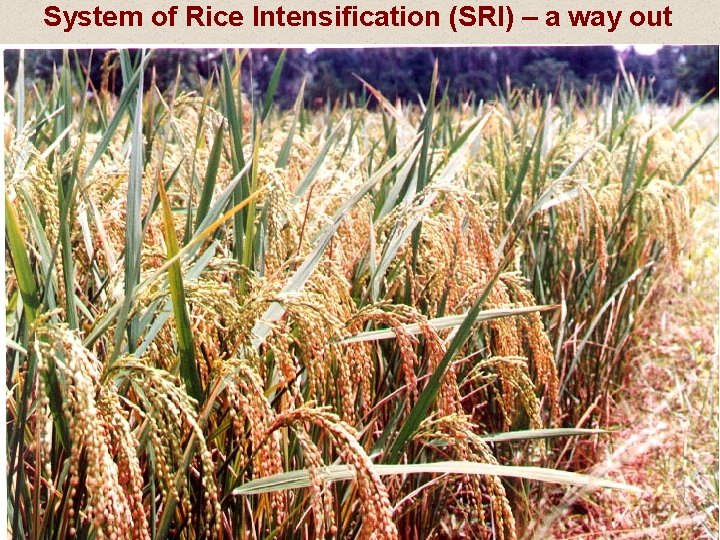
System of Rice Intensification (SRI) – a way out
SRI offers increased factor productivity of Ø Land Ø Labour Ø Water
v Rice is the most important food crop of India v Rice has been identified as Growth Engine under vision 2020 of Andhra Pradesh v The area and production of rice is coming down in recent years due to lack of sufficient water in irrigation systems v SRI has the potential to meet the challenge by virtue of its capacity to double or even triple the productivity and less water requirement
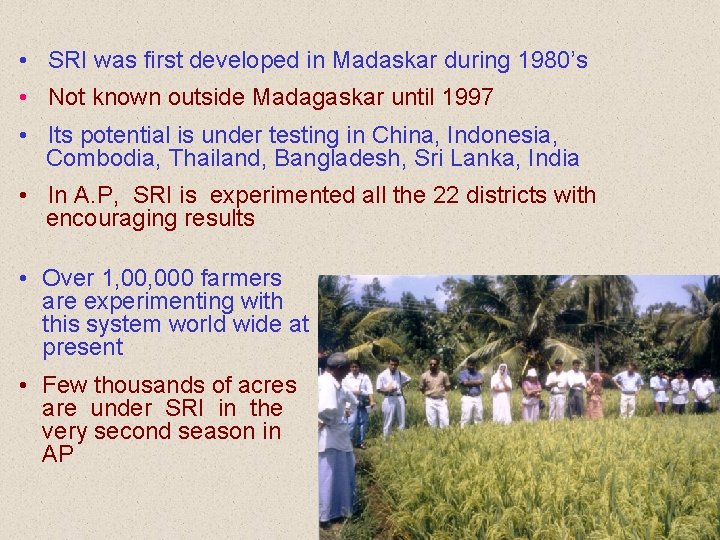
• SRI was first developed in Madaskar during 1980’s • Not known outside Madagaskar until 1997 • Its potential is under testing in China, Indonesia, Combodia, Thailand, Bangladesh, Sri Lanka, India • In A. P, SRI is experimented all the 22 districts with encouraging results • Over 1, 000 farmers are experimenting with this system world wide at present • Few thousands of acres are under SRI in the very second season in AP
SRI Technology uses Less external inputs • Less seed (2 kg/ac) • Fewer plants per unit area (25 x 25 cm) • Less chemical fertilizer • More organic manures • Less pesticides
SRI is initially labour intensive - Needs 50% more man days for transplanting and weeding - Mobilises labour to work for profit - It offers an alternative to resource poor, who puts in their family labour - Once skills are learnt and implements are used, the labour costs will be lesser than the present day Rice cultivation
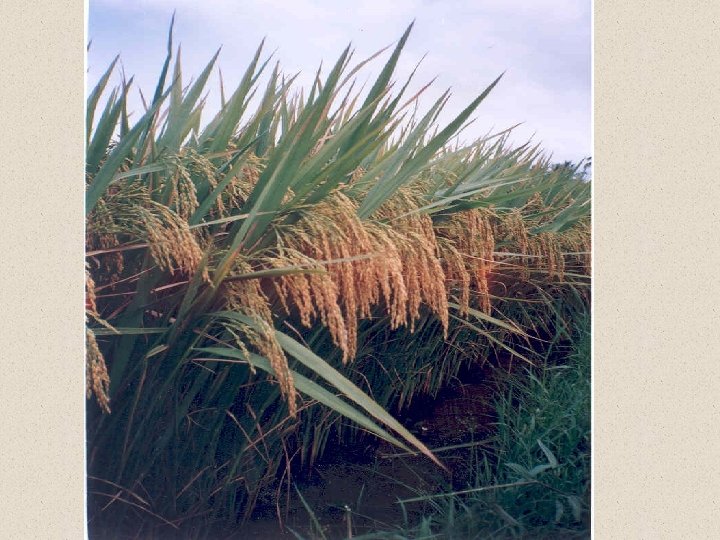
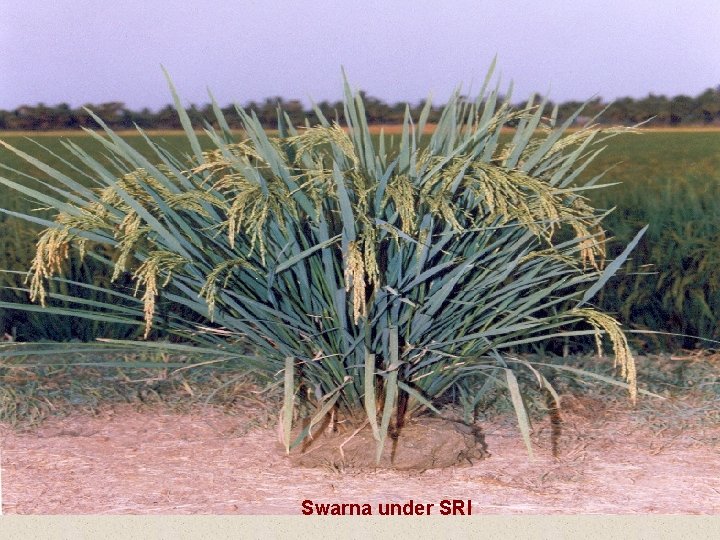
SRI encourages rice plant to grow healthy with Ø Large root volume Ø Profuse and strong tillers Ø Non-lodging Ø Big panicle Ø More and well filled spikelets and higher grain weight Ø Resists insects Because it allows Rice to grow naturally
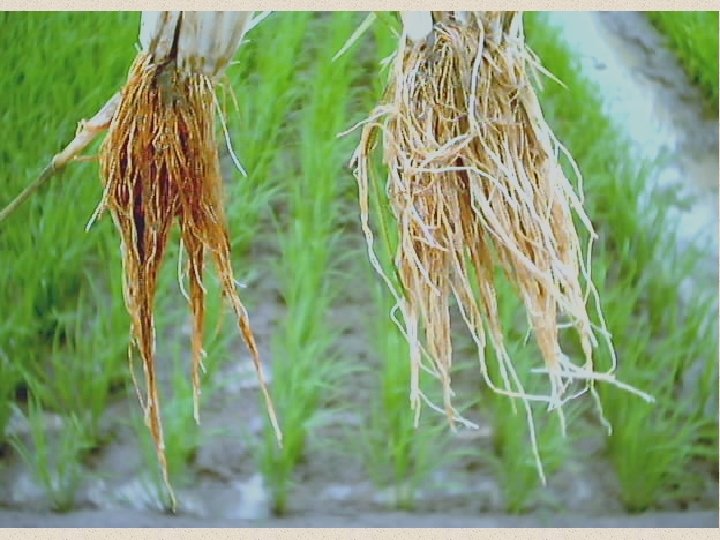
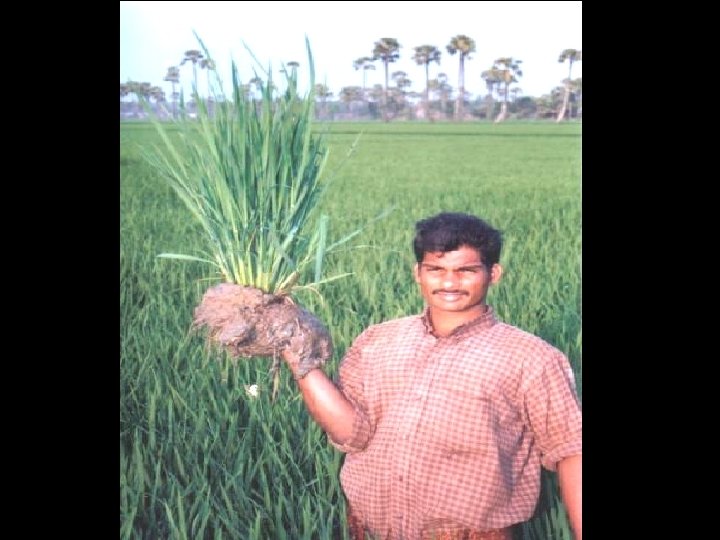
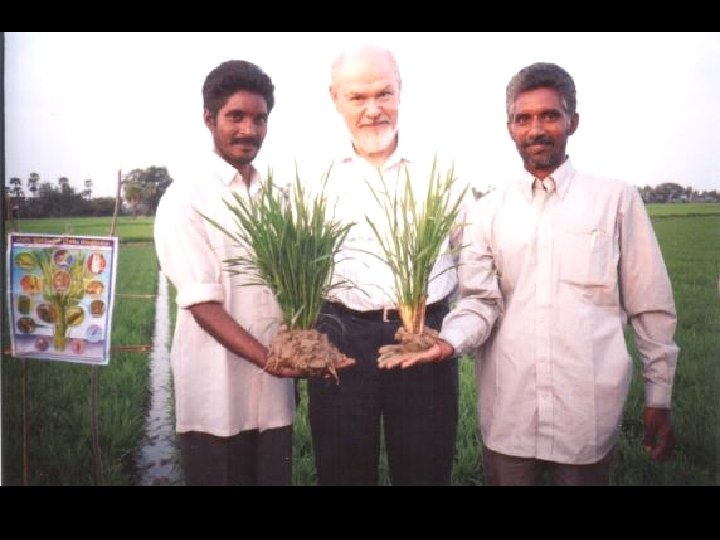
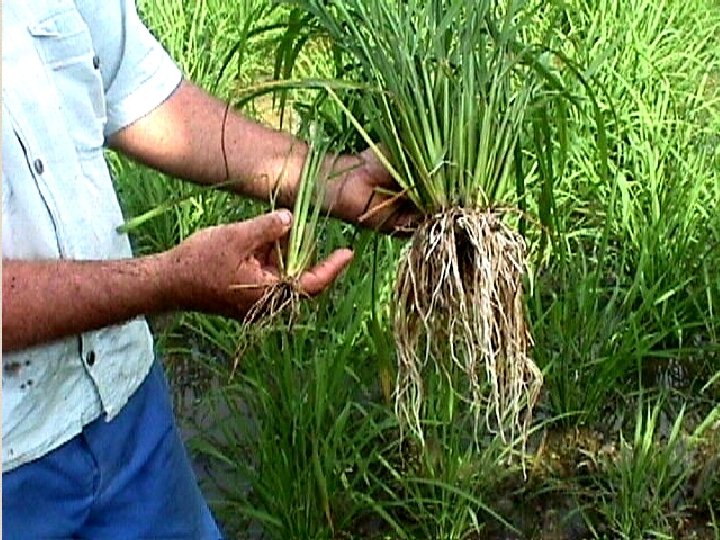
Root growth Ø Root growth can be massive in response to SRI practices Ø 3 hills under conventional method required 28 kg of force to be pulled up Ø Single SRI rice plants required 53 kg for uprooting
Tillering is greatly increased ü 30 tillers per plant are fairly easy to achieve ü 50 tillers per plant are quite attainable ü With really good use of SRI, individual plants can have 100 fertile tillers or even more Because no set back due to early transplanting and no die back of roots ü Maximum tillering occurs concurrently with panicle initiation ü With SRI positive correlation is found between the number of panicles per plant and number of grains per panicle
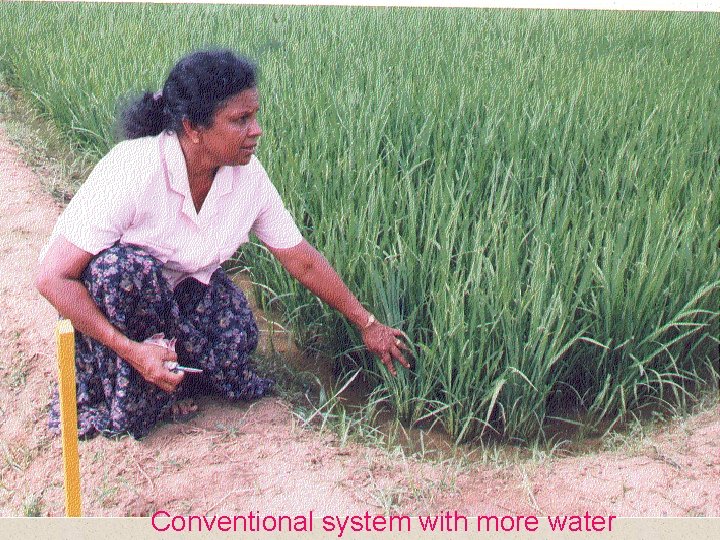
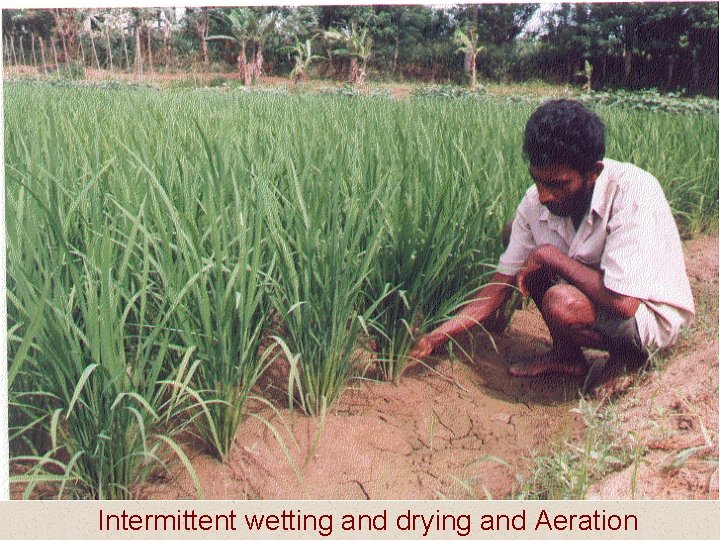
Rice plant v Everybody believe that Rice is an aquatic plant v v v and grows best in standing water Rice is not an aquatic plant, it can survive in water but does not thrive under hypoxic conditions Rice plants spends lot of its energy to develop air pockets (aerenchyma tissue) in its roots under continuous inundation 70% of Rice root tips get degenerated by flowering period Under SRI paddy fields are not flooded but keep the soil moist during vegetative phase SRI requires only about half as much water as normally applied in irrigated rice
Conventional system with more water
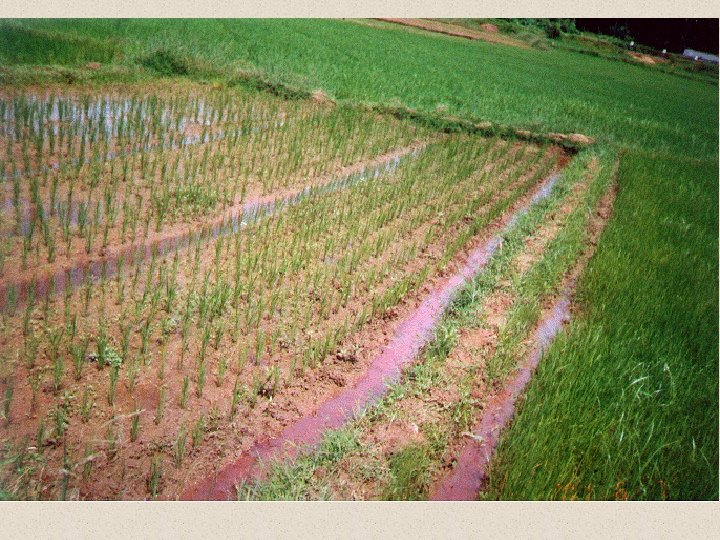
Intermittent wetting and drying and Aeration
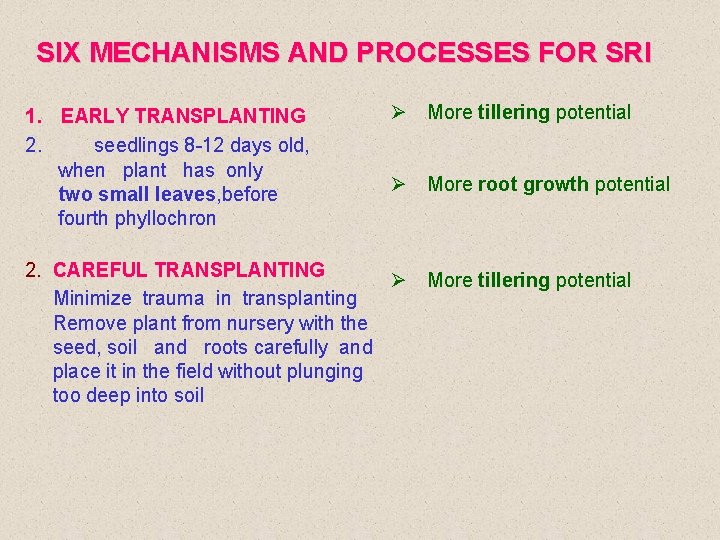
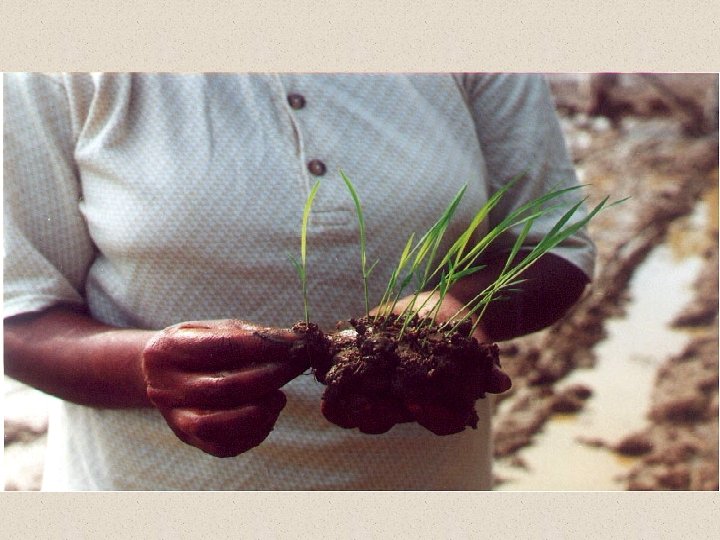
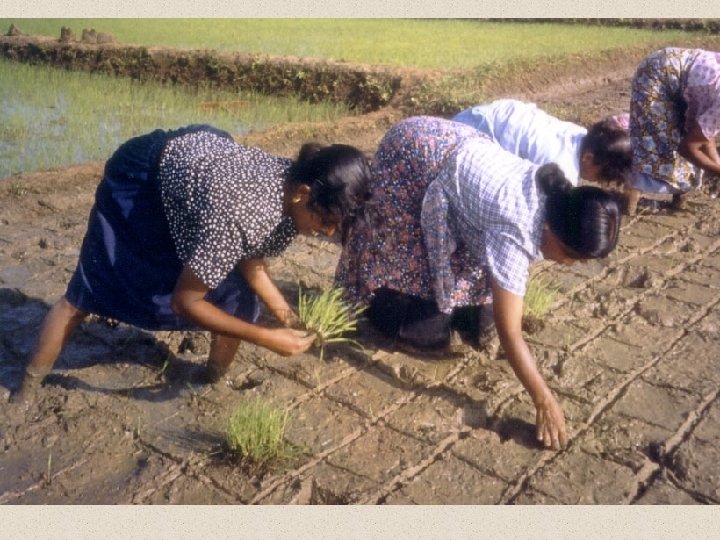
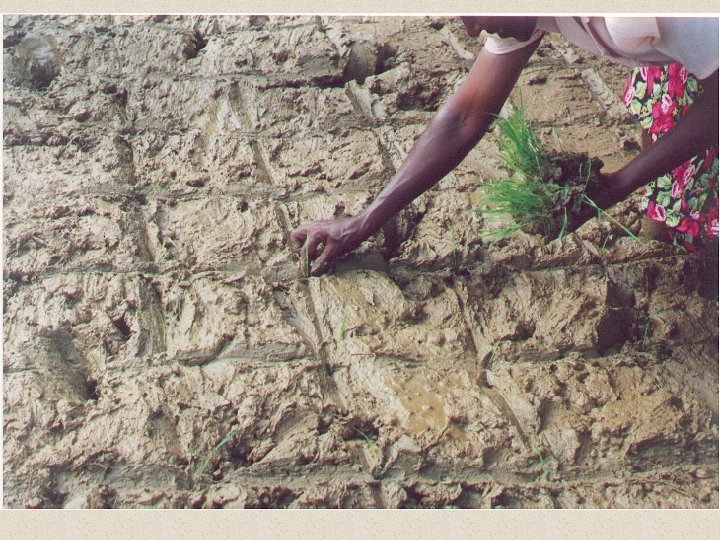
SIX MECHANISMS AND PROCESSES FOR SRI 1. EARLY TRANSPLANTING 2. seedlings 8 -12 days old, when plant has only two small leaves, before fourth phyllochron Ø More tillering potential Ø More root growth potential 2. CAREFUL TRANSPLANTING Ø More tillering potential Minimize trauma in transplanting Remove plant from nursery with the seed, soil and roots carefully and place it in the field without plunging too deep into soil
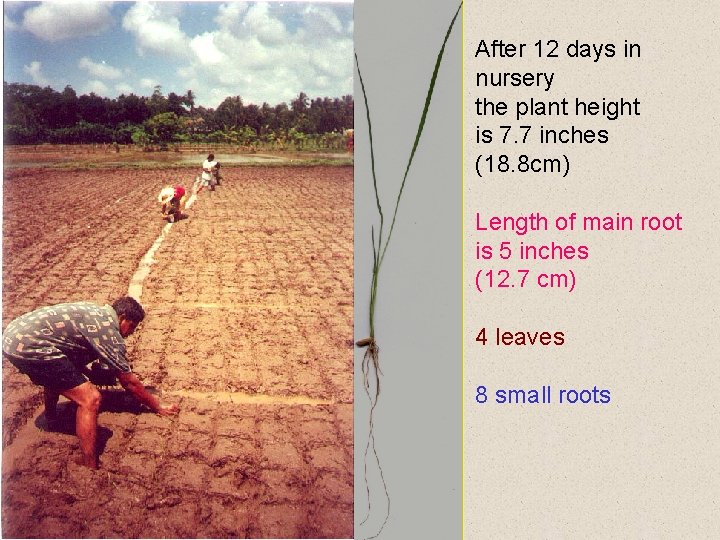
After 12 days in nursery the plant height is 7. 7 inches (18. 8 cm) Length of main root is 5 inches (12. 7 cm) 4 leaves 8 small roots
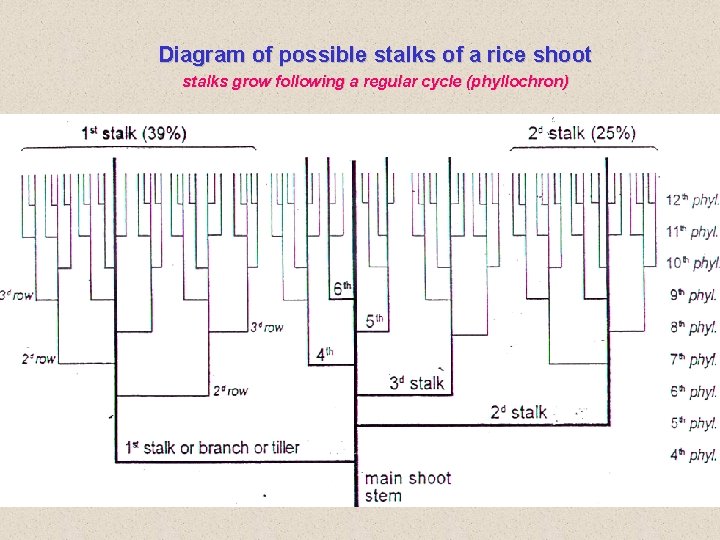
Diagram of possible stalks of a rice shoot stalks grow following a regular cycle (phyllochron)
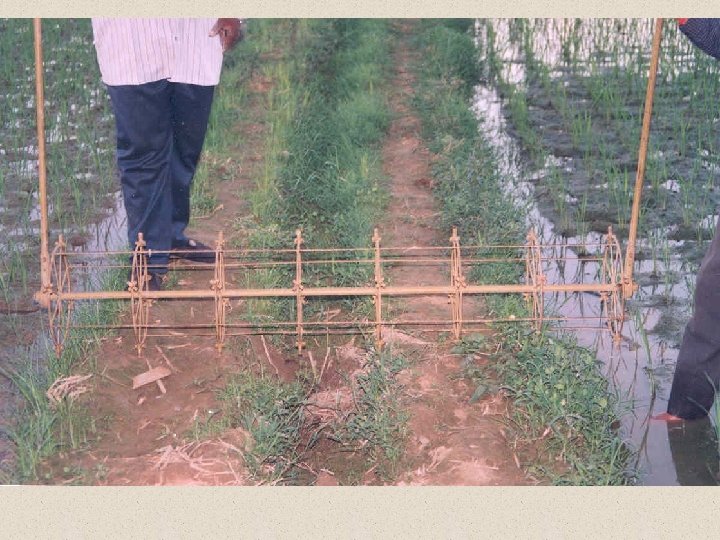
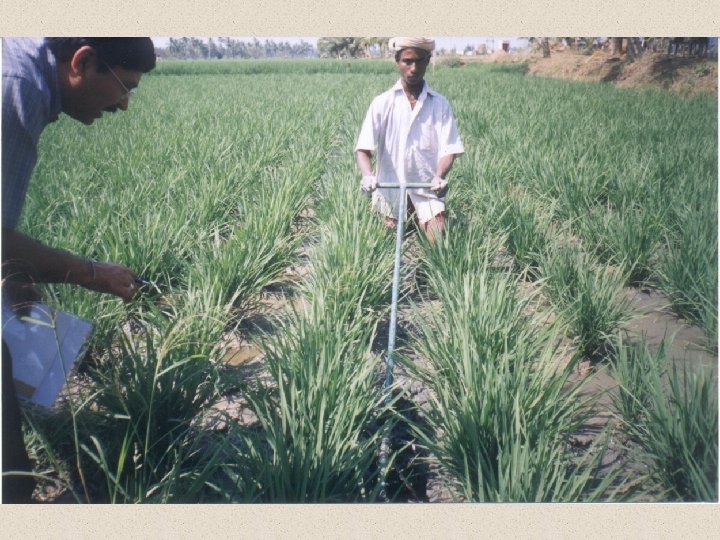
Contd. . 3. WIDE SPACING Ø More root growth potential plant single seedlings, not in clumps, and in a square pattern, not rows, 25 cm x 25 cm or wider 4. WEEDING AND AERATION Ø More root growth, due to reduced weed competition, needed because no standing water; and aeration of soil, giving use simple mechanical “rotating hoe” roots more oxygen and N that churns up soil; 2 weedings due to increased microbial required, with 4 recommended before activity we left in soil; can panicle initiation; first weeding 10 add 1+tons per weeding? days after transplanting Each additional weeding after two rounds results in increased productivity up to 2 t/ha/weeding
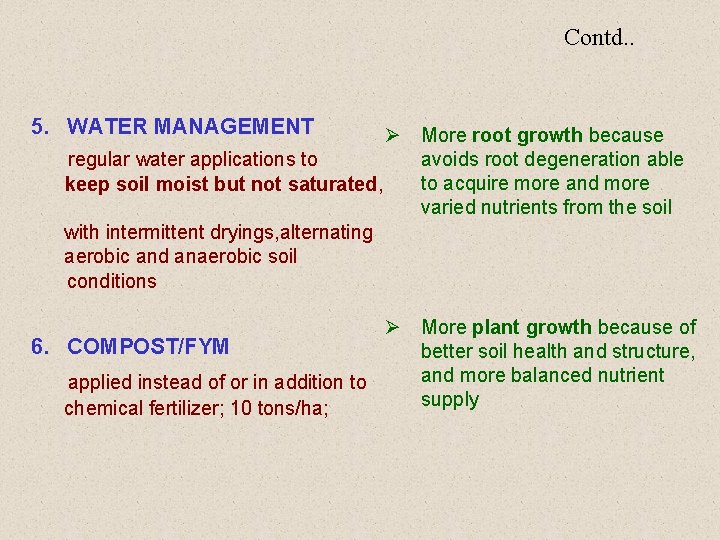
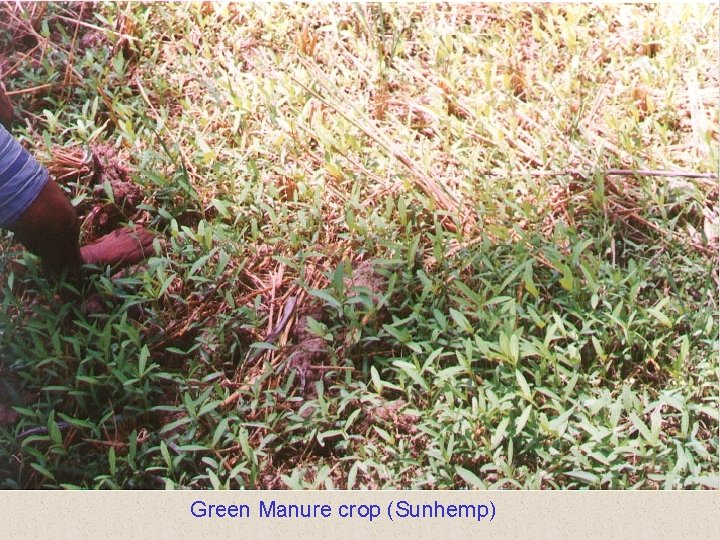
Contd. . 5. WATER MANAGEMENT Ø More root growth because avoids root degeneration able regular water applications to to acquire more and more keep soil moist but not saturated, varied nutrients from the soil with intermittent dryings, alternating aerobic and anaerobic soil conditions Ø More plant growth because of 6. COMPOST/FYM better soil health and structure, and more balanced nutrient applied instead of or in addition to supply chemical fertilizer; 10 tons/ha;
Green Manure crop (Sunhemp)
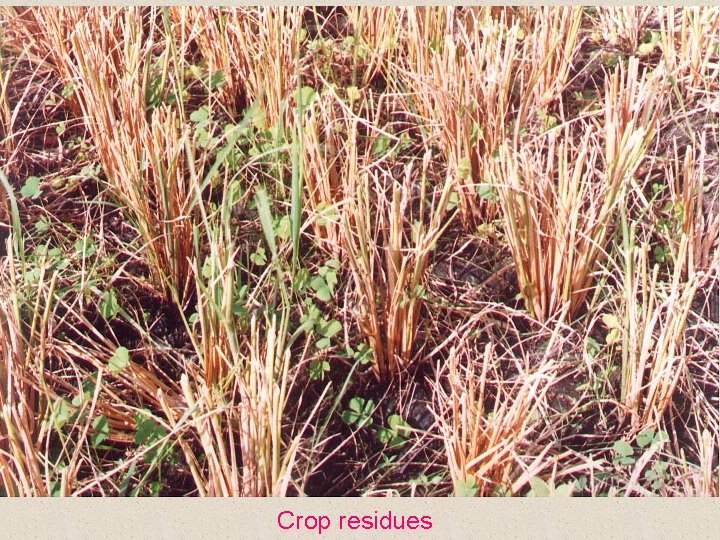
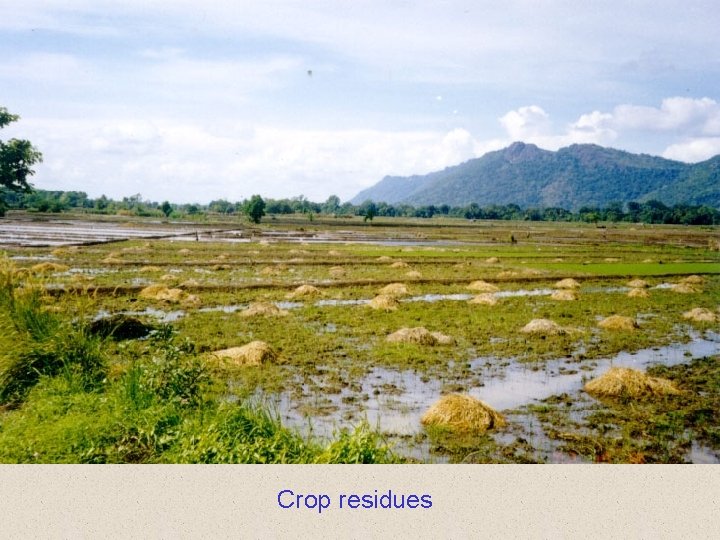
Crop residues
Crop residues
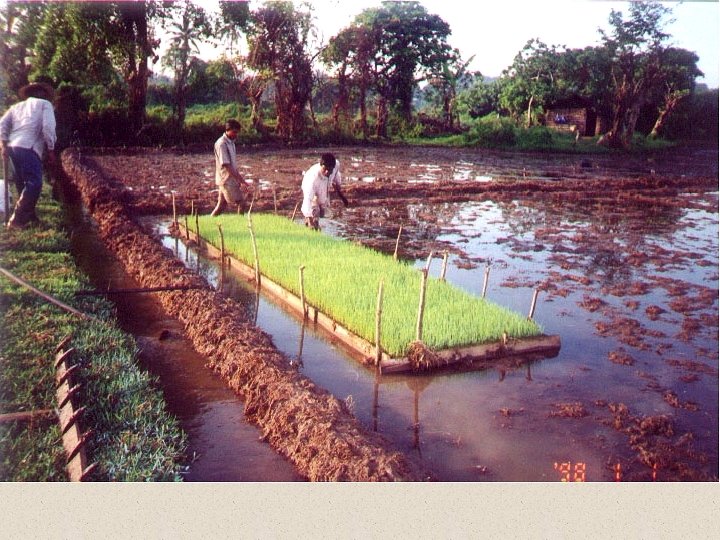
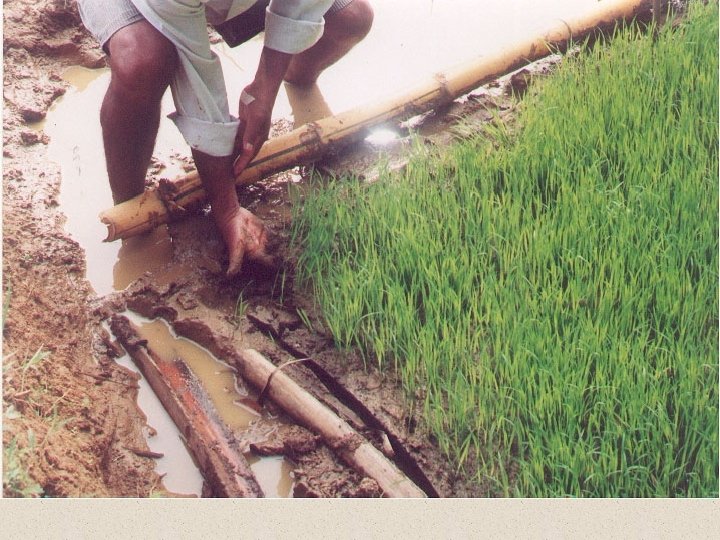
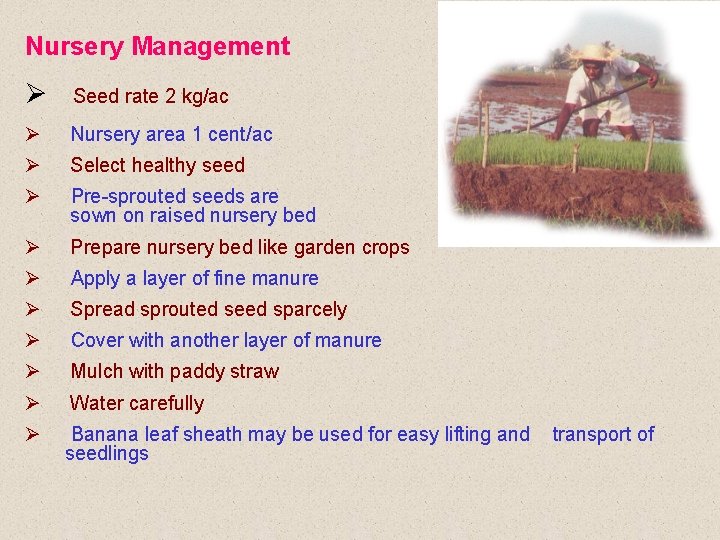
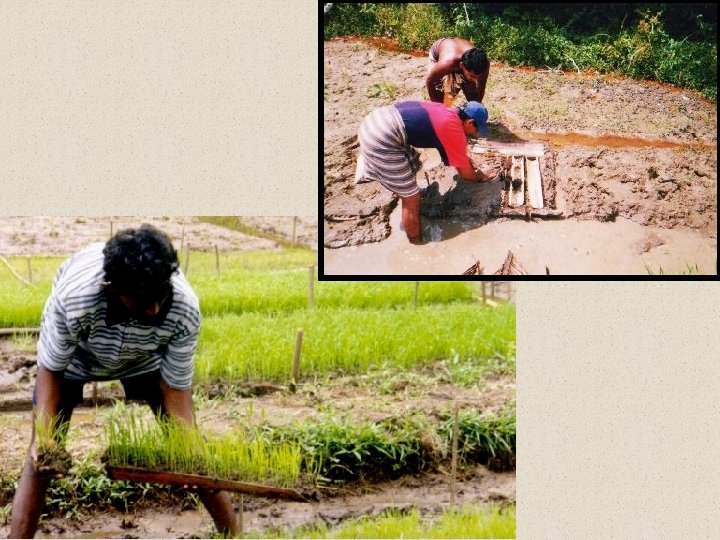
Nursery Management Ø Seed rate 2 kg/ac Ø Nursery area 1 cent/ac Ø Select healthy seed Ø Pre-sprouted seeds are sown on raised nursery bed Ø Prepare nursery bed like garden crops Ø Apply a layer of fine manure Ø Spread sprouted seed sparcely Ø Cover with another layer of manure Ø Mulch with paddy straw Ø Water carefully Ø Banana leaf sheath may be used for easy lifting and seedlings transport of
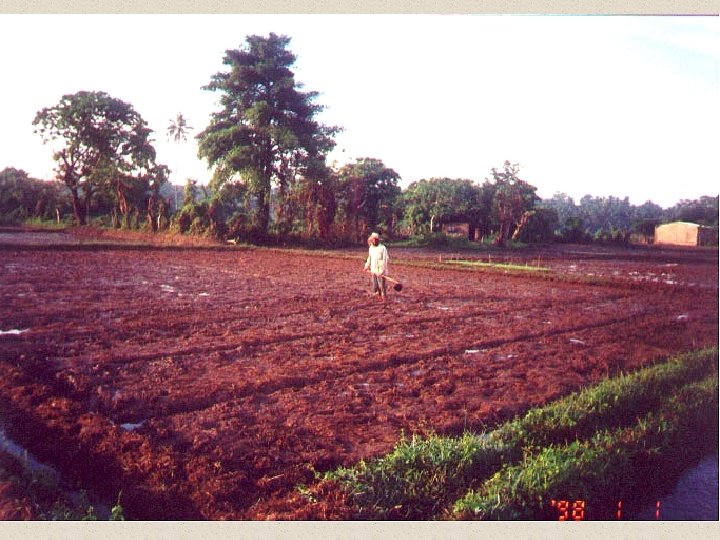
Main field preparation ü Land preparation is not different from regular irrigated rice cultivation ü Levelling should be done carefully so that water can be applied very evenly ü At every 3 m distance form a canal to facilitate drainage ü With the help of a marker draw lines both way at 25 x 25 cm apart and transplant at the intersection
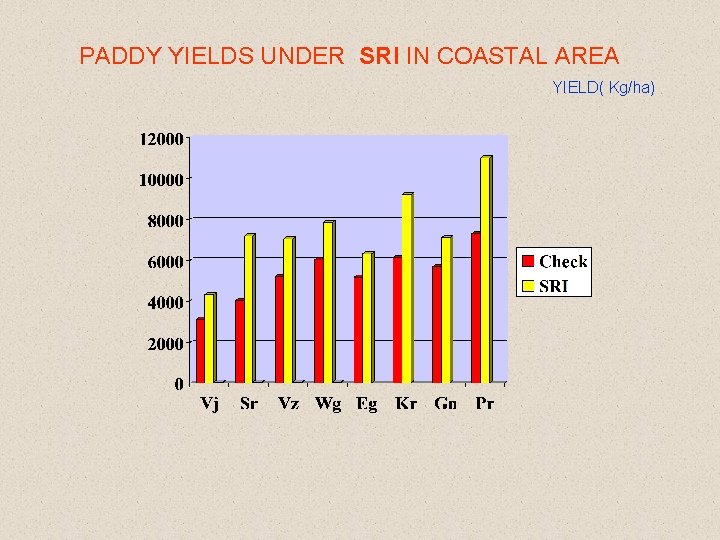
PADDY YIELDS UNDER SRI IN COASTAL AREA YIELD( Kg/ha)
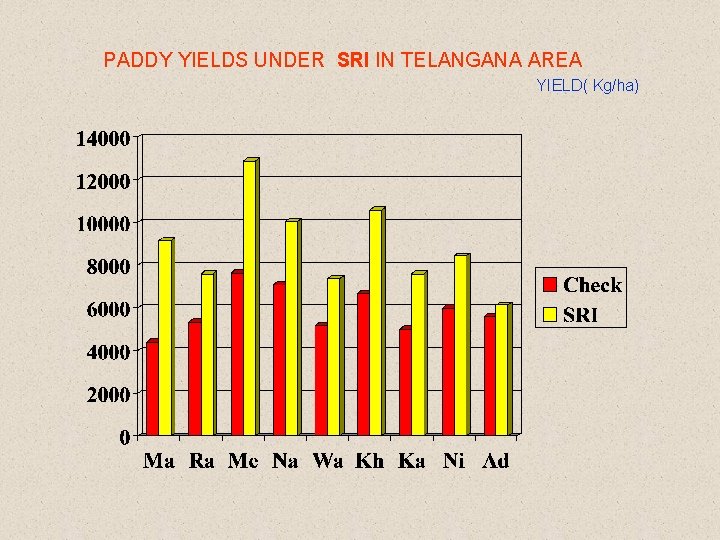
PADDY YIELDS UNDER SRI IN TELANGANA AREA YIELD( Kg/ha)
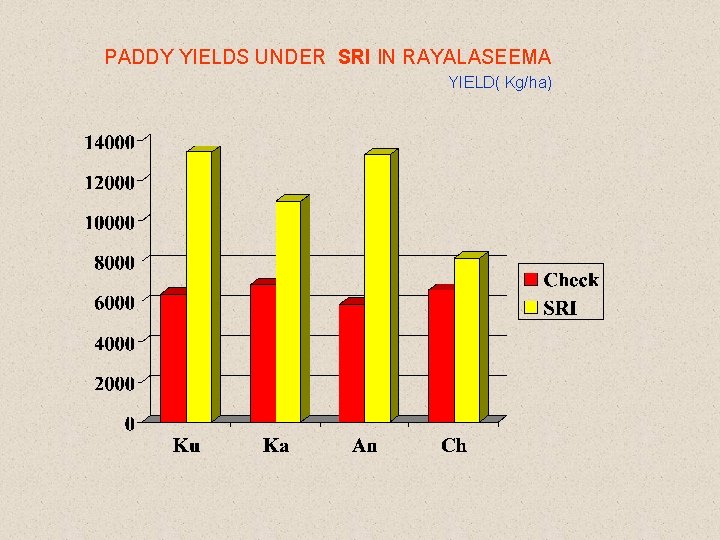
PADDY YIELDS UNDER SRI IN RAYALASEEMA YIELD( Kg/ha)
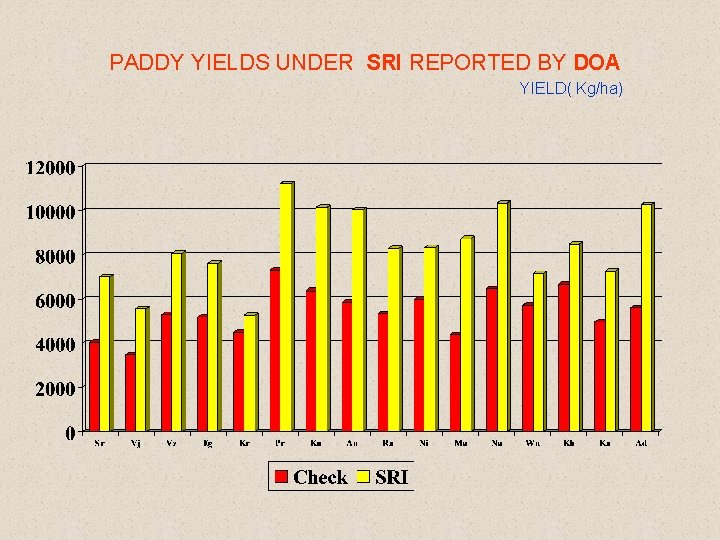
PADDY YIELDS UNDER SRI REPORTED BY DOA YIELD( Kg/ha)
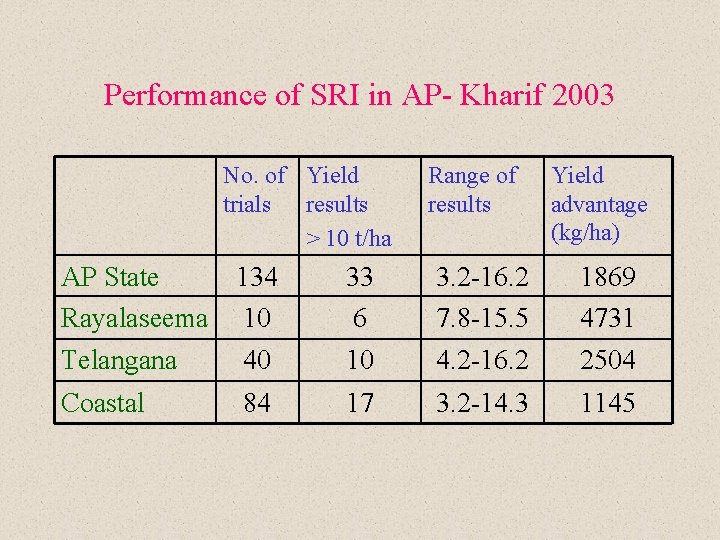
Performance of SRI in AP- Kharif 2003 No. of Yield trials results > 10 t/ha Range of results Yield advantage (kg/ha) AP State 134 Rayalaseema 10 33 6 3. 2 -16. 2 7. 8 -15. 5 1869 4731 Telangana 40 10 4. 2 -16. 2 2504 Coastal 84 17 3. 2 -14. 3 1145
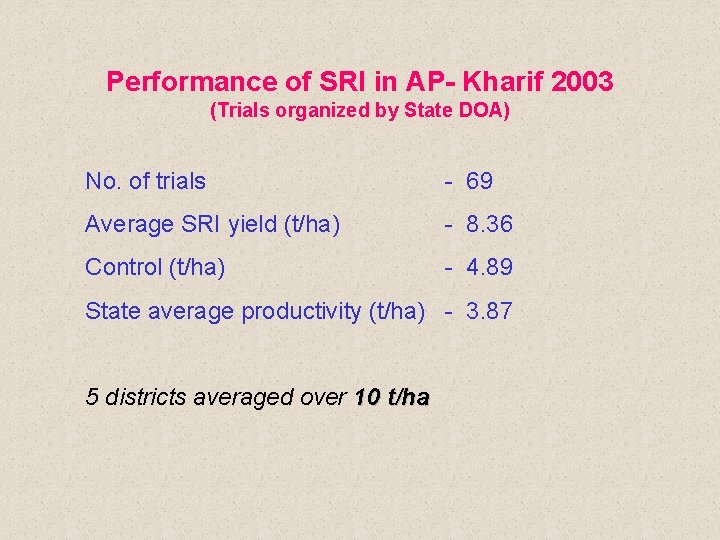
Performance of SRI in AP- Kharif 2003 (Trials organized by State DOA) No. of trials - 69 Average SRI yield (t/ha) - 8. 36 Control (t/ha) - 4. 89 State average productivity (t/ha) - 3. 87 5 districts averaged over 10 t/ha
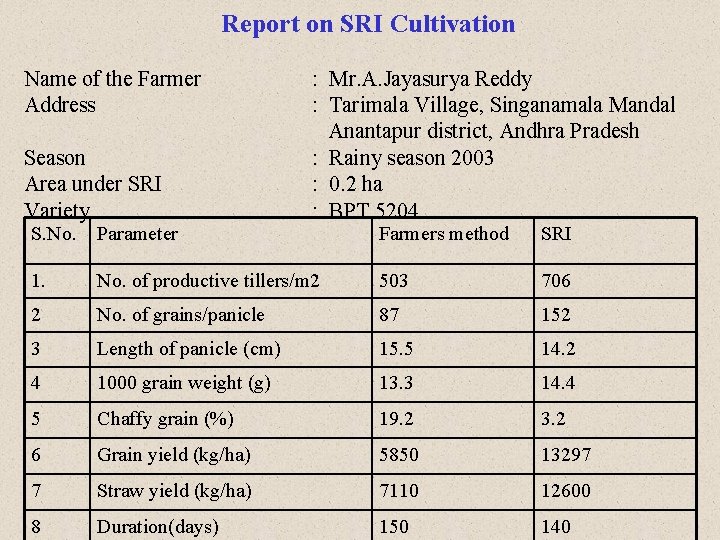
Report on SRI Cultivation Name of the Farmer Address Season Area under SRI Variety : Mr. A. Jayasurya Reddy : Tarimala Village, Singanamala Mandal Anantapur district, Andhra Pradesh : Rainy season 2003 : 0. 2 ha : BPT 5204 S. No. Parameter Farmers method SRI 1. No. of productive tillers/m 2 503 706 2 No. of grains/panicle 87 152 3 Length of panicle (cm) 15. 5 14. 2 4 1000 grain weight (g) 13. 3 14. 4 5 Chaffy grain (%) 19. 2 3. 2 6 Grain yield (kg/ha) 5850 13297 7 Straw yield (kg/ha) 7110 12600 8 Duration(days) 150 140
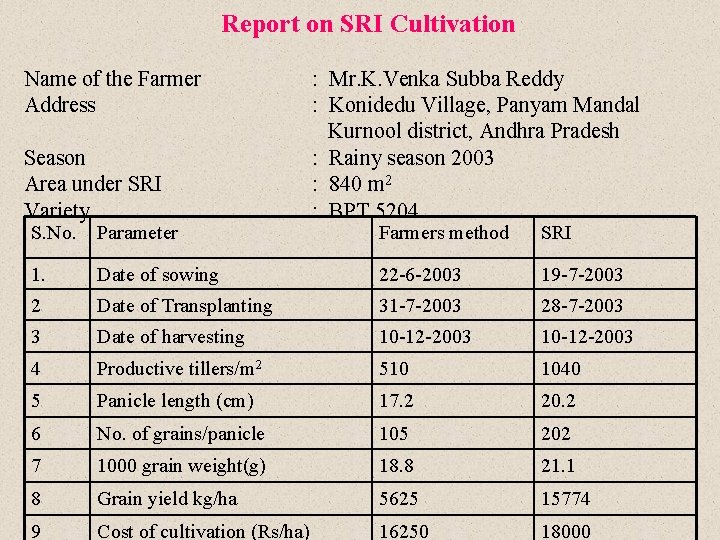
Report on SRI Cultivation Name of the Farmer Address Season Area under SRI Variety S. No. Parameter 1. : Mr. K. Venka Subba Reddy : Konidedu Village, Panyam Mandal Kurnool district, Andhra Pradesh : Rainy season 2003 : 840 m 2 : BPT 5204 Farmers method SRI Date of sowing 22 -6 -2003 19 -7 -2003 2 Date of Transplanting 31 -7 -2003 28 -7 -2003 3 Date of harvesting 10 -12 -2003 4 Productive tillers/m 2 510 1040 5 Panicle length (cm) 17. 2 20. 2 6 No. of grains/panicle 105 202 7 1000 grain weight(g) 18. 8 21. 1 8 Grain yield kg/ha 5625 15774 9 Cost of cultivation (Rs/ha) 16250 18000
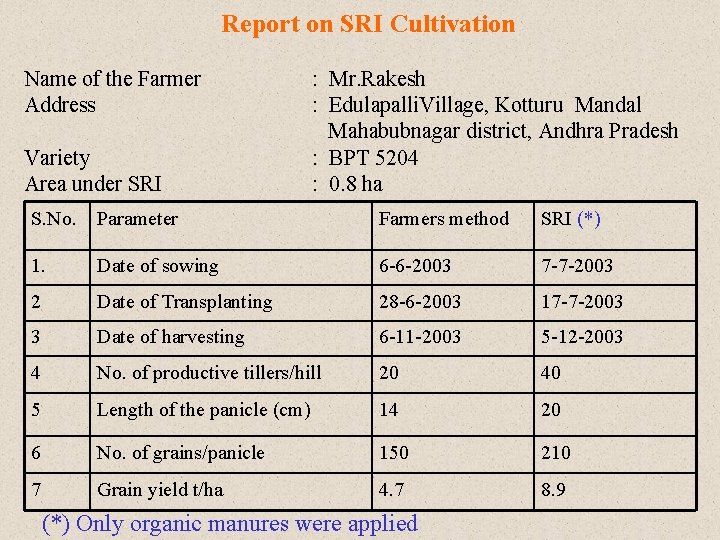
Report on SRI Cultivation Name of the Farmer Address Variety Area under SRI : Mr. Rakesh : Edulapalli. Village, Kotturu Mandal Mahabubnagar district, Andhra Pradesh : BPT 5204 : 0. 8 ha S. No. Parameter Farmers method SRI (*) 1. Date of sowing 6 -6 -2003 7 -7 -2003 2 Date of Transplanting 28 -6 -2003 17 -7 -2003 3 Date of harvesting 6 -11 -2003 5 -12 -2003 4 No. of productive tillers/hill 20 40 5 Length of the panicle (cm) 14 20 6 No. of grains/panicle 150 210 7 Grain yield t/ha 4. 7 8. 9 (*) Only organic manures were applied
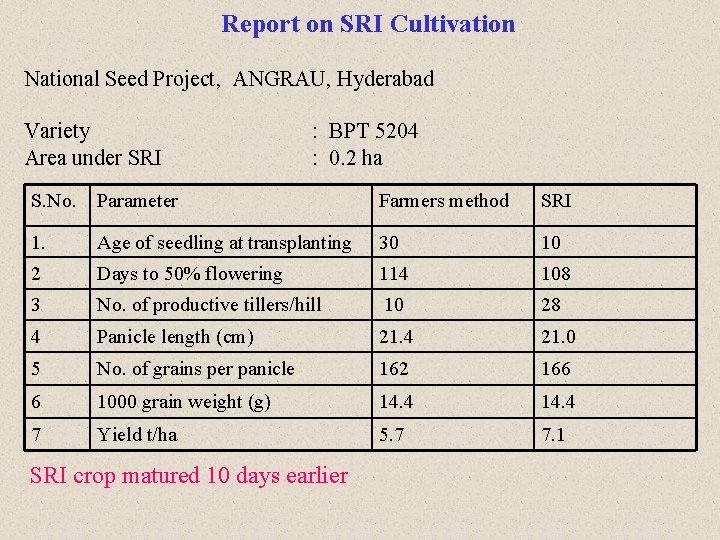
Report on SRI Cultivation National Seed Project, ANGRAU, Hyderabad Variety Area under SRI : BPT 5204 : 0. 2 ha S. No. Parameter Farmers method SRI 1. Age of seedling at transplanting 30 10 2 Days to 50% flowering 114 108 3 No. of productive tillers/hill 10 28 4 Panicle length (cm) 21. 4 21. 0 5 No. of grains per panicle 162 166 6 1000 grain weight (g) 14. 4 7 Yield t/ha 5. 7 7. 1 SRI crop matured 10 days earlier
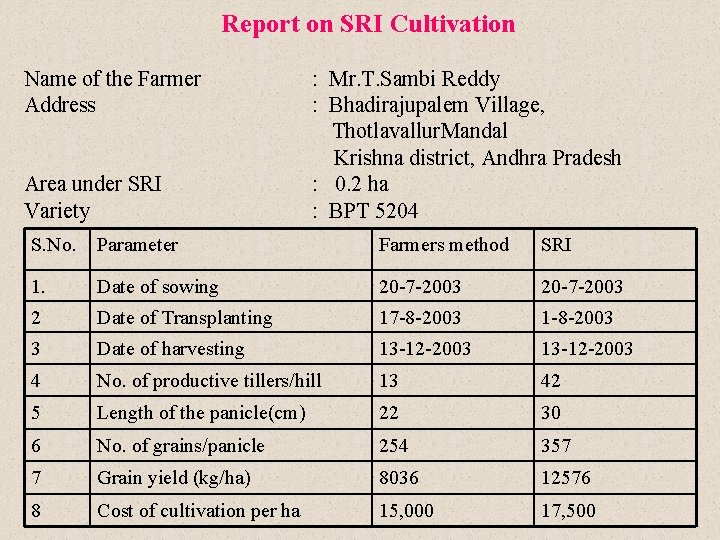
Report on SRI Cultivation Name of the Farmer Address Area under SRI Variety : Mr. T. Sambi Reddy : Bhadirajupalem Village, Thotlavallur. Mandal Krishna district, Andhra Pradesh : 0. 2 ha : BPT 5204 S. No. Parameter Farmers method SRI 1. Date of sowing 20 -7 -2003 2 Date of Transplanting 17 -8 -2003 1 -8 -2003 3 Date of harvesting 13 -12 -2003 4 No. of productive tillers/hill 13 42 5 Length of the panicle(cm) 22 30 6 No. of grains/panicle 254 357 7 Grain yield (kg/ha) 8036 12576 8 Cost of cultivation per ha 15, 000 17, 500
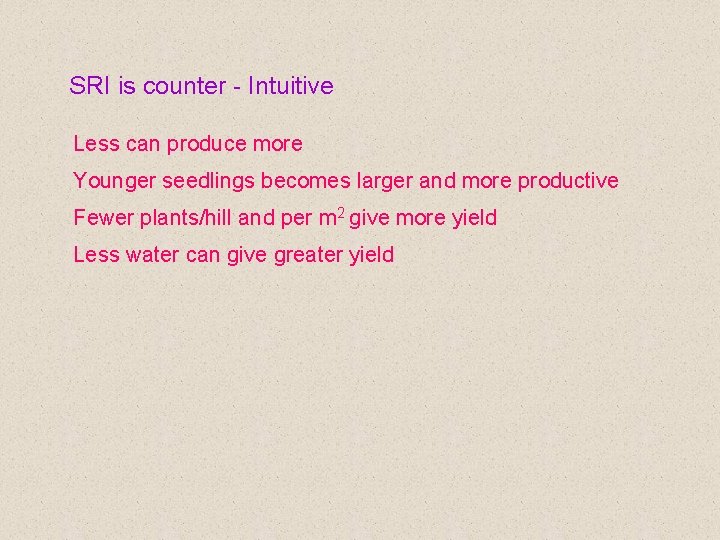
SRI is counter - Intuitive Less can produce more Younger seedlings becomes larger and more productive Fewer plants/hill and per m 2 give more yield Less water can give greater yield
SRI utilizes Biological Power ü Rice root system grown under SRI i. e. , aerated soil do not degenerate, are much larger and function better ü Soils that are aerated and well supplied with organic matter can support longer and diverse populations of soil micro organisms, which inturn mobilizes nutrients to the plant ü Phytohormones produced by bacteria and fungi living in soils and roots promote root growth and the health of the plants ü Root exudates provide food to microorganisms ü Application of fertilizers and other agro chemicals has inhibiting effect on soil biota
Benefits of SRI 1. Higher yields – Both grain and straw 2. Reduced duration (by 10 days) 3. Lesser chemical inputs 4. Less water requirement 5. Less chaffy grain % 6. Grain weight increased without change in grain size 7. Higher head rice recovery 8. Withstood cyclonic gales 9. Cold tolerance 10. Soil health improves through biological activity
Future needs Ø Research to produce different models for different situations Ø To promote SRI by way of making information available Ø To organise a few demonstrations with farmers participation
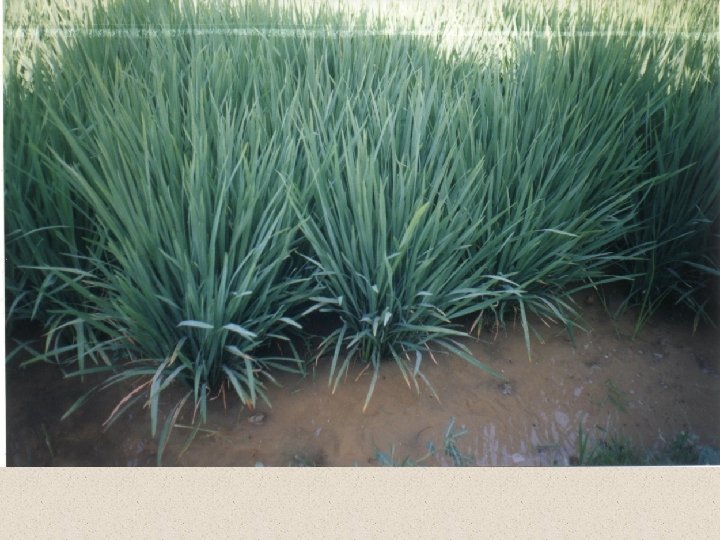
Swarna under SRI