
System Components Why is it important to understand
- Slides: 15
System Components Why is it important to understand how the parts of a system work?
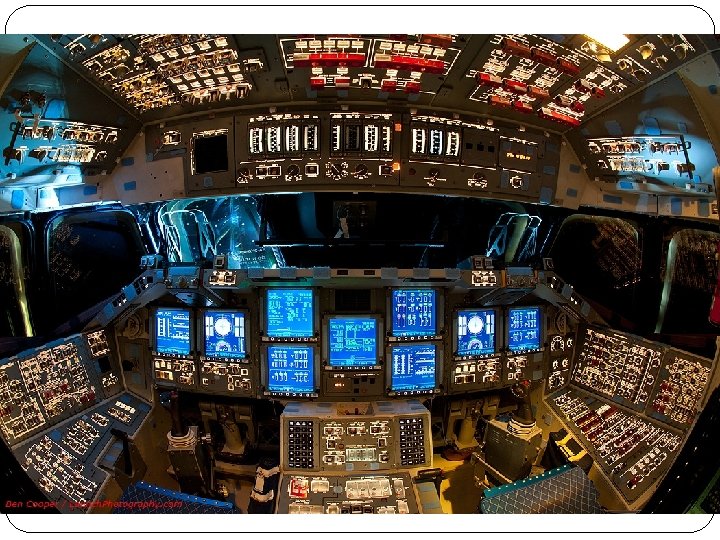
System Components �Physical systems and social systems vary in size and complexity. �Some systems, such as can openers and school clubs, are relatively small and simple. �Other systems, such as space shuttles and federal governments, are very large and complex.
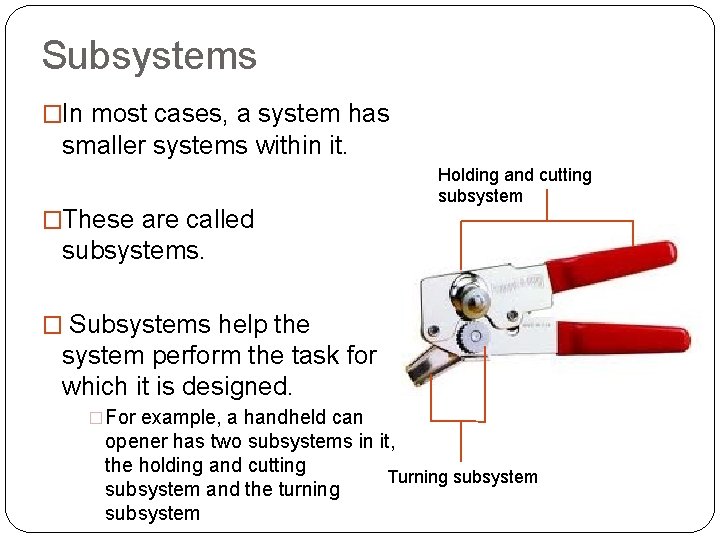
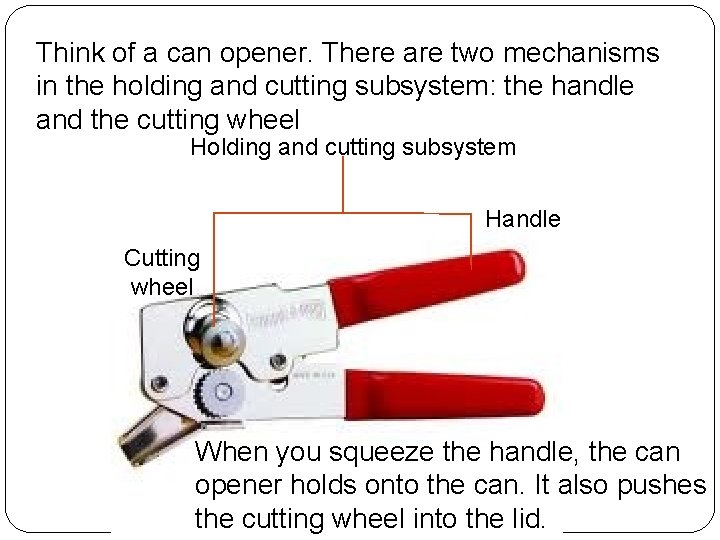
Subsystems �In most cases, a system has smaller systems within it. �These are called Holding and cutting subsystems. � Subsystems help the system perform the task for which it is designed. �For example, a handheld can opener has two subsystems in it, the holding and cutting Turning subsystem and the turning subsystem
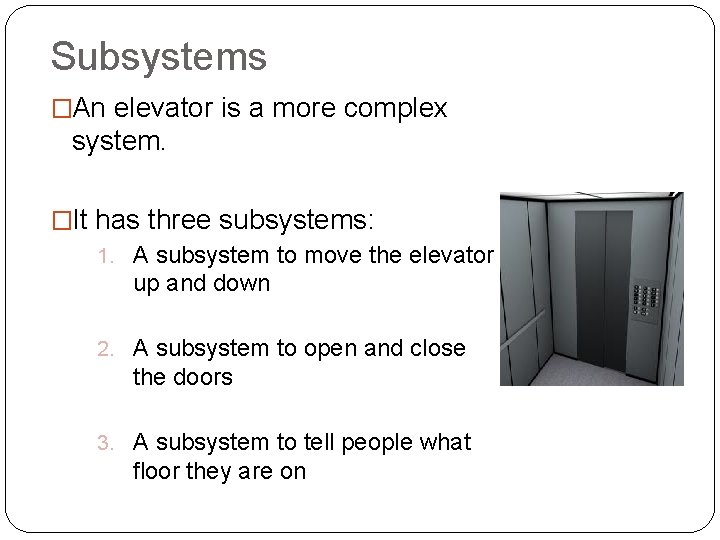
Subsystems �An elevator is a more complex system. �It has three subsystems: 1. A subsystem to move the elevator up and down 2. A subsystem to open and close the doors 3. A subsystem to tell people what floor they are on
Breaking Down Subsystems into Mechanisms �Subsystems contain mechanisms. � A mechanism is the part of a subsystem that: �changes one type of force into another �one type of energy into another �one type of motion into another �or one type of action into another � In physical systems, forces make things move. �A force is a push or pull on an object that may result in a change in the object’s motion or shape.
Think of a can opener. There are two mechanisms in the holding and cutting subsystem: the handle and the cutting wheel Holding and cutting subsystem Handle Cutting wheel When you squeeze the handle, the can opener holds onto the can. It also pushes the cutting wheel into the lid.
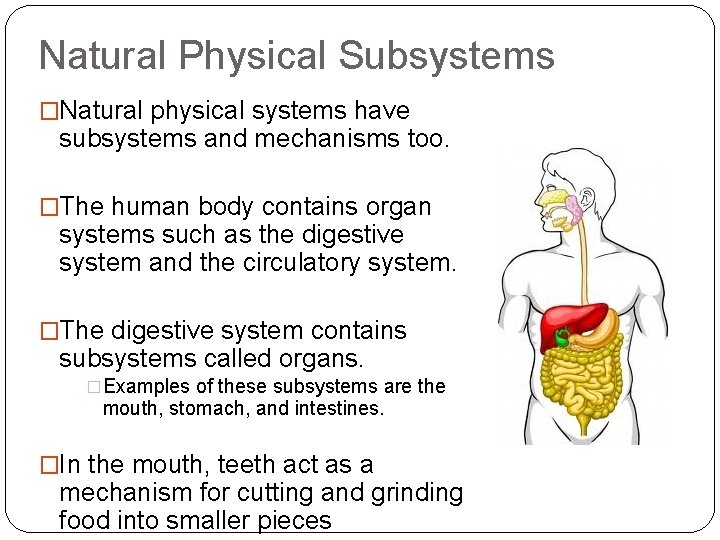
Natural Physical Subsystems �Natural physical systems have subsystems and mechanisms too. �The human body contains organ systems such as the digestive system and the circulatory system. �The digestive system contains subsystems called organs. �Examples of these subsystems are the mouth, stomach, and intestines. �In the mouth, teeth act as a mechanism for cutting and grinding food into smaller pieces
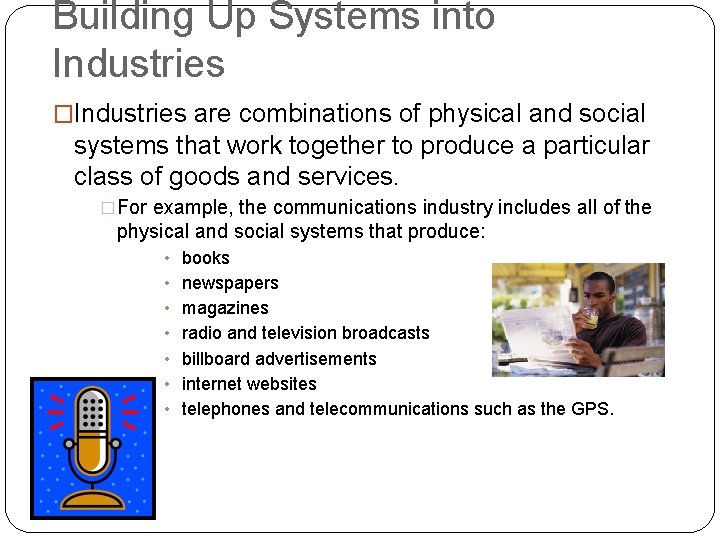
Building Up Systems into Industries �Industries are combinations of physical and social systems that work together to produce a particular class of goods and services. �For example, the communications industry includes all of the physical and social systems that produce: • • books newspapers magazines radio and television broadcasts billboard advertisements internet websites telephones and telecommunications such as the GPS.
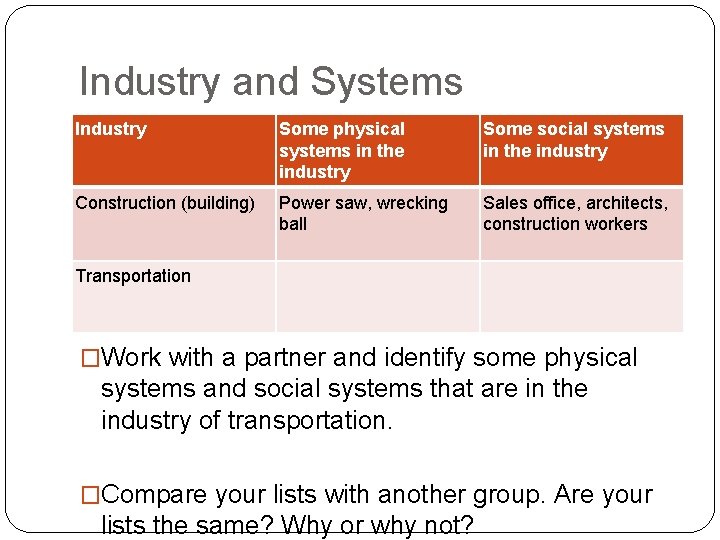
Industry and Systems Industry Some physical systems in the industry Some social systems in the industry Construction (building) Power saw, wrecking ball Sales office, architects, construction workers Transportation �Work with a partner and identify some physical systems and social systems that are in the industry of transportation. �Compare your lists with another group. Are your lists the same? Why or why not?
System Inputs and Outputs �All systems (and subsystems) have inputs and outputs. � Inputs are all of the things that go into a system to make it work. �energy, and raw materials. �The input of a can opener includes the force your hand puts on the handles. �Outputs are all of the things that come out of the system or the job the system does. (The tasks or services that the system performs. ) � The output of a can opener is the turning and cutting of the can’s lid.
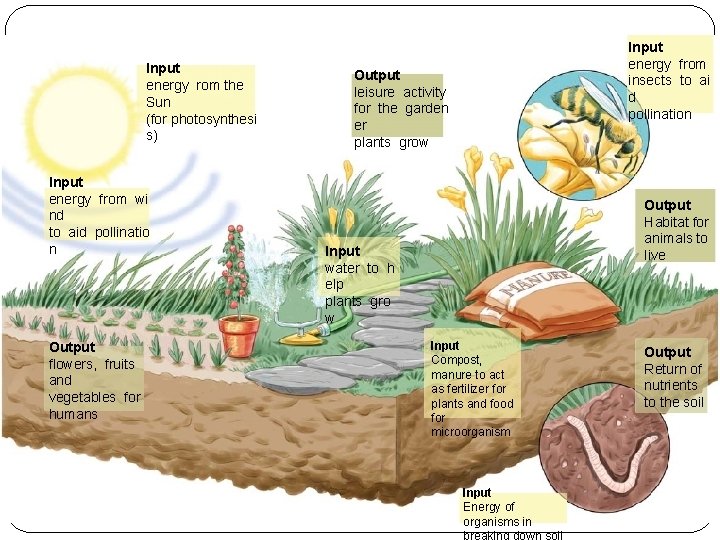
Input energy rom the Sun (for photosynthesi s) Input energy from wi nd to aid pollinatio n Output flowers, fruits and vegetables for humans Input energy from insects to ai d pollination Output leisure activity for the garden er plants grow Output Habitat for animals to live Input water to h elp plants gro w Input Compost, manure to act as fertilizer for plants and food for microorganism Input Energy of organisms in Output Return of nutrients to the soil
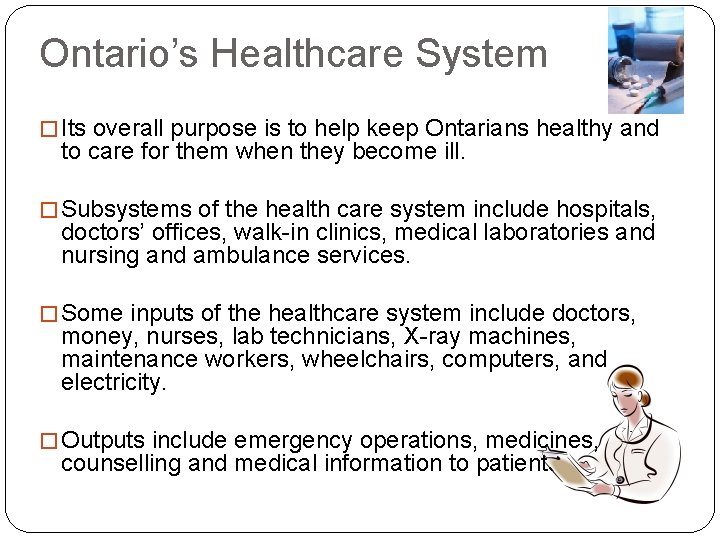
Ontario’s Healthcare System � Its overall purpose is to help keep Ontarians healthy and to care for them when they become ill. � Subsystems of the health care system include hospitals, doctors’ offices, walk-in clinics, medical laboratories and nursing and ambulance services. � Some inputs of the healthcare system include doctors, money, nurses, lab technicians, X-ray machines, maintenance workers, wheelchairs, computers, and electricity. � Outputs include emergency operations, medicines, grief counselling and medical information to patients.
Side Effects and Systems Thinking � While all systems have desired outputs, they often have undesired outputs called side effects as well. � For example, the desired output of a car is motion. � Some of the side effects of using cars are: � air pollution � traffic congestion � noise pollution � loss of natural habitat due to roads and parking spaces � Systems thinking involves thinking about how the parts of a system work together, and also about trying to understand how systems affect people, other organisms and the environment.
CHECK YOUR LEARNING 1. Why are “input” and “output” good words to use when discussing systems? 2. Name two inputs, two outputs, and two side effects of the health care system. 3. Compare and contrast one of the outputs with one of the side effects. 4. Which inputs to a garden occur naturally? Which inputs are provided by humans? Are there any side effects to a garden? Explain. 5. Describe the relationship between side effects and