
System Architecture Directions for Networked Sensors Jason Hill


- Slides: 16
System Architecture Directions for Networked Sensors Jason Hill, Rober Szewczyk, Alec Woo, Seth hollar, David Culler & Kristofer Pister Presented by Israel Martínez-Arredondo
Outline n Networked Sensor Characteristics n Hardware Organization n Tiny Microthreading Operating System (Tiny. OS) n Tiny. OS Design n Components n Evaluation 2
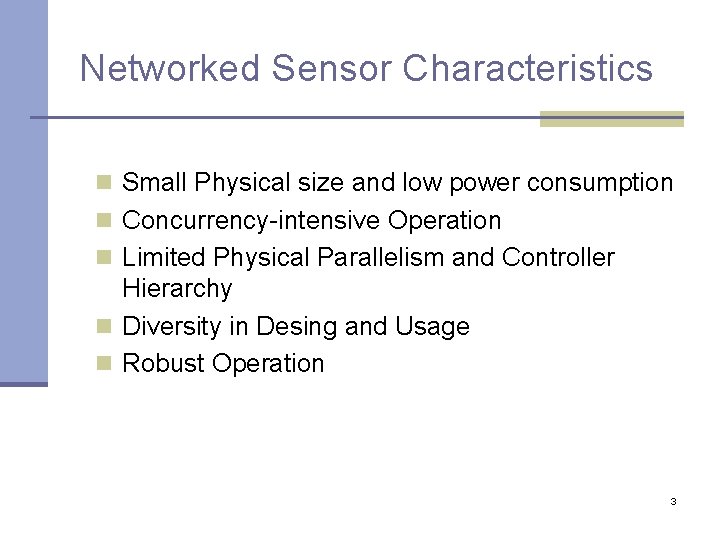
Networked Sensor Characteristics n Small Physical size and low power consumption n Concurrency-intensive Operation n Limited Physical Parallelism and Controller Hierarchy n Diversity in Desing and Usage n Robust Operation 3
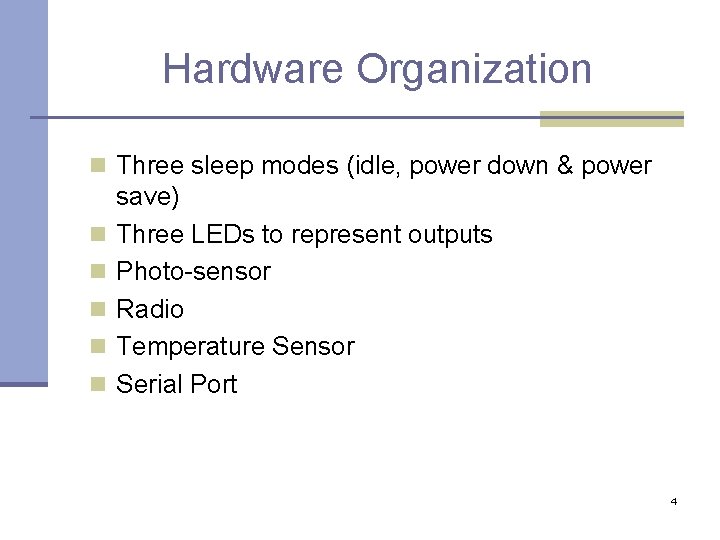
Hardware Organization n Three sleep modes (idle, power down & power n n n save) Three LEDs to represent outputs Photo-sensor Radio Temperature Sensor Serial Port 4
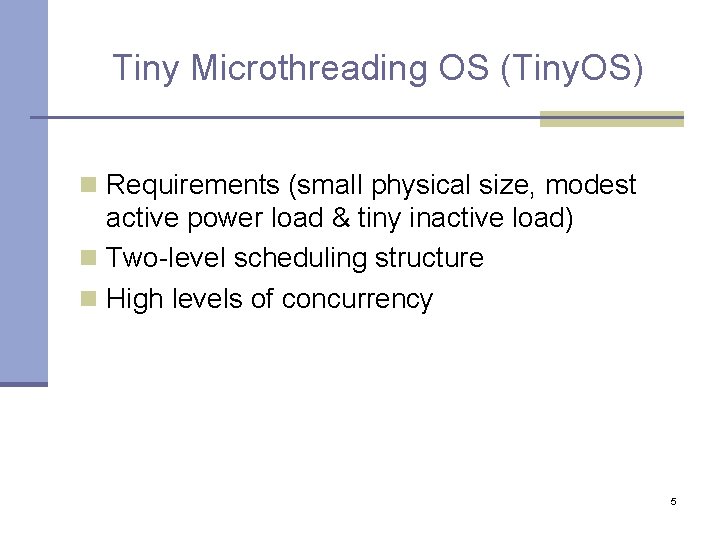
Tiny Microthreading OS (Tiny. OS) n Requirements (small physical size, modest active power load & tiny inactive load) n Two-level scheduling structure n High levels of concurrency 5
Tiny OS Design n Tiny Scheduler n Components n Frame n Tasks n Event Handlers n Command Handlers 6
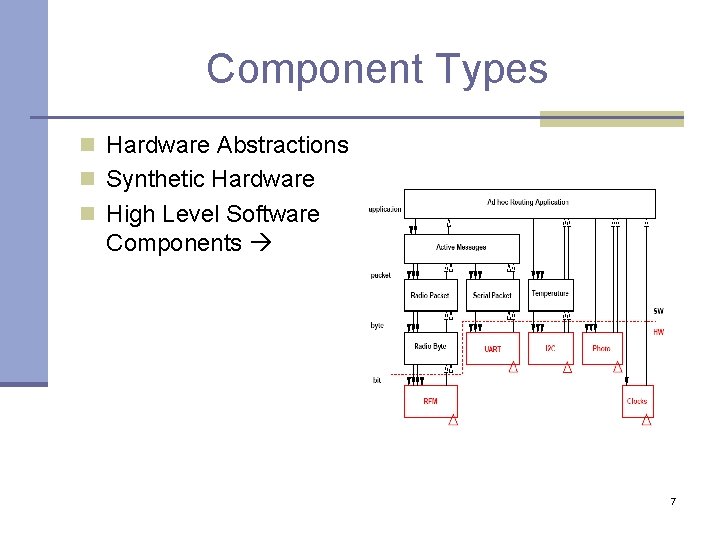
Component Types n Hardware Abstractions n Synthetic Hardware n High Level Software Components 7
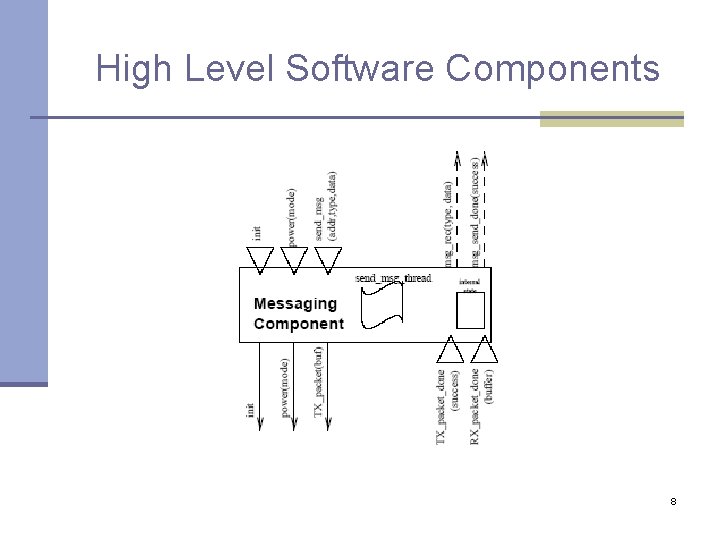
High Level Software Components 8
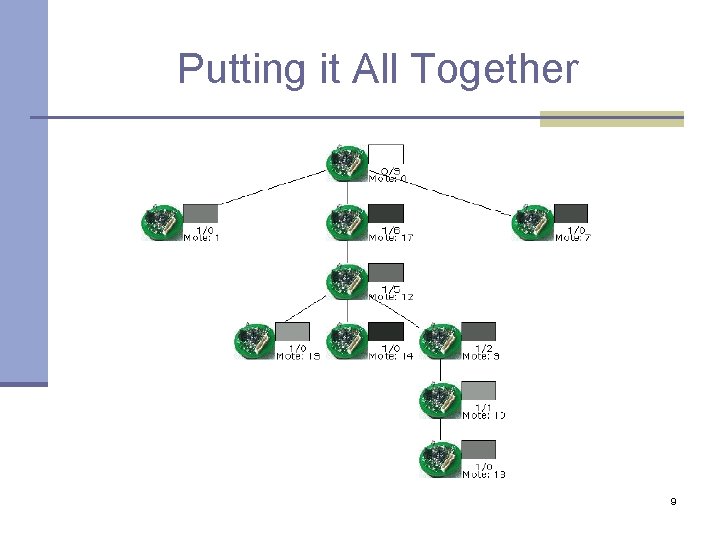
Putting it All Together 9
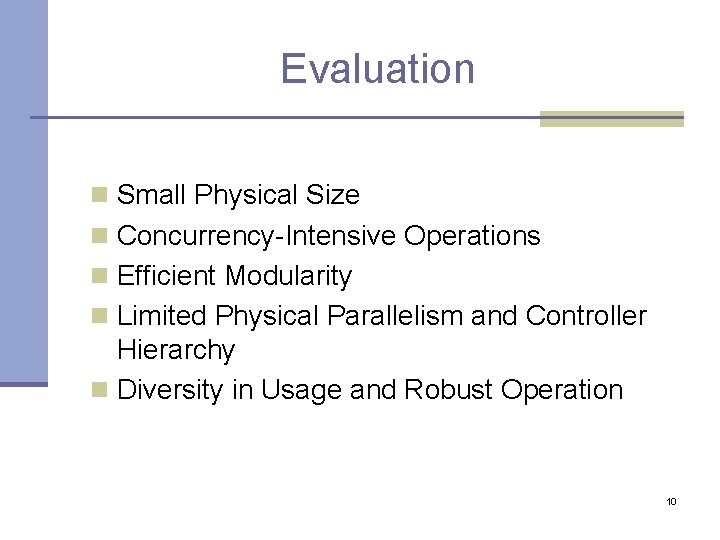
Evaluation n Small Physical Size n Concurrency-Intensive Operations n Efficient Modularity n Limited Physical Parallelism and Controller Hierarchy n Diversity in Usage and Robust Operation 10
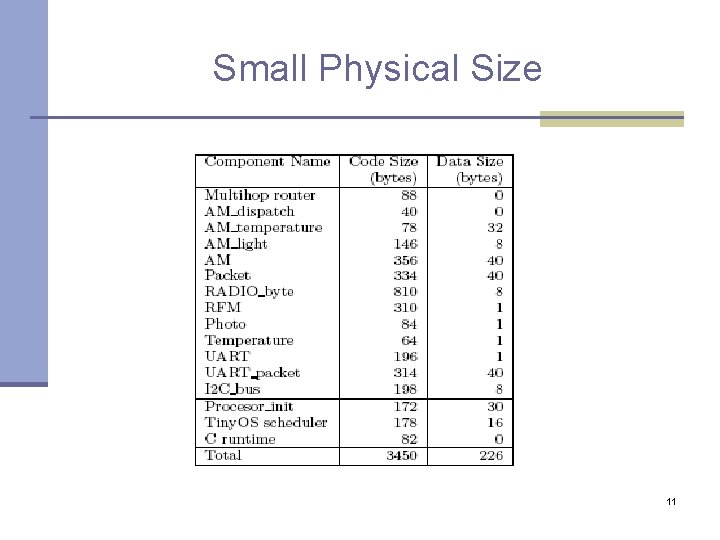
Small Physical Size 11
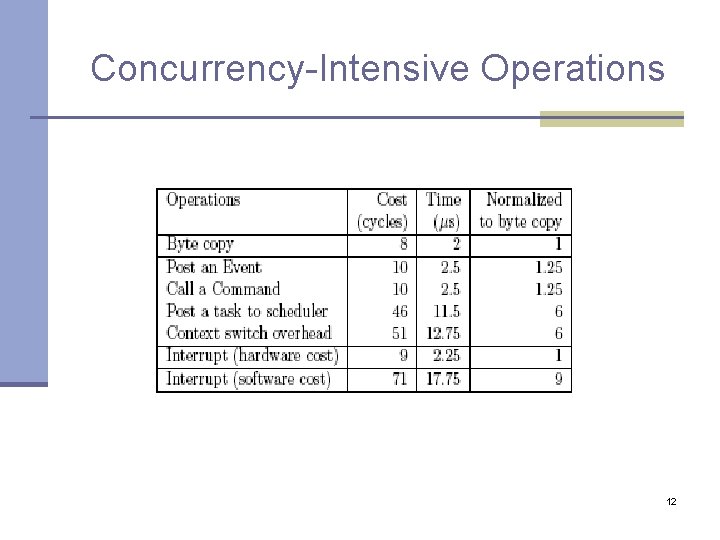
Concurrency-Intensive Operations 12
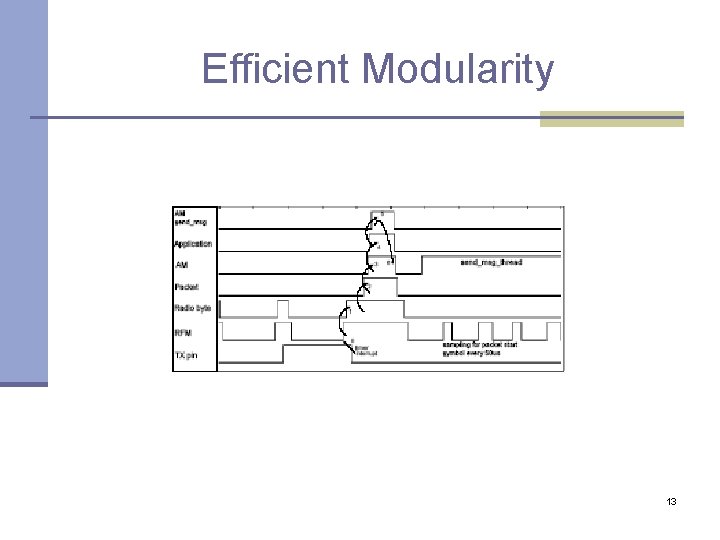
Efficient Modularity 13
Evaluation (Cont’d) n Limited Physical Parallelism and Controller Hierarchy n Diversity in Usage and Robust Operation 14
Discussion n What are potential avenues for further work and improvements? n RFIDs Characteristics n Usage n Downside n 15
References n Loren P. Clare, Esther H. Jennings, Jay L. Gao, “Performance Evaluation Modeling of Networked Sensors”, Ca, USA n Adrian Perrig, Robert Szewczk, Victor Wen, David Culler, “Security Protocols for Sensor Networks” University of California n RFID n http: //www. aimglobal. org/technologies/rfid/ n http: //news. com/2010 -1069 -980325. html n http: //www. rfidsociety. org/ 16