
System architect and beyond Hao Zhong Shanghai Jiao

System architect and beyond Hao Zhong Shanghai Jiao Tong University
Last class • Doman expert • Requirement Engineering Concepts Definition Stakeholders Types of requirements Process Elicitation Analysis Specification Validation
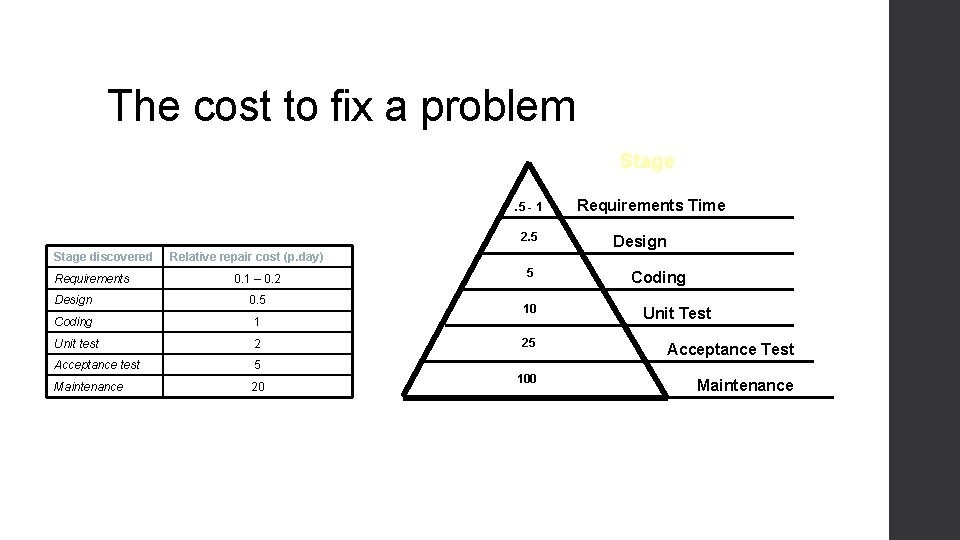
The cost to fix a problem Stage. 5 - 1 2. 5 Stage discovered Requirements Relative repair cost (p. day) 0. 1 – 0. 2 Design 0. 5 Coding 1 Unit test 2 Acceptance test 5 Maintenance 20 5 10 Requirements Time Design Coding Unit Test 25 Acceptance Test 100 Maintenance
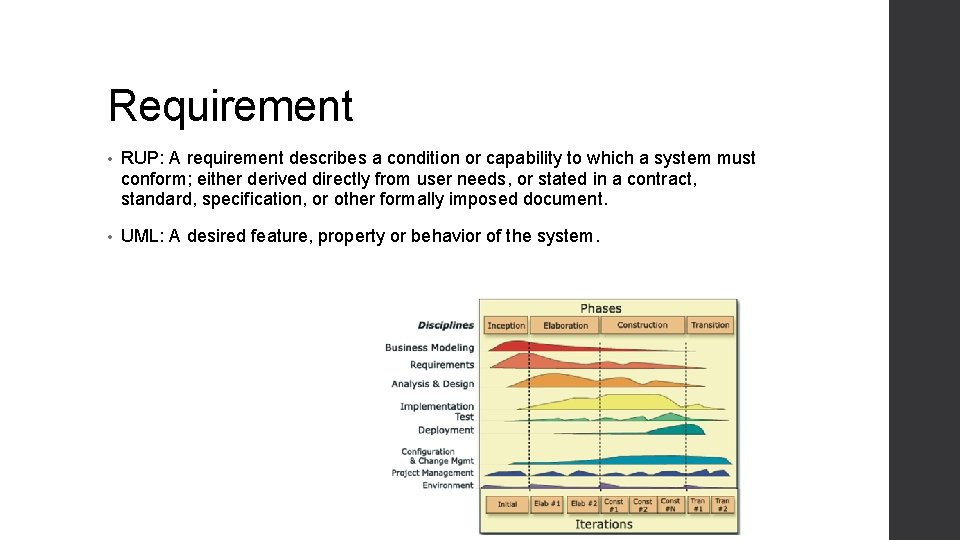
Requirement • RUP: A requirement describes a condition or capability to which a system must conform; either derived directly from user needs, or stated in a contract, standard, specification, or other formally imposed document. • UML: A desired feature, property or behavior of the system.
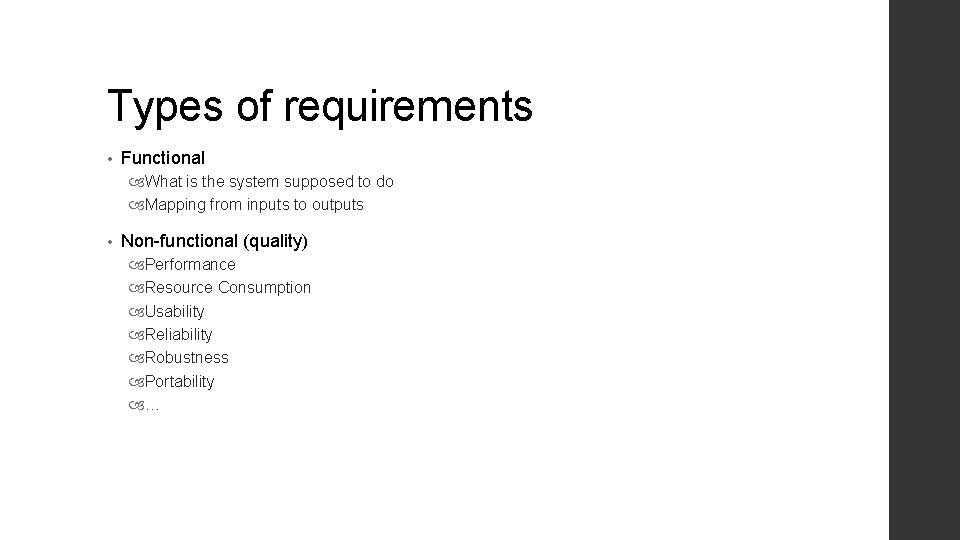
Types of requirements • Functional What is the system supposed to do Mapping from inputs to outputs • Non-functional (quality) Performance Resource Consumption Usability Reliability Robustness Portability …
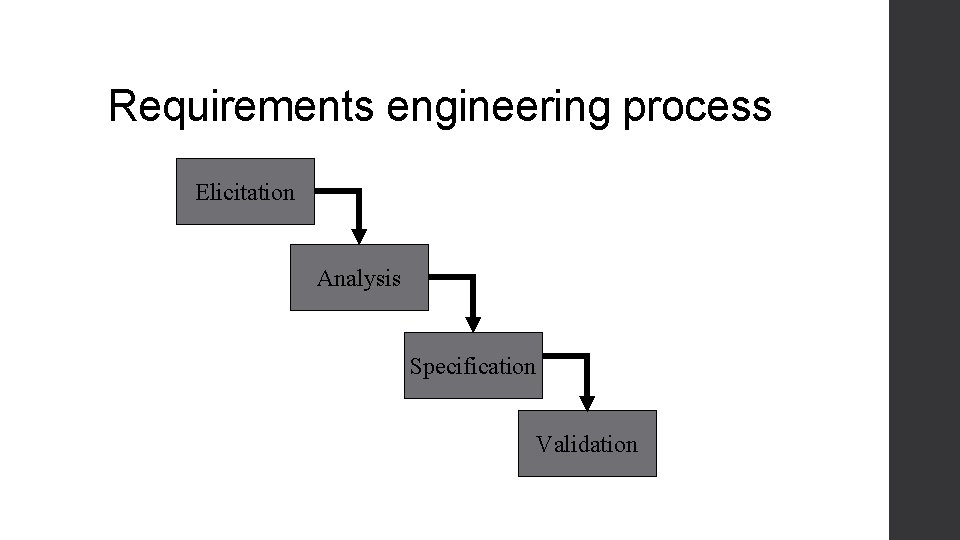
Requirements engineering process Elicitation Analysis Specification Validation
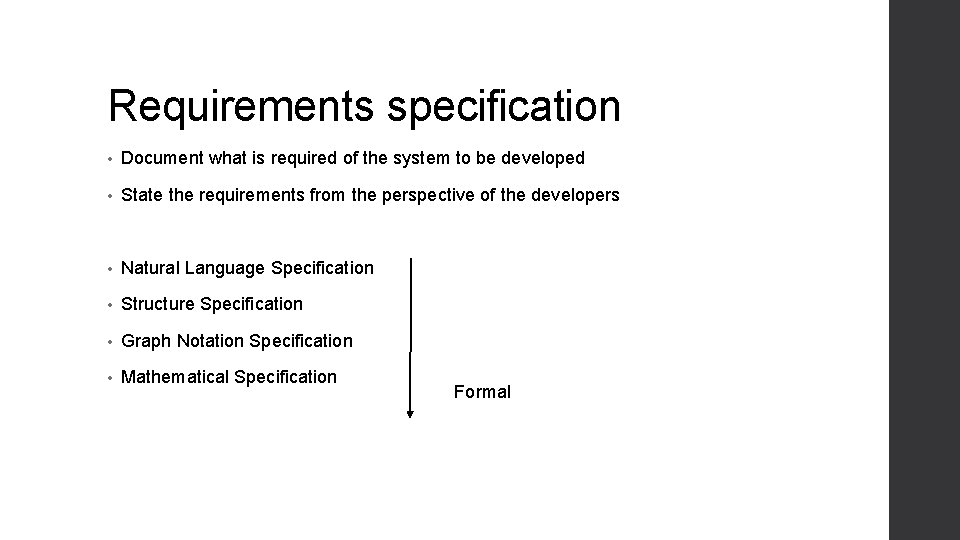
Requirements specification • Document what is required of the system to be developed • State the requirements from the perspective of the developers • Natural Language Specification • Structure Specification • Graph Notation Specification • Mathematical Specification Formal
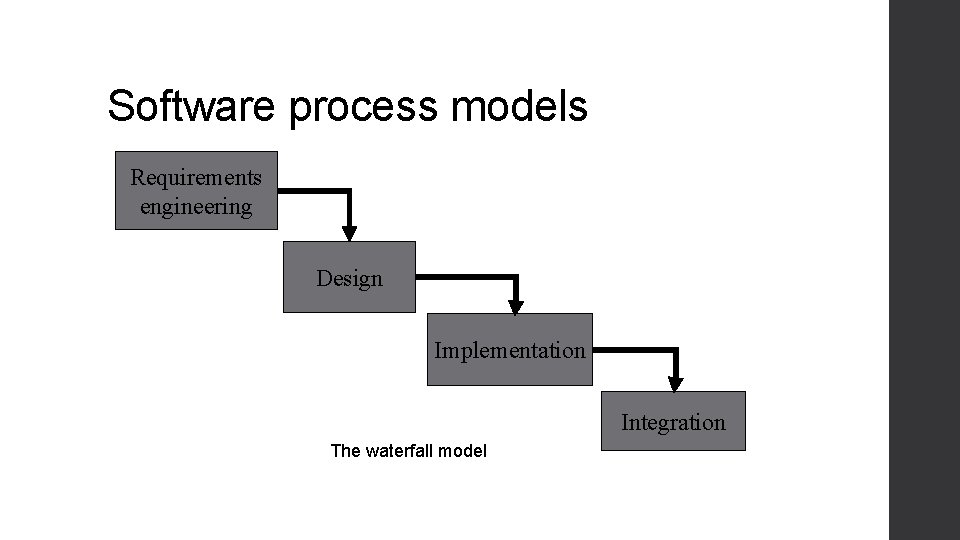
Software process models Requirements engineering Design Implementation Integration The waterfall model
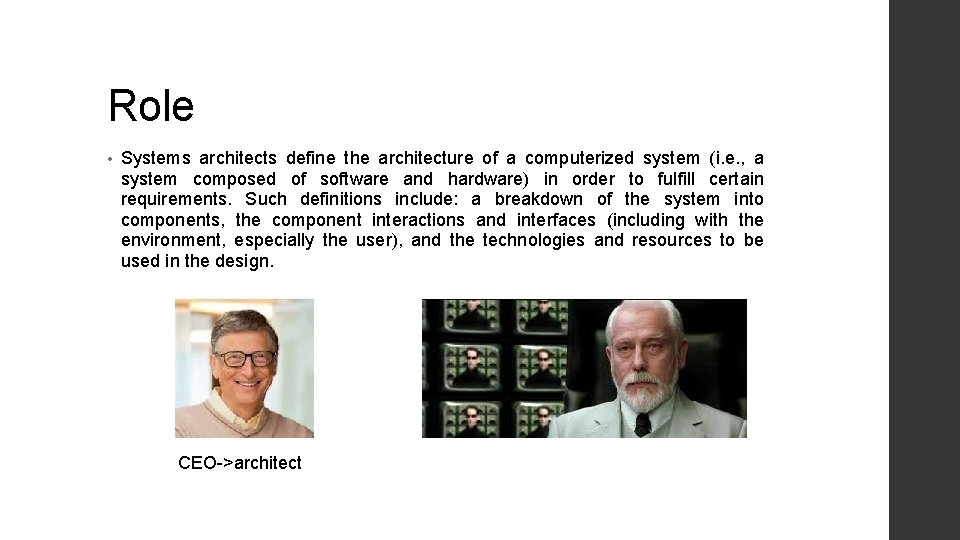
Role • Systems architects define the architecture of a computerized system (i. e. , a system composed of software and hardware) in order to fulfill certain requirements. Such definitions include: a breakdown of the system into components, the component interactions and interfaces (including with the environment, especially the user), and the technologies and resources to be used in the design. CEO->architect
What is software architecture • Software architecture is the structure of a software system – like the blue prints in building architecture Software components Details (data structure and algorithms) hidden Relationships among the components Relations can be vague Data flows Control flows Dependencies
Modularity • “Modularity is the single attribute of software that allows a program to be intellectually manageable. ” (Bertrand Myers) • Split a larger program into smaller modules • Cohesion - Each module should do one thing - high cohesion • Coupling - Each module should have a simple interface - low coupling • Each module should hide a design decision from others
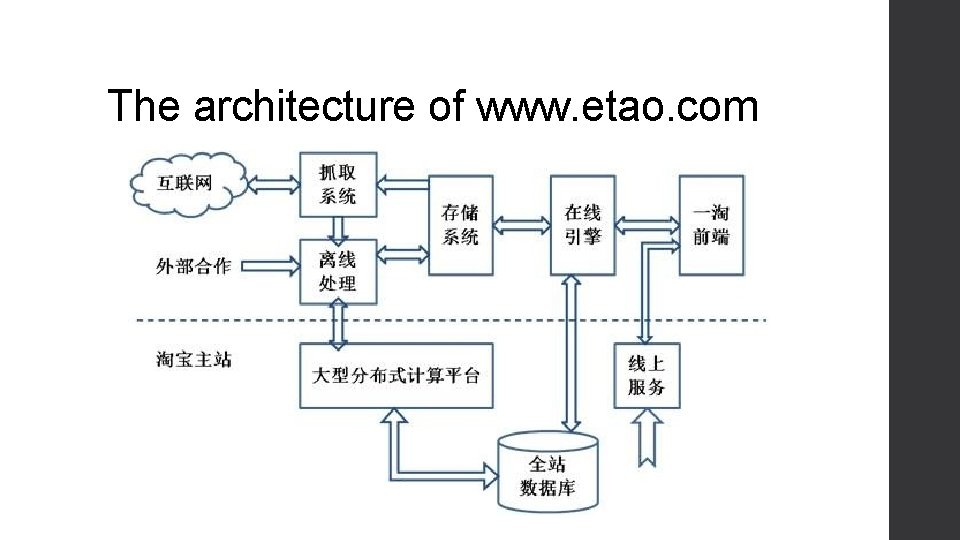
The architecture of www. etao. com
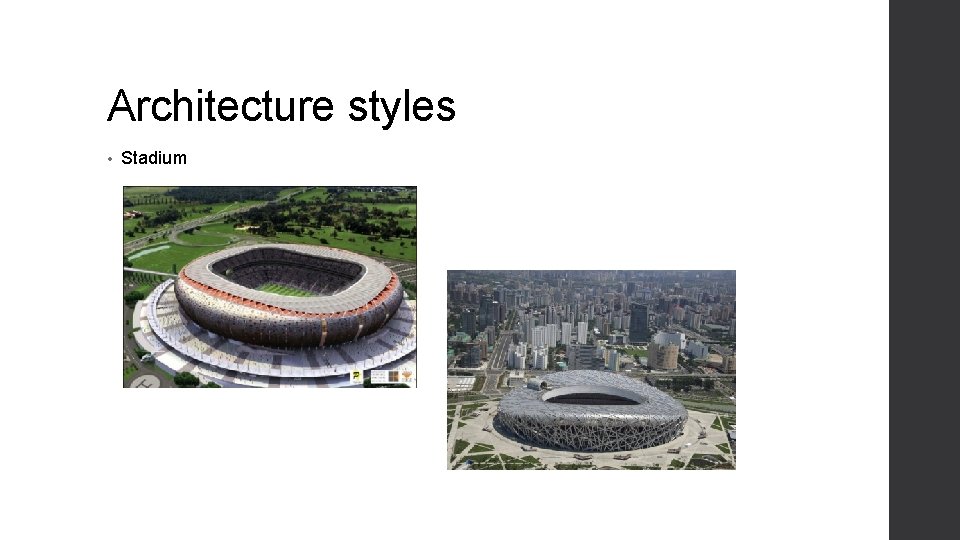
Architecture styles • Stadium
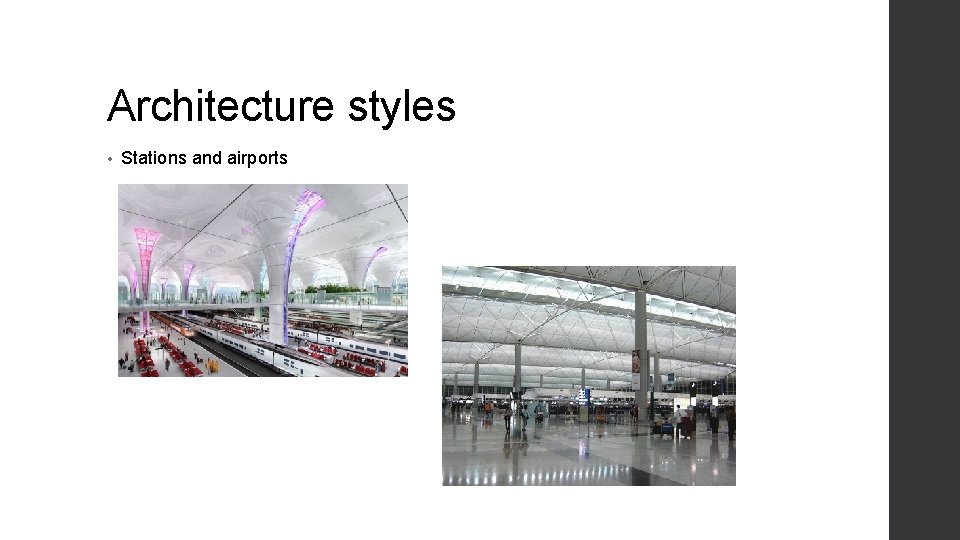
Architecture styles • Stations and airports
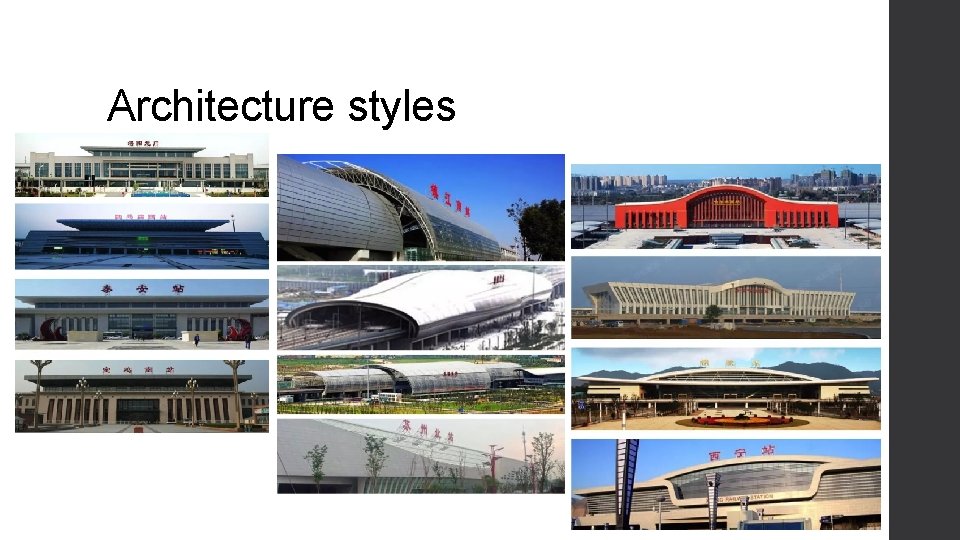
Architecture styles
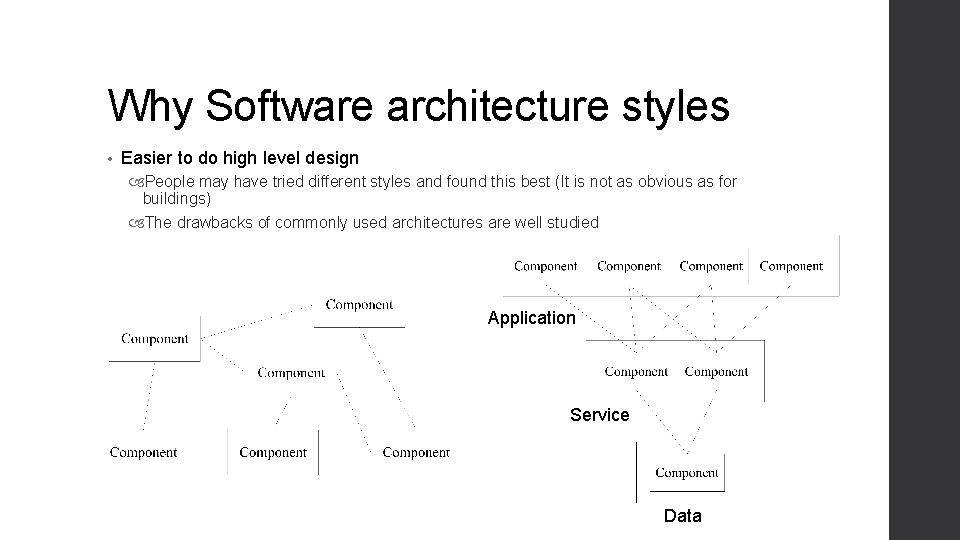
Why Software architecture styles • Easier to do high level design People may have tried different styles and found this best (It is not as obvious as for buildings) The drawbacks of commonly used architectures are well studied Application Service Data
Popular architecture styles • Pipe and Filter • Layered • Repository • MVC
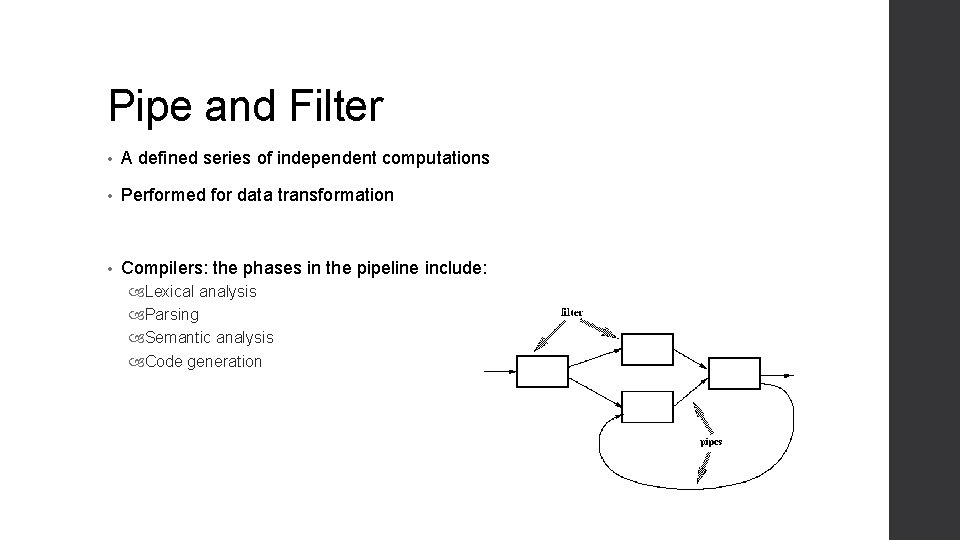
Pipe and Filter • A defined series of independent computations • Performed for data transformation • Compilers: the phases in the pipeline include: Lexical analysis Parsing Semantic analysis Code generation
Pipe and Filter • Advantages Easy to understand the overall input/output behavior of a system as a simple composition of the behaviors of the individual filters They support reuse, since any two filters can be hooked together, provided they agree on the data that is being transmitted between them. Systems can be easily maintained and enhanced, since new filters can be added to existing systems and old filters can be replaced by improved ones. The naturally support concurrent execution: map-reduce is actually pipe and filter architecture • Disadvantages Not good for handling reactive systems, because of their transformational character. Excessive parsing and un-parsing leads to loss of performance and increased complexity in writing the filters themselves.
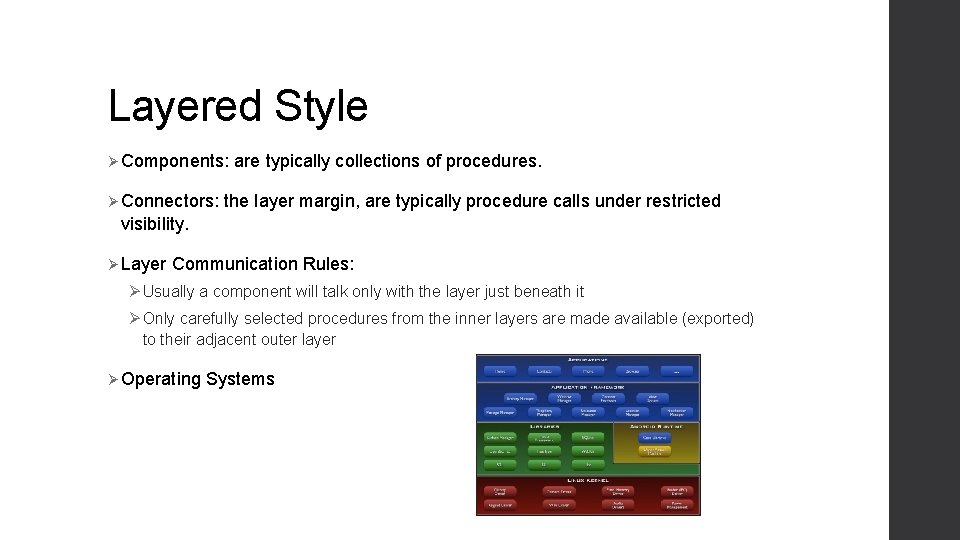
Layered Style Ø Components: Ø Connectors: are typically collections of procedures. the layer margin, are typically procedure calls under restricted visibility. Ø Layer Communication Rules: Ø Usually a component will talk only with the layer just beneath it Ø Only carefully selected procedures from the inner layers are made available (exported) to their adjacent outer layer Ø Operating Systems
Layered Style • Advantages Design: based on increasing levels of abstraction Maintainability: changes to the function of one layer affects at most two other layers Reuse: different implementations (with identical interfaces) of the same layer can be used interchangeably • Disadvantages Not all systems are easily structured in a layered fashion Performance requirements may force the coupling of high-level functions to their lowerlevel implementations
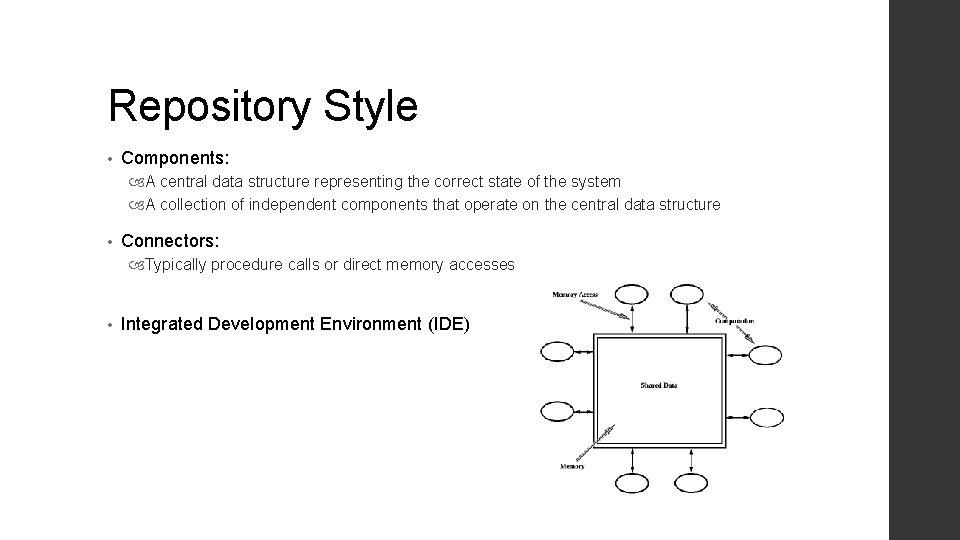
Repository Style • Components: A central data structure representing the correct state of the system A collection of independent components that operate on the central data structure • Connectors: Typically procedure calls or direct memory accesses • Integrated Development Environment (IDE)
Repository Style • Advantages Efficient way to store and analyze large amounts of data Centralized management • Disadvantages Must agree on a data model a prior Difficult to distribute data Data evolution is expensive
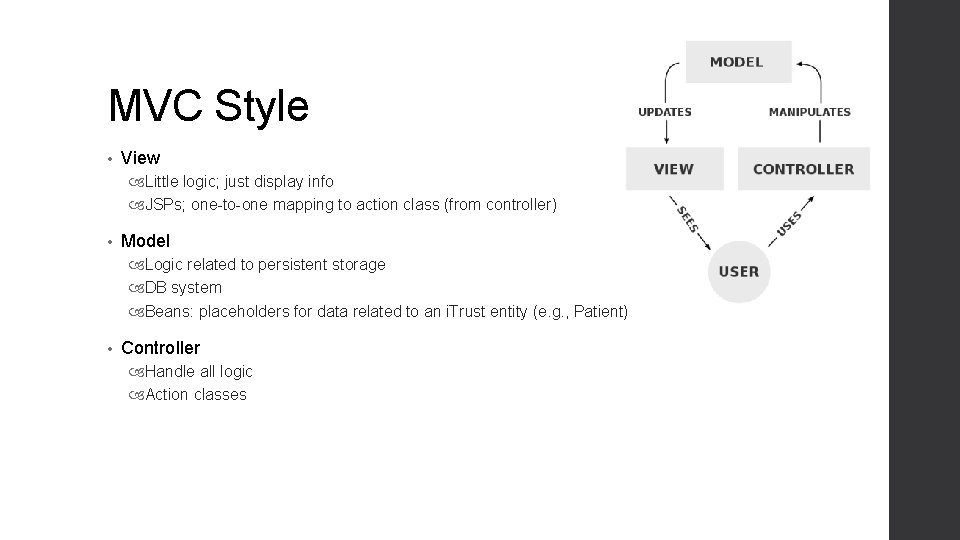
MVC Style • View Little logic; just display info JSPs; one-to-one mapping to action class (from controller) • Model Logic related to persistent storage DB system Beans: placeholders for data related to an i. Trust entity (e. g. , Patient) • Controller Handle all logic Action classes
MVC Style
Design decisions • Representation of data • Use of a particular software package • Use of a particular printer • Use of a particular operating system • Use of a particular algorithm • …
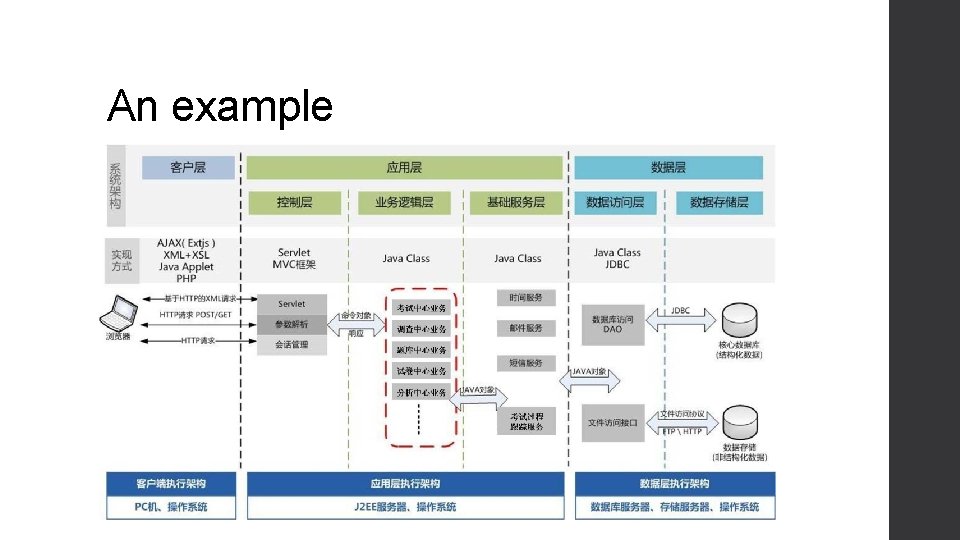
An example
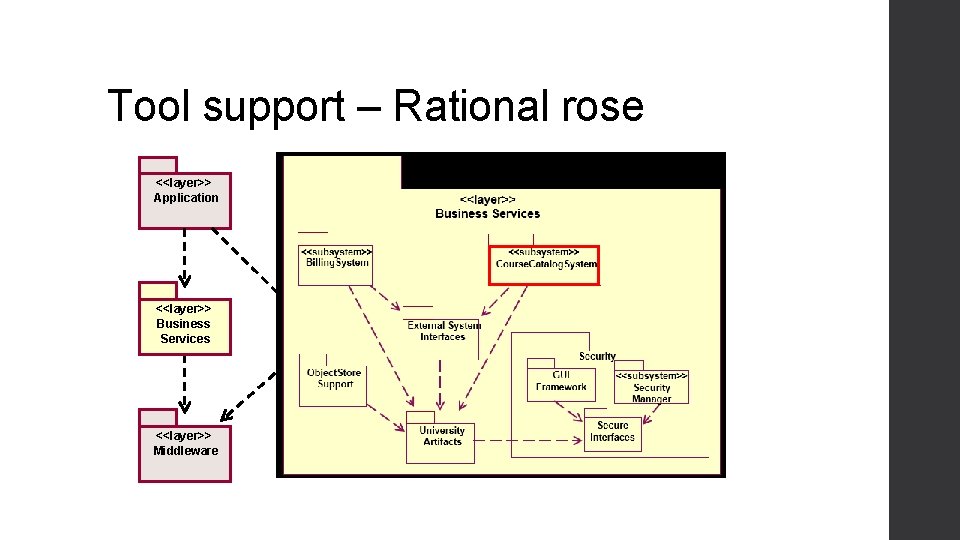
Tool support – Rational rose <<layer>> Application <<layer>> Business Services <<layer>> Middleware
Software market models • Many more type of software than before: commercial contract shareware open source • Influences: commercial needs IP protection & licensing support
Commercial • Classical model MS office • Time Software as a service (Saas) • Number of computers Windows • Number of IP addresses Server • Number of simultaneous users CAD
Contract • Customized software ERP • Consulting – individually or through consulting houses, e. g. , IBM, Accenture, 金 蝶,中软 • “Work for hire” – output belongs to customer • Billed by project or by hour
Shareware • Try before you buy Winzip • Not open source • Freely download binaries • Limited functionality vs full functionality • Tool support/guarantee
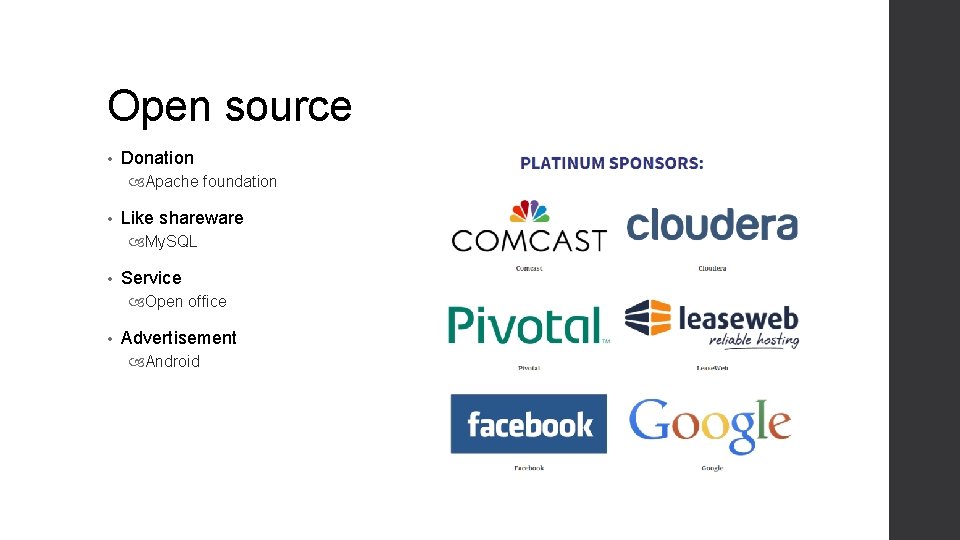
Open source • Donation Apache foundation • Like shareware My. SQL • Service Open office • Advertisement Android
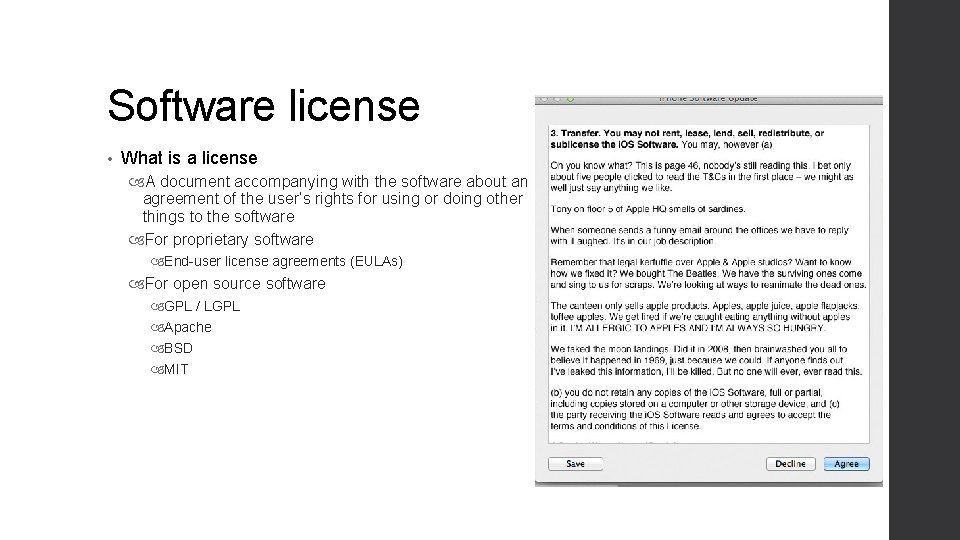
Software license • What is a license A document accompanying with the software about an agreement of the user’s rights for using or doing other things to the software For proprietary software End-user license agreements (EULAs) For open source software GPL / LGPL Apache BSD MIT
Why licenses? • The specialty of software, compared to other publications You often have to copy the software to use it, consider a multiple-CD/floppy disk game, hardware disposal, … Section 117 of copyright Act: the owner of a software copy have the rights to copy the software to a computer for using purpose General principle of copyrights: the owner of a copy can resell the copy without the agreement of the copyright owner: resell a book So, basically, you can copy the software from the CD to your computer, and resell the CD…
Why licenses? • We sell licenses, not software copies So the users are not “owners of copies” And they do not have the rights from section 117 of the Copyright Act They only have the rights described in the license • That’s how software licenses come • A lot of legal issues, and cases Apple vs. Franklin …
Why care about software licenses? • If you work for a software company As a developer, ask the department of legal issues before Using any new tools for your software development, e. g. , editing, checking, analysis, visualization, version control, … Incorporating any code, or using any third-party library in the software you are developing Especially careful about free and open source software • As a manager May further need to consider what license to buy, how many to buy, according to the permissions in the licenses How to design the license of your product
Proprietary licenses • A agreement on how users can use the software Who can use certain person, the buyer: personal software Any personal in a company/org: business software How many users 1 installation Fixed number of installations Contract licenses Period Permanent Annual
License mechanisms • License keys Server authentication Hardware ID authentication after the first usage • Protecting the Licensing mechanism Code obfuscation Dynamic loaded code encrypted code
Open source licenses • A document accompany with the source code of open source software • Documenting the rights and responsibility of users or adapters • Users are required to accept the license before using the software • But usually, there is no mechanism to guarantee it • User responsibilities Announce changes Include license when re-distribute Use certain license Providing revised source code
GPL (General Public License) • Most widely used license About 45% all open source projects according to Black Duck GNU software gcc, glibc, emacs, … Linux kernel My. SQL • Responsibilities Providing source code when re-distribute Re-distribute (any code including or revised from GPL licensed code) under GPL license Ignore patents and regional rules (liberty or death) • So what will happen if I want to revise a GPL-licensed software, and then sell the revised software?
LGPL (Lesser-GPL) • A variant of GPL Mostly the same with GPL Dynamic and static link to LGPL libraries will not enforce your software to be LGPL • Who is using LGPL QT KDE Open. Office (once) JBoss
BSD • A license used for Berkeley Software Distribution (Free BSD operating system) • Responsibilities: When re-distribution: Including a copyright notice (both source and binary distributions) Including an acknowledgement in ads Needs permission • Who is using BSD? Free BSD operating system Google Chrome Open. SSH Bzip
Apache • A license proposed by apache software foundation • Responsibilities Include apache license in the distributed software (both source and binary) State changes in the changed source files Including of the notice file if the Apache software you use includes one • Who is using apache? Apache software foundation Ant, maven, log 4 j, tomcat, … Open. Office (now) Android system Most open-source android apps
This class • Software architect Typical architect styles Modularity Design decisions Tool support • Software market model • License
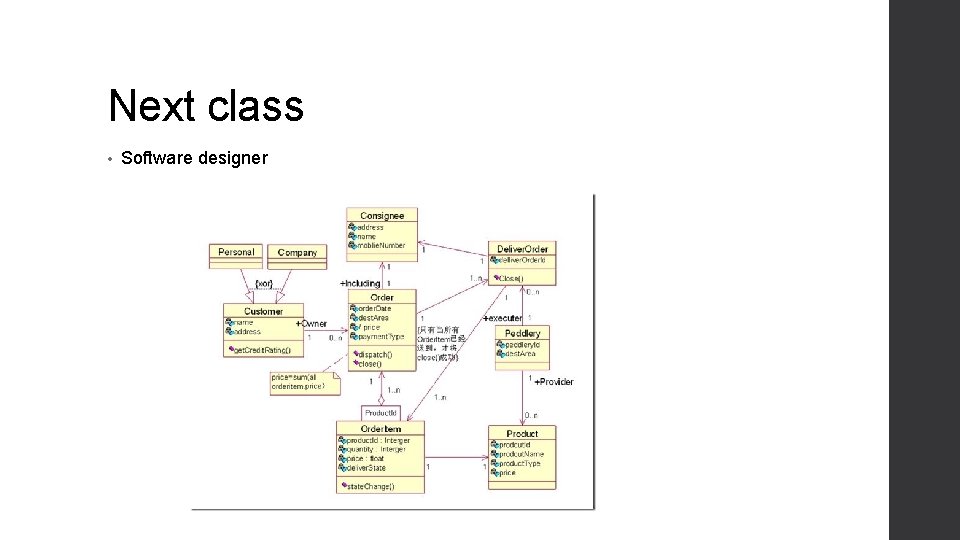
Next class • Software designer
- Slides: 46