
System Analysis and Design Chapter 1 Systems Development
- Slides: 25
System Analysis and Design Chapter 1 Systems Development (Lecture 1) 1
Basic Topics Introduction to System development. n System Development Life Cycle (SDLC). n System Development feasibility. n 2
Introduction to System Development n n When business organization facing a keen competition in the market, rapid change of technology and fast internal demand, system development is necessary. In the system development, a business organization could adopt the systematic method for such development. To understand Systems Development, one has to first understand what exactly are systems. 3
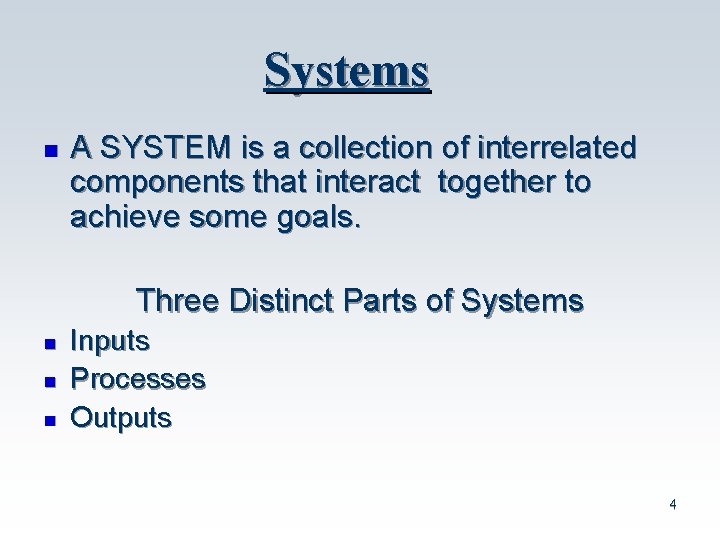
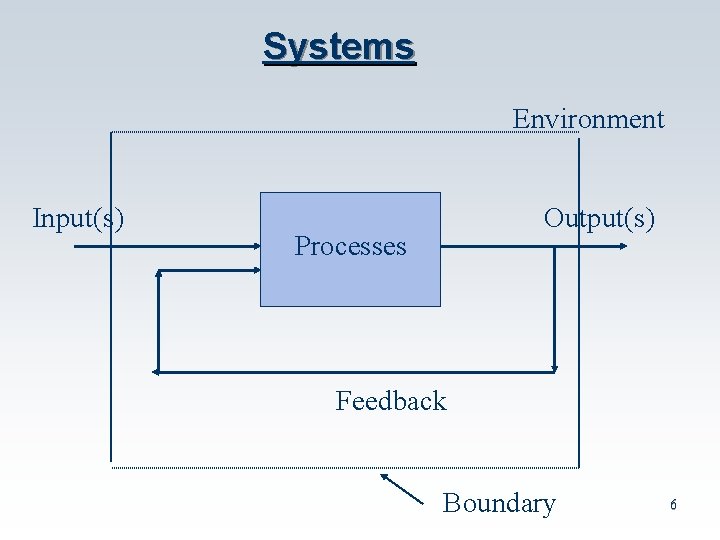
Systems n A SYSTEM is a collection of interrelated components that interact together to achieve some goals. Three Distinct Parts of Systems n n n Inputs Processes Outputs 4
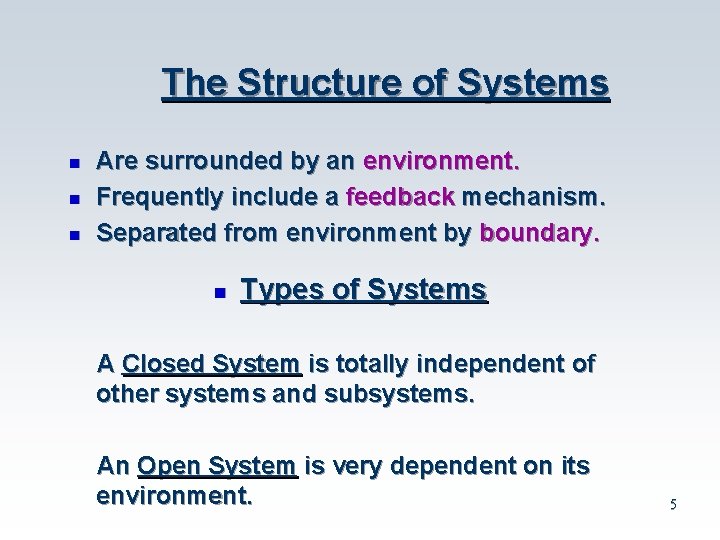
The Structure of Systems n n n Are surrounded by an environment. Frequently include a feedback mechanism. Separated from environment by boundary. n Types of Systems A Closed System is totally independent of other systems and subsystems. An Open System is very dependent on its environment. 5
Systems Environment Input(s) Output(s) Processes Feedback Boundary 6
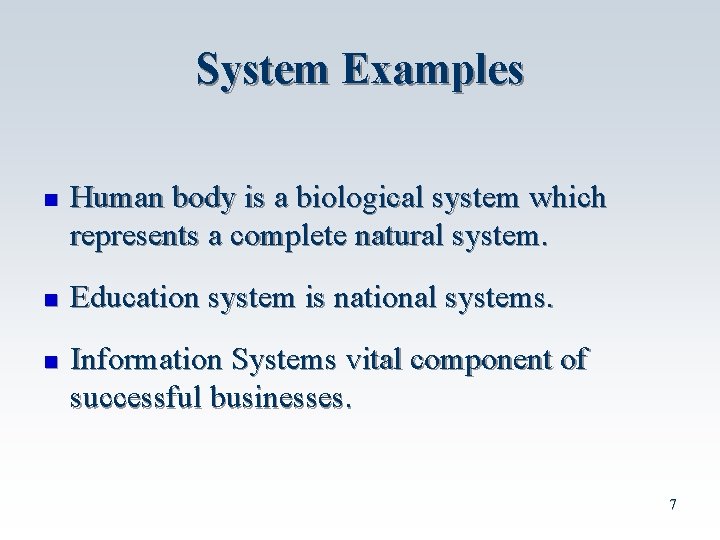
System Examples n n n Human body is a biological system which represents a complete natural system. Education system is national systems. Information Systems vital component of successful businesses. 7
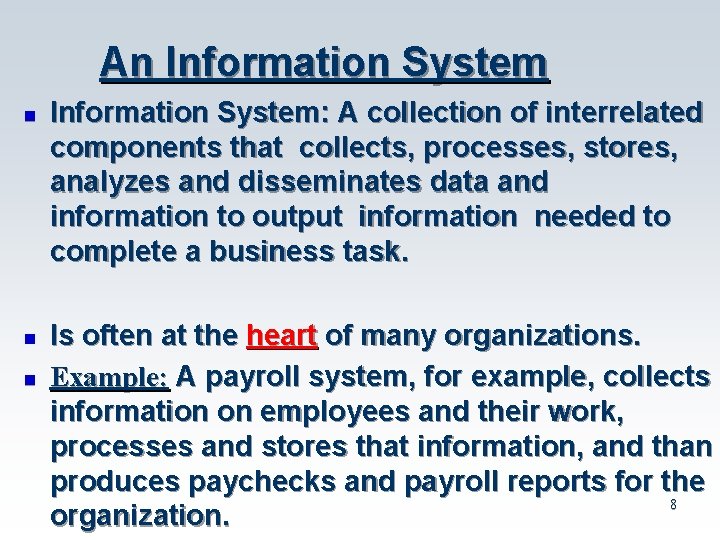
An Information System n n n Information System: A collection of interrelated components that collects, processes, stores, analyzes and disseminates data and information to output information needed to complete a business task. Is often at the heart of many organizations. Example: A payroll system, for example, collects information on employees and their work, processes and stores that information, and than produces paychecks and payroll reports for the 8 organization.
Computer-based Information System n n Computer-based Information System (CBIS). An information system that uses computer technology to perform some or all of its intended tasks. Examples: Airline reservation systems; Course reservation systems 9
Importance of Information Systems n n n Vital component of successful businesses Helps businesses expand compete Businesses use IS n To improve efficiency and effectiveness of business processes n For managerial decision making n For workgroup collaboration 10
Information System Development n There is Some reasons to information system development such as: 1 - To cope efficiently with an increasing volume of work. 2 - The existing system is needed to develop to regain the competitive edge. 11
Information Systems Analysis and Design n Used to develop and maintain computer based information systems. Complex organizational process. Used by a team of business and systems professionals (system analysts). 12
Role of the Systems Analyst n n n Study problems and needs of an organization Determine best approach to improving organization through use of: n People n Methods n Information technology Help system users and managers define their requirements for new or enhanced systems 13
Skills of a Successful Systems Analyst n n Analytical n Understanding of organizations n Problem-solving skills n System thinking n Ability to see organizations and information systems as systems Technical n Understanding of potential and limitations of technology 14
Skills of a Successful Systems Analyst n Managerial n n Ability to manage projects, resources, risk and change Interpersonal n Effective written and oral communication skills 15
System Development Life Cycle n Systems Development Life Cycle (SDLC)Traditional methodology used to develop, maintain, and replace information systems. 16
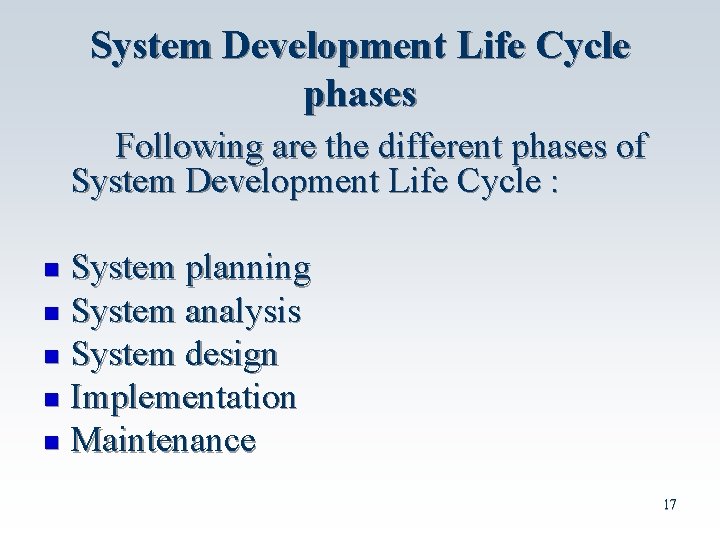
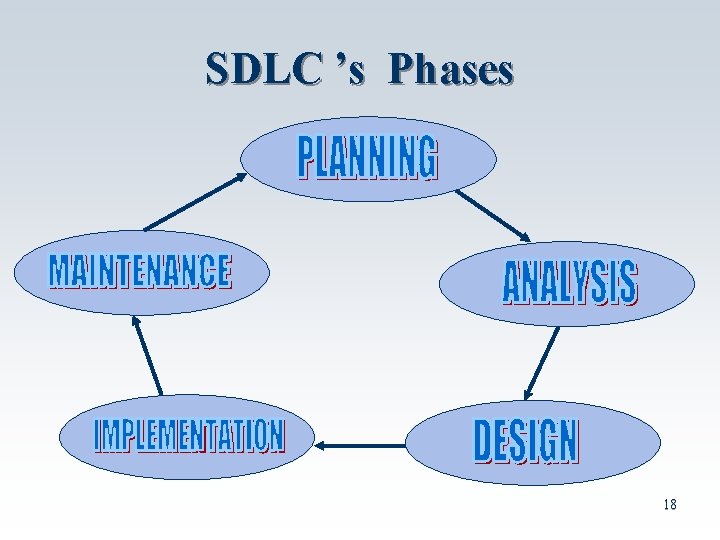
System Development Life Cycle phases Following are the different phases of System Development Life Cycle : System planning n System analysis n System design n Implementation n Maintenance n 17
SDLC ’s Phases 18
Planning n n In these phase, someone identifies the need for a new or enhanced system. The project leader and initial team of system analyst produce a specific plan for a proposed system project. A detailed plan is also developed for conducting the remaining phases of the SDLC for the proposed system. Also, feasibility study conducted in this phase. 19
System Development Feasibility Study The feasibility (possibility) study is basically the test of the proposed system in the light of its workability, meeting user’s requirements, effective use of resources and of course, the cost effectiveness. The main goal of feasibility study is not to solve the problem but to achieve the scope. In the process of feasibility study, the cost and benefits are estimated with greater accuracy. 20
Analysis n n n The first is requirements determination which the system analyst work with users to determine what the users want from the proposed system. Next the system analyst study the requirements and structure them according to their interrelationships. Then system analyst generate alternative initial design to match the requirements. 21
System Design n n The description of the recommended alternative solutions is converted into logical and then physical system specification. You must design all aspects of the system from input and output screens to reports, database, and computer processes. 22
System Design (continued) n n Logic design: all functional features of the system chosen for development in analysis are described independently of any computer platform. Physical design: the logical specifications of the system from logical design are transformed into technology-specific details from which all programming and system construction can be accomplished. 23
Implementation n n Detailed model or detailed written specifications are turned to programmer as the first part of implementation phase. Implementation includes coding, testing, and installation. Coding: programmers write the programs that make up the system. Testing: programmers and analysts test individual programs and the entire system in order to find and correct the errors. Installation: the new system becomes a part of the daily activities of the organization. 24.
Maintenance n n n When a system is operate in organization, users sometimes find problems with how it works and often think of better ways to perform its functions. Programmers make the changes that users ask for and modify the system to reflect changing business condition. So the final phase of SDLC improve information system. 25