
Synthetic Biology in Vaccine Development Julius Ho Biol
Synthetic Biology in Vaccine Development Julius Ho Biol 1220 4/20/10
Outline Historical overview of vaccines Genetic methods in vaccine development Use influenza as an example for new synthetic bio approaches
Traditional vaccines Use of inactive or weakened compounds from the microorganism causing disease Different approaches Heterologous Attenuated Inactivated Toxoid
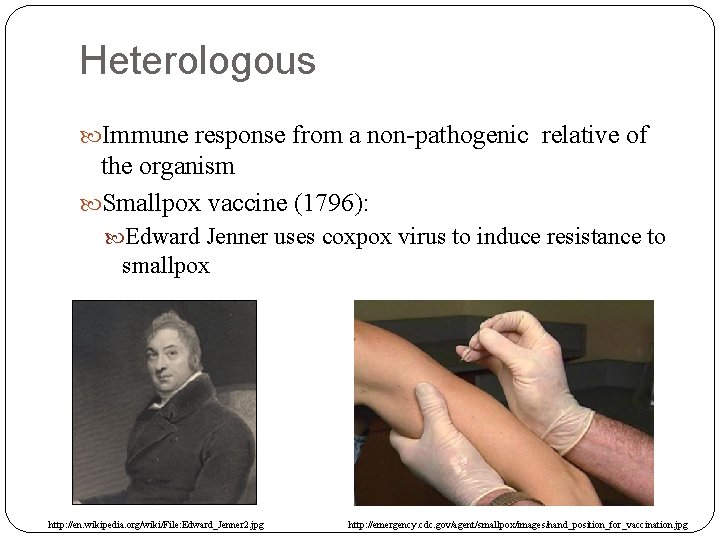
Heterologous Immune response from a non-pathogenic relative of the organism Smallpox vaccine (1796): Edward Jenner uses coxpox virus to induce resistance to smallpox http: //en. wikipedia. org/wiki/File: Edward_Jenner 2. jpg http: //emergency. cdc. gov/agent/smallpox/images/hand_position_for_vaccination. jpg
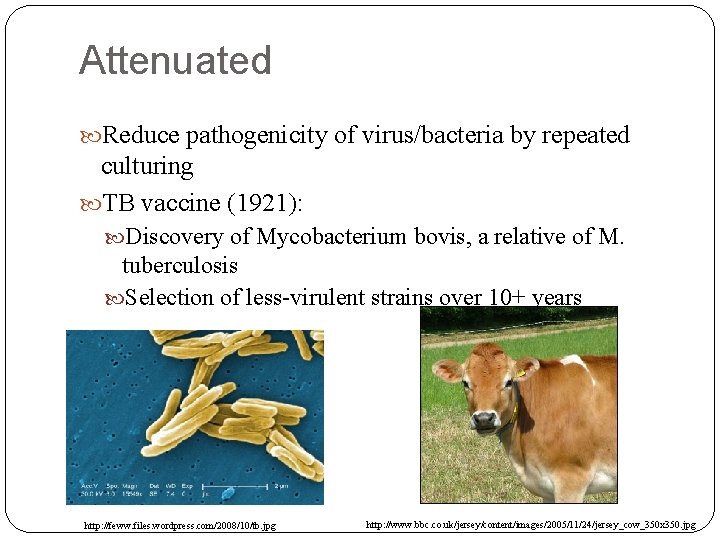
Attenuated Reduce pathogenicity of virus/bacteria by repeated culturing TB vaccine (1921): Discovery of Mycobacterium bovis, a relative of M. tuberculosis Selection of less-virulent strains over 10+ years http: //feww. files. wordpress. com/2008/10/tb. jpg http: //www. bbc. co. uk/jersey/content/images/2005/11/24/jersey_cow_350 x 350. jpg
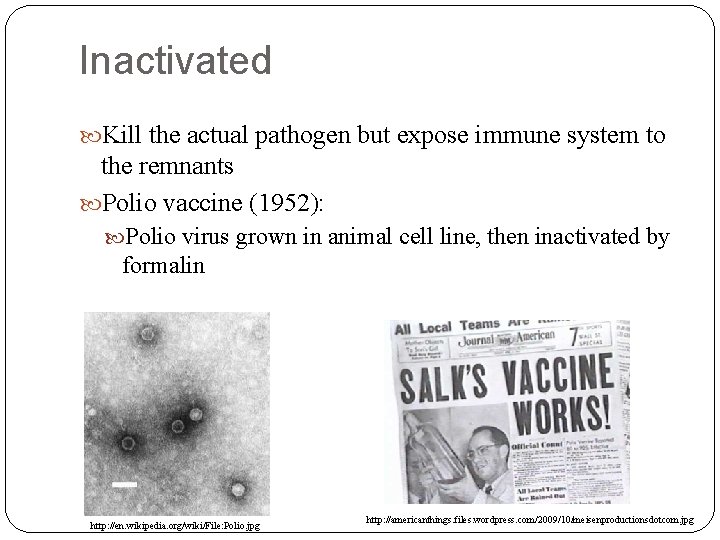
Inactivated Kill the actual pathogen but expose immune system to the remnants Polio vaccine (1952): Polio virus grown in animal cell line, then inactivated by formalin http: //en. wikipedia. org/wiki/File: Polio. jpg http: //americanthings. files. wordpress. com/2009/10/meisenproductionsdotcom. jpg
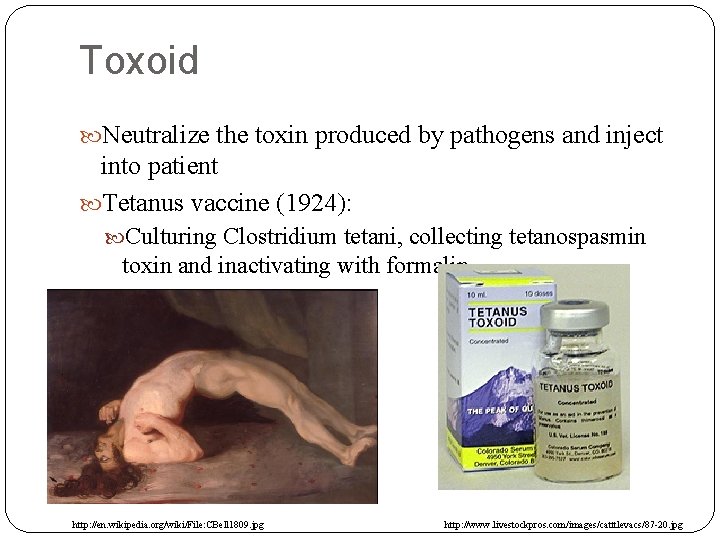
Toxoid Neutralize the toxin produced by pathogens and inject into patient Tetanus vaccine (1924): Culturing Clostridium tetani, collecting tetanospasmin toxin and inactivating with formalin http: //en. wikipedia. org/wiki/File: CBell 1809. jpg http: //www. livestockpros. com/images/catttlevacs/87 -20. jpg
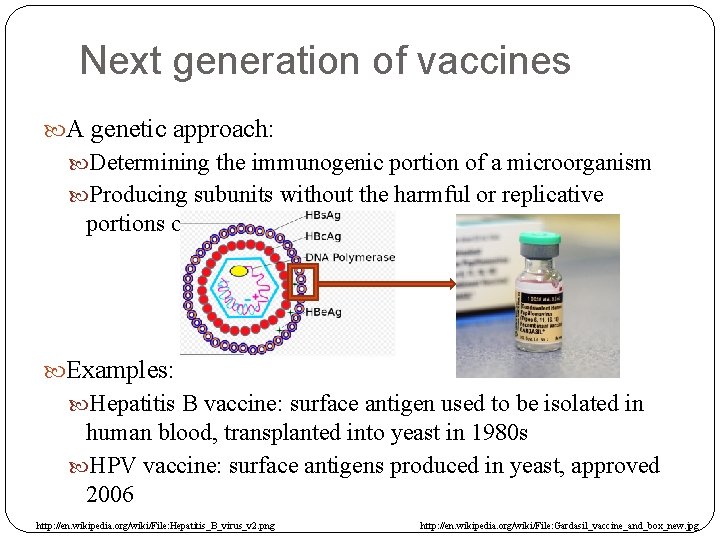
Next generation of vaccines A genetic approach: Determining the immunogenic portion of a microorganism Producing subunits without the harmful or replicative portions of pathogen Examples: Hepatitis B vaccine: surface antigen used to be isolated in human blood, transplanted into yeast in 1980 s HPV vaccine: surface antigens produced in yeast, approved 2006 http: //en. wikipedia. org/wiki/File: Hepatitis_B_virus_v 2. png http: //en. wikipedia. org/wiki/File: Gardasil_vaccine_and_box_new. jpg
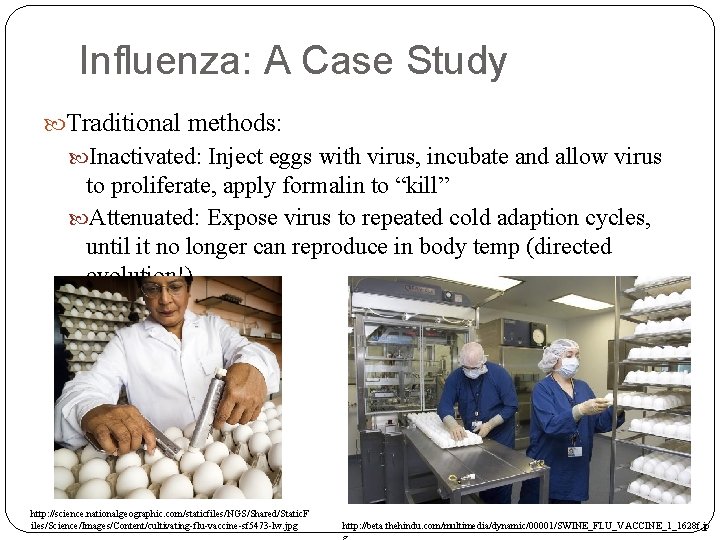
Influenza: A Case Study Traditional methods: Inactivated: Inject eggs with virus, incubate and allow virus to proliferate, apply formalin to “kill” Attenuated: Expose virus to repeated cold adaption cycles, until it no longer can reproduce in body temp (directed evolution!) http: //science. nationalgeographic. com/staticfiles/NGS/Shared/Static. F iles/Science/Images/Content/cultivating-flu-vaccine-sf 5473 -lw. jpg http: //beta. thehindu. com/multimedia/dynamic/00001/SWINE_FLU_VACCINE_1_1628 f. jp
Current shortcomings Takes around six months to prepare annual vaccine Only a prediction of the expected strains Variable quality of egg product Contamination Difficult to control amount of virus Live-attenuated vaccine is unsuitable in immunocompromised patients
Synthetic biology solutions Virus-like particles DNA vaccine Synthetic attenuation
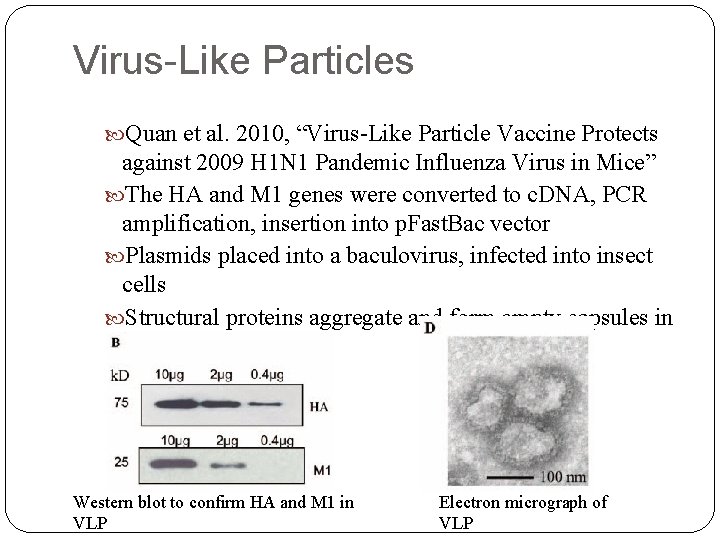
Virus-Like Particles Quan et al. 2010, “Virus-Like Particle Vaccine Protects against 2009 H 1 N 1 Pandemic Influenza Virus in Mice” The HA and M 1 genes were converted to c. DNA, PCR amplification, insertion into p. Fast. Bac vector Plasmids placed into a baculovirus, infected into insect cells Structural proteins aggregate and form empty capsules in supernatant Western blot to confirm HA and M 1 in VLP Electron micrograph of VLP
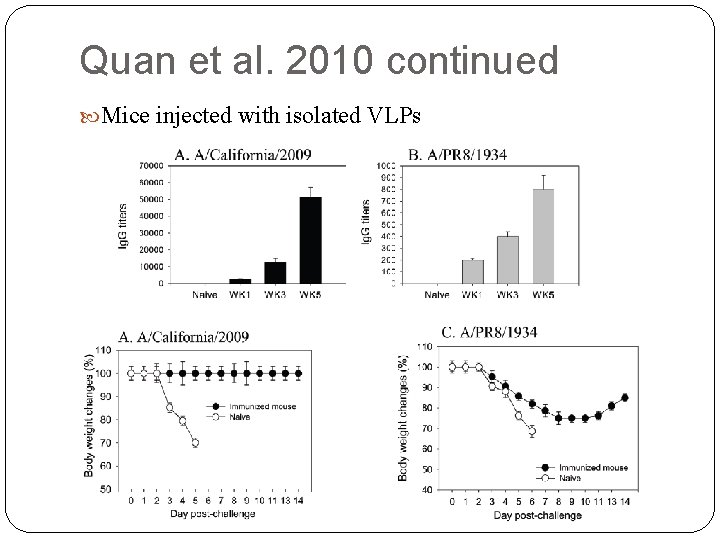
Quan et al. 2010 continued Mice injected with isolated VLPs
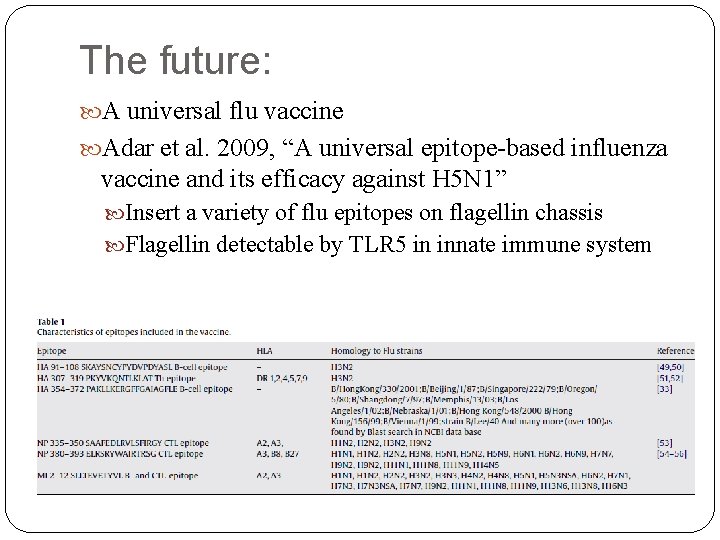
The future: A universal flu vaccine Adar et al. 2009, “A universal epitope-based influenza vaccine and its efficacy against H 5 N 1” Insert a variety of flu epitopes on flagellin chassis Flagellin detectable by TLR 5 in innate immune system
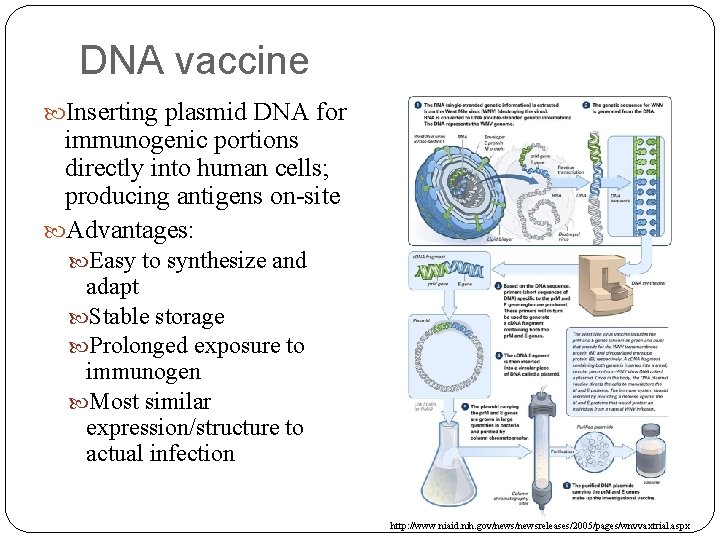
DNA vaccine Inserting plasmid DNA for immunogenic portions directly into human cells; producing antigens on-site Advantages: Easy to synthesize and adapt Stable storage Prolonged exposure to immunogen Most similar expression/structure to actual infection http: //www. niaid. nih. gov/newsreleases/2005/pages/wnvvaxtrial. aspx
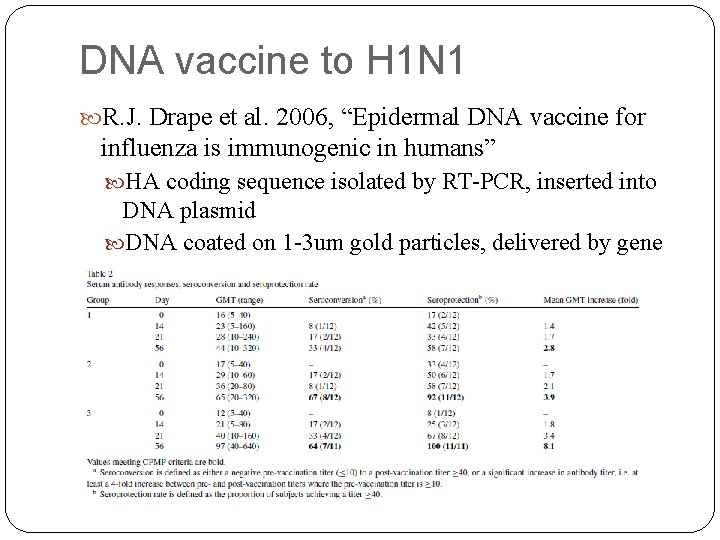
DNA vaccine to H 1 N 1 R. J. Drape et al. 2006, “Epidermal DNA vaccine for influenza is immunogenic in humans” HA coding sequence isolated by RT-PCR, inserted into DNA plasmid DNA coated on 1 -3 um gold particles, delivered by gene gun
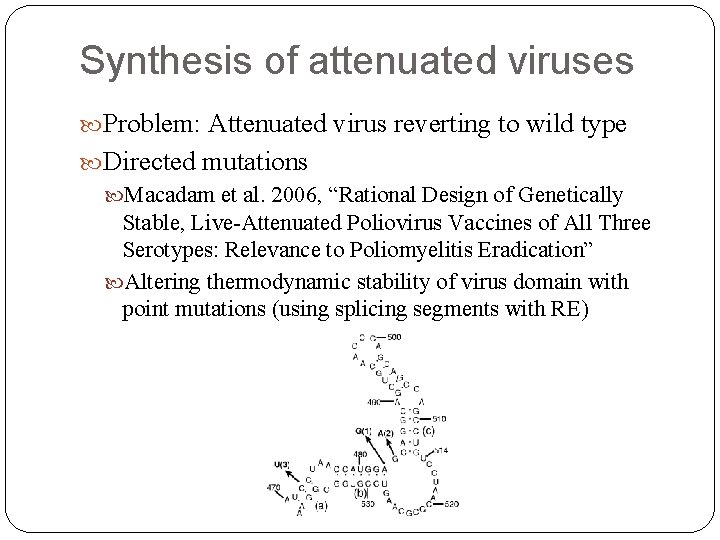
Synthesis of attenuated viruses Problem: Attenuated virus reverting to wild type Directed mutations Macadam et al. 2006, “Rational Design of Genetically Stable, Live-Attenuated Poliovirus Vaccines of All Three Serotypes: Relevance to Poliomyelitis Eradication” Altering thermodynamic stability of virus domain with point mutations (using splicing segments with RE)
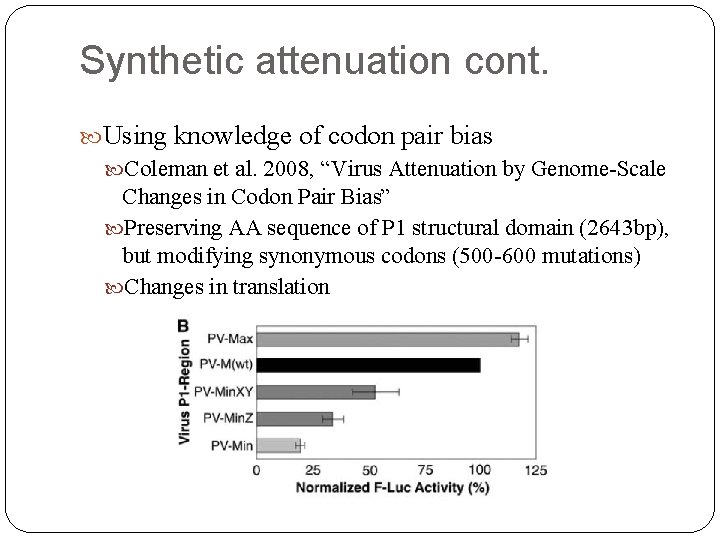
Synthetic attenuation cont. Using knowledge of codon pair bias Coleman et al. 2008, “Virus Attenuation by Genome-Scale Changes in Codon Pair Bias” Preserving AA sequence of P 1 structural domain (2643 bp), but modifying synonymous codons (500 -600 mutations) Changes in translation
Sources http: //discovermagazine. com/2009/jul-aug/27 -vaccine-production- horribly-outdated-3 -ways-fix-it http: //www. i-sis. org. uk/LASIVCSQ. php http: //www. who. int/vaccines/en/hepatitisa. shtml http: //www. ncbi. nlm. nih. gov/pmc/articles/PMC 2820088/ http: //www. who. int/biologicals/areas/vaccines/dna/en/index. html http: //www. cdc. gov/mmwr/preview/mmwrhtml/00041645. htm
- Slides: 19