
Synthesis Reactions Synthesis Reactions At the conclusion of
- Slides: 12
Synthesis Reactions
Synthesis Reactions: At the conclusion of our time together, you should be able to: 1. Recognize a synthesis chemical reaction 2. Balance this reaction type
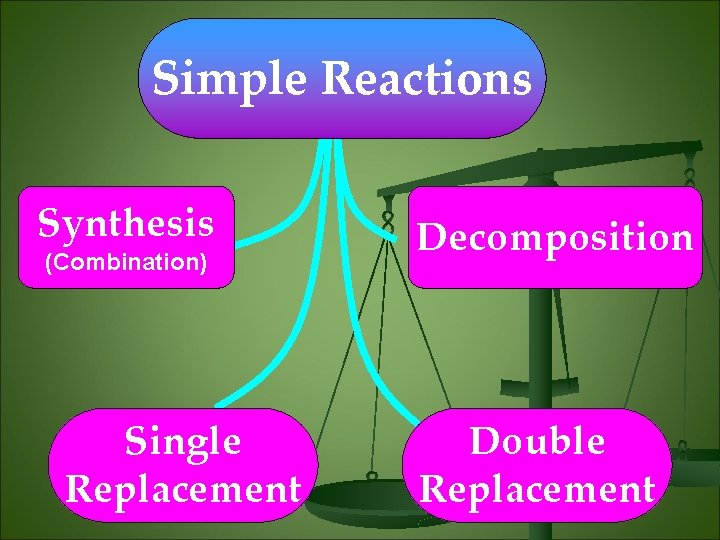
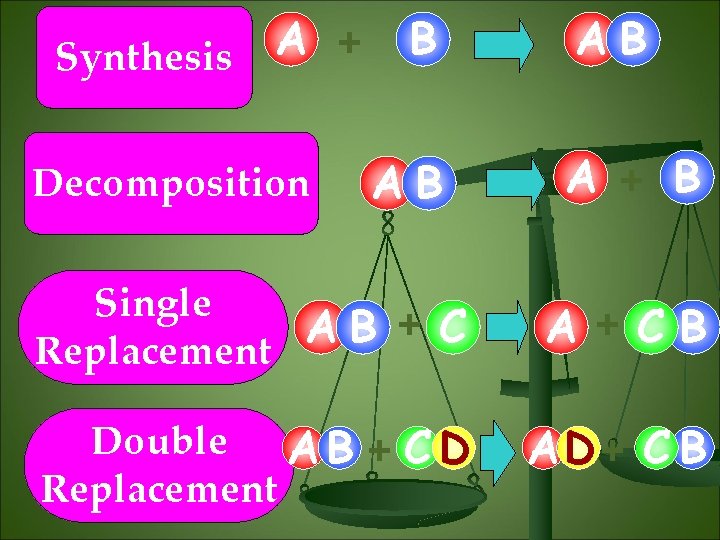
Simple Reactions Synthesis (Combination) Single Replacement Decomposition Double Replacement
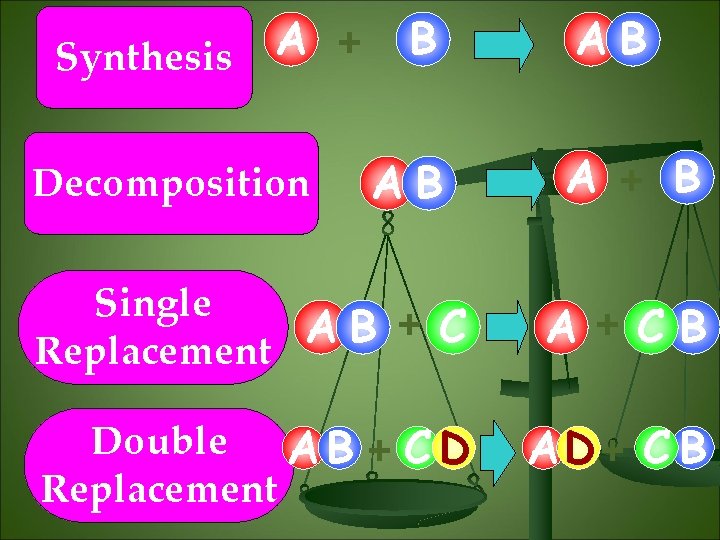
A + Synthesis Decomposition B AB AB A + B Single +C A B Replacement A +CB Double A B + C D Replacement AD + C B
A + Synthesis Decomposition B AB AB A + B Single +C A B Replacement A +CB Double A B + C D Replacement AD + C B
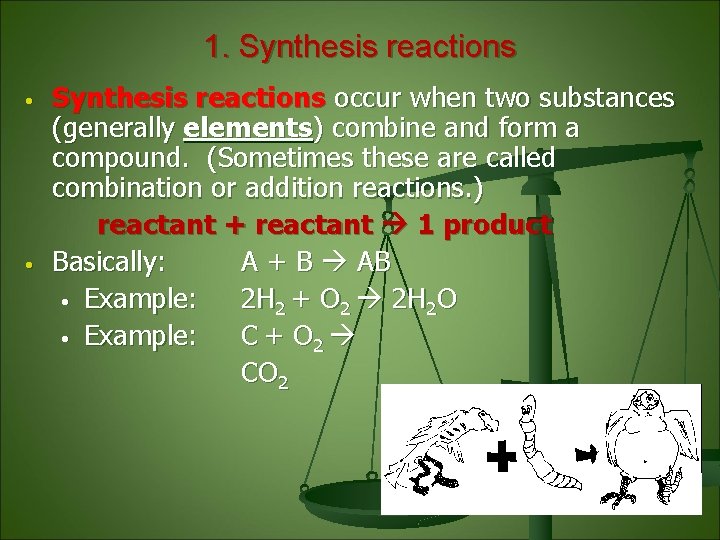
1. Synthesis reactions • • Synthesis reactions occur when two substances (generally elements) combine and form a compound. (Sometimes these are called combination or addition reactions. ) reactant + reactant 1 product Basically: A + B AB • Example: 2 H 2 + O 2 2 H 2 O • Example: C + O 2 CO 2
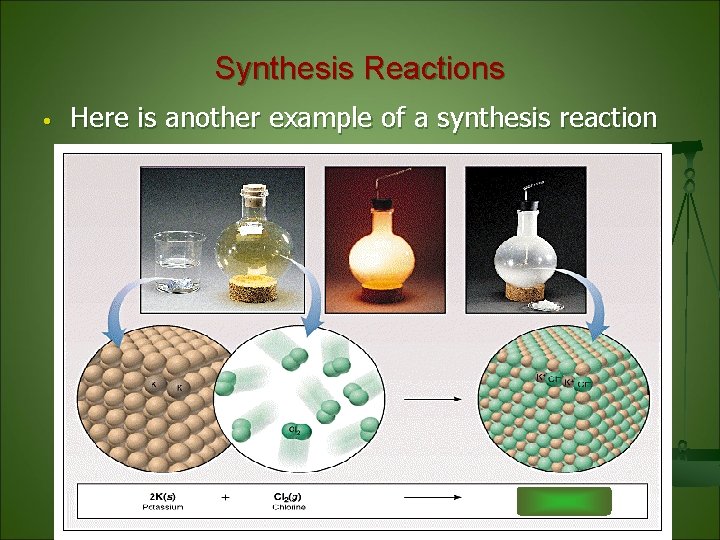
Synthesis Reactions • Here is another example of a synthesis reaction
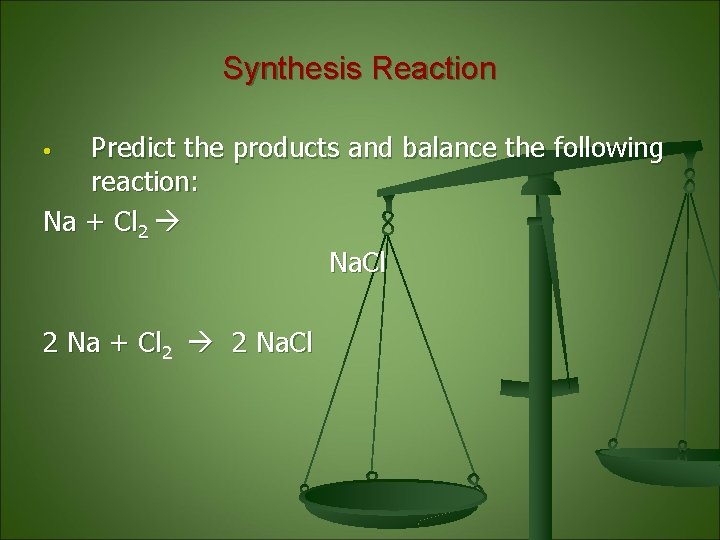
Synthesis Reaction Predict the products and balance the following reaction: Na + Cl 2 Na. Cl • 2 Na + Cl 2 2 Na. Cl
Synthesis Reactions = • One main purpose: • To make a more complex compound!!
Synthesis Reactions: Let’s see if you can: 1. Recognize a synthesis chemical reaction 2. Balance this reaction type
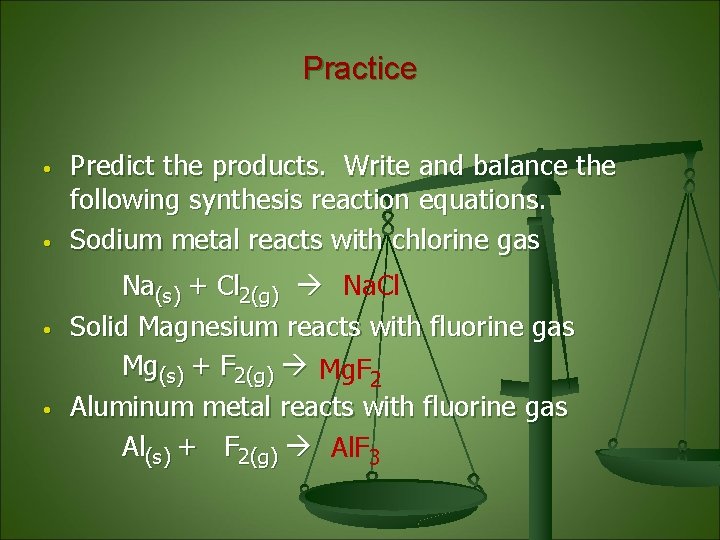
Practice • • Predict the products. Write and balance the following synthesis reaction equations. Sodium metal reacts with chlorine gas Na(s) + Cl 2(g) Na. Cl Solid Magnesium reacts with fluorine gas Mg(s) + F 2(g) Mg. F 2 Aluminum metal reacts with fluorine gas Al(s) + F 2(g) Al. F 3
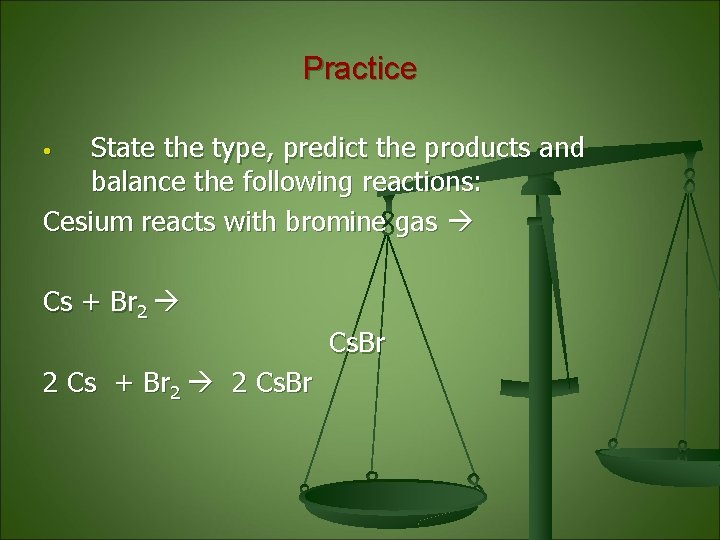
Practice State the type, predict the products and balance the following reactions: Cesium reacts with bromine gas • Cs + Br 2 Cs. Br 2 Cs + Br 2 2 Cs. Br