
Synthesis Of Unsaturated Fatty Acids A Nonessential unsaturated
- Slides: 20
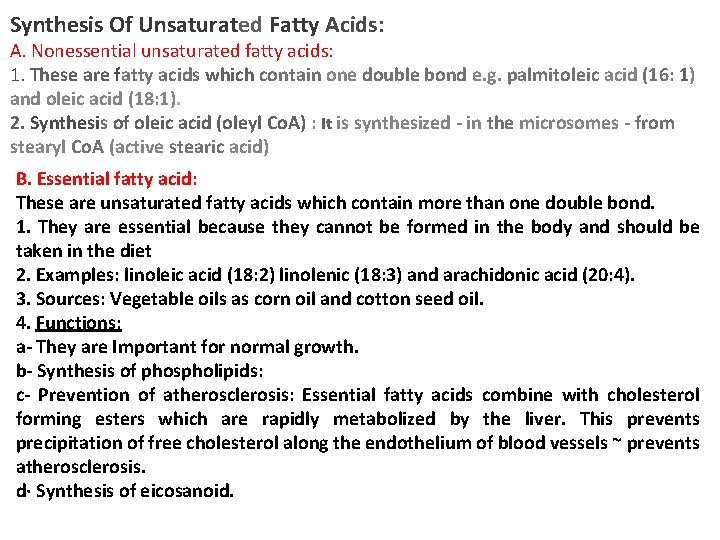
Synthesis Of Unsaturated Fatty Acids: A. Nonessential unsaturated fatty acids: 1. These are fatty acids which contain one double bond e. g. palmitoleic acid (16: 1) and oleic acid (18: 1). 2. Synthesis of oleic acid (oleyl Co. A) : It is synthesized - in the microsomes - from stearyl Co. A (active stearic acid) B. Essential fatty acid: These are unsaturated fatty acids which contain more than one double bond. 1. They are essential because they cannot be formed in the body and should be taken in the diet 2. Examples: linoleic acid (18: 2) linolenic (18: 3) and arachidonic acid (20: 4). 3. Sources: Vegetable oils as corn oil and cotton seed oil. 4. Functions: a- They are Important for normal growth. b- Synthesis of phospholipids: c- Prevention of atherosclerosis: Essential fatty acids combine with cholesterol forming esters which are rapidly metabolized by the liver. This prevents precipitation of free cholesterol along the endothelium of blood vessels ~ prevents atherosclerosis. d· Synthesis of eicosanoid.
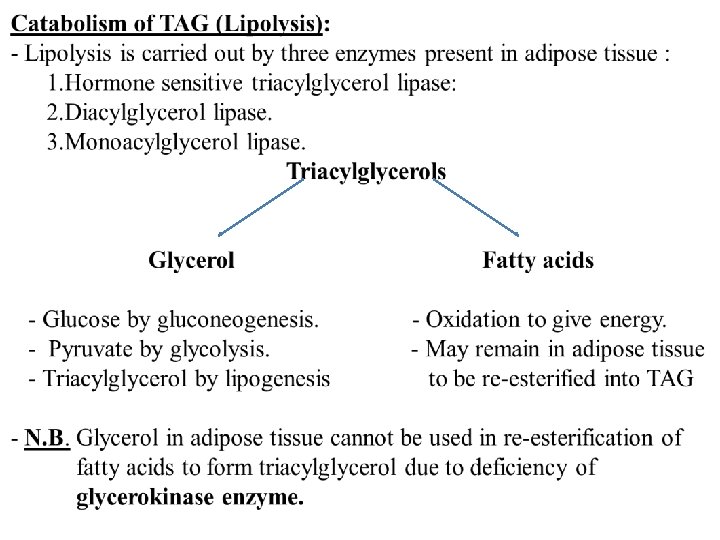
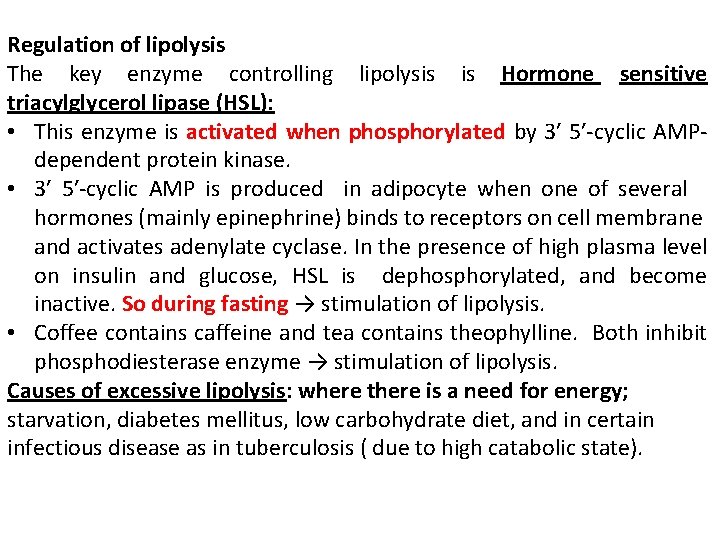
Regulation of lipolysis The key enzyme controlling lipolysis is Hormone sensitive triacylglycerol lipase (HSL): • This enzyme is activated when phosphorylated by 3′ 5′-cyclic AMPdependent protein kinase. • 3′ 5′-cyclic AMP is produced in adipocyte when one of several hormones (mainly epinephrine) binds to receptors on cell membrane and activates adenylate cyclase. In the presence of high plasma level on insulin and glucose, HSL is dephosphorylated, and become inactive. So during fasting → stimulation of lipolysis. • Coffee contains caffeine and tea contains theophylline. Both inhibit phosphodiesterase enzyme → stimulation of lipolysis. Causes of excessive lipolysis: where there is a need for energy; starvation, diabetes mellitus, low carbohydrate diet, and in certain infectious disease as in tuberculosis ( due to high catabolic state).
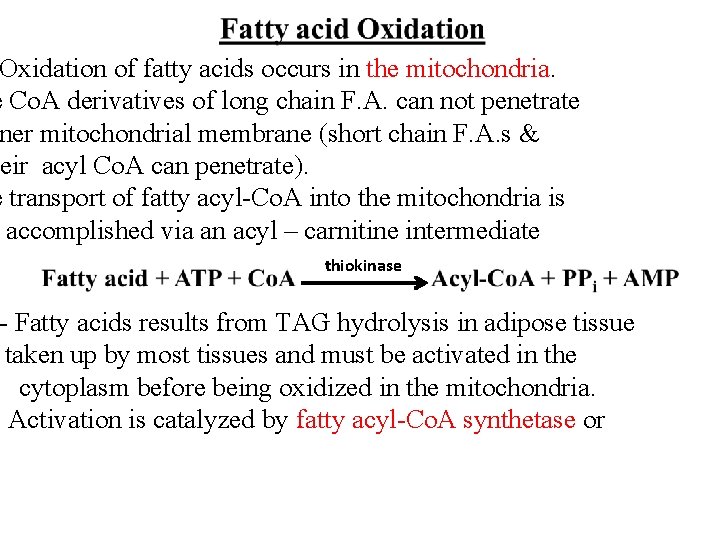
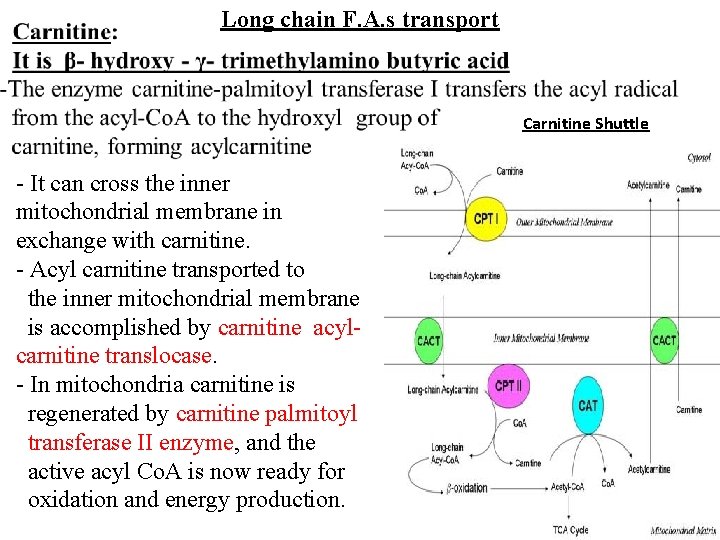
Oxidation of fatty acids occurs in the mitochondria. e Co. A derivatives of long chain F. A. can not penetrate ner mitochondrial membrane (short chain F. A. s & eir acyl Co. A can penetrate). e transport of fatty acyl-Co. A into the mitochondria is accomplished via an acyl – carnitine intermediate thiokinase - Fatty acids results from TAG hydrolysis in adipose tissue taken up by most tissues and must be activated in the cytoplasm before being oxidized in the mitochondria. - Activation is catalyzed by fatty acyl-Co. A synthetase or
Long chain F. A. s transport Carnitine Shuttle - It can cross the inner mitochondrial membrane in exchange with carnitine. - Acyl carnitine transported to the inner mitochondrial membrane is accomplished by carnitine acylcarnitine translocase. - In mitochondria carnitine is regenerated by carnitine palmitoyl transferase II enzyme, and the active acyl Co. A is now ready for oxidation and energy production.
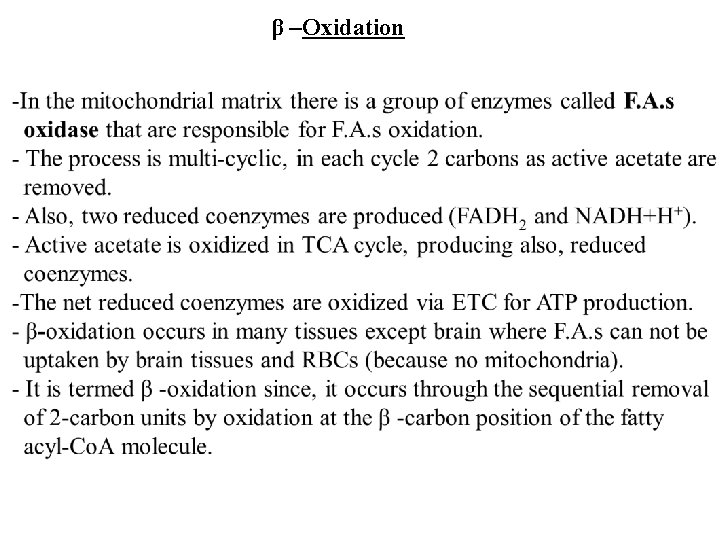
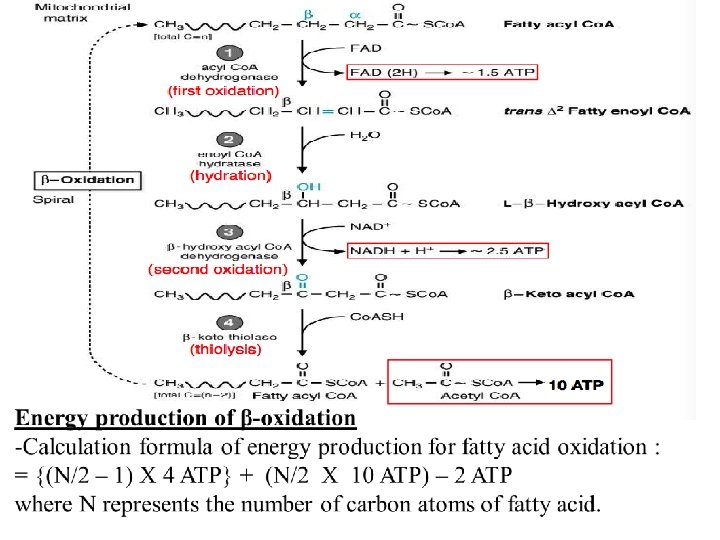
β –Oxidation
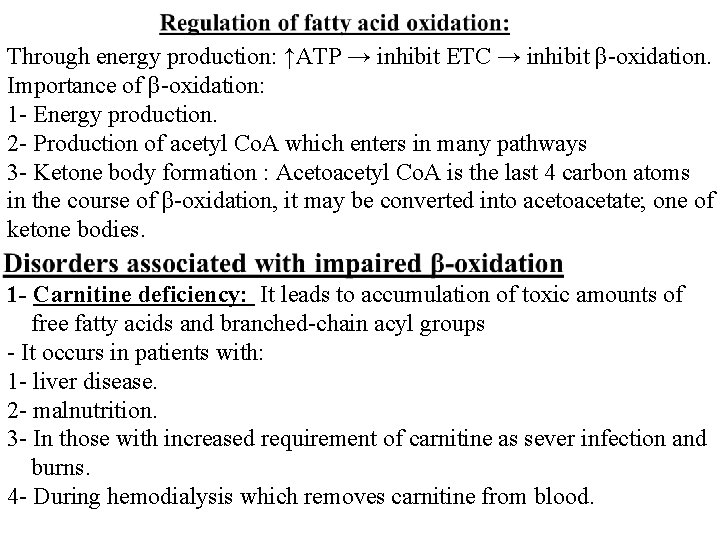
Through energy production: ↑ATP → inhibit ETC → inhibit β-oxidation. Importance of β-oxidation: 1 - Energy production. 2 - Production of acetyl Co. A which enters in many pathways 3 - Ketone body formation : Acetoacetyl Co. A is the last 4 carbon atoms in the course of β-oxidation, it may be converted into acetoacetate; one of ketone bodies. 1 - Carnitine deficiency: It leads to accumulation of toxic amounts of free fatty acids and branched-chain acyl groups - It occurs in patients with: 1 - liver disease. 2 - malnutrition. 3 - In those with increased requirement of carnitine as sever infection and burns. 4 - During hemodialysis which removes carnitine from blood.
-Symptoms include muscle cramps during exercise, severe weakness - Muscle weakness related to importance of fatty acids as long term energy source - Hypoglycemia and hypoketosis are common findings - Diet containing medium chain fatty acids is recommended since they do not require carnitine shuttle to enter mitochondria.
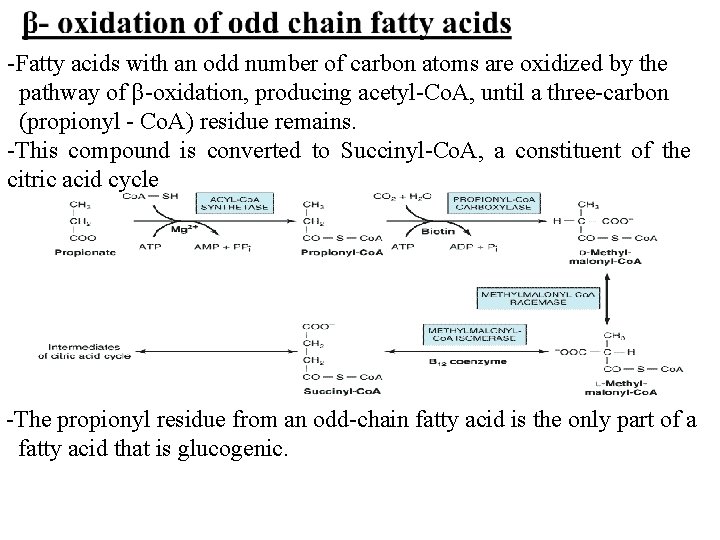
-Fatty acids with an odd number of carbon atoms are oxidized by the pathway of β-oxidation, producing acetyl-Co. A, until a three-carbon (propionyl - Co. A) residue remains. -This compound is converted to Succinyl-Co. A, a constituent of the citric acid cycle -The propionyl residue from an odd-chain fatty acid is the only part of a fatty acid that is glucogenic.
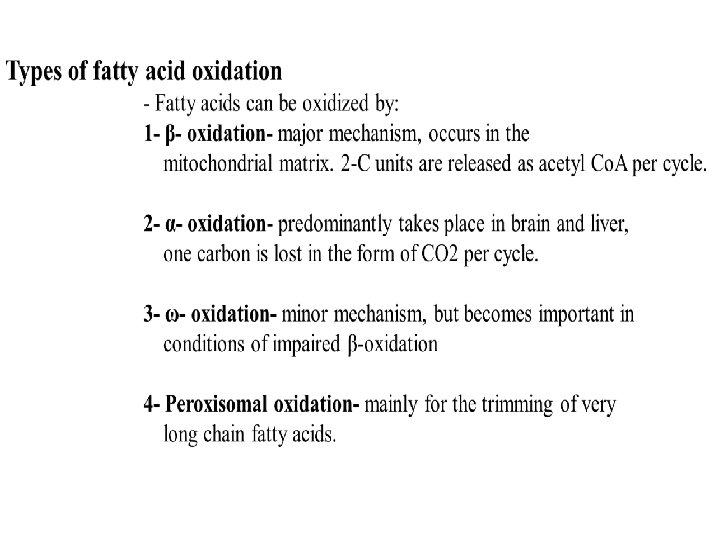
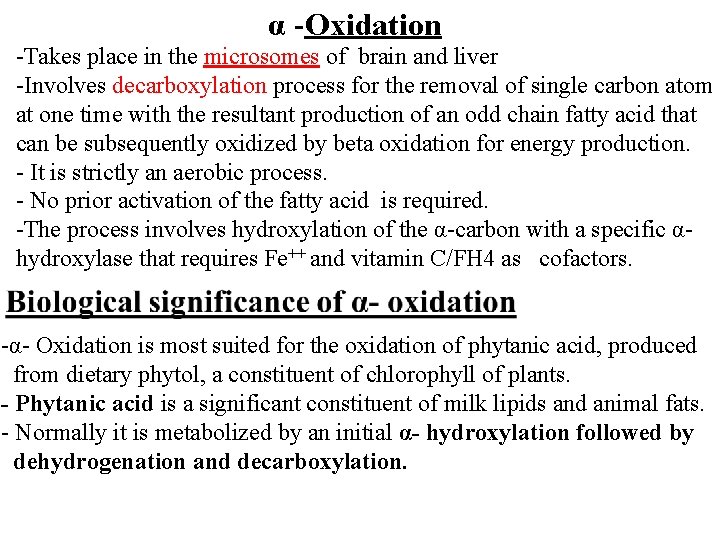
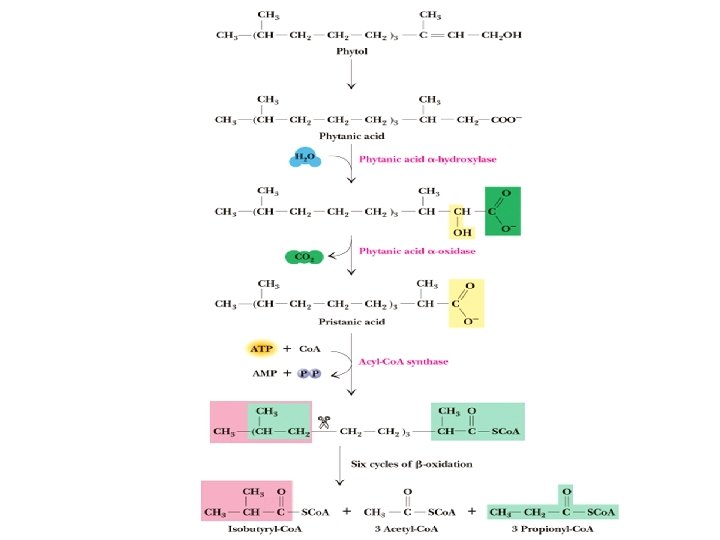
α -Oxidation -Takes place in the microsomes of brain and liver -Involves decarboxylation process for the removal of single carbon atom at one time with the resultant production of an odd chain fatty acid that can be subsequently oxidized by beta oxidation for energy production. - It is strictly an aerobic process. - No prior activation of the fatty acid is required. -The process involves hydroxylation of the α-carbon with a specific αhydroxylase that requires Fe++ and vitamin C/FH 4 as cofactors. -α- Oxidation is most suited for the oxidation of phytanic acid, produced from dietary phytol, a constituent of chlorophyll of plants. - Phytanic acid is a significant constituent of milk lipids and animal fats. - Normally it is metabolized by an initial α- hydroxylation followed by dehydrogenation and decarboxylation.
- α-oxidation can not occur initially because of the presence of 3 - methyl groups, but it can proceed after decarboxylation. -The whole reaction produces three molecules of propionyl Co. A, three molecules of Acetyl co A, and one molecule of iso butyryl Co A. -Phytanic acid is oxidized by phytanic acid α oxidase (α- hydroxylase enzyme) to yield CO 2 and odd chain fatty acid -Refsum's disease (RD)-is a neurocutaneous syndrome that is characterized biochemically by the accumulation of phytanic acid in plasma and tissues. - Patients with Refsum's disease are unable to degrade phytanic acid because of a deficient activity of phytanic acid oxidase enzyme catalyzing the first step of phytanic acid α-oxidation. - Peripheral polyneuropathy, cerebellar ataxia, retinitis pigmentosa, and Ichthyosis (rough, dry and scaly skin) are the major clinical components.
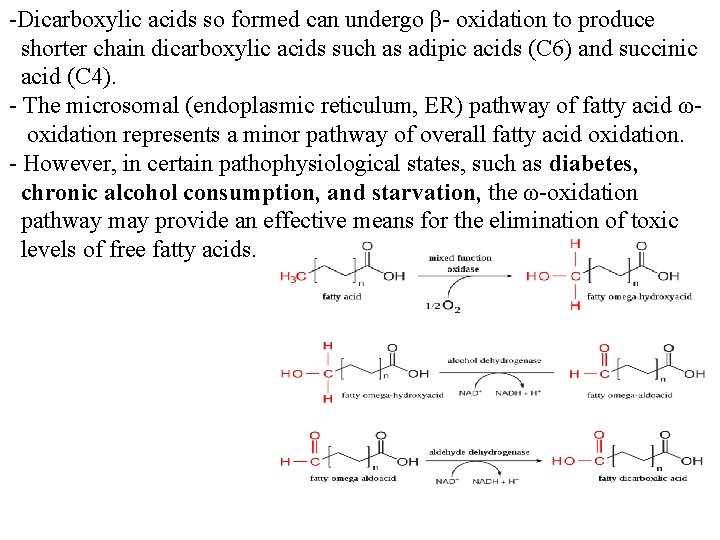
Zellweger's (cerebrohepatorenal) syndrome: Due to rare inherited absence of peroxisomes in all tissues. -They accumulate C 26 -C 38 polynoic acids in brain tissue owing to inability to oxidize long-chain fatty acids in peroxisomes. ω -Oxidation - Involves hydroxylation and occurs in the endoplasmic reticulum of many tissues. - Hydroxylation takes place on the methyl carbon at the other end of the molecule from the carboxyl group or on the carbon next to the methyl end. - It uses the “mixed function oxidase” type of reaction requiring Cytochrome P 450, O 2 and NADPH, as well as the necessary enzymes. - Hydroxy fatty acids can be further oxidized to a dicarboxylic acid via sequential reactions of Alcohol dehydrogenase and aldehyde dehydrogenases. - The process occurs primarily with medium chain fatty acids.
-Dicarboxylic acids so formed can undergo β- oxidation to produce shorter chain dicarboxylic acids such as adipic acids (C 6) and succinic acid (C 4). - The microsomal (endoplasmic reticulum, ER) pathway of fatty acid ωoxidation represents a minor pathway of overall fatty acid oxidation. - However, in certain pathophysiological states, such as diabetes, chronic alcohol consumption, and starvation, the ω-oxidation pathway may provide an effective means for the elimination of toxic levels of free fatty acids.