
Synthesis of Thiophene and Thiolane Derivatives Found in





- Slides: 23
Synthesis of Thiophene and Thiolane Derivatives Found in Biodiesel Produced from Brown Grease Lipids By Isah Shehu 07/25/2019
Outline of Presentation • Synthesis of Methyl 8 -(2’, 5’-hexylthienyl)octanoate (1) • Synthesis of epithiostearate (2) • Synthesis of cross-linked disulfide (3) • Synthesis of cross-linked sulfide (4) • Synthesis of epidithiostearate (5) • Synthesis of 5 -butyl dihydrthiophen-2 -one (6)
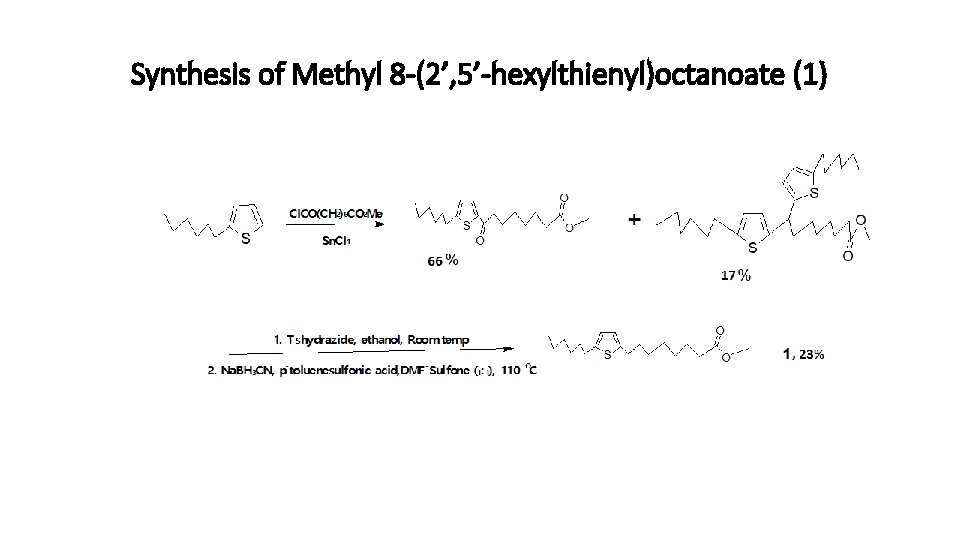
Synthesis of Methyl 8 -(2’, 5’-hexylthienyl)octanoate (1) The synthesis is according to the procedure described by Gunstone et al. , (1973) with some modifications. The multi-step synthesis is shown in scheme 1.
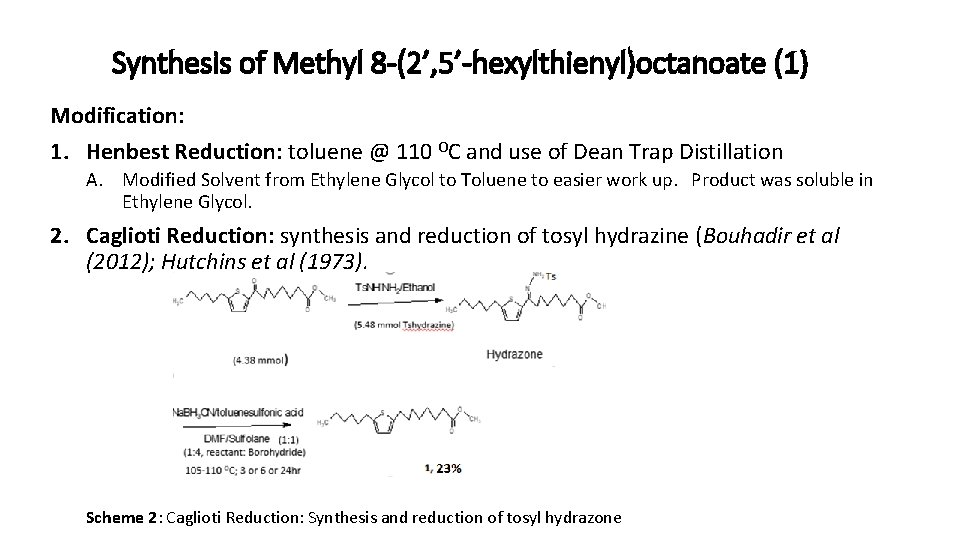
Synthesis of Methyl 8 -(2’, 5’-hexylthienyl)octanoate (1) Modification: 1. Henbest Reduction: toluene @ 110 OC and use of Dean Trap Distillation A. Modified Solvent from Ethylene Glycol to Toluene to easier work up. Product was soluble in Ethylene Glycol. 2. Caglioti Reduction: synthesis and reduction of tosyl hydrazine (Bouhadir et al (2012); Hutchins et al (1973). Scheme 2: Caglioti Reduction: Synthesis and reduction of tosyl hydrazone
Synthesis of Methyl 8 -(2’, 5’-hexylthienyl)octanoate (1) Scheme 3: Caglioti reaction (Hydrazone reduction) over 24 hr
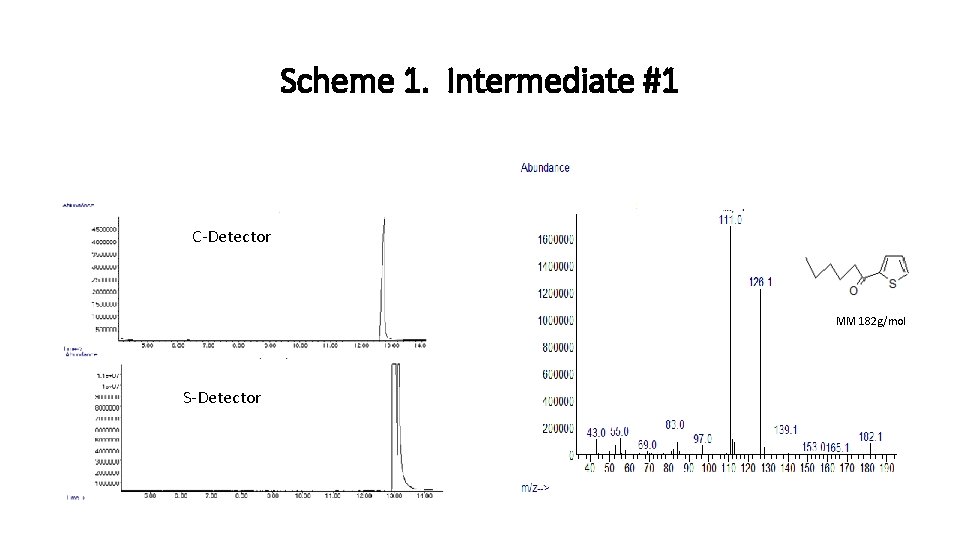
Scheme 1. Intermediate #1 C-Detector MM 182 g/mol S-Detector MM 182 g/mol
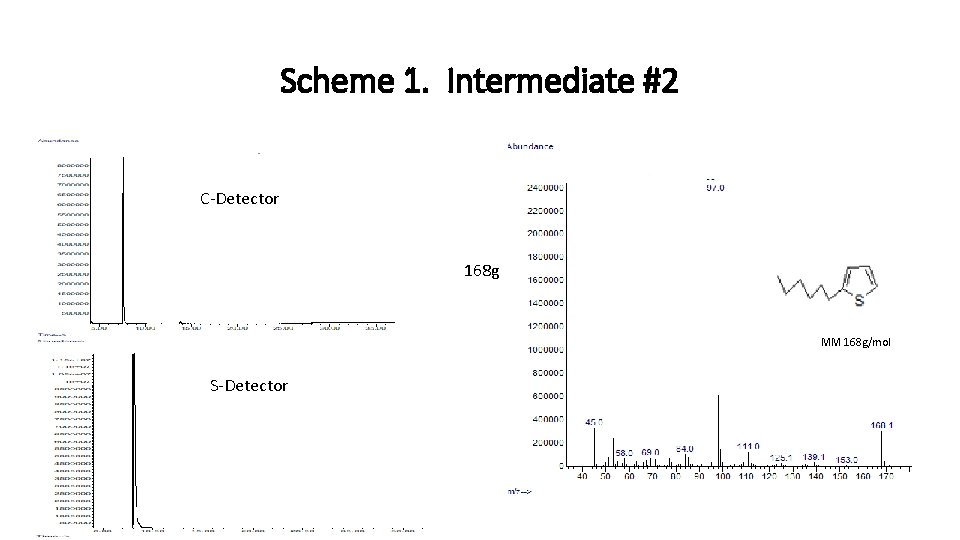
Scheme 1. Intermediate #2 C-Detector 168 g MM 168 g/mol S-Detector
Scheme 1. Intermediate #3 MW: 338 g/mol C-Detector MW: 338 g/mol S-Detector
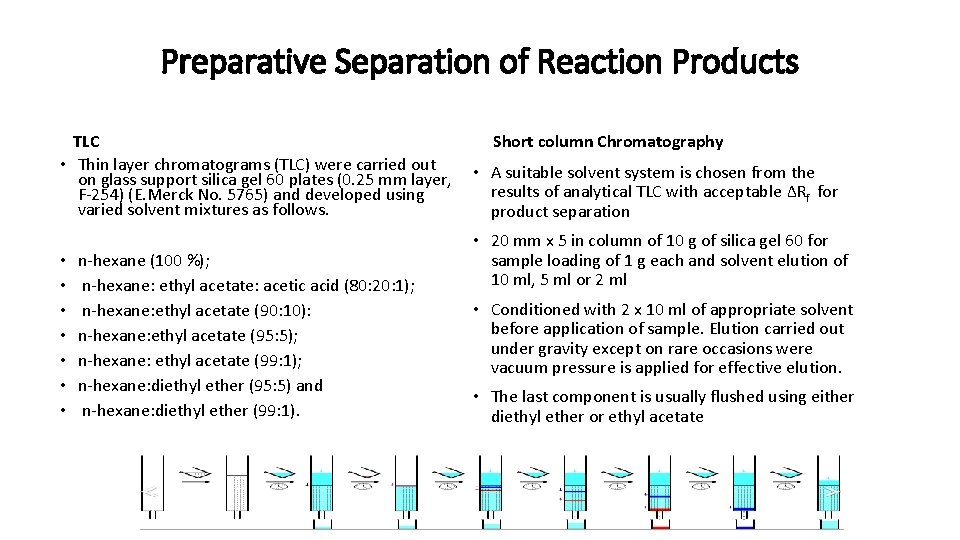
Preparative Separation of Reaction Products TLC • Thin layer chromatograms (TLC) were carried out on glass support silica gel 60 plates (0. 25 mm layer, F-254) (E. Merck No. 5765) and developed using varied solvent mixtures as follows. • • n-hexane (100 %); n-hexane: ethyl acetate: acetic acid (80: 20: 1); n-hexane: ethyl acetate (90: 10): n-hexane: ethyl acetate (95: 5); n-hexane: ethyl acetate (99: 1); n-hexane: diethyl ether (95: 5) and n-hexane: diethyl ether (99: 1). Short column Chromatography • A suitable solvent system is chosen from the results of analytical TLC with acceptable ∆Rf for product separation • 20 mm x 5 in column of 10 g of silica gel 60 for sample loading of 1 g each and solvent elution of 10 ml, 5 ml or 2 ml • Conditioned with 2 x 10 ml of appropriate solvent before application of sample. Elution carried out under gravity except on rare occasions were vacuum pressure is applied for effective elution. • The last component is usually flushed using either diethyl ether or ethyl acetate
Gunstone Reaction Unsuccessful C-Detector MW: 324 g/mol SW-Detector
Methyl 8 -(2’, 5’-hexylthienyl)octanoate (1) via Caglioti Reaction C-Detector S-Detector
Synthesis of Epithiostearate (2) The synthesis is according to the procedure described by Gunstone et al. , (1973) with some modifications. The multi-step synthesis is shown in scheme 1 a. This proposed procedure was abandoned due to the unsuccessful attempts to synthesis target #1
Synthesis of Epithiostearate (2) Scheme 4 a. Via Caglioti reduction (Hutchins et al. , 1973): (Gunstone intermediate) Scheme 4 b. Via Methylsulfonyl (mesyl) ester (Gunstone et al. , 1973); (from Oxy-mercuration and de-mercuration of Methyl-Ricinoleate
Methyl 9, 12 -Epithiostearate (2) C-Detector S-Detector
Scheme 5. Synthesis of cross-linked disulfide (3) from methyl 12 -hydroxystearate Me 12 -hydroxystearate (1: 2) (1: 10) 3, 10%
Cross-linked Disulfide S-Detector C-Detector
Scheme 6. Synthesis of Cross-linked Sulfide (4)
Crossed-linked Sulfide S-Detector C-Dtector
Scheme 6 : Methyl 10, 12 -epidithiostearate (5) obtained from treating the corresponding mesylate ester (D) with excess Na. HS.
Epidithiosterate S-Detector
Synthesis of 5 -butyl dihydrothiophen-2 -one (6)
5 -butyl dihydrothiophen-2 -one (6)
Results Mass spectra