
Synthesis of Reversible Synchronous Counters ISMVL May 2011
Synthesis of Reversible Synchronous Counters ISMVL, May 2011 Mozammel H A Khan Department of Computer Science and Engineering, East West University, 43 Mohakhali, Dhaka 1212, Bangladesh. mhakhan@ewubd. edu Marek A Perkowski Department of Electrical and Computer Engineering, Portland State University, 1900 SW 4 th Avenue, Portland, OR 97201, USA. mperkows@cecs. pdx. edu
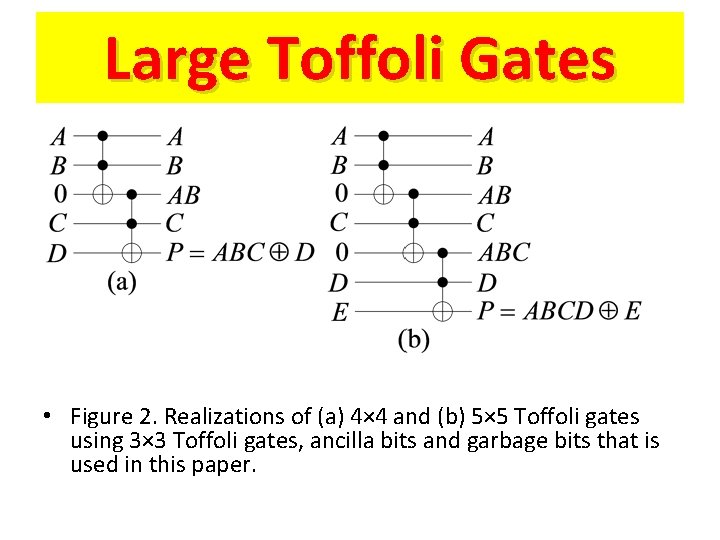
Large Toffoli Gates • Figure 2. Realizations of (a) 4× 4 and (b) 5× 5 Toffoli gates using 3× 3 Toffoli gates, ancilla bits and garbage bits that is used in this paper.
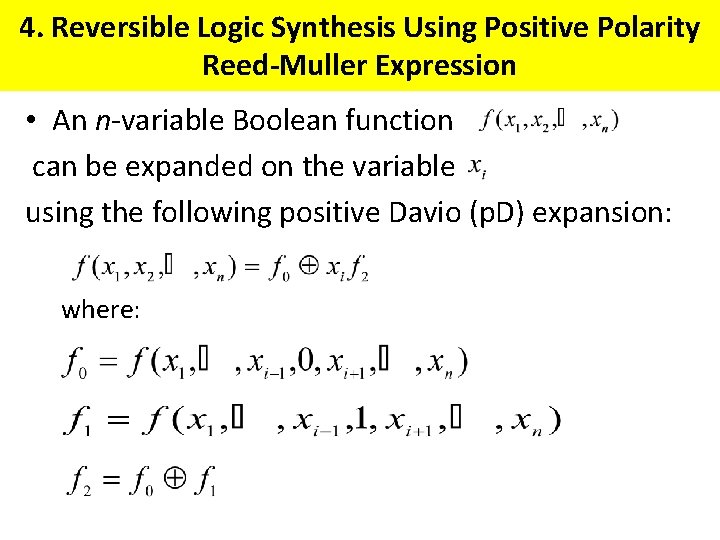
4. Reversible Logic Synthesis Using Positive Polarity Reed-Muller Expression • An n-variable Boolean function can be expanded on the variable using the following positive Davio (p. D) expansion: where:
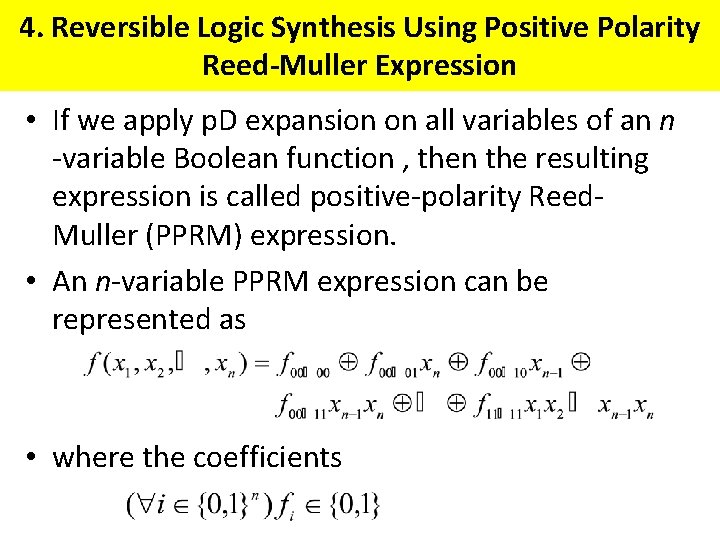
4. Reversible Logic Synthesis Using Positive Polarity Reed-Muller Expression • If we apply p. D expansion on all variables of an n -variable Boolean function , then the resulting expression is called positive-polarity Reed. Muller (PPRM) expression. • An n-variable PPRM expression can be represented as • where the coefficients
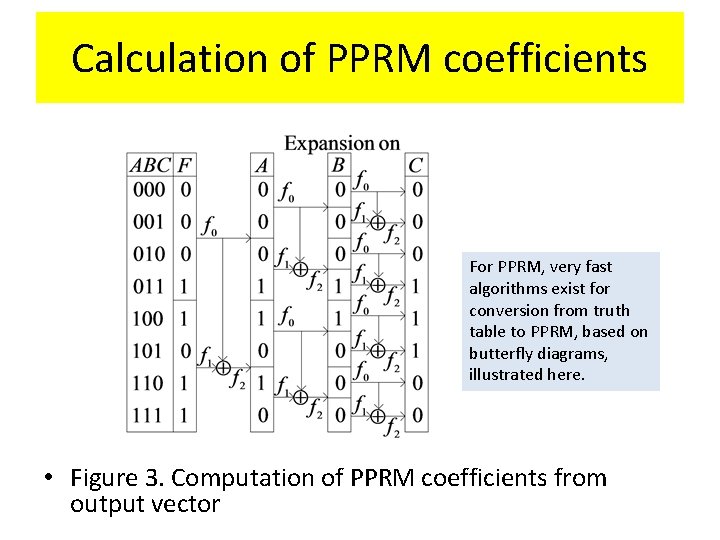
Calculation of PPRM coefficients For PPRM, very fast algorithms exist for conversion from truth table to PPRM, based on butterfly diagrams, illustrated here. • Figure 3. Computation of PPRM coefficients from output vector
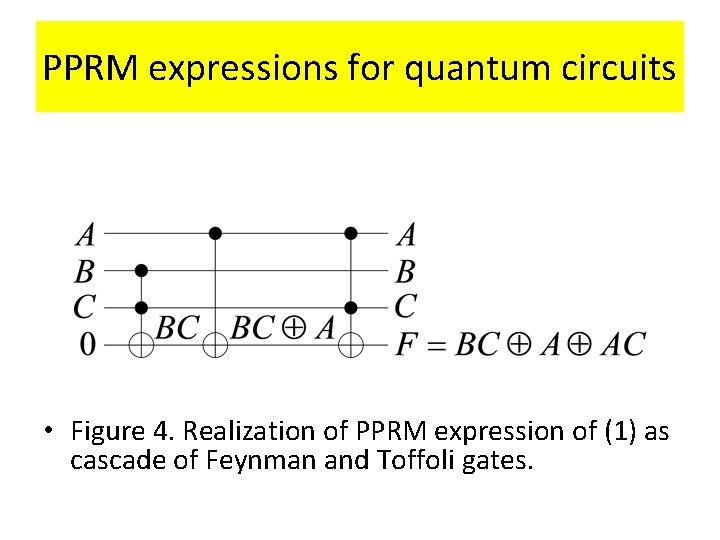
PPRM expressions for quantum circuits • Figure 4. Realization of PPRM expression of (1) as cascade of Feynman and Toffoli gates.
Synthesis of Synchronous Counters
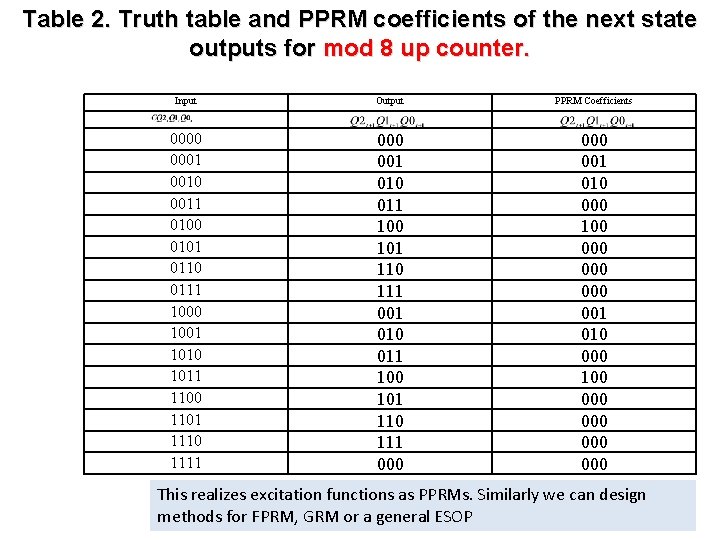
Table 2. Truth table and PPRM coefficients of the next state outputs for mod 8 up counter. Input Output PPRM Coefficients 0000 0001 0010 0011 0100 0101 0110 0111 1000 1001 1010 1011 1100 1101 1110 1111 000 001 010 011 100 101 110 111 000 000 001 010 000 100 000 000 000 This realizes excitation functions as PPRMs. Similarly we can design methods for FPRM, GRM or a general ESOP
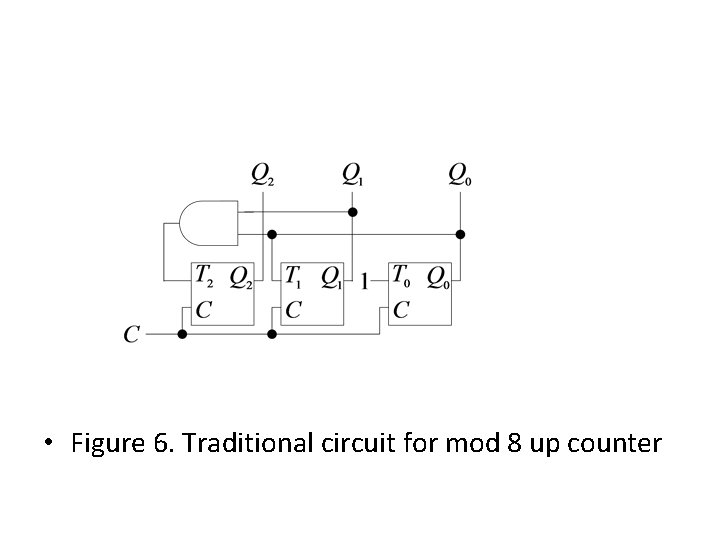
• Figure 6. Traditional circuit for mod 8 up counter
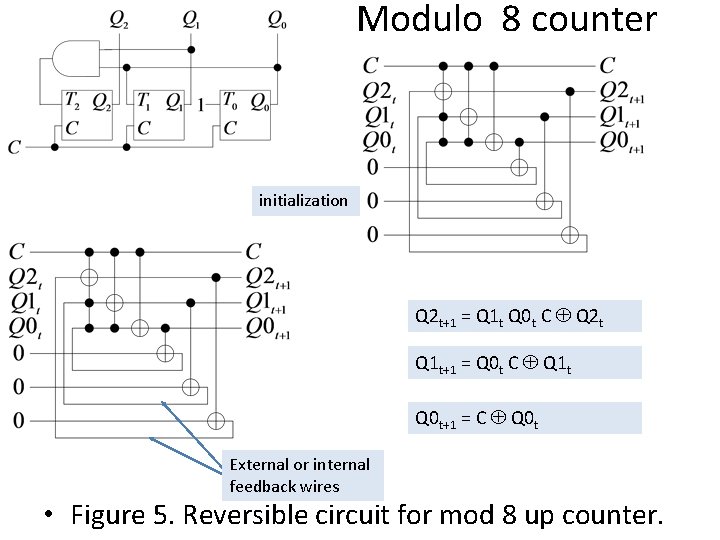
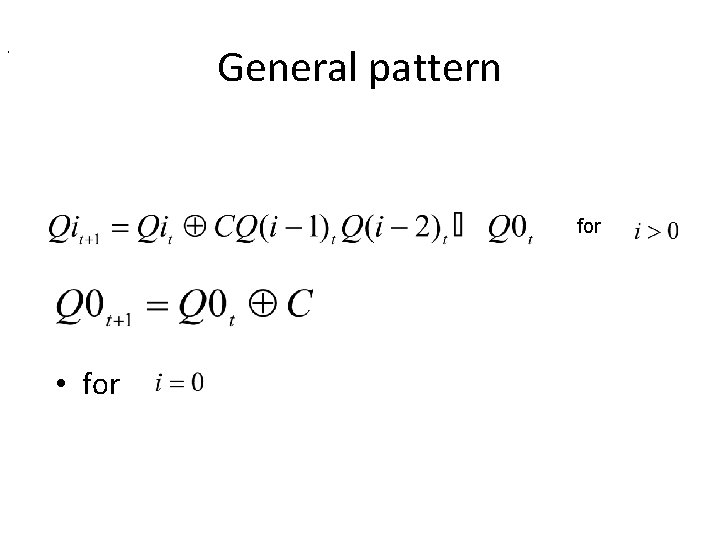
Modulo 8 counter initialization Q 2 t+1 = Q 1 t Q 0 t C Q 2 t Q 1 t+1 = Q 0 t C Q 1 t Q 0 t+1 = C Q 0 t External or internal feedback wires • Figure 5. Reversible circuit for mod 8 up counter.
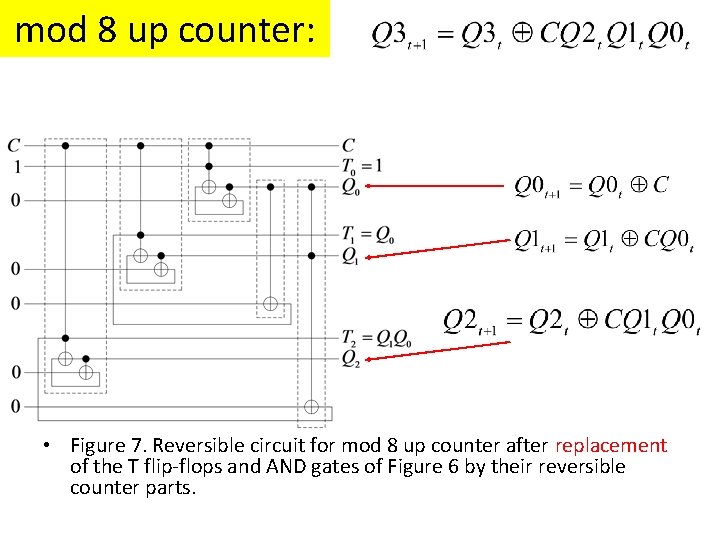
mod 8 up counter: • Figure 7. Reversible circuit for mod 8 up counter after replacement of the T flip-flops and AND gates of Figure 6 by their reversible counter parts.
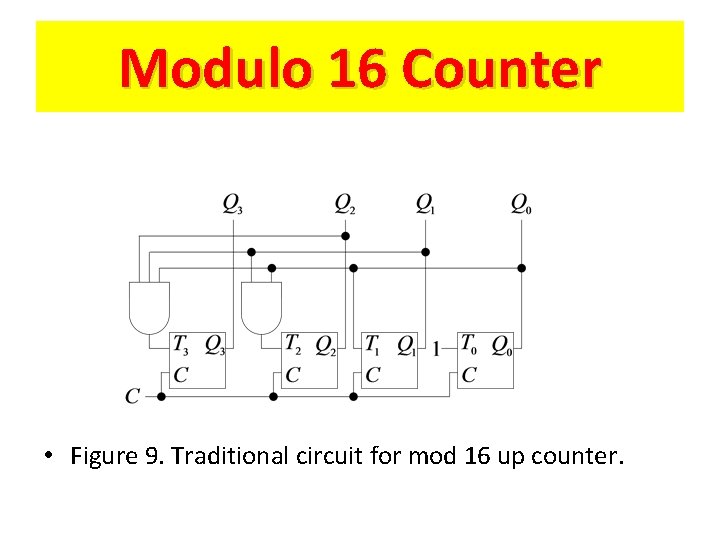
Modulo 16 Counter • Figure 9. Traditional circuit for mod 16 up counter.
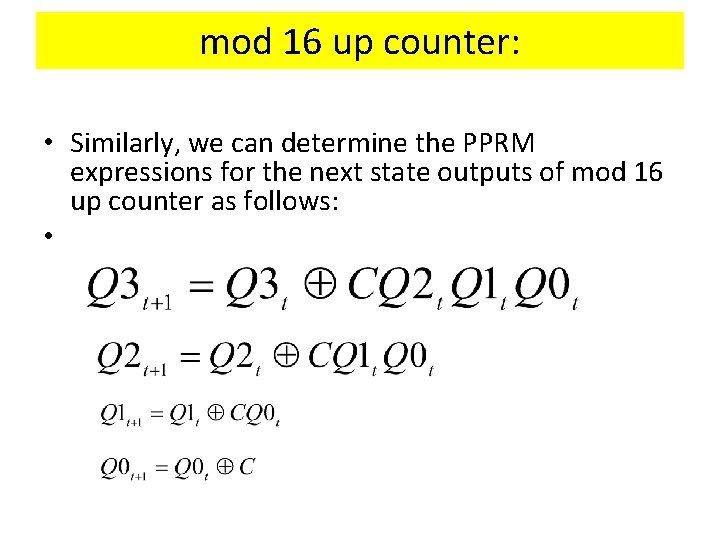
mod 16 up counter: • Similarly, we can determine the PPRM expressions for the next state outputs of mod 16 up counter as follows: •
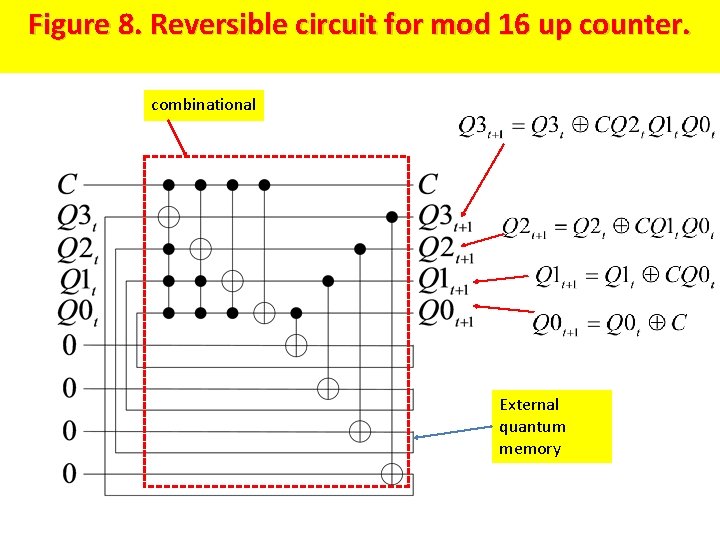
Figure 8. Reversible circuit for mod 16 up counter. combinational External quantum memory
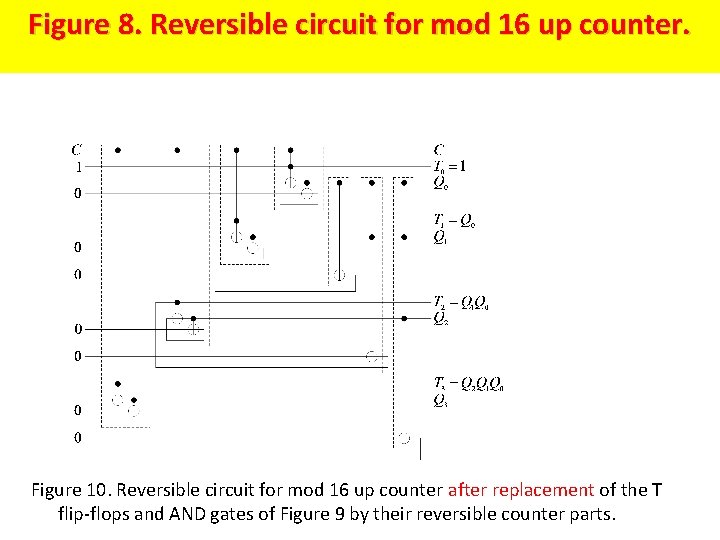
Figure 8. Reversible circuit for mod 16 up counter. Figure 10. Reversible circuit for mod 16 up counter after replacement of the T flip-flops and AND gates of Figure 9 by their reversible counter parts.
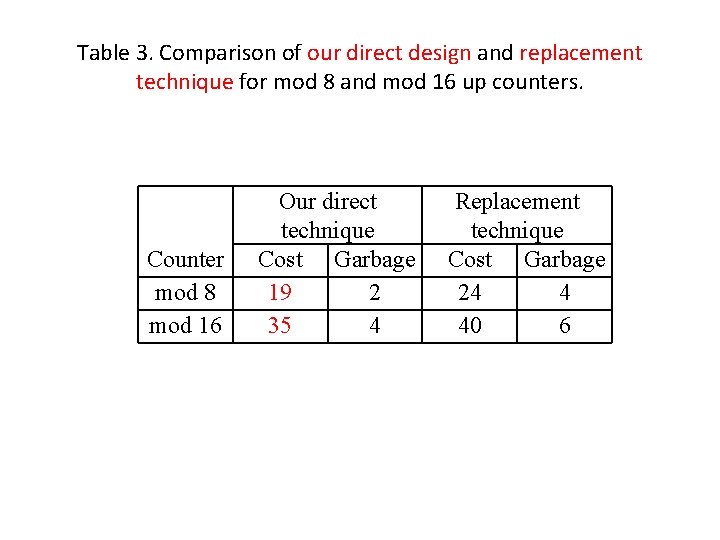
Table 3. Comparison of our direct design and replacement technique for mod 8 and mod 16 up counters. Counter mod 8 mod 16 Our direct technique Cost Garbage 19 2 35 4 Replacement technique Cost Garbage 24 4 40 6
General pattern , for • for
Conclusions 1. Reversible logic is very important for low power and quantum circuit design. 2. Most of the attempts on reversible logic design concentrate on reversible combinational logic design [9 -22]. 3. Only a few attempts were made on reversible sequential circuit design [2328, 32 -35]. 4. The major works on reversible sequential circuit design [23 -27] propose implementations of flip-flops and suggest that sequential circuit be constructed by replacing the flip-flops and gates of the traditional designs by their reversible counter parts. 5. This method leads to reversible sequential circuits with higher realization costs and garbage outputs. In this paper, we present a method of synchronous counter design directly from reversible gates.
Conclusions (cont) 6. This method produces circuit with lesser realization cost and lesser garbage outputs than the circuit produced by replacement method. The proposed method also generates expressions for the next state outputs, which can be expressed in general terms for all up counters. 7. This generalization of the expressions for the next state outputs makes synchronous up counter design very easy and efficient. 8. Traditionally, state minimization and state assignment are parts of the entire synthesis procedure of finite state machines. 9. The role of these two processes in the realization of reversible sequential circuits [32, 34] should be further investigated. 10. We showed a method that is specialized to certain type of counters. We can create similar methods for quantum circuits specialized to other types of counters, shifters or other sequential circuits.
• S. Bandyopadhyay, “Nanoelectric implementation of reversible and quantum logic, ” Supperlattices and Microstructures, vol. 23, 1998, pp. 445 -464. • H. Wood and D. J. Chen, “Fredkin gate circuits via recombination enzymes, ” Proceedings of Congress on Evolutionary Computation (CEC), vol. 2, 2004, pp. 1896 -1900. • S. K. S. Hari, S. Shroff, S. N. Mohammad, and V. Kamakoti, “Efficient building blocks for reversible sequential circuit design, ” IEEE International Midwest Symposium on Circuits and Systems (MWSCAS), 2006. • H. Thapliyal and A. P. Vinod, “Design of reversible sequential elements with feasibility of transistor implementation, ” International Symposium on Circuits and Systems (ISCAS 2007), 2007, pp. 625 -628.
• M. -L. Chuang and C. -Y. Wang, “Synthesis of reversible sequential elements, ” ACM journal of Engineering Technologies in Computing Systems (JETC), vol. 3, no. 4, 2008. • A. Banerjee and A. Pathak, “New designs of Reversible sequential devices, ” ar. Xiv: 0908. 1620 v 1 [quant-ph] 12 Aug 2009. • M. Kumar, S. Boshra-riad, Y. Nachimuthu and M. Perkowski, “Comparison of State Assignment methods for "Quantum Circuit" Model of permutative Quantum State Machines, ” Proc. CEC 2010. • M. Lukac and M. Perkowski, Evolving Quantum Finite State Machines for Sequence Detection, Book chapter, New Achievements in Evolutionary Computation, Peter Korosec (Eds. ), URL: http: //sciyo. com/books/show/title/new-achievements-in-evolutionarycomputation, ISBN: 978 -953 -307 -053 -7, 2010 • M. Kumar, S. Boshra-riad, Y. Nachimuthu, and M. Perkowski, “Engineering Models and Circuit Realization of Quantum State Machines, ” Proc. 18 th International Workshop on Post. Binary ULSI Systems, May 20, 2009, Okinawa. • M. Lukac, M. Kameyama, and M. Perkowski, Quantum Finite State Machines - a Circuit Based Approach, Quantum Information Processing, accepted with revisions
- Slides: 21