
Synthesis of Engineered Particulates Using Dry Particle Coating
- Slides: 16
Synthesis of Engineered Particulates Using Dry Particle Coating By Nick van Nispen
Engineered Particulates n Powder materials designed to have specific properties are called Engineered or Designed Particulates n Three Types n n Coated particles (discrete and film coatings Designer particles having a specific size, shape or morphology Composite particles (nano-composites, granulated particles) Our research focuses on the formation/synthesis of coated particles using new and innovative techniques
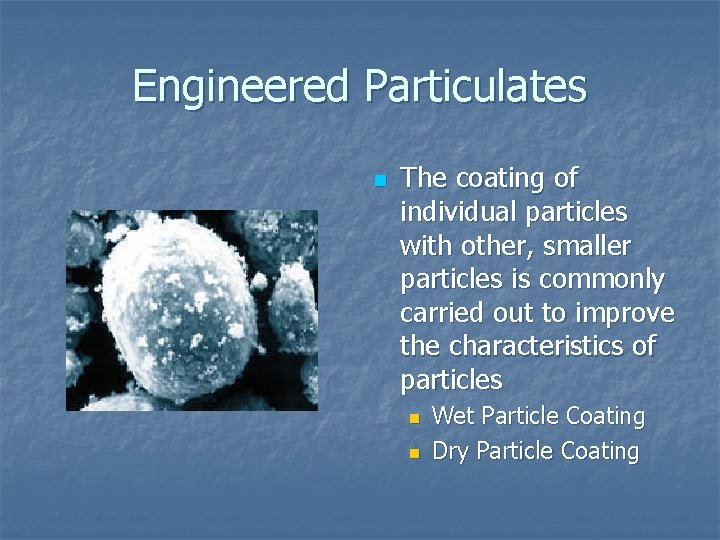
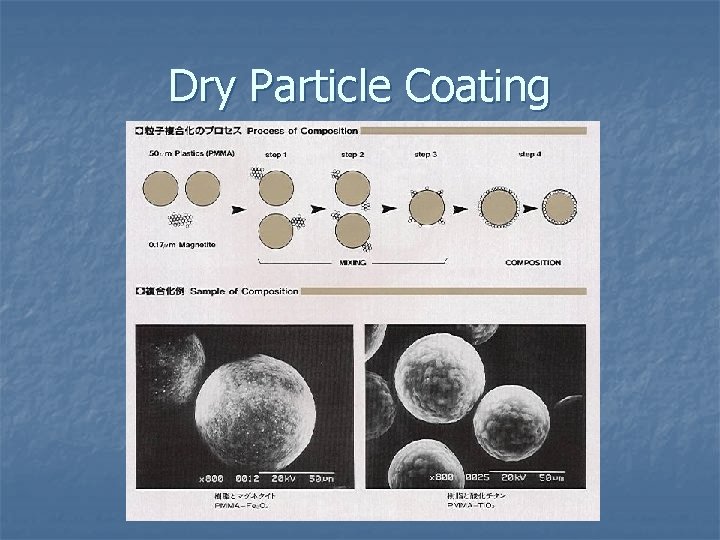
Engineered Particulates n The coating of individual particles with other, smaller particles is commonly carried out to improve the characteristics of particles n n Wet Particle Coating Dry Particle Coating
Applications n Nanoparticulates are widely used in industry n n n n n Cosmetics Dyestuff Toner Pharmaceuticals Food Ceramics Powder Biochemical Electromaterials Fertilizer
Applications n Particle Coating can change the properties of target particles n n n n n Flowability Dispersibility Wettability Coloring Falvor Hydrophilic/Hydrophobic Properties Electristatic/Electric/Magnetic/Optical Characteristics Particle Size Distribution Shape/Sphericity Solid Phase Reactivity
Wet Particle Coating n Currently Industrial Standard for nanoparticle coating n Drawbacks WPC solution may be volatile and toxic n Requires post treatment and waste processing increases cost n
Dry Particle Coating n Advantages to WPC new particles may have completely different functionality or much improved properties n much reduced use of high-priced or rare materials n Process is environmentally clean n Water soluble powders can now be coated without compromising the sample n
Dry Particle Coating
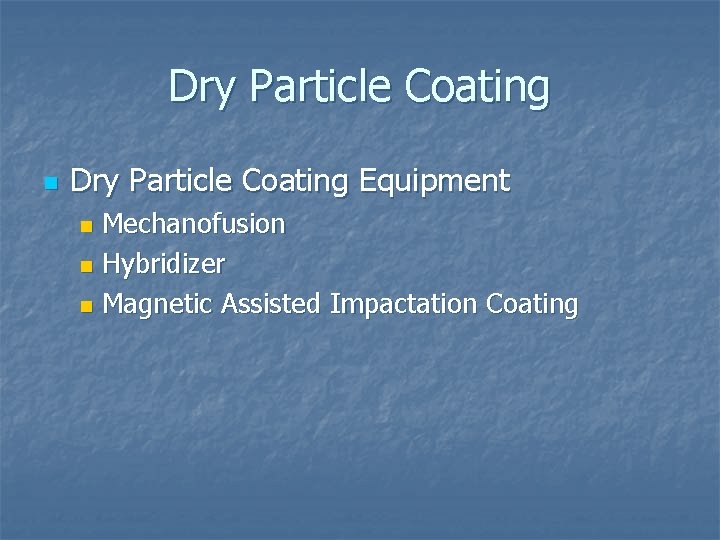
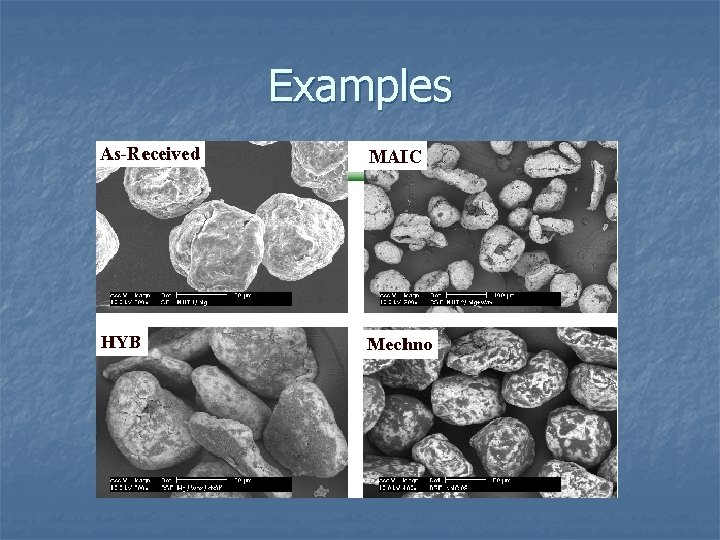
Dry Particle Coating n Dry Particle Coating Equipment Mechanofusion n Hybridizer n Magnetic Assisted Impactation Coating n
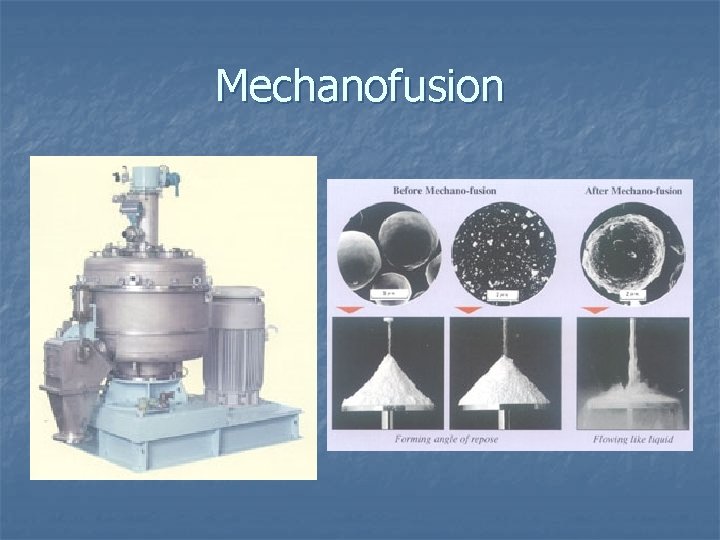
Mechanofusion
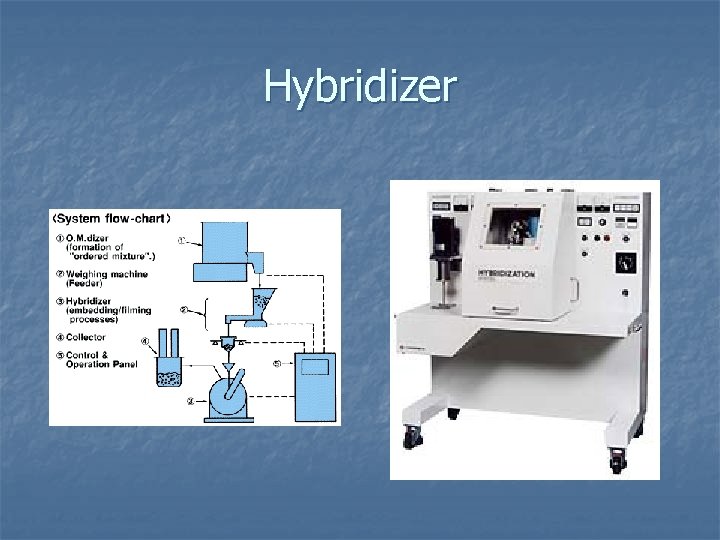
Hybridizer
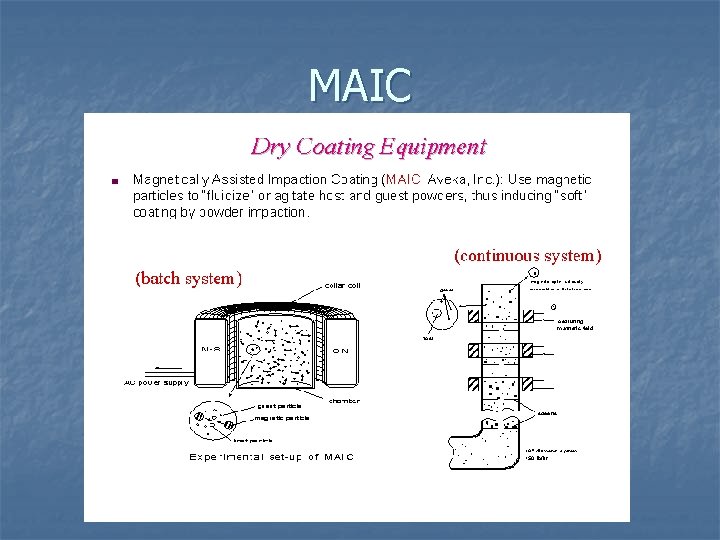
MAIC
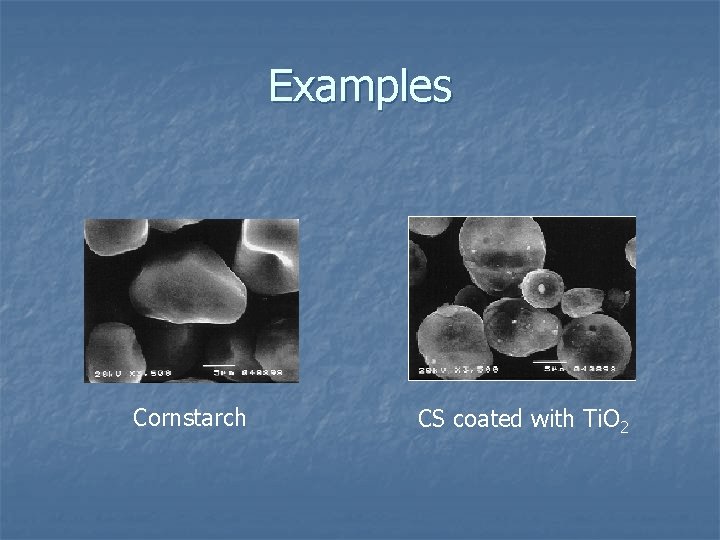
Examples Cornstarch CS coated with Ti. O 2
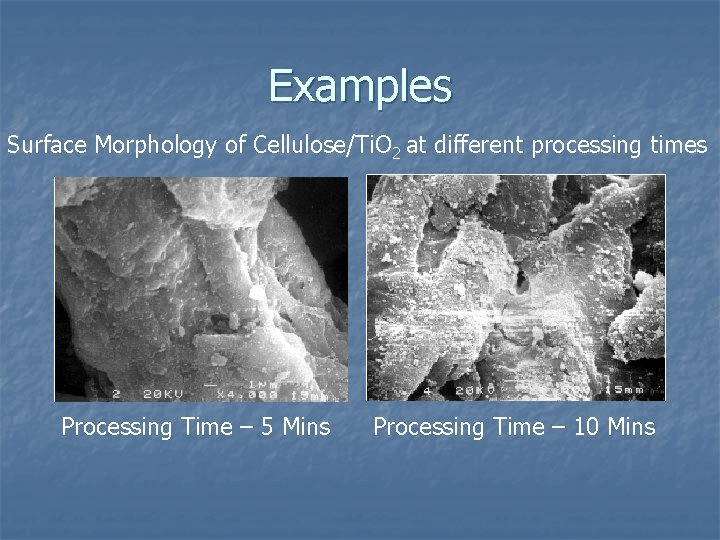
Examples Surface Morphology of Cellulose/Ti. O 2 at different processing times Processing Time – 5 Mins Processing Time – 10 Mins
Examples
Current Research at NJIT n Coating Particles using various coating techniques to create host/guest blends Cornstarch/Ti. O 2 n Pure Al/R 972 n n After Processing, nanoparticulates are processed again together to discover if guest particle exchange still occurs after coating n To be analzyed using EDX and SEM imaging