
Synthesis characterization and modeling of porous electrodes for


- Slides: 52
Synthesis, characterization and modeling of porous electrodes for fuel cells - Hao Wen - Prepared for defense practice talk - 3/29/2012 1
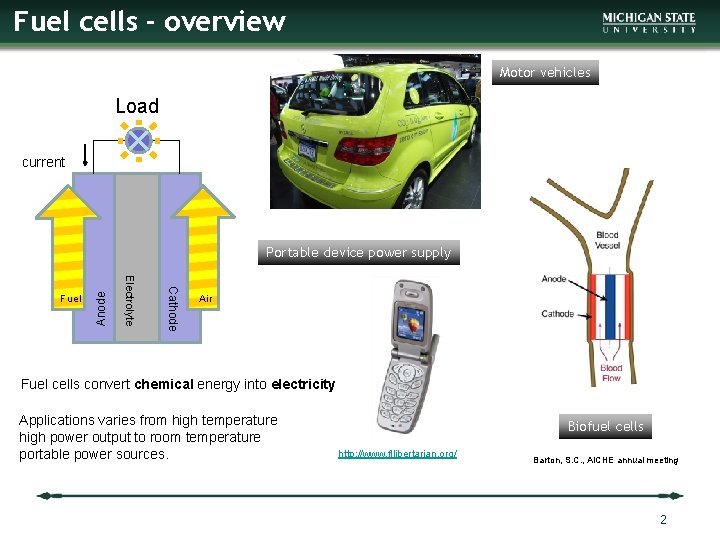
Fuel cells - overview Motor vehicles Load current Cathode Electrolyte Fuel Anode Portable device power supply Air Fuel cells convert chemical energy into electricity Applications varies from high temperature high power output to room temperature portable power sources. Biofuel cells http: //www. fllibertarian. org/ Barton, S. C. , Al. CHE annual meeting 2
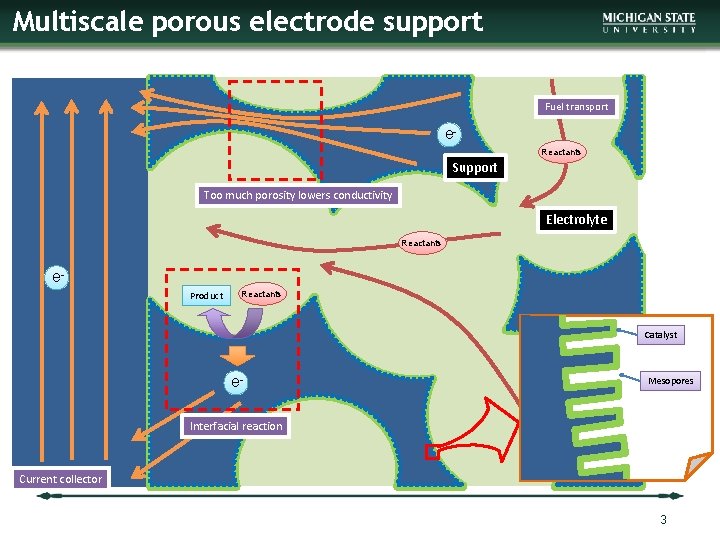
Multiscale porous electrode support Fuel transport e. Reactants Support Too much porosity lowers conductivity Electrolyte Reactants e. Product Reactants Catalyst e- Mesopores Interfacial reaction Current collector 3
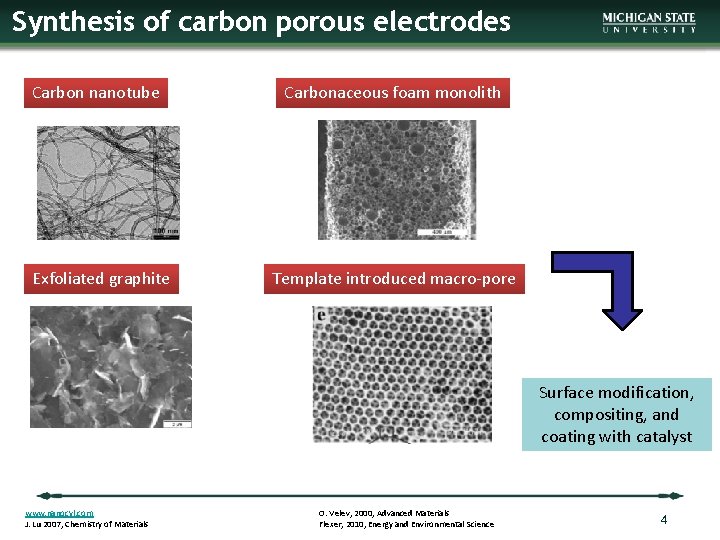
Synthesis of carbon porous electrodes Carbon nanotube Carbonaceous foam monolith Exfoliated graphite Template introduced macro-pore Surface modification, compositing, and coating with catalyst www. nanocyl. com J. Lu 2007, Chemistry of Materials O. Velev, 2000, Advanced Materials Flexer, 2010, Energy and Environmental Science 4
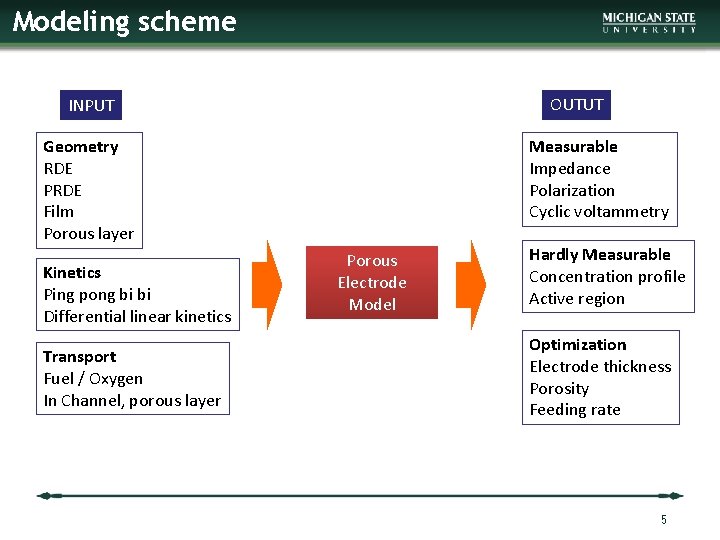
Modeling scheme OUTUT INPUT Geometry RDE PRDE Film Porous layer Kinetics Ping pong bi bi Differential linear kinetics Transport Fuel / Oxygen In Channel, porous layer Measurable Impedance Polarization Cyclic voltammetry Porous Electrode Model Hardly Measurable Concentration profile Active region Optimization Electrode thickness Porosity Feeding rate 5
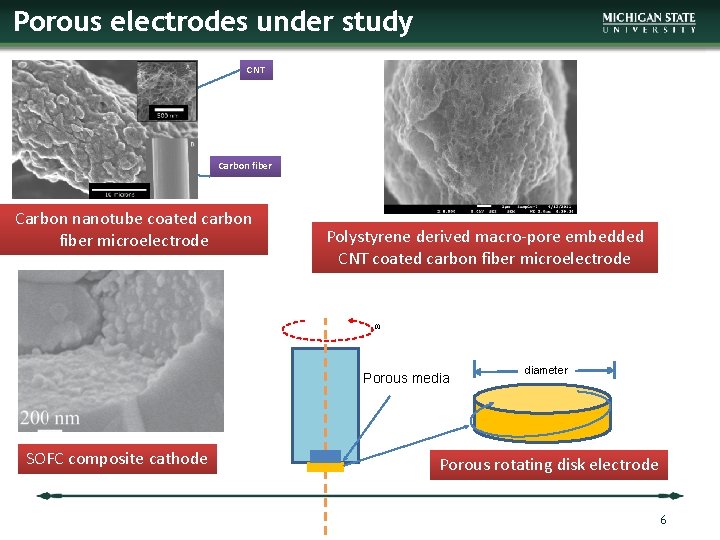
Porous electrodes under study CNT Carbon fiber Carbon nanotube coated carbon fiber microelectrode Polystyrene derived macro-pore embedded CNT coated carbon fiber microelectrode ω Porous media SOFC composite cathode diameter Porous rotating disk electrode 6
Outline • Carbon nanotube modified electrodes as support for glucose oxidation bioanodes • Polystyrene bead pore formers • Analysis of transport within porous rotating disk electrode • Solid oxide fuel cell composite cathode model 7
Carbon Nanotube Modified Electrodes As Support For Glucose Oxidation Bioanodes 8
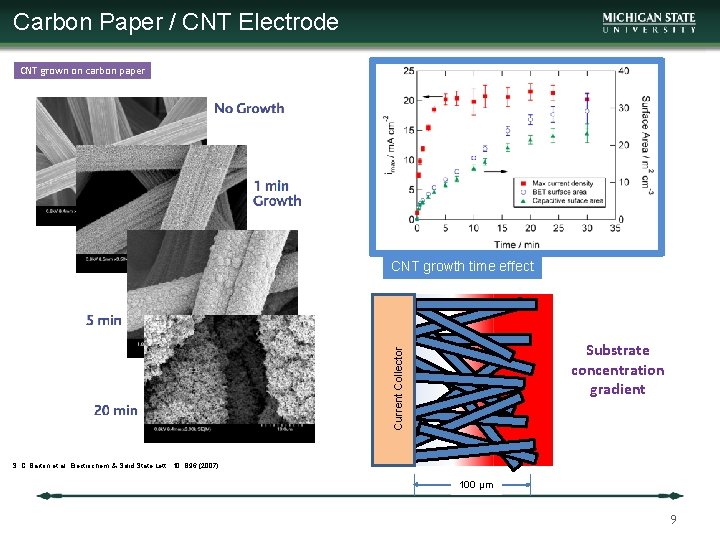
Carbon Paper / CNT Electrode CNT grown on carbon paper CNT growth time effect Current Collector Substrate concentration gradient S. C. Barton et al, Electrochem. & Solid State Lett. , 10, B 96 (2007). 100 µm 9
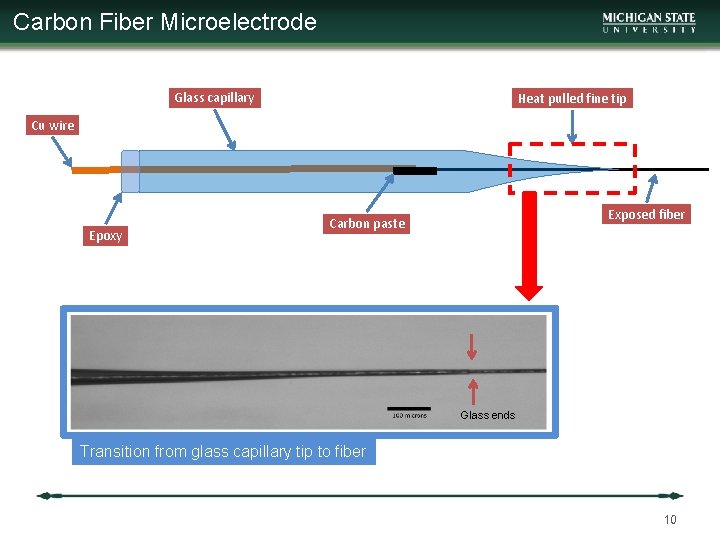
Carbon Fiber Microelectrode Glass capillary Heat pulled fine tip Cu wire Epoxy Exposed fiber Carbon paste Glass ends Transition from glass capillary tip to fiber 10
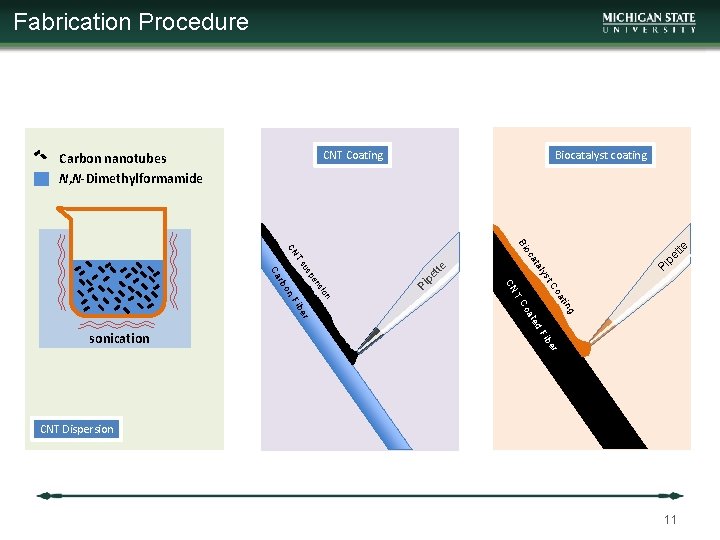
Fabrication Procedure CNT Coating Carbon nanotubes N, N-Dimethylformamide Biocatalyst coating pe Pi Pi pe g d. F ate Co r ibe tin oa t. C n T CN sio n. F bo en lys sp tte su ata T oc tte Bi CN r Ca r ibe sonication CNT Dispersion 11
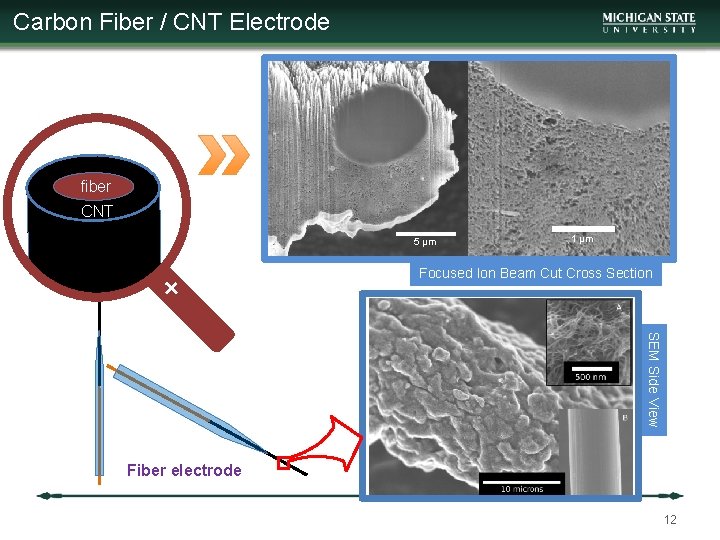
Carbon Fiber / CNT Electrode fiber CNT 5 μm 1 μm + Focused Ion Beam Cut Cross Section SEM Side View Fiber electrode 12
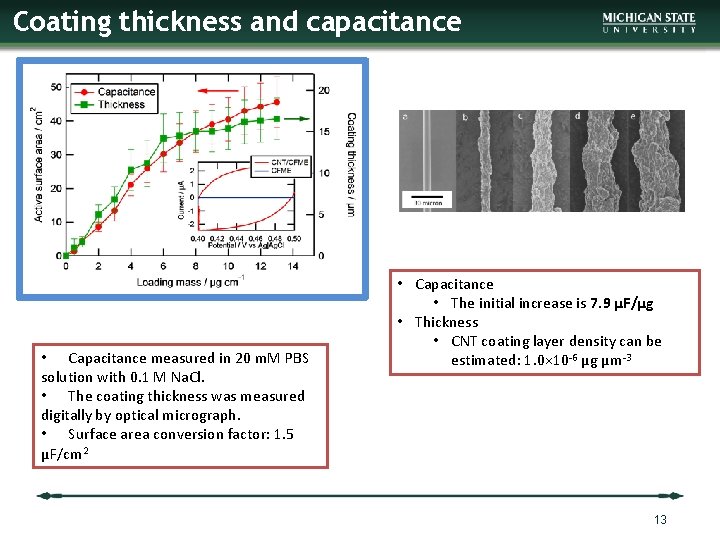
Coating thickness and capacitance • Capacitance measured in 20 m. M PBS solution with 0. 1 M Na. Cl. • The coating thickness was measured digitally by optical micrograph. • Surface area conversion factor: 1. 5 μF/cm 2 • Capacitance • The initial increase is 7. 9 µF/µg • Thickness • CNT coating layer density can be estimated: 1. 0× 10 -6 µg µm-3 13
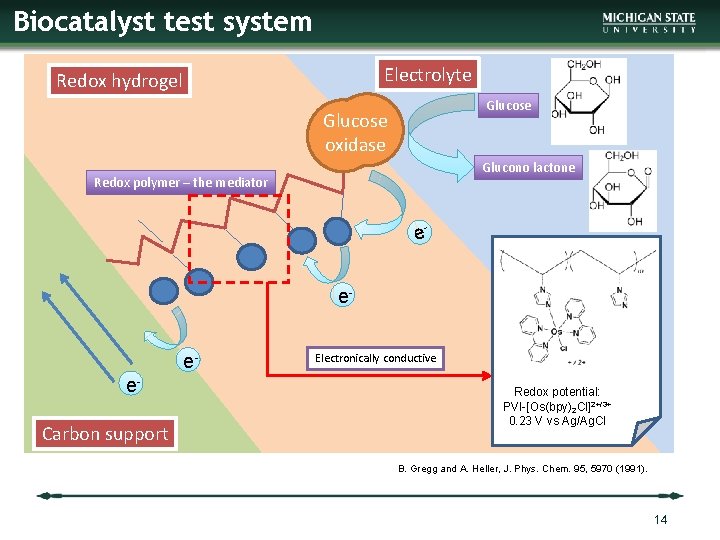
Biocatalyst test system Electrolyte Redox hydrogel Glucose oxidase Glucono lactone Redox polymer – the mediator e- eee. Carbon support Electronically conductive Redox potential: PVI-[Os(bpy)2 Cl]2+/3+ 0. 23 V vs Ag/Ag. Cl B. Gregg and A. Heller, J. Phys. Chem. 95, 5970 (1991). 14
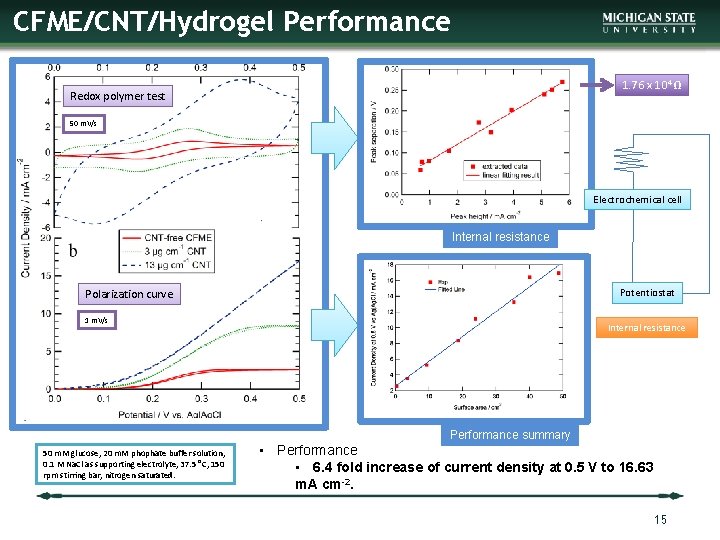
CFME/CNT/Hydrogel Performance 1. 76 x 104 Ω Redox polymer test 50 m. V/s Electrochemical cell Internal resistance Potentiostat Polarization curve 1 m. V/s Internal resistance Performance summary 50 m. M glucose, 20 m. M phophate buffer solution, 0. 1 M Na. Cl as supporting electrolyte, 37. 5 ⁰C, 150 rpm stirring bar, nitrogen saturated. • Performance • 6. 4 fold increase of current density at 0. 5 V to 16. 63 m. A cm-2. 15
Polystyrene Bead Template Introduced Macropores In Carbon Nanotube Porous Matrix 16
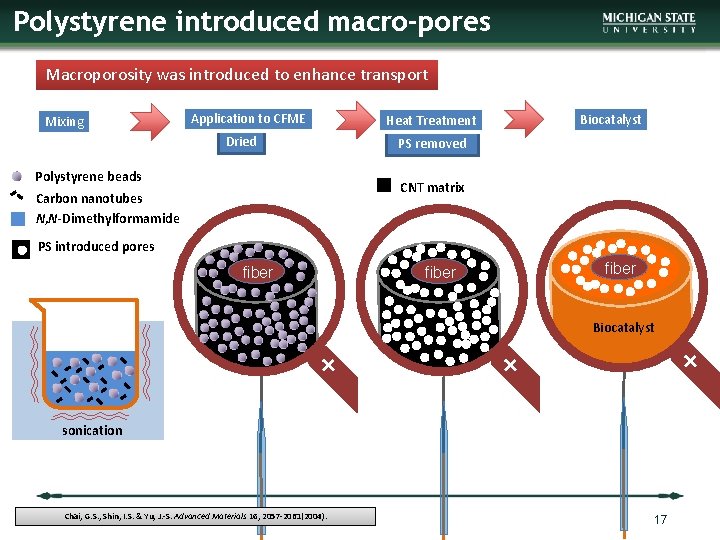
Polystyrene introduced macro-pores Macroporosity was introduced to enhance transport Mixing Application to CFME Dried Biocatalyst Heat Treatment PS removed Polystyrene beads CNT matrix Carbon nanotubes N, N-Dimethylformamide PS introduced pores fiber + + + Biocatalyst sonication Chai, G. S. , Shin, I. S. & Yu, J. -S. Advanced Materials 16, 2057 -2061(2004). 17
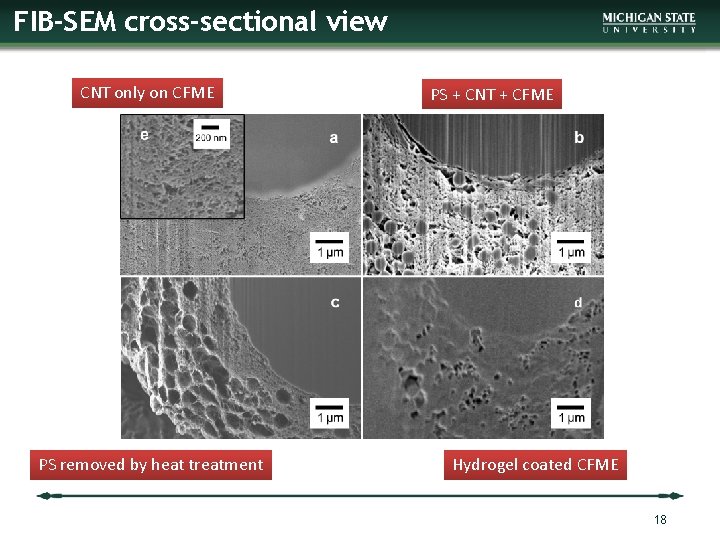
FIB-SEM cross-sectional view CNT only on CFME PS removed by heat treatment PS + CNT + CFME Hydrogel coated CFME 18
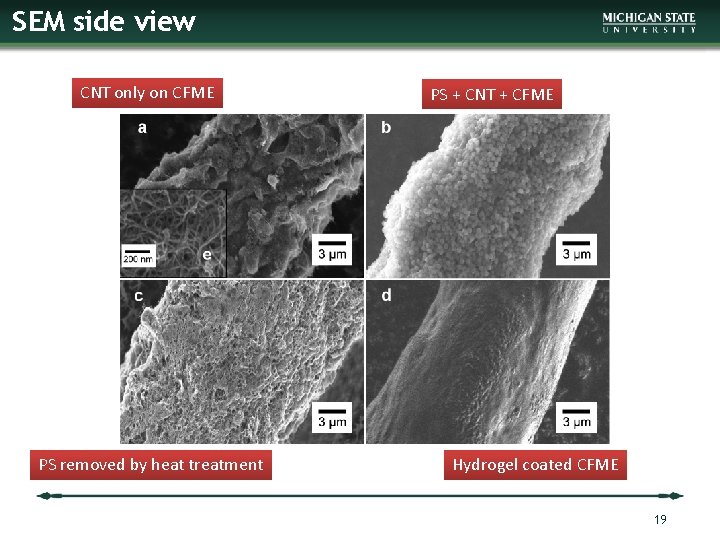
SEM side view CNT only on CFME PS removed by heat treatment PS + CNT + CFME Hydrogel coated CFME 19
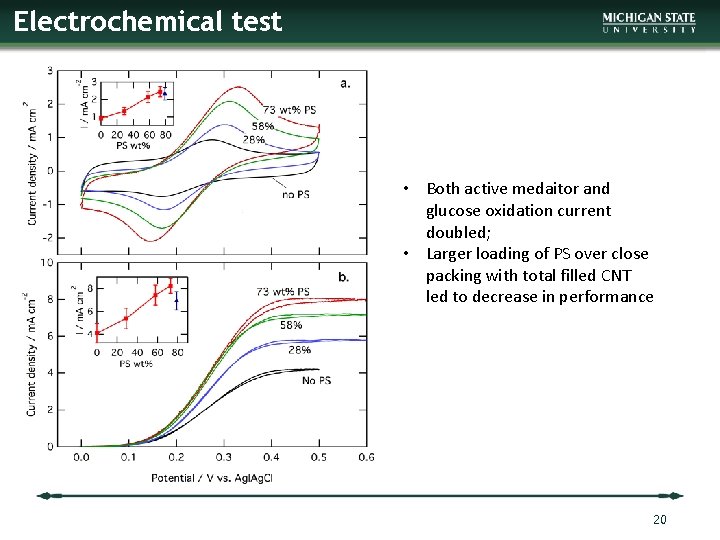
Electrochemical test • Both active medaitor and glucose oxidation current doubled; • Larger loading of PS over close packing with total filled CNT led to decrease in performance 20
Analysis Of Transport Within Porous Rotating Disk Electrode (PRDE) 21
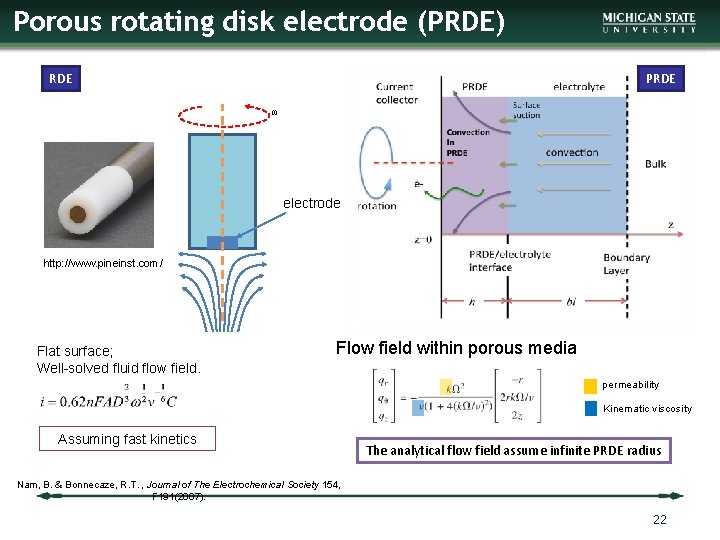
Porous rotating disk electrode (PRDE) RDE PRDE ω electrode http: //www. pineinst. com/ Flat surface; Well-solved fluid flow field. Flow field within porous media permeability Kinematic viscosity Assuming fast kinetics The analytical flow field assume infinite PRDE radius Nam, B. & Bonnecaze, R. T. , Journal of The Electrochemical Society 154, F 191(2007). 22
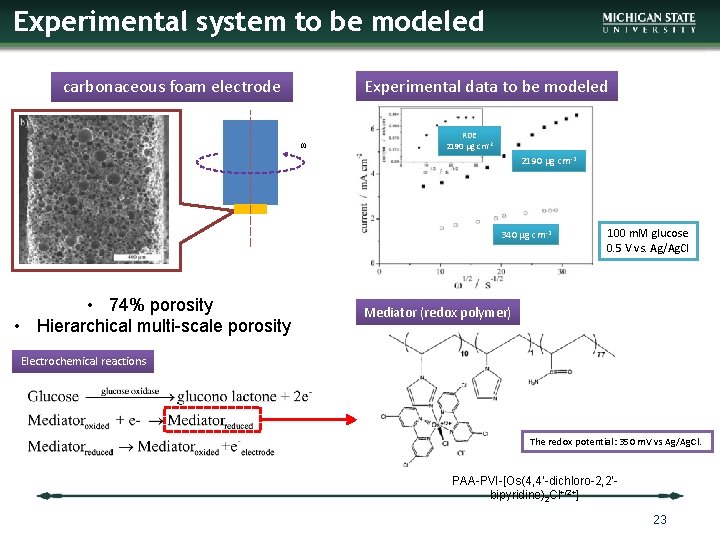
Experimental system to be modeled Experimental data to be modeled carbonaceous foam electrode ω RDE 2190 µg cm-2 2190 µg cm -2 340 µg cm-2 • 74% porosity • Hierarchical multi-scale porosity 100 m. M glucose 0. 5 V vs. Ag/Ag. Cl Mediator (redox polymer) Electrochemical reactions The redox potential: 350 m. V vs Ag/Ag. Cl. PAA-PVI-[Os(4, 4’-dichloro-2, 2’bipyridine)2 Cl+/2+] 23
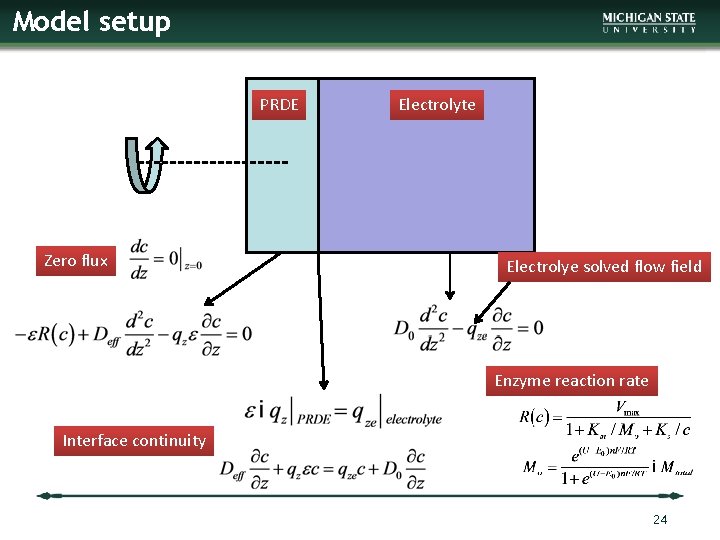
Model setup PRDE Zero flux Electrolyte Electrolye solved flow field Enzyme reaction rate Interface continuity 24
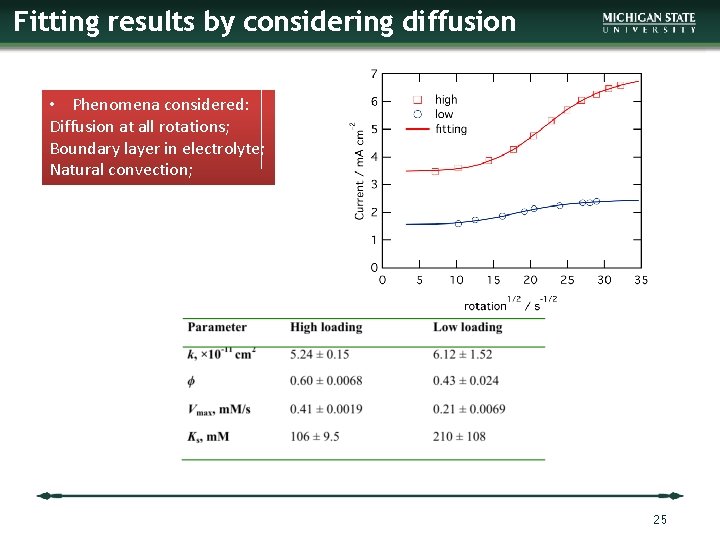
Fitting results by considering diffusion • Phenomena considered: Diffusion at all rotations; Boundary layer in electrolyte; Natural convection; 25
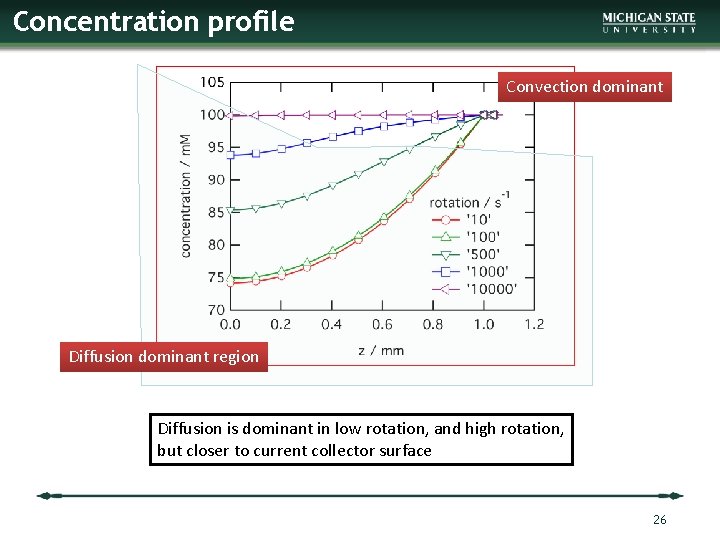
Concentration profile Convection dominant Diffusion dominant region Diffusion is dominant in low rotation, and high rotation, but closer to current collector surface 26
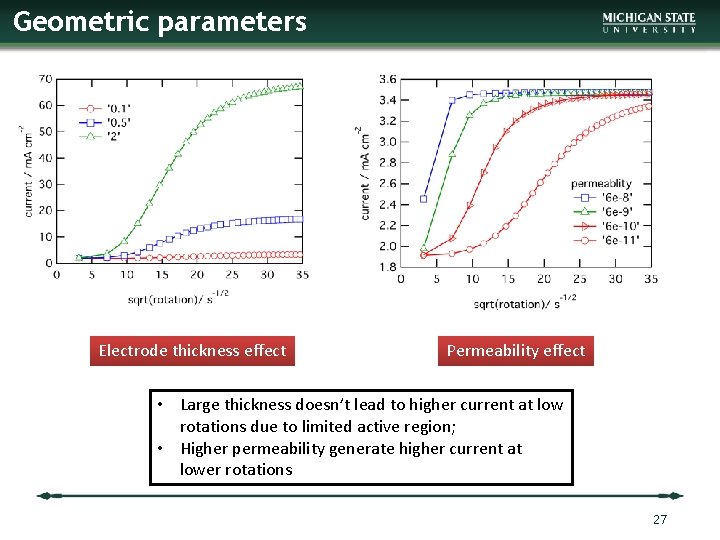
Geometric parameters Electrode thickness effect Permeability effect • Large thickness doesn’t lead to higher current at low rotations due to limited active region; • Higher permeability generate higher current at lower rotations 27
Solid Oxide Fuel Cell Composite Cathode Impedance Model With Low Electronic Conductivity 28
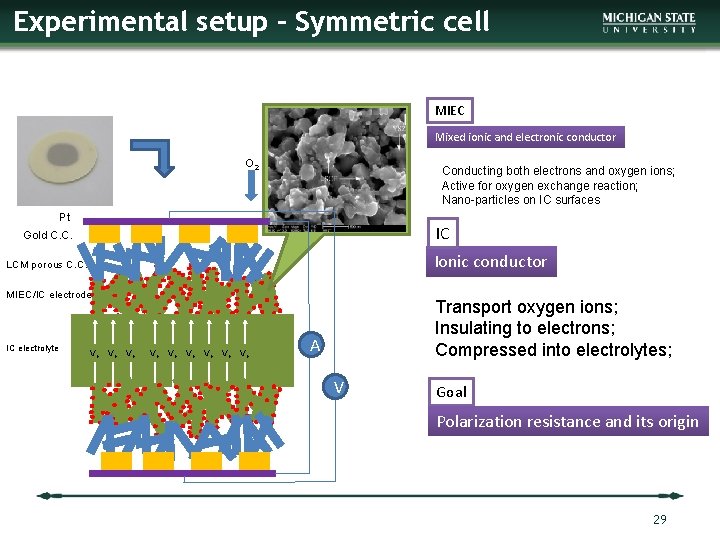
Experimental setup – Symmetric cell MIEC Mixed ionic and electronic conductor O 2 Conducting both electrons and oxygen ions; Active for oxygen exchange reaction; Nano-particles on IC surfaces Pt IC Gold C. C. Ionic conductor LCM porous C. C. MIEC/IC electrode IC electrolyte Vo Vo Vo Transport oxygen ions; Insulating to electrons; Compressed into electrolytes; A V Goal Polarization resistance and its origin 29
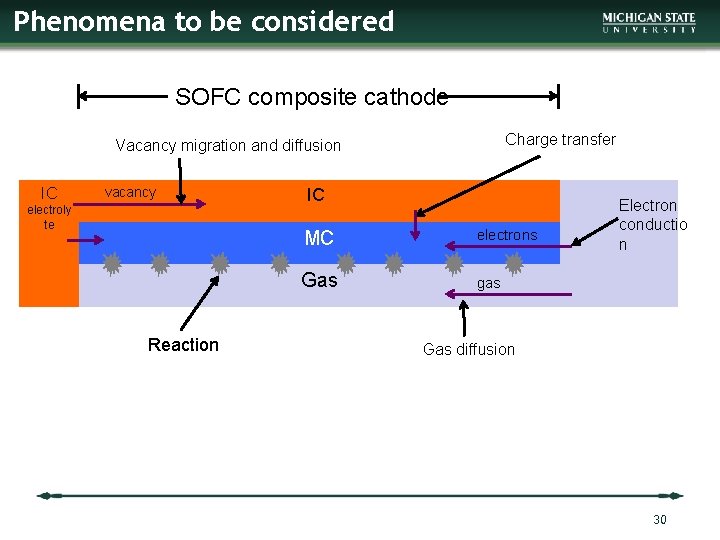
Phenomena to be considered SOFC composite cathode Charge transfer Vacancy migration and diffusion IC vacancy electroly te Reaction IC MC electrons Gas gas Electron conductio n Gas diffusion 30
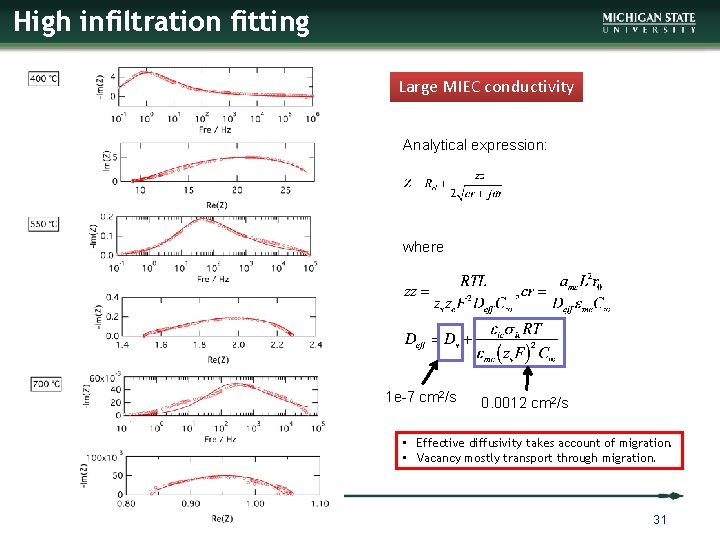
High infiltration fitting Large MIEC conductivity Analytical expression: where 1 e-7 cm 2/s 0. 0012 cm 2/s • Effective diffusivity takes account of migration. • Vacancy mostly transport through migration. 31
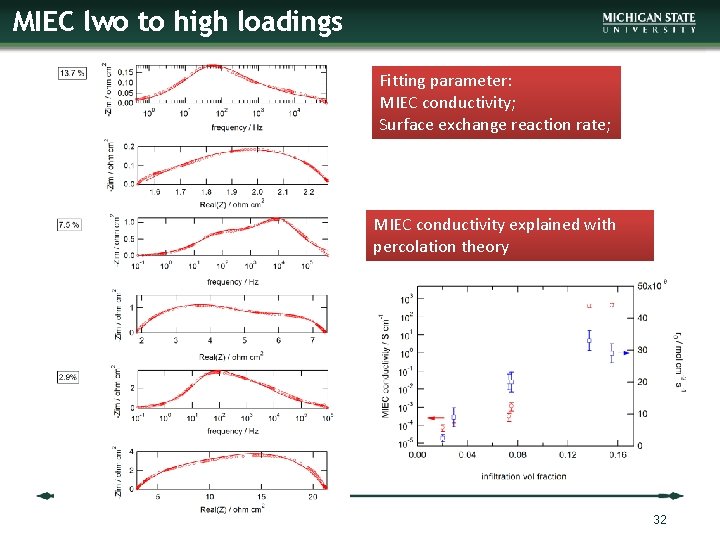
MIEC lwo to high loadings Fitting parameter: MIEC conductivity; Surface exchange reaction rate; MIEC conductivity explained with percolation theory 32
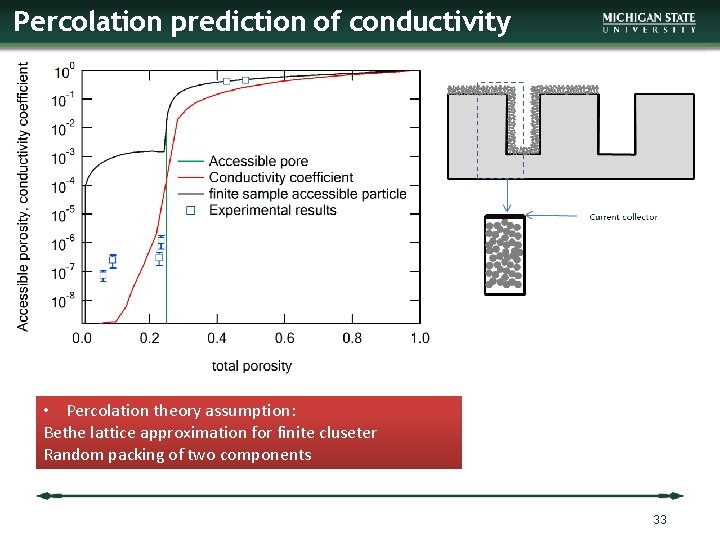
Percolation prediction of conductivity • Percolation theory assumption: Bethe lattice approximation for finite cluseter Random packing of two components 33
Conclusions 34
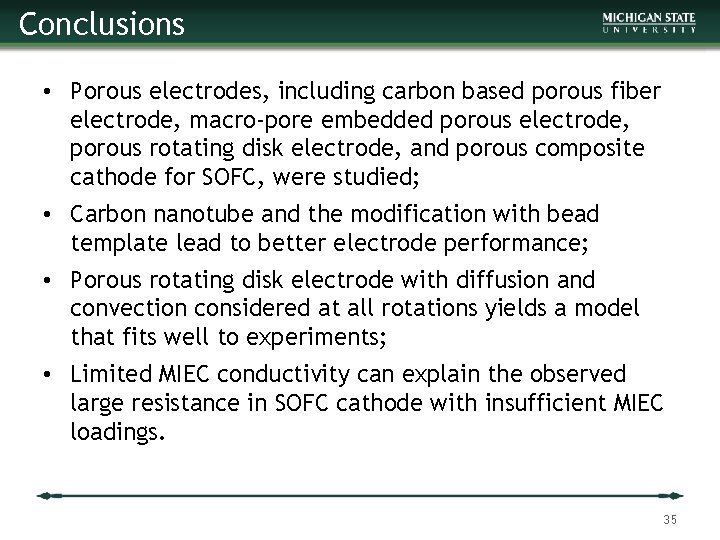
Conclusions • Porous electrodes, including carbon based porous fiber electrode, macro-pore embedded porous electrode, porous rotating disk electrode, and porous composite cathode for SOFC, were studied; • Carbon nanotube and the modification with bead template lead to better electrode performance; • Porous rotating disk electrode with diffusion and convection considered at all rotations yields a model that fits well to experiments; • Limited MIEC conductivity can explain the observed large resistance in SOFC cathode with insufficient MIEC loadings. 35
Thanks! 36
Backup Slides 37
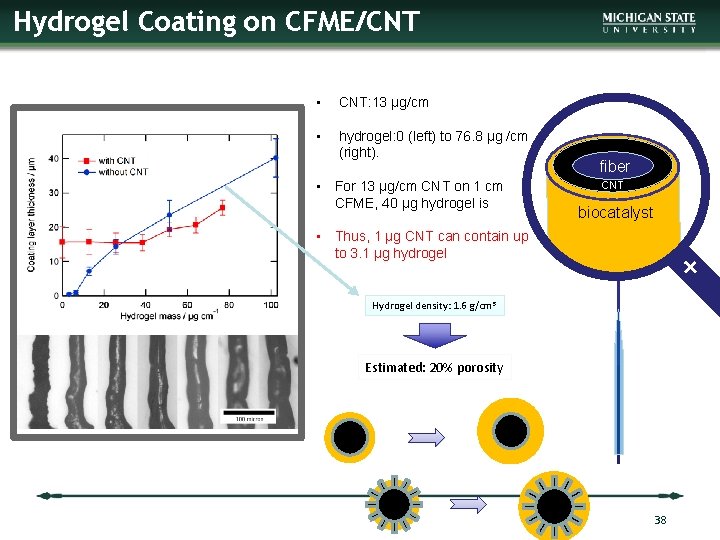
Hydrogel Coating on CFME/CNT • CNT: 13 µg/cm • hydrogel: 0 (left) to 76. 8 µg /cm (right). • For 13 µg/cm CNT on 1 cm CFME, 40 µg hydrogel is fiber CNT biocatalyst + • Thus, 1 µg CNT can contain up to 3. 1 µg hydrogel Hydrogel density: 1. 6 g/cm 3 Estimated: 20% porosity 38
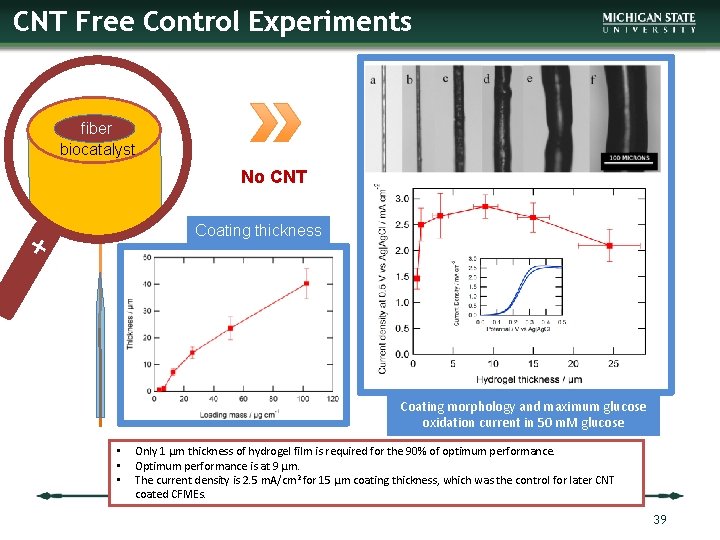
CNT Free Control Experiments fiber biocatalyst No CNT Coating thickness + Coating morphology and maximum glucose oxidation current in 50 m. M glucose • • • Only 1 µm thickness of hydrogel film is required for the 90% of optimum performance. Optimum performance is at 9 µm. The current density is 2. 5 m. A/cm 2 for 15 µm coating thickness, which was the control for later CNT coated CFMEs. 39
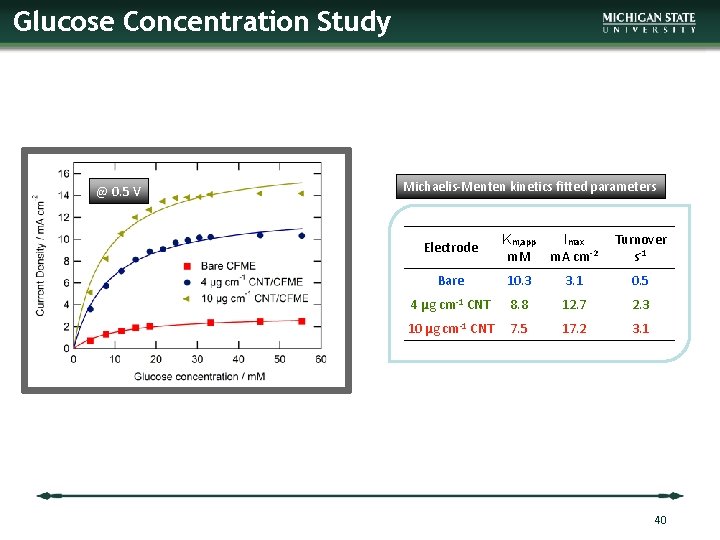
Glucose Concentration Study @ 0. 5 V Michaelis-Menten kinetics fitted parameters Electrode Km, app m. M Imax m. A cm-2 Turnover s-1 Bare 10. 3 3. 1 0. 5 4 µg cm-1 CNT 8. 8 12. 7 2. 3 10 µg cm-1 CNT 7. 5 17. 2 3. 1 40
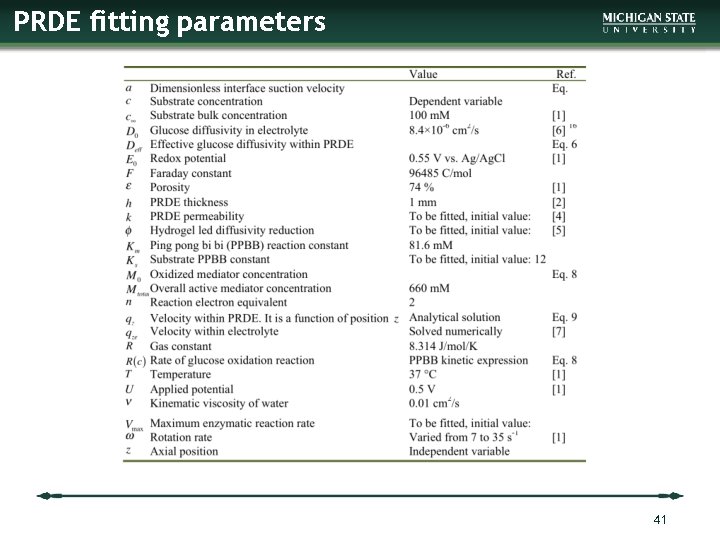
PRDE fitting parameters 41
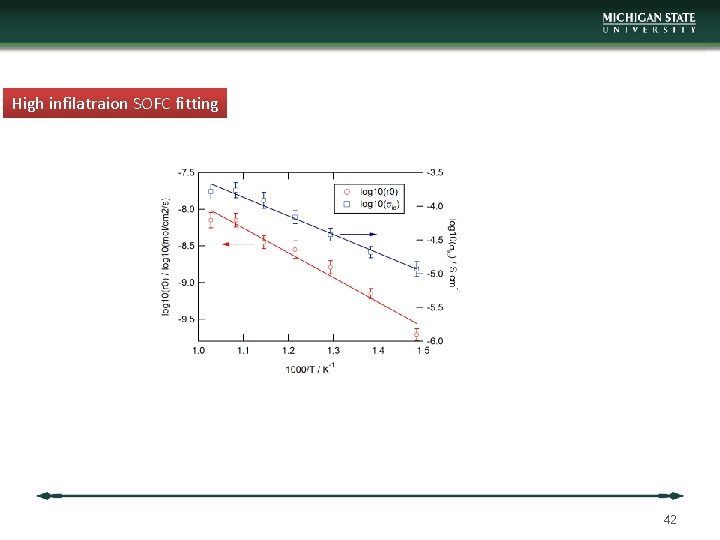
High infilatraion SOFC fitting 42
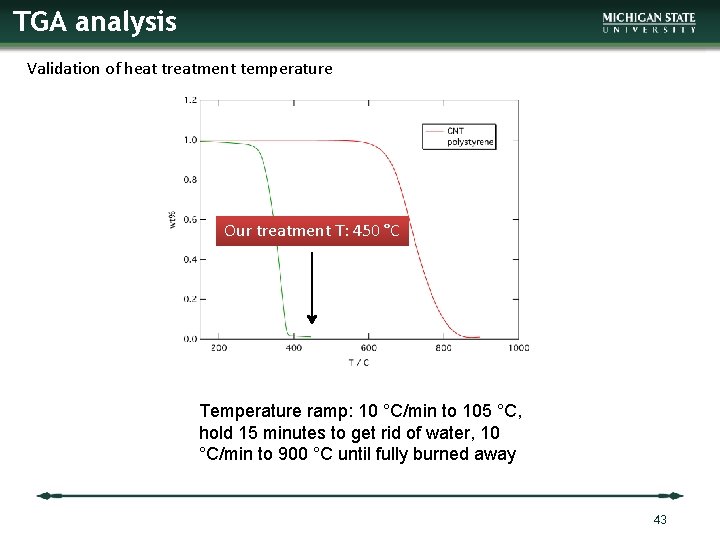
TGA analysis Validation of heat treatment temperature Our treatment T: 450 °C Temperature ramp: 10 °C/min to 105 °C, hold 15 minutes to get rid of water, 10 °C/min to 900 °C until fully burned away 43
Conclusions – CNT/CFME • Modified CFME bioelectrode allows observation and quantification of methodologies for increasing surface area and current density. • CNT modification lead to 4000 -fold increase in capacitive surface area and over 6 -fold increase in glucose oxidation current density. 44
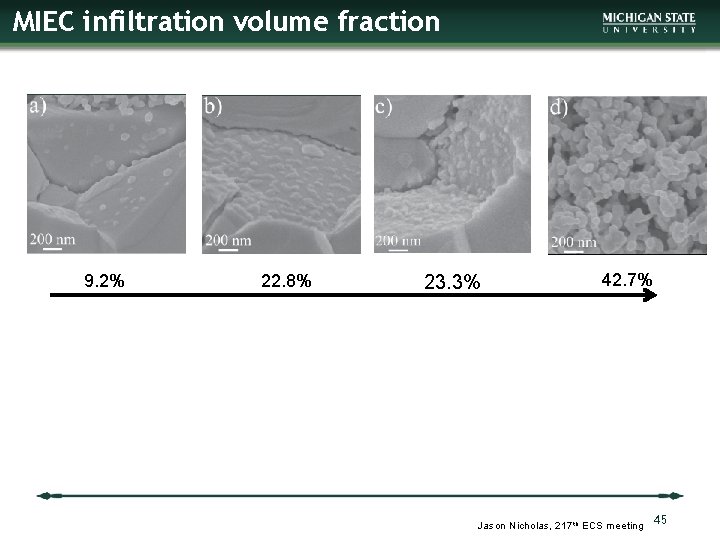
MIEC infiltration volume fraction 9. 2% 22. 8% 23. 3% 42. 7% Jason Nicholas, 217 th ECS meeting 45
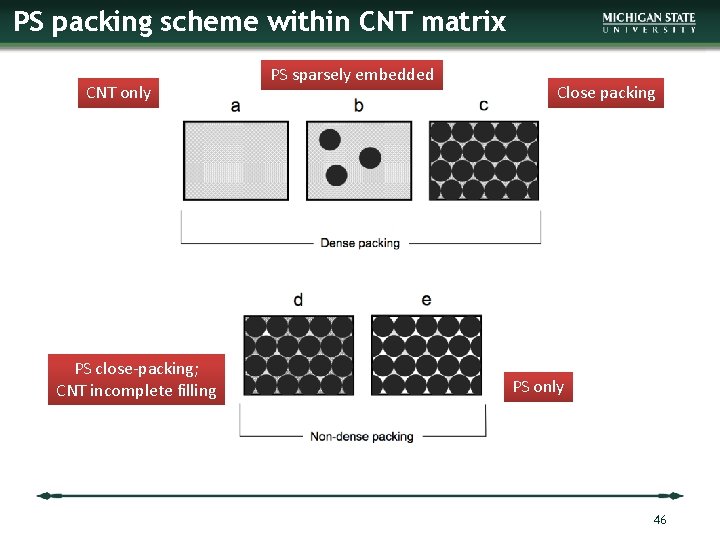
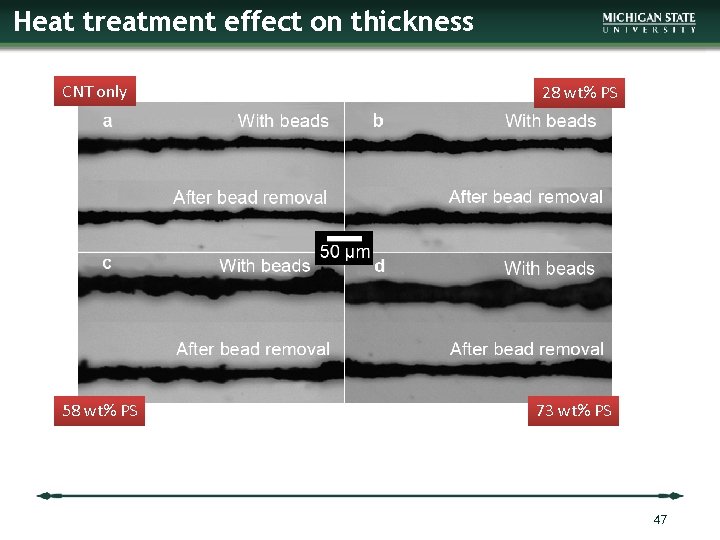
PS packing scheme within CNT matrix CNT only PS close-packing; CNT incomplete filling PS sparsely embedded Close packing PS only 46
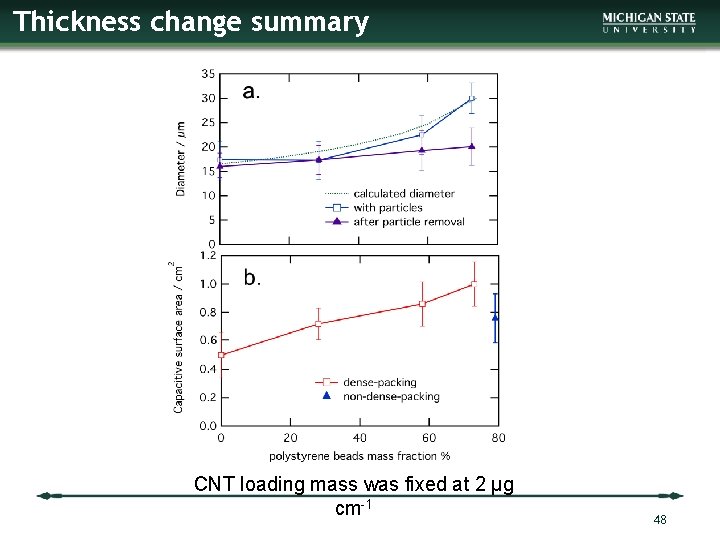
Heat treatment effect on thickness CNT only 58 wt% PS 28 wt% PS 73 wt% PS 47
Thickness change summary CNT loading mass was fixed at 2 µg cm-1 48
Conclusions • Introducing macropores via PS particle templating was shown to increase accessible surface area and performance; • Peak redox polymer and enzymatic activity properties that also doubled; • The hydrophilicity of the carboxylated CNT layer enabled total infiltration of biocatalytic hydrogel, as revealed by FIB-SEM 49
PRDE - Conclusions • A model based on convective and diffusive transport of substrate in porous rotating disk electrode was proposed; • It explains the non-zero current at low rotation speeds, and still show the signature sigmoidal trend of current versus rotation rate; • Almost perfect fitting to published PRDE experimental data; 50
Conclusions - SOFC • Composite cathode impedance performances were modeled at varying loadings and temperatures; • The diffusion, migration of oxygen vacancies and MIEC electronic conduction were considered; • Low MIEC loading leads to lower conductivity, which can be explained with percolation theory. 51
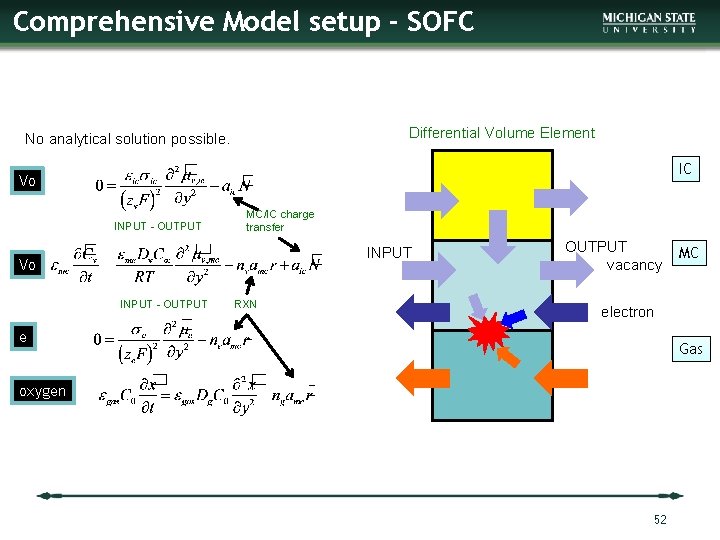
Comprehensive Model setup - SOFC Comprehensive Case including all processes Differential Volume Element No analytical solution possible. IC Vo INPUT - OUTPUT MC/IC charge transfer INPUT Vo INPUT - OUTPUT RXN OUTPUT vacancy MC electron e Gas oxygen 52