
Synthesis and degradation of Amino acids 1 Overview
- Slides: 28
Synthesis and degradation of Amino acids 1
Overview The catabolism of the amino acids involves: �Removal of α-amino groups. �Breakdown of the resulting carbon skeletons. �The resulting compounds will be used to form seven intermediate products: oxaloacetate, αketoglutarate, pyruvate, fumarate, succinyl coenzyme A (Co. A), acetyl Co. A, and acetoacetate. �These products directly enter the pathways of intermediary metabolism, resulting either in the synthesis of glucose or lipid or in the production of energy through their oxidation to CO 2 and water by the Krebs cycle. 2
3
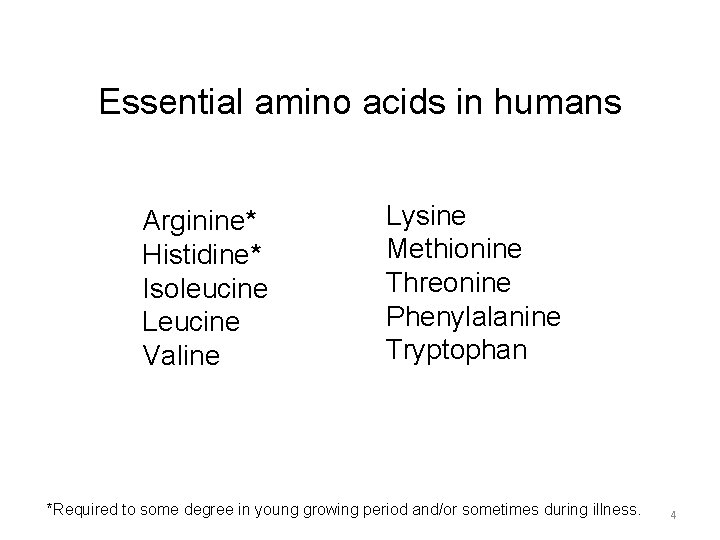
Essential amino acids in humans Arginine* Histidine* Isoleucine Leucine Valine Lysine Methionine Threonine Phenylalanine Tryptophan *Required to some degree in young growing period and/or sometimes during illness. 4
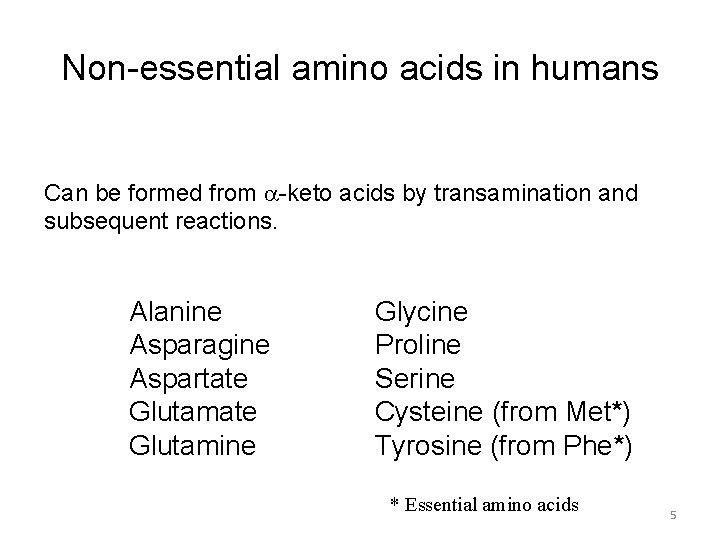
Non-essential amino acids in humans Can be formed from a-keto acids by transamination and subsequent reactions. Alanine Asparagine Aspartate Glutamine Glycine Proline Serine Cysteine (from Met*) Tyrosine (from Phe*) * Essential amino acids 5
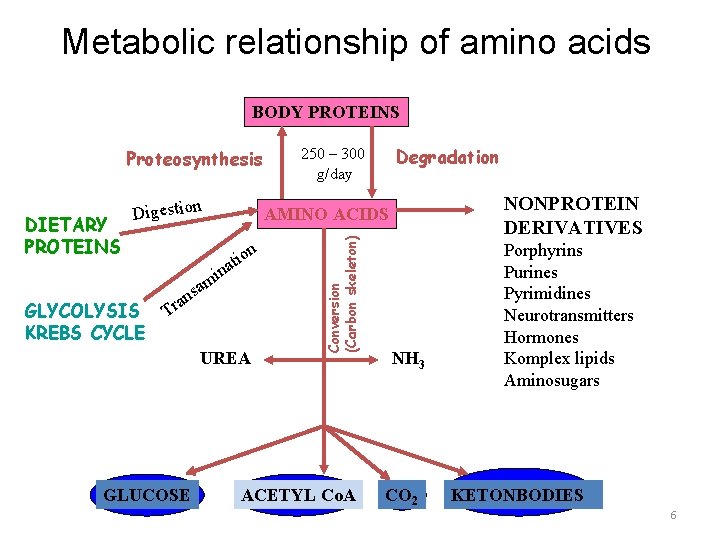
Metabolic relationship of amino acids BODY PROTEINS Proteosynthesis on i t a n GLYCOLYSIS KREBS CYCLE i m a s an r T UREA GLUCOSE NONPROTEIN DERIVATIVES AMINO ACIDS Conversion (Carbon skeleton) DIETARY PROTEINS Digestion Degradation 250 – 300 g/day ACETYL Co. A NH 3 CO 2 Porphyrins Purines Pyrimidines Neurotransmitters Hormones Komplex lipids Aminosugars KETONBODIES 6
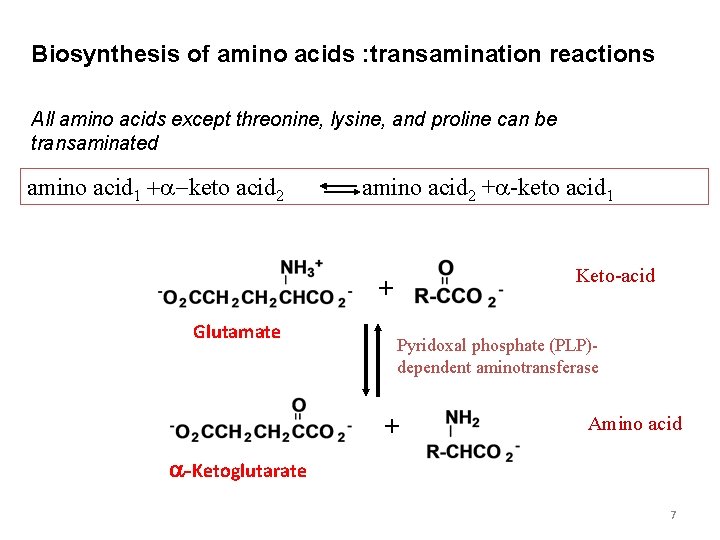
Biosynthesis of amino acids : transamination reactions All amino acids except threonine, lysine, and proline can be transaminated amino acid 1 +a-keto acid 2 amino acid 2 +a-keto acid 1 Keto-acid + Glutamate Pyridoxal phosphate (PLP)dependent aminotransferase + Amino acid a-Ketoglutarate 7
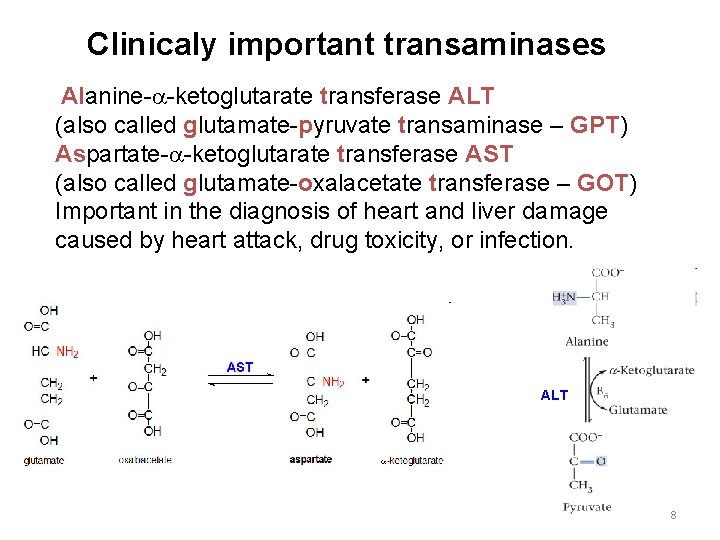
Clinicaly important transaminases Alanine-a-ketoglutarate transferase ALT (also called glutamate-pyruvate transaminase – GPT) Aspartate-a-ketoglutarate transferase AST (also called glutamate-oxalacetate transferase – GOT) Important in the diagnosis of heart and liver damage caused by heart attack, drug toxicity, or infection. ALT 8
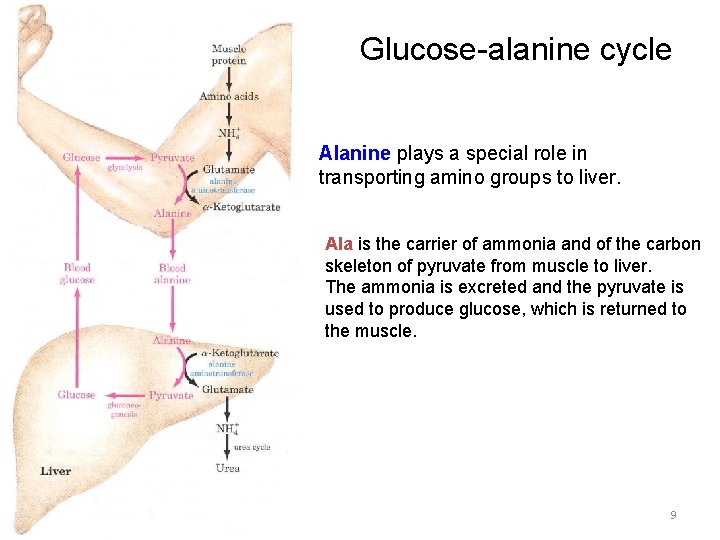
Glucose-alanine cycle Alanine plays a special role in transporting amino groups to liver. Ala is the carrier of ammonia and of the carbon skeleton of pyruvate from muscle to liver. The ammonia is excreted and the pyruvate is used to produce glucose, which is returned to the muscle. 9
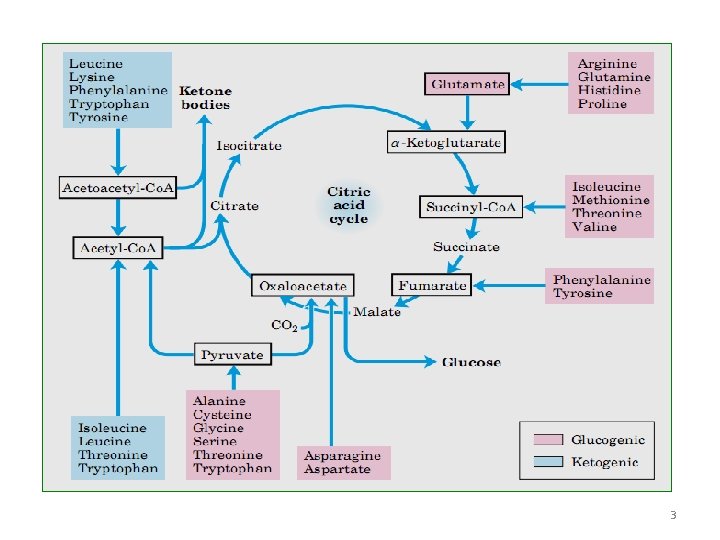
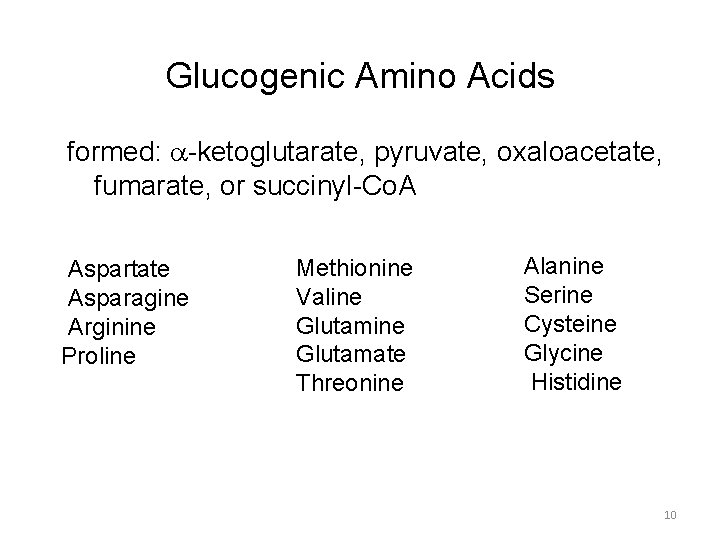
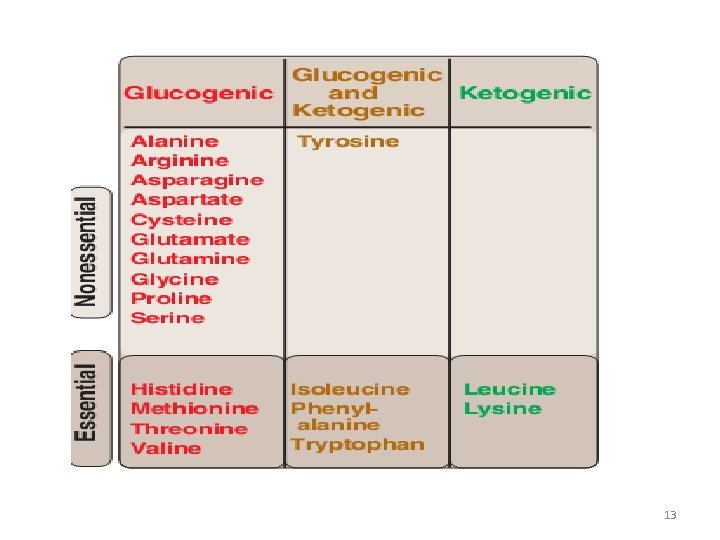
Glucogenic Amino Acids formed: a-ketoglutarate, pyruvate, oxaloacetate, fumarate, or succinyl-Co. A Aspartate Asparagine Arginine Proline Methionine Valine Glutamate Threonine Alanine Serine Cysteine Glycine Histidine 10
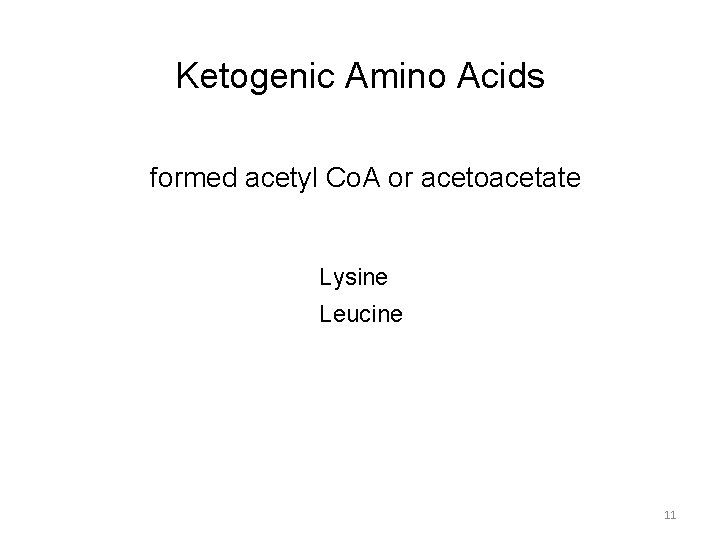
Ketogenic Amino Acids formed acetyl Co. A or acetoacetate Lysine Leucine 11
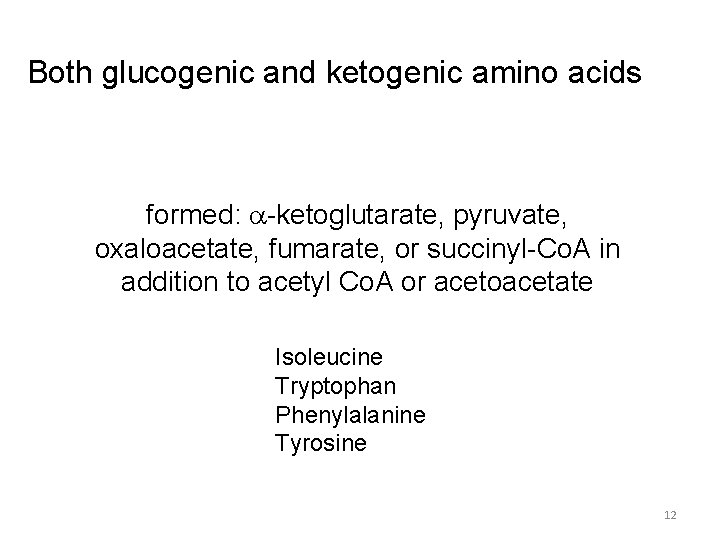
Both glucogenic and ketogenic amino acids formed: a-ketoglutarate, pyruvate, oxaloacetate, fumarate, or succinyl-Co. A in addition to acetyl Co. A or acetoacetate Isoleucine Tryptophan Phenylalanine Tyrosine 12
13
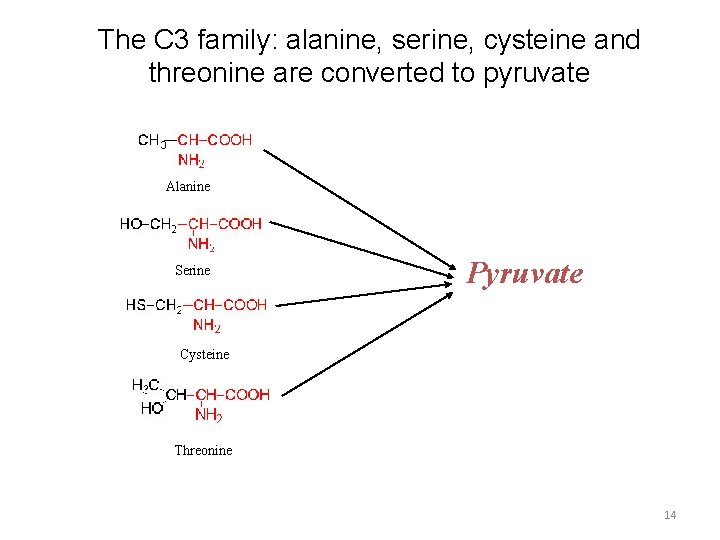
The C 3 family: alanine, serine, cysteine and threonine are converted to pyruvate Alanine Serine Pyruvate Cysteine Threonine 14
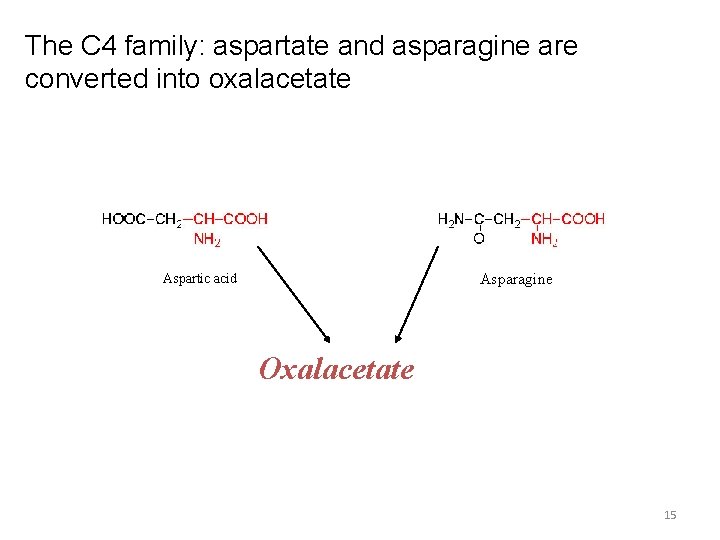
The C 4 family: aspartate and asparagine are converted into oxalacetate Asparagine Aspartic acid Oxalacetate 15
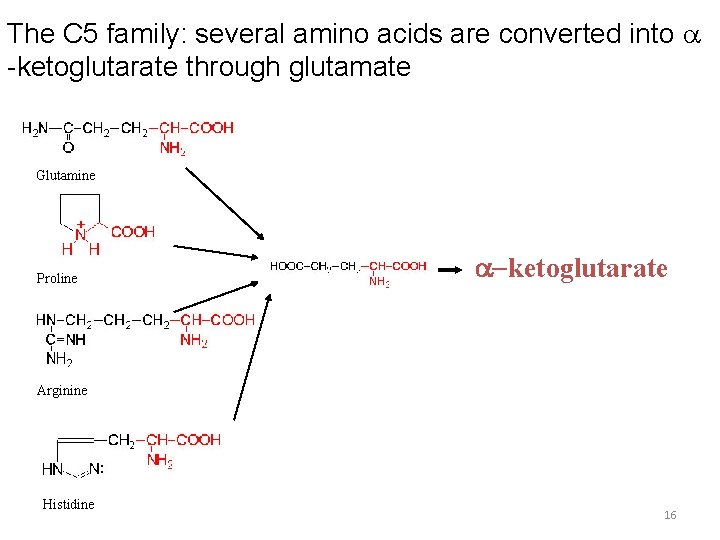
The C 5 family: several amino acids are converted into a -ketoglutarate through glutamate Glutamine Proline a-ketoglutarate Arginine Histidine 16
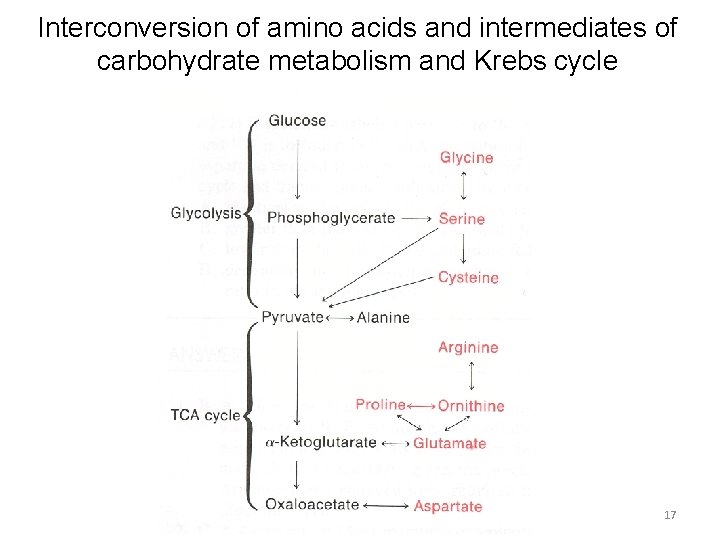
Interconversion of amino acids and intermediates of carbohydrate metabolism and Krebs cycle 17
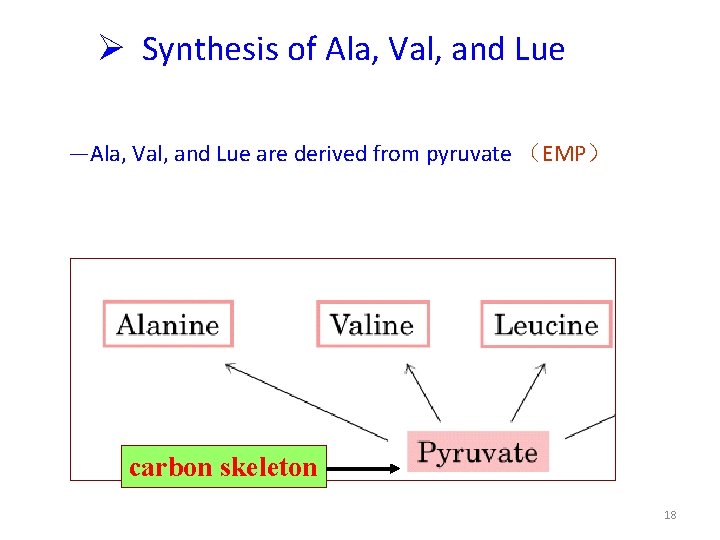
Synthesis of Ala, Val, and Lue —Ala, Val, and Lue are derived from pyruvate (EMP) carbon skeleton 18
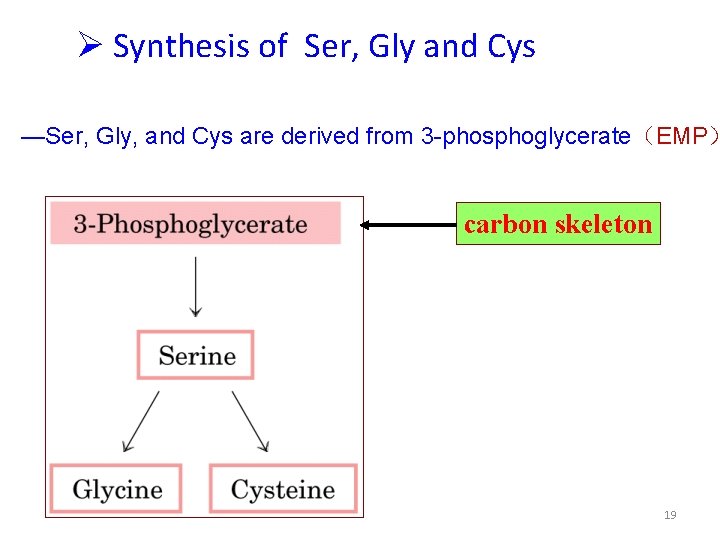
Synthesis of Ser, Gly and Cys —Ser, Gly, and Cys are derived from 3 -phosphoglycerate(EMP) carbon skeleton 19
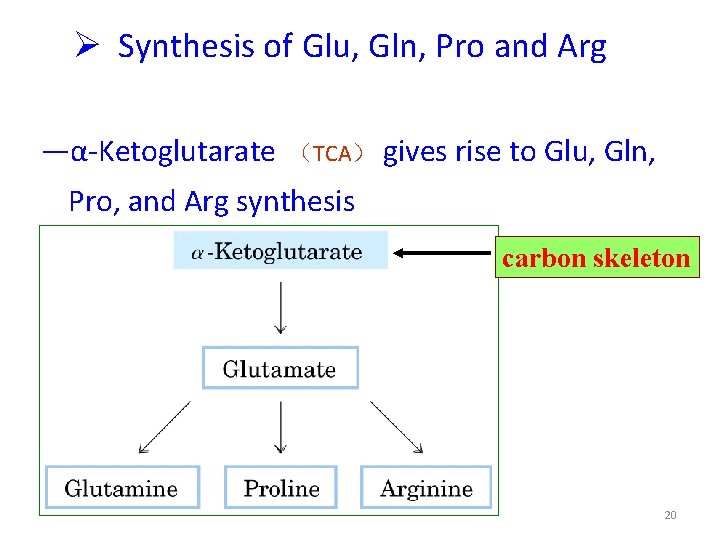
Synthesis of Glu, Gln, Pro and Arg —α-Ketoglutarate (TCA) gives rise to Glu, Gln, Pro, and Arg synthesis carbon skeleton 20
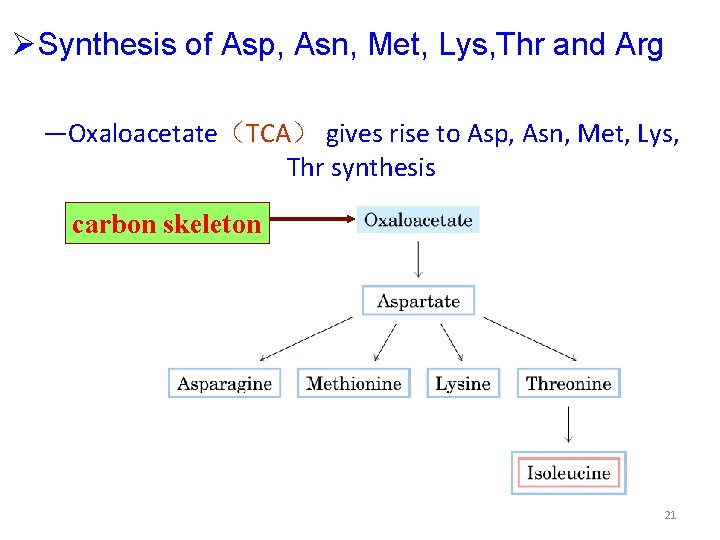
Synthesis of Asp, Asn, Met, Lys, Thr and Arg —Oxaloacetate(TCA) gives rise to Asp, Asn, Met, Lys, Thr synthesis carbon skeleton 21
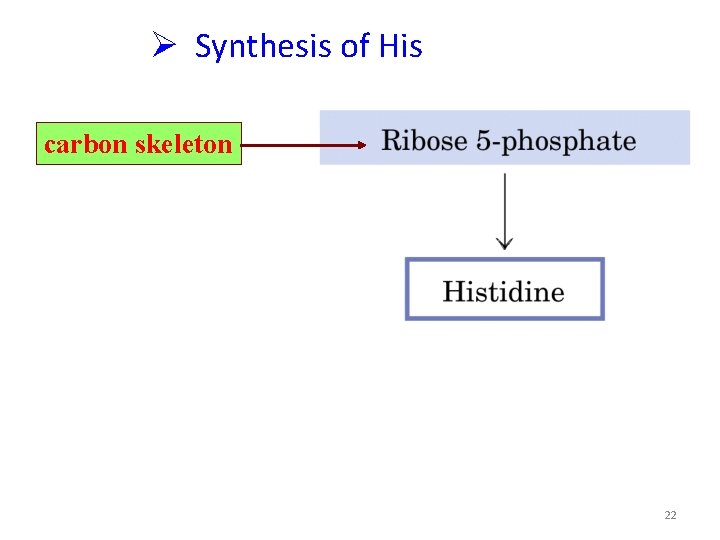
Synthesis of His carbon skeleton 22
Diseases related to the amino acid metabolism 23
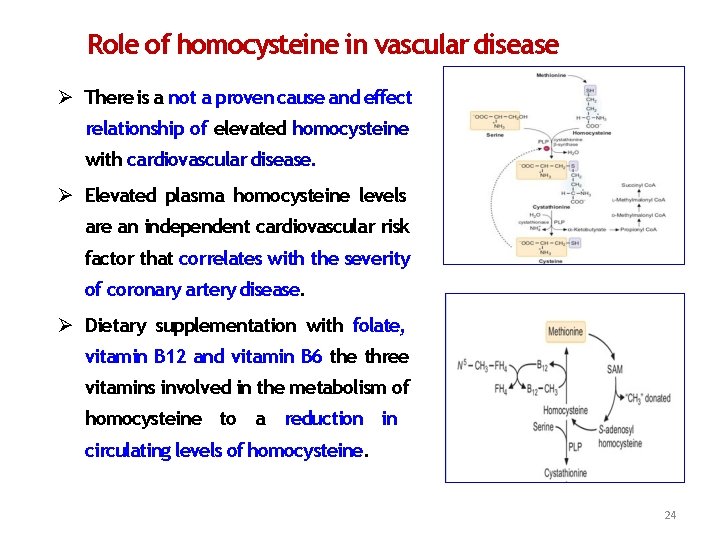
Role of homocysteine in vascular disease There is a not a proven cause and effect relationship of elevated homocysteine with cardiovascular disease. Elevated plasma homocysteine levels are an independent cardiovascular risk factor that correlates with the severity of coronary artery disease. Dietary supplementation with folate, vitamin B 12 and vitamin B 6 the three vitamins involved in the metabolism of homocysteine to a reduction in circulating levels of homocysteine. 24
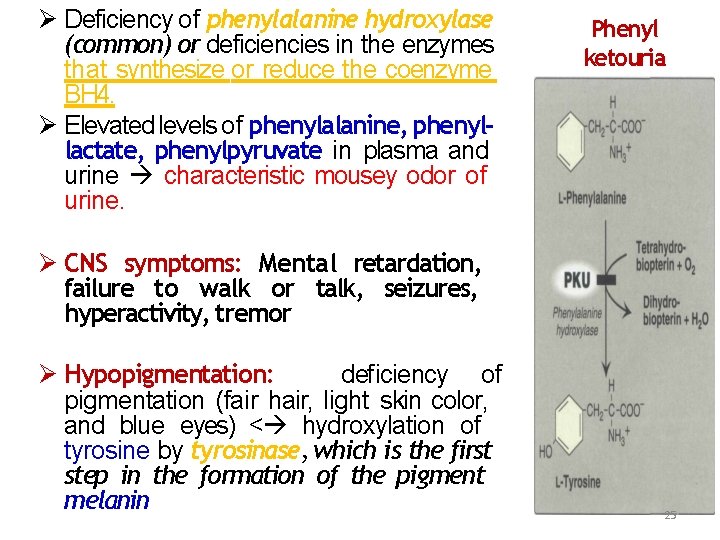
Deficiency of phenylalanine hydroxylase (common) or deficiencies in the enzymes that synthesize or reduce the coenzyme BH 4. Elevated levels of phenylalanine, phenyllactate, phenylpyruvate in plasma and urine characteristic mousey odor of urine. Phenyl ketouria CNS symptoms: Mental retardation, failure to walk or talk, seizures, hyperactivity, tremor Hypopigmentation: deficiency of pigmentation (fair hair, light skin color, and blue eyes) < hydroxylation of tyrosine by tyrosinase, which is the first step in the formation of the pigment melanin 25
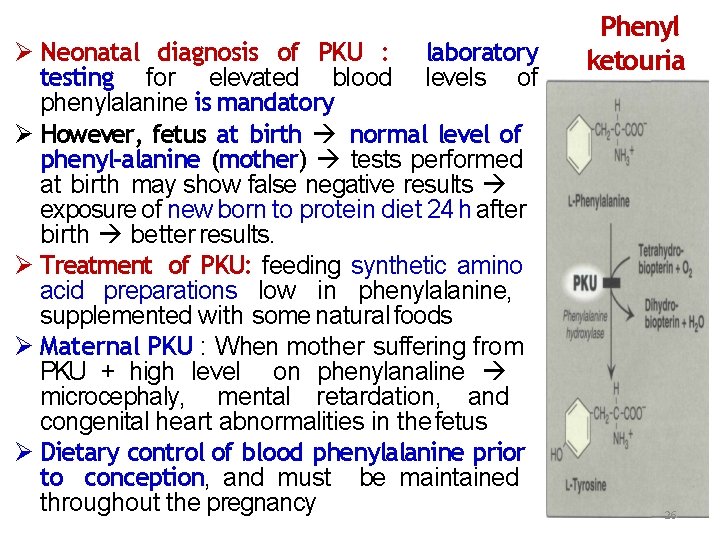
Neonatal diagnosis of PKU : laboratory testing for elevated blood levels of phenylalanine is mandatory However, fetus at birth normal level of phenyl-alanine (mother) tests performed at birth may show false negative results exposure of new born to protein diet 24 h after birth better results. Treatment of PKU: feeding synthetic amino acid preparations low in phenylalanine, supplemented with some natural foods Maternal PKU : When mother suffering from PKU + high level on phenylanaline microcephaly, mental retardation, and congenital heart abnormalities in the fetus Dietary control of blood phenylalanine prior to conception, and must be maintained throughout the pregnancy Phenyl ketouria 26
Alkaptonuria A rare metabolic disease involving a deficiency in accumulation homogentisic acid (degenerative pathway of homogentisic oxidase tyrosine) acid Characteristic symptoms: homogentisic aciduria • which is oxidized to a dark pigment onstanding large joint arthritis and black pigmentation of cartilage and collagenous tissue Patients are without symptoms till 40 Diets low in protein may help 27
Albinism A group of conditions with a defect in tyrosine metabolism a deficiency in the production of melanin partial or full absence of pigment from the skin, hair, and eyes. Oculo-cutaneous albinism: due to a deficiency of tyrosinase activity, causing a total absence of pigment from the hair, eyes, and skin The most severe form of the condition. Affected people may appear to have white hair, skin, and photophobia (sunlight is painful to their eyes), they sunburn easily, and do not tan. 28