
Synthesis and Analysis of Aspirin Chemistry 1060 Laboratory
Synthesis and Analysis of Aspirin Chemistry 1060 Laboratory

Analysis • Purity determination • Thin Layer Chromatography (TLC) • Separation and identification • stationary phase – silica gel • mobile phase – organic solvent • Relative attraction to the two phases • Polarity

Analysis • Thin Layer Chromatography (TLC) • Retention factor (Rf) values Solvent front Rf = 3/5 = 0. 60 5 cm 3 cm Origin
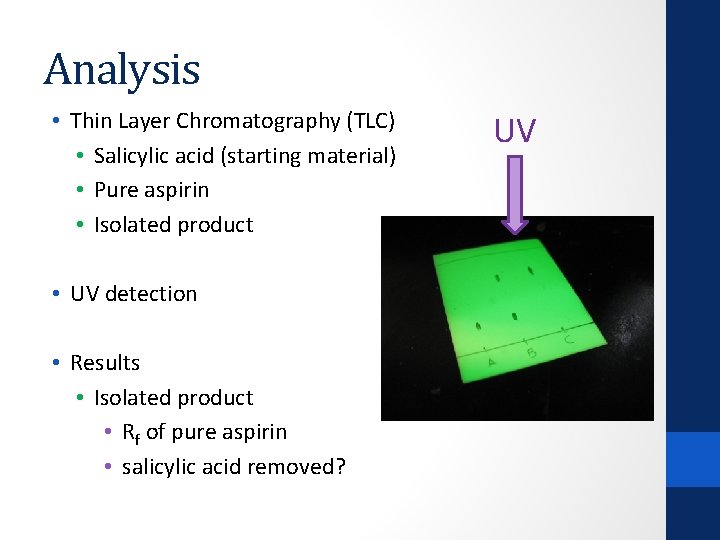
Analysis • Thin Layer Chromatography (TLC) • Salicylic acid (starting material) • Pure aspirin • Isolated product • UV detection • Results • Isolated product • Rf of pure aspirin • salicylic acid removed? UV
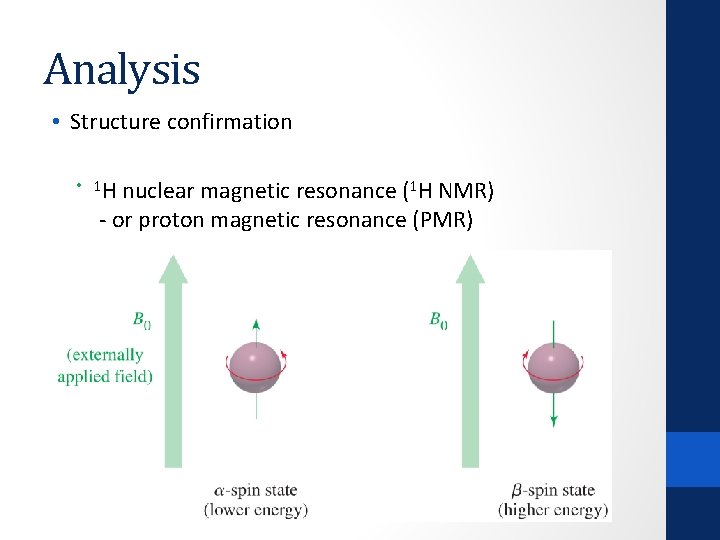
Analysis • Structure confirmation • 1 H nuclear magnetic resonance (1 H NMR) - or proton magnetic resonance (PMR)
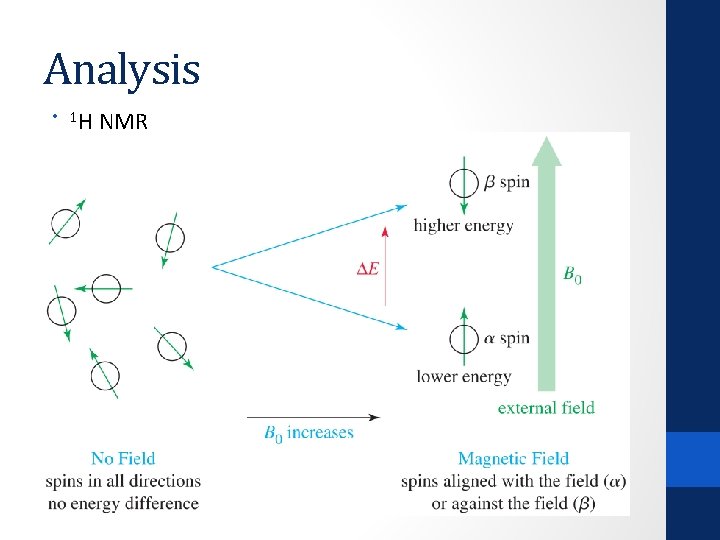
Analysis • 1 H NMR
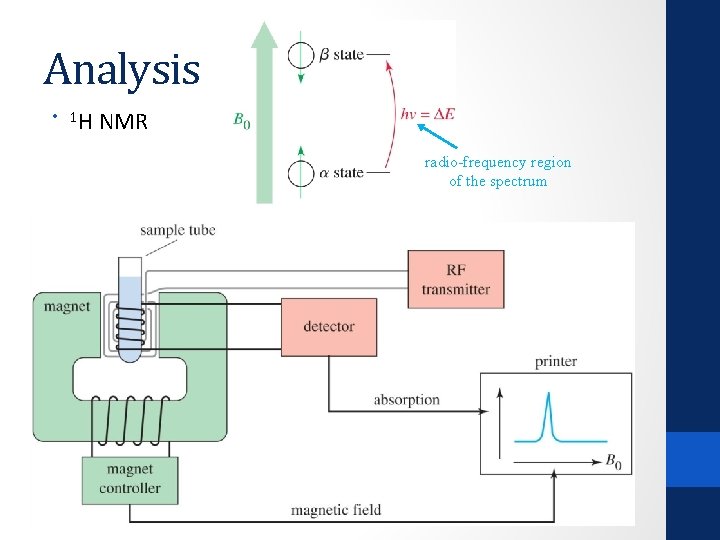
Analysis • 1 H NMR radio-frequency region of the spectrum
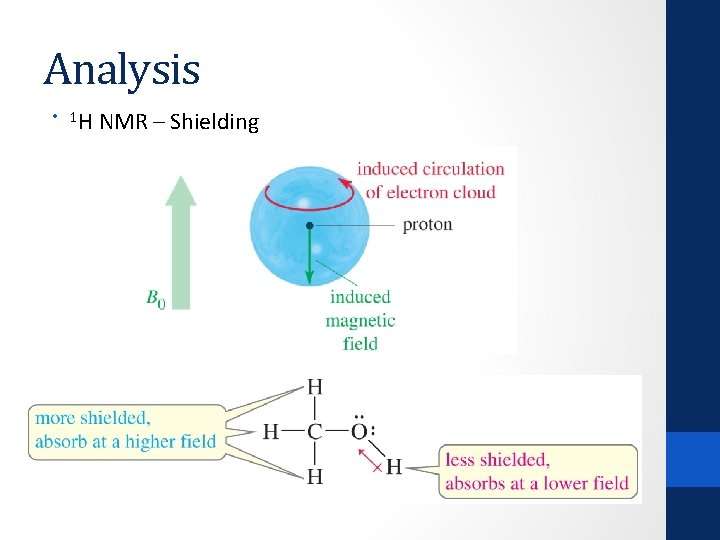
Analysis • 1 H NMR – Shielding

Analysis • 1 H NMR – Chemical Shifts, Chemical Equivalency tetramethylsilane (TMS)
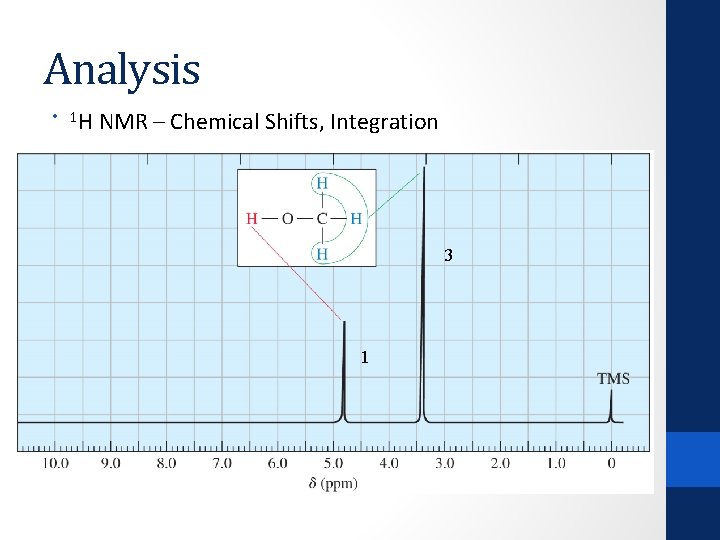
Analysis • 1 H NMR – Chemical Shifts, Integration 3 1
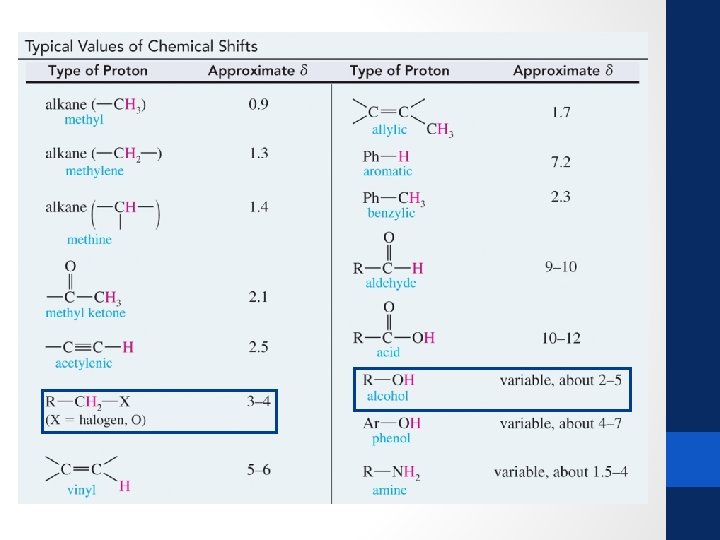
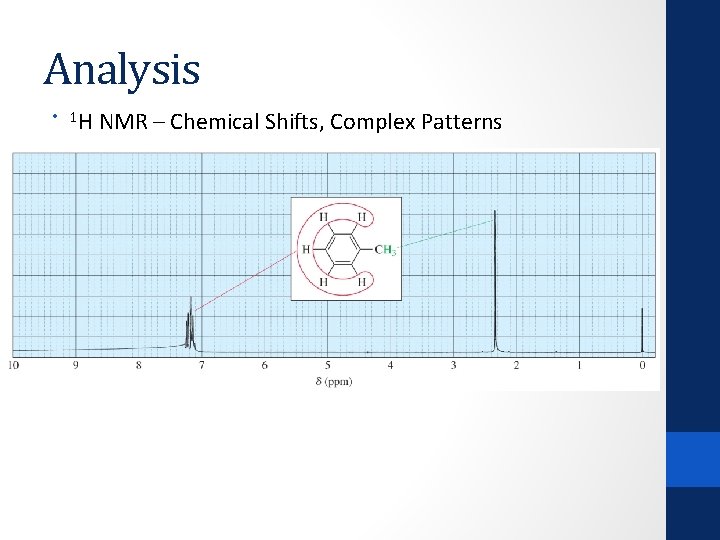
Analysis • 1 H NMR – Chemical Shifts, Complex Patterns
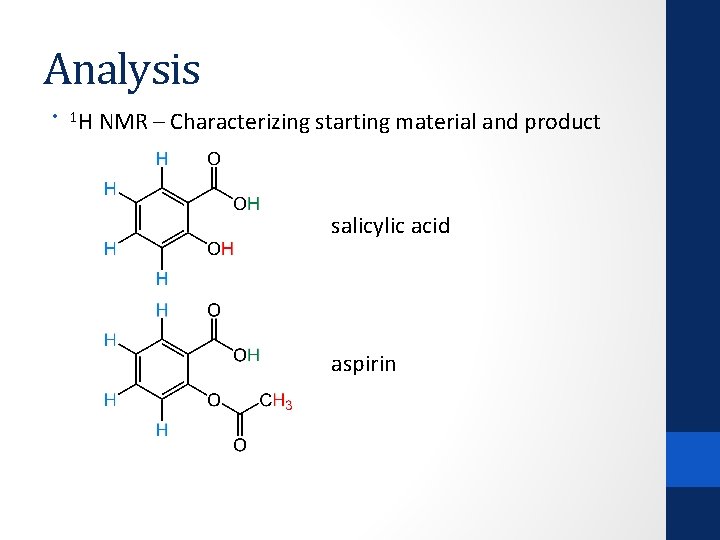
Analysis • 1 H NMR – Characterizing starting material and product salicylic acid aspirin
Summary • Goals Week 1: • To synthesize aspirin, from salicylic acid and acetic anhydride • To purify the product using recrystallization Week 2: • To verify the purity and identity of the product using thin layer chromatography (TLC) • To further confirm the identity of the product by nuclear magnetic resonance (NMR) spectroscopy
- Slides: 14