
SYN Flooding A Denial of Service Attack Shivani
- Slides: 19
SYN Flooding: A Denial of Service Attack Shivani Hashia CS 265
Topics v What is Denial of Service attack? v Types of attacks v SYN flooding attack v Solutions v Conclusion
What is Denial of Service Attack? v Main aim to stop the victim’s machine from doing it’s required job v Server unable to provide service to legitimate clients v Damage done varies from minor inconvenience to major financial losses
Types of Attacks v Bandwidth Consumption: All available bandwidth used by the attacker e. g. , ICMP ECHO attack v Resource Consumption: Resources like web server, print or mail server flooded with useless requests e. g. , mail bomb v Network Connectivity: The attacker forces the server to stop communicating on the network e. g. , SYN Flooding.
SYN Flooding Attack v Network connectivity attack v Most commonly-used Do. S attack v Launched with a little effort v Presently, difficult to trace attack back to its originator v Web servers and systems connected to Internet providing TCP-based services like FTP servers, mail servers are susceptible v Exploits TCP’s three-way handshake mechanism and its limitations in maintaining half open connections
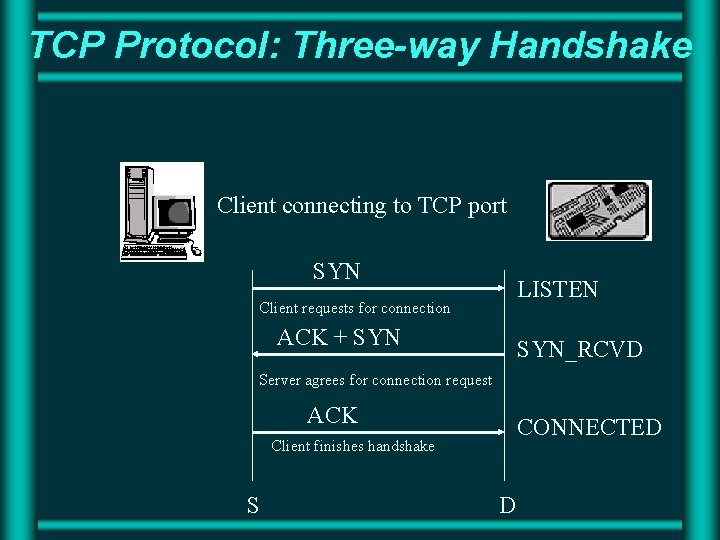
TCP Protocol: Three-way Handshake Client connecting to TCP port SYN LISTEN Client requests for connection ACK + SYN_RCVD Server agrees for connection request ACK CONNECTED Client finishes handshake S D
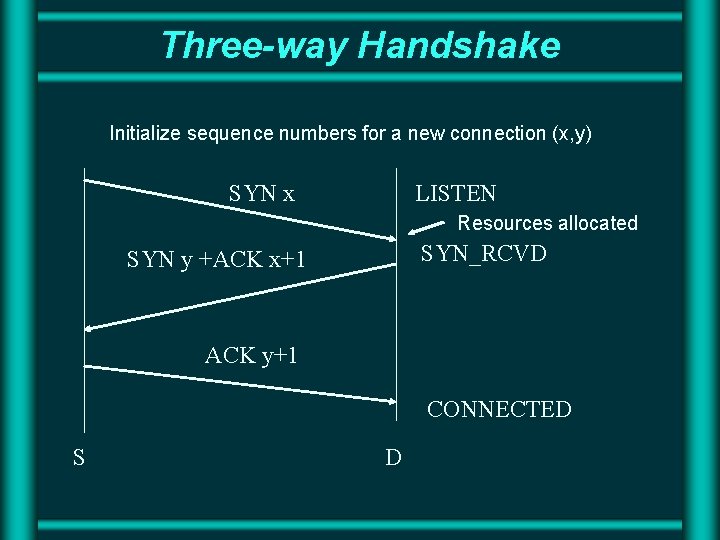
Three-way Handshake Initialize sequence numbers for a new connection (x, y) SYN x LISTEN Resources allocated SYN_RCVD SYN y +ACK x+1 ACK y+1 CONNECTED S D
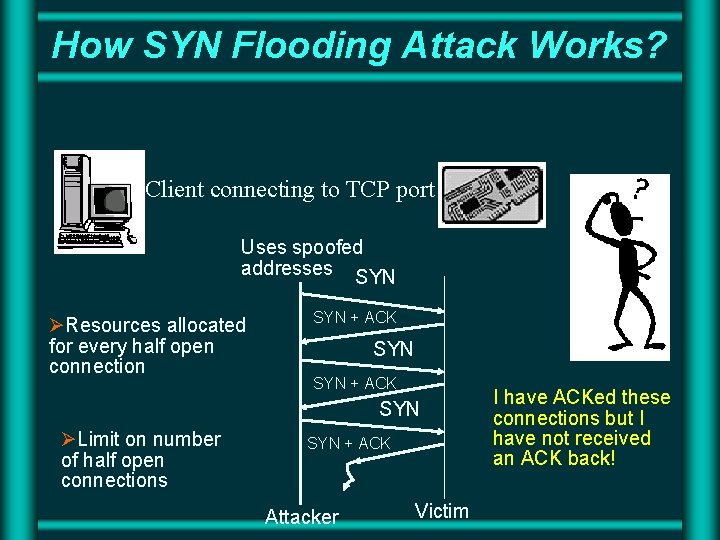
How SYN Flooding Attack Works? Client connecting to TCP port Uses spoofed addresses SYN ØResources allocated for every half open connection SYN + ACK SYN ØLimit on number of half open connections SYN + ACK Attacker Victim I have ACKed these connections but I have not received an ACK back!
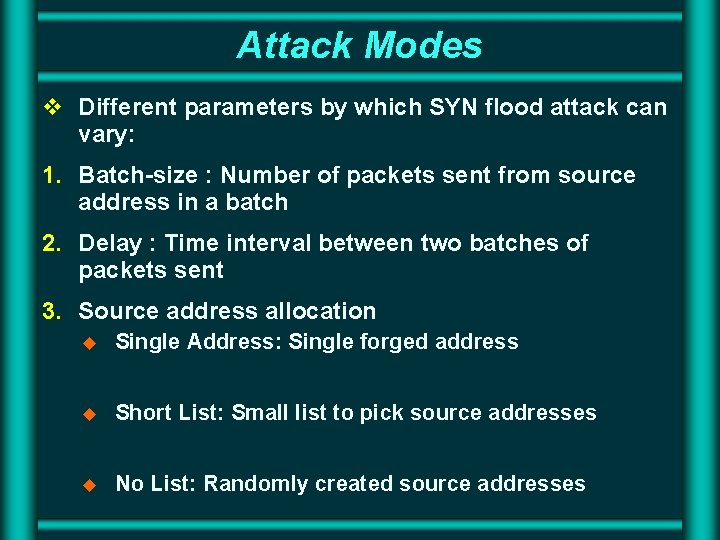
Attack Modes v Different parameters by which SYN flood attack can vary: 1. Batch-size : Number of packets sent from source address in a batch 2. Delay : Time interval between two batches of packets sent 3. Source address allocation u Single Address: Single forged address u Short List: Small list to pick source addresses u No List: Randomly created source addresses
Solutions v Using firewall v System configuration improvements v SYN cache
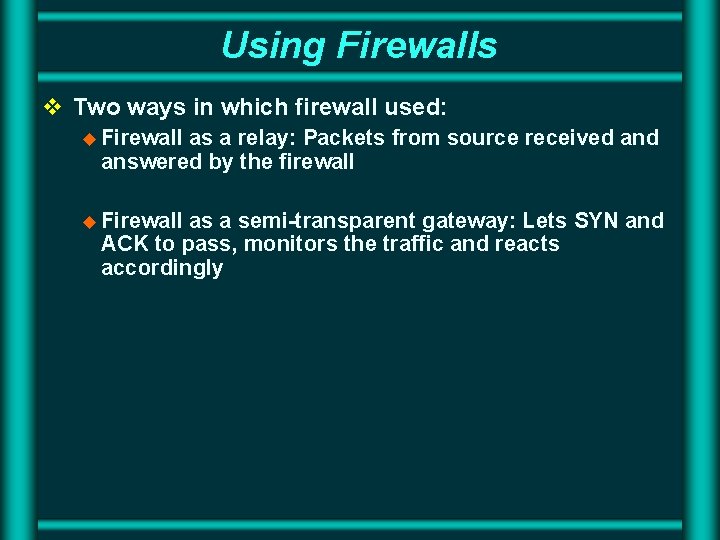
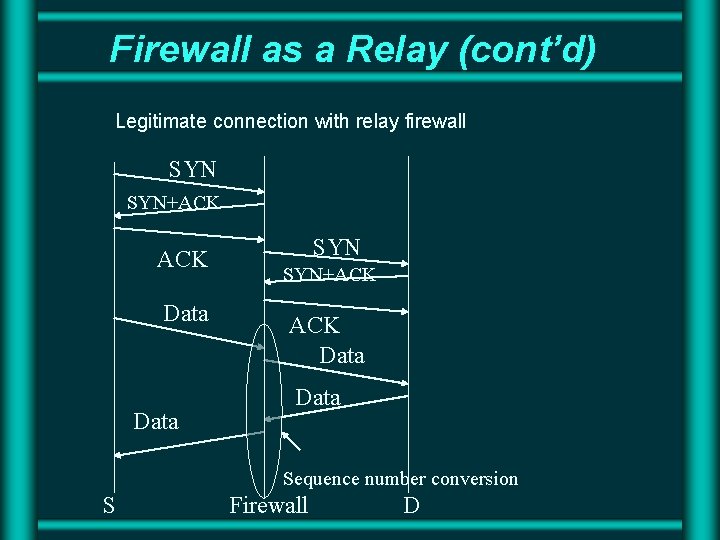
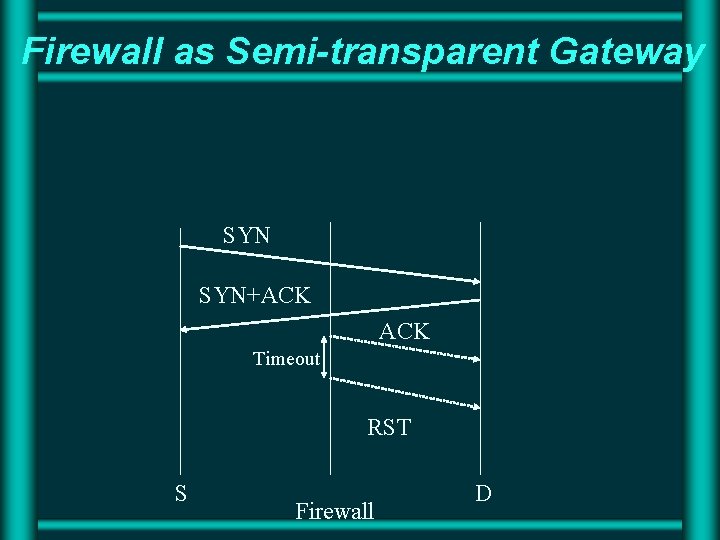
Using Firewalls v Two ways in which firewall used: u Firewall as a relay: Packets from source received answered by the firewall u Firewall as a semi-transparent gateway: Lets SYN and ACK to pass, monitors the traffic and reacts accordingly
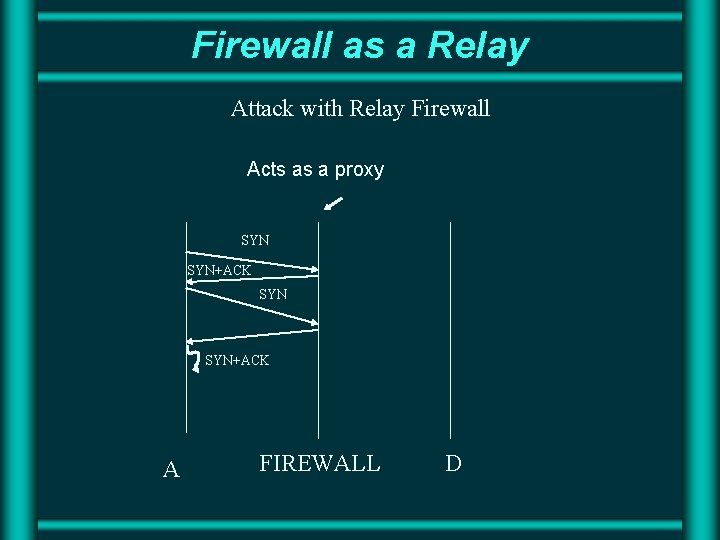
Firewall as a Relay Attack with Relay Firewall Acts as a proxy SYN SYN+ACK A FIREWALL D
Firewall as a Relay (cont’d) Legitimate connection with relay firewall SYN SYN+ACK ACK Data Sequence number conversion S Firewall D
Firewall as Semi-transparent Gateway SYN+ACK Timeout RST S Firewall D
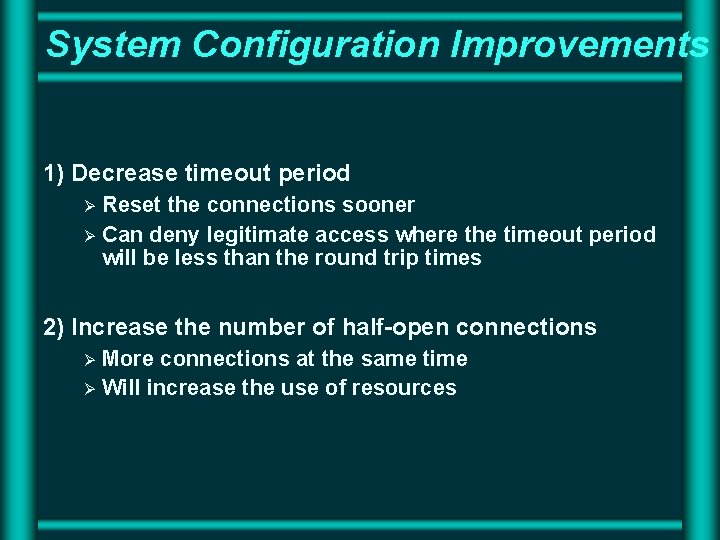
System Configuration Improvements 1) Decrease timeout period Ø Ø Reset the connections sooner Can deny legitimate access where the timeout period will be less than the round trip times 2) Increase the number of half-open connections Ø Ø More connections at the same time Will increase the use of resources
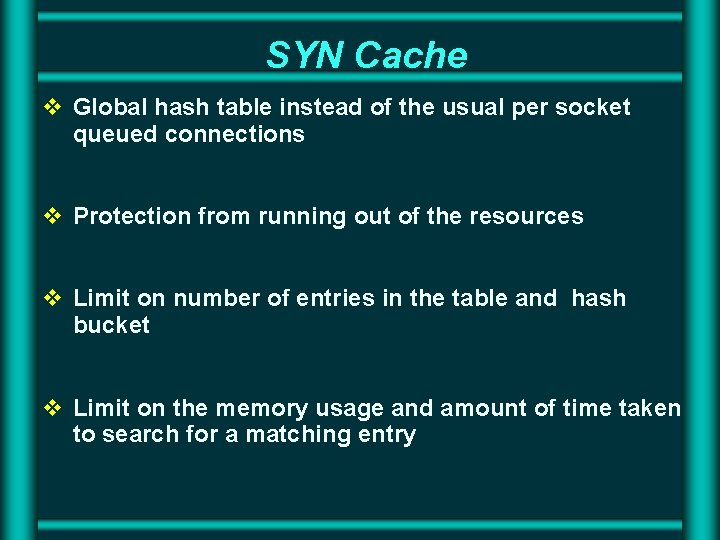
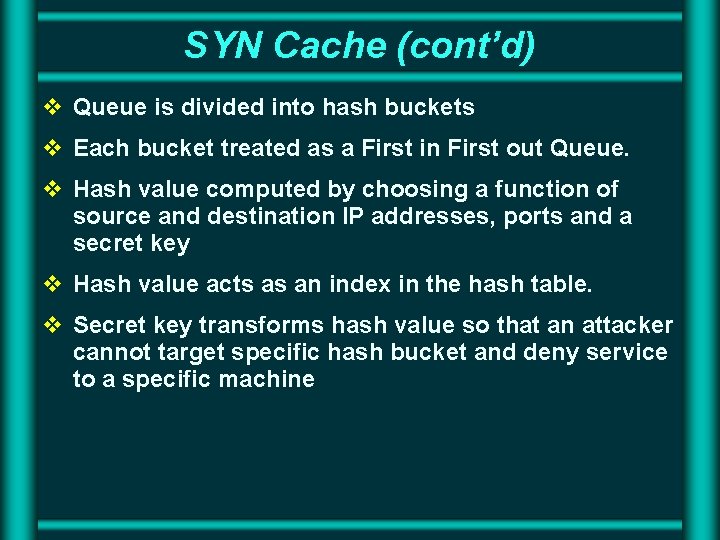
SYN Cache v Global hash table instead of the usual per socket queued connections v Protection from running out of the resources v Limit on number of entries in the table and hash bucket v Limit on the memory usage and amount of time taken to search for a matching entry
SYN Cache (cont’d) v Queue is divided into hash buckets v Each bucket treated as a First in First out Queue. v Hash value computed by choosing a function of source and destination IP addresses, ports and a secret key v Hash value acts as an index in the hash table. v Secret key transforms hash value so that an attacker cannot target specific hash bucket and deny service to a specific machine
Conclusion v SYN Flooding denial of service attack one of the most common attacks v Caused by the flaws in TCP protocol v Not possible to eliminate the attack v Possible to reduce the danger by taking the described measures properly
Thank you