
Symptomatology and Diagnosis of the Gastrointestinal System Diseases




- Slides: 29
Symptomatology and Diagnosis of the Gastrointestinal System Diseases Koray Topgul, MD, Prof Department of General Surgery
Symptoms of gastrointestinal diseases • • • Abdominal pain Abdominal distention Weight loss, loss of appetite Dysphagia Nausea-vomiting Gastrointestinal bleeding Bloating-distension Constipation Diarrhea
Abdominal pain • • • Quality - What is the pain like? Location - Where is the pain ? Radiation - Does it radiate? Timing – Did it start suddenly or gradually? Connection - Reference to eating - Is any connection with the eating? • What aggravates or relieves the pain? • What symptoms are associated with the pain?
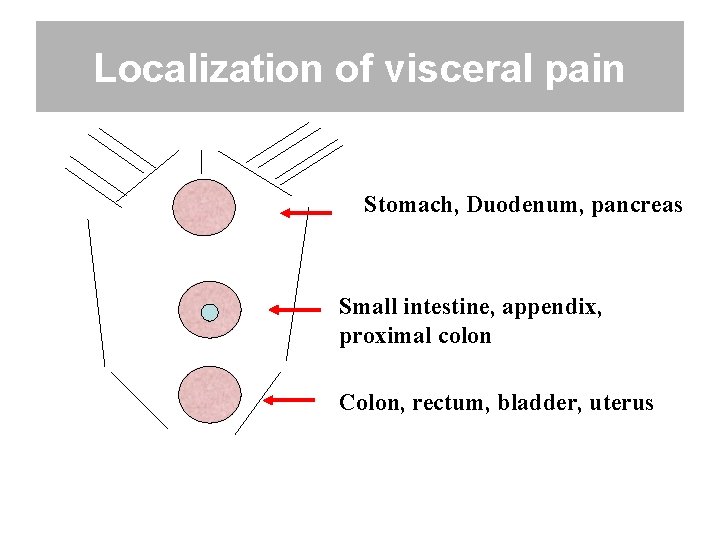
Possible mechanisms and clinical patterns (location and quality) of abdominal pain • Visceral pain (hollow structures may become painful because of unusually forceful contraction or distension) – Poorly localized, usually near to the midline • Epigastrial: stomach, duodenum, pancreas • Umbilical: appendix, small intestine, proximal colon • Hypogastrial: colon, bladder, uterus • Right upper quadrant : biliary tree, liver – The pain may be gnawing, burning, cramping. Associated syndroms can be sweating, pallor, nausea, restlessness.
• Parietal pain (originates in the inflamed parietal peritoneum) • It is a steady, aching pain. Usually more severe than visceral pain. More precisely localized over the involved structure. Movement and coughing aggravate the pain. • Referred pain • It is felt in more distant sites that are innervated at approximately the same spinal levels as the disordered structure. • Well localized, superficial or deep pain.
Localization of visceral pain Stomach, Duodenum, pancreas Small intestine, appendix, proximal colon Colon, rectum, bladder, uterus
Abdominal pain Early distension of inflamed appendix produces periumbilical pain – visceral pain, which gradually replaced by right lower quadrant pain due to inflammation of the adjacent parietal peritoneum - parietal pain. Pain from the biliary tree to the right shoulder – referred pain
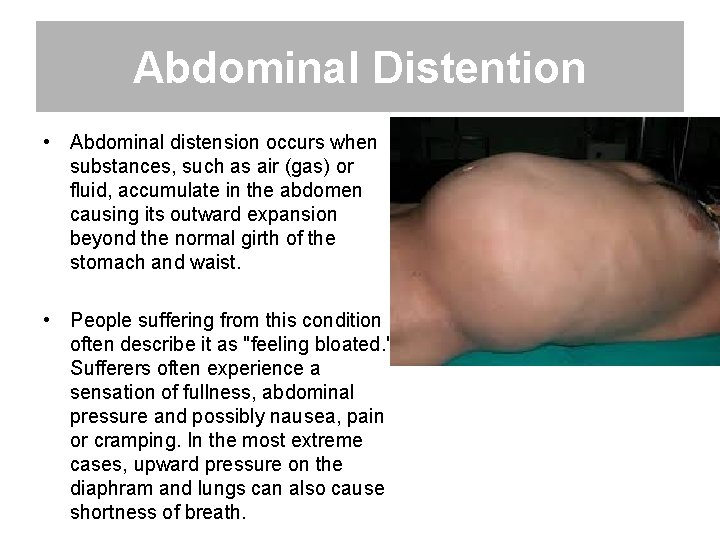
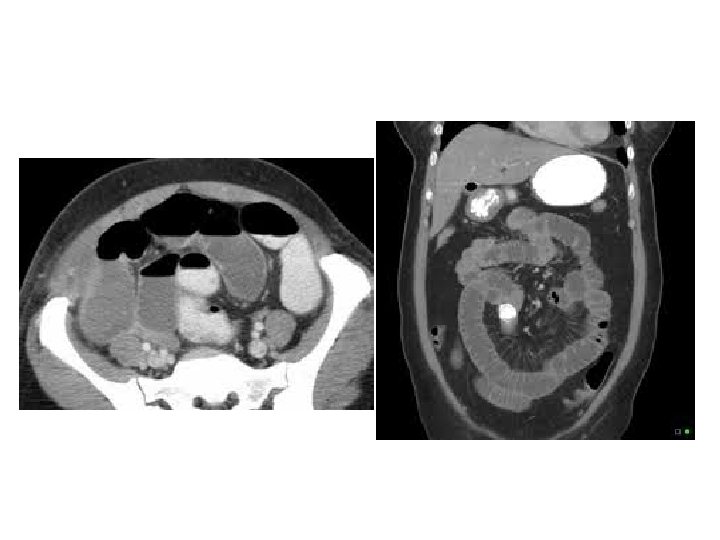
Abdominal Distention • Abdominal distension occurs when substances, such as air (gas) or fluid, accumulate in the abdomen causing its outward expansion beyond the normal girth of the stomach and waist. • People suffering from this condition often describe it as "feeling bloated. " Sufferers often experience a sensation of fullness, abdominal pressure and possibly nausea, pain or cramping. In the most extreme cases, upward pressure on the diaphram and lungs can also cause shortness of breath.
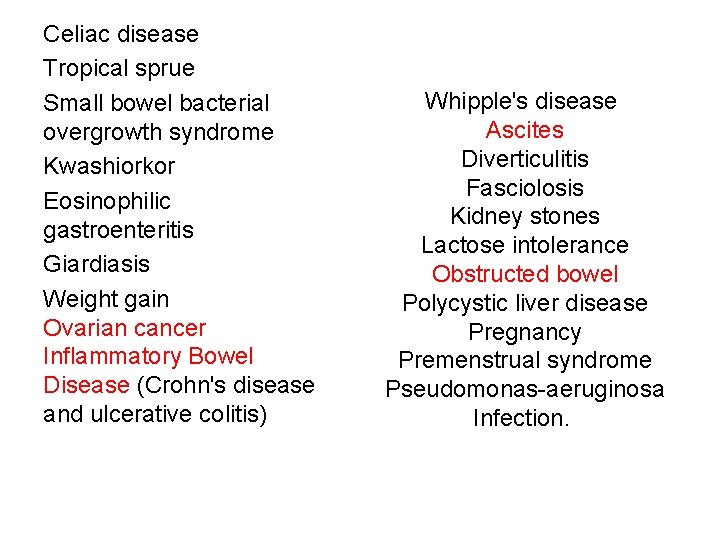
Celiac disease Tropical sprue Small bowel bacterial overgrowth syndrome Kwashiorkor Eosinophilic gastroenteritis Giardiasis Weight gain Ovarian cancer Inflammatory Bowel Disease (Crohn's disease and ulcerative colitis) Whipple's disease Ascites Diverticulitis Fasciolosis Kidney stones Lactose intolerance Obstructed bowel Polycystic liver disease Pregnancy Premenstrual syndrome Pseudomonas-aeruginosa Infection.
Weight loss • Unintentional loss of 5% of body weight over 6 -12 months. In a previously healthy individual is often a harbinger of underlying systemic disease. • Significance of weight loss: – Unintentional weight loss, especially in elderly is common, and associates with increased morbidity and mortality rate, even after comorbid conditions have been taken into account. – In cancer patients with weight loss have impaired responses to chemotherapy, and reduced median survival – Marked weight loss predisposes to infection
Possible causes of weight loss In elderly: Depression, cancer, benign gastrointestinal disease The most common malignancies that causes weight loss: Lung, gastrointestinal cancer In young individuals: Diabetes mellitus, hyperthyroidism, psychiatric disorders, infections (HIV) Others: Heart failure, emphysema, COPD, tuberculosis, parasitic infection, stroke, dementia, renal insufficiency, etc.
Dysphagia • It is a sensation of sticking or obstruction of the passage of food through the mouth, pharynx or esophagus. • Physiology of swallowing: – Preparation of food bolus suitable for swallowing – The bolus is pushed into the pharynx by contraction of the tongue – Activation of oropharyngeal sensory receptors to initiate the deglutition reflex, which serves both to propel food through the pharynx and the esophagus and to prevent its entry into the airway. • The larynx moves forward and the upper esopageal sphincter opens • As the bolus moves into the pharynx, contraction of the superior pharyngeal constrictors against the contracted soft palate initiates a peristaltic contraction that proceeds rapidly downward to move the bolus through the pharynx and the esophagus. • The lower esophageal sphincter opens as the food enters the esophagus and remains open until the peristaltic contraction has swept the bolus into the stomach. – The peristalsis involves inhibition followed by sequential contraction of muscles along the entire swallowing passage.
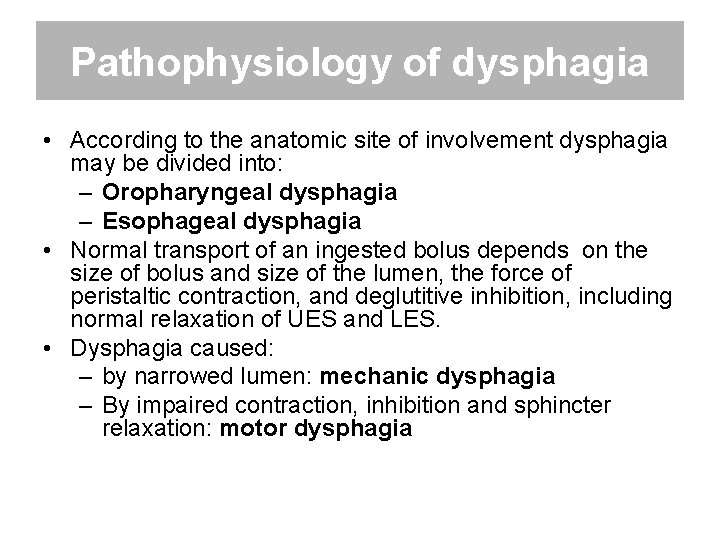
Pathophysiology of dysphagia • According to the anatomic site of involvement dysphagia may be divided into: – Oropharyngeal dysphagia – Esophageal dysphagia • Normal transport of an ingested bolus depends on the size of bolus and size of the lumen, the force of peristaltic contraction, and deglutitive inhibition, including normal relaxation of UES and LES. • Dysphagia caused: – by narrowed lumen: mechanic dysphagia – By impaired contraction, inhibition and sphincter relaxation: motor dysphagia
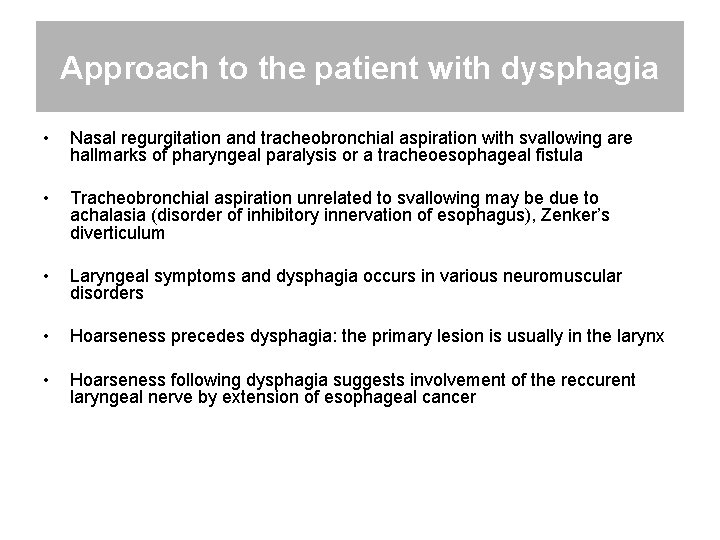
Approach to the patient with dysphagia • Nasal regurgitation and tracheobronchial aspiration with svallowing are hallmarks of pharyngeal paralysis or a tracheoesophageal fistula • Tracheobronchial aspiration unrelated to svallowing may be due to achalasia (disorder of inhibitory innervation of esophagus), Zenker’s diverticulum • Laryngeal symptoms and dysphagia occurs in various neuromuscular disorders • Hoarseness precedes dysphagia: the primary lesion is usually in the larynx • Hoarseness following dysphagia suggests involvement of the reccurent laryngeal nerve by extension of esophageal cancer
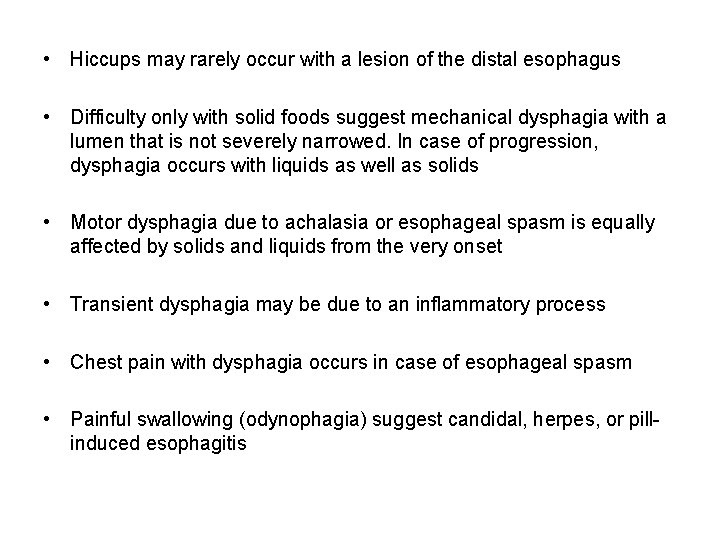
• Hiccups may rarely occur with a lesion of the distal esophagus • Difficulty only with solid foods suggest mechanical dysphagia with a lumen that is not severely narrowed. In case of progression, dysphagia occurs with liquids as well as solids • Motor dysphagia due to achalasia or esophageal spasm is equally affected by solids and liquids from the very onset • Transient dysphagia may be due to an inflammatory process • Chest pain with dysphagia occurs in case of esophageal spasm • Painful swallowing (odynophagia) suggest candidal, herpes, or pillinduced esophagitis
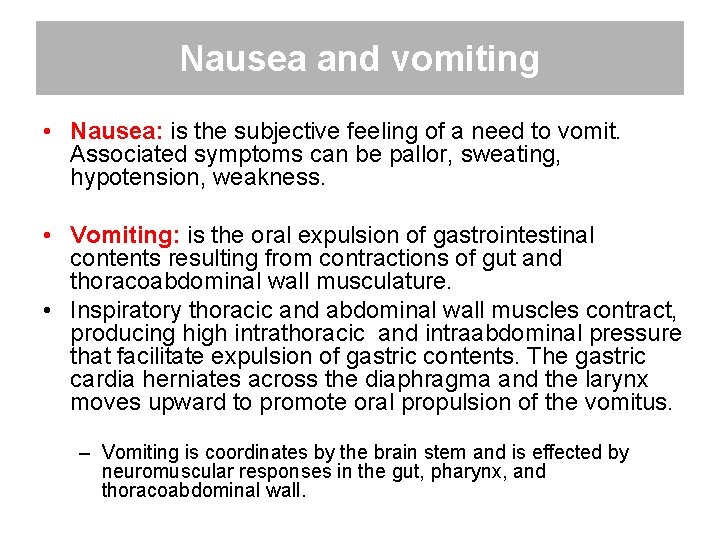
Nausea and vomiting • Nausea: is the subjective feeling of a need to vomit. Associated symptoms can be pallor, sweating, hypotension, weakness. • Vomiting: is the oral expulsion of gastrointestinal contents resulting from contractions of gut and thoracoabdominal wall musculature. • Inspiratory thoracic and abdominal wall muscles contract, producing high intrathoracic and intraabdominal pressure that facilitate expulsion of gastric contents. The gastric cardia herniates across the diaphragma and the larynx moves upward to promote oral propulsion of the vomitus. – Vomiting is coordinates by the brain stem and is effected by neuromuscular responses in the gut, pharynx, and thoracoabdominal wall.
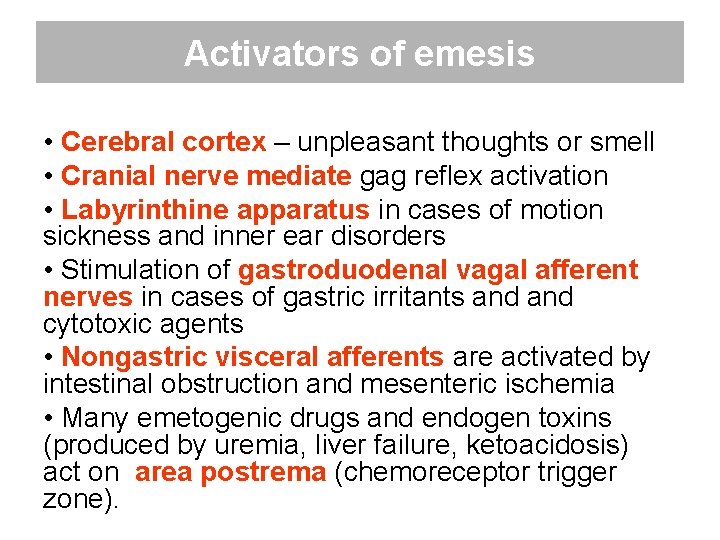
Activators of emesis • Cerebral cortex – unpleasant thoughts or smell • Cranial nerve mediate gag reflex activation • Labyrinthine apparatus in cases of motion sickness and inner ear disorders • Stimulation of gastroduodenal vagal afferent nerves in cases of gastric irritants and cytotoxic agents • Nongastric visceral afferents are activated by intestinal obstruction and mesenteric ischemia • Many emetogenic drugs and endogen toxins (produced by uremia, liver failure, ketoacidosis) act on area postrema (chemoreceptor trigger zone).
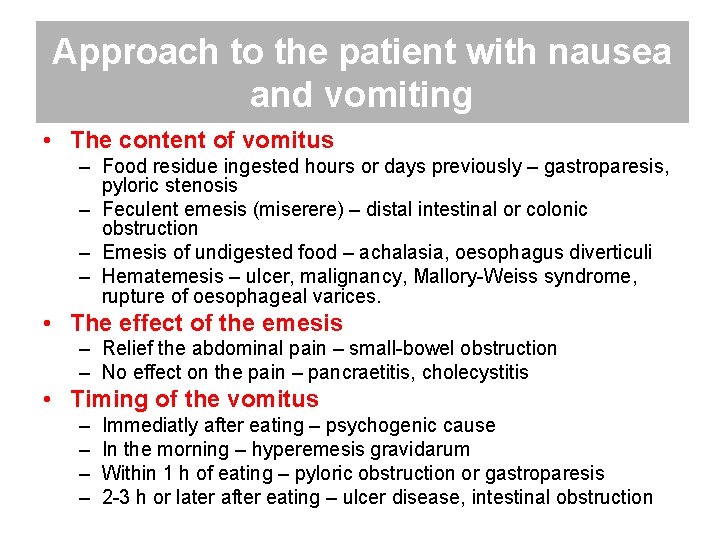
Approach to the patient with nausea and vomiting • The content of vomitus – Food residue ingested hours or days previously – gastroparesis, pyloric stenosis – Feculent emesis (miserere) – distal intestinal or colonic obstruction – Emesis of undigested food – achalasia, oesophagus diverticuli – Hematemesis – ulcer, malignancy, Mallory-Weiss syndrome, rupture of oesophageal varices. • The effect of the emesis – Relief the abdominal pain – small-bowel obstruction – No effect on the pain – pancraetitis, cholecystitis • Timing of the vomitus – – Immediatly after eating – psychogenic cause In the morning – hyperemesis gravidarum Within 1 h of eating – pyloric obstruction or gastroparesis 2 -3 h or later after eating – ulcer disease, intestinal obstruction
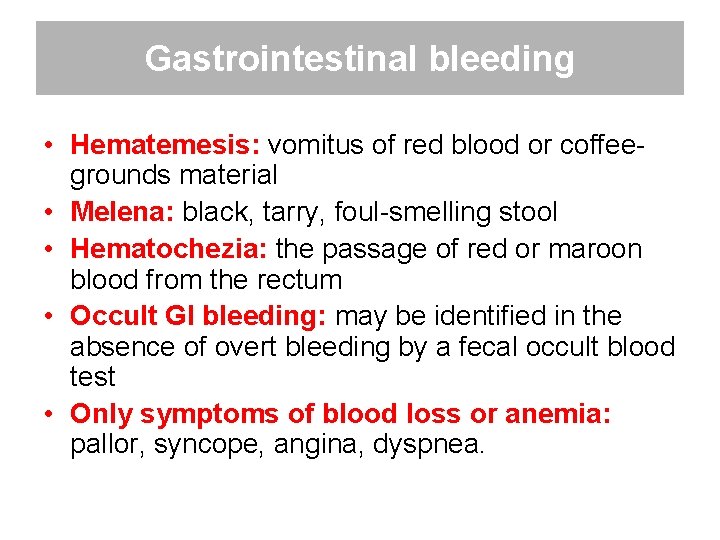
Gastrointestinal bleeding • Hematemesis: vomitus of red blood or coffeegrounds material • Melena: black, tarry, foul-smelling stool • Hematochezia: the passage of red or maroon blood from the rectum • Occult GI bleeding: may be identified in the absence of overt bleeding by a fecal occult blood test • Only symptoms of blood loss or anemia: pallor, syncope, angina, dyspnea.
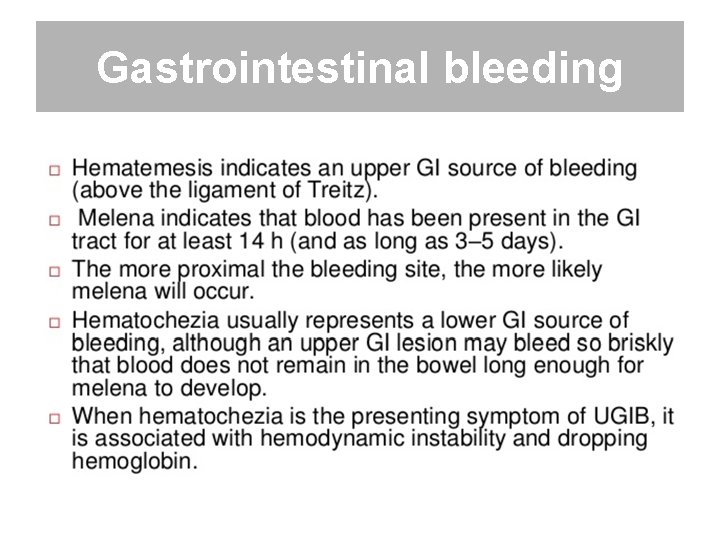
Gastrointestinal bleeding
Sources of GI bleeding • Peptic ulcer -H. pylori, NSAID, acid. • Mallory-Weiss tears – vomiting, reching or coughing preceedes the hematemesis, especially in alcoholic patients. • Esophageal varices – consequences of portal hypertension in patients with liver cirrhosis. • Erosiv gastropathy – subepithelial hemorrhages and erosions in alcoholic patients or during NSAID therapy. • Small intestinal sources – Meckel’s diverticulum in children, tumors in middle aged population, vascular ectasias in elderly patients. • Colonic sources – hemorrhoids, diverticula, neoplasma, vascular ectasias.
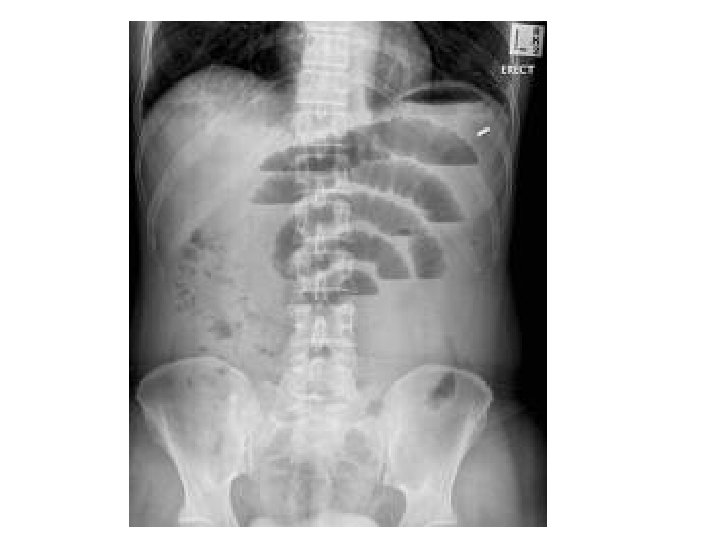
Flatulence (meteorism) - abdominal swelling / distention • Increased gas – Aerophagia – Consumption of legumes (pease, bean, lentil) – Bacterial fermentation of unabsorbed carbohydrates (lactase deficiency) – Decreased absorption of gases across the bowel wall (congestive heart failure, portal congestion in cirrhotic patients) – Inhibited evacuation (mechanic or paralytic ileus). Increased parasympathetic activity • Physical signs – Diffuse protuberance of the abdomen, tightening, tympanic percussion sound.
Constipation • Constipation refers to persistent, difficult, infrequent (fewer than three bowel movements per week), or seemingly incomplete defecation. The consistency of the stool is lumpy/hard. • • Chronic constipation generally results from inadequate fiber or fluid intake or from disordered colonic transit or anorectal function. • In the vast majority of cases (>90%) there is no underlying cause, and constipation responds to ample hydration, exercise, and supplementation of dietary fiber (15 -25 g/day)
Diarrhea • The passage of abnormally liquid or unformed stools at an increased frequency. The stool weight is more than 200 g/day. – Pseudodiarrhea: The frequent passage of small volumes of stool (rectal urgencies, IBD, proctitis) – Fecal incontinence: involuntary discharge of rectal contents, is most often caused by neuromuscular disorders or structural anorectal problems. – Overflow diarrhea: In elderly patients due to fecal impactation that is detectable by rectal examination.
Acute diarrhea (<2 weeks in duration) • Caused by infectious agents (more than 90% of cases) – Travelers: Escheria coli, Campylobacter, Shigella, Giardia – Consumers of certain foods: • Following food consumption at a banquet or restorant: – – – Salmonella, Shigella, Campylobacter from chicken Enterohemorhagic E. coli from undercooked hamburger Bacillus cereus from fried rise Staph. aureus from eggs Vibrio species, Salmonella or acute hepatitis A from seafood – Immunodeficient persons (AIDS, pharmacologic suppression): • Mycobacterium species • Protozoa (Criptosporodium, Isospora belli etc. ) • Neisseria gonorrhoeae, Treponema pallidum (transmitted venereally per rectum) – Institutionalized persons: • Most commonly Clostridium difficile
Acute diarrhea (<2 weeks in duration) • Side effects of medication: – Antibiotics, antihypertensivs, cardiac antidysrhythmics, NSAIDs, chemotherapeutic agents, laxatives • Ischemic colitis (mostly in the sigmoid and left colon) – Over 50 year of age, presents as acute abdominal pain preceding watery, then bloody diarrhea • Colonic diverticulitis • Ingestion of toxins (often associated with systemic compromise) – Organophosphates, amanita and other mushrooms
Chronic diarrhea (lasts more than 4 weeks) • Secretory causes: due to dearangements in fluid and electrolyte transport across the enterocolonic mucosa): – Watery, large-volume fecal outputs that are painless and persist with fasting • Medications (senna, ricinoleic acid), ethanol • Bowel resection (inadequate surface for reabsorption) • Hormones (serotonin, histamin-carcinoid, gastrin, VIP, calcitonin) • Defects in ion absorption (congenitally defective Cl/HCO 3 exchange)