
Symmetry Hierarchy of ManMade Objects Yanzhen Wang 1
Symmetry Hierarchy of Man-Made Objects Yanzhen Wang 1, 2, Kai Xu 1, 2, Jun Li 2, Hao Zhang 1, Ariel Shamir 3, Ligang Liu 4, Zhiquan Cheng 2, Yueshan Xiong 2 1 Simon Fraser University 2 National University of Defense Technology 3 The Interdisciplinary Center, Herzliya 4 Zhejiang University
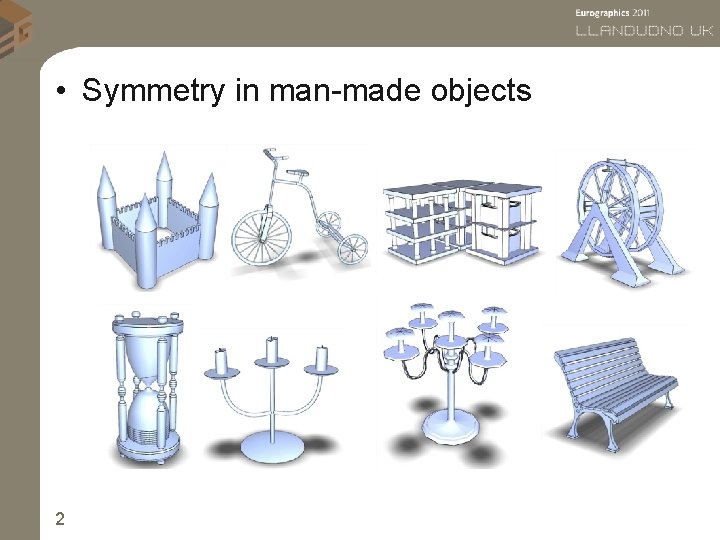
• Symmetry in man-made objects 2

• Symmetry hierarchy 3
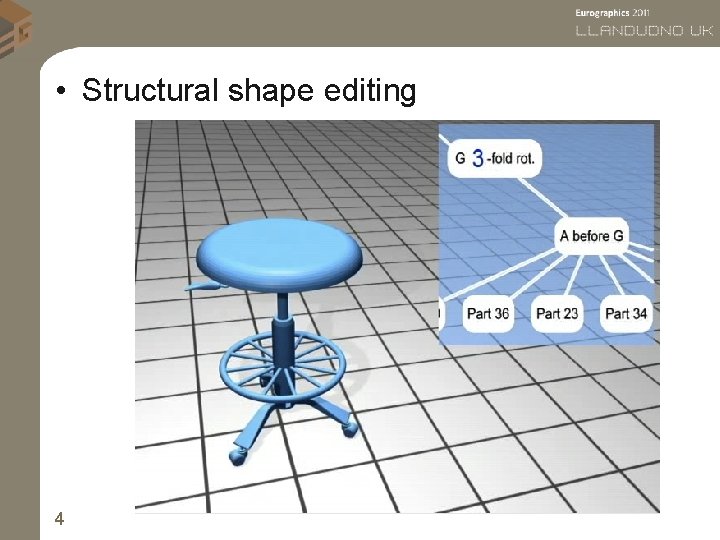
• Structural shape editing 4
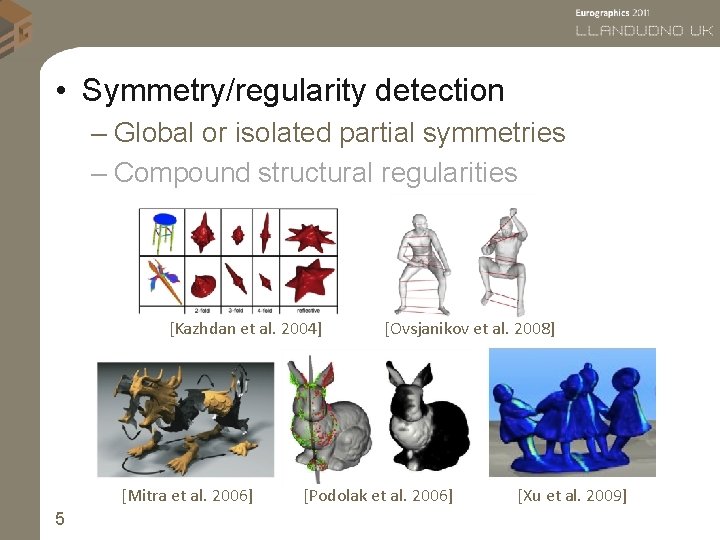
• Symmetry/regularity detection – Global or isolated partial symmetries – Compound structural regularities [Kazhdan et al. 2004] [Mitra et al. 2006] 5 [Ovsjanikov et al. 2008] [Podolak et al. 2006] [Xu et al. 2009]
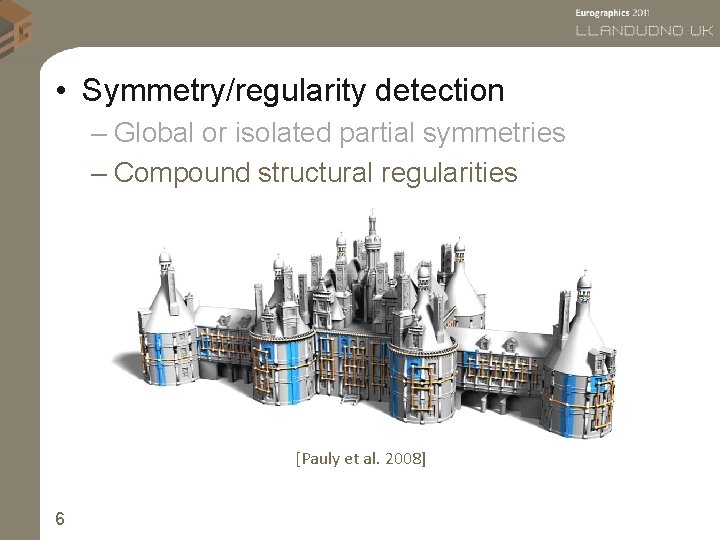
• Symmetry/regularity detection – Global or isolated partial symmetries – Compound structural regularities [Pauly et al. 2008] 6
![• Symmetry-aware processing [Podolak et al. 2006] 7 [Gal et al. 2009] [Xu](http://slidetodoc.com/presentation_image_h/c7ee0c29fe6644704145daab08c01af7/image-7.jpg "• Symmetry-aware processing [Podolak et al. 2006] 7 [Gal et al. 2009] [Xu")
• Symmetry-aware processing [Podolak et al. 2006] 7 [Gal et al. 2009] [Xu et al. 2009] [Mitra et al. 2010]
![• Symmetry-based hierarchical structures – Structuring 3 D geometry [Martinet 2007] 8](http://slidetodoc.com/presentation_image_h/c7ee0c29fe6644704145daab08c01af7/image-8.jpg "• Symmetry-based hierarchical structures – Structuring 3 D geometry [Martinet 2007] 8")
• Symmetry-based hierarchical structures – Structuring 3 D geometry [Martinet 2007] 8
![• Symmetry-based hierarchical structures – Folding meshes [Simari et al. 2006] 9](http://slidetodoc.com/presentation_image_h/c7ee0c29fe6644704145daab08c01af7/image-9.jpg "• Symmetry-based hierarchical structures – Folding meshes [Simari et al. 2006] 9")
• Symmetry-based hierarchical structures – Folding meshes [Simari et al. 2006] 9
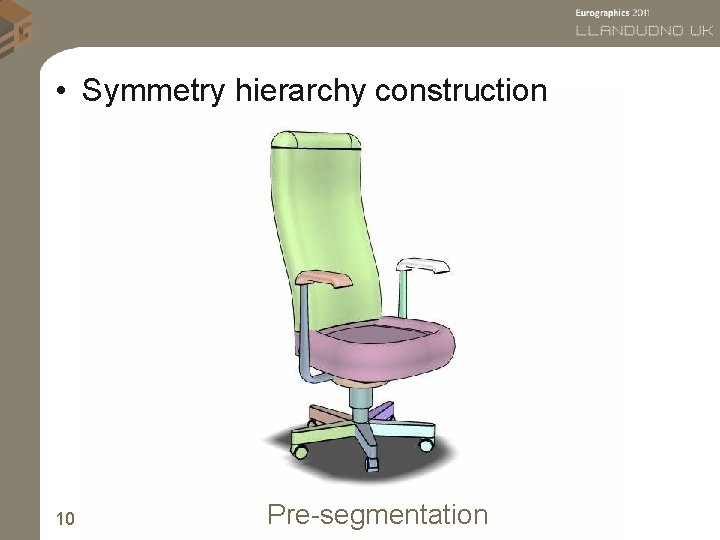
• Symmetry hierarchy construction 10 Pre-segmentation
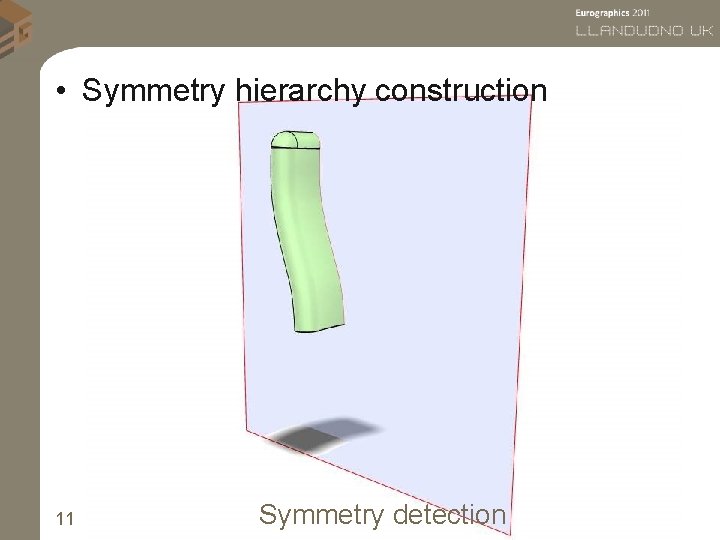
• Symmetry hierarchy construction 11 Symmetry detection
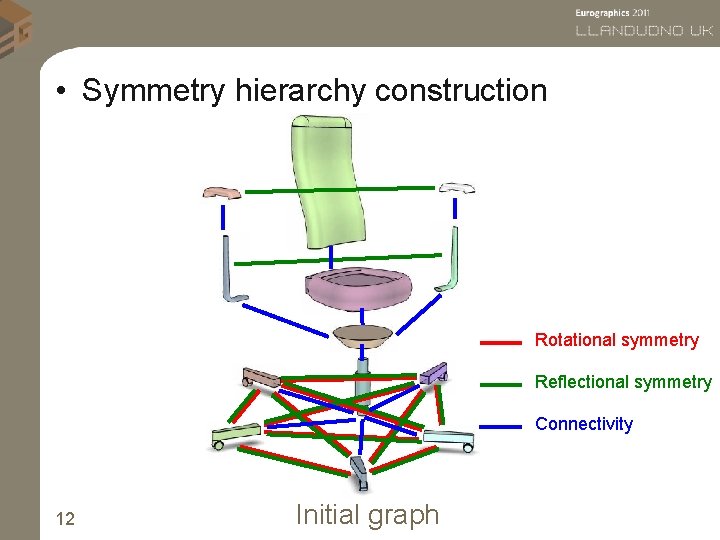
• Symmetry hierarchy construction Rotational symmetry Reflectional symmetry Connectivity 12 Initial graph
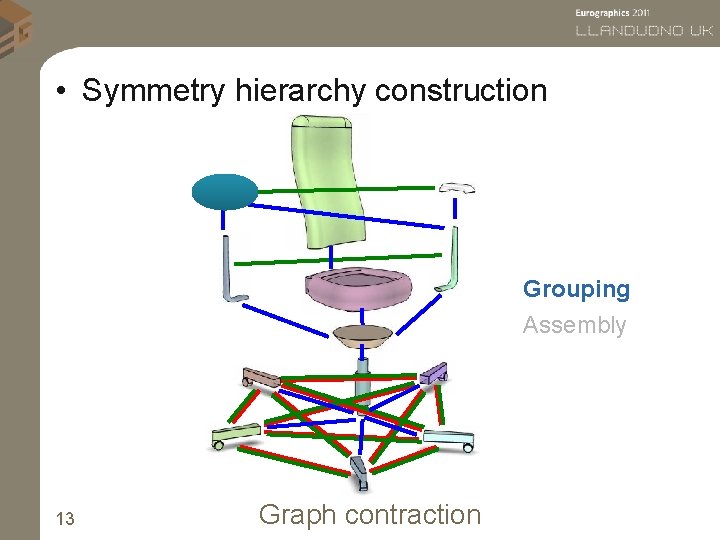
• Symmetry hierarchy construction Grouping Assembly 13 Graph contraction
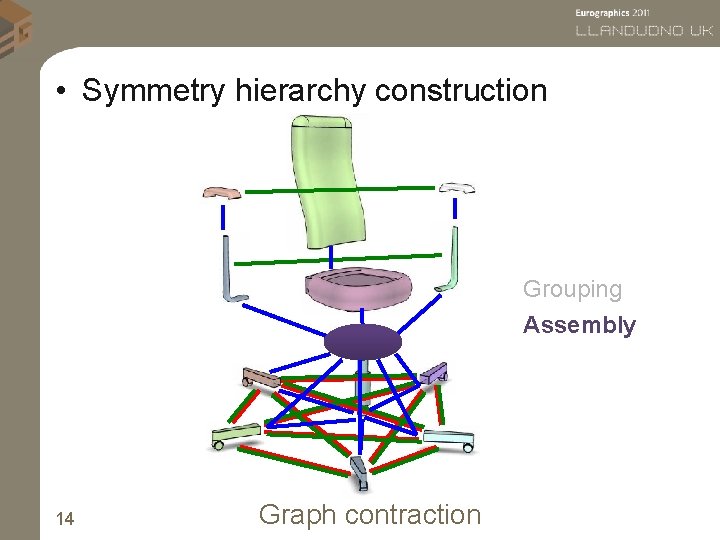
• Symmetry hierarchy construction Grouping Assembly 14 Graph contraction
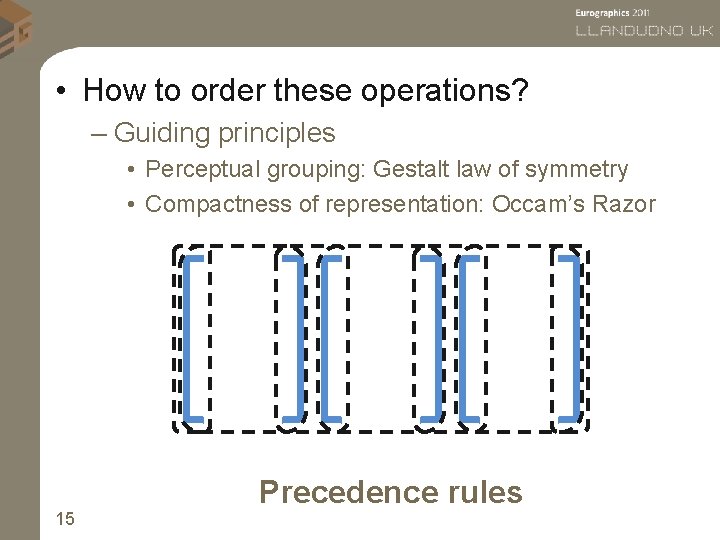
• How to order these operations? – Guiding principles • Perceptual grouping: Gestalt law of symmetry • Compactness of representation: Occam’s Razor 15 Precedence rules
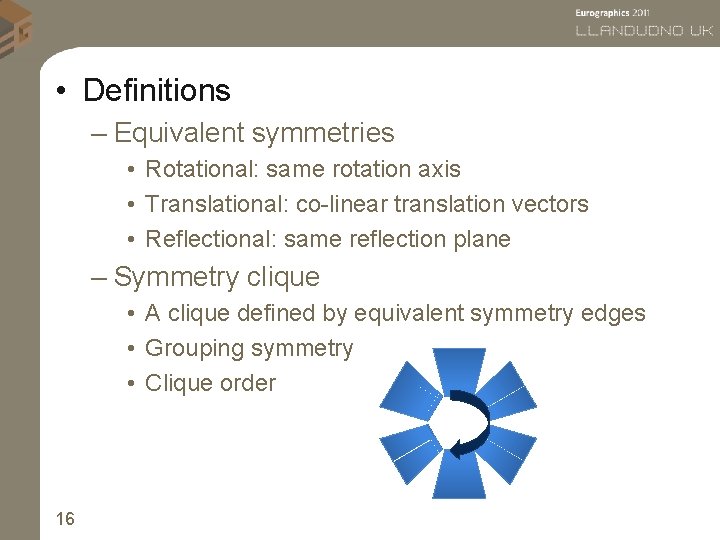
• Definitions – Equivalent symmetries • Rotational: same rotation axis • Translational: co-linear translation vectors • Reflectional: same reflection plane – Symmetry clique • A clique defined by equivalent symmetry edges • Grouping symmetry • Clique order 16
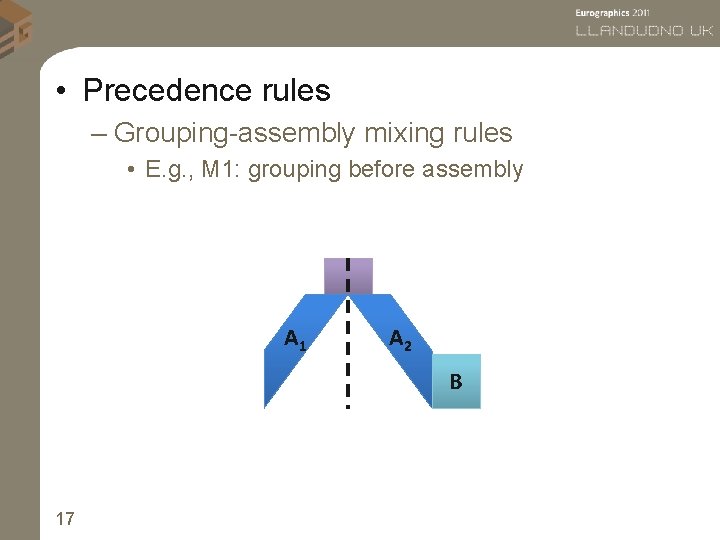
• Precedence rules – Grouping-assembly mixing rules • E. g. , M 1: grouping before assembly A 1 A 2 B 17
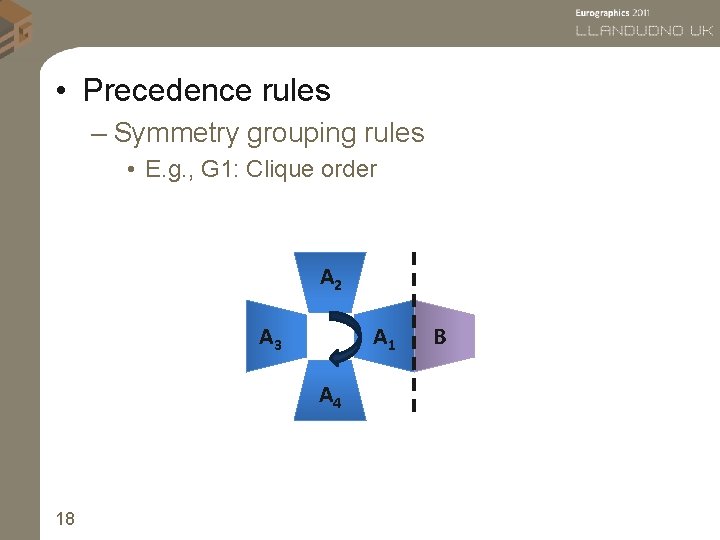
• Precedence rules – Symmetry grouping rules • E. g. , G 1: Clique order A 2 A 3 A 1 A 4 18 B
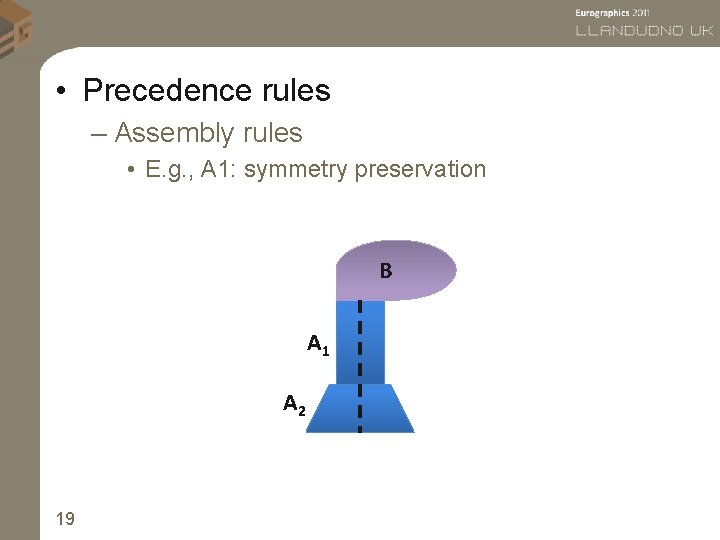
• Precedence rules – Assembly rules • E. g. , A 1: symmetry preservation B A 1 A 2 19
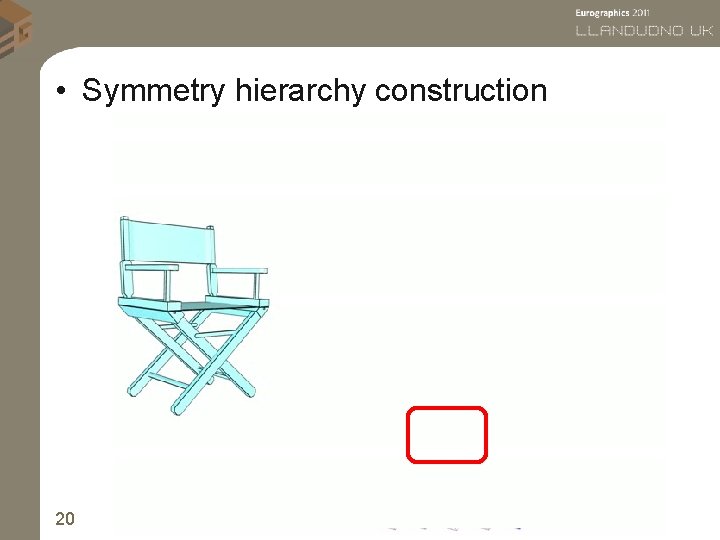
• Symmetry hierarchy construction 20
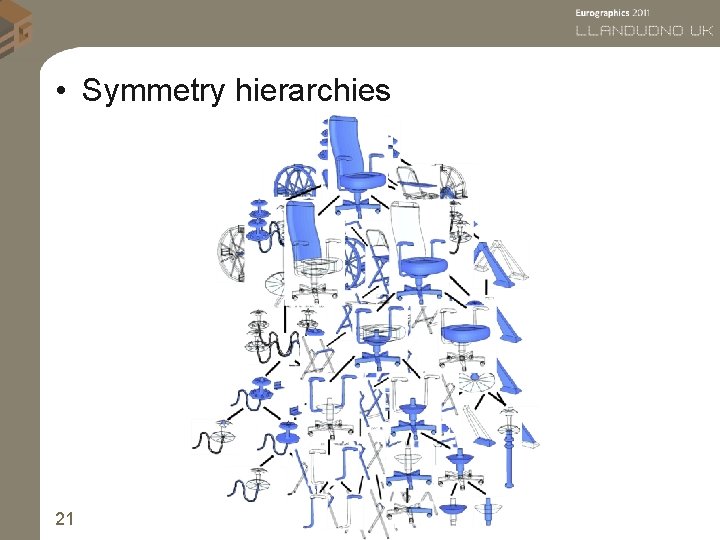
• Symmetry hierarchies 21
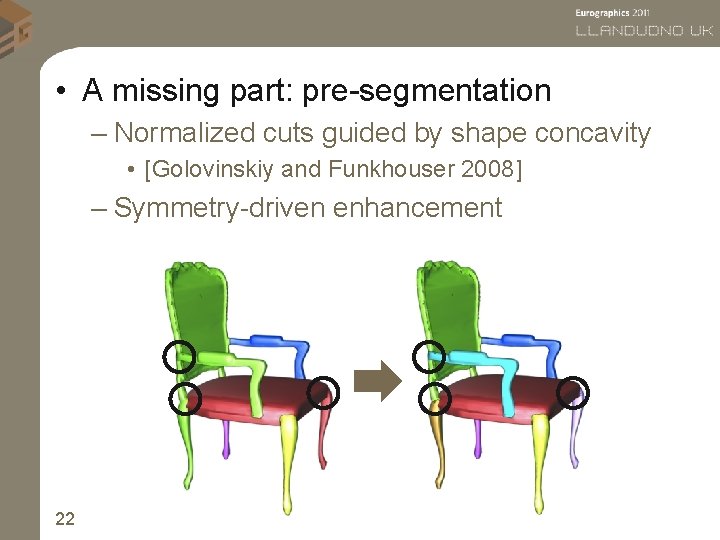
• A missing part: pre-segmentation – Normalized cuts guided by shape concavity • [Golovinskiy and Funkhouser 2008] – Symmetry-driven enhancement 22
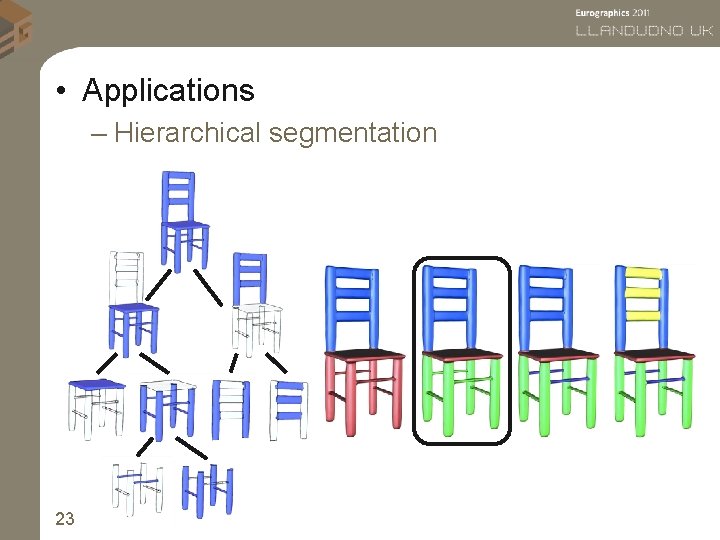
• Applications – Hierarchical segmentation 23
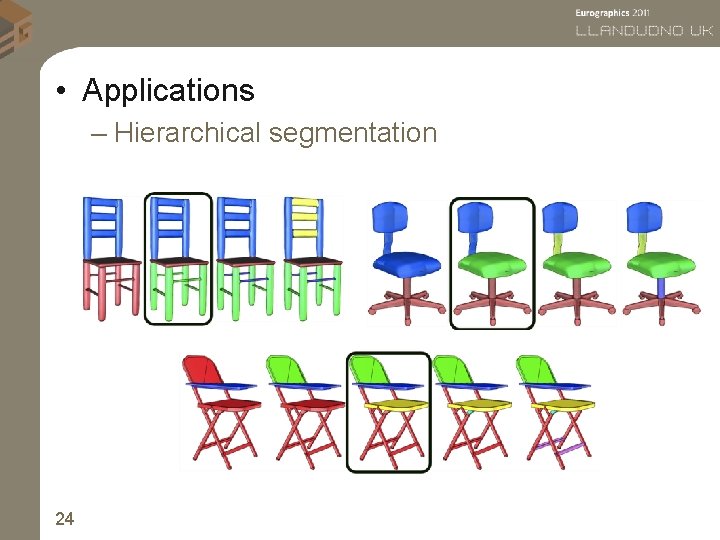
• Applications – Hierarchical segmentation 24
• Applications – Structural shape editing • Editing of man-made objects: semantics-aware • Two modes – Part structure geometry (CAD/CAM design systems) – Geometry part structure (i. Wires [Gal et al. 2009]) • Symmetry hierarchy: suited for both – Structural view – Geometric view 25
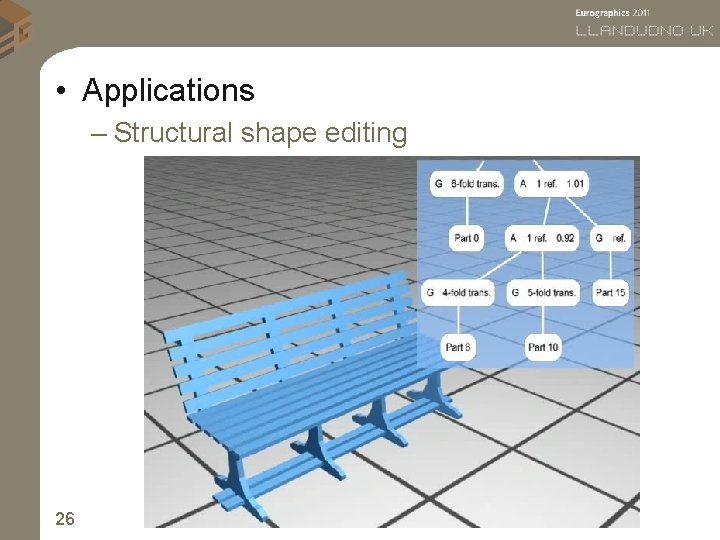
• Applications – Structural shape editing 26
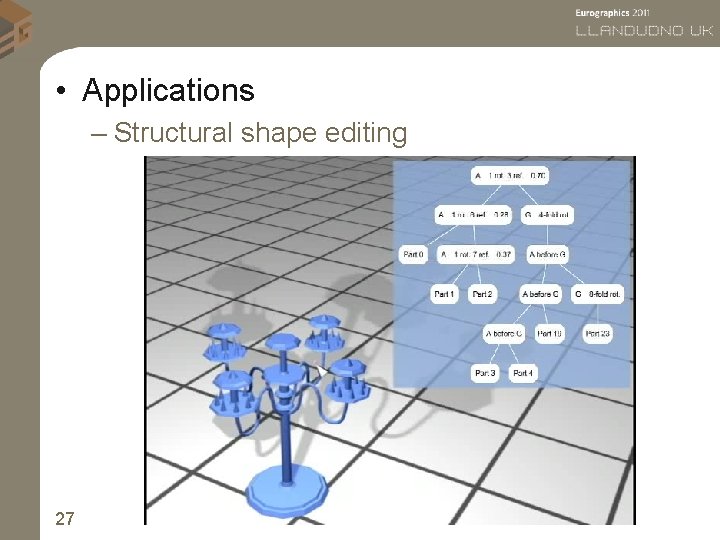
• Applications – Structural shape editing 27
• Conclusion – Contribution: • Symmetry hierarchy and its construction – A preliminary step towards high-level analysis of man-made shapes • An intermediate representation between low-level representation and functional shape analysis 28
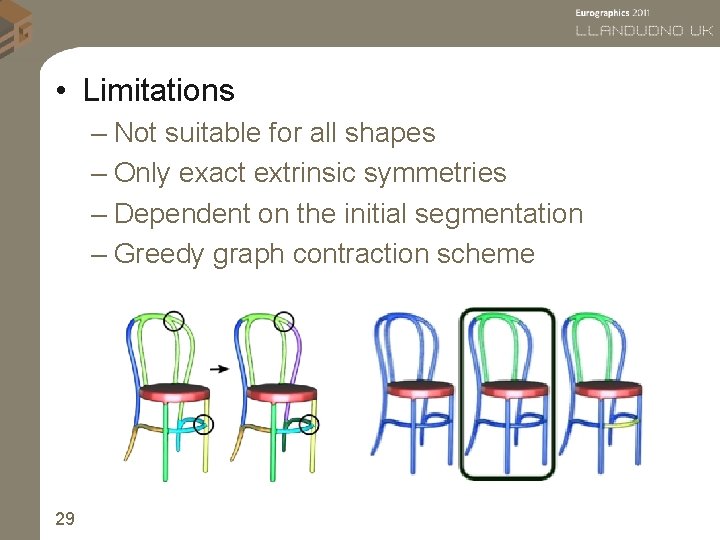
• Limitations – Not suitable for all shapes – Only exact extrinsic symmetries – Dependent on the initial segmentation – Greedy graph contraction scheme 29
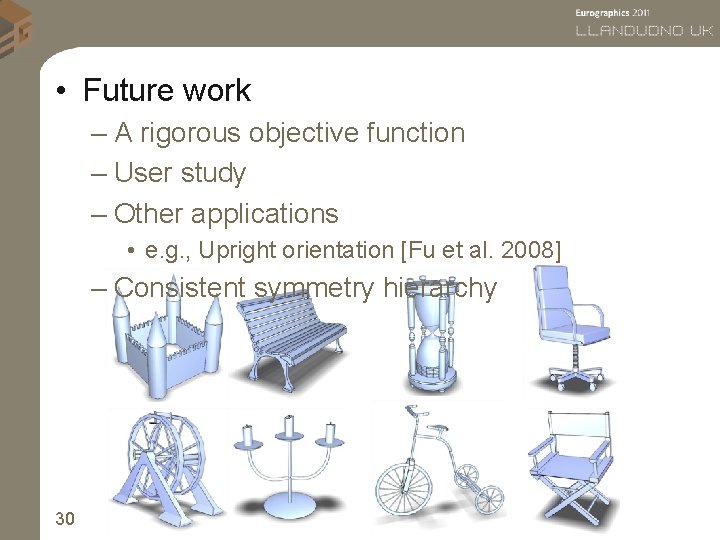
• Future work – A rigorous objective function – User study – Other applications • e. g. , Upright orientation [Fu et al. 2008] – Consistent symmetry hierarchy 30

• Acknowledgement • • Anonymous reviewers Code and model help: Oliver van Kaick, Kun Liu Fruitful discussions: Daniel Cohen-Or Fundings: NSERC (Canada), the Israel Ministry of Science and Education, the Israel Science Foundation, NSF China, the Research Fund for the Doctoral Program of Higher Education (China), and the China Scholarship Council • Mesh models: the Princeton Shape Benchmark, SHREC’ 09, and Ran Gal 31
Thank you! Project page: http: //www. computer-graphics. cn/~eric/symh. html
- Slides: 32