
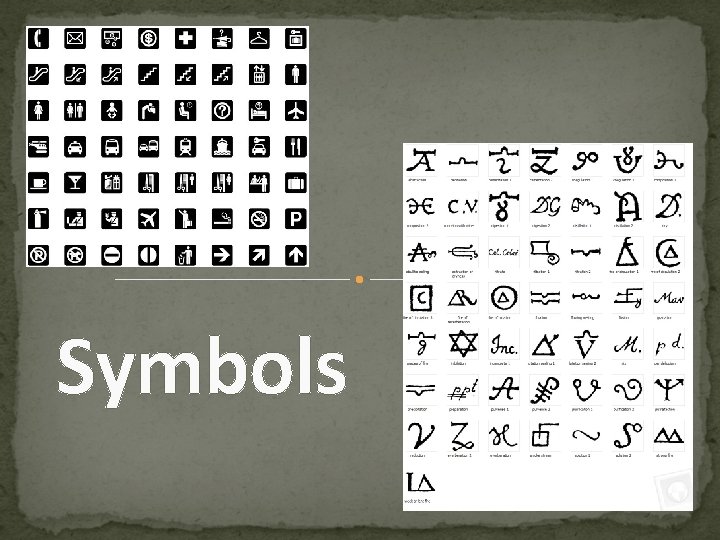
Symbols As you look at the following symbols
Symbols

As you look at the following symbols, think about: �What does each symbol represent? �What message is it trying to tell you? �Why is this symbol important?

Nose Creek �What symbols can you find at NCS? �What does that tell you about what we value? �How do we create meaning from symbols?
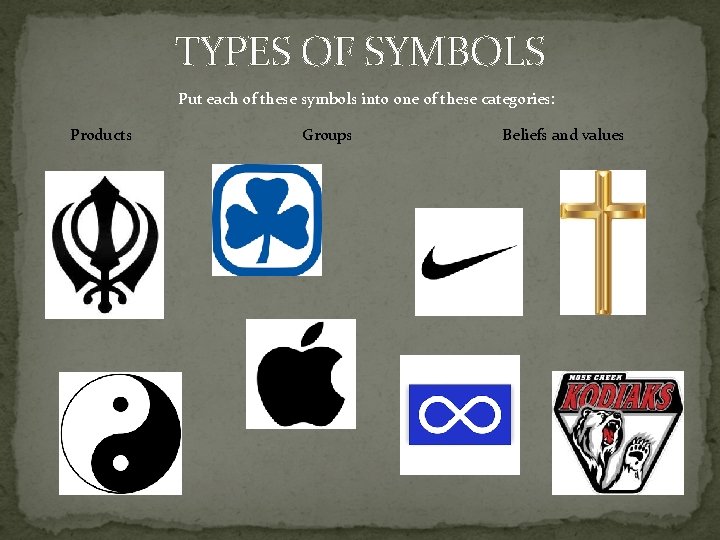
TYPES OF SYMBOLS Put each of these symbols into one of these categories: Products Groups Beliefs and values
�How do symbols represent our identity? �Can you think of a symbol that could be used to represent all students of the class? �Would this symbol reflect shared beliefs or values or merely the fact that you are classmates? �How would the symbol differ if it reflected shared beliefs or values instead of being for classmates?
COLLECTIVE IDENTITY �People have individual characteristics but also share aspects of their identity with others. Those aspects we share with others are often reflected in symbols that express a collective identity. �A collective identity is a shared belief system that often includes the same language, culture, values, and attitudes.
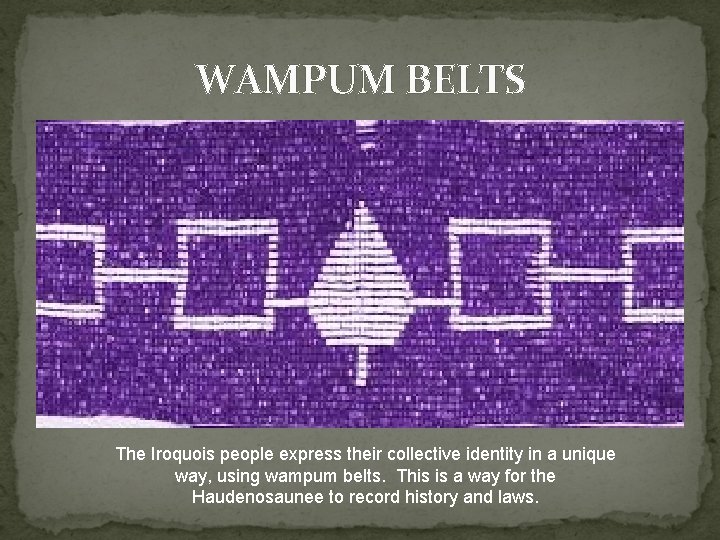
WAMPUM BELTS The Iroquois people express their collective identity in a unique way, using wampum belts. This is a way for the Haudenosaunee to record history and laws.
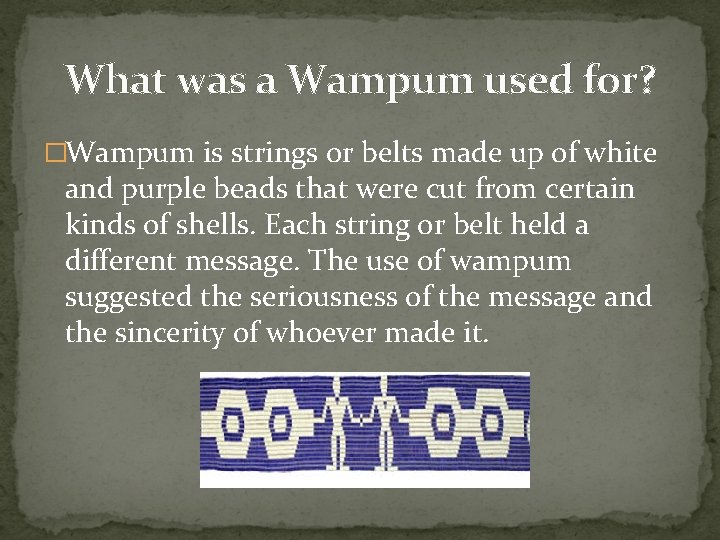
What was a Wampum used for? �Wampum is strings or belts made up of white and purple beads that were cut from certain kinds of shells. Each string or belt held a different message. The use of wampum suggested the seriousness of the message and the sincerity of whoever made it.
When was a wampum belt used? �http: //www. wampumshop. com/1594. html
Primary Sources �A wampum belt is an example of a primary source �Primary sources provide information that is direct from the source and the time period – it is not passed along second hand
The Great Law of Peace � The Great Law of Peace is a constitution of the Iroquois. It describes principles of good living and tells how the Confederacy should be organized and run. The Great Law of Peace is so long that it would take days to recite the whole thing. In order to help them remember the Great Law, the Iroquois used wampum belts. � A wampum keeper was responsible for caring for the wampum and reading it. The reader would pass his hands along the belt, bead by bead, using their texture to remind him of the events or treaties it recorded. Wampum keepers were chosen by the clan and trained from a young age—younger than you are now—to remember the information on the belt and tell it in a dramatic and poetic way. Iroquois women made the wampum belts.

The Hiawatha Wampum
� The Hiawatha wampum is one of many belts and strings that describe the Great Law. � It is a national belt of the Haudenosaunee. � The belt is named after Hiawatha, the Peacemaker’s helper. � Here are the meanings of the symbols on the Hiawatha Wampum: � From left to right, the five images represent the Mohawk, Oneida, Onondaga, Cayuga, and Seneca Nations and their territories. The Onondaga symbol in the centre also represents the Tree of Peace. � The lines joining the five images show the connection of the five nations to one another. � The two lines extending out from the squares at the two ends of the belt are the Path of Peace by which other nations are welcomed to join the Confederacy. � The white colour symbolizes that no evil or jealous thought shall creep into the minds of the chiefs while in Council under the Great Peace. White, the emblem of peace, love, charity and equity surrounds and guards the Five Nations.
�Each square represents a nation and the line connects each nation in peace. �The center symbol represents Onondaga. Here the peacemaker planted the Tree of Peace. Under this tree the leaders buried their weapons of war beneath it. Then the Peacemaker set forth a method for the Haudenosaunee to gather as one to think about decisions concerning the Haudenosaunee. The Peacemaker set the council fire at Onondaga. At Onondaga is where the nation leaders will meet. He then used the symbolism of the longhouse in the belt. To the west, he named the Senecas as our Western Doorkeepers and the east the Mohawks the Keepers of the Eastern door. As for the Onondagas, he named them the Firekeepers. They are entrusted ensure that the council fire of the Haudenosaunee continues on.
What is wampum? �https: //www. youtube. com/watch? v=Byz. Af. NXUb. EQ
Create your own symbol What is the criteria for a powerful symbol? � inclusive—represents most or all of the group � recognizable � connects to important beliefs and values Create a representative symbol that represents the collective identity of a group to which you belong. The group may be a sports team, a club, a religious group or another group with whom the students share a set of values, beliefs or interests. � Sketch the symbol in your visual journal � Write a paragraph explaining your symbol – What is your symbol? Why did you choose it? How does it represent your group and their collective identity?
- Slides: 22