
Symbiosis Our goal for today is to answer

Symbiosis
Our goal for today is to answer these questions: What is symbiosis? What are the different kinds of symbiosis? What are some examples of symbiosis?
What is symbiosis? the act of living together
Symbiosis What it means: Two organisms that live together At least one of the organisms benefits from the relationship
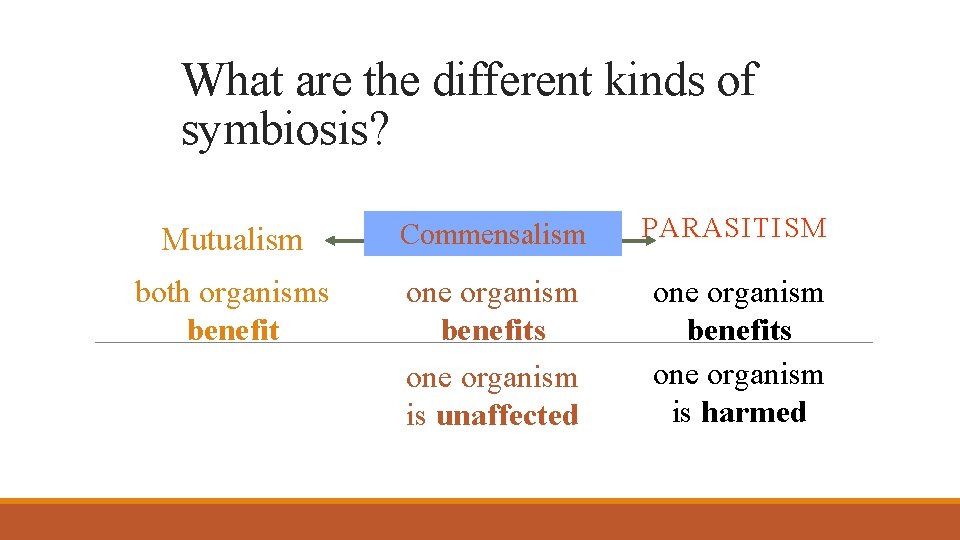
What are the different kinds of symbiosis? Mutualism Commensalism PARASITISM both organisms benefit one organism benefits one organism is unaffected one organism benefits one organism is harmed
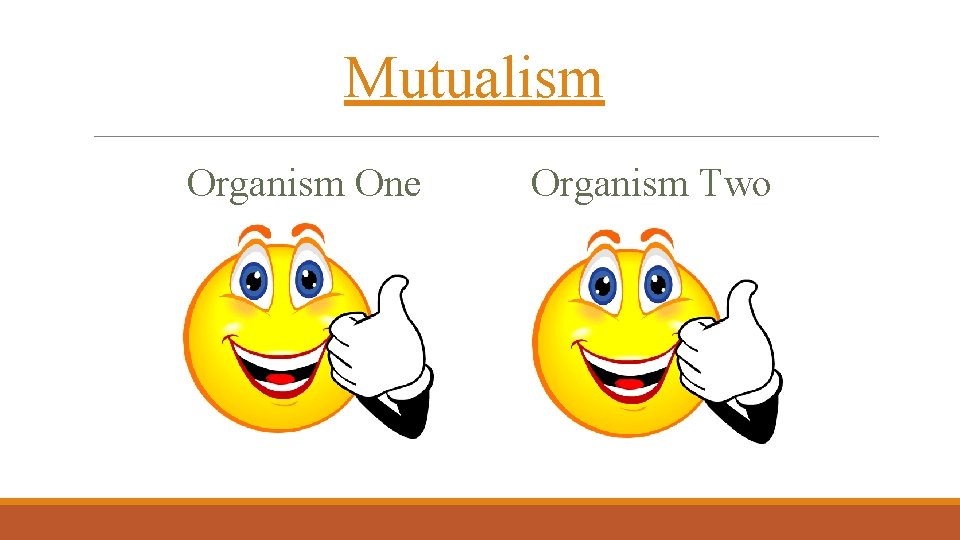
Mutualism Organism One Organism Two
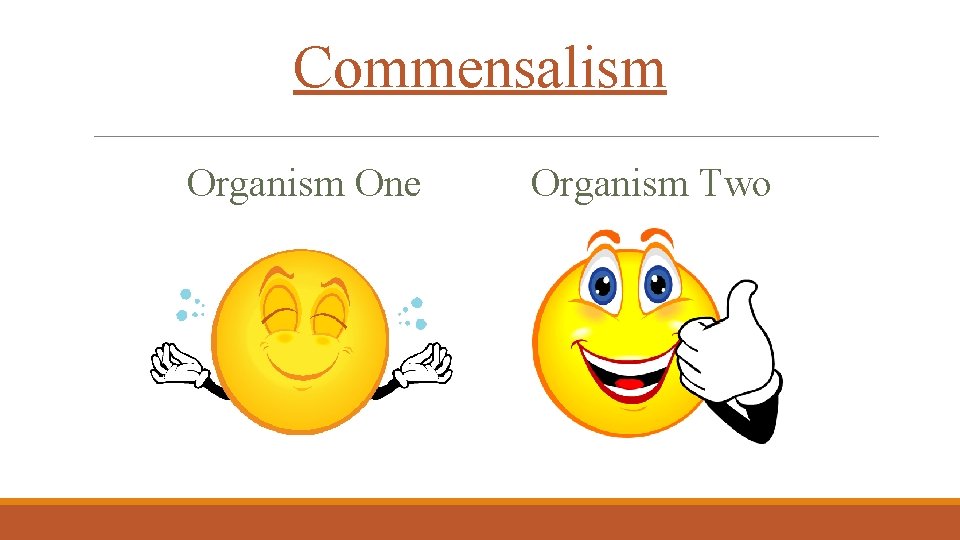
Commensalism Organism One Organism Two
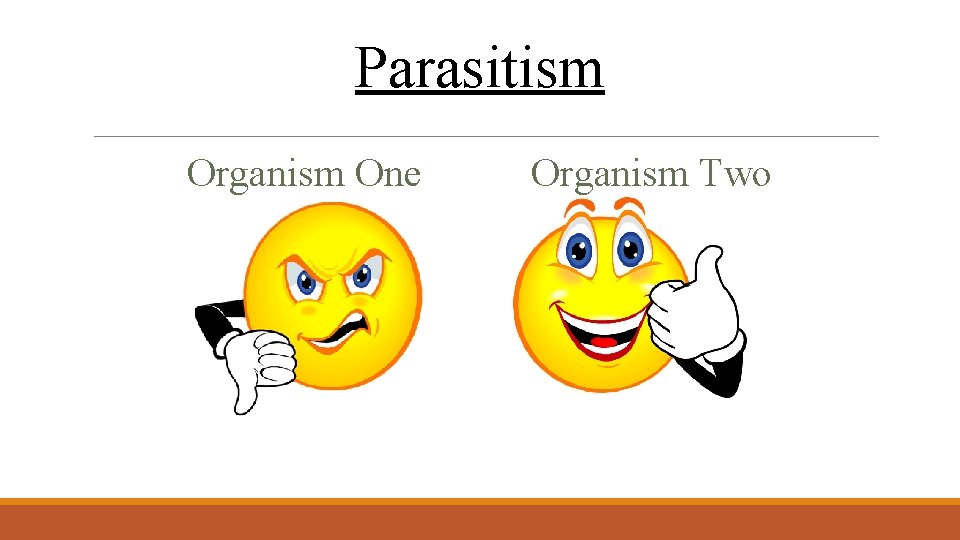
Parasitism Organism One Organism Two
PREDATOR an organism that kills and eats another food
PREY an organism that is killed and eaten by another organism.
COMPETITION occurs when two or more organisms or populations try to use the same resource (i. e. food, water, space, etc. )
Symbiosis – a close, long-term association between two or more species Predator – an organism that kills and eats another food Prey – an organism that is killed and eaten by another organism. Competition – occurs when two or more organisms or populations try to use the same resource (i. e. food, water, space, etc. ) Mutualism – a relationship between two species in which both species benefit Commensalism – a relationship between two organisms in which one organism benefits and the other is unaffected. Parasitism – a relationship between two species in which one species, the parasite, benefits from the other species, the host, which is harmed.
OPENING ACTIVITY: VIDEO CLIP http: //nationalgeographic. org/activity/ecologicalrelationships/
FISH THIEVES TAKE RARE SEALS’ PREY • What is the ecological relationship between the monk seal and the octopus/eel/trigger fish? • Predator/prey
FISH THIEVES TAKE RARE SEALS’ PREY • What is the ecological relationship between the monk seal and the jacks/sharks? • Competition
FISH THIEVES TAKE RARE SEALS’ PREY • What are the benefits of studying animal behavior and ecological interactions without interference by human observers? • Crittercam allows researchers to examine the behavior and interactions of marine species that they normally would be unable to observe.
CARIBBEAN CLEANERS https: //www. nationalgeographic. org/activity/ecological-relationships/ What type of symbiotic relationship was shown in the video? Mutualism
GIVING FISH A BATH https: //www. nationalgeographic. org/activity/ecological-relationships/ What type of symbiotic relationship was shown in the video? Parasitism
CLOWNFISH AND SEA ANEMONE PARTNERSHIP https: //www. nationalgeographic. org/activity/ecological-relationships/ What type of symbiotic relationship was shown in the video? Mutualism What type of symbiotic relationship was not shown in the videos? Commensalism
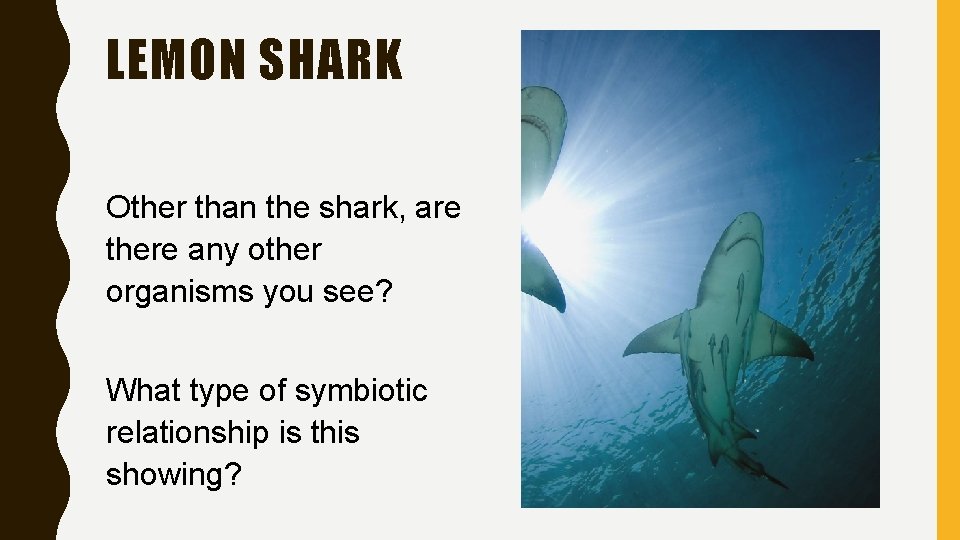
LEMON SHARK Other than the shark, are there any other organisms you see? What type of symbiotic relationship is this showing?
• This commensal relationship is why Greg Marshall, marine biologist and filmmaker, invented Crittercam. In 1986, a shark approached him during a dive near Belize. Marshall noticed a remora clinging to a shark, and as he watched the shark disappear, it occurred to him that if he could put a camera in the place of the remora, he could see the shark's behavior unfold without disturbing the shark. Using the Crittercam, Marshall learned that remoras attach themselves to predatory fish like sharks for two reasons: a free ride and protection due to hanging onto a feared predator. The shark is not affected in the process since remoras eat only leftover food from the shark.
SYMBIOTIC INTERACTIONS HANDOUT • For each description/scenario, write if it is mutualism (M), commensalism (C), or parasitism (P)

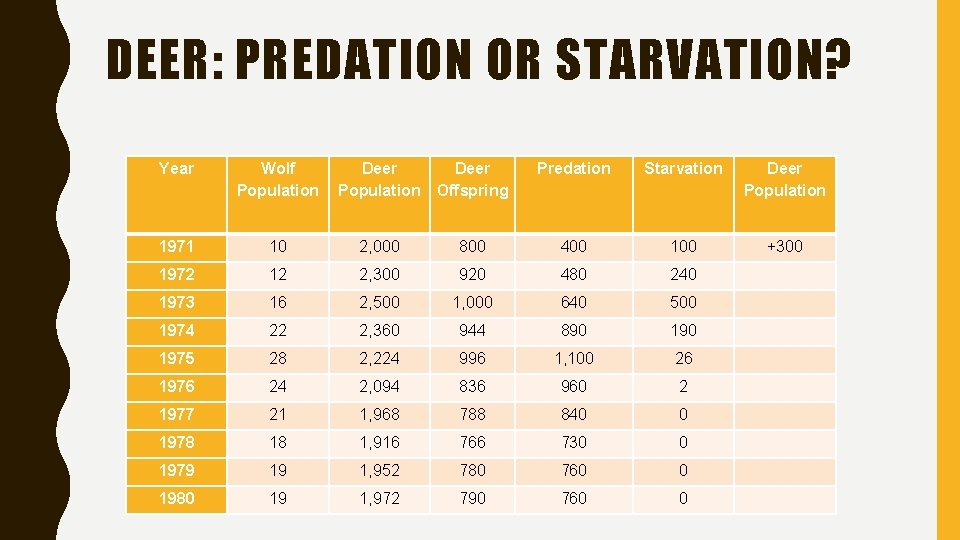
DEER: PREDATION OR STARVATION? Year Wolf Population Deer Population Offspring Predation Starvation Deer Population 1971 10 2, 000 800 400 100 +300 1972 12 2, 300 920 480 240 1973 16 2, 500 1, 000 640 500 1974 22 2, 360 944 890 1975 28 2, 224 996 1, 100 26 1976 24 2, 094 836 960 2 1977 21 1, 968 788 840 0 1978 18 1, 916 766 730 0 1979 19 1, 952 780 760 0 1980 19 1, 972 790 760 0
- Slides: 24