
SYMBIOSIS Objectives Understand the interrelationships of predation parasitism

SYMBIOSIS
Objectives • Understand the interrelationships of predation, parasitism, commensalism, and mutualism and give examples of each. • Identify examples of competition for resources, within a species, and among species
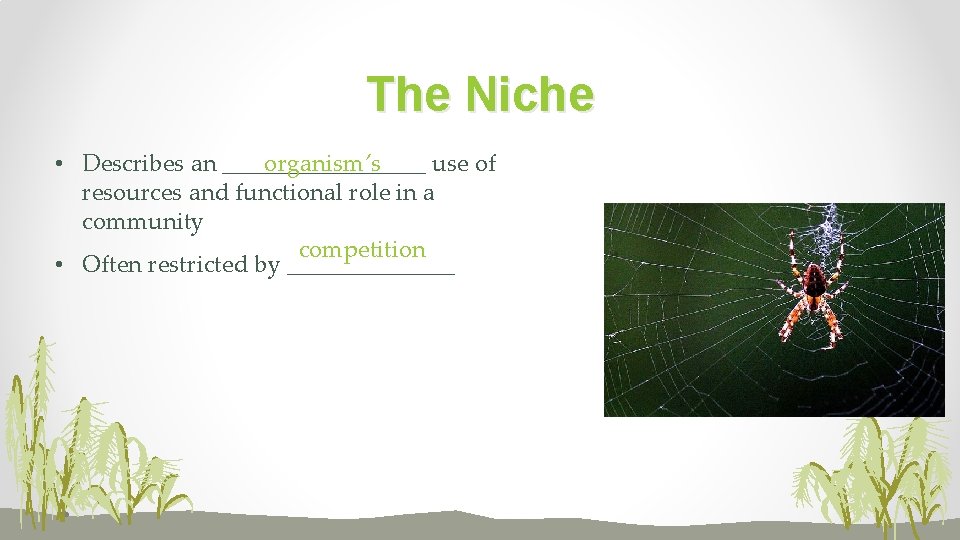
The Niche • Describes an _________ organism’s use of resources and functional role in a community competition • Often restricted by _______
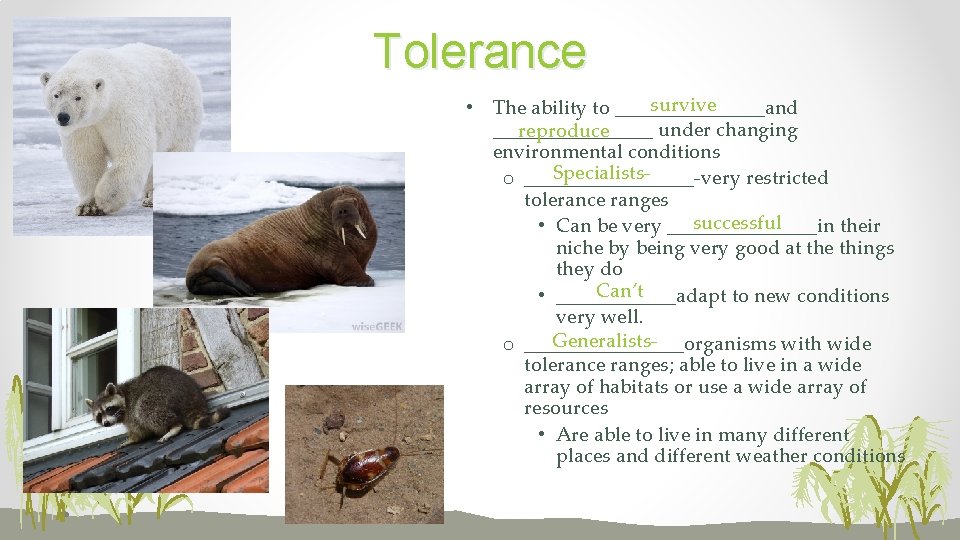
Tolerance survive • The ability to ________and ________ under changing reproduce environmental conditions Specialistso _________-very restricted tolerance ranges successful • Can be very ________in their niche by being very good at the things they do Can’t • ______adapt to new conditions very well. Generalistso ________organisms with wide tolerance ranges; able to live in a wide array of habitats or use a wide array of resources • Are able to live in many different places and different weather conditions

Coevolution • The ______by process which _____ two species evolve in response to changes in each other. o A change in one species is usually followed by a change in another.
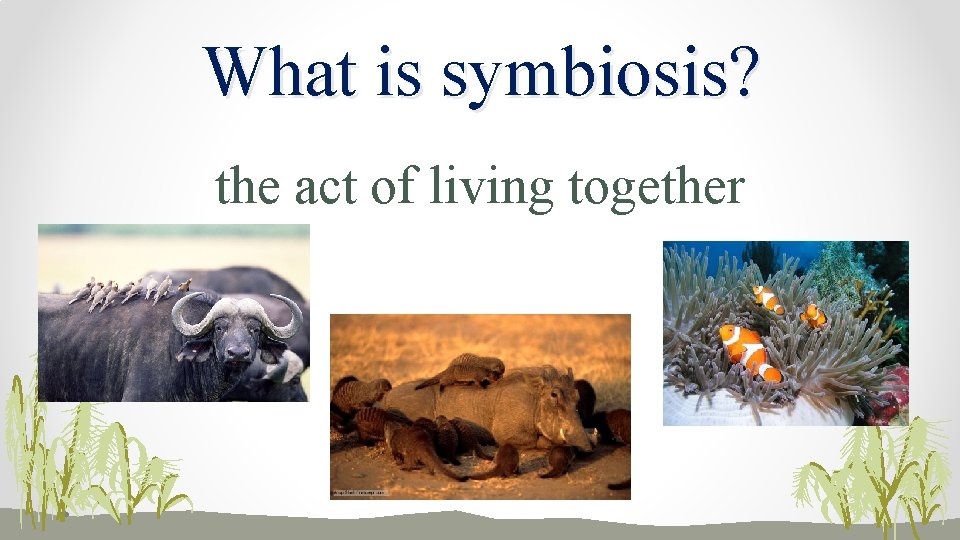
What is symbiosis? the act of living together
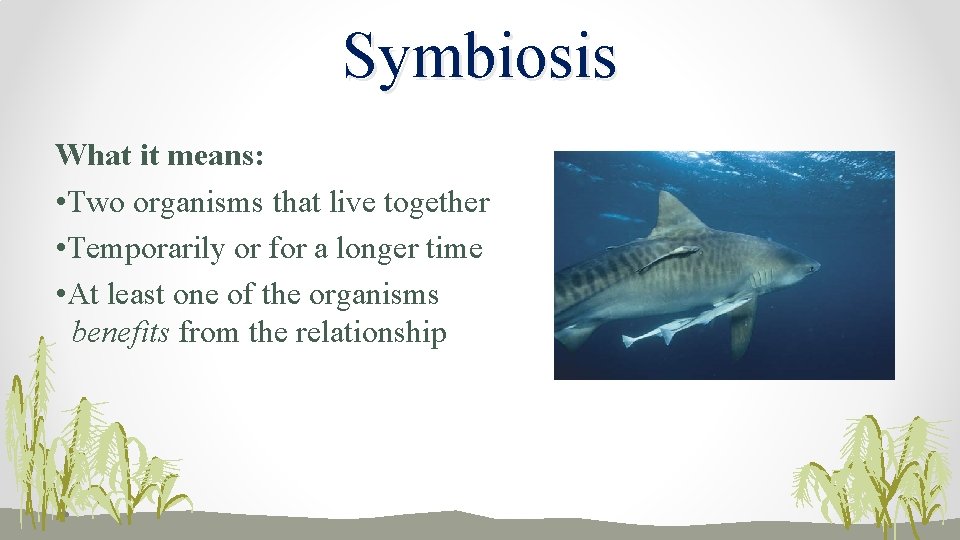
Symbiosis What it means: • Two organisms that live together • Temporarily or for a longer time • At least one of the organisms benefits from the relationship
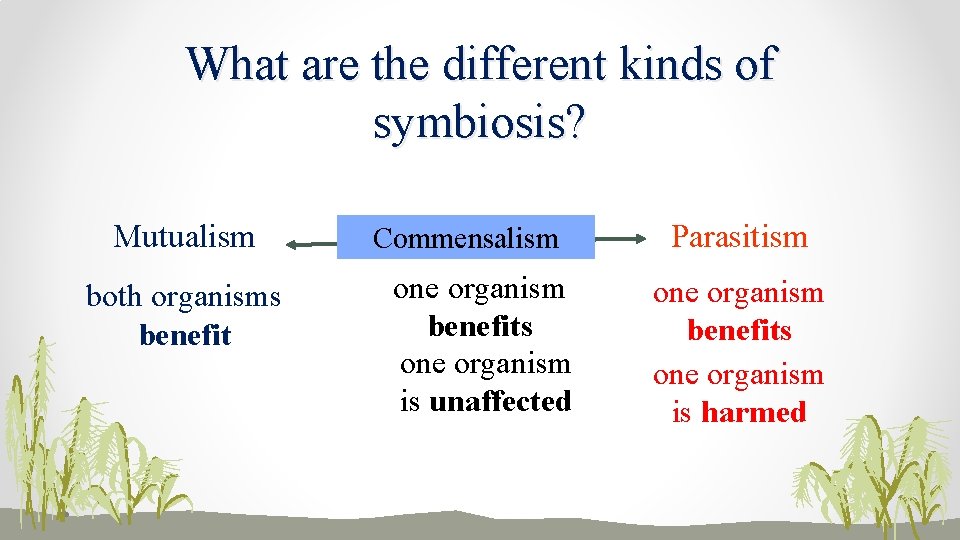
What are the different kinds of symbiosis? Mutualism both organisms benefit Commensalism one organism benefits one organism is unaffected Parasitism one organism benefits one organism is harmed

Parasitism and Herbivory (+/–) relies on another (the host) • _______: Parasitism One organism (the parasite) ____ for nourishment or for some other benefit • A long lasting and physically close relationship in which at least one organism benefits is called symbiosis. Herbivory An animal feeding on a plant • _______:
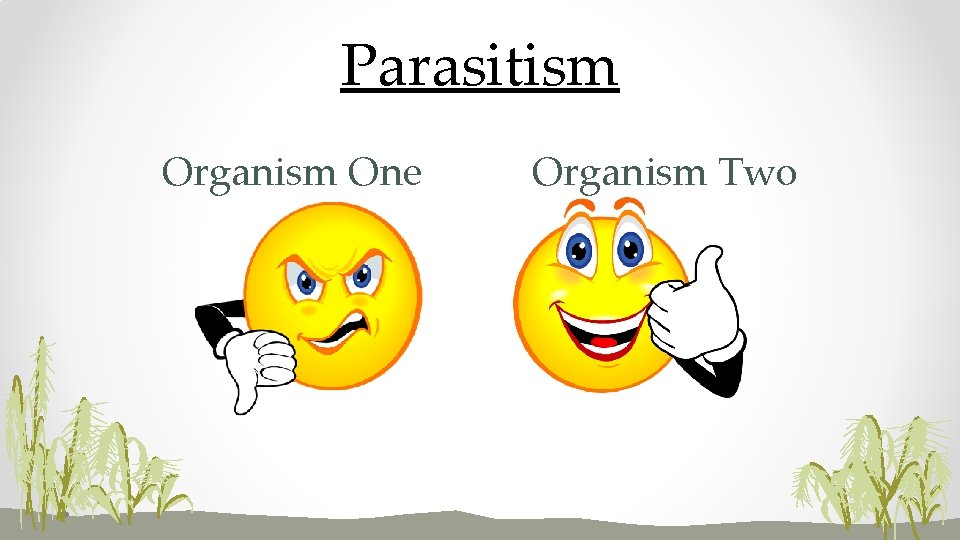
Parasitism Organism One Organism Two
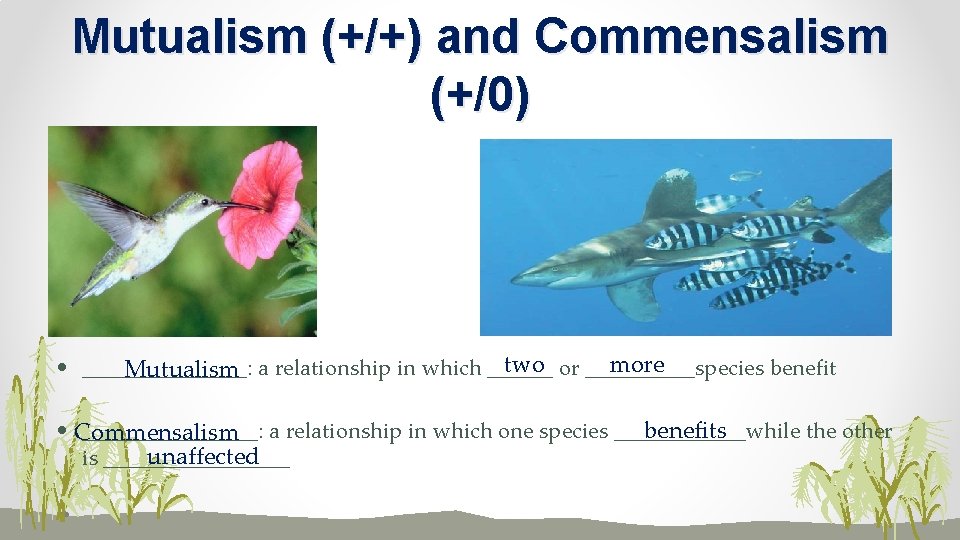
Mutualism (+/+) and Commensalism (+/0) two or _____species more • ________: benefit Mutualism a relationship in which ______ benefits • Commensalism ________: a relationship in which one species ______while the other unaffected is _________
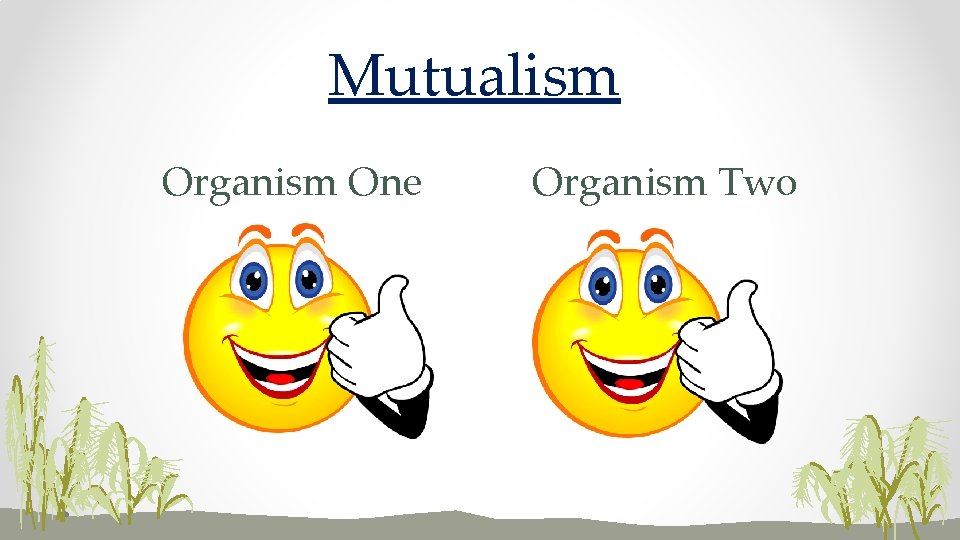
Mutualism Organism One Organism Two
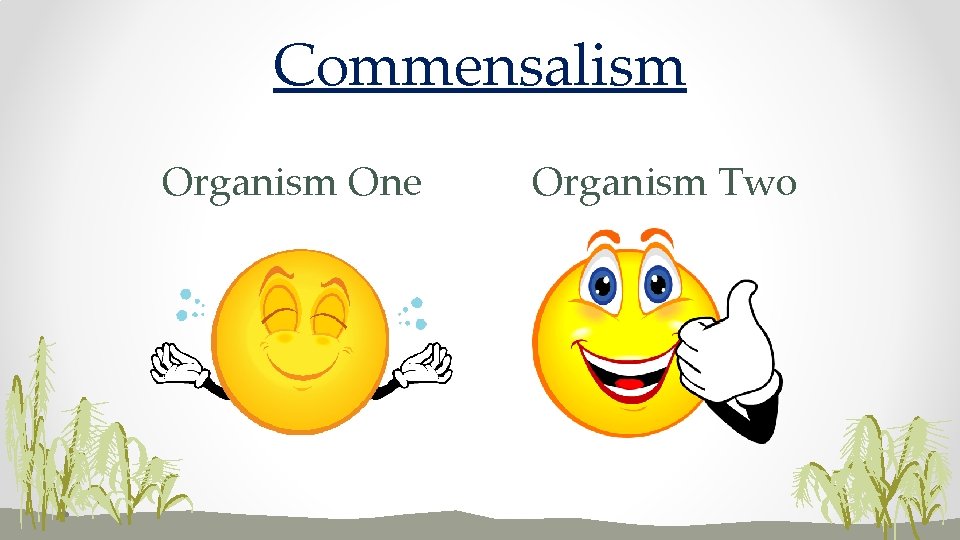
Commensalism Organism One Organism Two
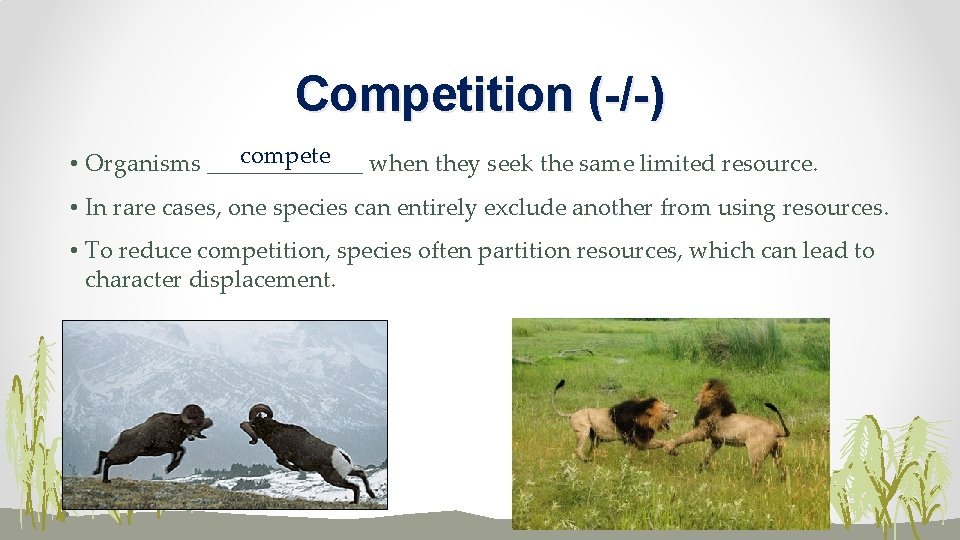
Competition (-/-) compete • Organisms _______ when they seek the same limited resource. • In rare cases, one species can entirely exclude another from using resources. • To reduce competition, species often partition resources, which can lead to character displacement.
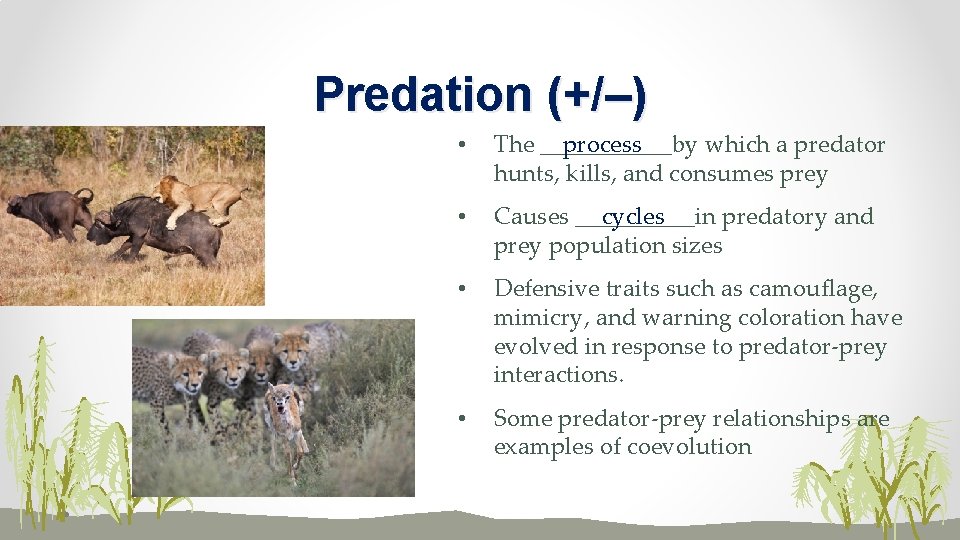
Predation (+/–) • process The ______by which a predator hunts, kills, and consumes prey • cycles Causes _____in predatory and prey population sizes • Defensive traits such as camouflage, mimicry, and warning coloration have evolved in response to predator-prey interactions. • Some predator-prey relationships are examples of coevolution
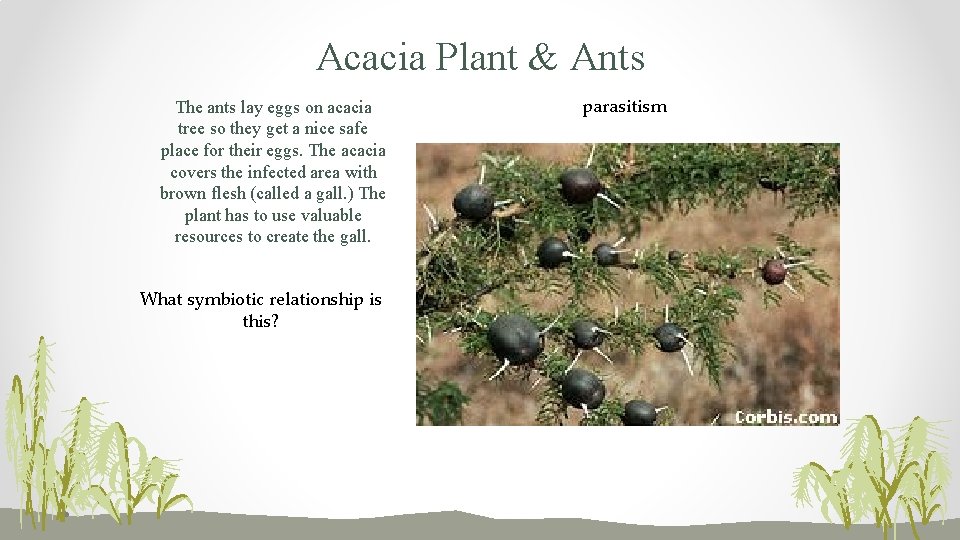
Acacia Plant & Ants The ants lay eggs on acacia tree so they get a nice safe place for their eggs. The acacia covers the infected area with brown flesh (called a gall. ) The plant has to use valuable resources to create the gall. What symbiotic relationship is this? parasitism
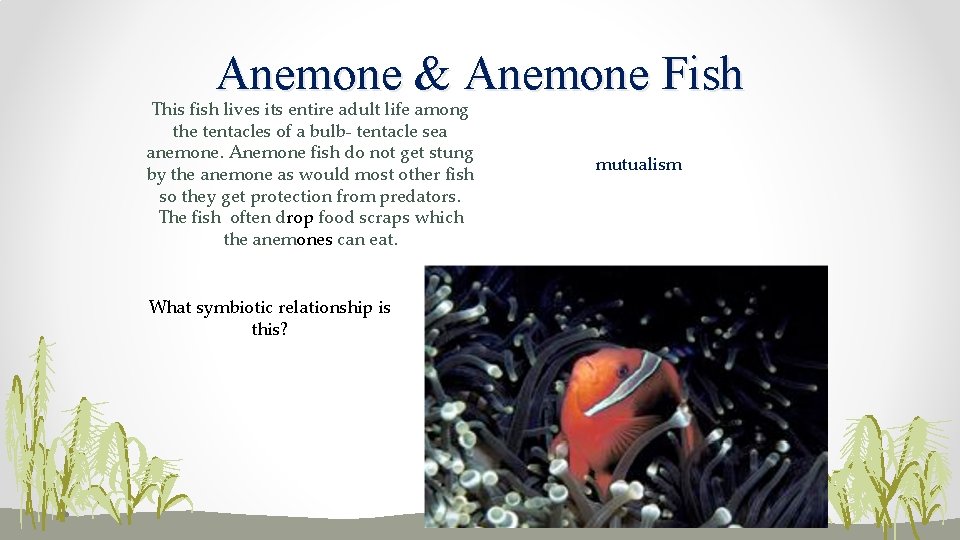
Anemone & Anemone Fish This fish lives its entire adult life among the tentacles of a bulb- tentacle sea anemone. Anemone fish do not get stung by the anemone as would most other fish so they get protection from predators. The fish often drop food scraps which the anemones can eat. What symbiotic relationship is this? mutualism
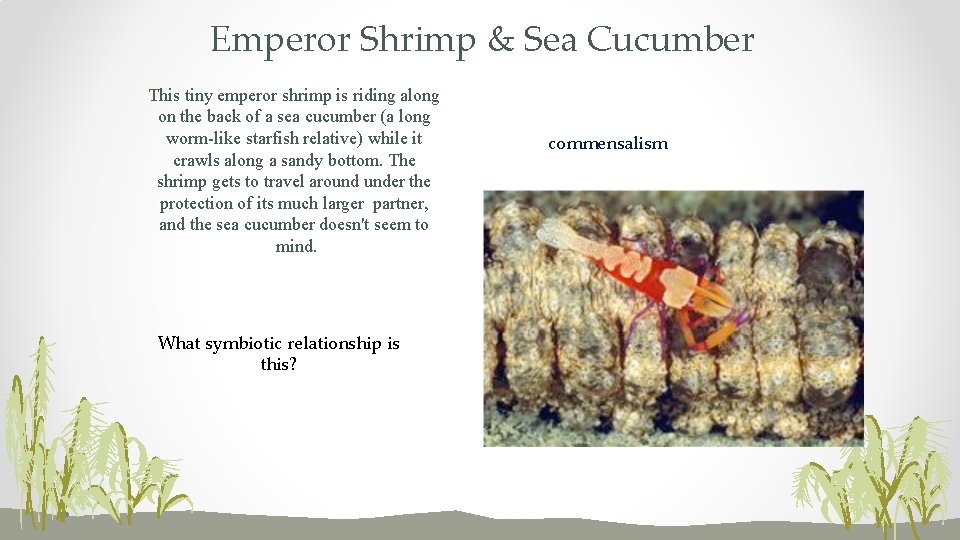
Emperor Shrimp & Sea Cucumber This tiny emperor shrimp is riding along on the back of a sea cucumber (a long worm-like starfish relative) while it crawls along a sandy bottom. The shrimp gets to travel around under the protection of its much larger partner, and the sea cucumber doesn't seem to mind. What symbiotic relationship is this? commensalism
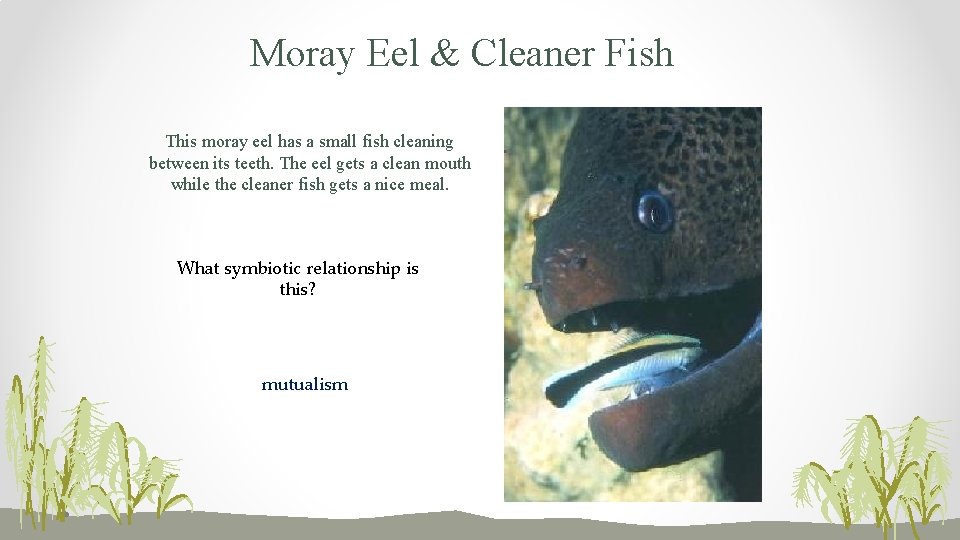
Moray Eel & Cleaner Fish This moray eel has a small fish cleaning between its teeth. The eel gets a clean mouth while the cleaner fish gets a nice meal. What symbiotic relationship is this? mutualism
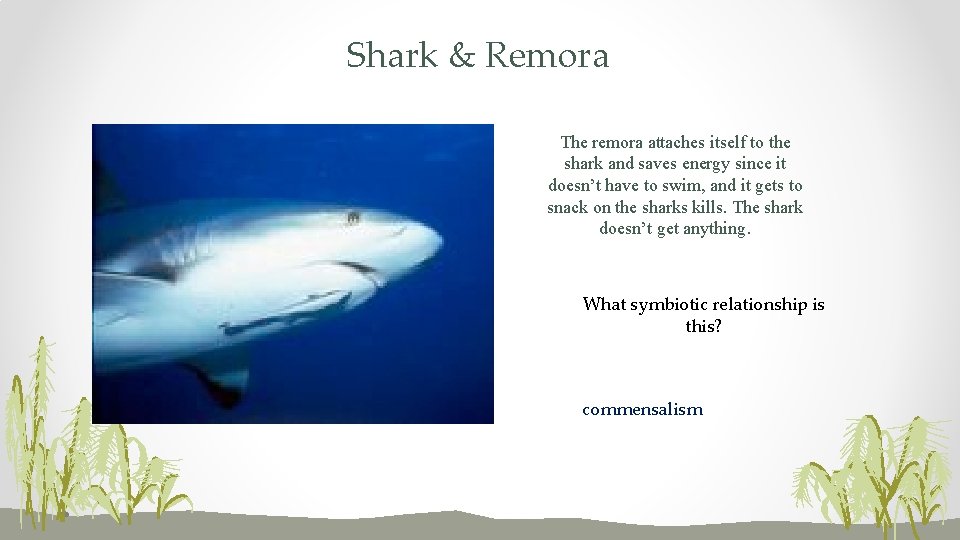
Shark & Remora The remora attaches itself to the shark and saves energy since it doesn’t have to swim, and it gets to snack on the sharks kills. The shark doesn’t get anything. What symbiotic relationship is this? commensalism
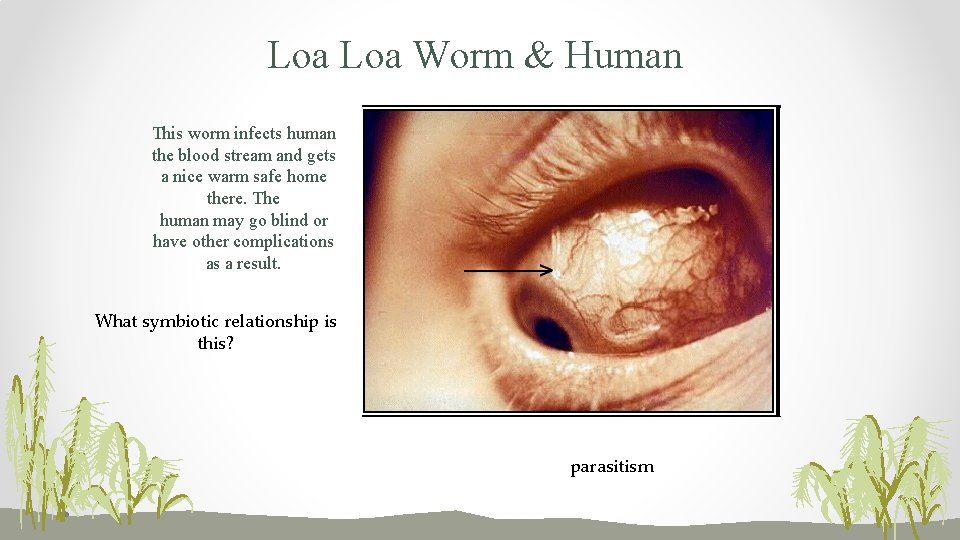
Loa Worm & Human This worm infects human the blood stream and gets a nice warm safe home there. The human may go blind or have other complications as a result. What symbiotic relationship is this? parasitism
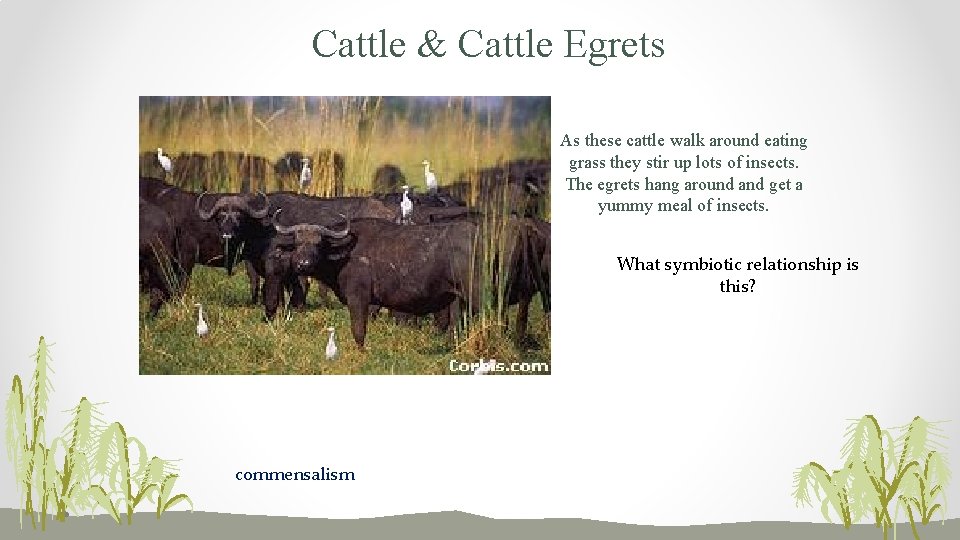
Cattle & Cattle Egrets As these cattle walk around eating grass they stir up lots of insects. The egrets hang around and get a yummy meal of insects. What symbiotic relationship is this? commensalism
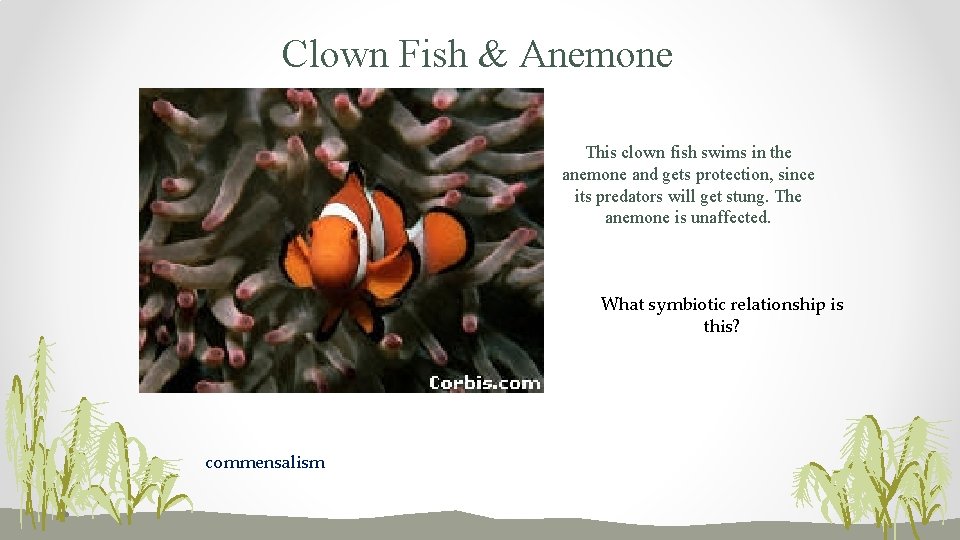
Clown Fish & Anemone This clown fish swims in the anemone and gets protection, since its predators will get stung. The anemone is unaffected. What symbiotic relationship is this? commensalism
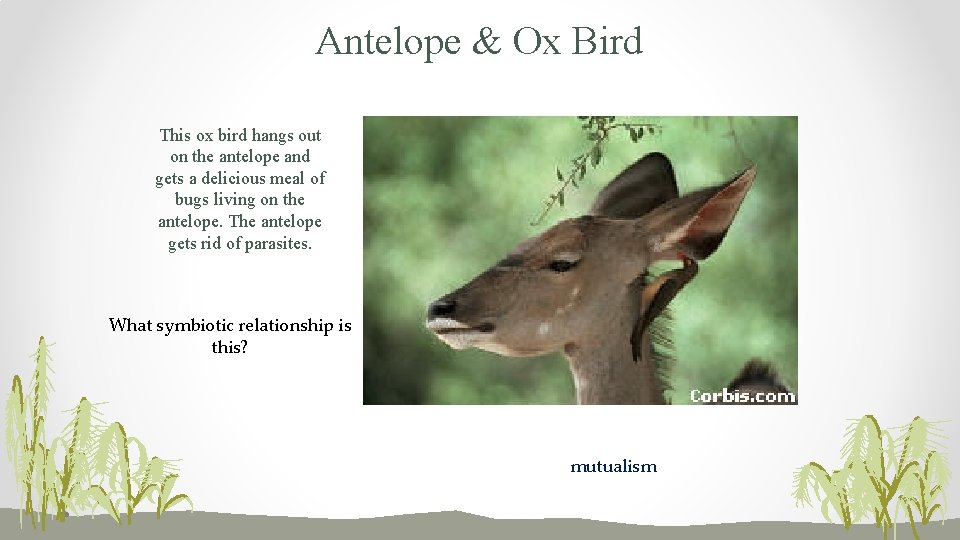
Antelope & Ox Bird This ox bird hangs out on the antelope and gets a delicious meal of bugs living on the antelope. The antelope gets rid of parasites. What symbiotic relationship is this? mutualism
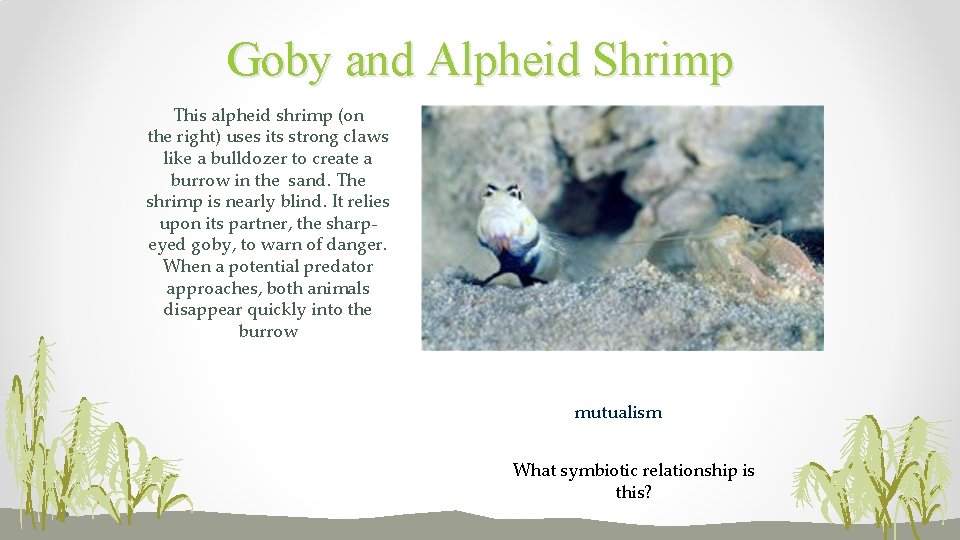
Goby and Alpheid Shrimp This alpheid shrimp (on the right) uses its strong claws like a bulldozer to create a burrow in the sand. The shrimp is nearly blind. It relies upon its partner, the sharpeyed goby, to warn of danger. When a potential predator approaches, both animals disappear quickly into the burrow mutualism What symbiotic relationship is this?
Exit Slip Answer each of following questions on a sheet of lined paper. 1. 2. 3. What is symbiosis? What are the different kinds of symbiosis? Describe one example of each kind of symbiotic relationship.
- Slides: 26